
Search
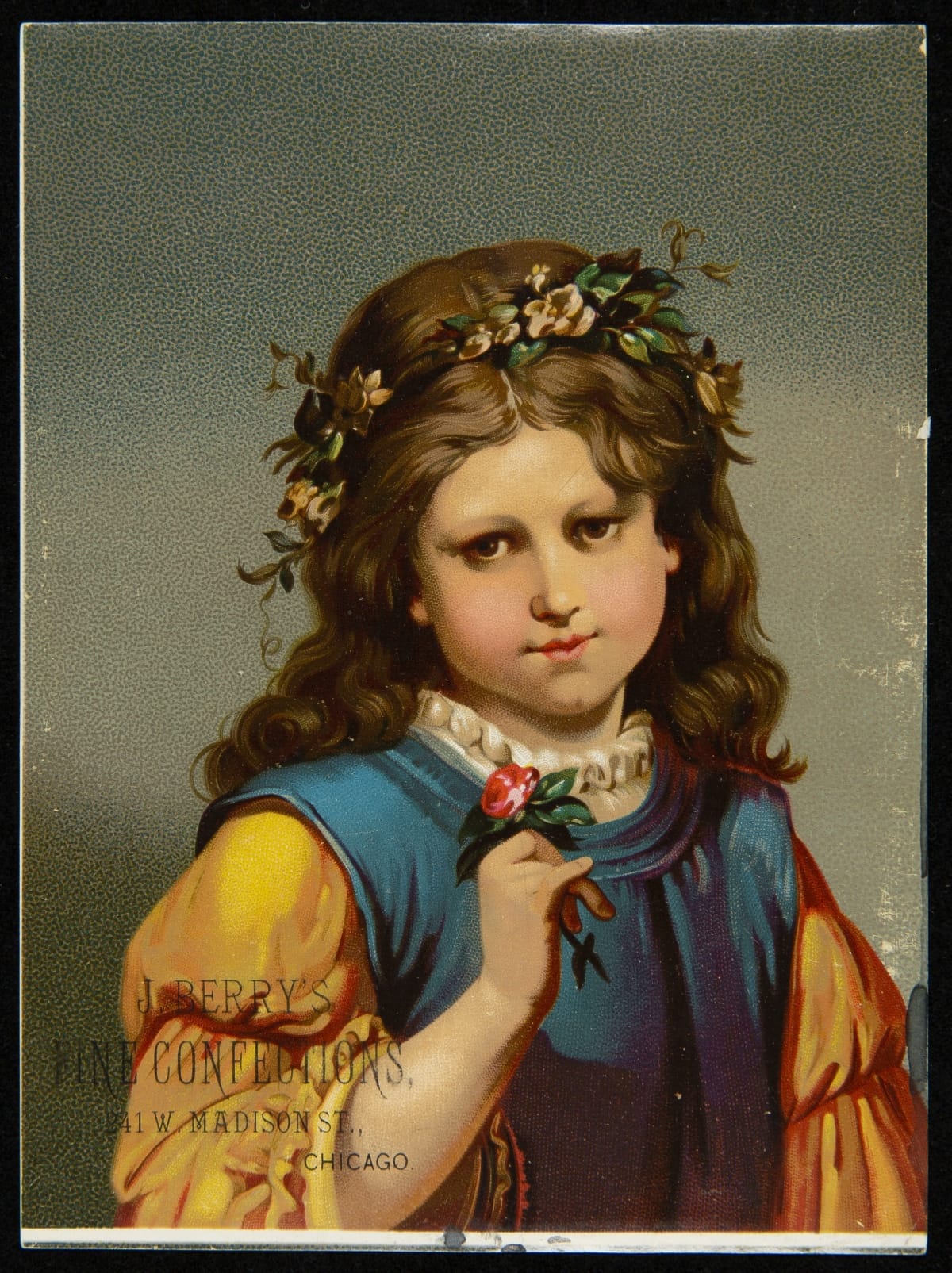
- Label, "J. Berry's Fine Confections," 1886-1905 -
- 1886-1905
- Collections - Artifact
Label, "J. Berry's Fine Confections," 1886-1905
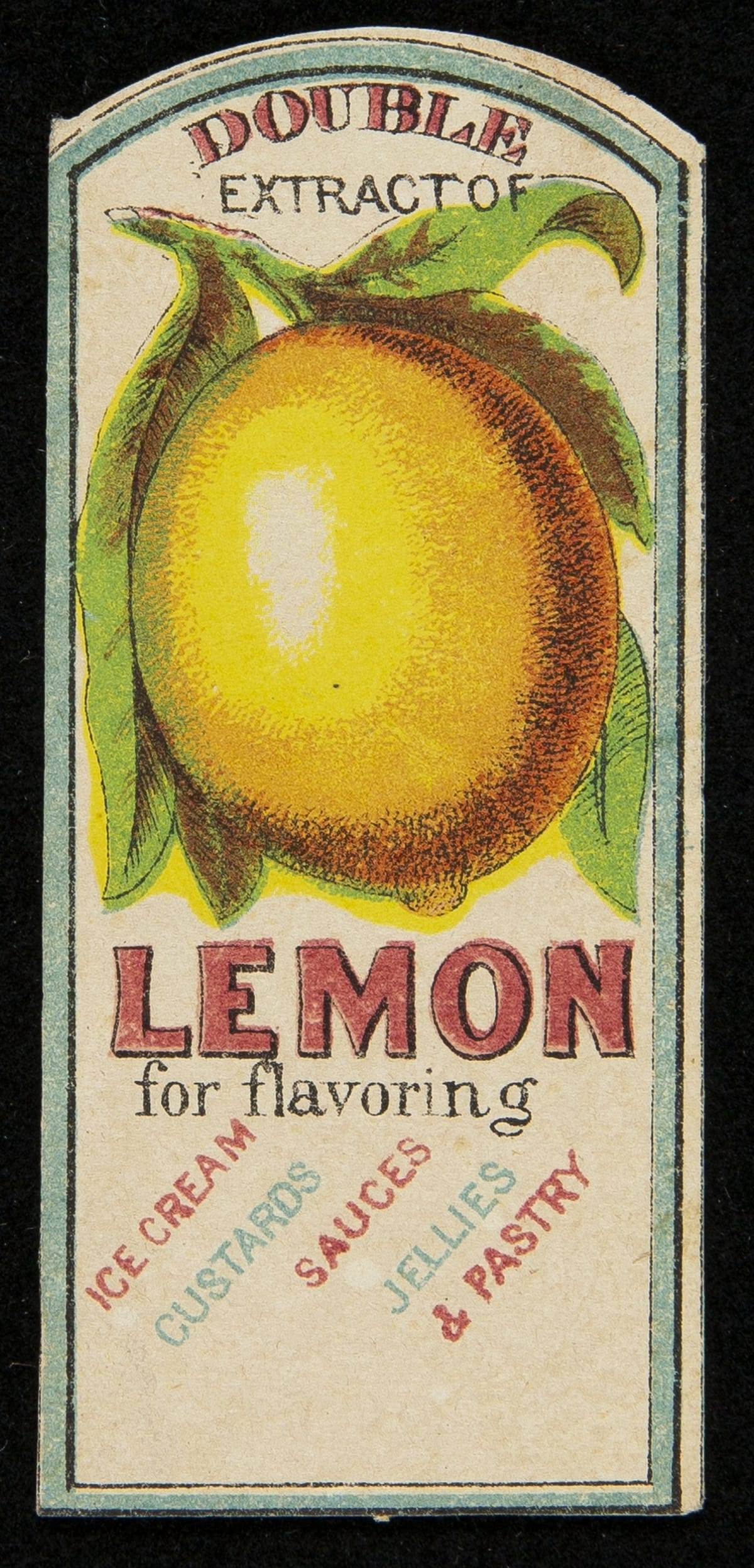
- Label for Double Extract of Lemon, 1880-1910 -
- 1880-1910
- Collections - Artifact
Label for Double Extract of Lemon, 1880-1910
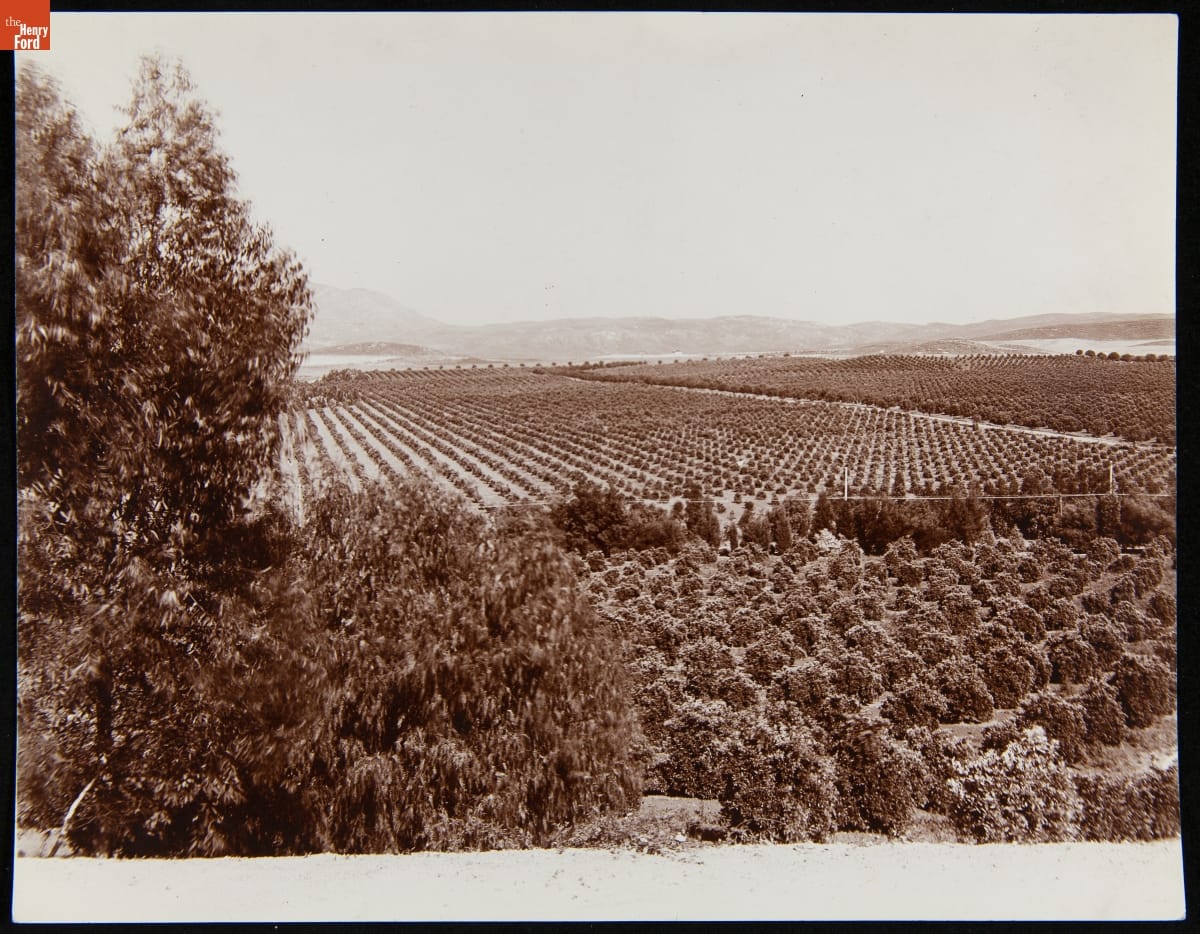
- Orange Groves, Riverside, California, circa 1900 - Orange growers and packers in Riverside, California, joined forces to launch the Riverside Fruit Exchange in 1893. The exchange marketed navel oranges, grown in expansive groves like this one. To increase production of the sweet, seedless crop consumers craved, growers propagated new trees by grafting buds onto rootstock. At harvest time, workers hand-picked and packed the oranges for sale.
- circa 1900
- Collections - Artifact
Orange Groves, Riverside, California, circa 1900
Orange growers and packers in Riverside, California, joined forces to launch the Riverside Fruit Exchange in 1893. The exchange marketed navel oranges, grown in expansive groves like this one. To increase production of the sweet, seedless crop consumers craved, growers propagated new trees by grafting buds onto rootstock. At harvest time, workers hand-picked and packed the oranges for sale.
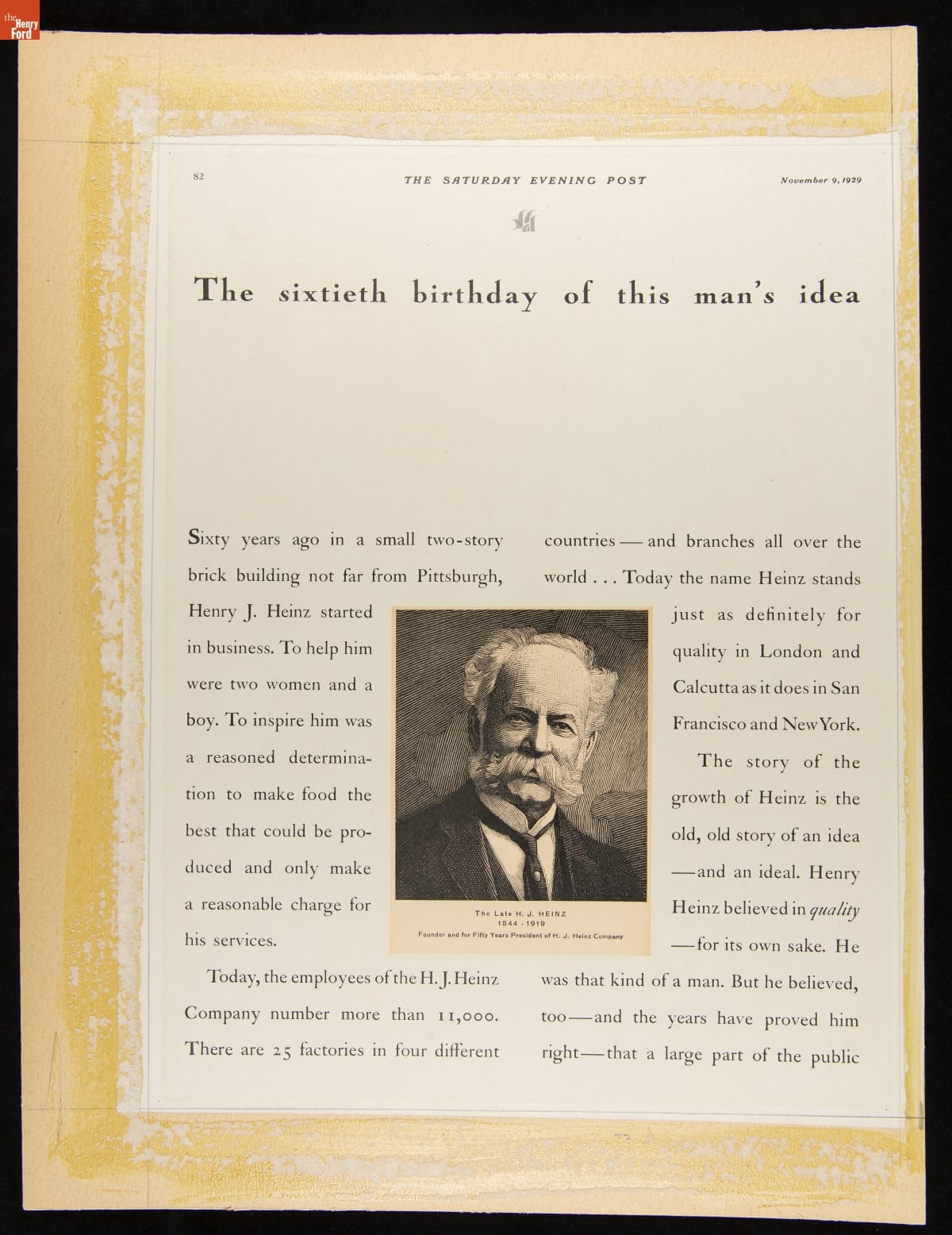
- "The Sixtieth Birthday of This Man's Idea," Heinz Company Advertisement, November 9, 1929 - This two-page tear sheet advertising layout was created to be published in the Saturday Evening Post on November 9, 1929, in honor of the H.J. Heinz Company's 60th birthday. The advertisement describes H.J. Heinz's commitment to quality and how the company continues to strive for the highest-quality ingredients and products even after its founders' death in 1919.
- November 09, 1929
- Collections - Artifact
"The Sixtieth Birthday of This Man's Idea," Heinz Company Advertisement, November 9, 1929
This two-page tear sheet advertising layout was created to be published in the Saturday Evening Post on November 9, 1929, in honor of the H.J. Heinz Company's 60th birthday. The advertisement describes H.J. Heinz's commitment to quality and how the company continues to strive for the highest-quality ingredients and products even after its founders' death in 1919.
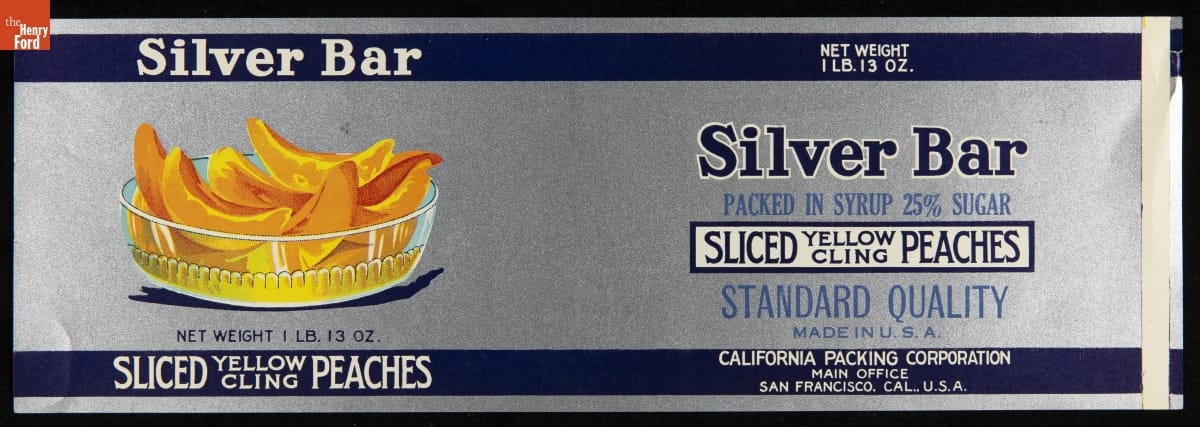
- Can Label, "Silver Bar Brand Sliced Yellow Cling Peaches," circa 1920 - Manufacturers of similar products sought ways to make their company's goods stand out on store shelves. Attractive labels, like this design for Silver Bar Brand Yellow Cling Peaches, helped catch the attention of potential customers -- hopefully encouraging them to purchase the company's product rather than that of a competitor.
- circa 1920
- Collections - Artifact
Can Label, "Silver Bar Brand Sliced Yellow Cling Peaches," circa 1920
Manufacturers of similar products sought ways to make their company's goods stand out on store shelves. Attractive labels, like this design for Silver Bar Brand Yellow Cling Peaches, helped catch the attention of potential customers -- hopefully encouraging them to purchase the company's product rather than that of a competitor.
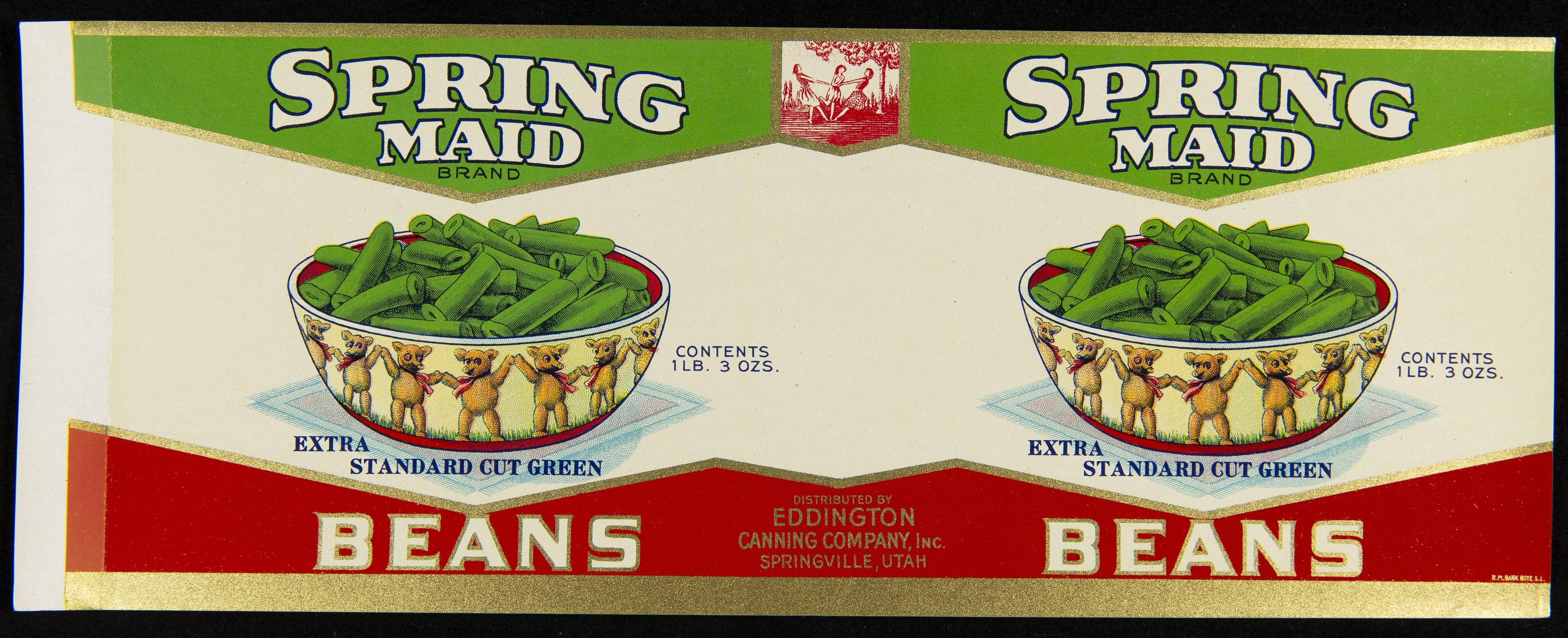
- Can Label, "Spring Maid Brand Cut Green Beans," 1904-1958 - Manufacturers of similar products sought ways to make their company's goods stand out on store shelves. Attractive labels, like this design for Spring Maid Brand Cut Green Beans, helped catch the attention of potential customers - hopefully encouraging them to purchase the company's product rather than that of a competitor.
- 1904-1958
- Collections - Artifact
Can Label, "Spring Maid Brand Cut Green Beans," 1904-1958
Manufacturers of similar products sought ways to make their company's goods stand out on store shelves. Attractive labels, like this design for Spring Maid Brand Cut Green Beans, helped catch the attention of potential customers - hopefully encouraging them to purchase the company's product rather than that of a competitor.
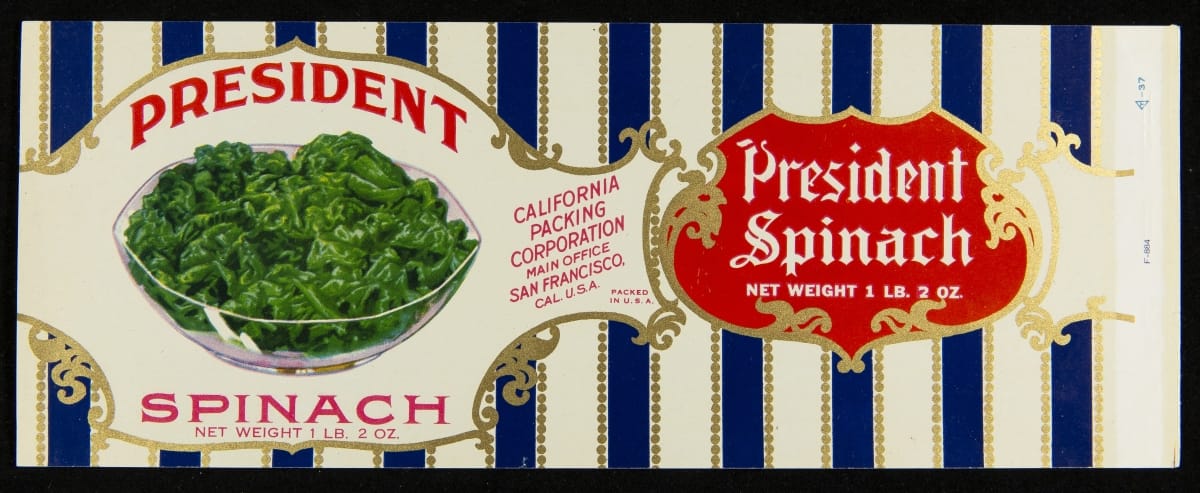
- Can Label, "President Brand Spinach," 1920-1940 - Manufacturers of similar products sought ways to make their company's goods stand out on store shelves. Attractive labels, like this design for President Brand Spinach, helped catch the attention of potential customers -- hopefully encouraging them to purchase the company's product rather than that of a competitor.
- 1920-1940
- Collections - Artifact
Can Label, "President Brand Spinach," 1920-1940
Manufacturers of similar products sought ways to make their company's goods stand out on store shelves. Attractive labels, like this design for President Brand Spinach, helped catch the attention of potential customers -- hopefully encouraging them to purchase the company's product rather than that of a competitor.
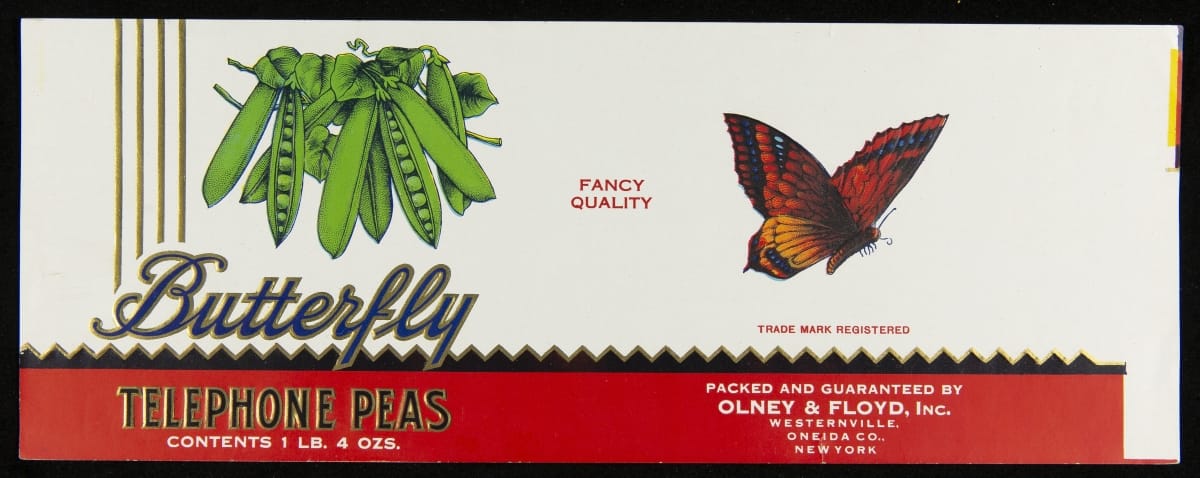
- Can Label, "Butterfly Brand Telephone Peas," circa 1950 - Throughout the late-19th to early-20th centuries, lithographers created labels to help sell products. Manufacturers of foodstuffs utilized the same design for several different products -- a strategy which helped customers distinguish one brand over another. Olney and Floyd's Butterfly Brand products were easy to identify with their colorful, eye-catching labels and signature butterfly.
- circa 1950
- Collections - Artifact
Can Label, "Butterfly Brand Telephone Peas," circa 1950
Throughout the late-19th to early-20th centuries, lithographers created labels to help sell products. Manufacturers of foodstuffs utilized the same design for several different products -- a strategy which helped customers distinguish one brand over another. Olney and Floyd's Butterfly Brand products were easy to identify with their colorful, eye-catching labels and signature butterfly.
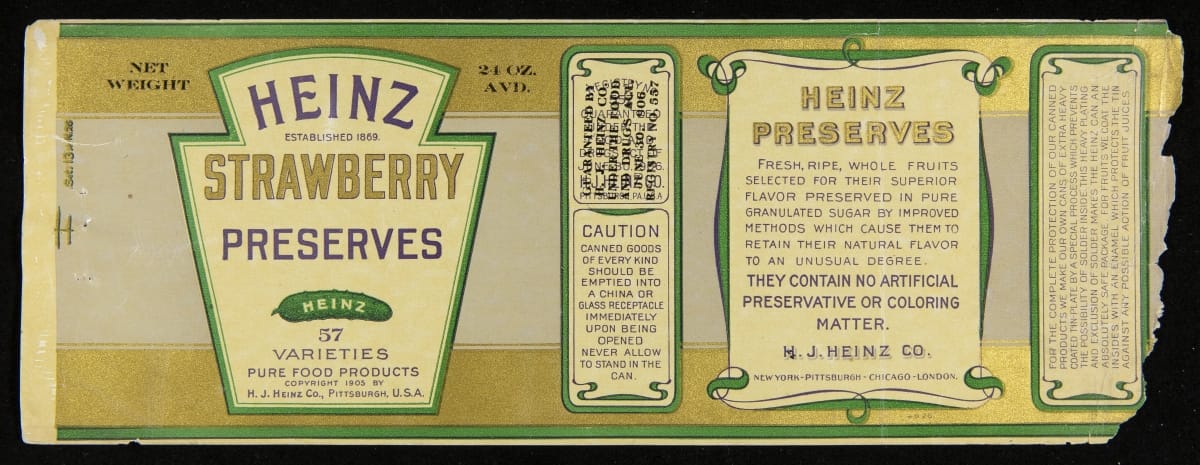
- Can Label, "Heinz Brand Strawberry Preserves," 1906-1910 - Manufacturers of similar products sought ways to make their companies' goods stand out on store shelves. Some companies established a uniform label design for their multi-product offerings -- a strategy which helped customers distinguish one brand over another. H.J. Heinz products were identified by the famous Heinz pickle and signature "keystone" logo. These design features are still found on Heinz products today.
- 1906-1910
- Collections - Artifact
Can Label, "Heinz Brand Strawberry Preserves," 1906-1910
Manufacturers of similar products sought ways to make their companies' goods stand out on store shelves. Some companies established a uniform label design for their multi-product offerings -- a strategy which helped customers distinguish one brand over another. H.J. Heinz products were identified by the famous Heinz pickle and signature "keystone" logo. These design features are still found on Heinz products today.
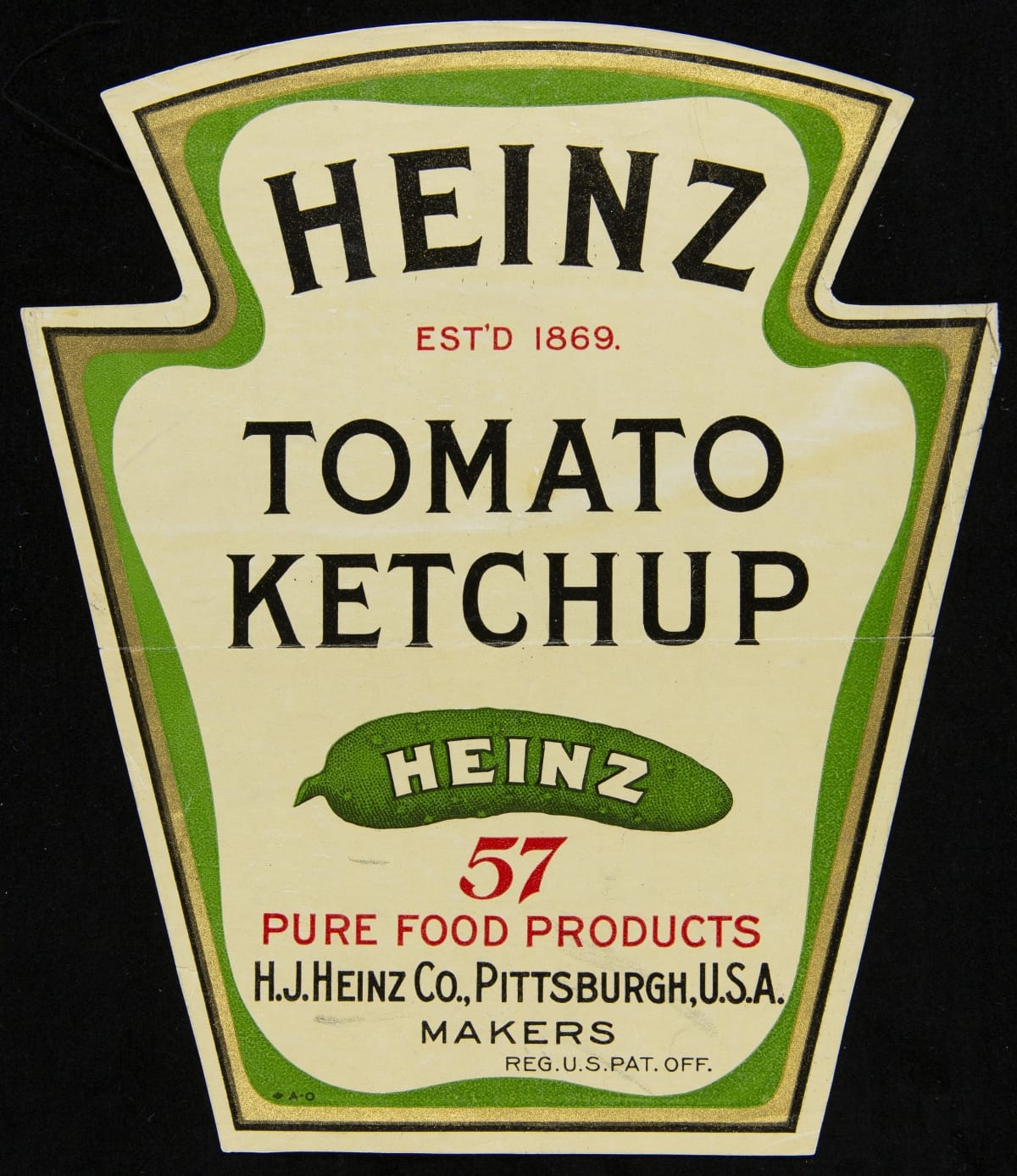
- Label, "H. J. Heinz Brand Tomato Ketchup," circa 1900 - Manufacturers of similar products sought ways to make their companies' goods stand out on store shelves. Some companies established a uniform label design for their multi-product offerings -- a strategy which helped customers distinguish one brand over another. H.J. Heinz products were identified by the famous Heinz pickle and signature "keystone" logo. These design features are still found on Heinz products today.
- circa 1900
- Collections - Artifact
Label, "H. J. Heinz Brand Tomato Ketchup," circa 1900
Manufacturers of similar products sought ways to make their companies' goods stand out on store shelves. Some companies established a uniform label design for their multi-product offerings -- a strategy which helped customers distinguish one brand over another. H.J. Heinz products were identified by the famous Heinz pickle and signature "keystone" logo. These design features are still found on Heinz products today.