
Search
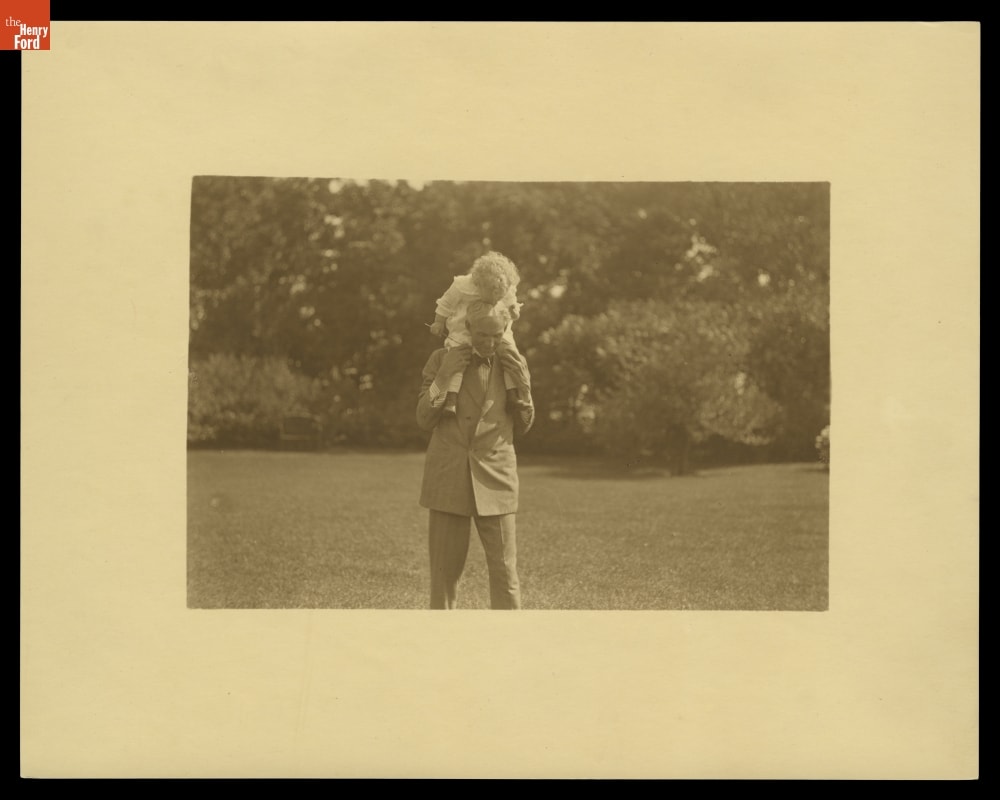
- Henry Ford Carrying Grandson Henry Ford II at Fair Lane, Dearborn, Michigan, 1919 - In the early 1910s, Henry and Clara Ford selected 1300 acres of farmland in Dearborn, Michigan, as the site for a new home. They called the estate Fair Lane. Surrounded by woods, meadows, gardens, and the nature they loved, Henry and Clara found this home a peaceful respite. Here they could wander the landscaped grounds, entertain guests, and play with grandchildren.
- 1919
- Collections - Artifact
Henry Ford Carrying Grandson Henry Ford II at Fair Lane, Dearborn, Michigan, 1919
In the early 1910s, Henry and Clara Ford selected 1300 acres of farmland in Dearborn, Michigan, as the site for a new home. They called the estate Fair Lane. Surrounded by woods, meadows, gardens, and the nature they loved, Henry and Clara found this home a peaceful respite. Here they could wander the landscaped grounds, entertain guests, and play with grandchildren.
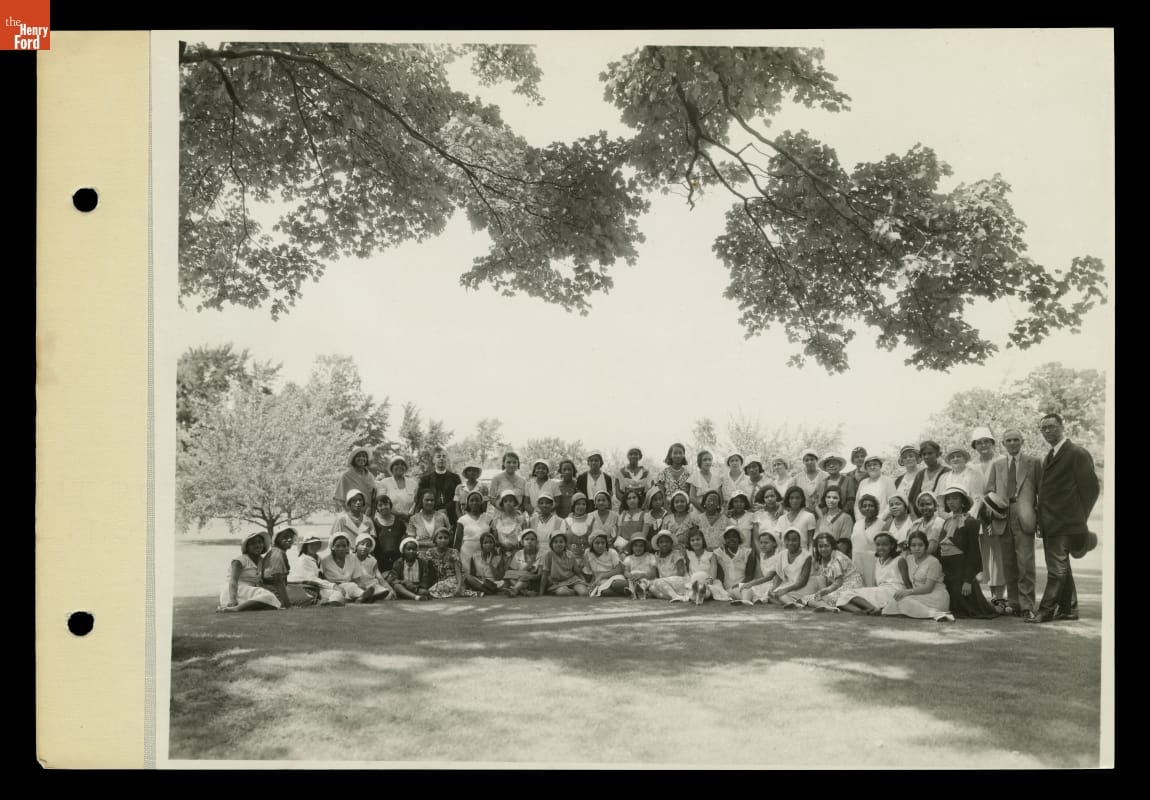
- Henry Ford and Clara Ford with Group on the Grounds of Fair Lane, 1932 - In the early 1910s, Henry and Clara Ford selected 1300 acres of farmland in Dearborn, Michigan, as the site for a new home. They called the estate Fair Lane. Surrounded by woods, meadows, gardens, and the nature they loved, Henry and Clara found this home a peaceful respite. Here they could wander the landscaped grounds, entertain guests, and play with grandchildren.
- July 09, 1932
- Collections - Artifact
Henry Ford and Clara Ford with Group on the Grounds of Fair Lane, 1932
In the early 1910s, Henry and Clara Ford selected 1300 acres of farmland in Dearborn, Michigan, as the site for a new home. They called the estate Fair Lane. Surrounded by woods, meadows, gardens, and the nature they loved, Henry and Clara found this home a peaceful respite. Here they could wander the landscaped grounds, entertain guests, and play with grandchildren.
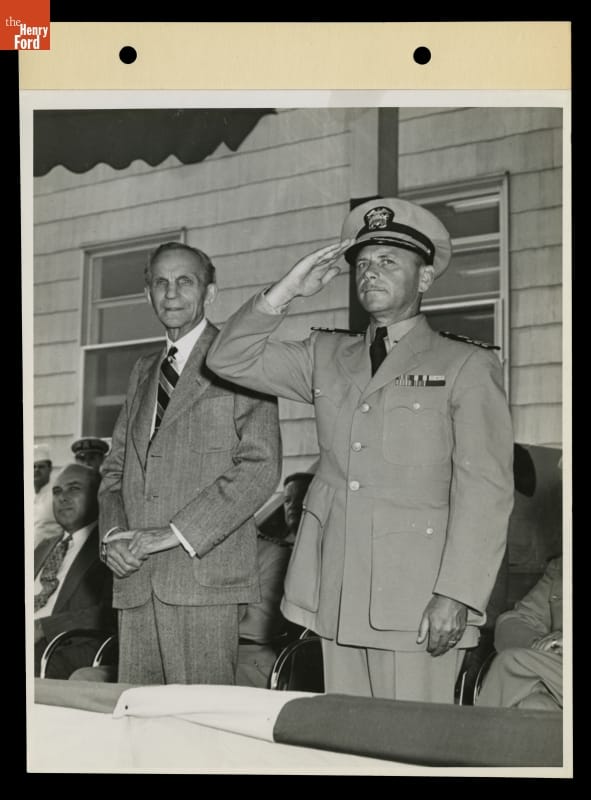
- Henry Ford on His 80th Birthday, U. S. Naval Training School at the Ford Rouge Plant, July 1943 - Personnel at the United States Naval Training School in Dearborn, Michigan, invited Henry Ford to celebrate his 80th birthday at the base. Ford was feted with gifts, a military drill, and a large cake modeled after the school buildings. The school -- built on land at Ford's Rouge Plant and leased to the Navy -- trained thousands of recruits in various skilled trades during World War II.
- July 28, 1943
- Collections - Artifact
Henry Ford on His 80th Birthday, U. S. Naval Training School at the Ford Rouge Plant, July 1943
Personnel at the United States Naval Training School in Dearborn, Michigan, invited Henry Ford to celebrate his 80th birthday at the base. Ford was feted with gifts, a military drill, and a large cake modeled after the school buildings. The school -- built on land at Ford's Rouge Plant and leased to the Navy -- trained thousands of recruits in various skilled trades during World War II.
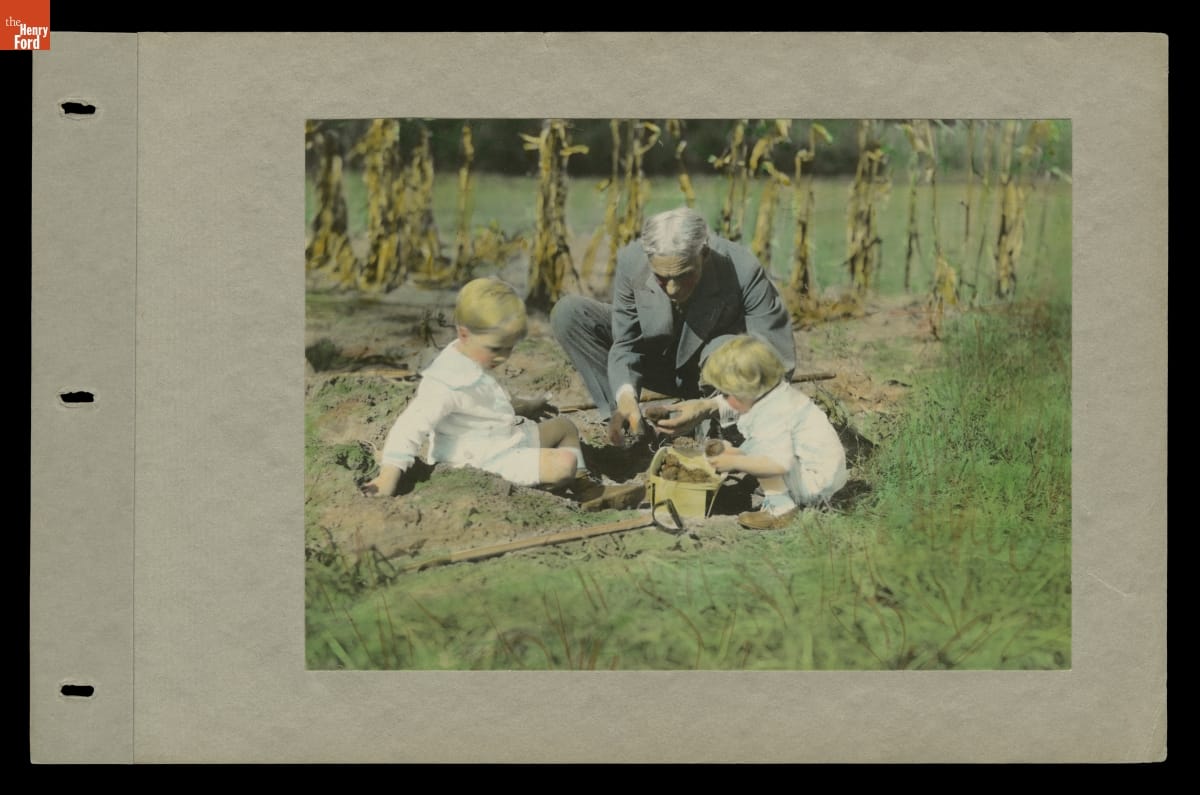
- Henry Ford Digging Potatoes with his Grandsons Henry Ford II and Benson Ford, Fair Lane, Dearborn, Michigan, 1922-1923 - In the early 1910s, Henry and Clara Ford selected 1300 acres of farmland in Dearborn, Michigan, as the site for a new home. They called the estate Fair Lane. Surrounded by woods, meadows, gardens, and the nature they loved, Henry and Clara found this home a peaceful respite. Here they could wander the landscaped grounds, entertain guests, and play with grandchildren.
- July 14, 1923
- Collections - Artifact
Henry Ford Digging Potatoes with his Grandsons Henry Ford II and Benson Ford, Fair Lane, Dearborn, Michigan, 1922-1923
In the early 1910s, Henry and Clara Ford selected 1300 acres of farmland in Dearborn, Michigan, as the site for a new home. They called the estate Fair Lane. Surrounded by woods, meadows, gardens, and the nature they loved, Henry and Clara found this home a peaceful respite. Here they could wander the landscaped grounds, entertain guests, and play with grandchildren.
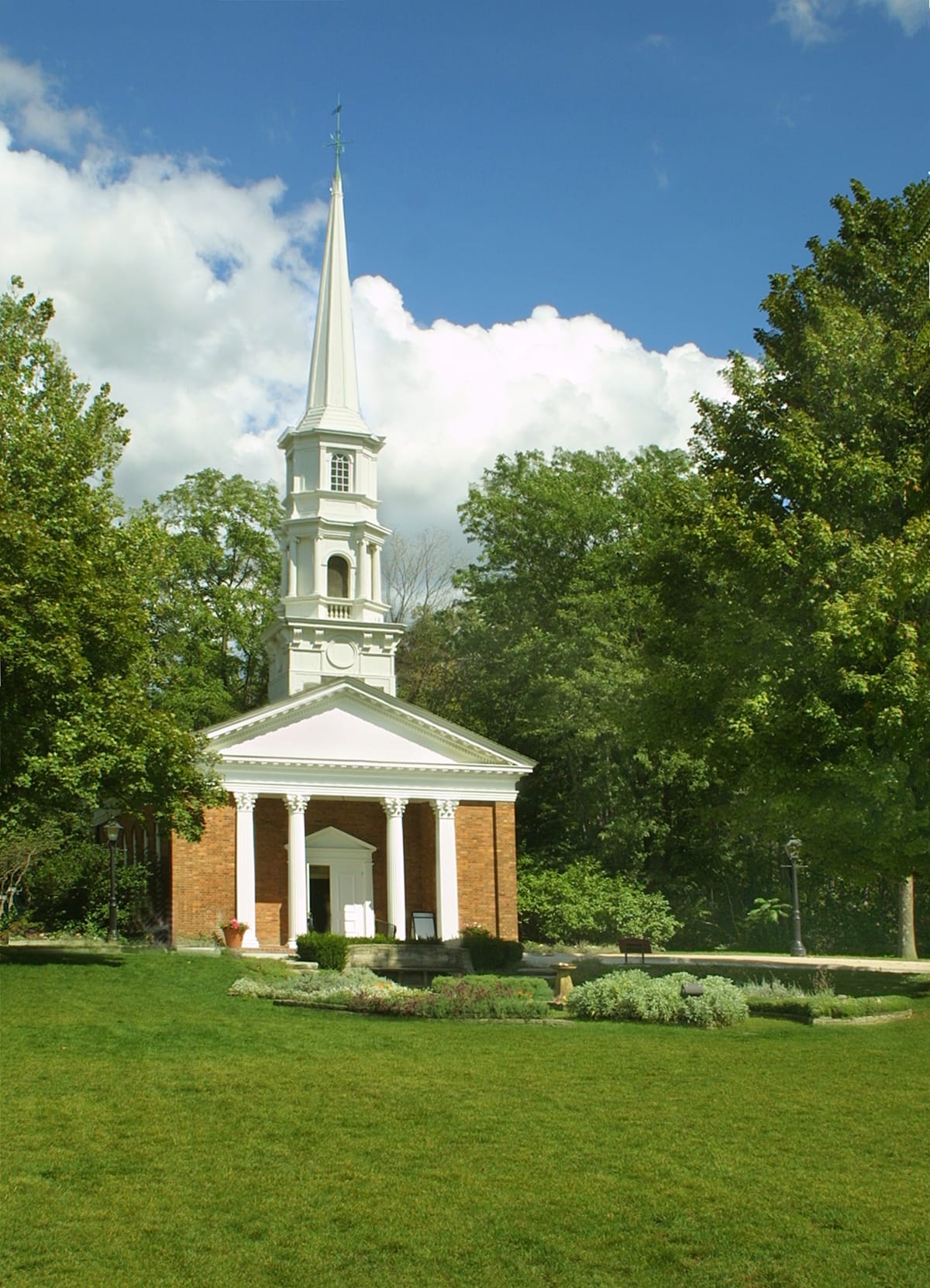
- Martha-Mary Chapel - Churches were a center of community life in the 1700s, a place where townspeople came together to attend services and socialize. The Martha-Mary Chapel, with its architecture inspired by New England's colonial-era churches, was built in Greenfield Village in 1929. This chapel was named after Henry Ford's mother, Mary Litogot Ford, and his mother-in-law, Martha Bench Bryant.
- 1929
- Collections - Artifact
Martha-Mary Chapel
Churches were a center of community life in the 1700s, a place where townspeople came together to attend services and socialize. The Martha-Mary Chapel, with its architecture inspired by New England's colonial-era churches, was built in Greenfield Village in 1929. This chapel was named after Henry Ford's mother, Mary Litogot Ford, and his mother-in-law, Martha Bench Bryant.
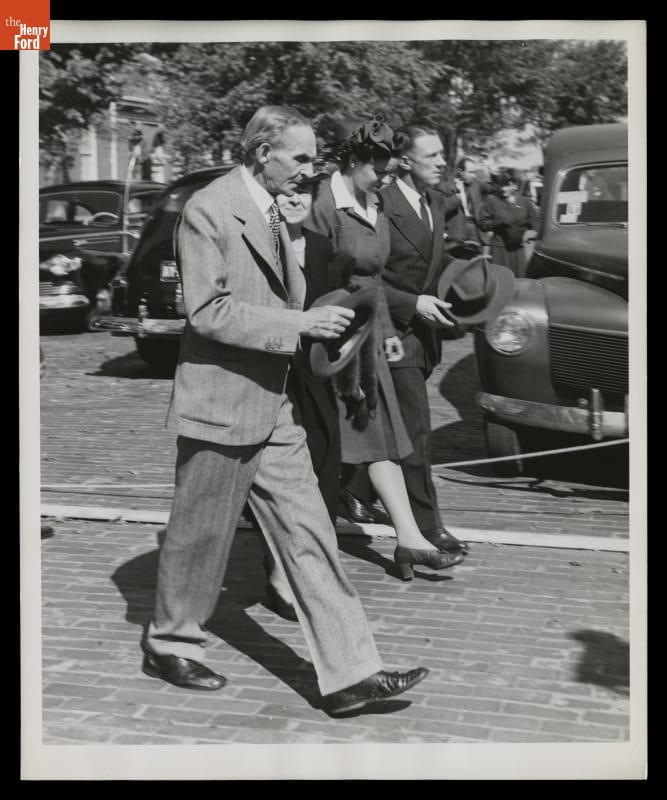
- Henry Ford and Clara Ford at Henry Ford Museum for the Presentation of the Sikorsky VS-300 Helicopter, October 7, 1943 - Henry Ford never intended his Edison Institute -- today's The Henry Ford -- only to be about the past. Henry Ford Museum and Greenfield Village would inspire the institute's students and visitors to create the future. Ford collected modern inventions alongside historic items. He acquired the VS-300 helicopter from inventor Igor Sikorsky in 1943 -- only four years after the aircraft's introduction.
- October 07, 1943
- Collections - Artifact
Henry Ford and Clara Ford at Henry Ford Museum for the Presentation of the Sikorsky VS-300 Helicopter, October 7, 1943
Henry Ford never intended his Edison Institute -- today's The Henry Ford -- only to be about the past. Henry Ford Museum and Greenfield Village would inspire the institute's students and visitors to create the future. Ford collected modern inventions alongside historic items. He acquired the VS-300 helicopter from inventor Igor Sikorsky in 1943 -- only four years after the aircraft's introduction.
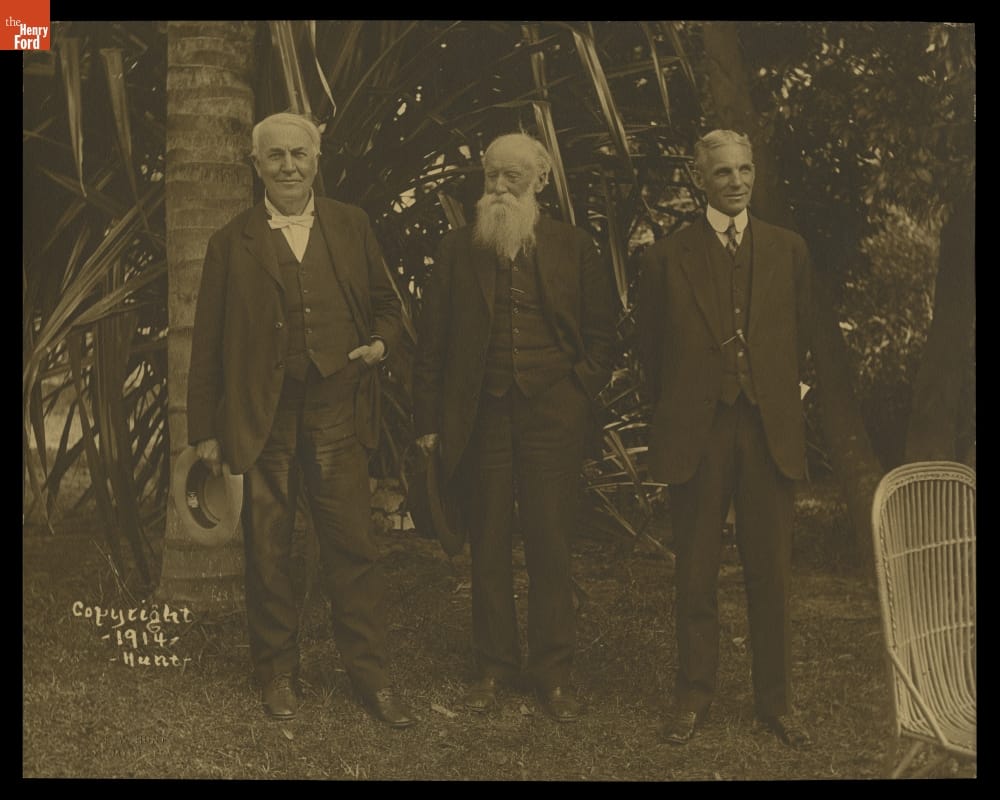
- Thomas Edison, John Burroughs and Henry Ford in Fort Myers, Florida, 1914 - John Burroughs (1837-1921) was an internationally known naturalist and writer. His writings appealed to Henry Ford, who invited Burroughs in 1914 to join him and Thomas Edison to explore the Florida Everglades together. This led to the more famous Vagabond camping trips of a few years later, which also involved Harvey Firestone.
- 1914
- Collections - Artifact
Thomas Edison, John Burroughs and Henry Ford in Fort Myers, Florida, 1914
John Burroughs (1837-1921) was an internationally known naturalist and writer. His writings appealed to Henry Ford, who invited Burroughs in 1914 to join him and Thomas Edison to explore the Florida Everglades together. This led to the more famous Vagabond camping trips of a few years later, which also involved Harvey Firestone.
- Henry Ford's Private Railroad Car "Fair Lane," 1921 - By 1920, Henry and Clara Ford found it increasingly difficult to travel with any degree of privacy. They purchased a private railcar and named it <em>Fair Lane</em>. The car had four private rooms, an observation lounge, a dining room, and a fully equipped kitchen. It could accommodate eight passengers. The couple made over 400 trips using <em>Fair Lane</em> before selling the passenger car in 1942.

- June 23, 1921
- Collections - Artifact
Henry Ford's Private Railroad Car "Fair Lane," 1921
By 1920, Henry and Clara Ford found it increasingly difficult to travel with any degree of privacy. They purchased a private railcar and named it Fair Lane. The car had four private rooms, an observation lounge, a dining room, and a fully equipped kitchen. It could accommodate eight passengers. The couple made over 400 trips using Fair Lane before selling the passenger car in 1942.
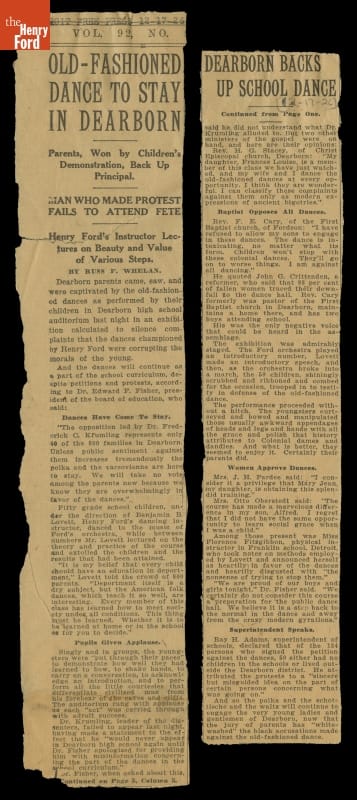
- Newspaper Article, "Old-Fashioned Dance to Stay in Dearborn...Dearborn Backs Up School Dance," 1926 - As Henry Ford extended his traditional American dance classes to local Dearborn schoolchildren, some parents grew alarmed--they weren't sure they approved of boys and girls dancing together. A dance demonstration by the children soon set most of the parents' minds at ease. They quickly realized the benefit of having their children learn these old-time dances--and the good manners that went along with them.
- December 17, 1926
- Collections - Artifact
Newspaper Article, "Old-Fashioned Dance to Stay in Dearborn...Dearborn Backs Up School Dance," 1926
As Henry Ford extended his traditional American dance classes to local Dearborn schoolchildren, some parents grew alarmed--they weren't sure they approved of boys and girls dancing together. A dance demonstration by the children soon set most of the parents' minds at ease. They quickly realized the benefit of having their children learn these old-time dances--and the good manners that went along with them.
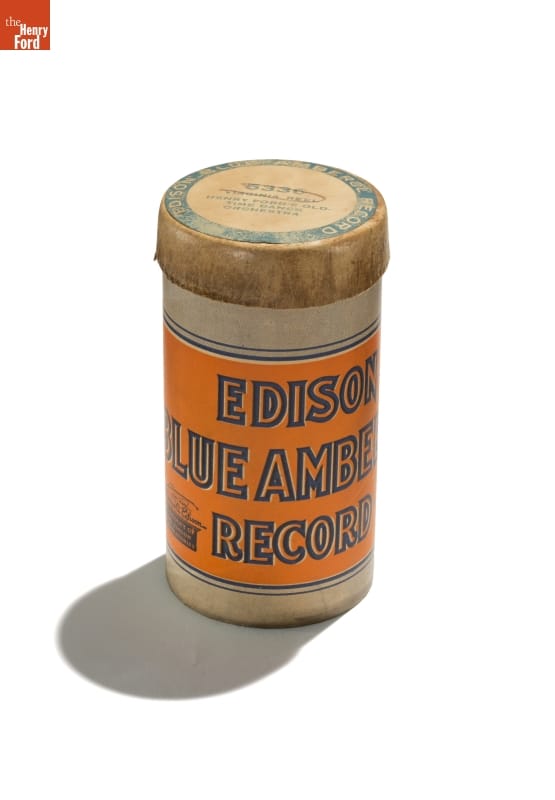
- Blue Amberol Cylinder Record, "Virginia Reel," 1927 - During the 1920s, Henry Ford organized an "Old Time Orchestra" to play at dances Ford hosted to teach his friends and business associates the dances of Ford's rural youth. In 1925, Thomas Edison's staff traveled to Dearborn, Michigan, to record Ford's orchestra. For this recording, they set up their equipment at Fair Lane, Ford's home, capturing the orchestra playing this American country dance.
- 1927
- Collections - Artifact
Blue Amberol Cylinder Record, "Virginia Reel," 1927
During the 1920s, Henry Ford organized an "Old Time Orchestra" to play at dances Ford hosted to teach his friends and business associates the dances of Ford's rural youth. In 1925, Thomas Edison's staff traveled to Dearborn, Michigan, to record Ford's orchestra. For this recording, they set up their equipment at Fair Lane, Ford's home, capturing the orchestra playing this American country dance.