
Search
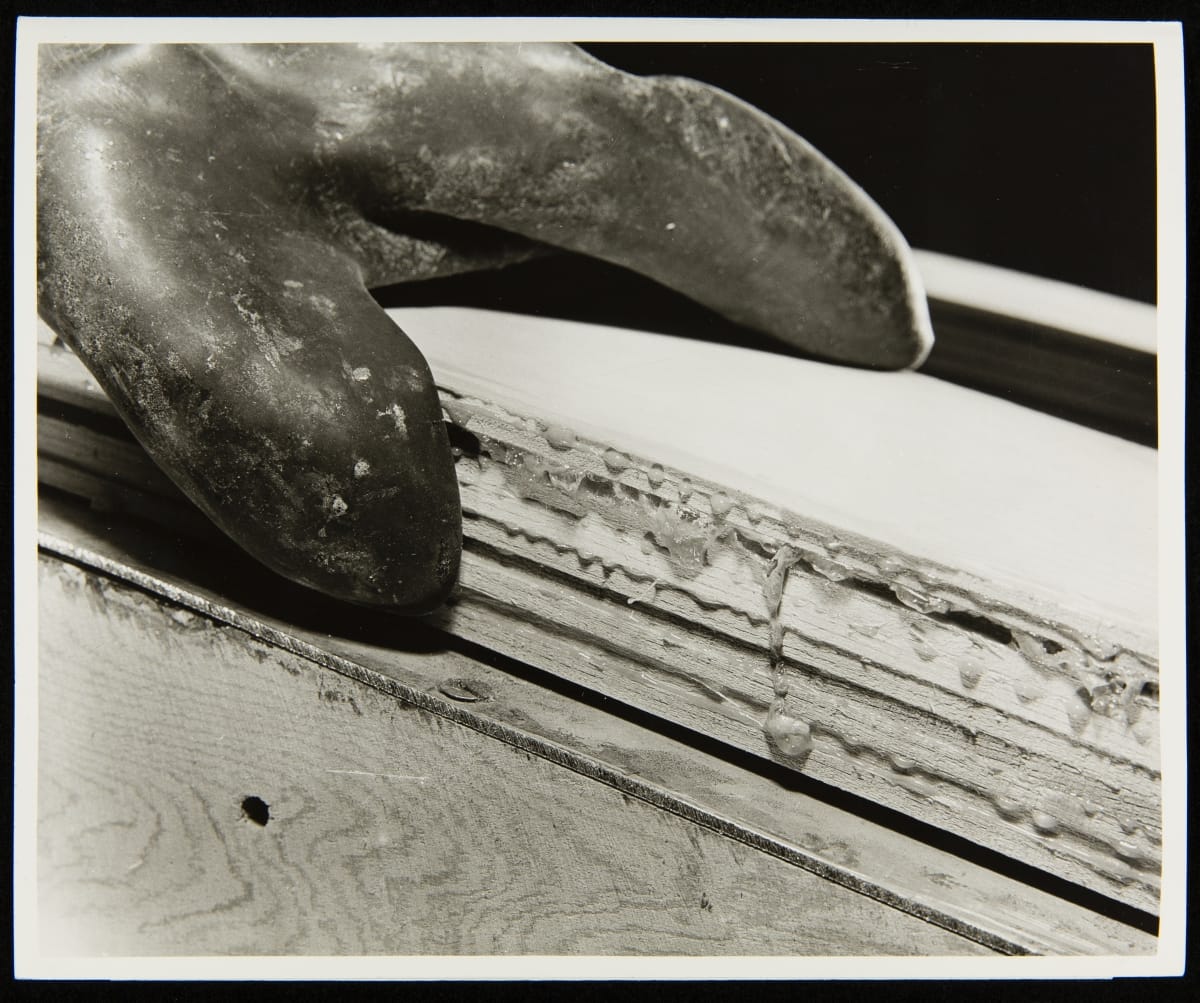
- Close-up of Adhesive on Wood Veneer Door Frame Pillar for Ford Station Wagons, Iron Mountain Plant, March 1949 - Ford Motor Company built wood station wagon bodies at its Iron Mountain plant in Michigan's Upper Peninsula. For 1949, Ford eliminated wood framing from its wagons in favor of steel. Wood was still used on the wagons, but in the form of specially laminated paneling bolted onto the steel frames. Iron Mountain closed when Ford switched to all-steel wagons in 1952.
- circa 1949
- Collections - Artifact
Close-up of Adhesive on Wood Veneer Door Frame Pillar for Ford Station Wagons, Iron Mountain Plant, March 1949
Ford Motor Company built wood station wagon bodies at its Iron Mountain plant in Michigan's Upper Peninsula. For 1949, Ford eliminated wood framing from its wagons in favor of steel. Wood was still used on the wagons, but in the form of specially laminated paneling bolted onto the steel frames. Iron Mountain closed when Ford switched to all-steel wagons in 1952.
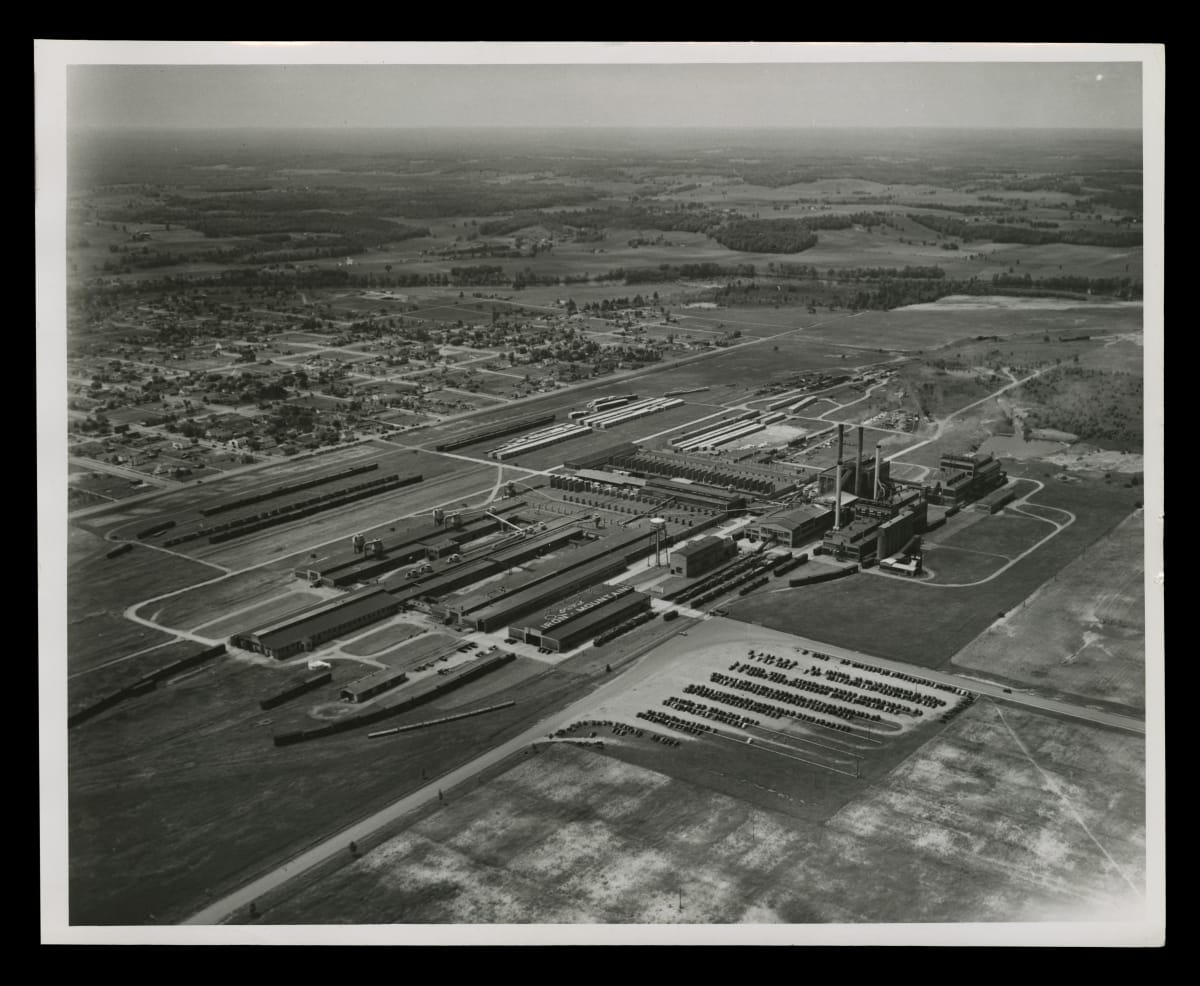
- Aerial View of Ford Motor Company Iron Mountain Plant, Upper Peninsula of Michigan, 1946 - Ford Motor Company's Iron Mountain plant, located in Michigan's Upper Peninsula, produced wood body frames and parts for the automaker's various models. After Ford adopted all-steel sedan bodies for the 1937 model year, Iron Mountain focused on station wagon bodies. Some 300 skilled craftspeople worked at the plant until 1952, when Ford wagons switched to all-steel bodies.
- August 06, 1946
- Collections - Artifact
Aerial View of Ford Motor Company Iron Mountain Plant, Upper Peninsula of Michigan, 1946
Ford Motor Company's Iron Mountain plant, located in Michigan's Upper Peninsula, produced wood body frames and parts for the automaker's various models. After Ford adopted all-steel sedan bodies for the 1937 model year, Iron Mountain focused on station wagon bodies. Some 300 skilled craftspeople worked at the plant until 1952, when Ford wagons switched to all-steel bodies.
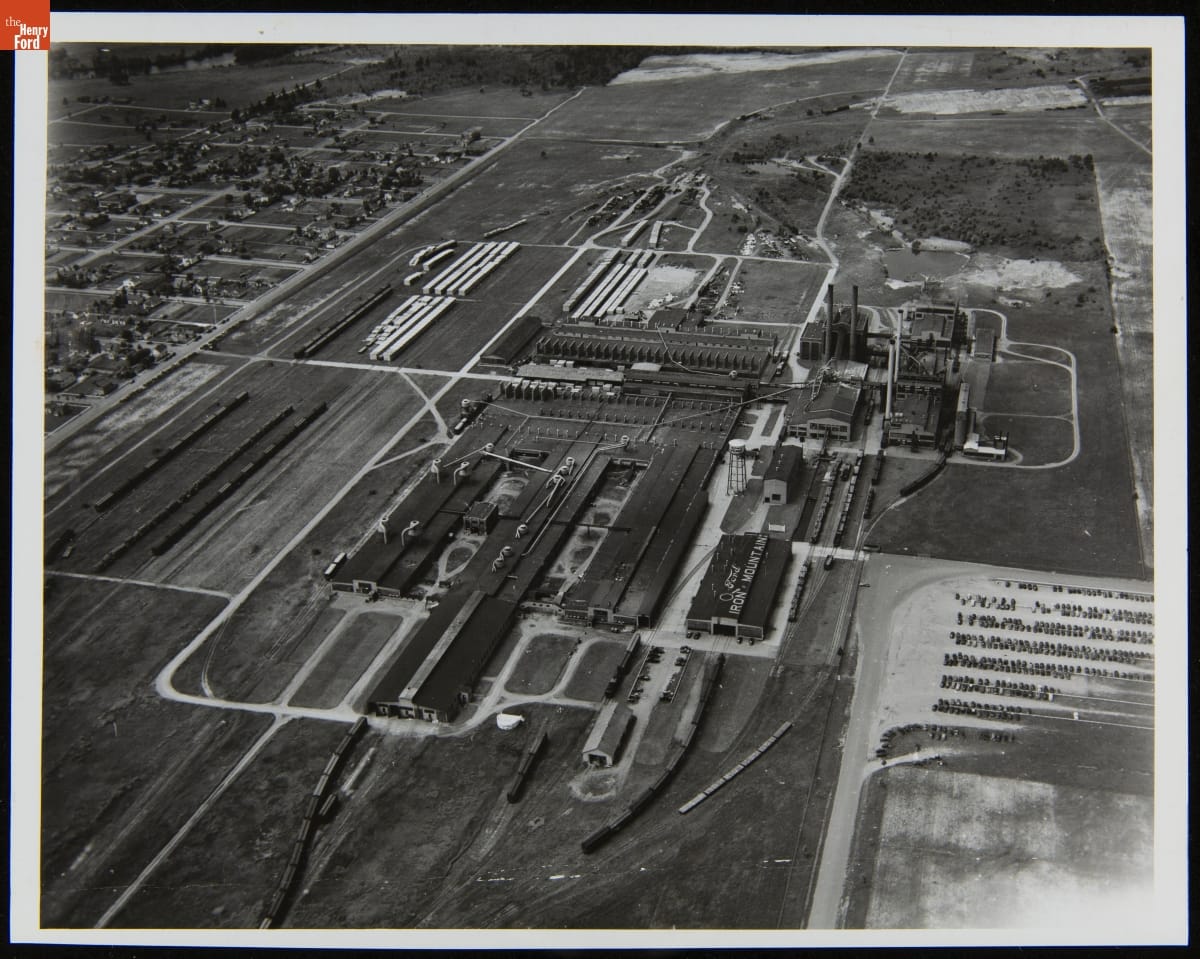
- Aerial View of Ford Motor Company Branch in Iron Mountain, Michigan, 1946 - Ford Motor Company's Iron Mountain plant, located in Michigan's Upper Peninsula, produced wood body frames and parts for the automaker's various models. After Ford adopted all-steel sedan bodies for the 1937 model year, Iron Mountain focused on station wagon bodies. Some 300 skilled craftspeople worked at the plant until 1952, when Ford wagons switched to all-steel bodies.
- 1946
- Collections - Artifact
Aerial View of Ford Motor Company Branch in Iron Mountain, Michigan, 1946
Ford Motor Company's Iron Mountain plant, located in Michigan's Upper Peninsula, produced wood body frames and parts for the automaker's various models. After Ford adopted all-steel sedan bodies for the 1937 model year, Iron Mountain focused on station wagon bodies. Some 300 skilled craftspeople worked at the plant until 1952, when Ford wagons switched to all-steel bodies.
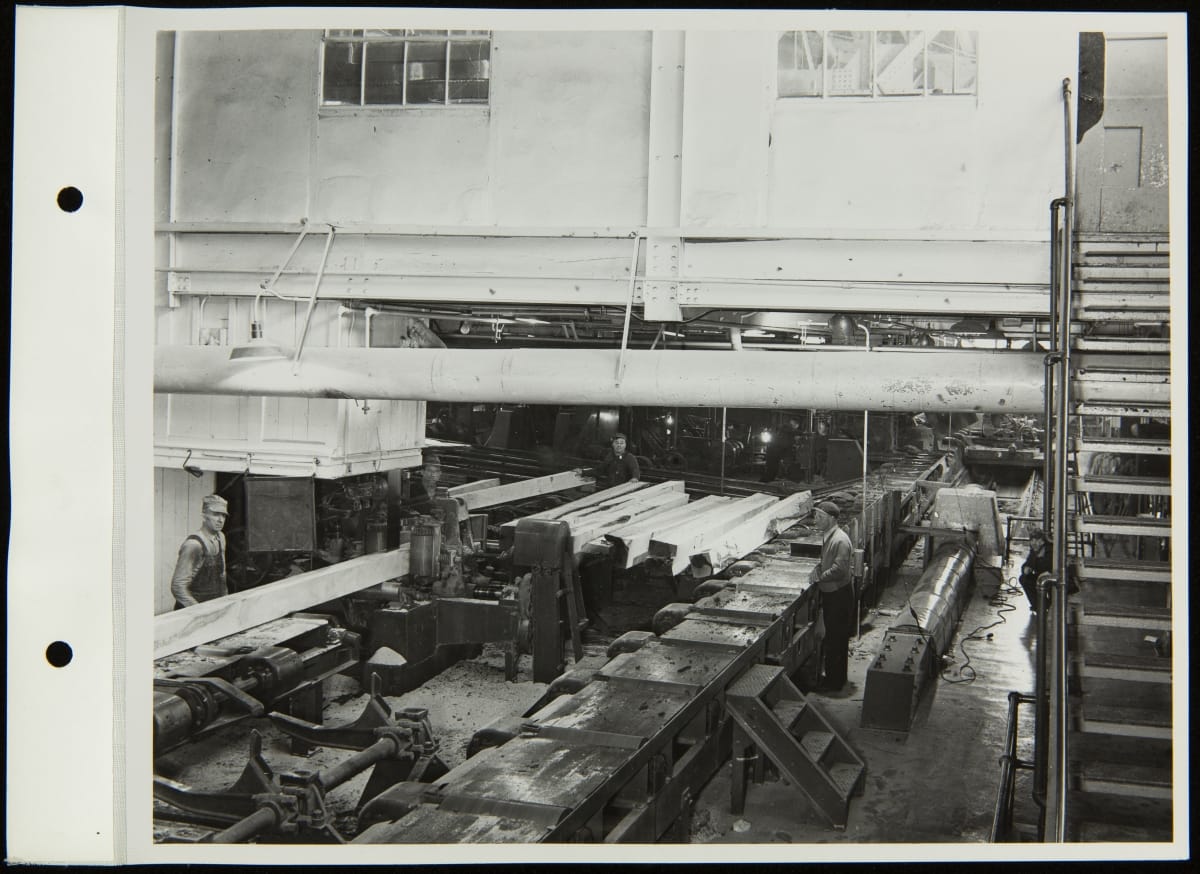
- Interior of the Ford Iron Mountain Plant, December 1946 - Ford Motor Company's Iron Mountain plant, located in Michigan's Upper Peninsula, produced wood body frames and parts for the automaker's various models. After Ford adopted all-steel sedan bodies for the 1937 model year, Iron Mountain focused on station wagon bodies. Some 300 skilled craftspeople worked at the plant until 1952, when Ford wagons switched to all-steel bodies.
- December 13, 1946
- Collections - Artifact
Interior of the Ford Iron Mountain Plant, December 1946
Ford Motor Company's Iron Mountain plant, located in Michigan's Upper Peninsula, produced wood body frames and parts for the automaker's various models. After Ford adopted all-steel sedan bodies for the 1937 model year, Iron Mountain focused on station wagon bodies. Some 300 skilled craftspeople worked at the plant until 1952, when Ford wagons switched to all-steel bodies.
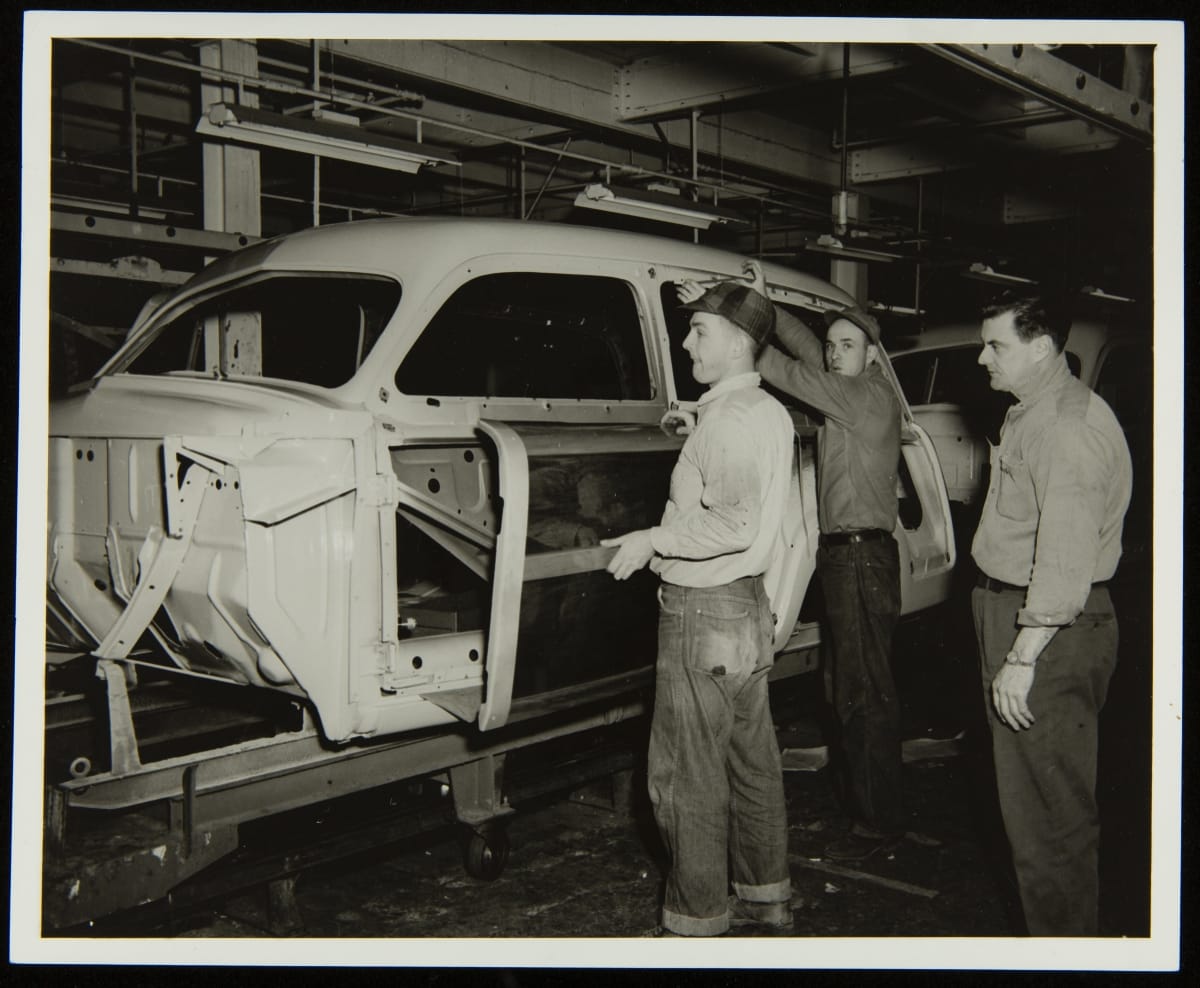
- Ford Motor Company Iron Mountain Plant, Wood Body Station Wagon Assembly, circa 1949 - Ford Motor Company built wood station wagon bodies at its Iron Mountain plant in Michigan's Upper Peninsula. For 1949, Ford eliminated wood framing from its wagons in favor of steel. Wood was still used on the wagons, but in the form of specially laminated paneling bolted onto the steel frames. Iron Mountain closed when Ford switched to all-steel wagons in 1952.
- circa 1949
- Collections - Artifact
Ford Motor Company Iron Mountain Plant, Wood Body Station Wagon Assembly, circa 1949
Ford Motor Company built wood station wagon bodies at its Iron Mountain plant in Michigan's Upper Peninsula. For 1949, Ford eliminated wood framing from its wagons in favor of steel. Wood was still used on the wagons, but in the form of specially laminated paneling bolted onto the steel frames. Iron Mountain closed when Ford switched to all-steel wagons in 1952.
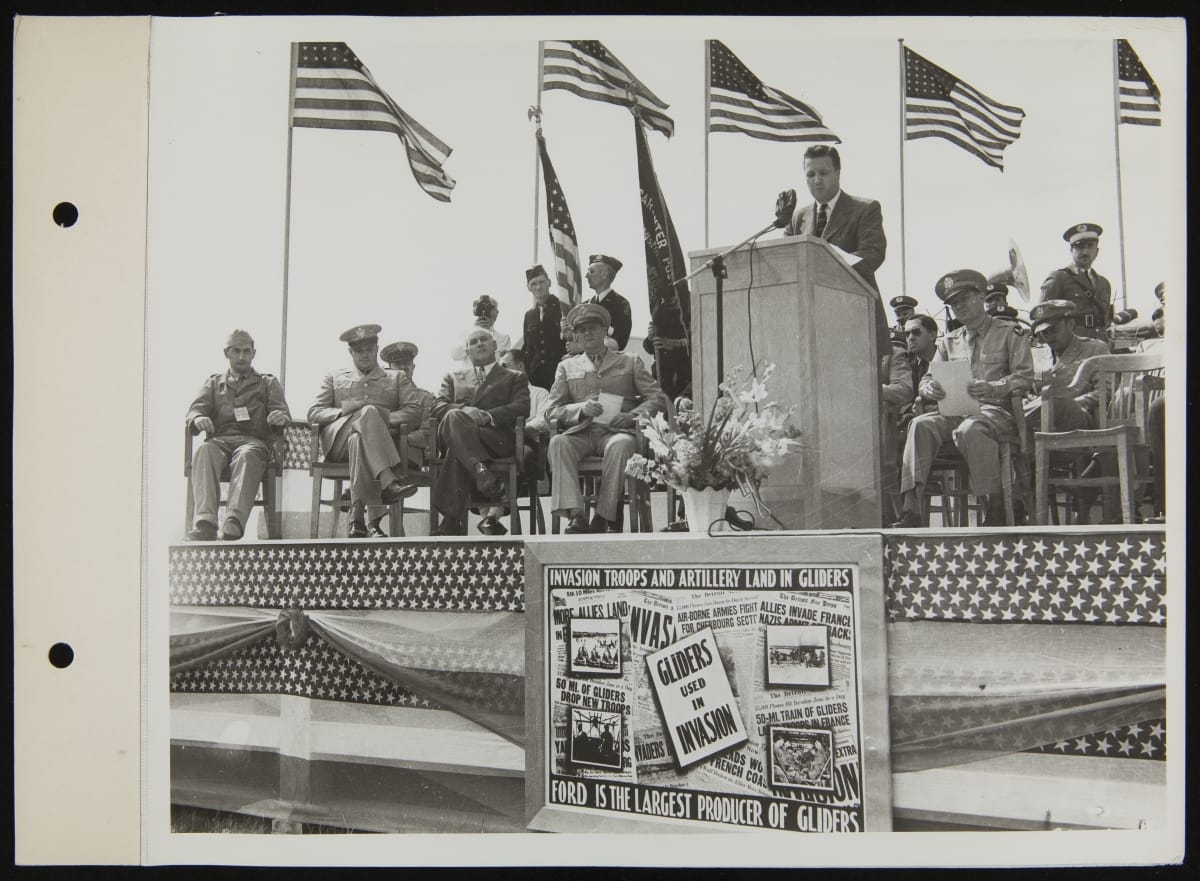
- Henry Ford II Accepting the Army-Navy "E" Award for Glider Production at the Ford Iron Mountiain Plant, June 21, 1944 - Ford Motor Company president Henry Ford II joined employees and officials at the automaker's Iron Mountain Plant, in Michigan's Upper Peninsula, after the plant received an Army-Navy "E" Award. The prize honored factories that excelled in the production of war materiel and maintained exceptional labor relations during World War II. Only a small percentage of manufacturers earned the award.
- June 21, 1944
- Collections - Artifact
Henry Ford II Accepting the Army-Navy "E" Award for Glider Production at the Ford Iron Mountiain Plant, June 21, 1944
Ford Motor Company president Henry Ford II joined employees and officials at the automaker's Iron Mountain Plant, in Michigan's Upper Peninsula, after the plant received an Army-Navy "E" Award. The prize honored factories that excelled in the production of war materiel and maintained exceptional labor relations during World War II. Only a small percentage of manufacturers earned the award.
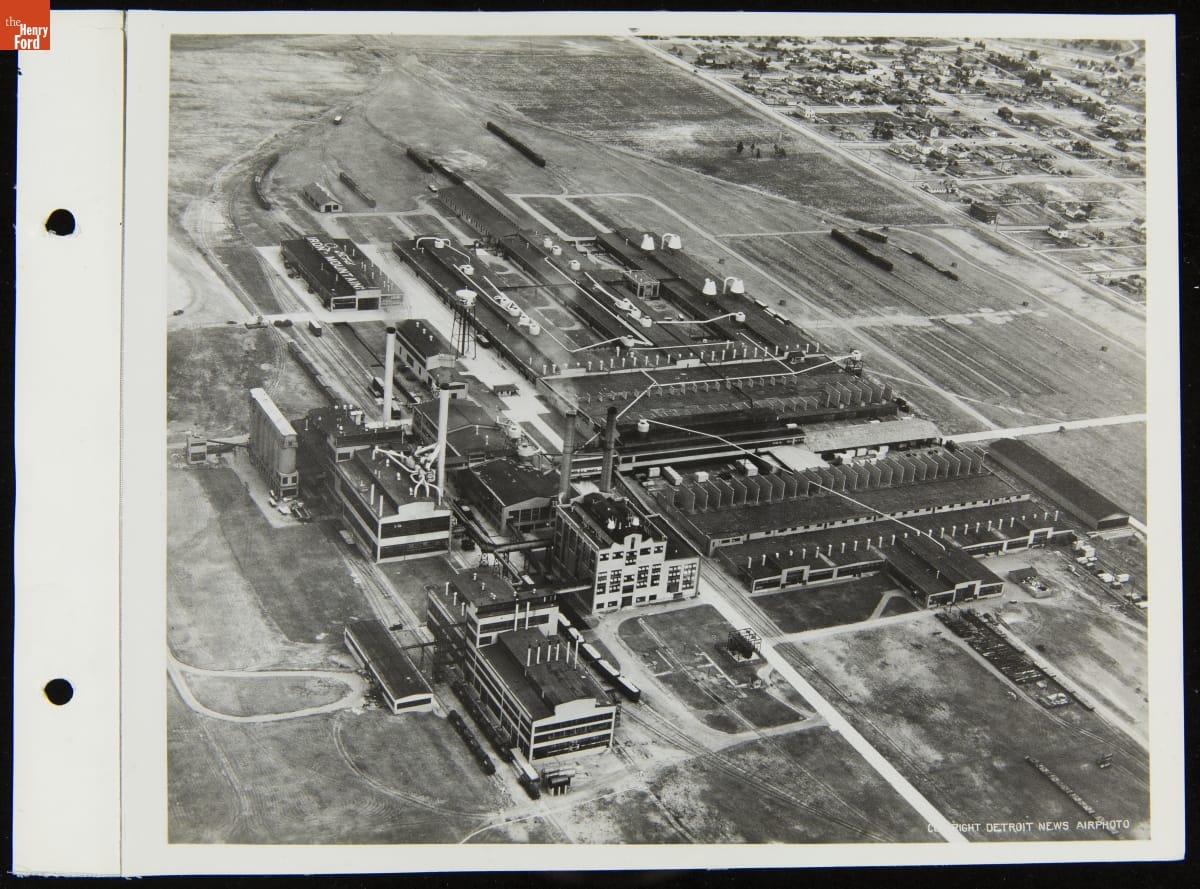
- Aerial View of Ford Motor Company Branch in Iron Mountain, Michigan, January 4, 1944 - Ford Motor Company's Iron Mountain plant, located in Michigan's Upper Peninsula, produced wood bodies for station wagons. During World War II, workers at the factory built wood CG-4A gliders for the U.S. Army. These light aircraft, which had no motors or propellers, were towed by airplanes to the battlefront where they landed with soldiers, supplies, or equipment.
- January 04, 1944
- Collections - Artifact
Aerial View of Ford Motor Company Branch in Iron Mountain, Michigan, January 4, 1944
Ford Motor Company's Iron Mountain plant, located in Michigan's Upper Peninsula, produced wood bodies for station wagons. During World War II, workers at the factory built wood CG-4A gliders for the U.S. Army. These light aircraft, which had no motors or propellers, were towed by airplanes to the battlefront where they landed with soldiers, supplies, or equipment.
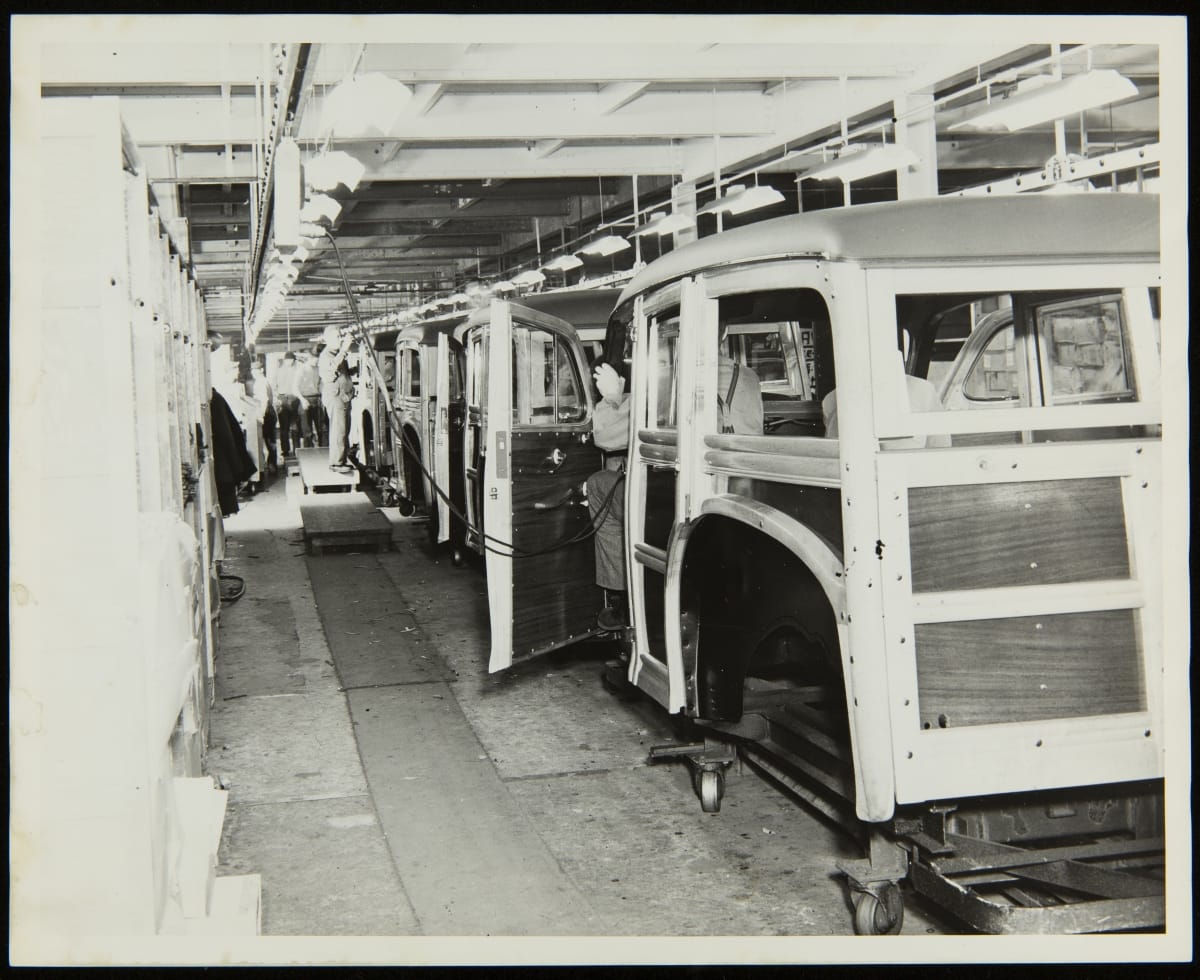
- Assembly of Ford "Woody" Station Wagons, Iron Mountain Plant, circa 1947 - Ford Motor Company's Iron Mountain plant, located in Michigan's Upper Peninsula, produced wood body frames and parts for the automaker's various models. After Ford adopted all-steel sedan bodies for the 1937 model year, Iron Mountain focused on station wagon bodies. Some 300 skilled craftspeople worked at the plant until 1952, when Ford wagons switched to all-steel bodies.
- circa 1947
- Collections - Artifact
Assembly of Ford "Woody" Station Wagons, Iron Mountain Plant, circa 1947
Ford Motor Company's Iron Mountain plant, located in Michigan's Upper Peninsula, produced wood body frames and parts for the automaker's various models. After Ford adopted all-steel sedan bodies for the 1937 model year, Iron Mountain focused on station wagon bodies. Some 300 skilled craftspeople worked at the plant until 1952, when Ford wagons switched to all-steel bodies.
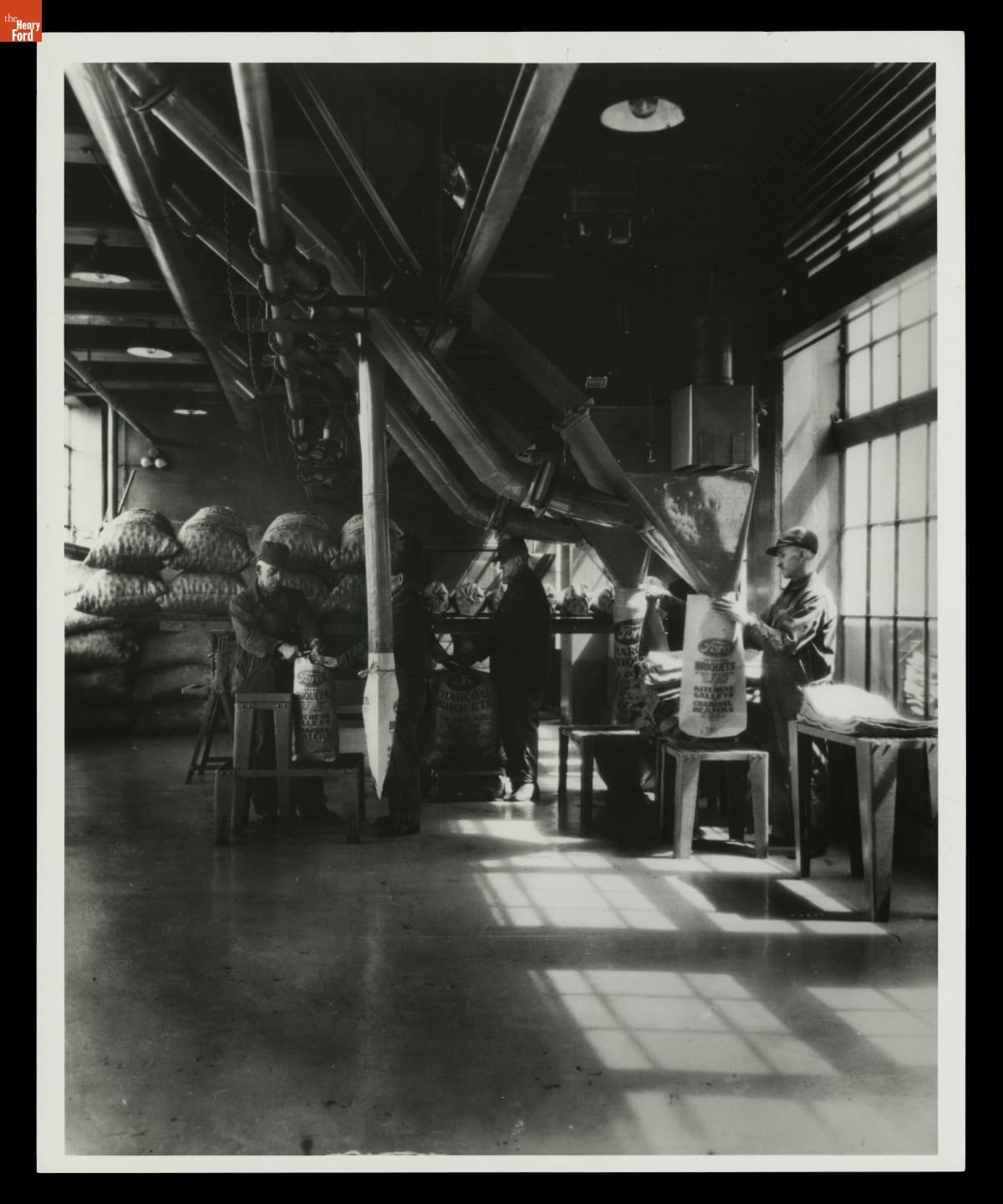
- Bagging Charcoal Briquets at Ford Motor Company Iron Mountain Plant, 1935 - Ford Motor Company sawmills created heaps of wood wastes. Some was used to produce steam for factory operations. The rest was carbonized and compressed into charcoal. Workers mixed charred hardwood chips with starch, forming nearly 100 tons of charcoal briquettes each day. Dealers sold branded barbecue accessories and packages of the popular briquettes in Ford dealerships across the country.
- 1935
- Collections - Artifact
Bagging Charcoal Briquets at Ford Motor Company Iron Mountain Plant, 1935
Ford Motor Company sawmills created heaps of wood wastes. Some was used to produce steam for factory operations. The rest was carbonized and compressed into charcoal. Workers mixed charred hardwood chips with starch, forming nearly 100 tons of charcoal briquettes each day. Dealers sold branded barbecue accessories and packages of the popular briquettes in Ford dealerships across the country.
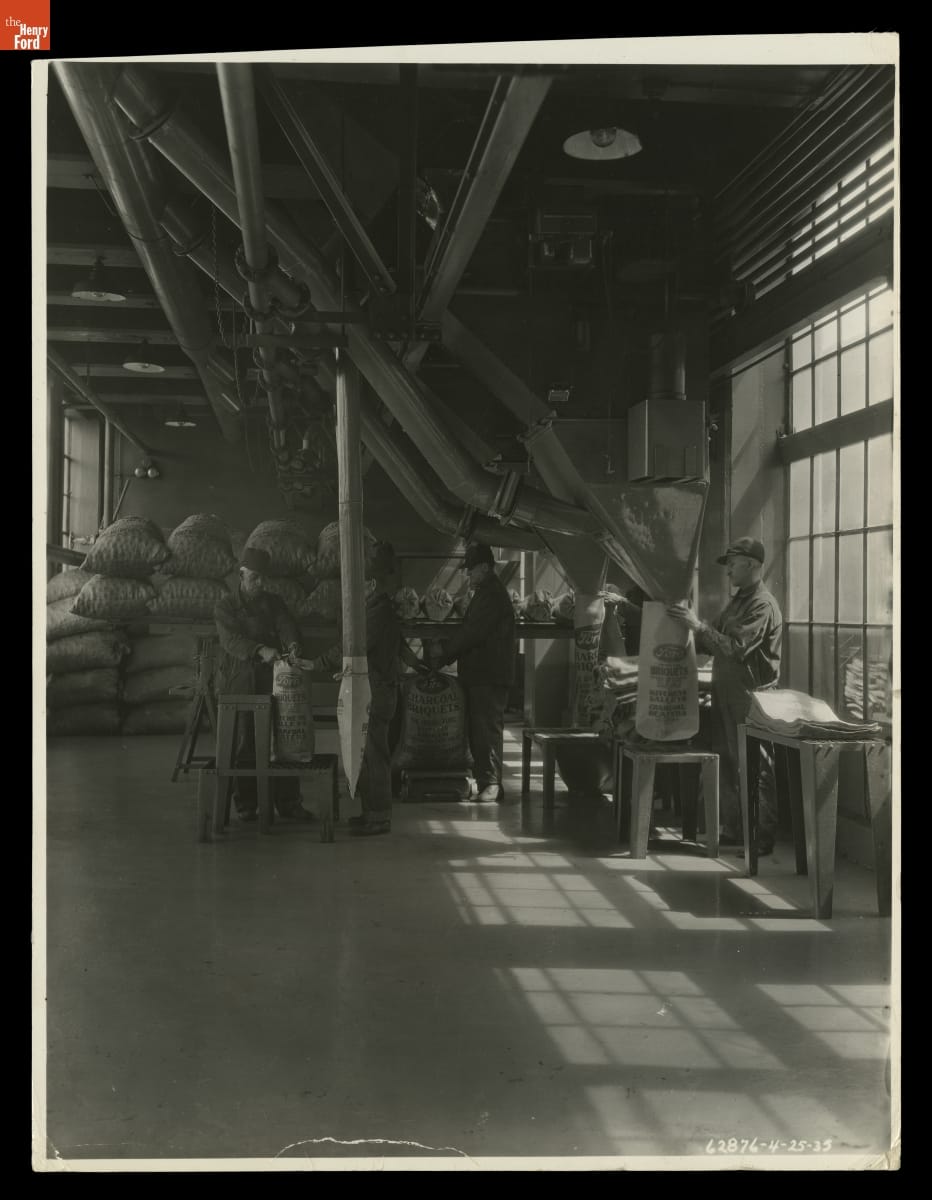
- Bagging Charcoal Briquets Produced at the Ford Motor Company Iron Mountain Plant, 1935 - Ford Motor Company sawmills created heaps of wood wastes. Some was used to produce steam for factory operations. The rest was carbonized and compressed into charcoal. Workers mixed charred hardwood chips with starch, forming nearly 100 tons of charcoal briquettes each day. Dealers sold branded barbecue accessories and packages of the popular briquettes in Ford dealerships across the country.
- 1935
- Collections - Artifact
Bagging Charcoal Briquets Produced at the Ford Motor Company Iron Mountain Plant, 1935
Ford Motor Company sawmills created heaps of wood wastes. Some was used to produce steam for factory operations. The rest was carbonized and compressed into charcoal. Workers mixed charred hardwood chips with starch, forming nearly 100 tons of charcoal briquettes each day. Dealers sold branded barbecue accessories and packages of the popular briquettes in Ford dealerships across the country.