
Search
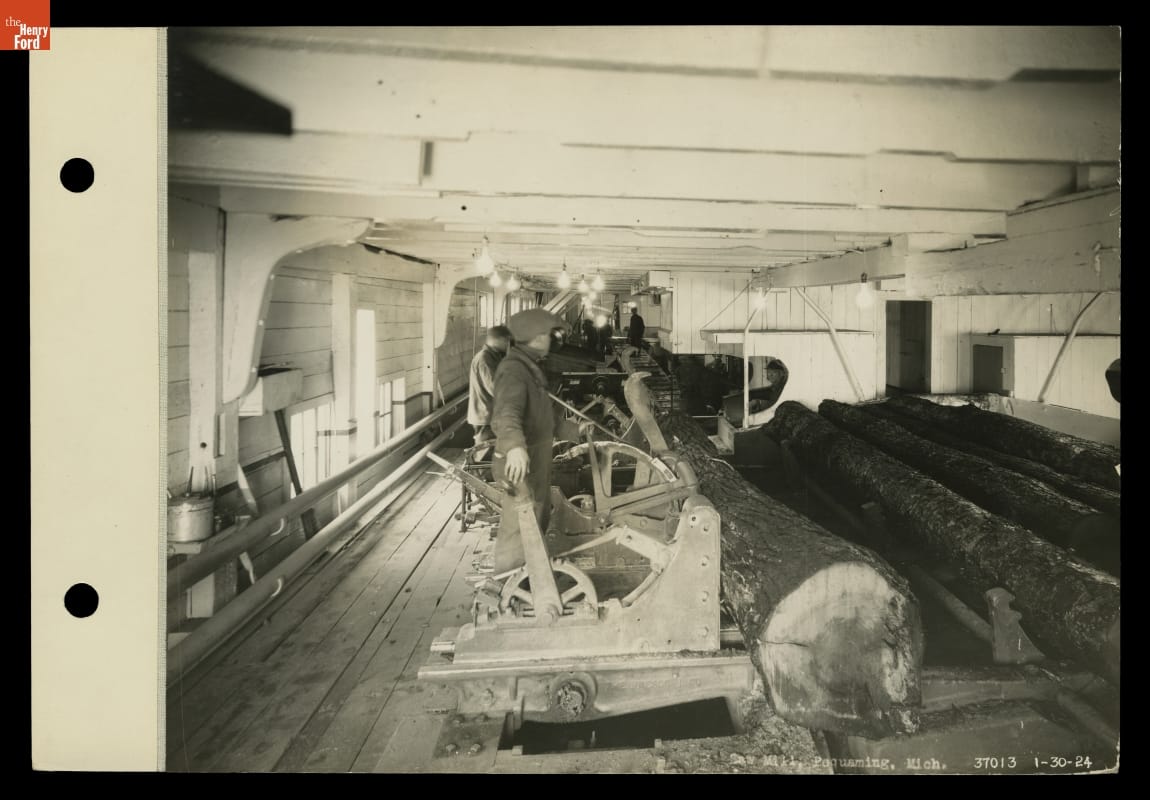
- Lumber Mill at Ford Plant in Pequaming, Michigan, 1924 - In 1919, Henry Ford began buying vast amounts of forestland in Michigan's Upper Peninsula. These prime hardwood forests supplied the lumber used to create vehicle bodies and parts. Other products such as railroad ties, shipping containers and chemical byproducts were also made -- all to support Ford's automobile operations and his goal of manufacturing self-sufficiency.
- January 30, 1924
- Collections - Artifact
Lumber Mill at Ford Plant in Pequaming, Michigan, 1924
In 1919, Henry Ford began buying vast amounts of forestland in Michigan's Upper Peninsula. These prime hardwood forests supplied the lumber used to create vehicle bodies and parts. Other products such as railroad ties, shipping containers and chemical byproducts were also made -- all to support Ford's automobile operations and his goal of manufacturing self-sufficiency.
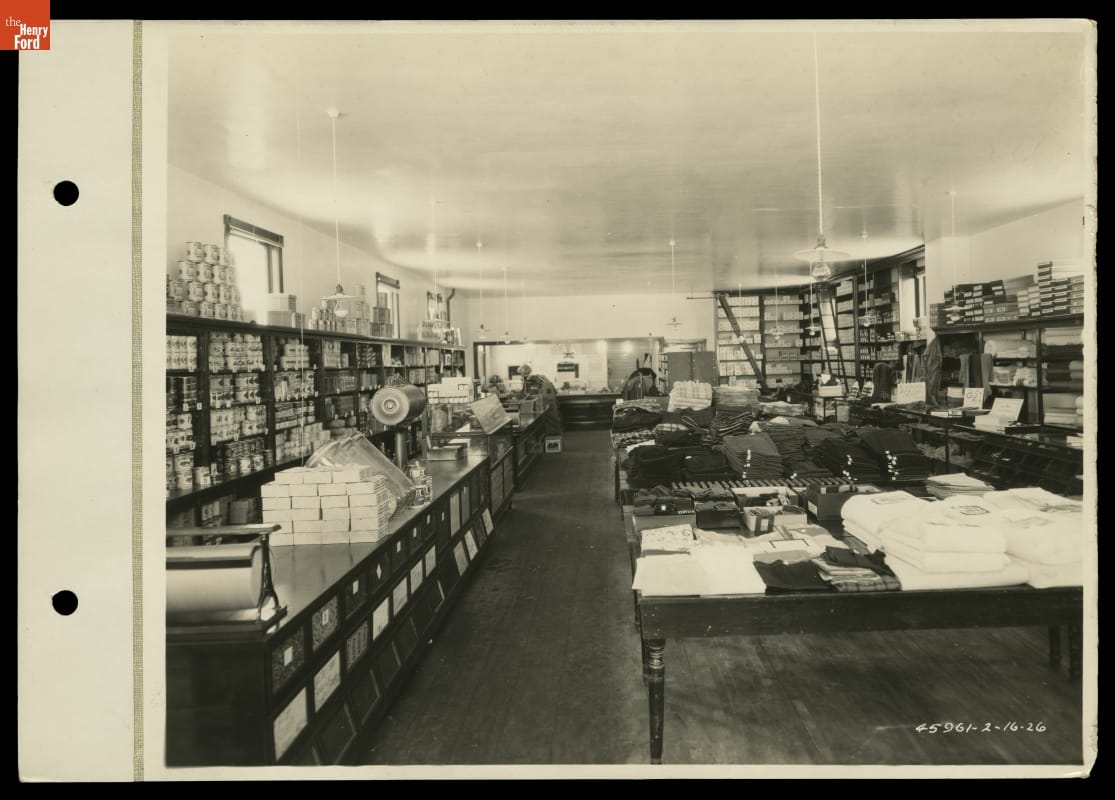
- Dry Goods Store, Ford Motor Company Plant, Pequaming, Michigan, 1926 - Ford Motor Company opened its first employee commissary in 1919. By purchasing groceries, dry goods and over-the-counter medicines in bulk, Ford obtained better prices -- savings which it then passed on to employees through its company stores. The lumbering village of Pequaming, essentially a Ford company town, was especially dependent on its commissary; it was the only store in the area.
- February 16, 1926
- Collections - Artifact
Dry Goods Store, Ford Motor Company Plant, Pequaming, Michigan, 1926
Ford Motor Company opened its first employee commissary in 1919. By purchasing groceries, dry goods and over-the-counter medicines in bulk, Ford obtained better prices -- savings which it then passed on to employees through its company stores. The lumbering village of Pequaming, essentially a Ford company town, was especially dependent on its commissary; it was the only store in the area.
- Ford Motor Company Plant, Pequaming, Michigan, 1924 - In 1919, Henry Ford began buying vast amounts of forestland in Michigan's Upper Peninsula. These prime hardwood forests supplied the lumber used to create vehicle bodies and parts. Other products such as railroad ties, shipping containers and chemical byproducts were also made -- all to support Ford's automobile operations and his goal of manufacturing self-sufficiency.

- January 30, 1924
- Collections - Artifact
Ford Motor Company Plant, Pequaming, Michigan, 1924
In 1919, Henry Ford began buying vast amounts of forestland in Michigan's Upper Peninsula. These prime hardwood forests supplied the lumber used to create vehicle bodies and parts. Other products such as railroad ties, shipping containers and chemical byproducts were also made -- all to support Ford's automobile operations and his goal of manufacturing self-sufficiency.