
Search
- Women Making Electric Harnesses for B-24 Bombers at Phoenix Mills, September 1944 - In the early 1920s, Henry Ford began locating small hydroelectrically powered plants in rural southeast Michigan. These "Village Industries" employed local people who could maintain farms while working at the factory. Women represented most of the workforce at Phoenix Mill. During World War II, they manufactured electrical harnesses for B-24 bomber airplanes assembled at Ford's nearby Willow Run plant.
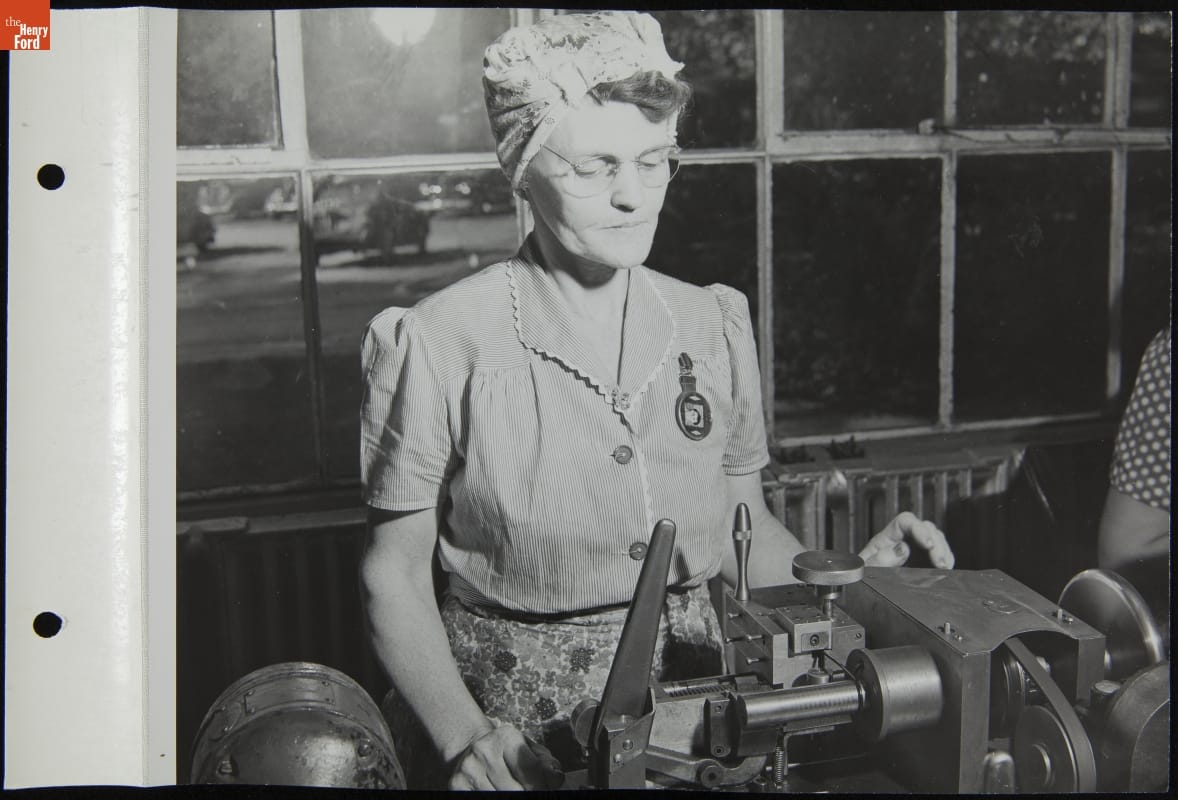
- September 25, 1944
- Collections - Artifact
Women Making Electric Harnesses for B-24 Bombers at Phoenix Mills, September 1944
In the early 1920s, Henry Ford began locating small hydroelectrically powered plants in rural southeast Michigan. These "Village Industries" employed local people who could maintain farms while working at the factory. Women represented most of the workforce at Phoenix Mill. During World War II, they manufactured electrical harnesses for B-24 bomber airplanes assembled at Ford's nearby Willow Run plant.
- Women Making Electric Harnesses for B-24 Bombers at Phoenix Mills, September 1944 - In the early 1920s, Henry Ford began locating small hydroelectrically powered plants in rural southeast Michigan. These "Village Industries" employed local people who could maintain farms while working at the factory. Women represented most of the workforce at Phoenix Mill. During World War II, they manufactured electrical harnesses for B-24 bomber airplanes assembled at Ford's nearby Willow Run plant.
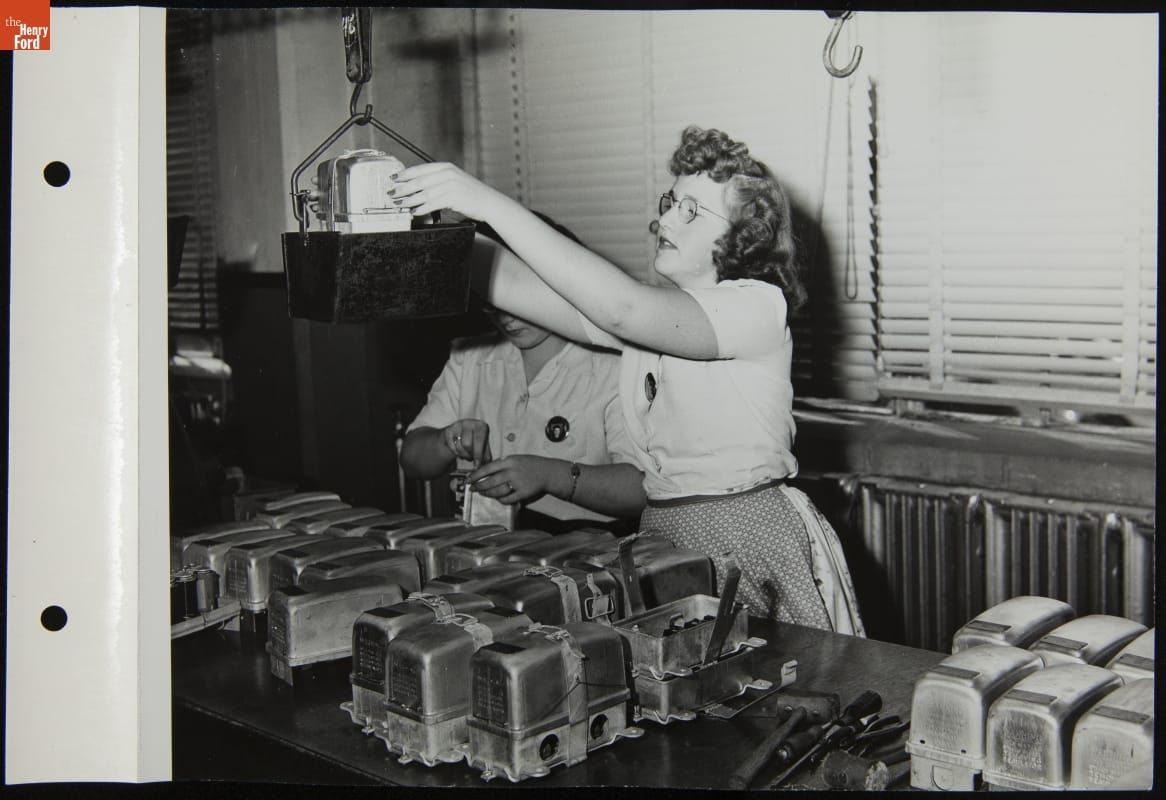
- September 25, 1944
- Collections - Artifact
Women Making Electric Harnesses for B-24 Bombers at Phoenix Mills, September 1944
In the early 1920s, Henry Ford began locating small hydroelectrically powered plants in rural southeast Michigan. These "Village Industries" employed local people who could maintain farms while working at the factory. Women represented most of the workforce at Phoenix Mill. During World War II, they manufactured electrical harnesses for B-24 bomber airplanes assembled at Ford's nearby Willow Run plant.
- Women Workers at Phoenix Mill Plant during Changeover from Automobile Parts Production to Defense Work, Plymouth, Michigan, 1942 - In the 1920s and '30s, Henry Ford set up small-scale factories throughout southeast Michigan. These "Village Industries" supplied Ford with tools and vehicle parts. Employees at his Phoenix Mill factory made electrical parts and voltage regulators. Most of this factory's employees were women. This photo was taken in 1942 during a period of changeover from automotive parts production to defense work.
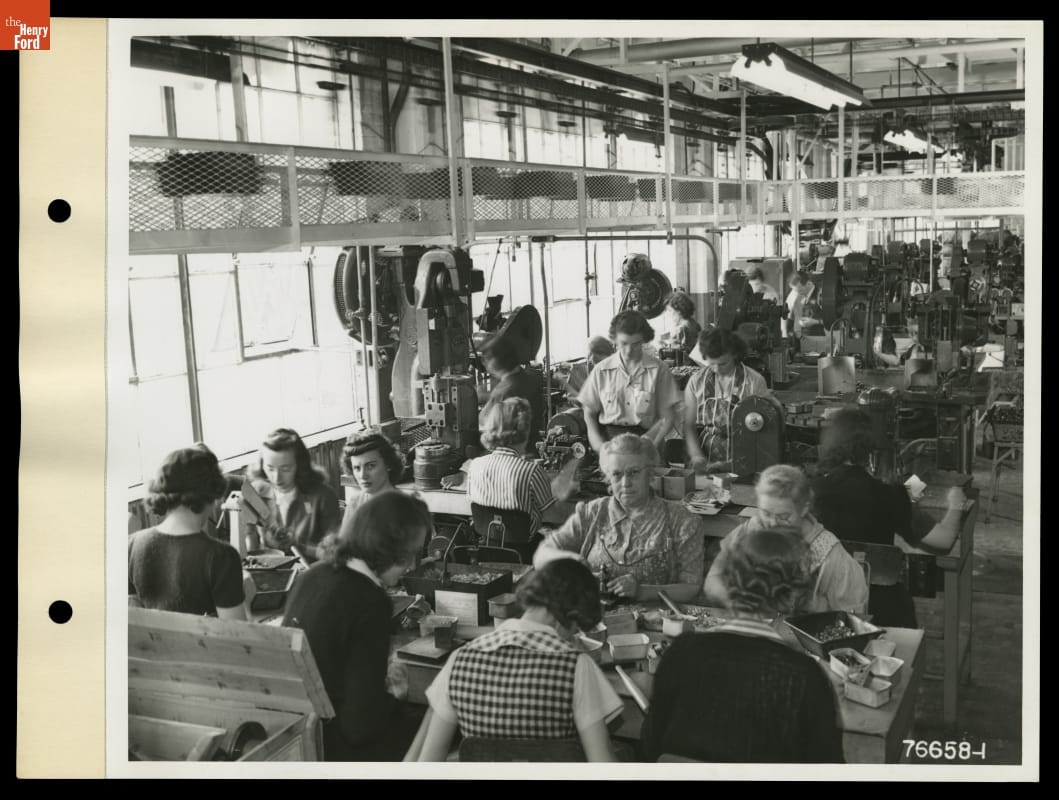
- March 20, 1942
- Collections - Artifact
Women Workers at Phoenix Mill Plant during Changeover from Automobile Parts Production to Defense Work, Plymouth, Michigan, 1942
In the 1920s and '30s, Henry Ford set up small-scale factories throughout southeast Michigan. These "Village Industries" supplied Ford with tools and vehicle parts. Employees at his Phoenix Mill factory made electrical parts and voltage regulators. Most of this factory's employees were women. This photo was taken in 1942 during a period of changeover from automotive parts production to defense work.
- Women Making Electric Harnesses for B-24 Bombers at Phoenix Mills, September 1944 - In the early 1920s, Henry Ford began locating small hydroelectrically powered plants in rural southeast Michigan. These "Village Industries" employed local people who could maintain farms while working at the factory. Women represented most of the workforce at Phoenix Mill. During World War II, they manufactured electrical harnesses for B-24 bomber airplanes assembled at Ford's nearby Willow Run plant.
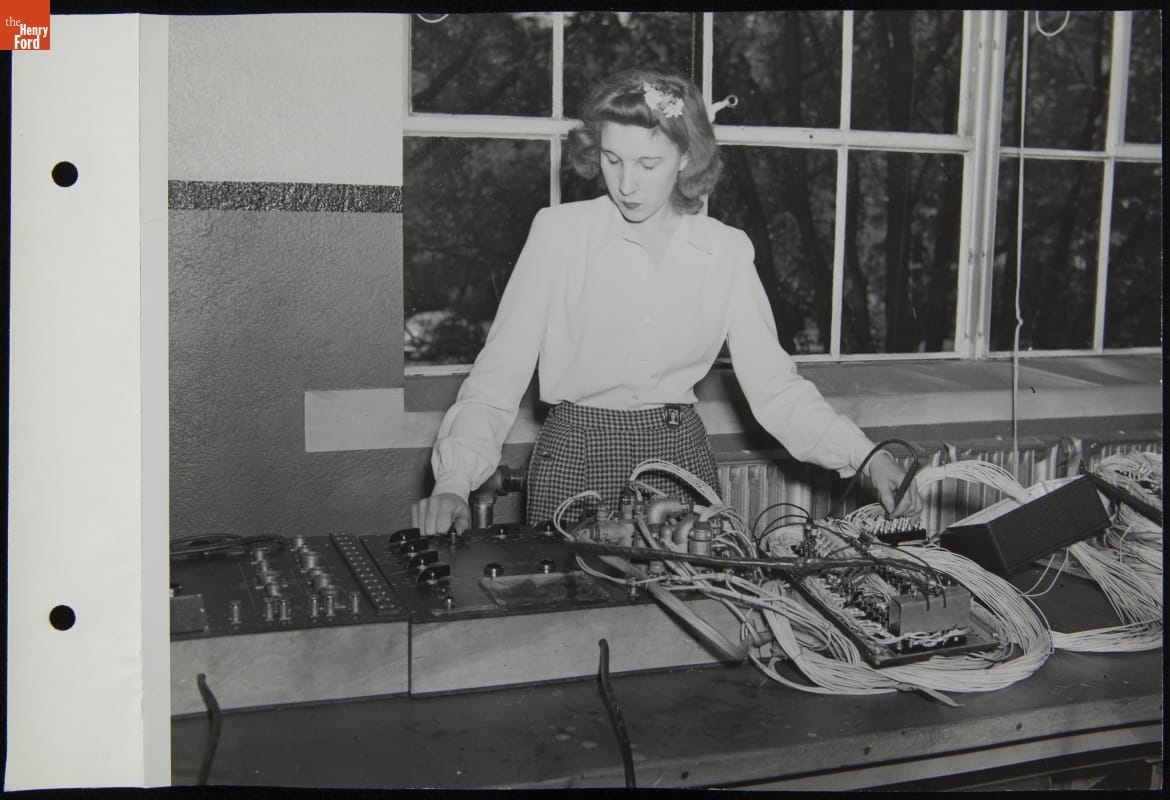
- September 25, 1944
- Collections - Artifact
Women Making Electric Harnesses for B-24 Bombers at Phoenix Mills, September 1944
In the early 1920s, Henry Ford began locating small hydroelectrically powered plants in rural southeast Michigan. These "Village Industries" employed local people who could maintain farms while working at the factory. Women represented most of the workforce at Phoenix Mill. During World War II, they manufactured electrical harnesses for B-24 bomber airplanes assembled at Ford's nearby Willow Run plant.
- Women Making Electric Harnesses for B-24 Bombers at Phoenix Mills, September 1944 - In the early 1920s, Henry Ford began locating small hydroelectrically powered plants in rural southeast Michigan. These "Village Industries" employed local people who could maintain farms while working at the factory. Women represented most of the workforce at Phoenix Mill. During World War II, they manufactured electrical harnesses for B-24 bomber airplanes assembled at Ford's nearby Willow Run plant.
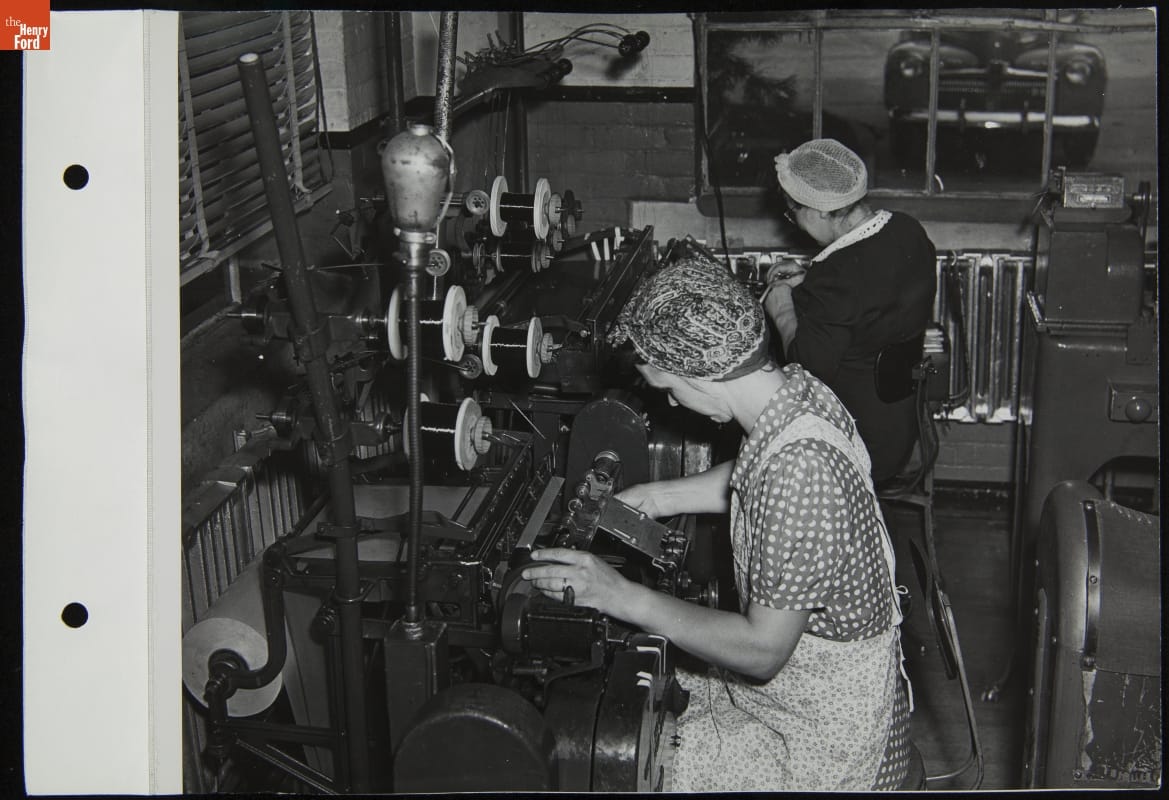
- October 02, 1944
- Collections - Artifact
Women Making Electric Harnesses for B-24 Bombers at Phoenix Mills, September 1944
In the early 1920s, Henry Ford began locating small hydroelectrically powered plants in rural southeast Michigan. These "Village Industries" employed local people who could maintain farms while working at the factory. Women represented most of the workforce at Phoenix Mill. During World War II, they manufactured electrical harnesses for B-24 bomber airplanes assembled at Ford's nearby Willow Run plant.
- Number of Men Working in Ford Motor Company Plants Listed by Nationalities, August 1935 - Employees of Ford Motor Company made up a diverse workforce drawn from around the world. This list, compiled in August 1935, shows more than 60 nations and territories represented by 66,000 hourly workers at various Ford plants in southeast Michigan.
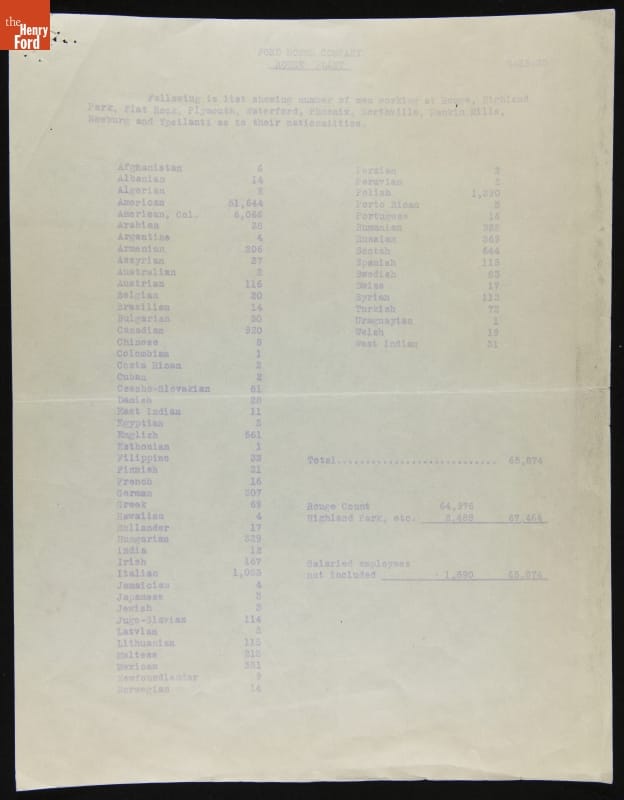
- August 28, 1935
- Collections - Artifact
Number of Men Working in Ford Motor Company Plants Listed by Nationalities, August 1935
Employees of Ford Motor Company made up a diverse workforce drawn from around the world. This list, compiled in August 1935, shows more than 60 nations and territories represented by 66,000 hourly workers at various Ford plants in southeast Michigan.
- Women Working at the Ford Motor Company Phoenix Mill Plant, Plymouth, Michigan, June 1923 - In the 1920s and '30s, Henry Ford set up small-scale factories throughout southeast Michigan. These "Village Industries" supplied Ford with tools and vehicle parts, and they employed local people who could maintain farms while working at the factory. Employees at Ford's Phoenix Mill factory made electrical parts and voltage regulators. Most of this factory's employees were women.
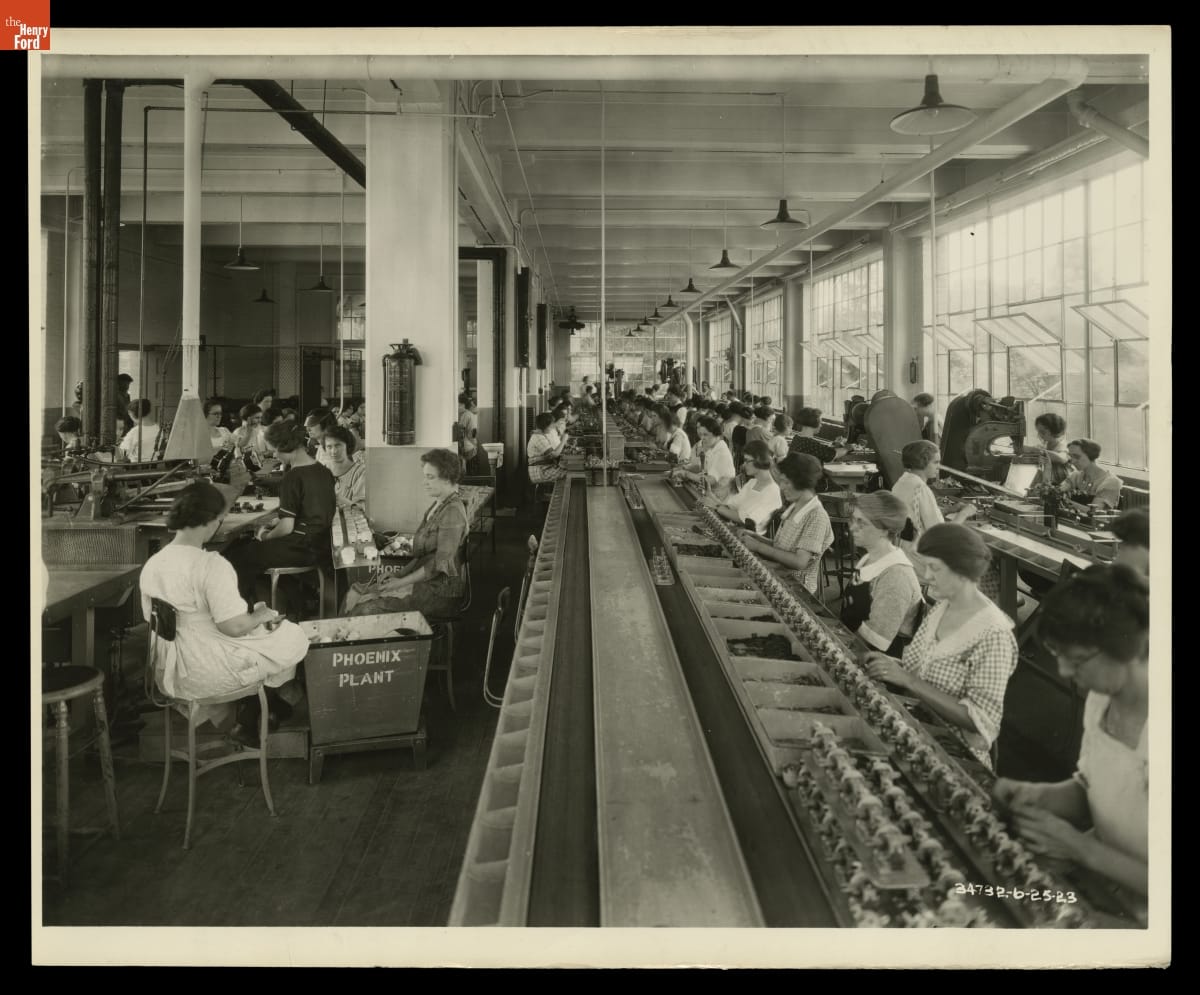
- June 25, 1923
- Collections - Artifact
Women Working at the Ford Motor Company Phoenix Mill Plant, Plymouth, Michigan, June 1923
In the 1920s and '30s, Henry Ford set up small-scale factories throughout southeast Michigan. These "Village Industries" supplied Ford with tools and vehicle parts, and they employed local people who could maintain farms while working at the factory. Employees at Ford's Phoenix Mill factory made electrical parts and voltage regulators. Most of this factory's employees were women.
- Women Making Electric Harnesses for B-24 Bombers at Phoenix Mills, September 1944 - In the early 1920s, Henry Ford began locating small hydroelectrically powered plants in rural southeast Michigan. These "Village Industries" employed local people who could maintain farms while working at the factory. Women represented most of the workforce at Phoenix Mill. During World War II, they manufactured electrical harnesses for B-24 bomber airplanes assembled at Ford's nearby Willow Run plant.
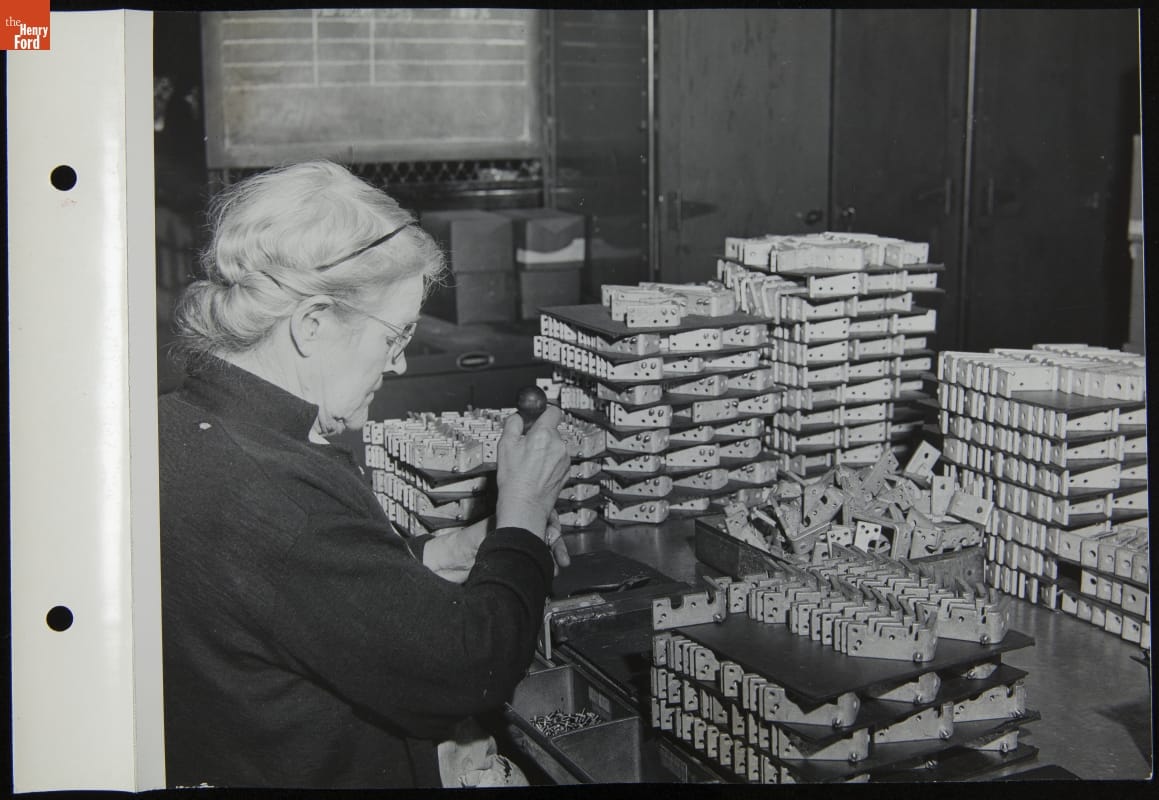
- September 25, 1944
- Collections - Artifact
Women Making Electric Harnesses for B-24 Bombers at Phoenix Mills, September 1944
In the early 1920s, Henry Ford began locating small hydroelectrically powered plants in rural southeast Michigan. These "Village Industries" employed local people who could maintain farms while working at the factory. Women represented most of the workforce at Phoenix Mill. During World War II, they manufactured electrical harnesses for B-24 bomber airplanes assembled at Ford's nearby Willow Run plant.
- Women Making Electric Harnesses for B-24 Bombers at Phoenix Mills, September 1944 - In the early 1920s, Henry Ford began locating small hydroelectrically powered plants in rural southeast Michigan. These "Village Industries" employed local people who could maintain farms while working at the factory. Women represented most of the workforce at Phoenix Mill. During World War II, they manufactured electrical harnesses for B-24 bomber airplanes assembled at Ford's nearby Willow Run plant.
- September 25, 1944
- Collections - Artifact
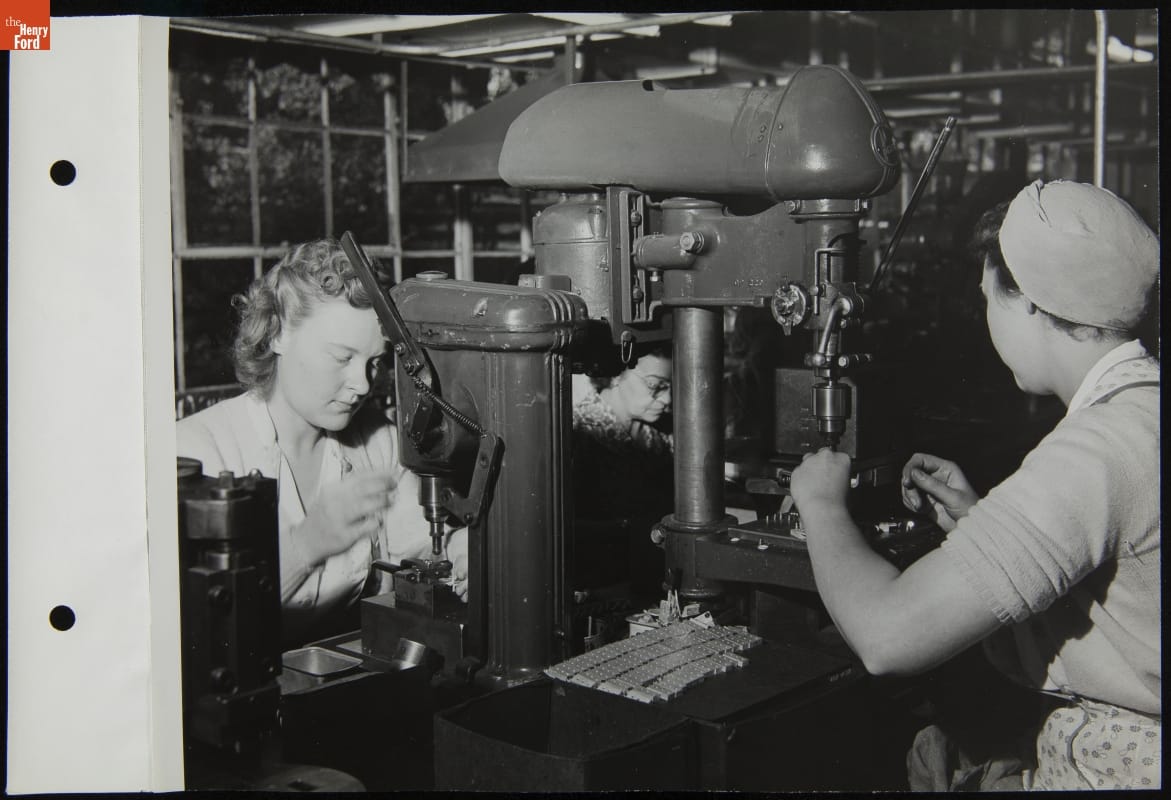
Women Making Electric Harnesses for B-24 Bombers at Phoenix Mills, September 1944
In the early 1920s, Henry Ford began locating small hydroelectrically powered plants in rural southeast Michigan. These "Village Industries" employed local people who could maintain farms while working at the factory. Women represented most of the workforce at Phoenix Mill. During World War II, they manufactured electrical harnesses for B-24 bomber airplanes assembled at Ford's nearby Willow Run plant.
- Women Making Electric Harnesses for B-24 Bombers at Phoenix Mills, October 1944 - In the early 1920s, Henry Ford began locating small hydroelectrically powered plants in rural southeast Michigan. These "Village Industries" employed local people who could maintain farms while working at the factory. Women represented most of the workforce at Phoenix Mill. During World War II, they manufactured electrical harnesses for B-24 bomber airplanes assembled at Ford's nearby Willow Run plant.
- October 02, 1944
- Collections - Artifact
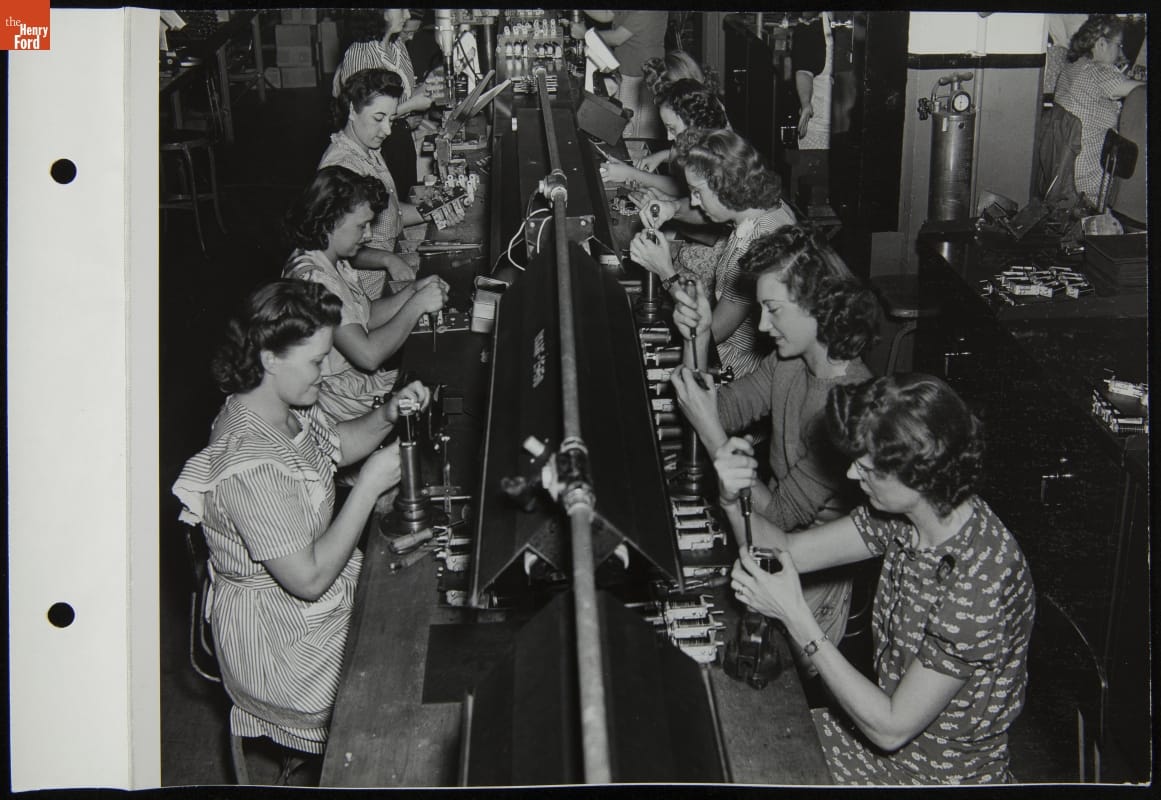
Women Making Electric Harnesses for B-24 Bombers at Phoenix Mills, October 1944
In the early 1920s, Henry Ford began locating small hydroelectrically powered plants in rural southeast Michigan. These "Village Industries" employed local people who could maintain farms while working at the factory. Women represented most of the workforce at Phoenix Mill. During World War II, they manufactured electrical harnesses for B-24 bomber airplanes assembled at Ford's nearby Willow Run plant.