
Search
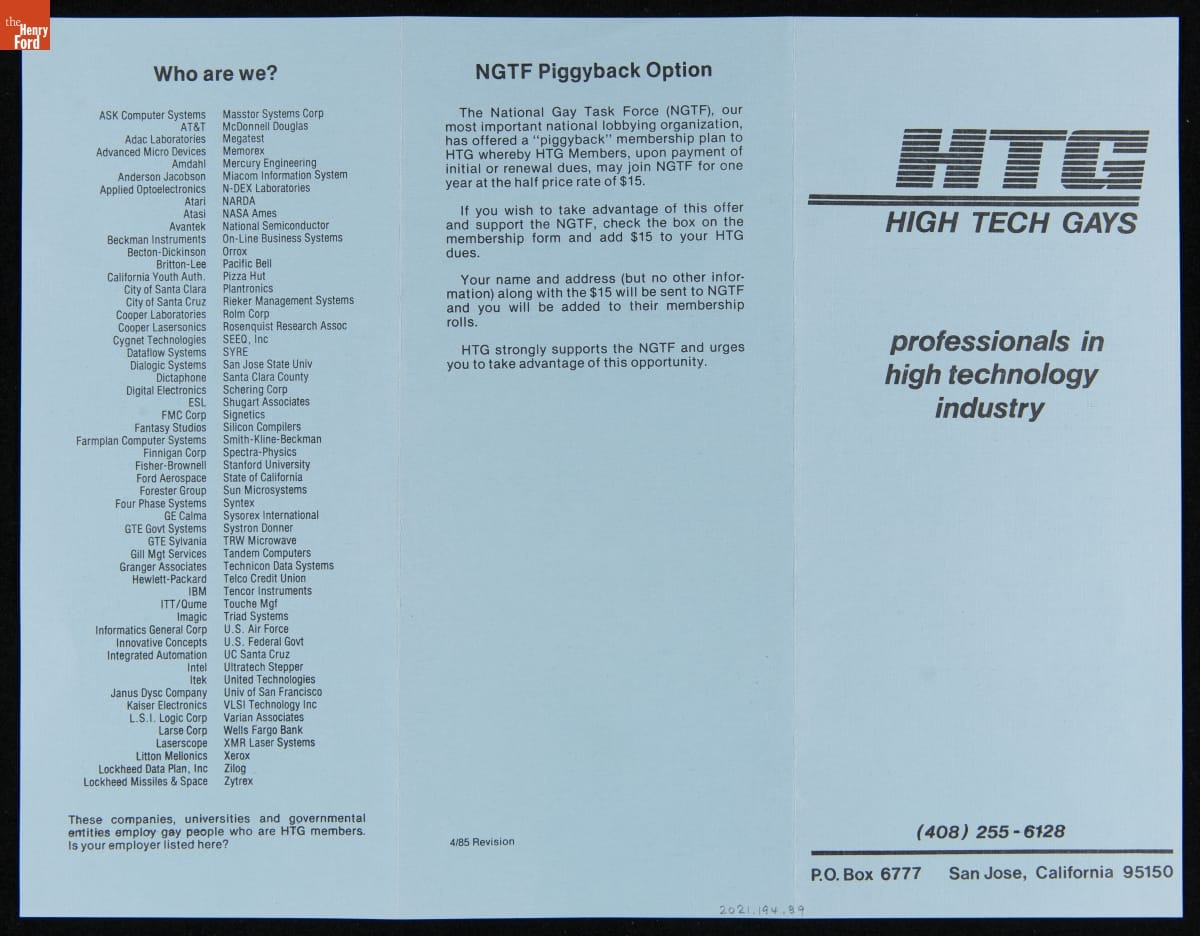
- High Tech Gays Brochure, 1985-1986 - High Tech Gays (HTGs) began in 1983 as a Silicon Valley-based social club and political action group. In 1984, the group was a co-defendant in a federal court case--High Tech Gays vs. DISCO--arguing that LGBTQ+ people were being denied access clearance to work in military and sensitive tech industries. The court ruled in favor of the High Tech Gays but was later overturned and appealed.
- 1985-1986
- Collections - Artifact
High Tech Gays Brochure, 1985-1986
High Tech Gays (HTGs) began in 1983 as a Silicon Valley-based social club and political action group. In 1984, the group was a co-defendant in a federal court case--High Tech Gays vs. DISCO--arguing that LGBTQ+ people were being denied access clearance to work in military and sensitive tech industries. The court ruled in favor of the High Tech Gays but was later overturned and appealed.
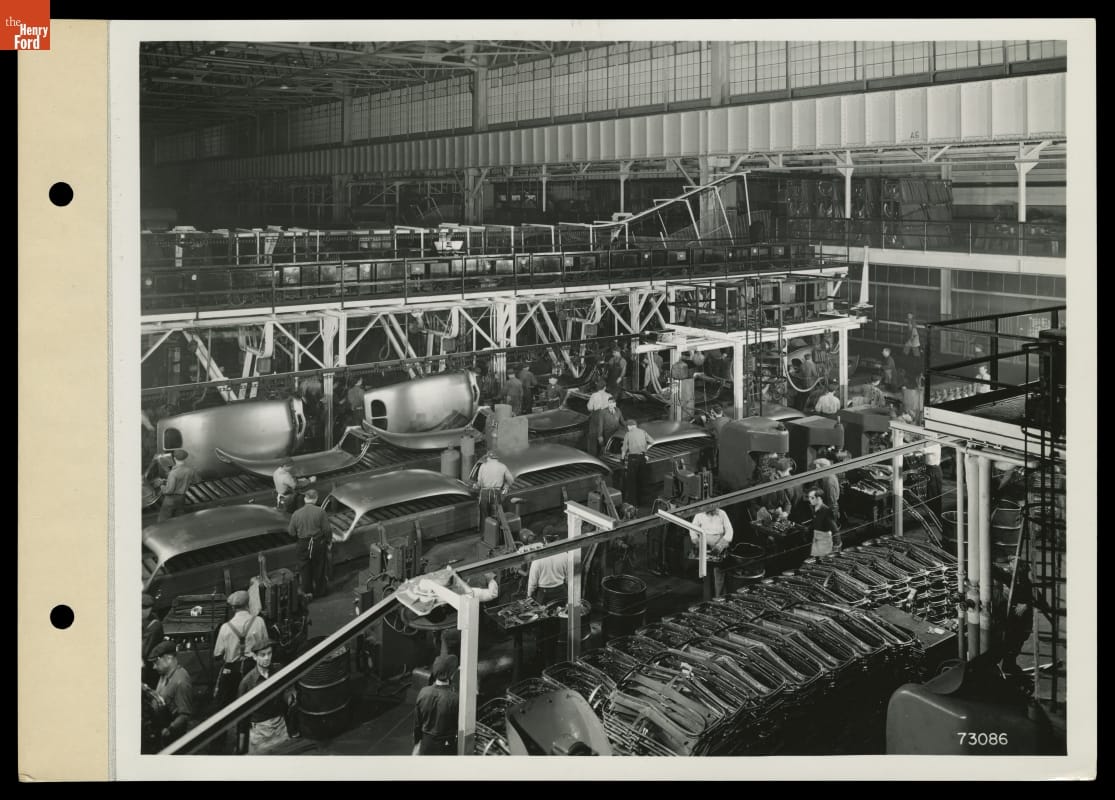
- Inside the Ford Rouge Plant Pressed Steel Building, Conveyors Moving New Parts to Body Assembly Area, 1940 - The pressed-steel building at Ford Motor Company's Rouge plant produced steel components like automobile fenders, body panels, and roof sections. In the late 1930s, the building had more than 4,000 presses, and 10,000 workers turned out more than 2,000 different parts. Some of those parts were used at the Rouge, and some were shipped to other Ford assembly plants.
- February 08, 1940
- Collections - Artifact
Inside the Ford Rouge Plant Pressed Steel Building, Conveyors Moving New Parts to Body Assembly Area, 1940
The pressed-steel building at Ford Motor Company's Rouge plant produced steel components like automobile fenders, body panels, and roof sections. In the late 1930s, the building had more than 4,000 presses, and 10,000 workers turned out more than 2,000 different parts. Some of those parts were used at the Rouge, and some were shipped to other Ford assembly plants.
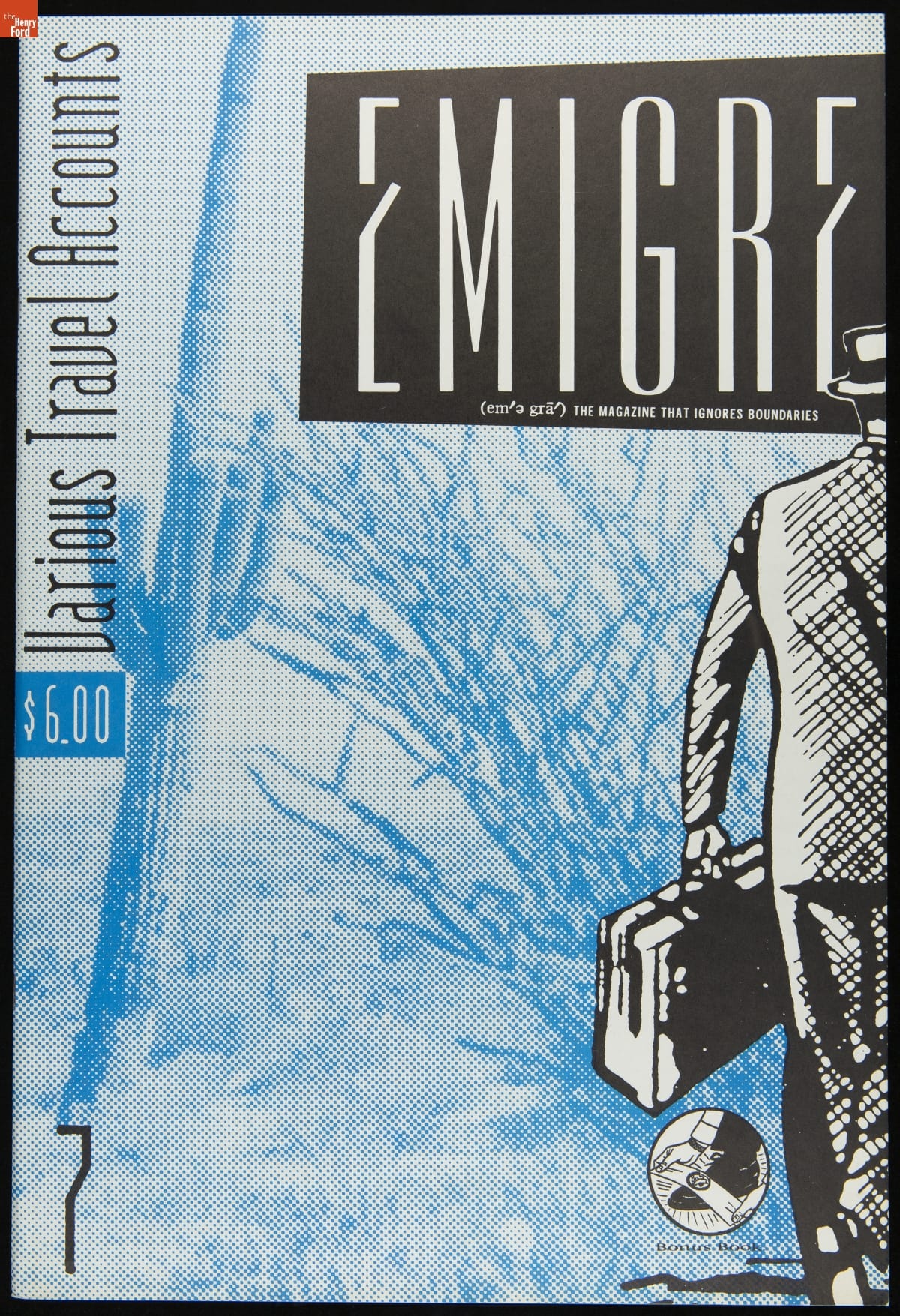
- Magazine, Emigre No. 7, "Various Travel Accounts," 1987 - Emigre is a digital type foundry established by Rudy VanderLans and Zuzana Licko. The company's history is linked with the introduction of the 1984 Macintosh computer, used to design their early bitmapped typefaces. Emigre's digital work gained notoriety -- defying visual communication standards with fractured, layered combinations of text and image. <em>Emigre</em> magazine showcased their fonts and promoted groundbreaking designers.
- 1987
- Collections - Artifact
Magazine, Emigre No. 7, "Various Travel Accounts," 1987
Emigre is a digital type foundry established by Rudy VanderLans and Zuzana Licko. The company's history is linked with the introduction of the 1984 Macintosh computer, used to design their early bitmapped typefaces. Emigre's digital work gained notoriety -- defying visual communication standards with fractured, layered combinations of text and image. Emigre magazine showcased their fonts and promoted groundbreaking designers.
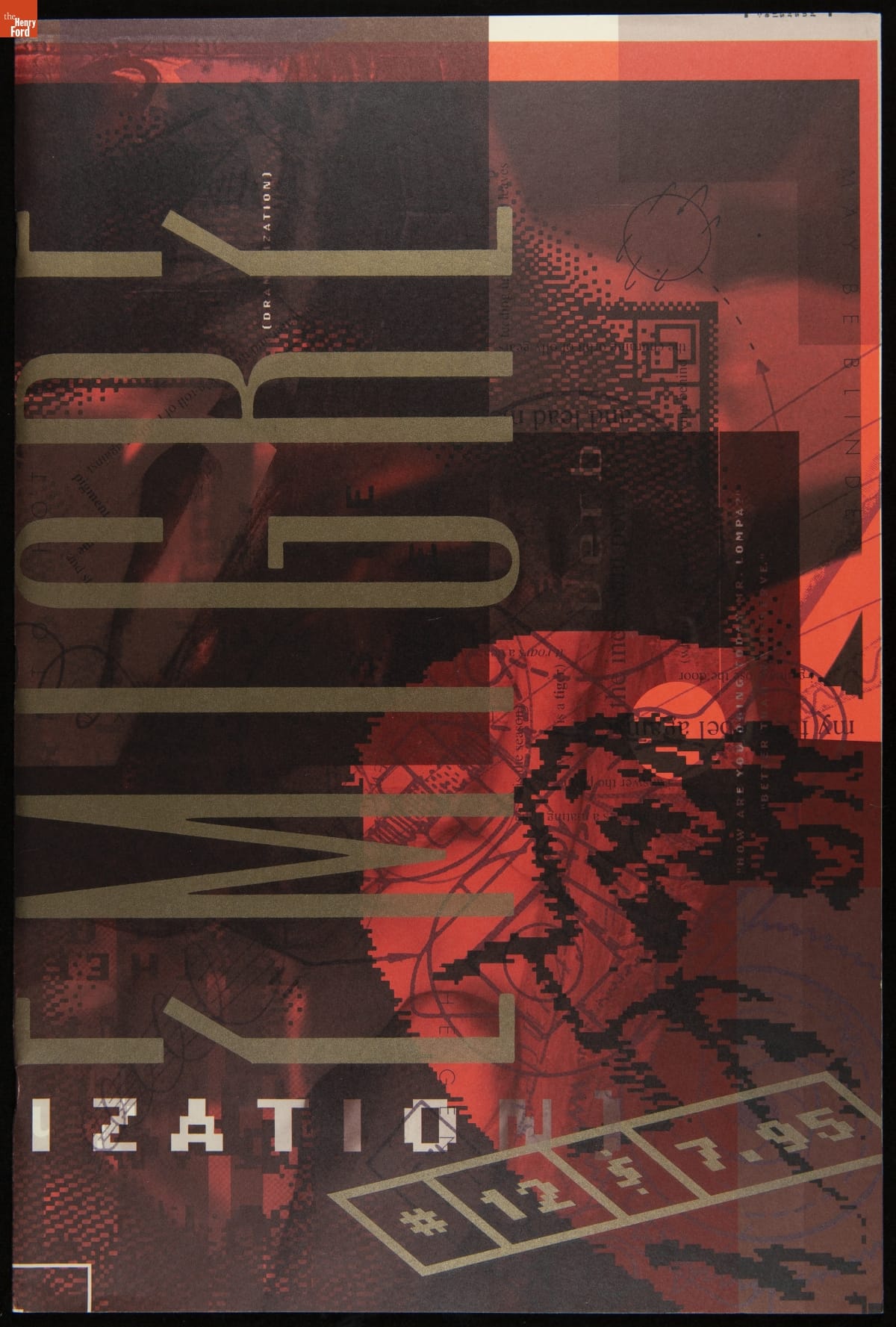
- Magazine, Emigre No. 12, "Press Time!," 1989 - Emigre is a digital type foundry established by Rudy VanderLans and Zuzana Licko. The company's history is linked with the introduction of the 1984 Macintosh computer, used to design their early bitmapped typefaces. Emigre's digital work gained notoriety -- defying visual communication standards with fractured, layered combinations of text and image. <em>Emigre</em> magazine showcased their fonts and promoted groundbreaking designers.
- 1989
- Collections - Artifact
Magazine, Emigre No. 12, "Press Time!," 1989
Emigre is a digital type foundry established by Rudy VanderLans and Zuzana Licko. The company's history is linked with the introduction of the 1984 Macintosh computer, used to design their early bitmapped typefaces. Emigre's digital work gained notoriety -- defying visual communication standards with fractured, layered combinations of text and image. Emigre magazine showcased their fonts and promoted groundbreaking designers.
- Magazine, Emigre No. 13, "Redesigning Stereotypes," 1989 - Emigre is a digital type foundry established by Rudy VanderLans and Zuzana Licko. The company's history is linked with the introduction of the 1984 Macintosh computer, used to design their early bitmapped typefaces. Emigre's digital work gained notoriety -- defying visual communication standards with fractured, layered combinations of text and image. <em>Emigre</em> magazine showcased their fonts and promoted groundbreaking designers.
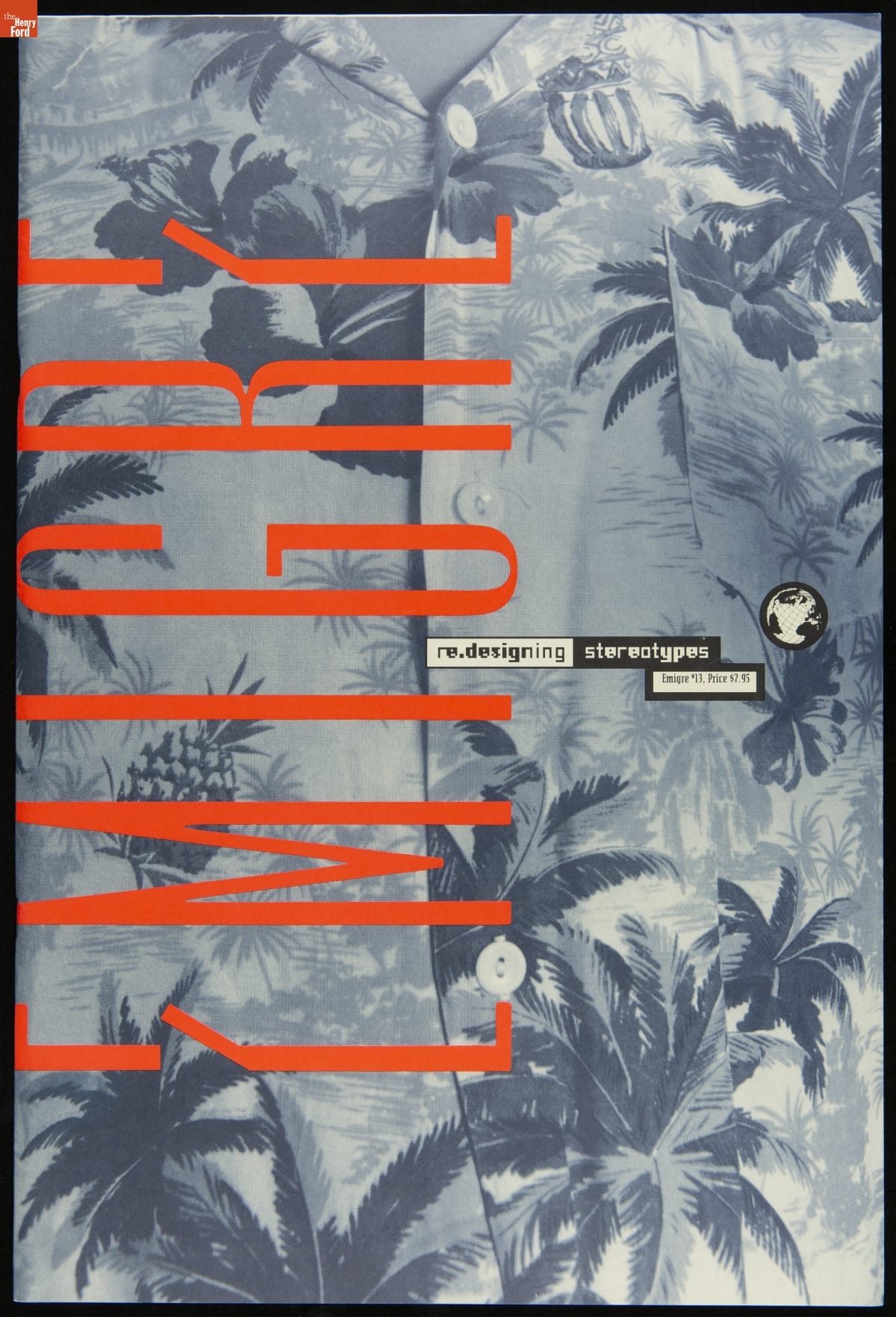
- 1989
- Collections - Artifact
Magazine, Emigre No. 13, "Redesigning Stereotypes," 1989
Emigre is a digital type foundry established by Rudy VanderLans and Zuzana Licko. The company's history is linked with the introduction of the 1984 Macintosh computer, used to design their early bitmapped typefaces. Emigre's digital work gained notoriety -- defying visual communication standards with fractured, layered combinations of text and image. Emigre magazine showcased their fonts and promoted groundbreaking designers.
- Magazine, GlasHaus, Vol. 1, No. 1, "Shoes," August 8, 1987 - <em>GlasHaus</em> magazine was designed by Rudy VanderLans, co-founder of the digital type foundry, Emigre, Inc. VanderLans tested the limits of the Macintosh computer as a creative design tool, producing adventurous magazine layouts for several publications. <em>Glashaus</em> was a San Francisco "hot house for international style, fashion, and entertainment." This thematic magazine advertised their activities and the local fashion scene.
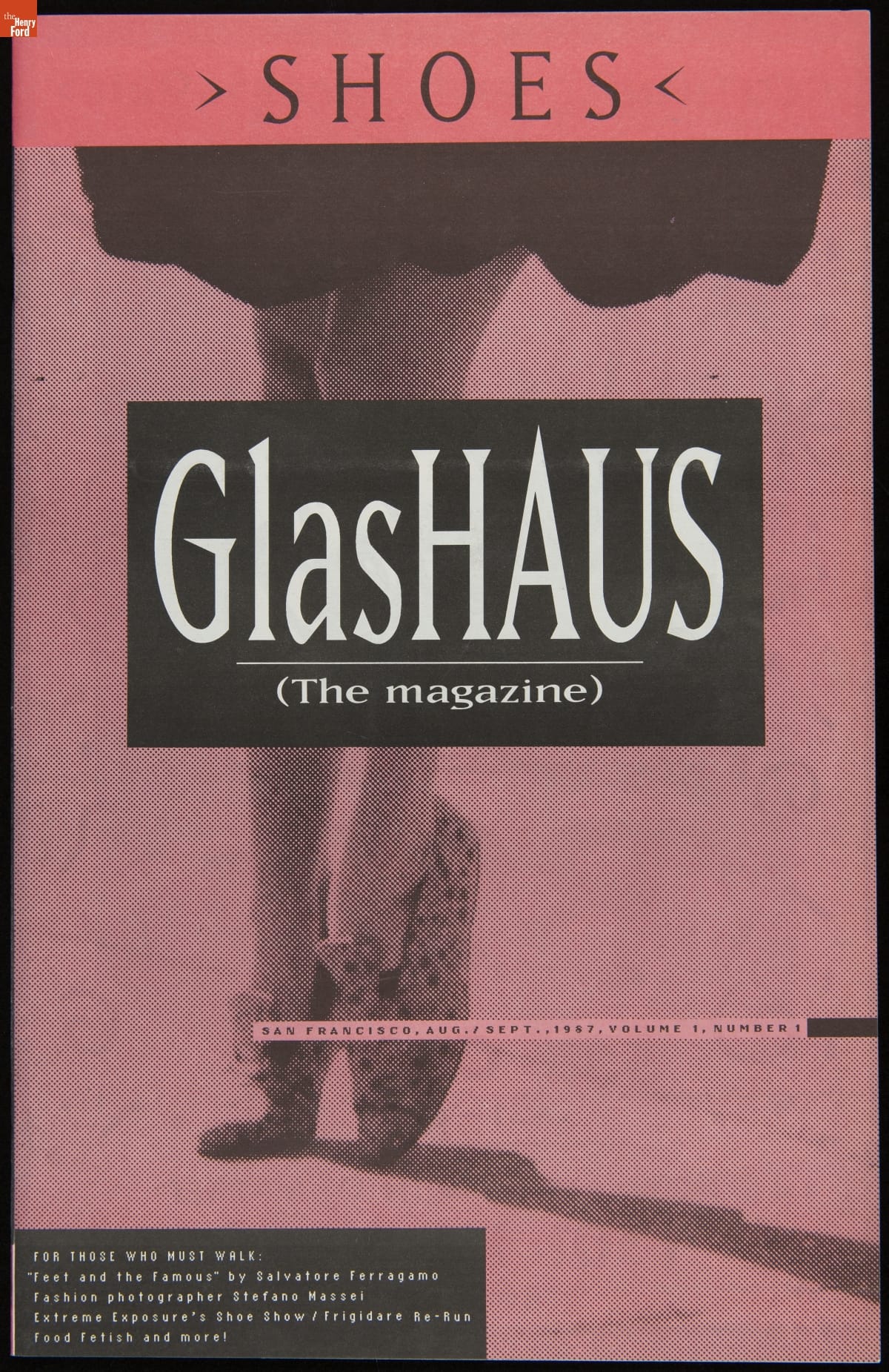
- August 08, 1987
- Collections - Artifact
Magazine, GlasHaus, Vol. 1, No. 1, "Shoes," August 8, 1987
GlasHaus magazine was designed by Rudy VanderLans, co-founder of the digital type foundry, Emigre, Inc. VanderLans tested the limits of the Macintosh computer as a creative design tool, producing adventurous magazine layouts for several publications. Glashaus was a San Francisco "hot house for international style, fashion, and entertainment." This thematic magazine advertised their activities and the local fashion scene.
- Magazine, Emigre No. 32, "Essays, Texts and Other Writings about Graphic Design," 1994 - Emigre is a digital type foundry established by Rudy VanderLans and Zuzana Licko. The company's history is linked with the introduction of the 1984 Macintosh computer, used to design their early bitmapped typefaces. Emigre's digital work gained notoriety -- defying visual communication standards with fractured, layered combinations of text and image. <em>Emigre</em> magazine showcased their fonts and promoted groundbreaking designers.
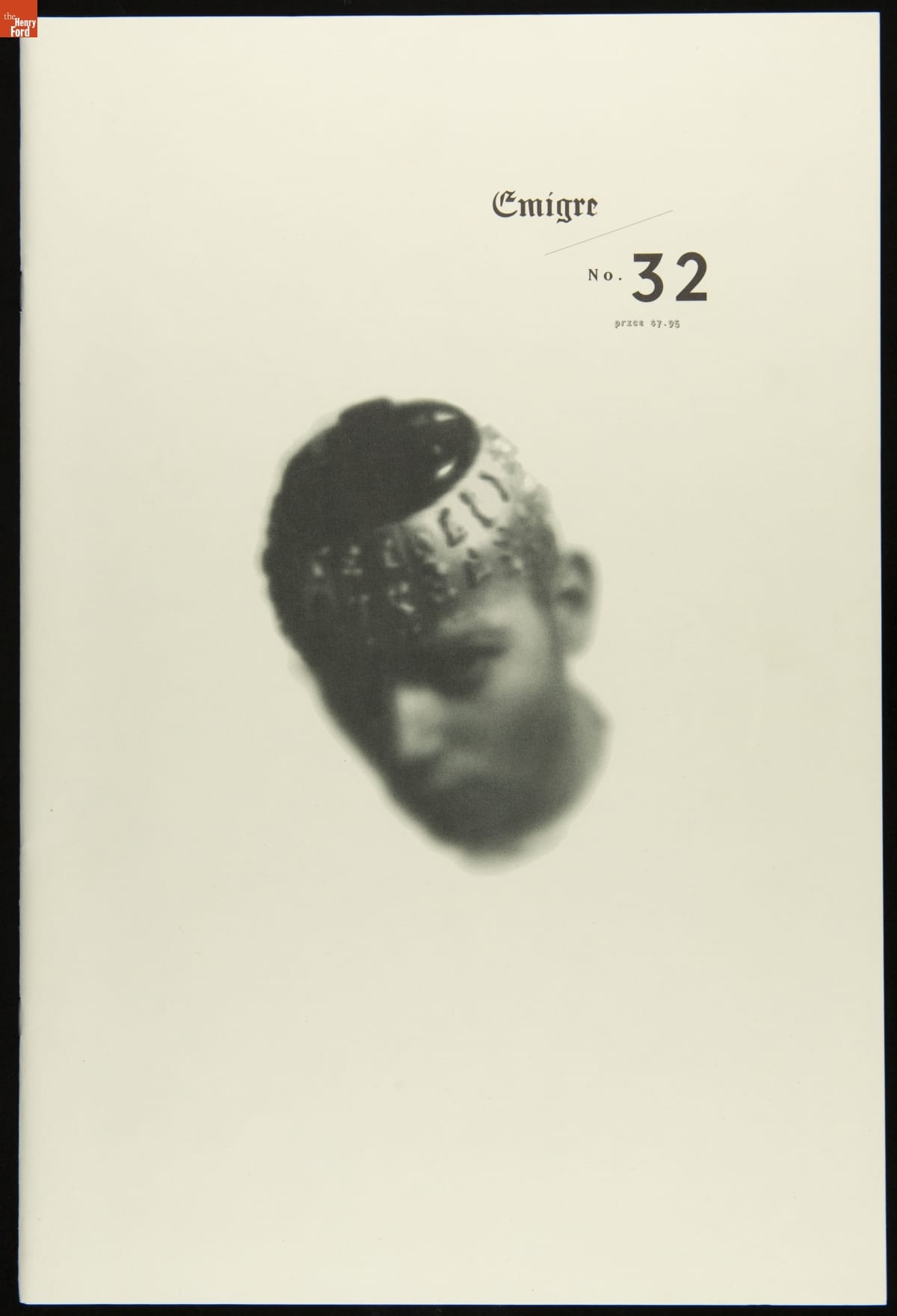
- 1994
- Collections - Artifact
Magazine, Emigre No. 32, "Essays, Texts and Other Writings about Graphic Design," 1994
Emigre is a digital type foundry established by Rudy VanderLans and Zuzana Licko. The company's history is linked with the introduction of the 1984 Macintosh computer, used to design their early bitmapped typefaces. Emigre's digital work gained notoriety -- defying visual communication standards with fractured, layered combinations of text and image. Emigre magazine showcased their fonts and promoted groundbreaking designers.
- Magazine, Emigre No. 31, "Raising Voices," 1994 - Emigre is a digital type foundry established by Rudy VanderLans and Zuzana Licko. The company's history is linked with the introduction of the 1984 Macintosh computer, used to design their early bitmapped typefaces. Emigre's digital work gained notoriety -- defying visual communication standards with fractured, layered combinations of text and image. <em>Emigre</em> magazine showcased their fonts and promoted groundbreaking designers.
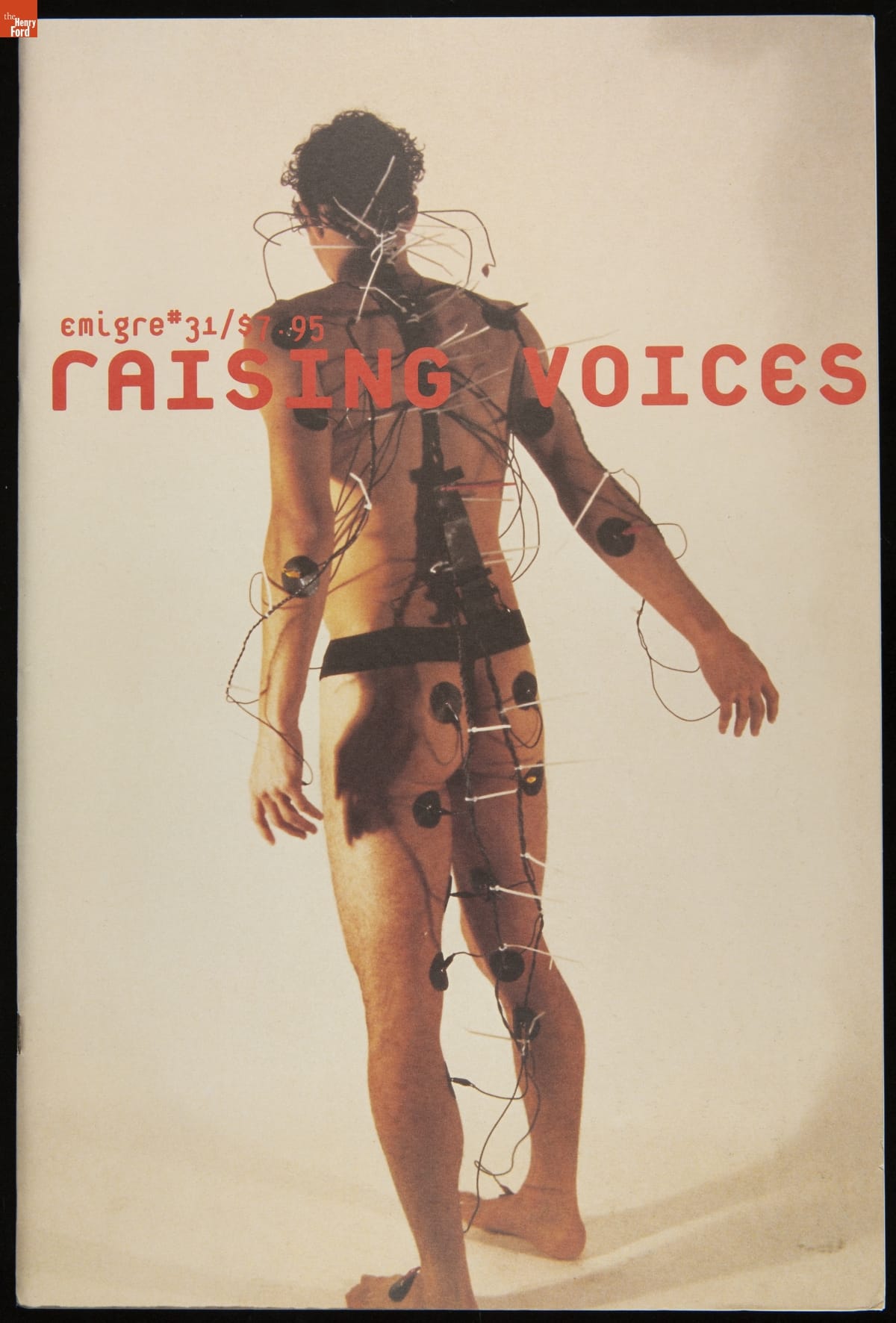
- 1994
- Collections - Artifact
Magazine, Emigre No. 31, "Raising Voices," 1994
Emigre is a digital type foundry established by Rudy VanderLans and Zuzana Licko. The company's history is linked with the introduction of the 1984 Macintosh computer, used to design their early bitmapped typefaces. Emigre's digital work gained notoriety -- defying visual communication standards with fractured, layered combinations of text and image. Emigre magazine showcased their fonts and promoted groundbreaking designers.
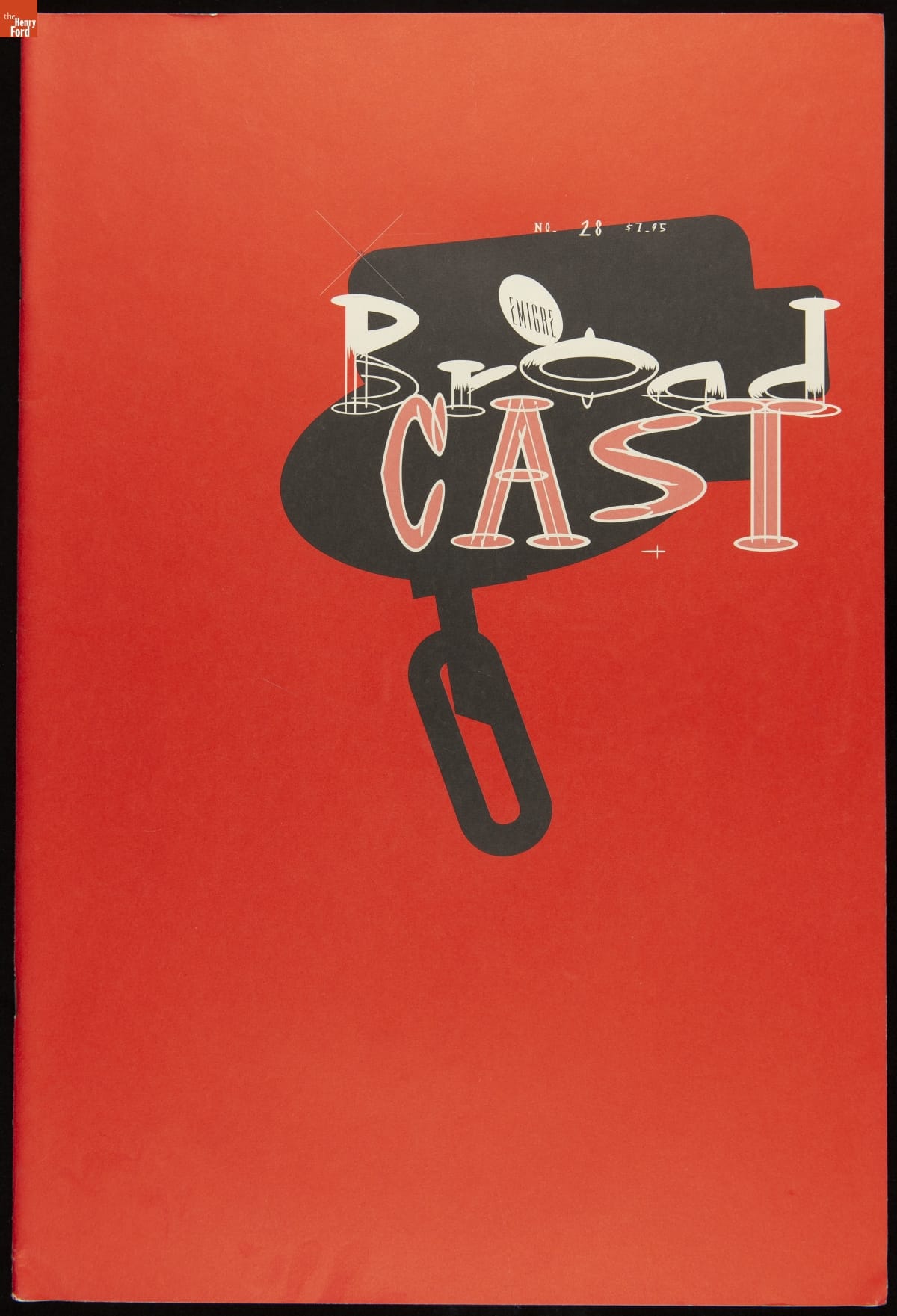
- Magazine, Emigre No. 28, "Broadcast," 1993 - Emigre is a digital type foundry established by Rudy VanderLans and Zuzana Licko. The company's history is linked with the introduction of the 1984 Macintosh computer, used to design their early bitmapped typefaces. Emigre's digital work gained notoriety -- defying visual communication standards with fractured, layered combinations of text and image. <em>Emigre</em> magazine showcased their fonts and promoted groundbreaking designers.
- 1993
- Collections - Artifact
Magazine, Emigre No. 28, "Broadcast," 1993
Emigre is a digital type foundry established by Rudy VanderLans and Zuzana Licko. The company's history is linked with the introduction of the 1984 Macintosh computer, used to design their early bitmapped typefaces. Emigre's digital work gained notoriety -- defying visual communication standards with fractured, layered combinations of text and image. Emigre magazine showcased their fonts and promoted groundbreaking designers.
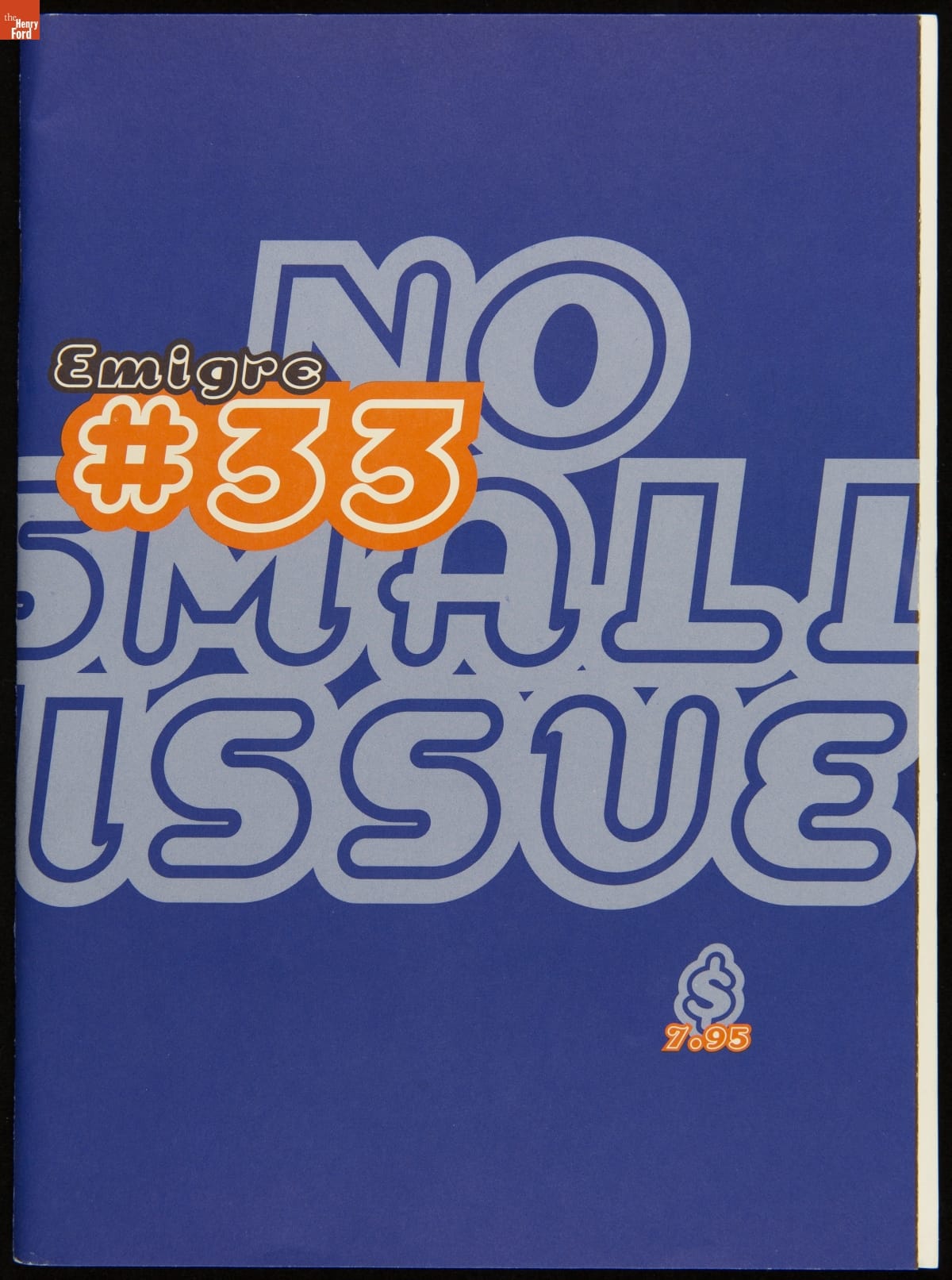
- Magazine, Emigre No. 33, "No Small Issue," 1995 - Emigre is a digital type foundry established by Rudy VanderLans and Zuzana Licko. The company's history is linked with the introduction of the 1984 Macintosh computer, used to design their early bitmapped typefaces. Emigre's digital work gained notoriety -- defying visual communication standards with fractured, layered combinations of text and image. <em>Emigre</em> magazine showcased their fonts and promoted groundbreaking designers.
- 1995
- Collections - Artifact
Magazine, Emigre No. 33, "No Small Issue," 1995
Emigre is a digital type foundry established by Rudy VanderLans and Zuzana Licko. The company's history is linked with the introduction of the 1984 Macintosh computer, used to design their early bitmapped typefaces. Emigre's digital work gained notoriety -- defying visual communication standards with fractured, layered combinations of text and image. Emigre magazine showcased their fonts and promoted groundbreaking designers.