
Search
- Birth and Baptismal Certificate for Elisabetha Ombaden, circa 1847 - Early German immigrants created decorative keepsakes to commemorate important family events. These documents, known as Fraktur, usually incorporated intricate lettering, elaborate borders and colorful drawings. By the late 1700s, some Fraktur had printed elements. Philadelphia publishers Mentz & Rovoudt created this Fraktur depicting the Ten Commandments. Later, the images were hand colored and names were inserted. The Fraktur commemorates the birth and baptism of Elisabetha Ombaden.
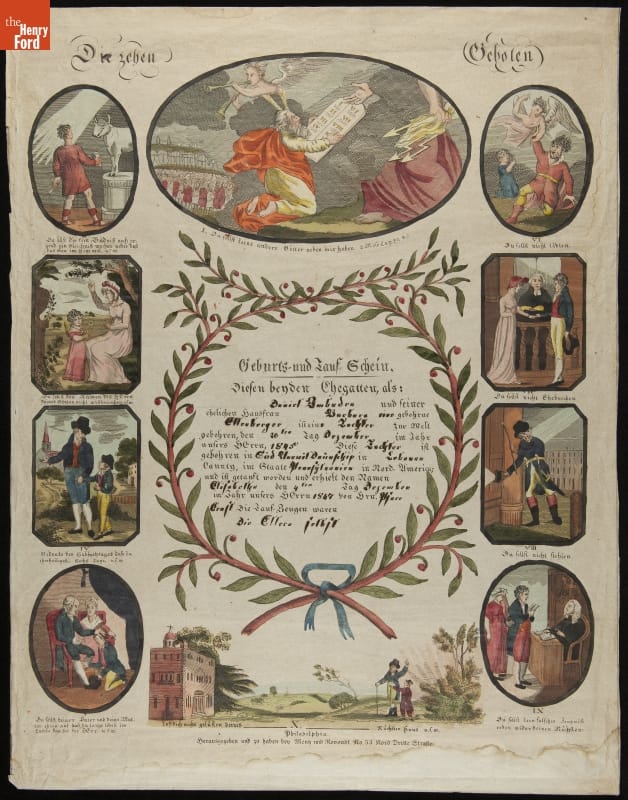
- circa 1847
- Collections - Artifact
Birth and Baptismal Certificate for Elisabetha Ombaden, circa 1847
Early German immigrants created decorative keepsakes to commemorate important family events. These documents, known as Fraktur, usually incorporated intricate lettering, elaborate borders and colorful drawings. By the late 1700s, some Fraktur had printed elements. Philadelphia publishers Mentz & Rovoudt created this Fraktur depicting the Ten Commandments. Later, the images were hand colored and names were inserted. The Fraktur commemorates the birth and baptism of Elisabetha Ombaden.
- Birth and Baptismal Certificate for Susanna Popp, 1797 - Early German immigrants created decorative keepsakes to commemorate important family events. These documents, known as Fraktur, usually incorporated intricate lettering, elaborate borders and colorful drawings of birds, flowers, hearts or other stylized figures. By the late 1700s, some Fraktur had printed elements. This Fraktur commemorates the birth and baptism of Susanna Popp from Bucks County, Pennsylvania, in 1782.
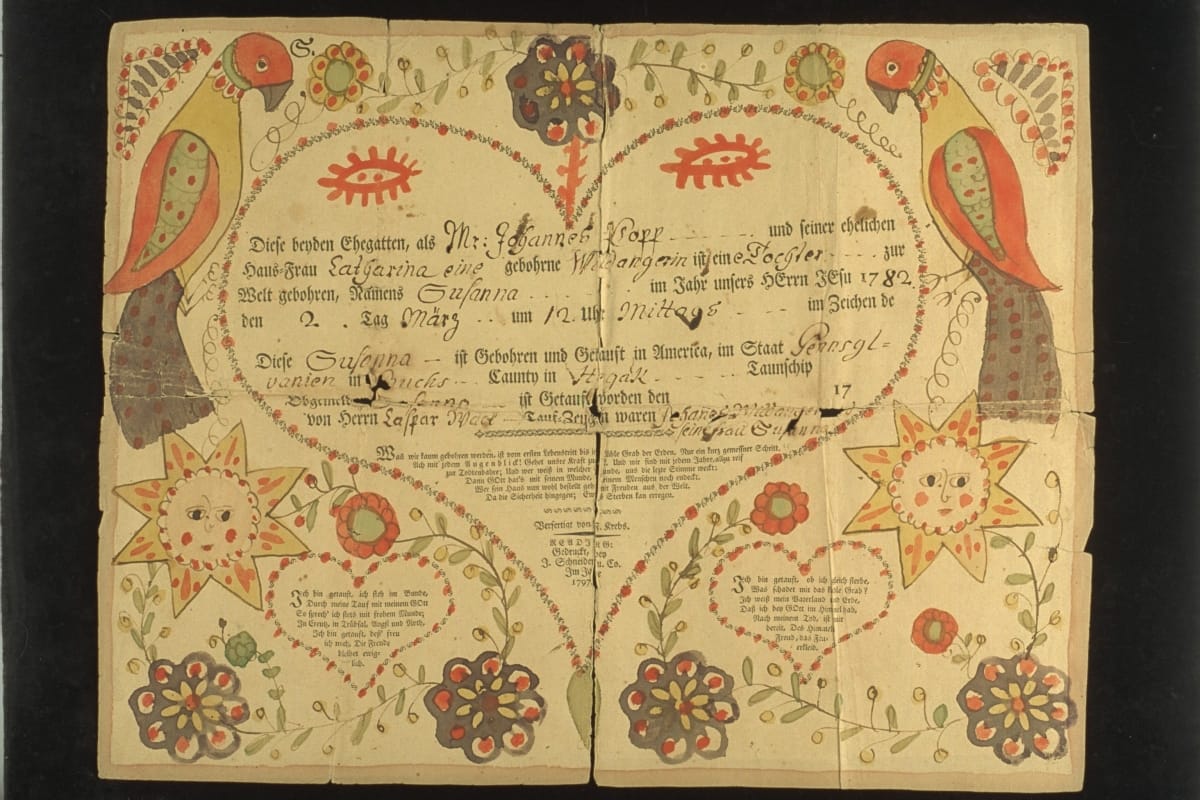
- March 02, 1782
- Collections - Artifact
Birth and Baptismal Certificate for Susanna Popp, 1797
Early German immigrants created decorative keepsakes to commemorate important family events. These documents, known as Fraktur, usually incorporated intricate lettering, elaborate borders and colorful drawings of birds, flowers, hearts or other stylized figures. By the late 1700s, some Fraktur had printed elements. This Fraktur commemorates the birth and baptism of Susanna Popp from Bucks County, Pennsylvania, in 1782.
- Birth and Baptismal Certificate for Catharina Wildanger, 1797 - Early German immigrants created decorative keepsakes to commemorate important family events. These documents, known as Fraktur, usually incorporated intricate lettering, elaborate borders and colorful drawings of birds, flowers, hearts or other stylized figures. By the late 1700s, some Fraktur had printed elements. This Fraktur commemorates the birth and baptism of Catharina Wildanger from Bucks County, Pennsylvania, in 1751.
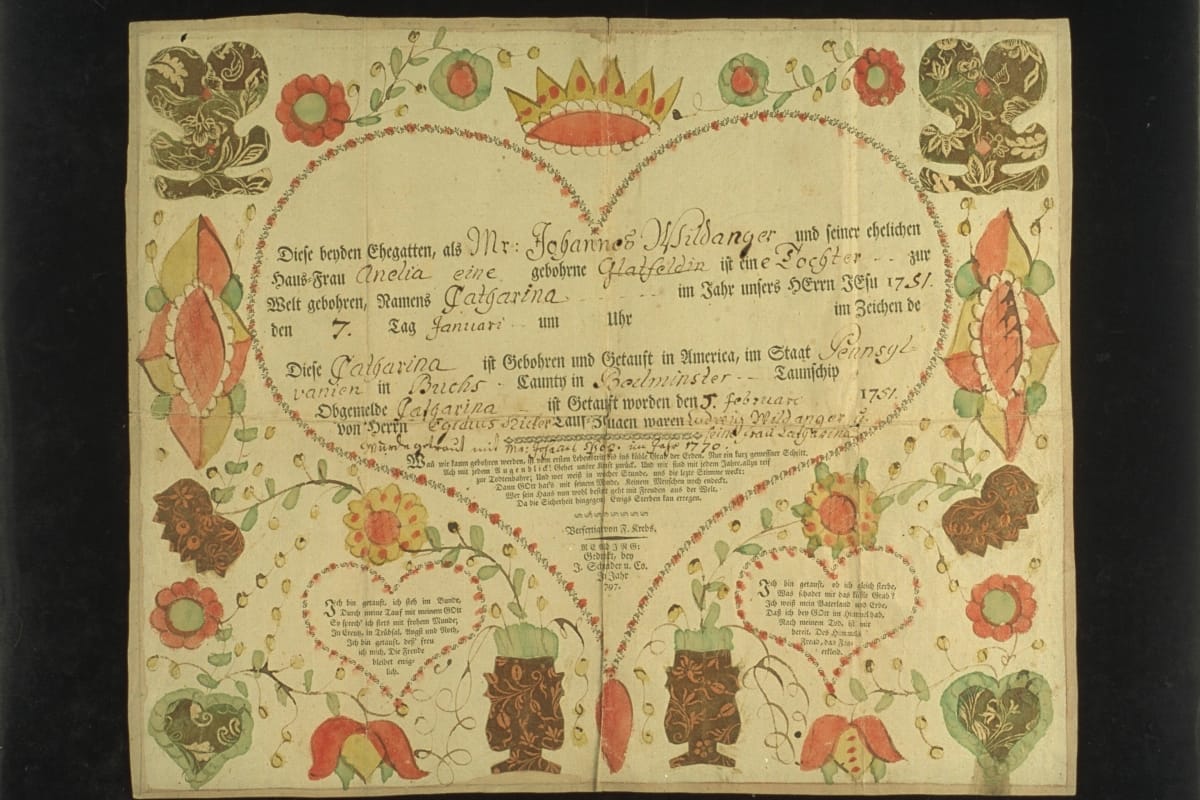
- January 07, 1751
- Collections - Artifact
Birth and Baptismal Certificate for Catharina Wildanger, 1797
Early German immigrants created decorative keepsakes to commemorate important family events. These documents, known as Fraktur, usually incorporated intricate lettering, elaborate borders and colorful drawings of birds, flowers, hearts or other stylized figures. By the late 1700s, some Fraktur had printed elements. This Fraktur commemorates the birth and baptism of Catharina Wildanger from Bucks County, Pennsylvania, in 1751.
- Birth and Baptismal Certificate for Liebeine Grimm, 1838 - Early German immigrants created decorative keepsakes to commemorate important family events. These documents, known as Fraktur, usually incorporated intricate lettering, elaborate borders and colorful drawings of birds, flowers, hearts or other stylized figures. By the late 1700s, some Fraktur had printed elements. This printed and hand-colored Fraktur from 1838 commemorates the birth and baptism of Liebeine Grimm from Pennsylvania.
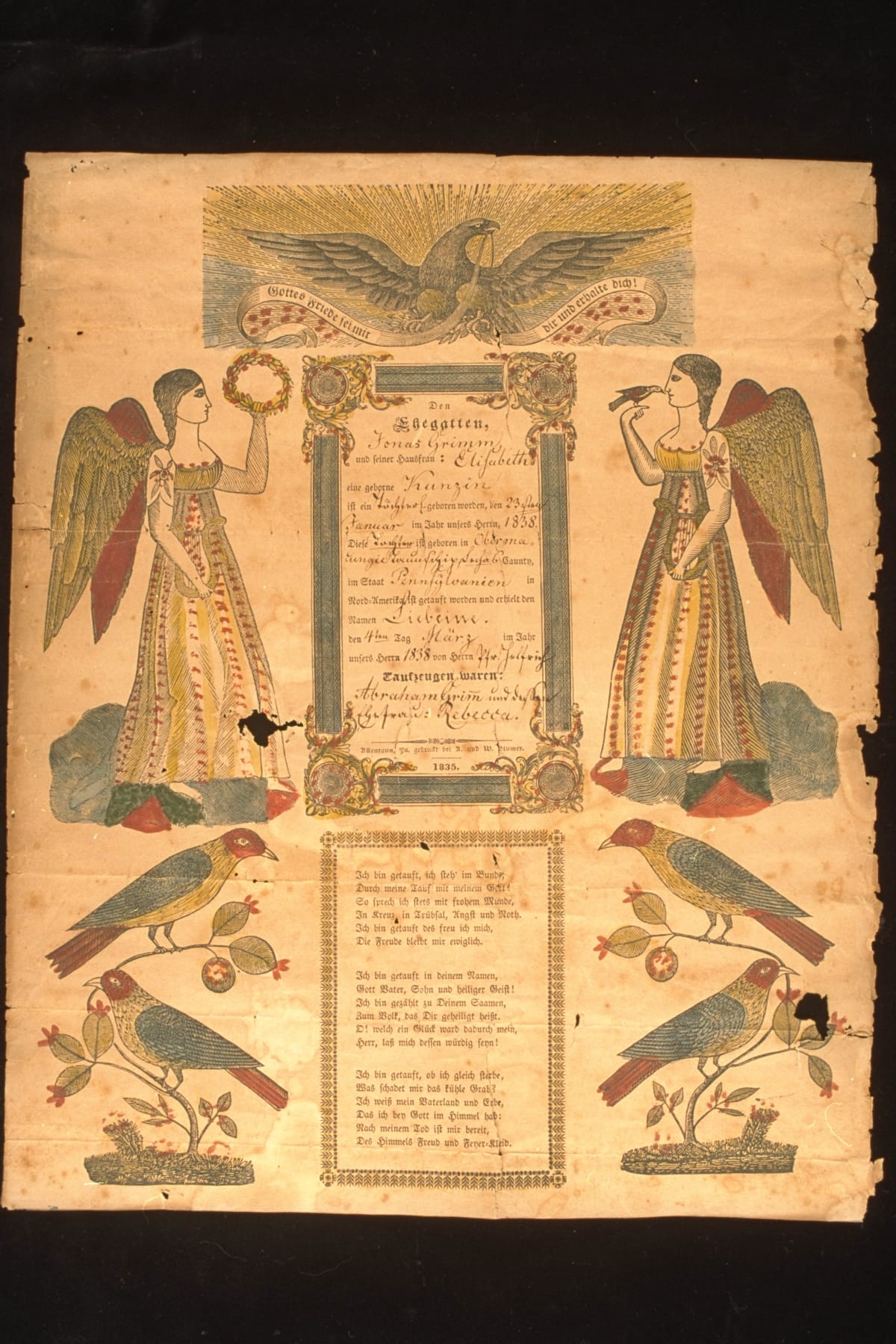
- January 23, 1838
- Collections - Artifact
Birth and Baptismal Certificate for Liebeine Grimm, 1838
Early German immigrants created decorative keepsakes to commemorate important family events. These documents, known as Fraktur, usually incorporated intricate lettering, elaborate borders and colorful drawings of birds, flowers, hearts or other stylized figures. By the late 1700s, some Fraktur had printed elements. This printed and hand-colored Fraktur from 1838 commemorates the birth and baptism of Liebeine Grimm from Pennsylvania.
- Birth and Baptismal Certificate for Elizabeth App, 1814 - Early German immigrants created decorative keepsakes to commemorate important family events. These documents, known as Fraktur, usually incorporated intricate lettering, elaborate borders and colorful drawings of birds, flowers, hearts or other stylized figures. By the late 1700s, some Fraktur had printed elements. This Fraktur from 1814 commemorates the birth and baptism of Elizebeth App from Lycoming County, Pennsylvania.
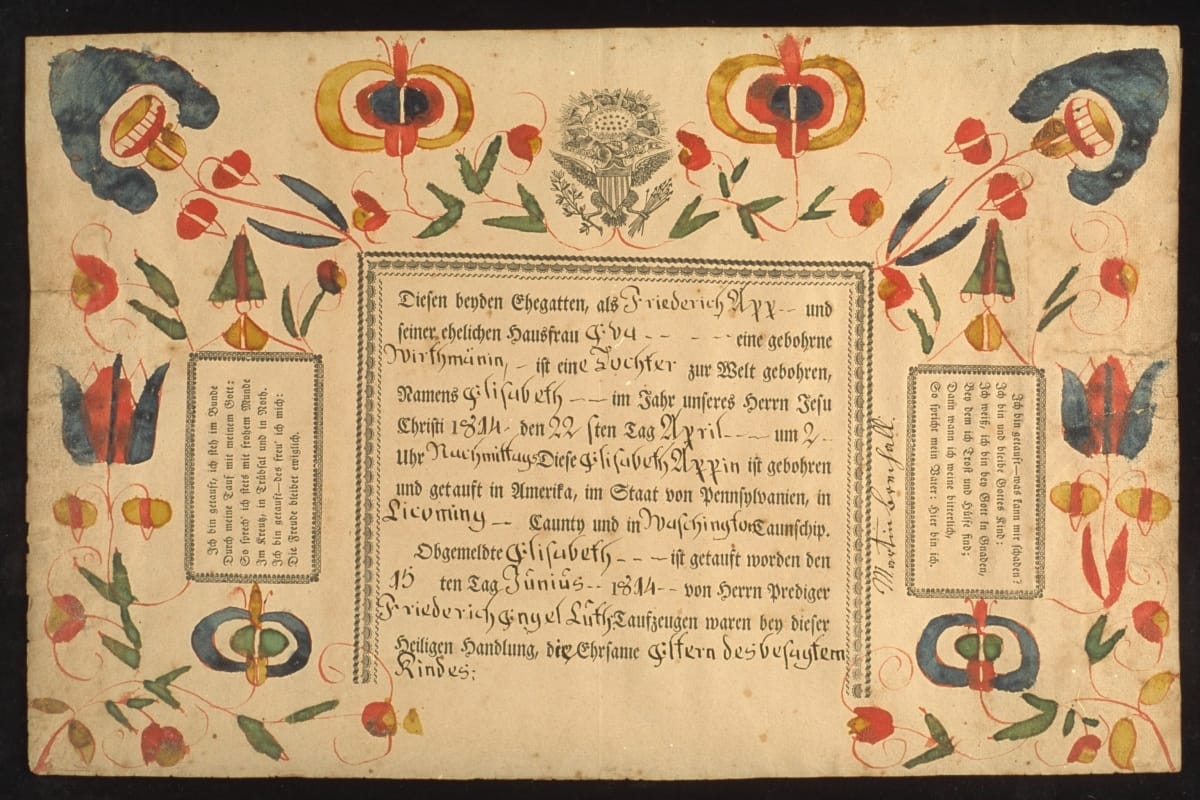
- April 22, 1814
- Collections - Artifact
Birth and Baptismal Certificate for Elizabeth App, 1814
Early German immigrants created decorative keepsakes to commemorate important family events. These documents, known as Fraktur, usually incorporated intricate lettering, elaborate borders and colorful drawings of birds, flowers, hearts or other stylized figures. By the late 1700s, some Fraktur had printed elements. This Fraktur from 1814 commemorates the birth and baptism of Elizebeth App from Lycoming County, Pennsylvania.
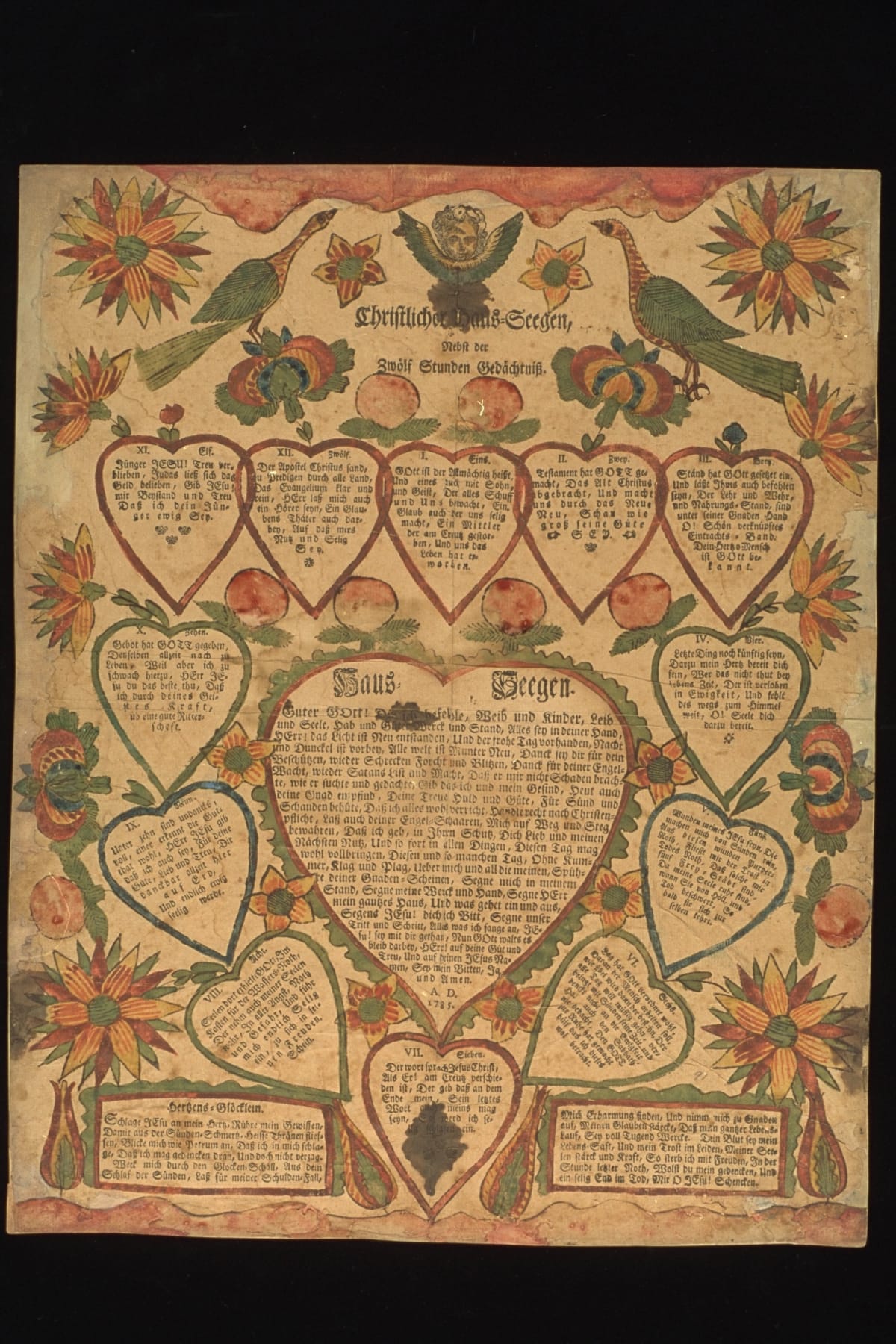
- House Blessing, 1785 - Early German immigrants created decorative documents, known as Fraktur, for a variety of reasons. Many commemorated a child's birth and baptism. Others were made as keepsakes, symbols of achievement or expressions of the immigrant's heritage or religion. These documents usually incorporated intricate lettering, elaborate borders and colorful drawings. This "house blessing" was a request for God's favor on the family and their livelihood.
- 1785
- Collections - Artifact
House Blessing, 1785
Early German immigrants created decorative documents, known as Fraktur, for a variety of reasons. Many commemorated a child's birth and baptism. Others were made as keepsakes, symbols of achievement or expressions of the immigrant's heritage or religion. These documents usually incorporated intricate lettering, elaborate borders and colorful drawings. This "house blessing" was a request for God's favor on the family and their livelihood.
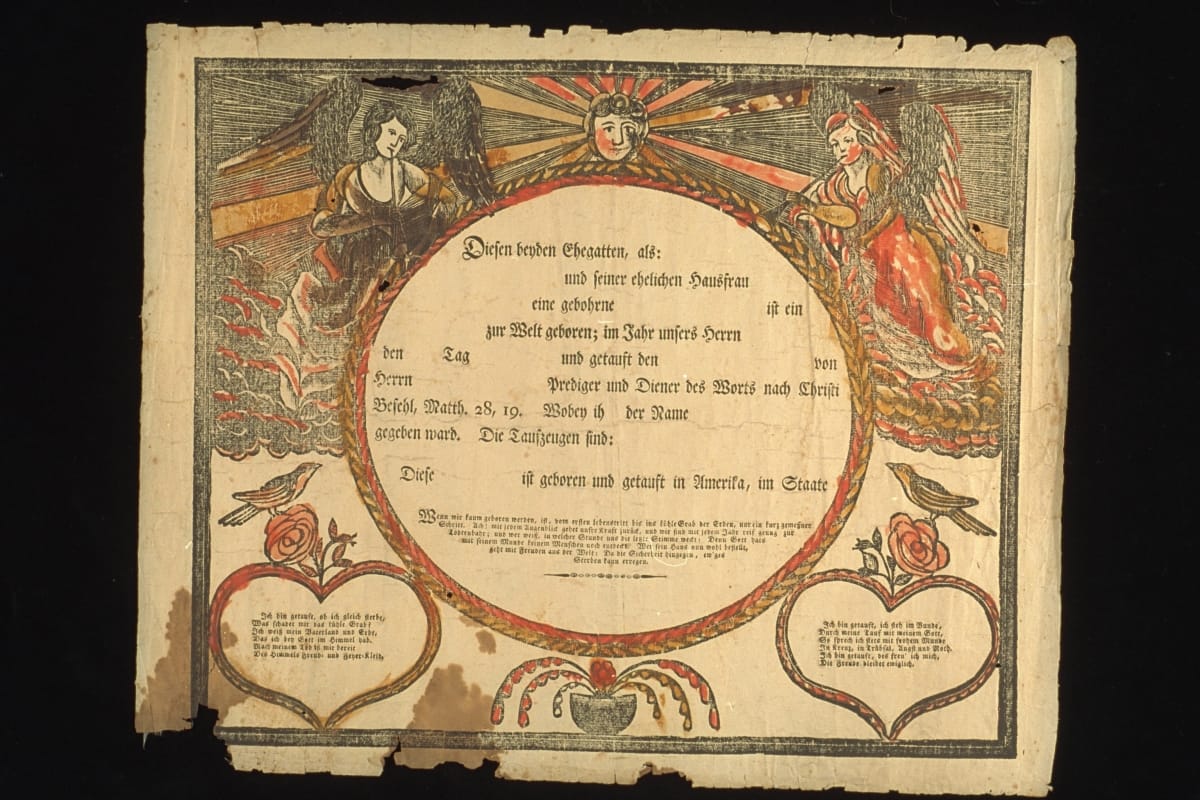
- Birth and Baptismal Certificate, circa 1810 - Early German immigrants created decorative keepsakes to commemorate important family events. These documents, known as Fraktur, usually incorporated intricate lettering, elaborate borders and colorful drawings of birds, flowers, hearts or other stylized figures. By the late 1700s, some Fraktur had printed elements. This printed and hand-colored Fraktur was left blank. Birth and baptismal information could be filled in later.
- circa 1810
- Collections - Artifact
Birth and Baptismal Certificate, circa 1810
Early German immigrants created decorative keepsakes to commemorate important family events. These documents, known as Fraktur, usually incorporated intricate lettering, elaborate borders and colorful drawings of birds, flowers, hearts or other stylized figures. By the late 1700s, some Fraktur had printed elements. This printed and hand-colored Fraktur was left blank. Birth and baptismal information could be filled in later.
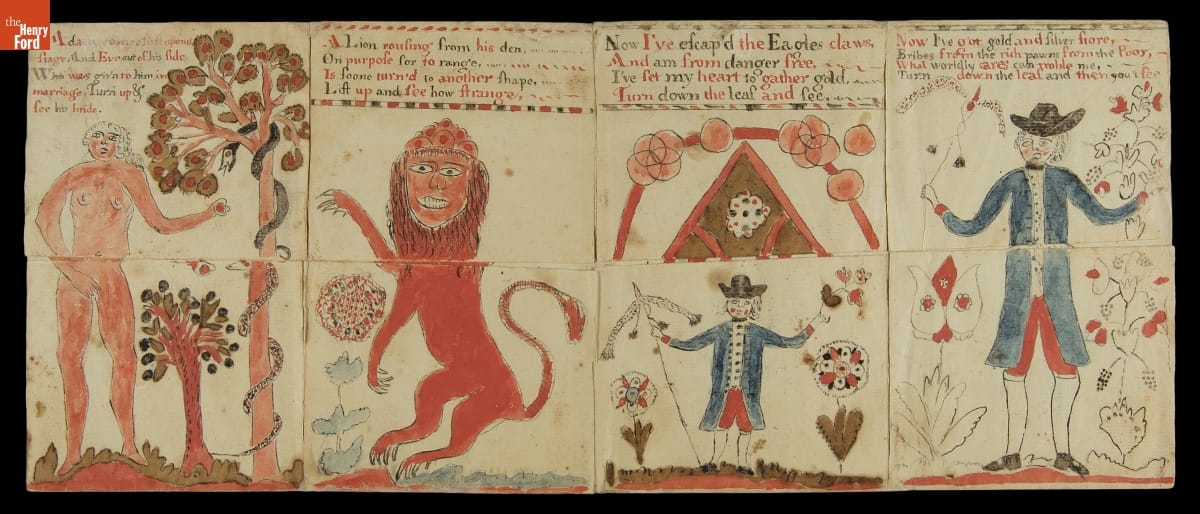
- Metamorphosis Turn-Up Book, 1790-1820 - Printed and handmade flap or turn-up books entice readers to interact with their pages. This handmade version from the late-18th to early-19th centuries presented a series of moral tales on movable pages. Unfortunately, the artist is unknown -- perhaps a young child made it as part of their education, or maybe a new parent crafted it for their children.
- 1790-1820
- Collections - Artifact
Metamorphosis Turn-Up Book, 1790-1820
Printed and handmade flap or turn-up books entice readers to interact with their pages. This handmade version from the late-18th to early-19th centuries presented a series of moral tales on movable pages. Unfortunately, the artist is unknown -- perhaps a young child made it as part of their education, or maybe a new parent crafted it for their children.
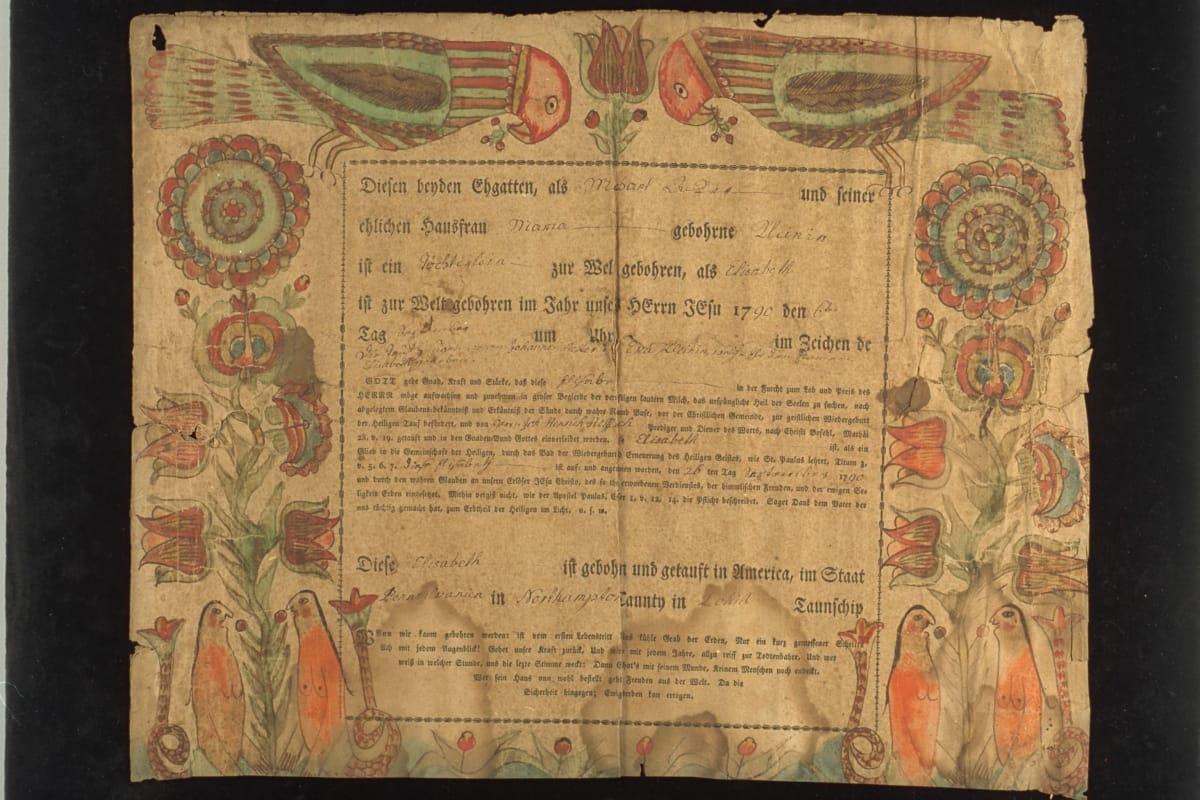
- Birth and Baptismal Certificate for Elisabeth Becker, 1790 - Early German immigrants created decorative keepsakes to commemorate important family events. These documents, known as Fraktur, usually incorporated intricate lettering, elaborate borders and colorful drawings of birds, flowers, hearts or other stylized figures. By the late 1700s, some Fraktur had printed elements. This Fraktur from 1790 commemorates the birth and baptism of a "little daughter" named Elisabeth from Pennsylvania.
- 1790
- Collections - Artifact
Birth and Baptismal Certificate for Elisabeth Becker, 1790
Early German immigrants created decorative keepsakes to commemorate important family events. These documents, known as Fraktur, usually incorporated intricate lettering, elaborate borders and colorful drawings of birds, flowers, hearts or other stylized figures. By the late 1700s, some Fraktur had printed elements. This Fraktur from 1790 commemorates the birth and baptism of a "little daughter" named Elisabeth from Pennsylvania.
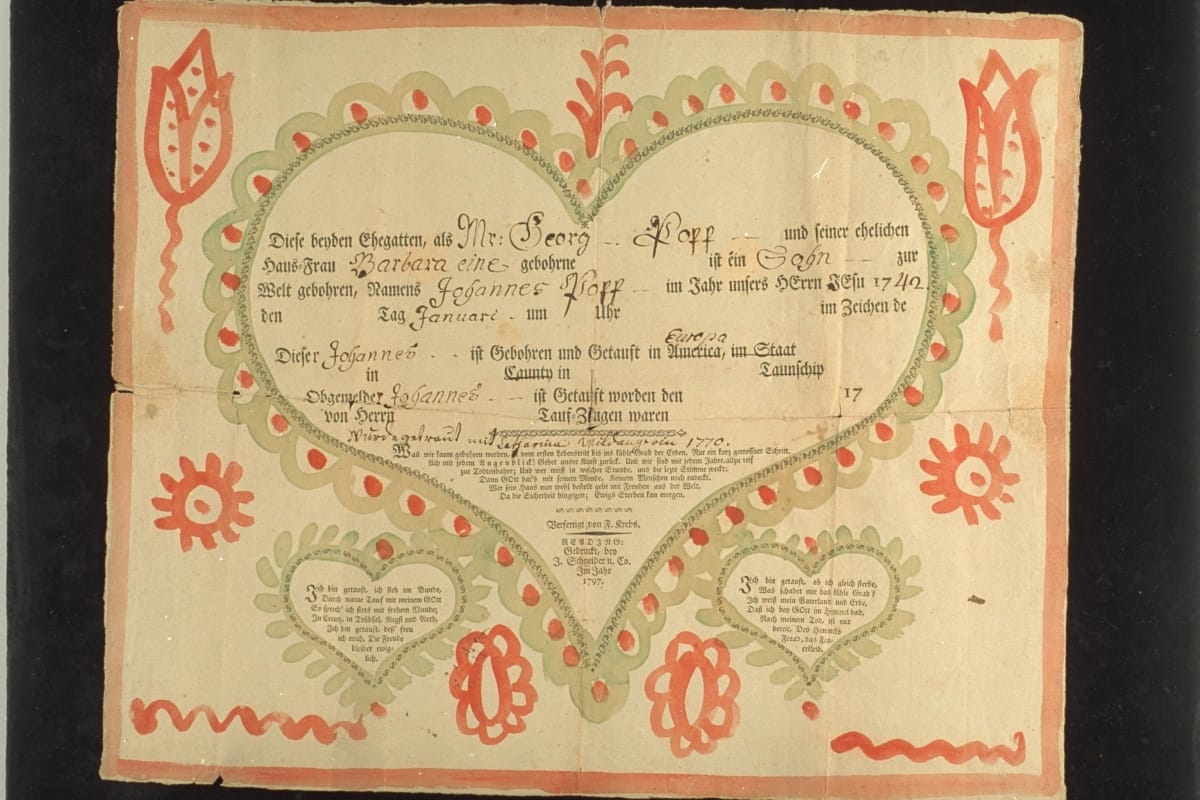
- Birth and Baptismal Certificate for Johannes Popp, 1797 - Early German immigrants created decorative keepsakes to commemorate important family events. These documents, known as Fraktur, usually incorporated intricate lettering, elaborate borders and colorful drawings of birds, flowers, hearts or other stylized figures. By the late 1700s, some Fraktur had printed elements. Johannes Popp was born and baptized in Europe in 1742. This Fraktur was created many years later after he immigrated to Pennsylvania.
- January 01, 1742
- Collections - Artifact
Birth and Baptismal Certificate for Johannes Popp, 1797
Early German immigrants created decorative keepsakes to commemorate important family events. These documents, known as Fraktur, usually incorporated intricate lettering, elaborate borders and colorful drawings of birds, flowers, hearts or other stylized figures. By the late 1700s, some Fraktur had printed elements. Johannes Popp was born and baptized in Europe in 1742. This Fraktur was created many years later after he immigrated to Pennsylvania.