
Search
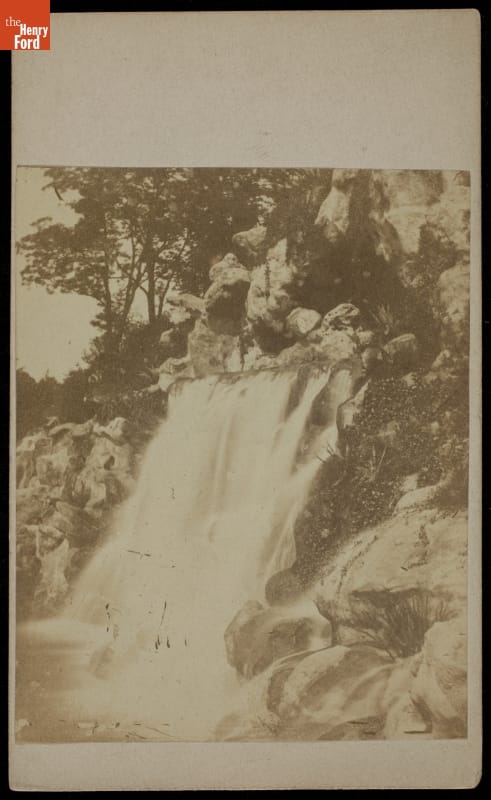
- The Grande Cascade of the Bois de Boulogne, Paris, France, 1860-1890 -
- 1860-1890
- Collections - Artifact
The Grande Cascade of the Bois de Boulogne, Paris, France, 1860-1890
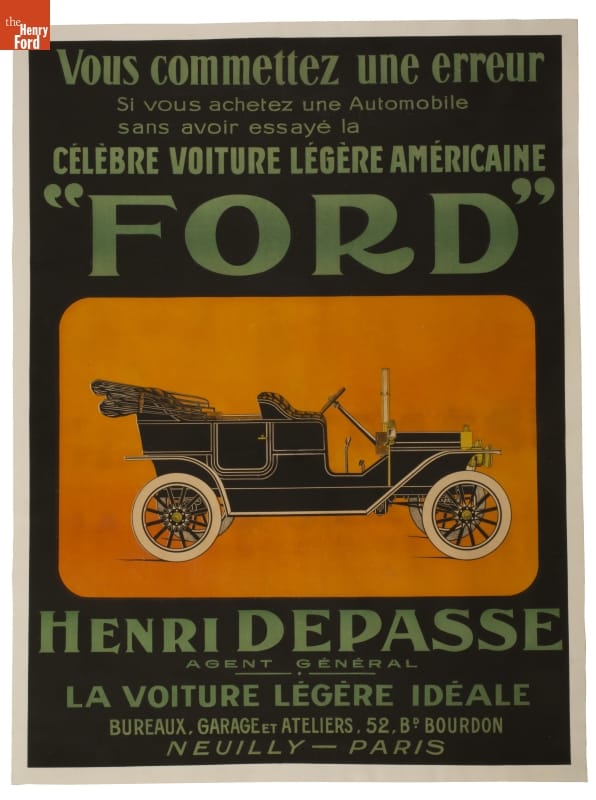
- Advertising Poster for the 1911 Ford Model T Sold by Ford Dealer Henri Depasse, Paris and Neuilly, France, 1910-1911 - Ford Motor Company opened its first international sales branch, in Paris, France, in 1908. The Paris office became the heart of Ford's marketing efforts throughout the European continent. The company established a French subsidiary, Ford France, in 1916. This French-language poster advertised Henri Depasse's dealerships in Paris and Neuilly. Depasse opened his first Ford dealership in 1908.
- 1911
- Collections - Artifact
Advertising Poster for the 1911 Ford Model T Sold by Ford Dealer Henri Depasse, Paris and Neuilly, France, 1910-1911
Ford Motor Company opened its first international sales branch, in Paris, France, in 1908. The Paris office became the heart of Ford's marketing efforts throughout the European continent. The company established a French subsidiary, Ford France, in 1916. This French-language poster advertised Henri Depasse's dealerships in Paris and Neuilly. Depasse opened his first Ford dealership in 1908.
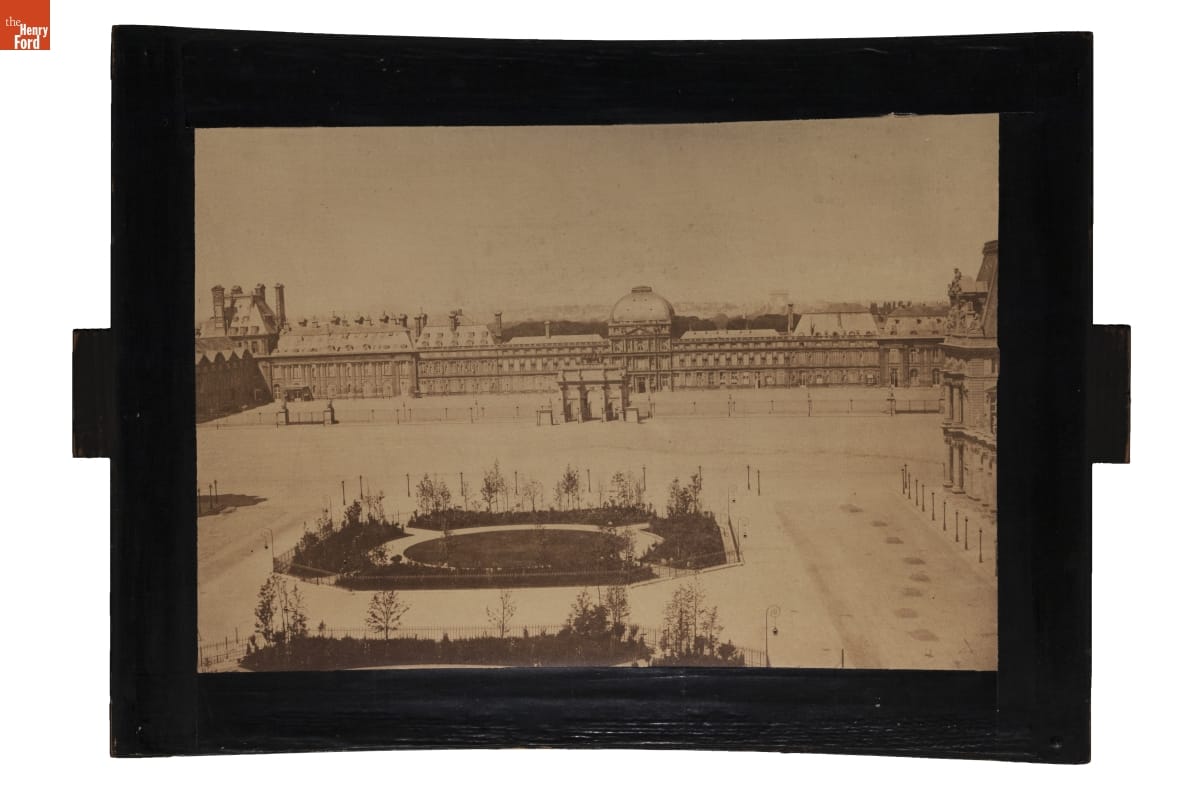
- Megalethoscope Slide, "Paris, Palais Imperial" - Invented by Carlo Ponti in the early 1860s, a megalethoscope is a device used to view a translucent, multilayered photograph. By opening or closing various panels, a person saw the image change. When lit from behind, pinpricks and paint or colored tissue applied to the back or a secondary layer of the photograph transform the scene to reveal hidden images and create an illusion of nighttime.
- Collections - Artifact
Megalethoscope Slide, "Paris, Palais Imperial"
Invented by Carlo Ponti in the early 1860s, a megalethoscope is a device used to view a translucent, multilayered photograph. By opening or closing various panels, a person saw the image change. When lit from behind, pinpricks and paint or colored tissue applied to the back or a secondary layer of the photograph transform the scene to reveal hidden images and create an illusion of nighttime.
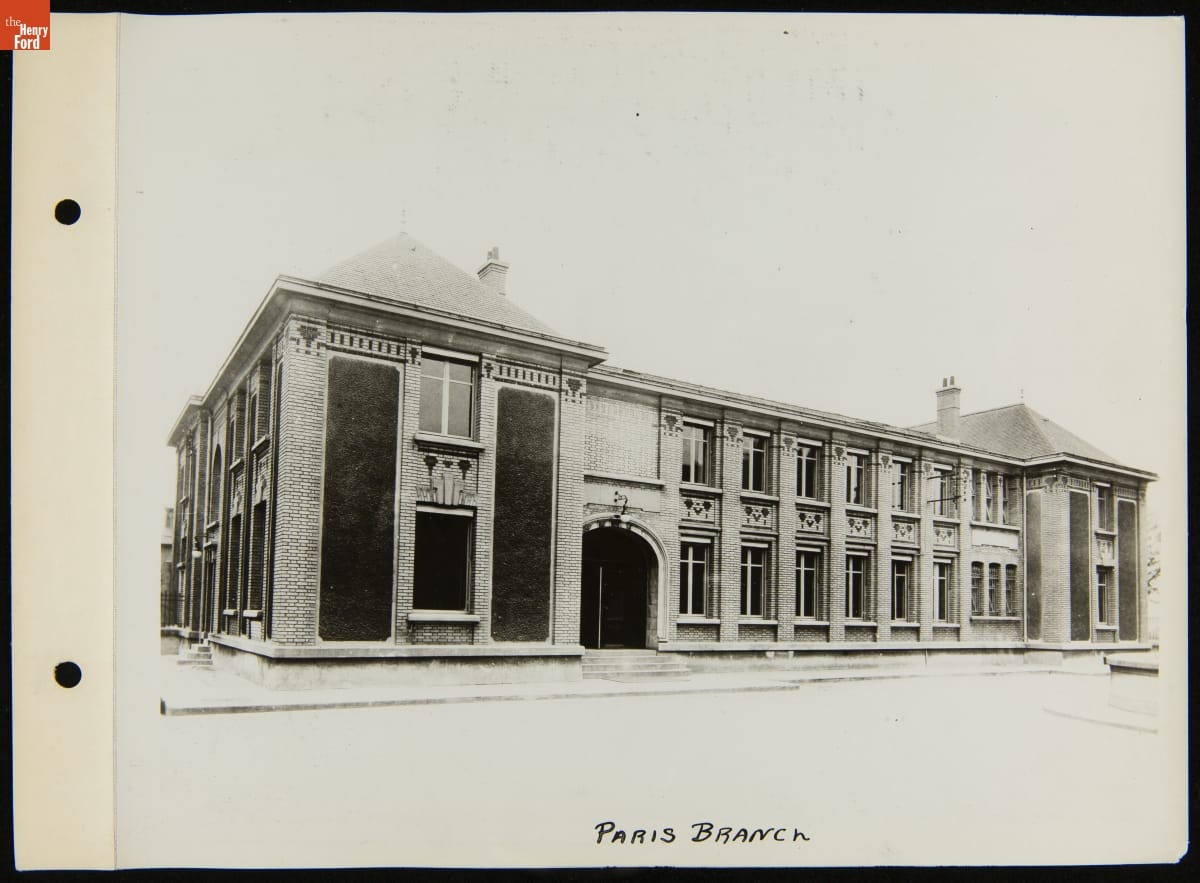
- Ford Motor Company Branch in Paris, France - Ford Motor Company opened its first international sales branch, in Paris, France, in 1908. The Paris office became the heart of Ford's marketing efforts throughout the European continent. The company established a French subsidiary, Ford France, in 1916. Model T assembly began at a plant in Bordeaux, and then moved to suburban Paris in 1925.
- Collections - Artifact
Ford Motor Company Branch in Paris, France
Ford Motor Company opened its first international sales branch, in Paris, France, in 1908. The Paris office became the heart of Ford's marketing efforts throughout the European continent. The company established a French subsidiary, Ford France, in 1916. Model T assembly began at a plant in Bordeaux, and then moved to suburban Paris in 1925.
- Letter from Elizabeth Parke Firestone to Marguerite Carre (for Dior), January 18, 1953 -
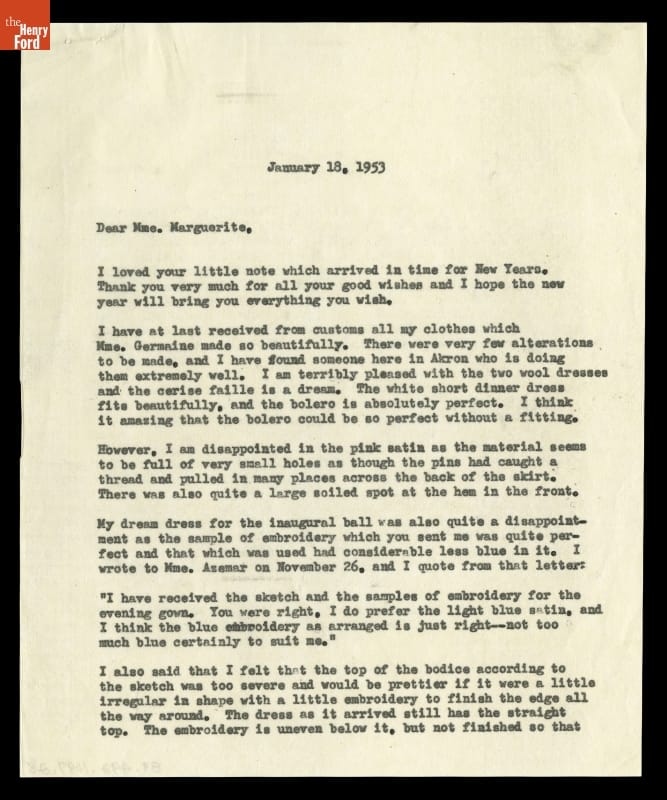
- January 18, 1953
- Collections - Artifact
Letter from Elizabeth Parke Firestone to Marguerite Carre (for Dior), January 18, 1953
- Trade Card for J. F. Stein, Optician, "Paris," circa 1890 - In the last third of the nineteenth century, an unprecedented variety of consumer goods and services flooded the American market. Advertisers bombarded potential customers with trade cards. Americans enjoyed and saved the often illustrated little advertisements found in product packages or distributed by local merchants. Many survive as historical records of commercialism in the United States.
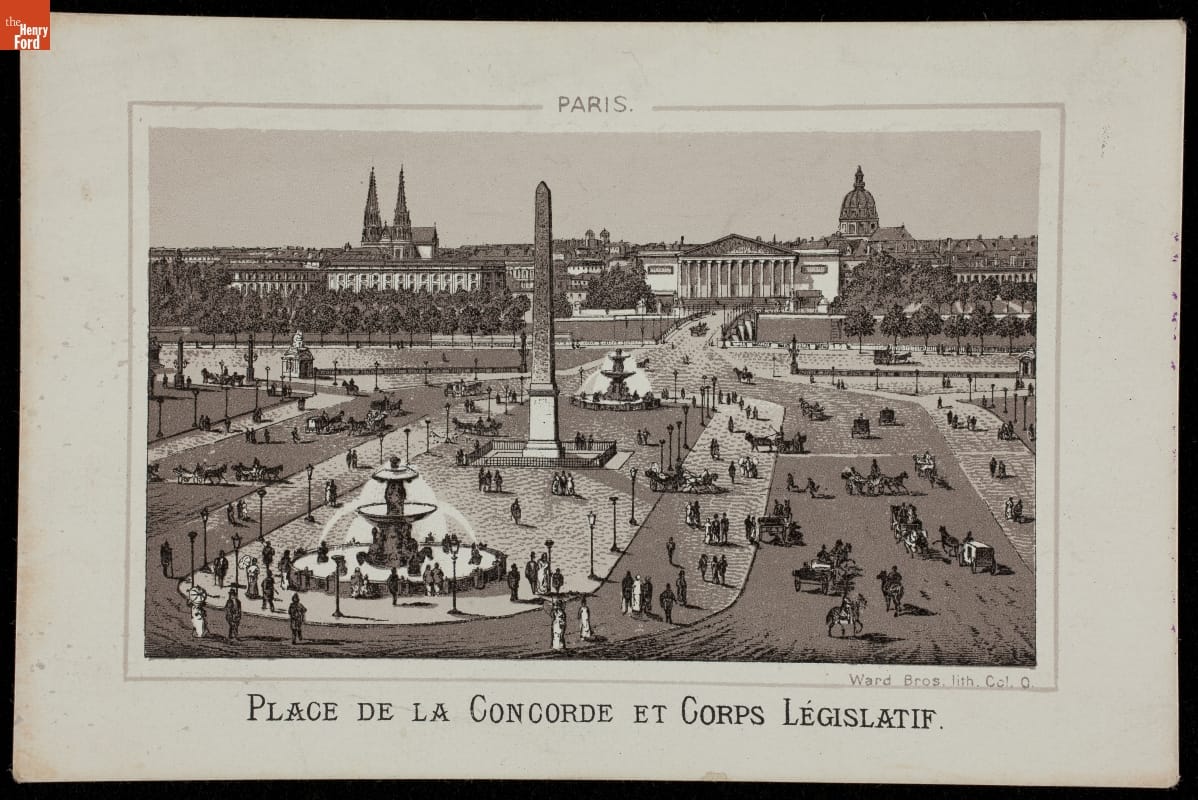
- circa 1890
- Collections - Artifact
Trade Card for J. F. Stein, Optician, "Paris," circa 1890
In the last third of the nineteenth century, an unprecedented variety of consumer goods and services flooded the American market. Advertisers bombarded potential customers with trade cards. Americans enjoyed and saved the often illustrated little advertisements found in product packages or distributed by local merchants. Many survive as historical records of commercialism in the United States.
- Trade Card for C.I. Hood & Co. with Hood's Photos of the World, "Louvre, Paris," 1890-1910 - In the late 19th century, trade cards were a major means of advertising goods and services. Patent medicine producer, C.I. Hood & Co., had its own advertising department, creating cookbooks, calendars, and, most abundantly, trade cards. The trade card series, "Hood's Photos of the World," became popular among consumers, as it offered views of far-away places, providing a window to the broader world.
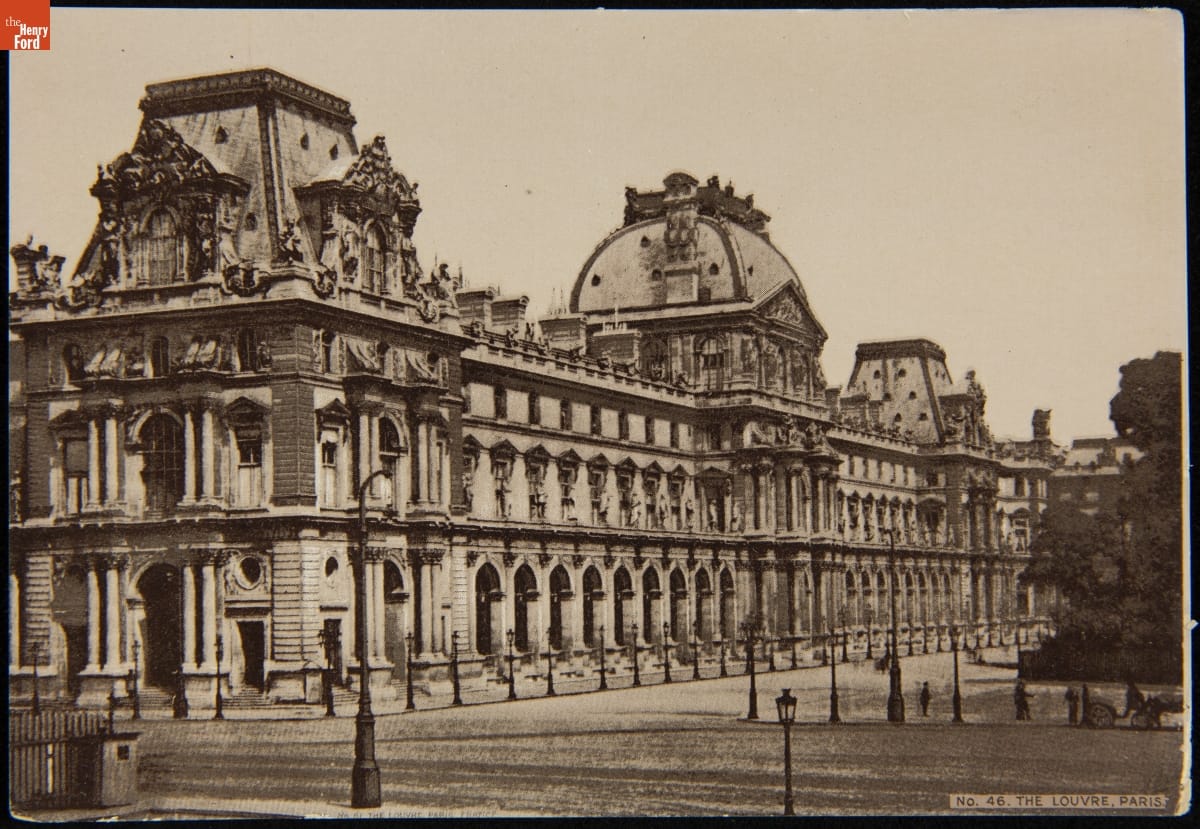
- 1890-1910
- Collections - Artifact
Trade Card for C.I. Hood & Co. with Hood's Photos of the World, "Louvre, Paris," 1890-1910
In the late 19th century, trade cards were a major means of advertising goods and services. Patent medicine producer, C.I. Hood & Co., had its own advertising department, creating cookbooks, calendars, and, most abundantly, trade cards. The trade card series, "Hood's Photos of the World," became popular among consumers, as it offered views of far-away places, providing a window to the broader world.
- Trade Card for C.I. Hood & Co. with Hood's Photos of the World, "Bastille Square, Paris," 1890-1910 - In the late 19th century, trade cards were a major means of advertising goods and services. Patent medicine producer, C.I. Hood & Co., had its own advertising department, creating cookbooks, calendars, and, most abundantly, trade cards. The trade card series, "Hood's Photos of the World," became popular among consumers, as it offered views of far-away places, providing a window to the broader world.
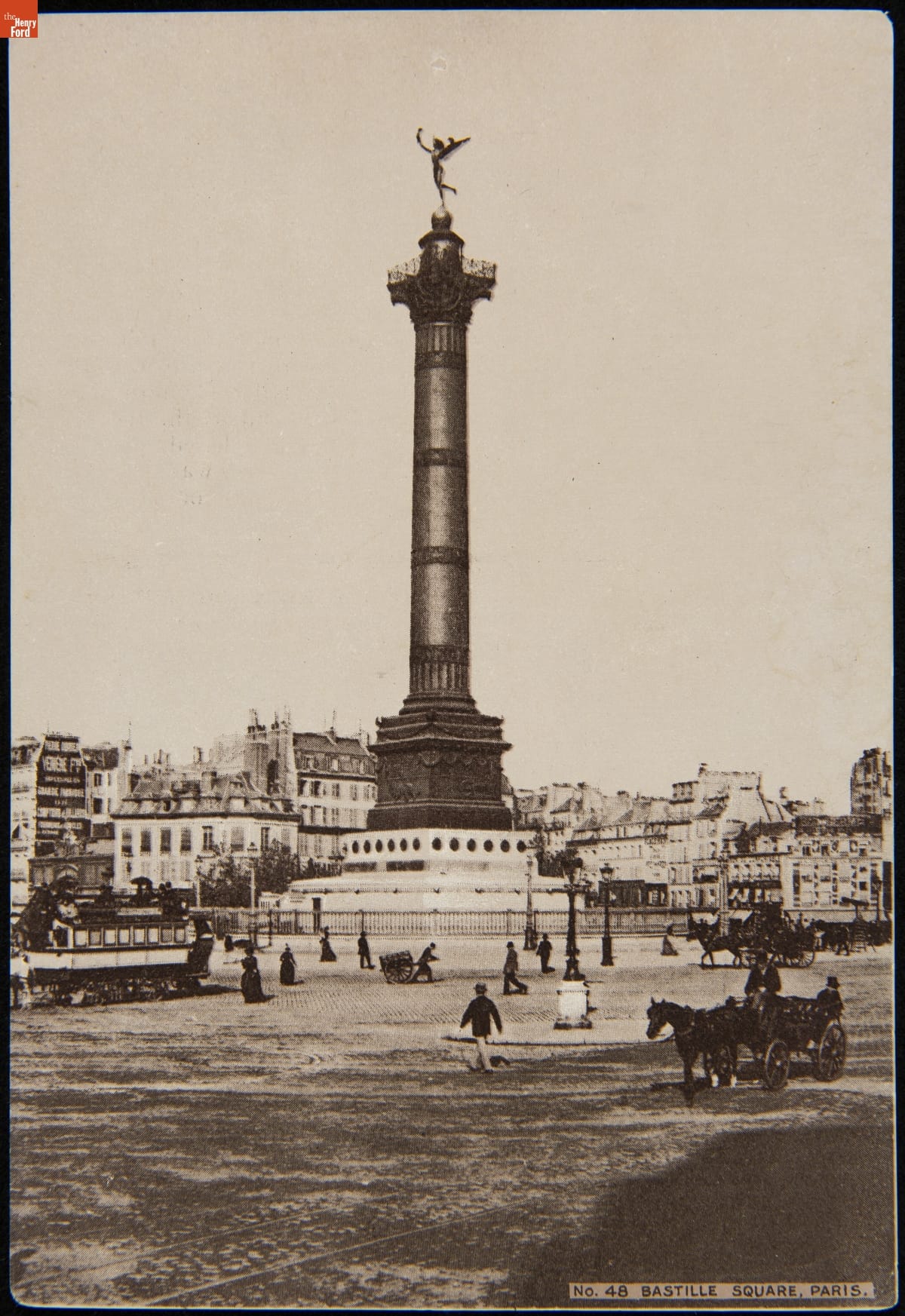
- 1890-1910
- Collections - Artifact
Trade Card for C.I. Hood & Co. with Hood's Photos of the World, "Bastille Square, Paris," 1890-1910
In the late 19th century, trade cards were a major means of advertising goods and services. Patent medicine producer, C.I. Hood & Co., had its own advertising department, creating cookbooks, calendars, and, most abundantly, trade cards. The trade card series, "Hood's Photos of the World," became popular among consumers, as it offered views of far-away places, providing a window to the broader world.
- Punch Bowl Set, 1893 -
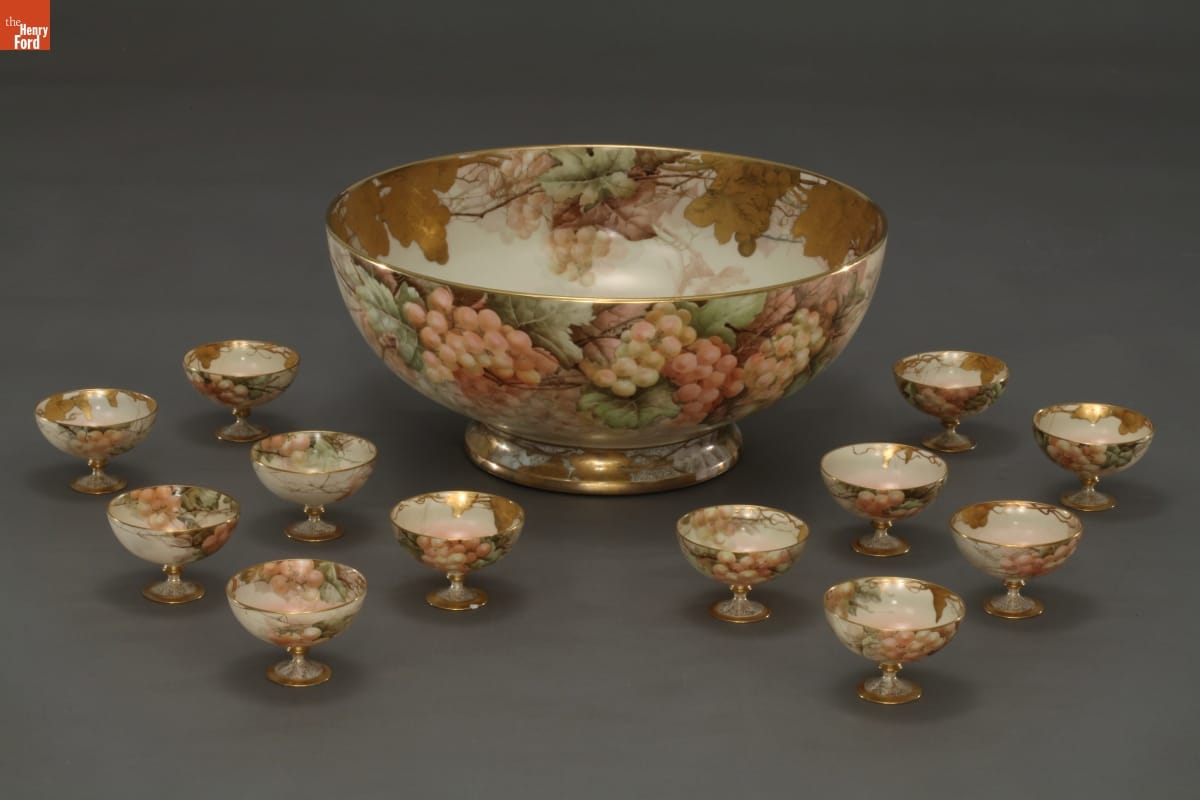
- 1893
- Collections - Artifact
Punch Bowl Set, 1893
- Pekin to Paris: An Account of Prince Borghese's Journey Across Two Continents in a Motor-Car, 1908 -
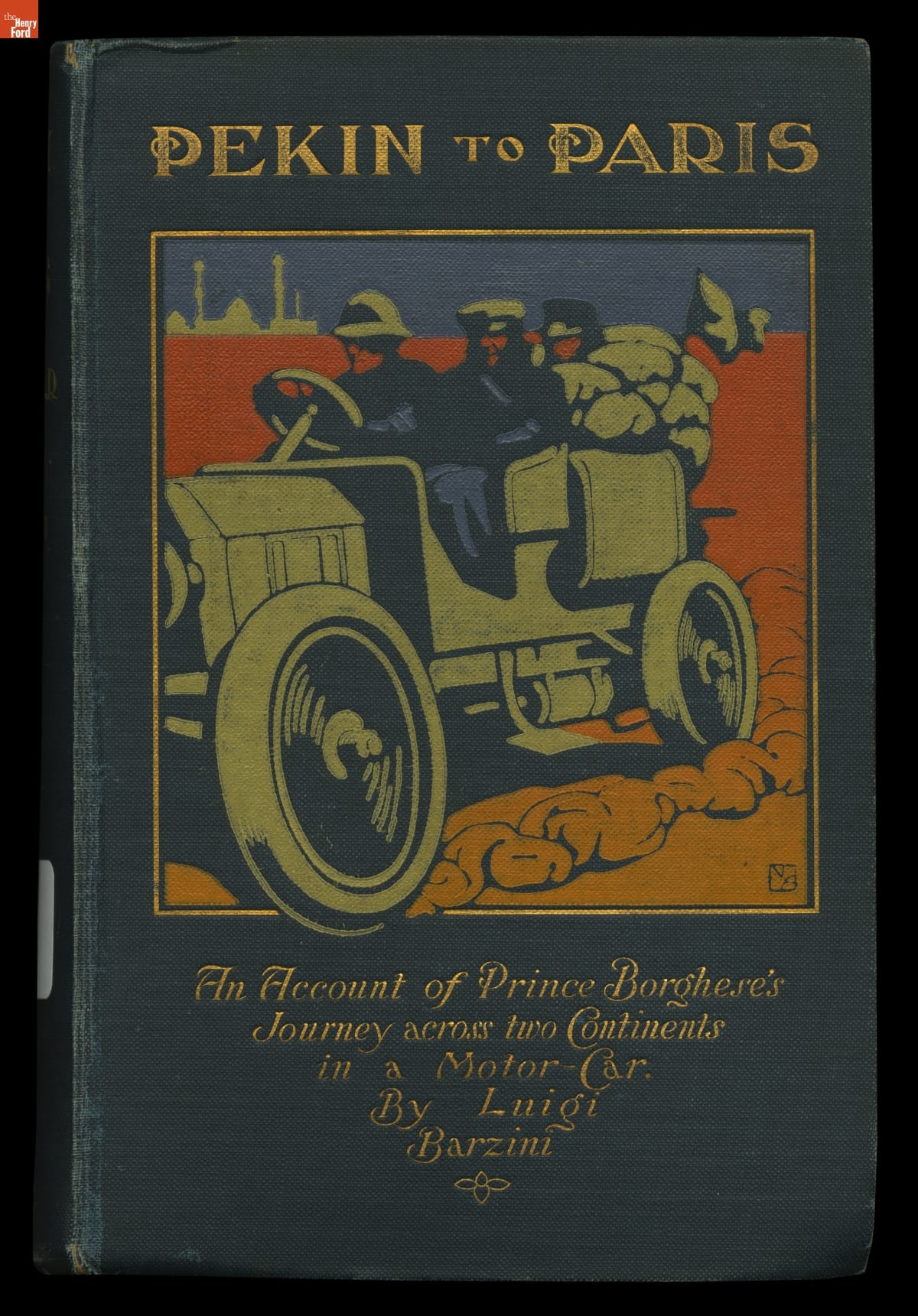
- 1908
- Collections - Artifact
Pekin to Paris: An Account of Prince Borghese's Journey Across Two Continents in a Motor-Car, 1908