
Search
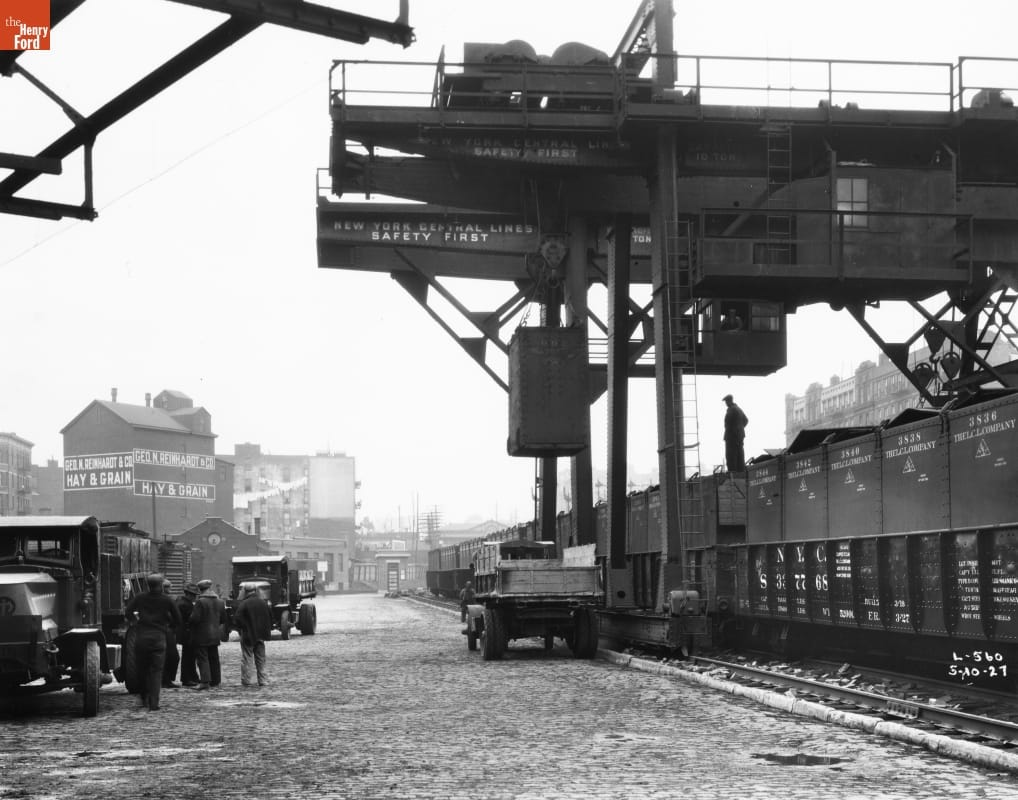
- Crane Unloading Cargo from Railroad Cars into a Mack Model AC Dump Truck. 1927 - Mack AC trucks were introduced in 1916 and were continuously manufactured through 1939. During that time span, AC trucks earned a sterling reputation for their reliability and durability. Aside from the civilian tasks that these trucks accomplished, the Mack AC gained international fame for its military service in World War I -- along with the nickname "Bulldog," coined by British engineers.
- May 10, 1927
- Collections - Artifact
Crane Unloading Cargo from Railroad Cars into a Mack Model AC Dump Truck. 1927
Mack AC trucks were introduced in 1916 and were continuously manufactured through 1939. During that time span, AC trucks earned a sterling reputation for their reliability and durability. Aside from the civilian tasks that these trucks accomplished, the Mack AC gained international fame for its military service in World War I -- along with the nickname "Bulldog," coined by British engineers.
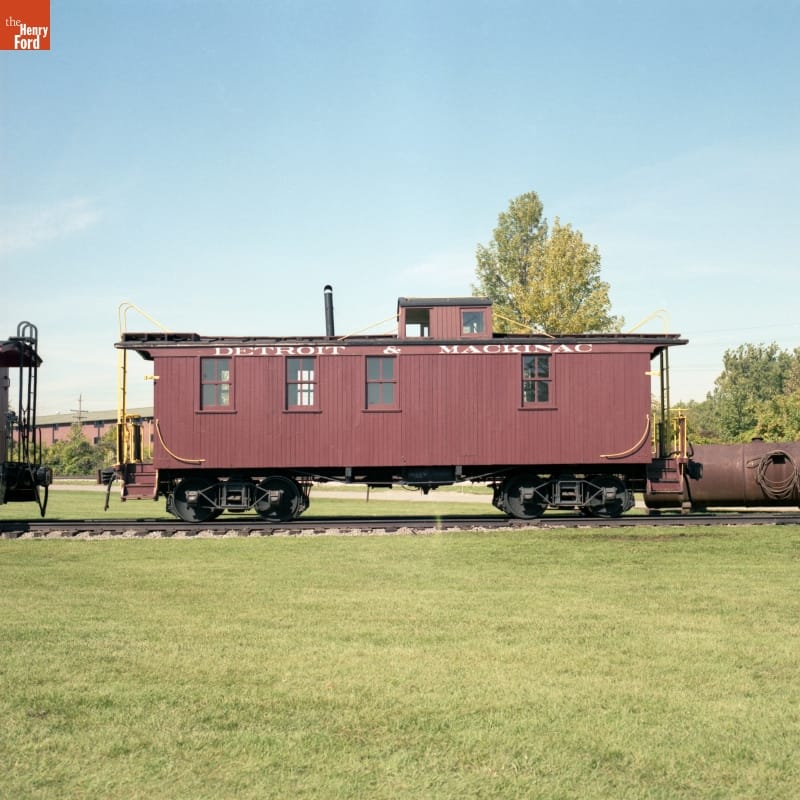
- Detroit & Mackinac Railway Caboose, circa 1912 - The caboose was the conductor's office, the crew's quarters, and -- from the elevated cupola -- a place to spot problems on the train. By the 1980s, the caboose was made obsolete by new technologies and smaller crews. This car served on Michigan's Detroit & Mackinac Railway, which operated a 200-mile route between Bay City and Cheboygan along the Lake Huron shoreline.
- circa 1912
- Collections - Artifact
Detroit & Mackinac Railway Caboose, circa 1912
The caboose was the conductor's office, the crew's quarters, and -- from the elevated cupola -- a place to spot problems on the train. By the 1980s, the caboose was made obsolete by new technologies and smaller crews. This car served on Michigan's Detroit & Mackinac Railway, which operated a 200-mile route between Bay City and Cheboygan along the Lake Huron shoreline.
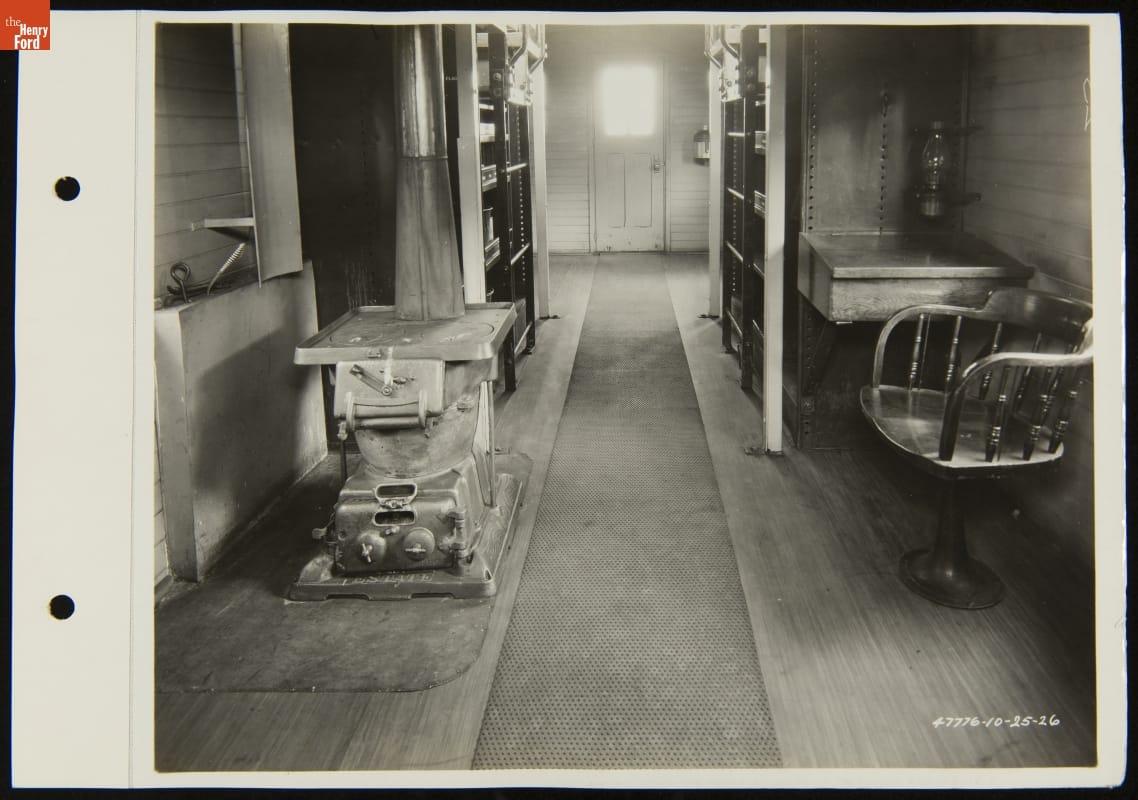
- Interior of a Railroad Caboose, Detroit, Toledo & Ironton Railroad, October 1926 - The caboose served as an office for the conductor, temporary living quarters for the train crew and a storage shack for tools and equipment. The cupola at top provided crew members with a place to watch for problems with the train. Computerized record keeping, trackside defect detectors and smaller crews all made the caboose obsolete by the 1980s.
- October 25, 1926
- Collections - Artifact
Interior of a Railroad Caboose, Detroit, Toledo & Ironton Railroad, October 1926
The caboose served as an office for the conductor, temporary living quarters for the train crew and a storage shack for tools and equipment. The cupola at top provided crew members with a place to watch for problems with the train. Computerized record keeping, trackside defect detectors and smaller crews all made the caboose obsolete by the 1980s.
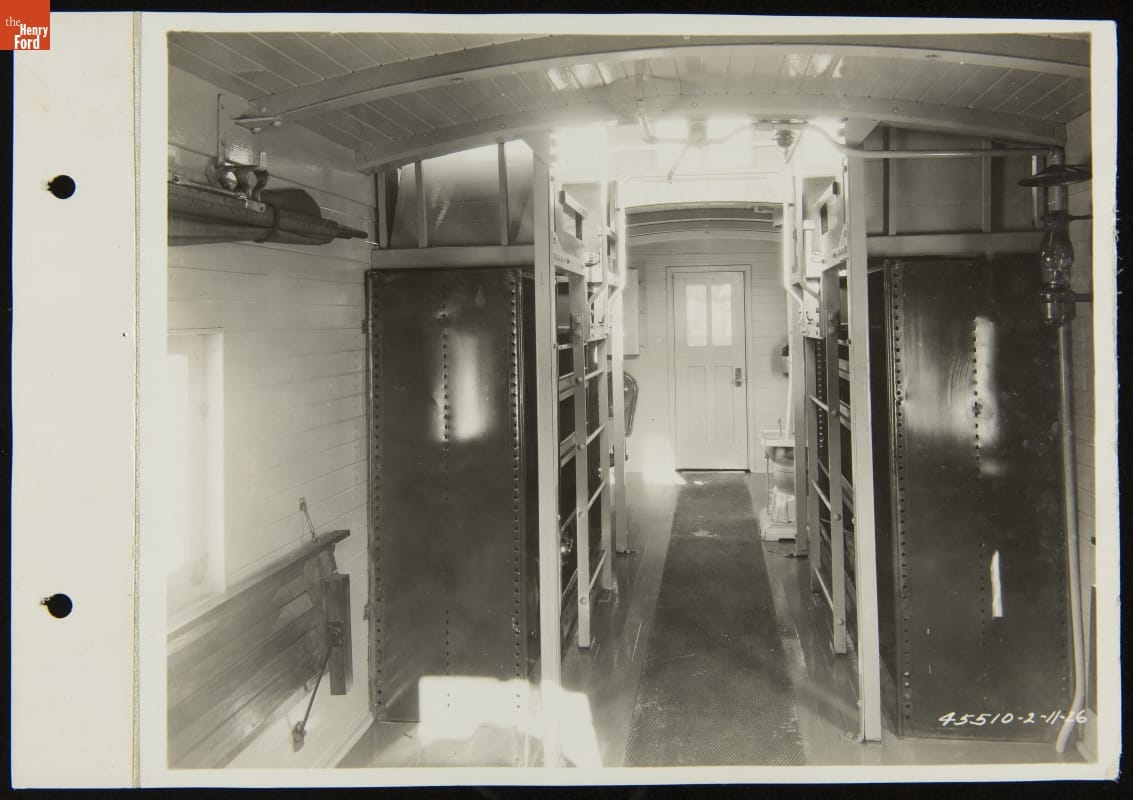
- Interior of a Railroad Caboose, Detroit, Toledo & Ironton Railroad, February 1926 - The caboose served as an office for the conductor, temporary living quarters for the train crew and a storage shack for tools and equipment. The cupola at top provided crew members with a place to watch for problems with the train. Computerized record keeping, trackside defect detectors and smaller crews all made the caboose obsolete by the 1980s.
- February 11, 1926
- Collections - Artifact
Interior of a Railroad Caboose, Detroit, Toledo & Ironton Railroad, February 1926
The caboose served as an office for the conductor, temporary living quarters for the train crew and a storage shack for tools and equipment. The cupola at top provided crew members with a place to watch for problems with the train. Computerized record keeping, trackside defect detectors and smaller crews all made the caboose obsolete by the 1980s.
- Interior of a Railroad Caboose, Detroit, Toledo & Ironton Railroad, February 1926 - The caboose served as an office for the conductor, temporary living quarters for the train crew and a storage shack for tools and equipment. The cupola at top provided crew members with a place to watch for problems with the train. Computerized record keeping, trackside defect detectors and smaller crews all made the caboose obsolete by the 1980s.
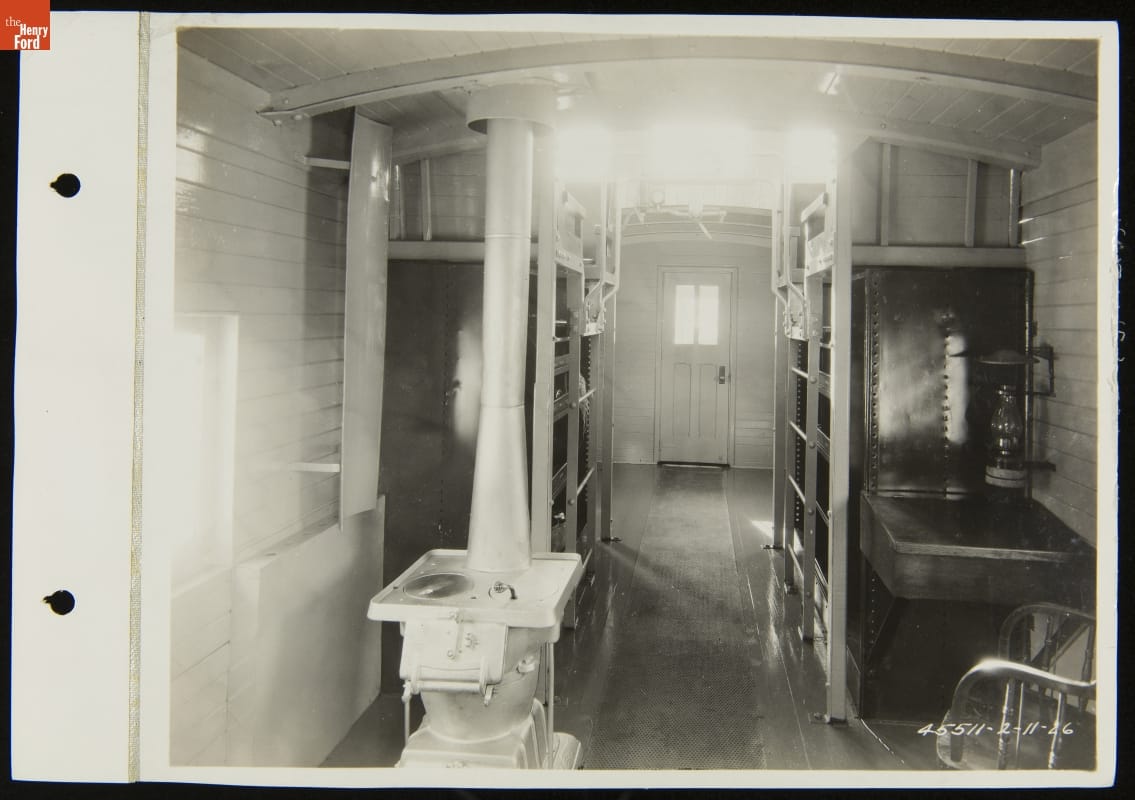
- February 11, 1926
- Collections - Artifact
Interior of a Railroad Caboose, Detroit, Toledo & Ironton Railroad, February 1926
The caboose served as an office for the conductor, temporary living quarters for the train crew and a storage shack for tools and equipment. The cupola at top provided crew members with a place to watch for problems with the train. Computerized record keeping, trackside defect detectors and smaller crews all made the caboose obsolete by the 1980s.
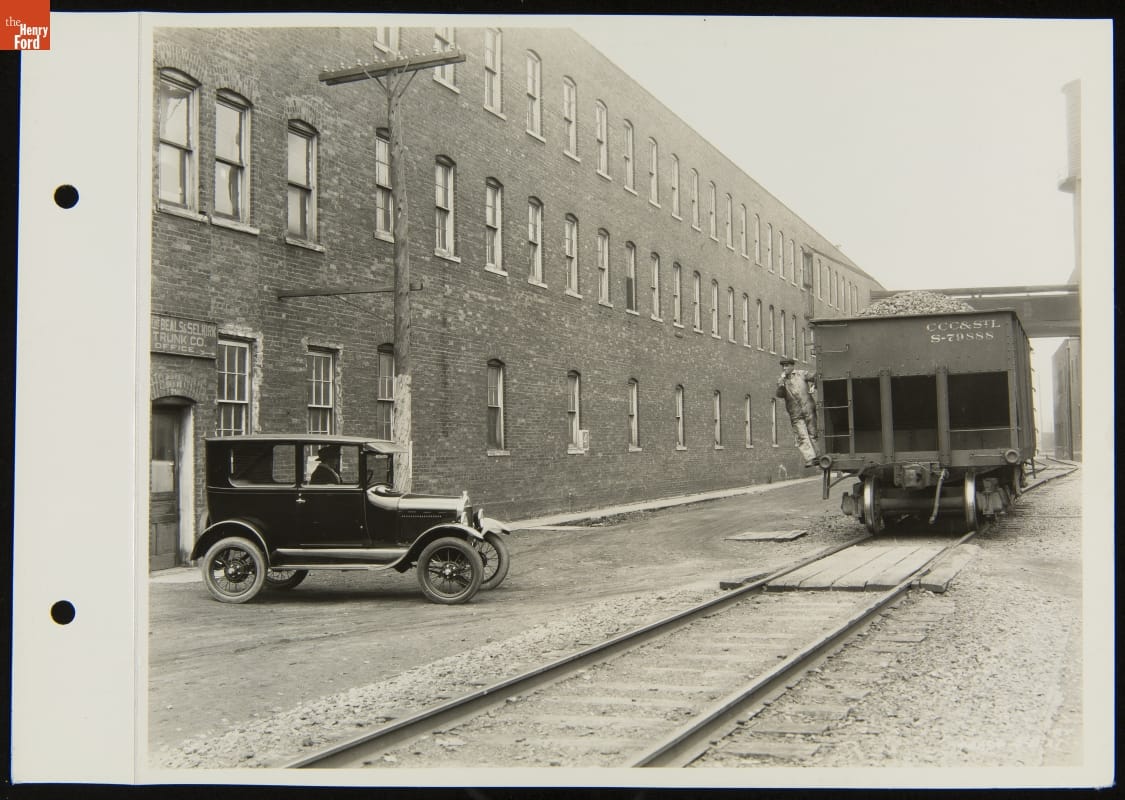
- Automobile Crossing Tracks Behind a Cleveland, Cincinnati, Chicago, and St. Louis Railway Freight Car, April 1927 - The driver of a Ford Model T waits for a loaded hopper car to clear a railroad crossing in this 1927 photograph. The brakeman, riding on the hopper, is blowing a whistle to warn the motorist. Lightly used spur tracks like this often lacked railroad crossing signs, lights or gates. Railroad crews and drivers both had to be cautious.
- April 08, 1927
- Collections - Artifact
Automobile Crossing Tracks Behind a Cleveland, Cincinnati, Chicago, and St. Louis Railway Freight Car, April 1927
The driver of a Ford Model T waits for a loaded hopper car to clear a railroad crossing in this 1927 photograph. The brakeman, riding on the hopper, is blowing a whistle to warn the motorist. Lightly used spur tracks like this often lacked railroad crossing signs, lights or gates. Railroad crews and drivers both had to be cautious.
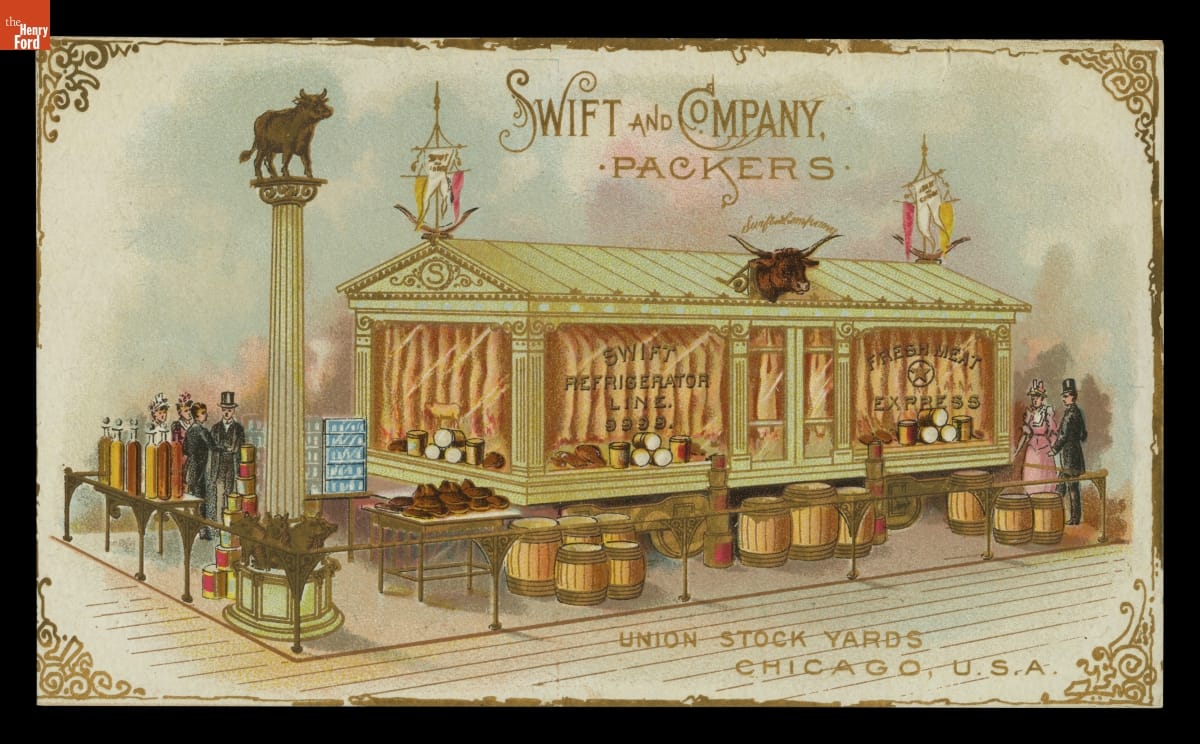
- Trade Card for Swift and Company, Packers, at the World's Columbian Exposition, 1893 - In the last third of the nineteenth century, an unprecedented variety of consumer goods and services flooded the American market. Advertisers, armed with new methods of color printing, bombarded potential customers with trade cards. Americans enjoyed and often saved the vibrant little advertisements found in product packages or distributed by local merchants. Many survive as historical records of commercialism in the United States.
- 1893
- Collections - Artifact
Trade Card for Swift and Company, Packers, at the World's Columbian Exposition, 1893
In the last third of the nineteenth century, an unprecedented variety of consumer goods and services flooded the American market. Advertisers, armed with new methods of color printing, bombarded potential customers with trade cards. Americans enjoyed and often saved the vibrant little advertisements found in product packages or distributed by local merchants. Many survive as historical records of commercialism in the United States.
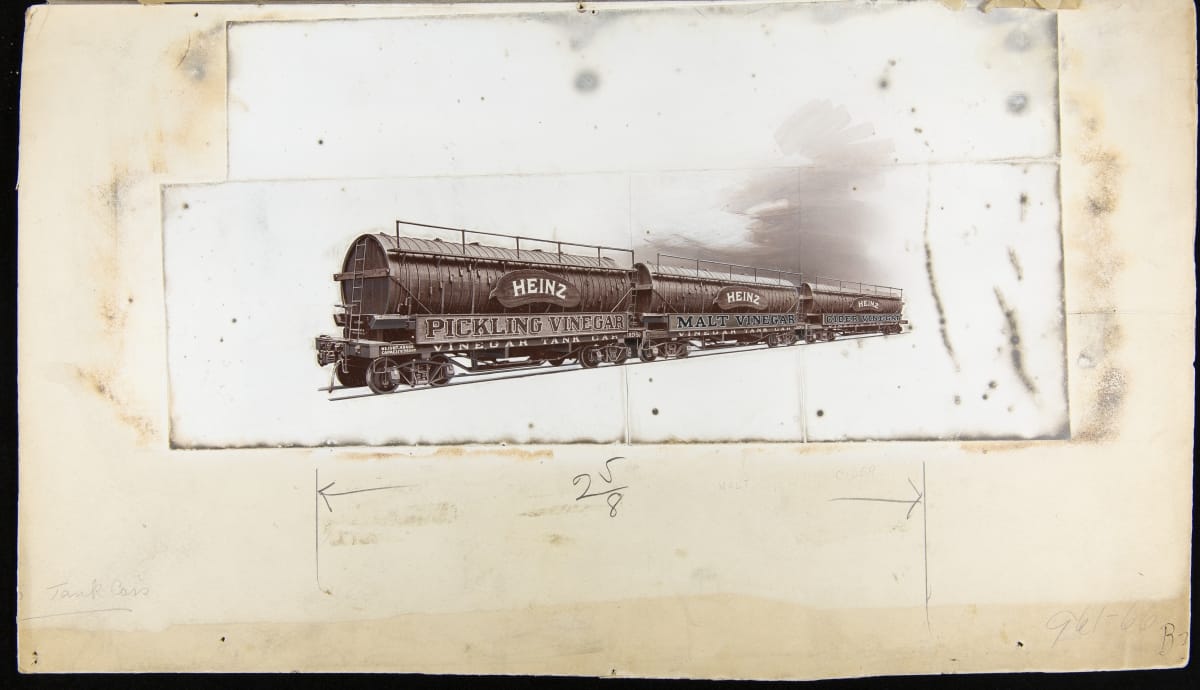
- Process Photograph, H. J. Heinz Company, Vinegar Tank Railroad Car, circa 1910 - The famous "57 Varieties" of the H.J. Heinz Company included several kinds of vinegar -- Malt, White, and Cider being the most popular. In order to transport its vinegar more efficiently, the H.J. Heinz Company owned and operated a line of railroad cars designed specifically for shipping vinegar in bulk, which allowed the company to transport about 10,000 gallons of vinegar per carload.
- circa 1910
- Collections - Artifact
Process Photograph, H. J. Heinz Company, Vinegar Tank Railroad Car, circa 1910
The famous "57 Varieties" of the H.J. Heinz Company included several kinds of vinegar -- Malt, White, and Cider being the most popular. In order to transport its vinegar more efficiently, the H.J. Heinz Company owned and operated a line of railroad cars designed specifically for shipping vinegar in bulk, which allowed the company to transport about 10,000 gallons of vinegar per carload.
- Replica of 1831 "DeWitt Clinton" Steam Locomotive Being Delivered to Henry Ford Museum, June 1935 - Built by the New York Central Railroad for the 1893 World's Columbian Exposition in Chicago, the <EM>DeWitt Clinton</EM> replica locomotive and cars were given to The Henry Ford in 1935. The replica train continued to travel to fairs, expositions, and promotional events across the NYC system into the 1950s.
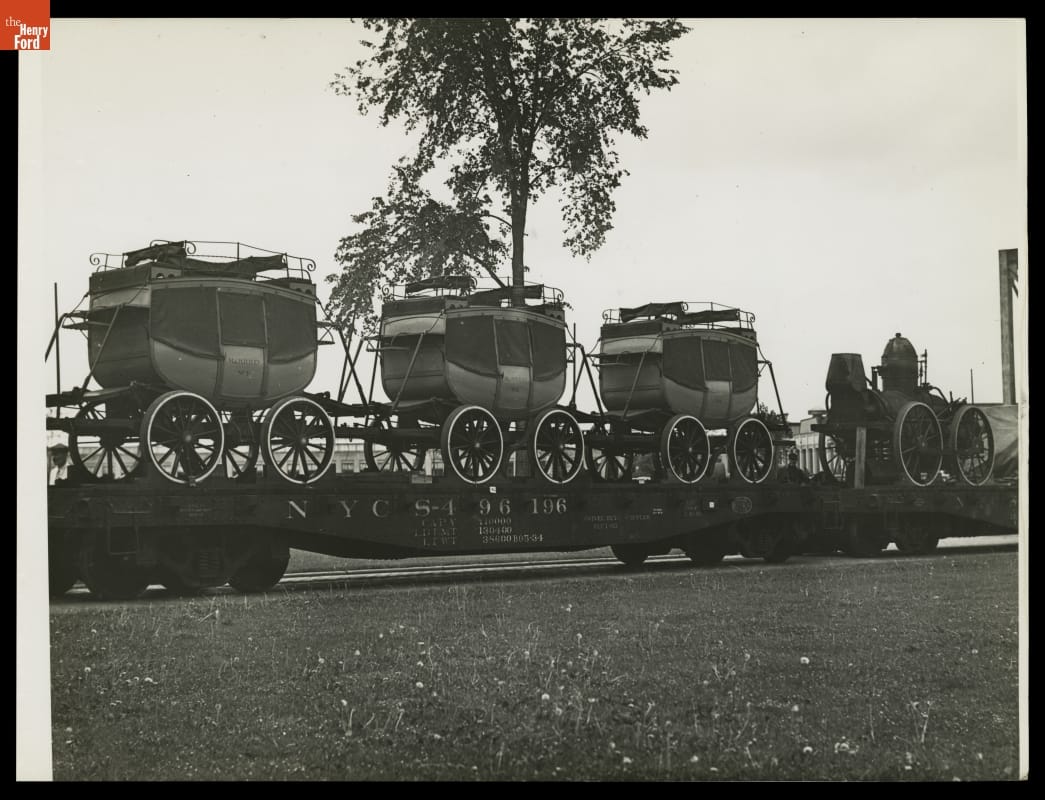
- June 04, 1935
- Collections - Artifact
Replica of 1831 "DeWitt Clinton" Steam Locomotive Being Delivered to Henry Ford Museum, June 1935
Built by the New York Central Railroad for the 1893 World's Columbian Exposition in Chicago, the DeWitt Clinton replica locomotive and cars were given to The Henry Ford in 1935. The replica train continued to travel to fairs, expositions, and promotional events across the NYC system into the 1950s.
- Large "Ford" Sign at the Rouge Plant, circa 1964 - The River Rouge complex took raw materials, like iron ore, and converted them to refined materials for the creation of new automobiles. Ford strategically positioned the Rouge plant near the river to receive raw materials by boat, and it used the complex's railroad network to distribute them to the proper buildings for refinement. This strategy made Ford Motor Company more efficient and allowed for financial growth.
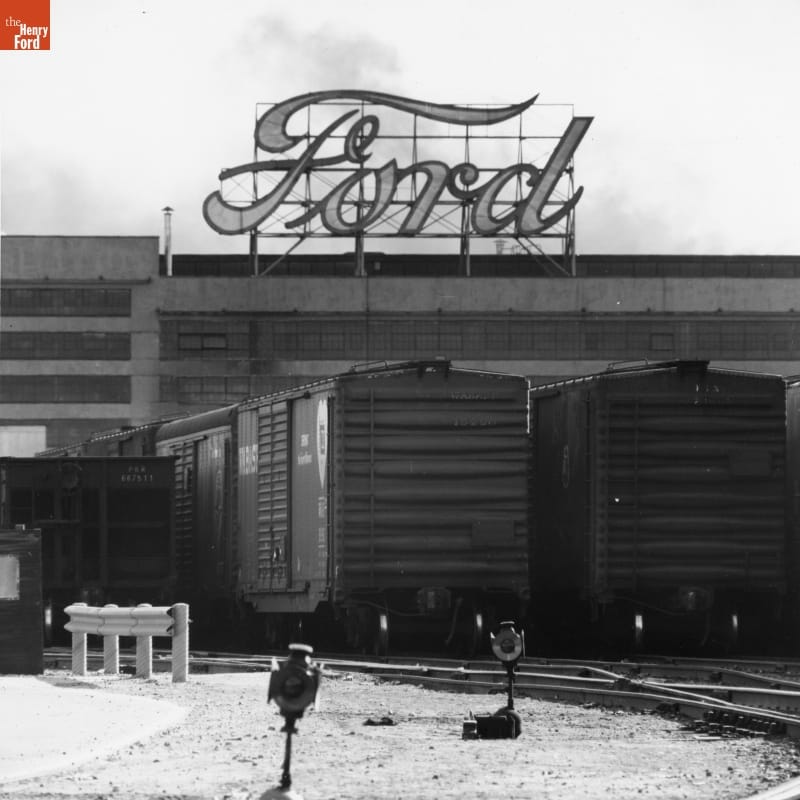
- October 31, 1963
- Collections - Artifact
Large "Ford" Sign at the Rouge Plant, circa 1964
The River Rouge complex took raw materials, like iron ore, and converted them to refined materials for the creation of new automobiles. Ford strategically positioned the Rouge plant near the river to receive raw materials by boat, and it used the complex's railroad network to distribute them to the proper buildings for refinement. This strategy made Ford Motor Company more efficient and allowed for financial growth.