
Large "Ford" Sign at the Rouge Plant, circa 1964
THF68322 / Large "Ford" Sign at the Rouge Plant, circa 1964
01
Artifact Overview
The River Rouge complex took raw materials, like iron ore, and converted them to refined materials for the creation of new automobiles. Ford strategically positioned the Rouge plant near the river to receive raw materials by boat, and it used the complex's railroad network to distribute them to the proper buildings for refinement. This strategy made Ford Motor Company more efficient and allowed for financial growth.
Artifact Details
Artifact
Photographic print
Subject Date
31 October 1963
Place of Creation
Collection Title
Location
By Request in the Benson Ford Research Center
Object ID
P.833.135687.95
Credit
From the Collections of The Henry Ford. Gift of Ford Motor Company.
Material
Paper (Fiber product)
Technique
Gelatin silver process
Color
Black-and-white (Colors)
Dimensions
Height: 8.25 in
Width: 10.25 in
Keywords |
|---|
02
Related Content
 Set
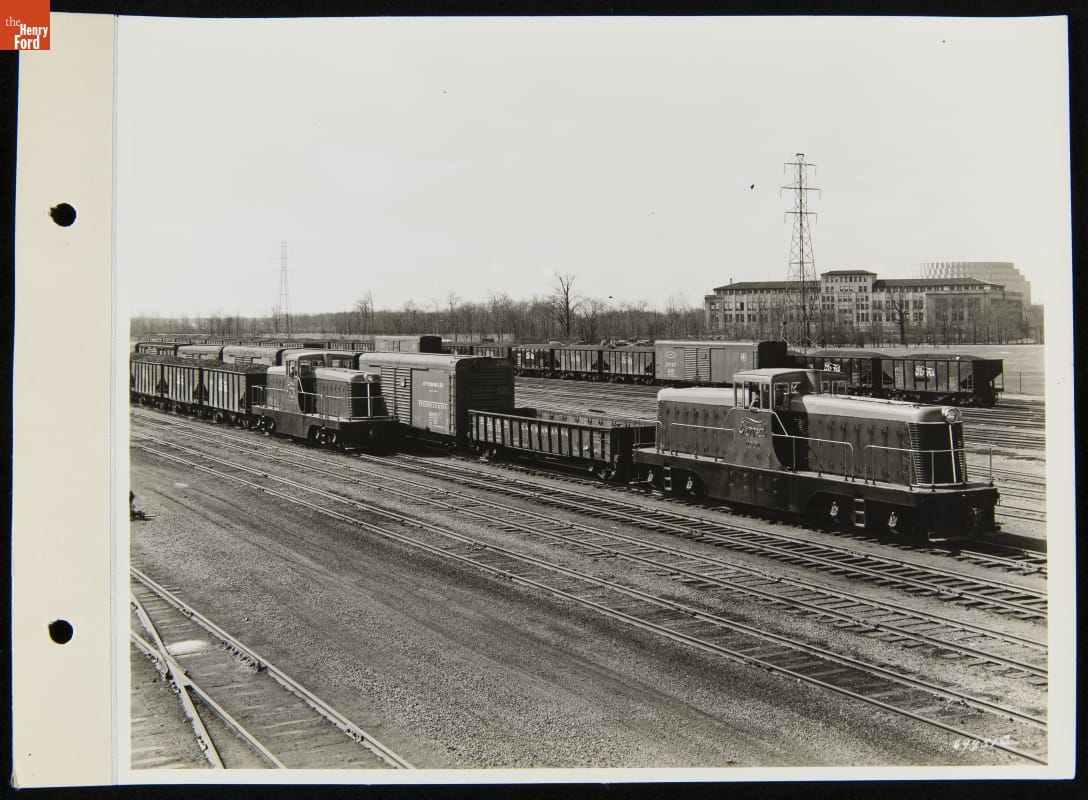
SetFord Rouge Railroad
- 36 Artifacts
Ford Motor Company operated its own industrial railroad at the Rouge factory. Ford-owned locomotives moved incoming railcars filled with raw materials, and outgoing railcars loaded with finished parts and vehicles. Ford employees crewed trains, cared for locomotives, and maintained 100 miles of track within the factory grounds. At its 1930s peak, Ford's Rouge railroad was one of the largest privately owned rail operations in the world.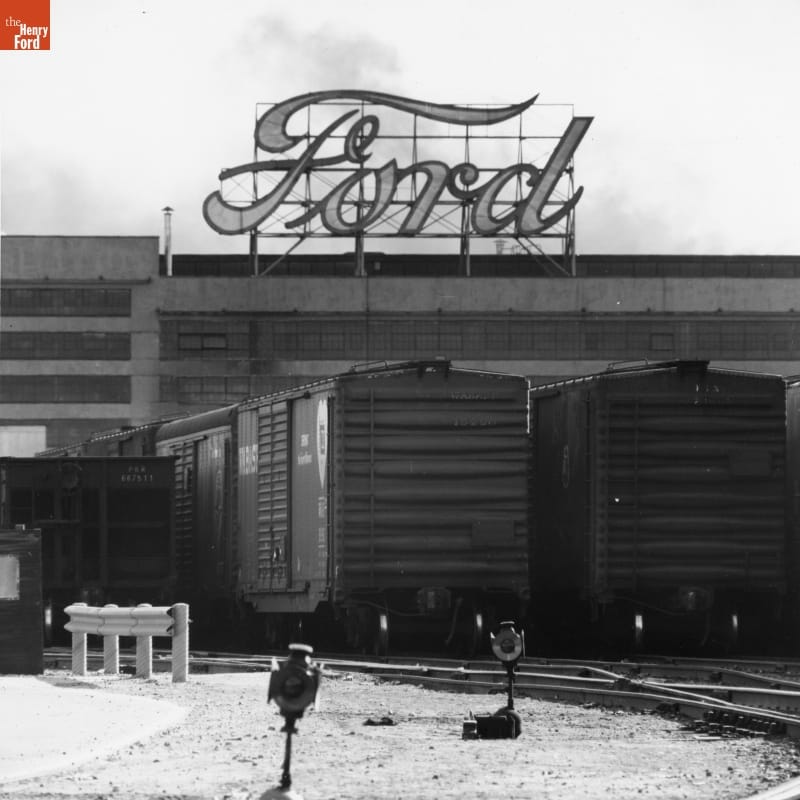 Set
SetLesson: Social Change - Mass Advertising -1920s
- 13 Artifacts
The River Rouge complex took raw materials, like iron ore, and converted them to refined materials for the creation of new automobiles. Ford strategically positioned the Rouge plant near the river to receive raw materials by boat, and it used the complex's railroad network to distribute them to the proper buildings for refinement. This strategy made Ford Motor Company more efficient and allowed for financial growth.