
Search
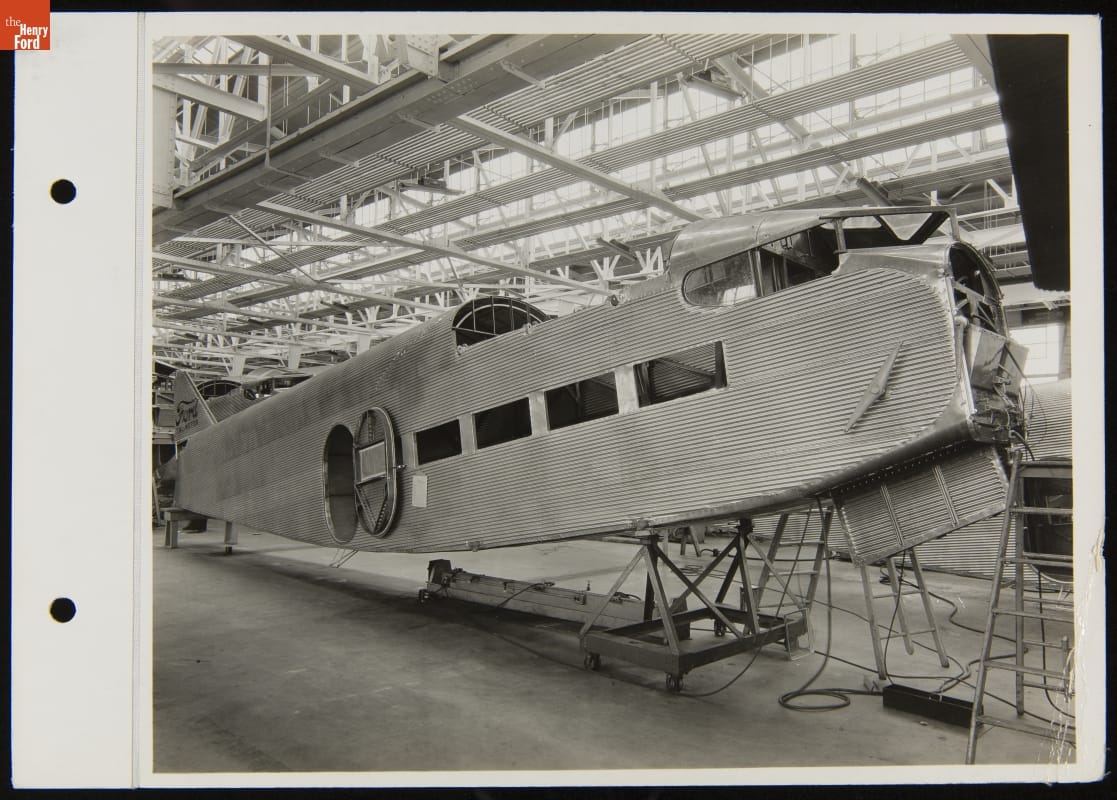
- Ford Tri-Motor Airplane Fuselage Being Constructed at the Stout Factory, Dearborn, Michigan, April 1929 - Ford Motor Company's Tri-Motor, built from 1926-1933, flew in many early American airline fleets. The all-metal airplane was rugged, dependable, and equally adaptable to passenger and freight service. Tri-Motors were built with some of the same mass production techniques used in Ford's automobile plants. The fuselage, or the main body of the airplane, is constructed in this photograph.
- April 30, 1929
- Collections - Artifact
Ford Tri-Motor Airplane Fuselage Being Constructed at the Stout Factory, Dearborn, Michigan, April 1929
Ford Motor Company's Tri-Motor, built from 1926-1933, flew in many early American airline fleets. The all-metal airplane was rugged, dependable, and equally adaptable to passenger and freight service. Tri-Motors were built with some of the same mass production techniques used in Ford's automobile plants. The fuselage, or the main body of the airplane, is constructed in this photograph.
- Photograph Album of the H. J. Heinz Company War Production Division, circa 1945 - Company photograph albums are often reminders of the company's history, significant moments in time, and the employees who worked there. This album, compiled by the H.J. Heinz Company, includes text and photographs describing the company's involvement in producing airplane parts during World War II.
- circa 1945
- Collections - Artifact
Photograph Album of the H. J. Heinz Company War Production Division, circa 1945
Company photograph albums are often reminders of the company's history, significant moments in time, and the employees who worked there. This album, compiled by the H.J. Heinz Company, includes text and photographs describing the company's involvement in producing airplane parts during World War II.
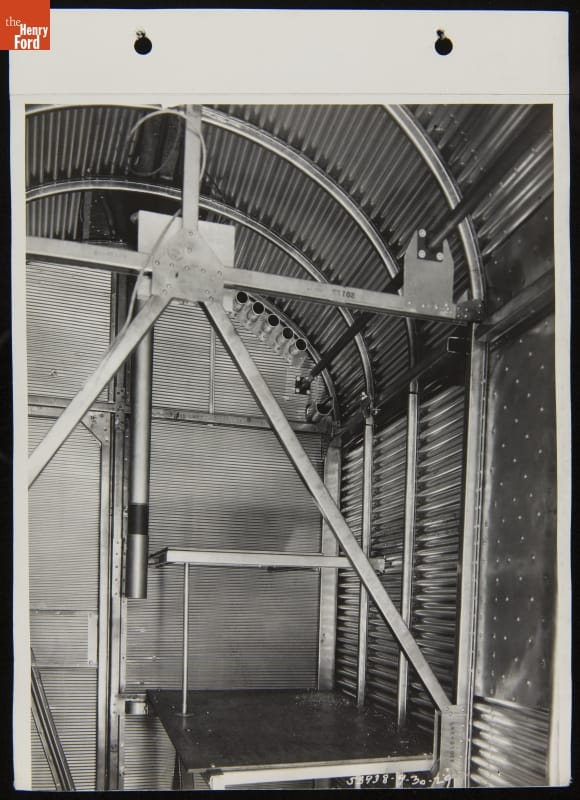
- Ford Tri-Motor Airplane, Interior View of Fuselage Showing Construction Detail, September 1929 - Ford Motor Company's Tri-Motor, built from 1926-1933, flew in many early American airline fleets. The all-metal airplane was rugged, dependable, and equally adaptable to passenger and freight service. Tri-Motors were built with some of the same mass production techniques used in Ford's automobile plants. The interior of the fuselage, or the main body of the airplane, is revealed in this photograph.
- September 01, 1929
- Collections - Artifact
Ford Tri-Motor Airplane, Interior View of Fuselage Showing Construction Detail, September 1929
Ford Motor Company's Tri-Motor, built from 1926-1933, flew in many early American airline fleets. The all-metal airplane was rugged, dependable, and equally adaptable to passenger and freight service. Tri-Motors were built with some of the same mass production techniques used in Ford's automobile plants. The interior of the fuselage, or the main body of the airplane, is revealed in this photograph.
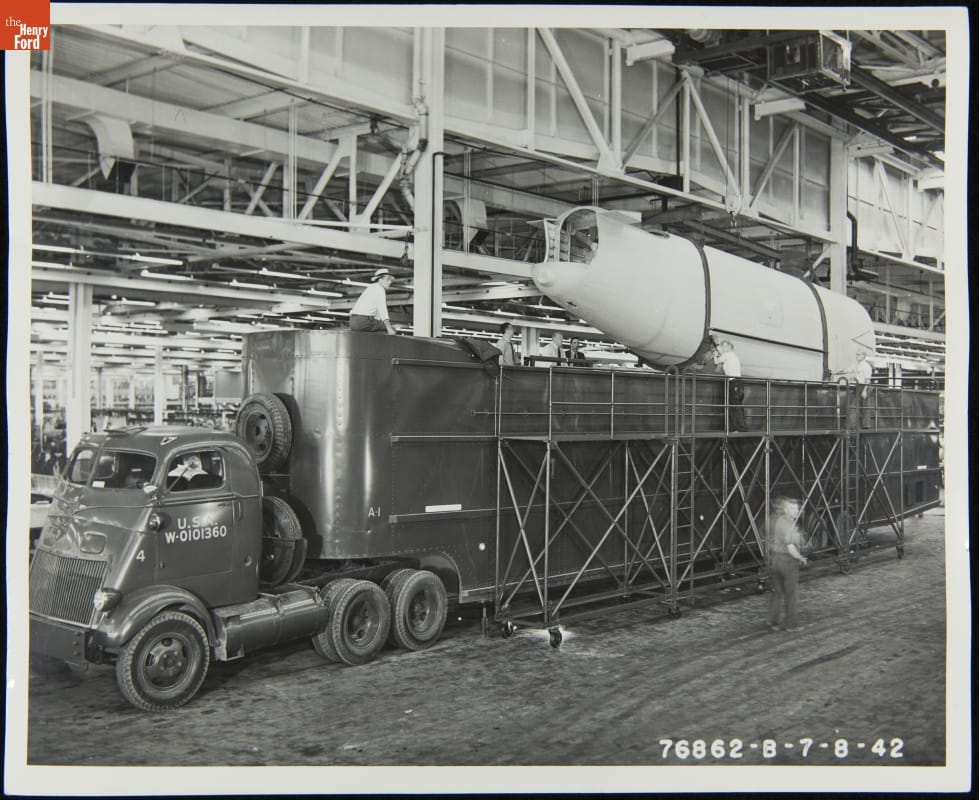
- Haulaway Truck with Bomber Fuselage, Willow Run Bomber Plant, July 8, 1942 - Not every B-24 bomber built at Ford Motor Company's Willow Run plant left the facility as a completed airplane. Some 1,800 bombers were sent as partially assembled kits to Consolidated Aircraft Corporation in Fort Worth, Texas, or Douglas Aircraft in Tulsa, Oklahoma. The components for each plane were packed into two specially designed semi-trailers for transport to these final assembly plants.
- July 08, 1942
- Collections - Artifact
Haulaway Truck with Bomber Fuselage, Willow Run Bomber Plant, July 8, 1942
Not every B-24 bomber built at Ford Motor Company's Willow Run plant left the facility as a completed airplane. Some 1,800 bombers were sent as partially assembled kits to Consolidated Aircraft Corporation in Fort Worth, Texas, or Douglas Aircraft in Tulsa, Oklahoma. The components for each plane were packed into two specially designed semi-trailers for transport to these final assembly plants.
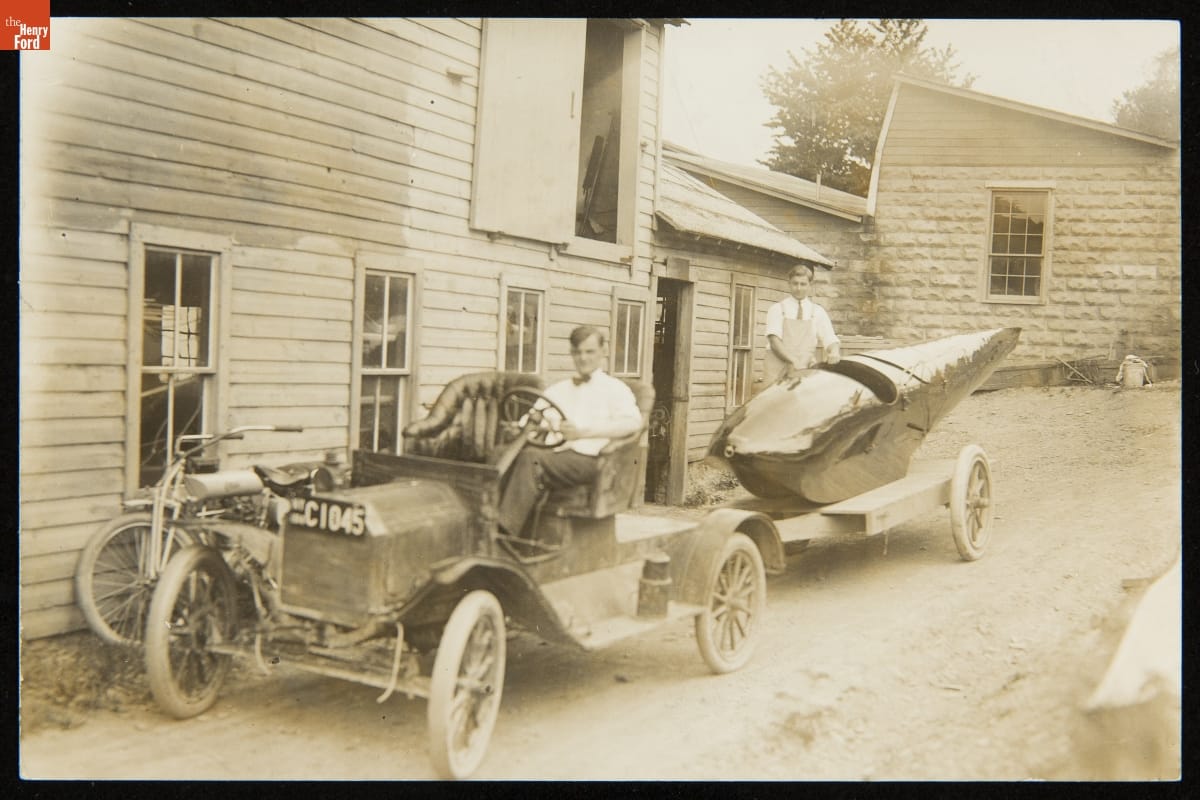
- Ford Model T, Motorcycle, and Possible Fuselage from a Curtiss Flying Boat, 1912-1920 - Glenn Curtiss formed the G.H. Curtiss Manufacturing Company in his hometown of Hammondsport, New York, in 1901. The company built motorcycles until 1913, and Curtiss himself set several speed records. In 1907, he reached 136.36 mph on a 40-horsepower V-8 racing motorcycle. By that time. Curtiss's interests and efforts were increasingly focused on aviation.
- 1912-1920
- Collections - Artifact
Ford Model T, Motorcycle, and Possible Fuselage from a Curtiss Flying Boat, 1912-1920
Glenn Curtiss formed the G.H. Curtiss Manufacturing Company in his hometown of Hammondsport, New York, in 1901. The company built motorcycles until 1913, and Curtiss himself set several speed records. In 1907, he reached 136.36 mph on a 40-horsepower V-8 racing motorcycle. By that time. Curtiss's interests and efforts were increasingly focused on aviation.