
Search
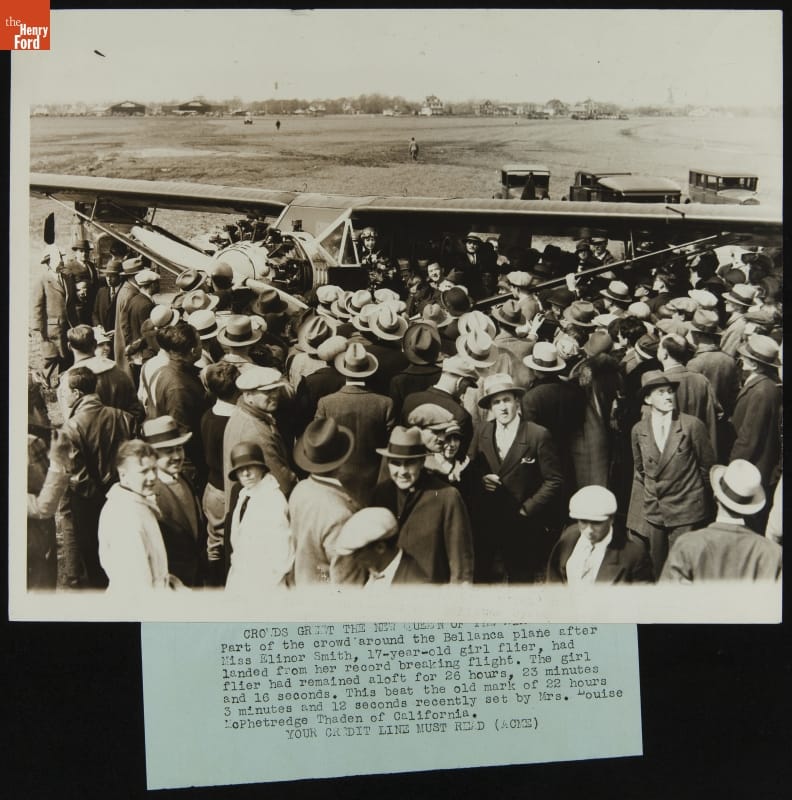
- Elinor Smith after Record-Breaking Women's Endurance Flight, 1929 - Elinor Smith took her first flight at age six and earned a pilot's license at 16. She made headlines flying under New York City bridges in 1928, but more serious pursuits earned Smith a series of endurance, speed, and altitude records for a female pilot. Smith piloted an airplane for the last time in 2001, at the age of 89.
- April 23, 1929
- Collections - Artifact
Elinor Smith after Record-Breaking Women's Endurance Flight, 1929
Elinor Smith took her first flight at age six and earned a pilot's license at 16. She made headlines flying under New York City bridges in 1928, but more serious pursuits earned Smith a series of endurance, speed, and altitude records for a female pilot. Smith piloted an airplane for the last time in 2001, at the age of 89.
- Workers in a Cucumber Greenhouse, circa 1923 -
- circa 1923
- Collections - Artifact
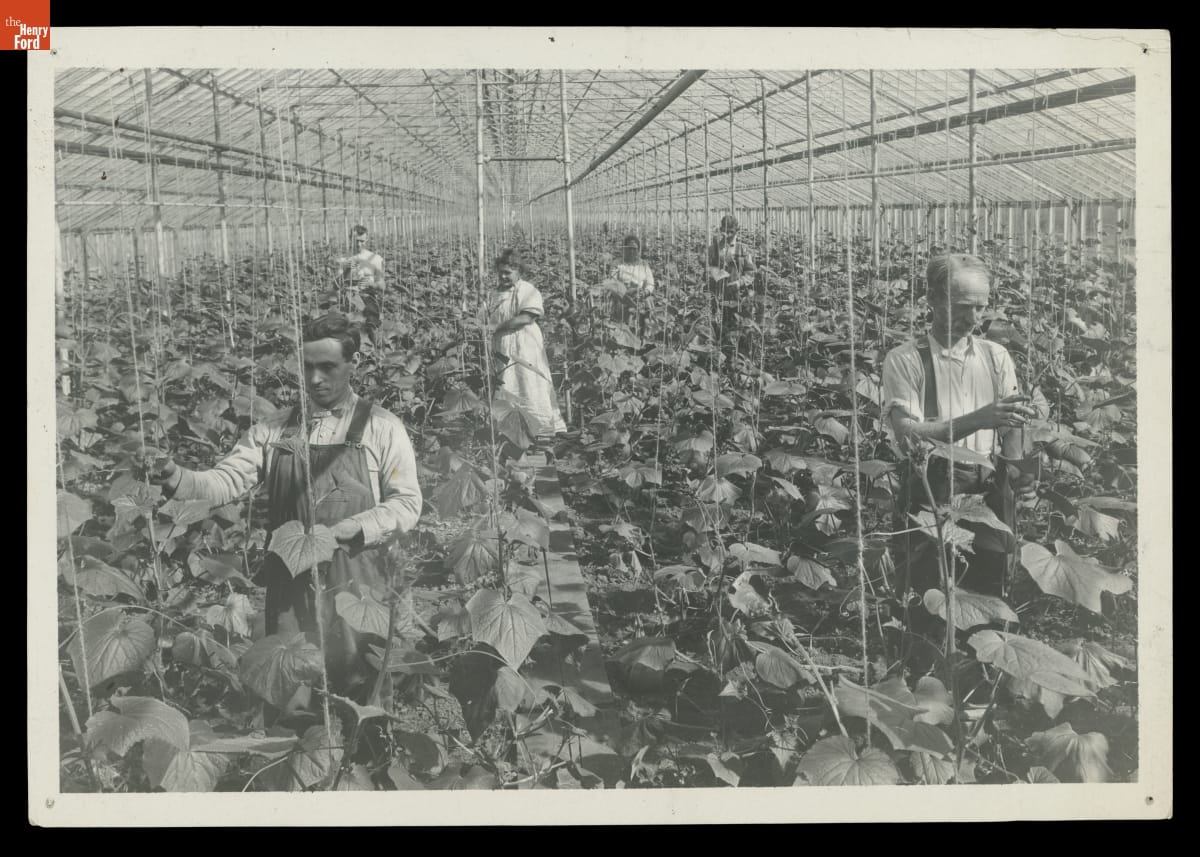
Workers in a Cucumber Greenhouse, circa 1923
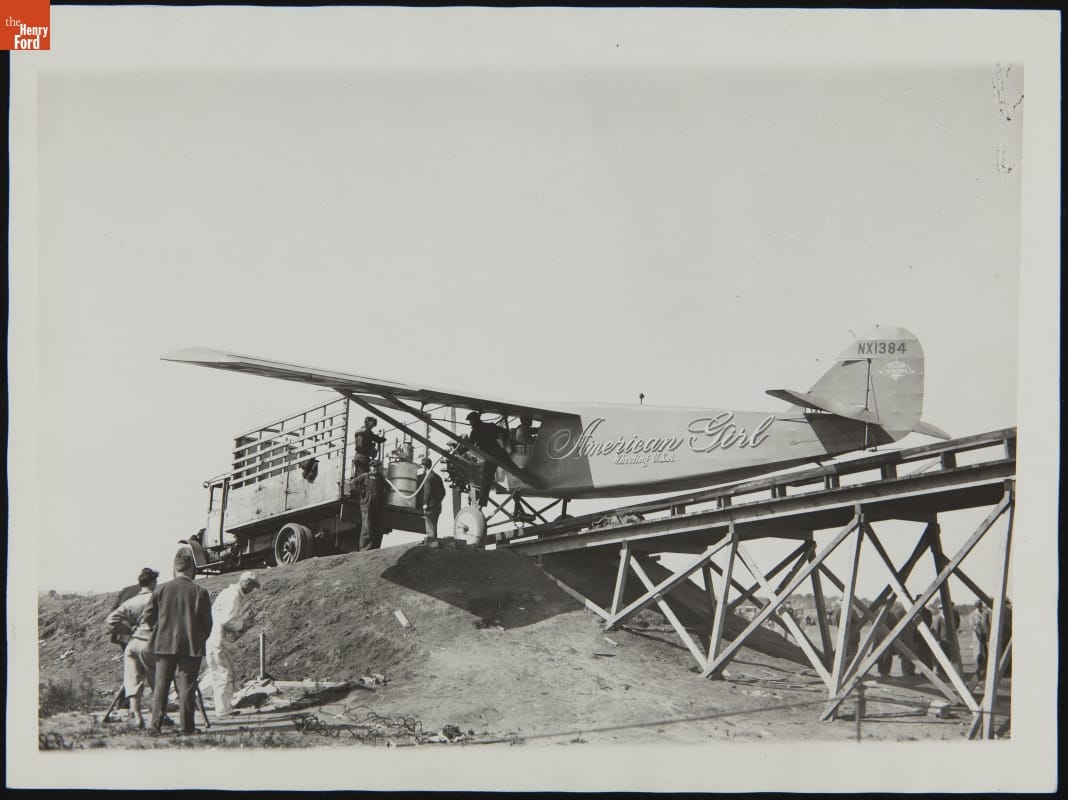
- Ruth Elder's Airplane, the "American Girl," Fueling up before Take-off, October 11, 1927 - Ruth Elder planned to be the first woman to fly across the Atlantic. On October 11, 1927, Elder and co-pilot George Haldeman took off in their Stinson Detroiter <EM>American Girl</EM>. An oil leak forced them to ditch in the ocean some 360 miles short of land. Still, the 2,623 miles Elder covered set a new distance record for a female pilot.
- October 11, 1927
- Collections - Artifact
Ruth Elder's Airplane, the "American Girl," Fueling up before Take-off, October 11, 1927
Ruth Elder planned to be the first woman to fly across the Atlantic. On October 11, 1927, Elder and co-pilot George Haldeman took off in their Stinson Detroiter American Girl. An oil leak forced them to ditch in the ocean some 360 miles short of land. Still, the 2,623 miles Elder covered set a new distance record for a female pilot.
- Workers in a Greenhouse, circa 1923 -
- circa 1923
- Collections - Artifact
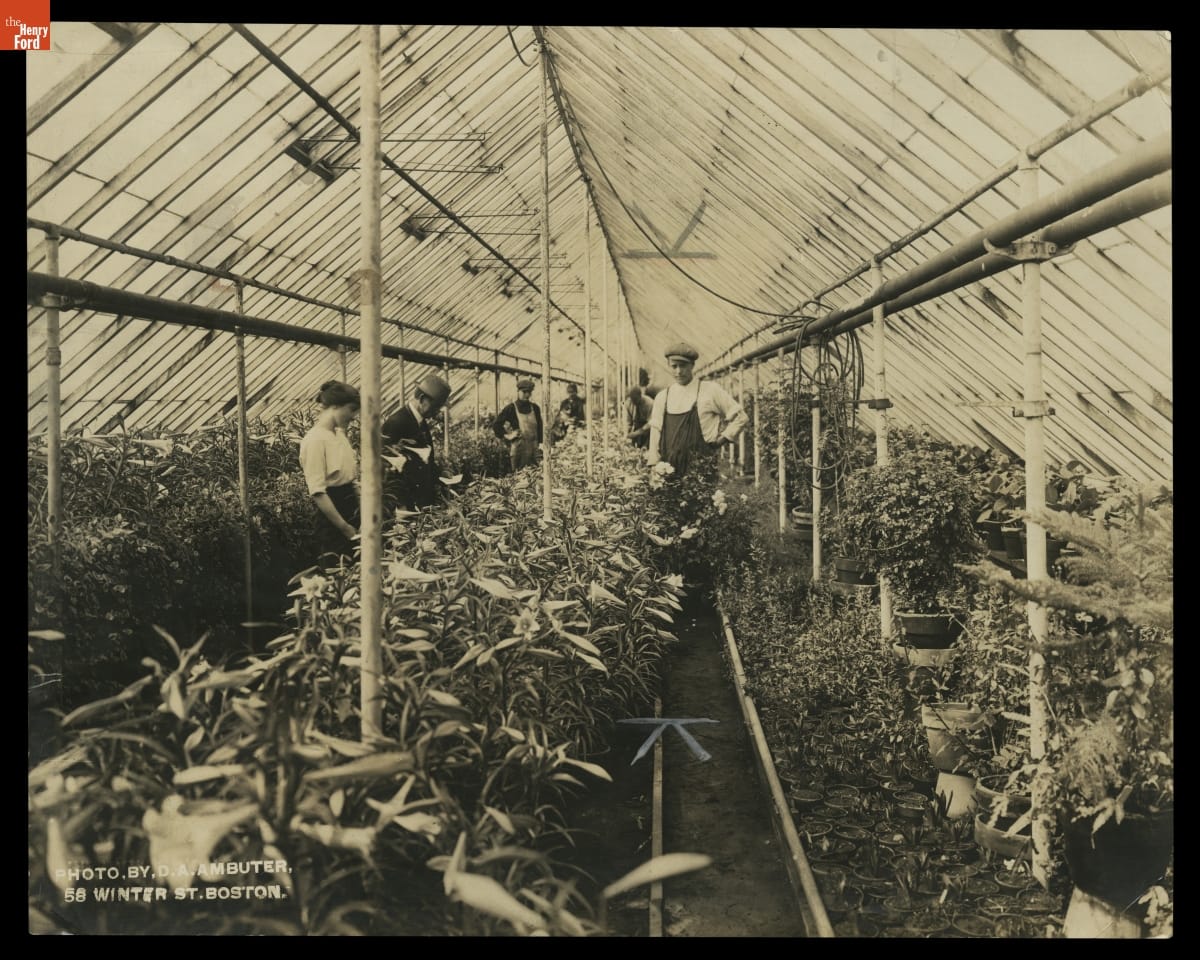
Workers in a Greenhouse, circa 1923
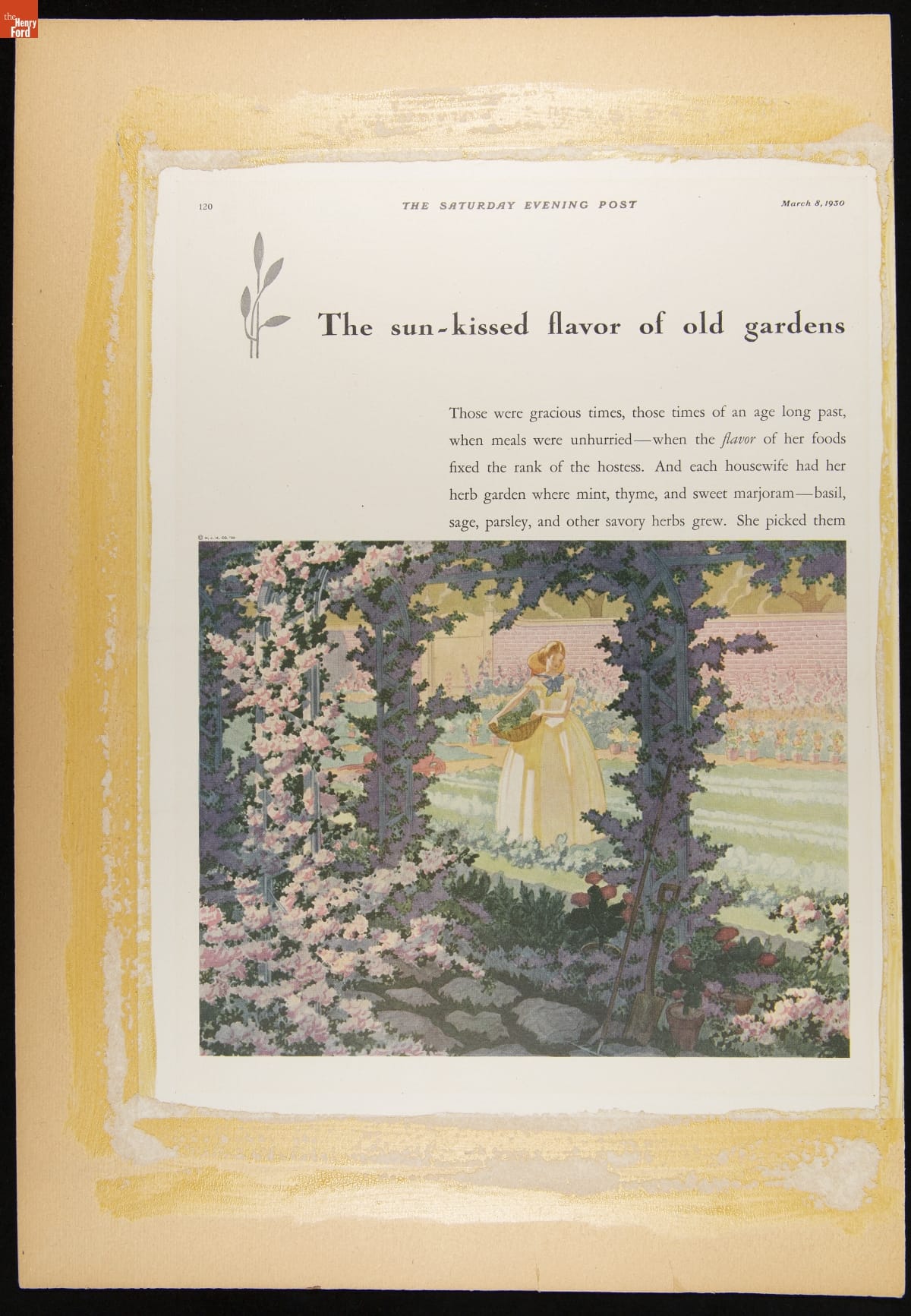
- "The Sun-Kissed Flavor of Old Gardens," Heinz Company Advertisement, March 8, 1930 - This two-page tear sheet advertising layout was created to be published in the Saturday Evening Post on March 8, 1930. The advertisement describes how old ways of cooking were painstaking and time consuming, whereas Heinz products exhibit the same great taste of old recipes without all the hassle.
- March 08, 1930
- Collections - Artifact
"The Sun-Kissed Flavor of Old Gardens," Heinz Company Advertisement, March 8, 1930
This two-page tear sheet advertising layout was created to be published in the Saturday Evening Post on March 8, 1930. The advertisement describes how old ways of cooking were painstaking and time consuming, whereas Heinz products exhibit the same great taste of old recipes without all the hassle.
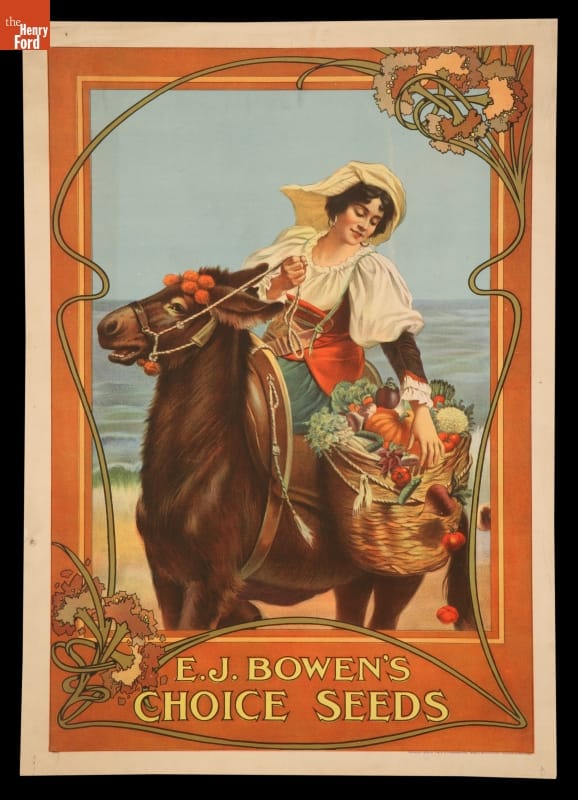
- Advertising Poster, "E.J. Bowen's Choice Seeds," 1904 -
- 1904
- Collections - Artifact
Advertising Poster, "E.J. Bowen's Choice Seeds," 1904
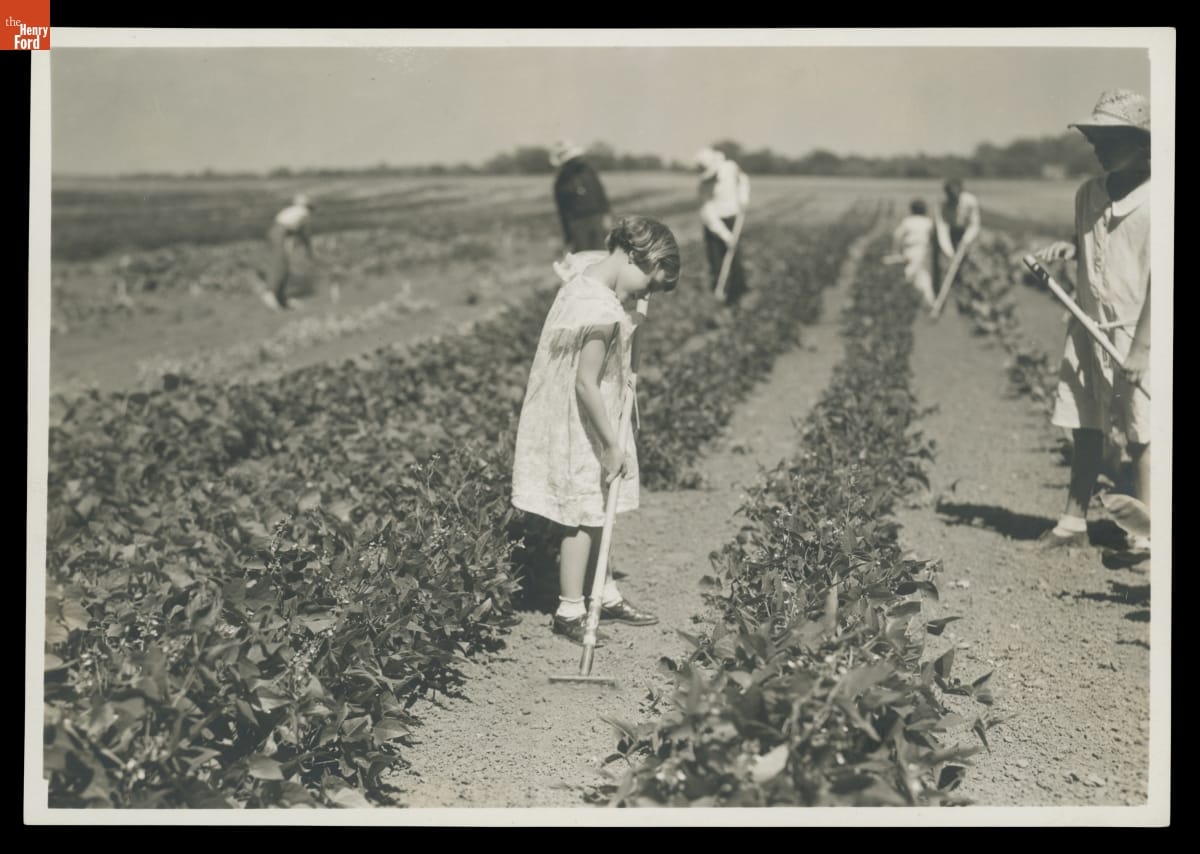
- School Children Working in a Garden, Macon, Michigan -
- 1930-1947
- Collections - Artifact
School Children Working in a Garden, Macon, Michigan
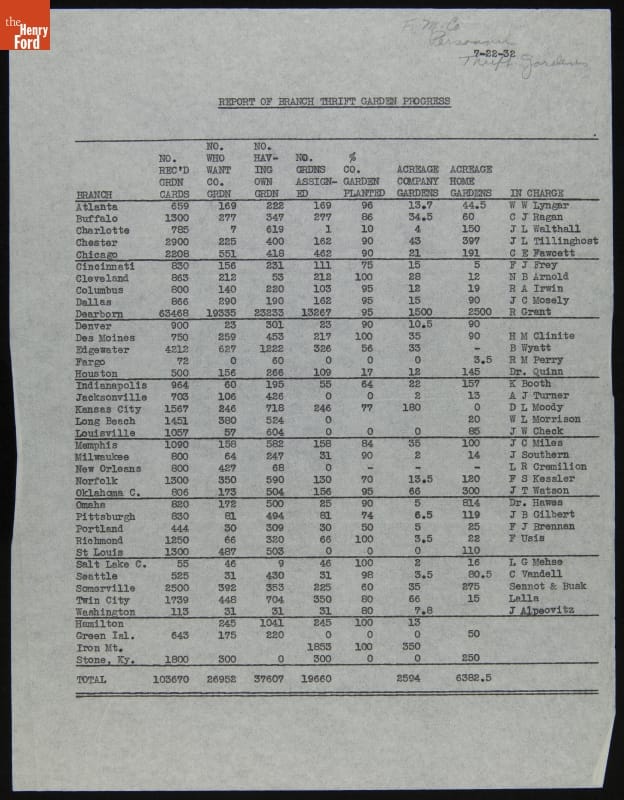
- Report of Branch Thrift Garden Progress, July 1932 -
- July 22, 1932
- Collections - Artifact
Report of Branch Thrift Garden Progress, July 1932
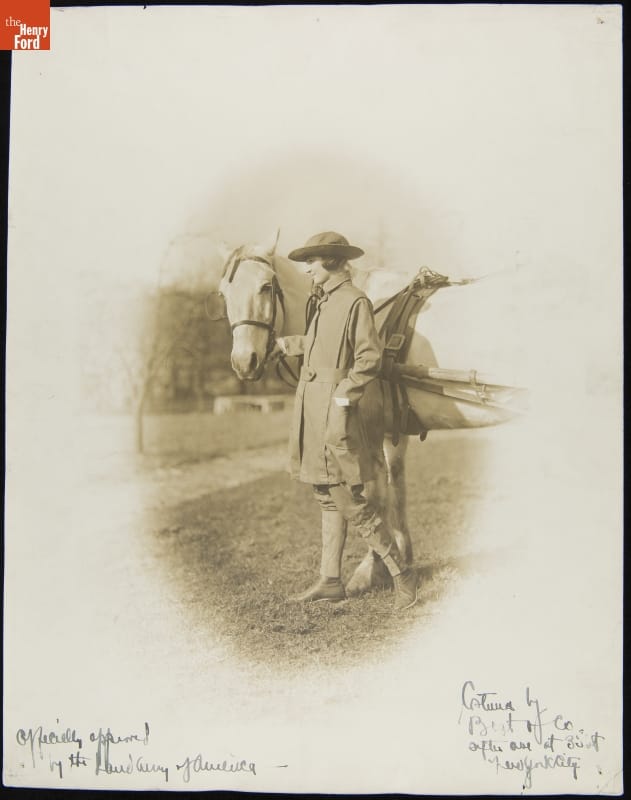
- Woman in Work Costume Officially Approved by the Land Army of America, 1918 - After the United States entered World War I in 1917, Americans worried about labor and food shortages as a result of men going off to fight. Organizations like the Woman's Land Army of America and the Woman's National Farm and Garden Association recruited and trained women to perform agricultural work across the country. This woman modeled the Land Army uniform.
- 1918
- Collections - Artifact
Woman in Work Costume Officially Approved by the Land Army of America, 1918
After the United States entered World War I in 1917, Americans worried about labor and food shortages as a result of men going off to fight. Organizations like the Woman's Land Army of America and the Woman's National Farm and Garden Association recruited and trained women to perform agricultural work across the country. This woman modeled the Land Army uniform.
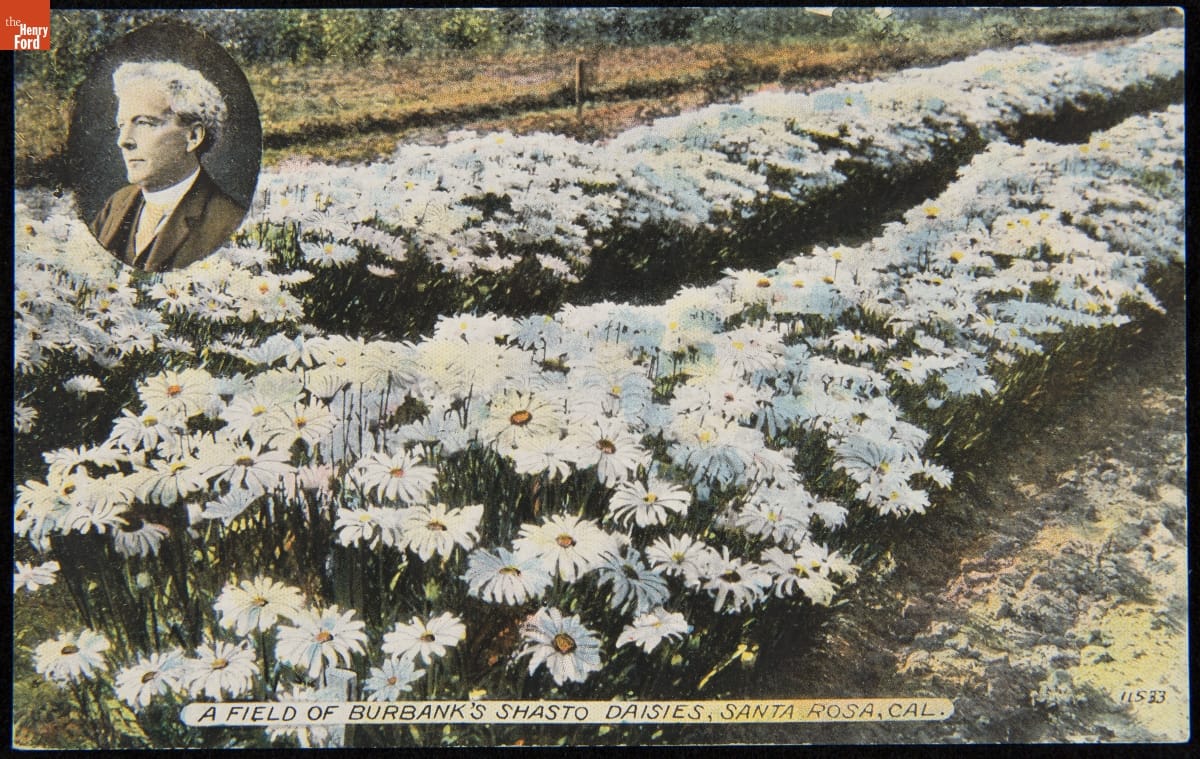
- "A Field of Burbank's Shasto Daisies, Santa Rosa, Cal.," circa 1915 - Luther Burbank (1849-1926), an American horticulturalist, gained a reputation for selective breeding that yielded more than 800 new fruits, vegetables, flowers, and other plants. One of his most enduring inventions, the Shasta daisy, released in 1901, took him 17 years to perfect. He praised its grace, beauty, abundance of bloom, hardiness, and persistence, even as he released three "new" Shasta daisy varieties in 1904.
- circa 1915
- Collections - Artifact
"A Field of Burbank's Shasto Daisies, Santa Rosa, Cal.," circa 1915
Luther Burbank (1849-1926), an American horticulturalist, gained a reputation for selective breeding that yielded more than 800 new fruits, vegetables, flowers, and other plants. One of his most enduring inventions, the Shasta daisy, released in 1901, took him 17 years to perfect. He praised its grace, beauty, abundance of bloom, hardiness, and persistence, even as he released three "new" Shasta daisy varieties in 1904.