
Search
- Mack Model AB Tank Trucks at a Gas Station, February 1934 - Founded in Brooklyn, New York, in 1900, Mack Brothers Company relocated to Allentown, Pennsylvania, in 1905 and adopted the name Mack Trucks in 1922. Mack-built tank trucks like this had separate compartments for gasoline, diesel fuel, lubricants, and other oil and petroleum products. The delivery trucks transported these products from distributors to gas stations.
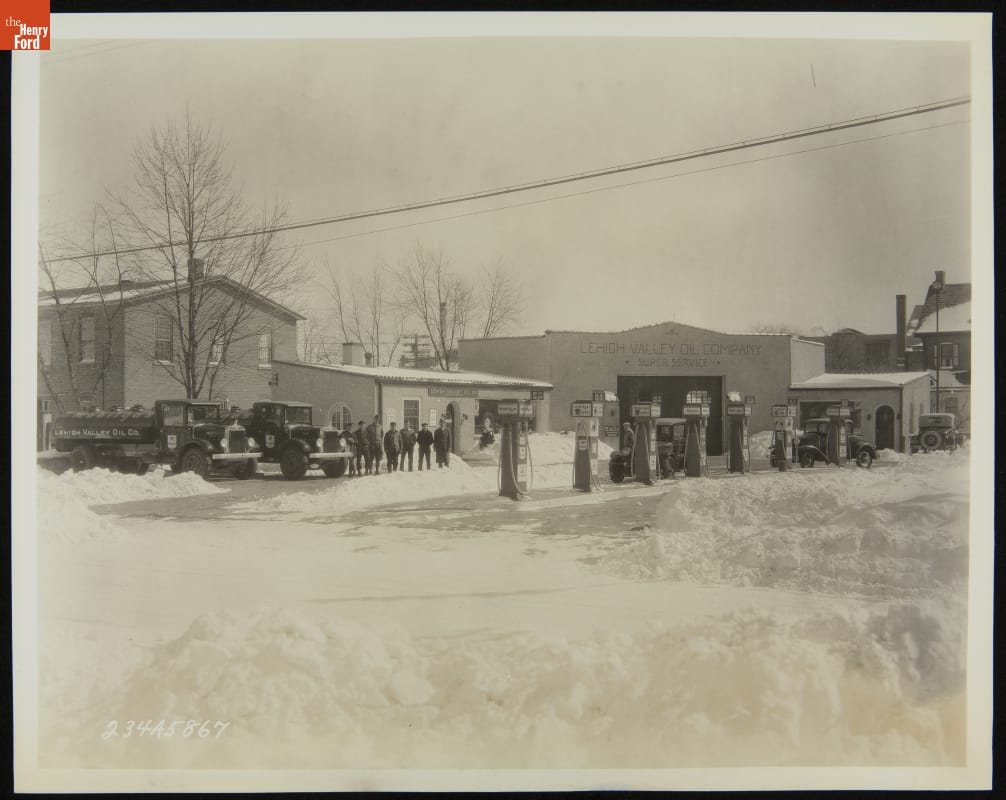
- February 01, 1934
- Collections - Artifact
Mack Model AB Tank Trucks at a Gas Station, February 1934
Founded in Brooklyn, New York, in 1900, Mack Brothers Company relocated to Allentown, Pennsylvania, in 1905 and adopted the name Mack Trucks in 1922. Mack-built tank trucks like this had separate compartments for gasoline, diesel fuel, lubricants, and other oil and petroleum products. The delivery trucks transported these products from distributors to gas stations.
- Mack Model AC Tank Truck at a Gas Station, June 1925 - Founded in Brooklyn, New York, in 1900, Mack Brothers Company relocated to Allentown, Pennsylvania, in 1905 and adopted the name Mack Trucks in 1922. Mack-built tank trucks like this had separate compartments for gasoline, diesel fuel, lubricants, and other oil and petroleum products. The delivery trucks transported these products from distributors to gas stations.
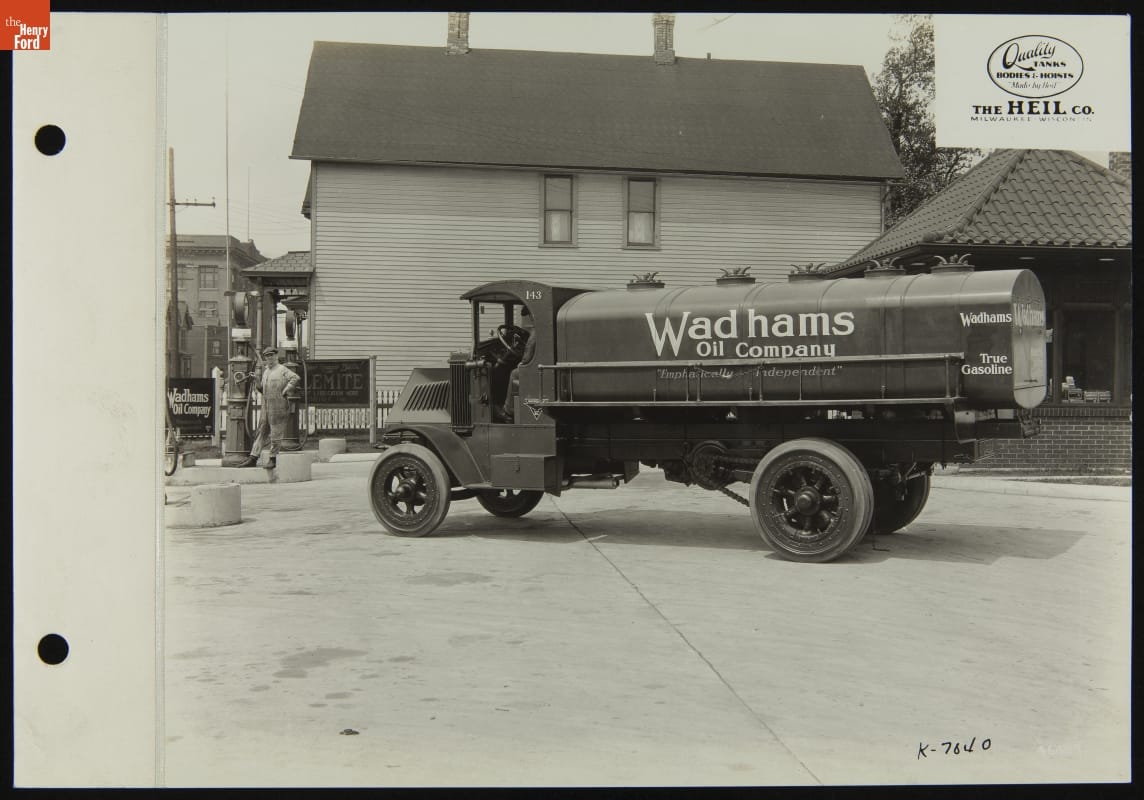
- June 01, 1925
- Collections - Artifact
Mack Model AC Tank Truck at a Gas Station, June 1925
Founded in Brooklyn, New York, in 1900, Mack Brothers Company relocated to Allentown, Pennsylvania, in 1905 and adopted the name Mack Trucks in 1922. Mack-built tank trucks like this had separate compartments for gasoline, diesel fuel, lubricants, and other oil and petroleum products. The delivery trucks transported these products from distributors to gas stations.
- Mobil Gas Pump, 1946-1960 - By the 1940s, "computing" pumps like this automatically calculated the amount of gasoline and the price. This type of pump did away with the price charts used by service station attendants. Mobil formed from a merger of Socony and Vacuum Oil in 1931 -- both with extensive networks of gas stations. Mobil began using Vacuum's flying red horse logo system-wide in 1934.
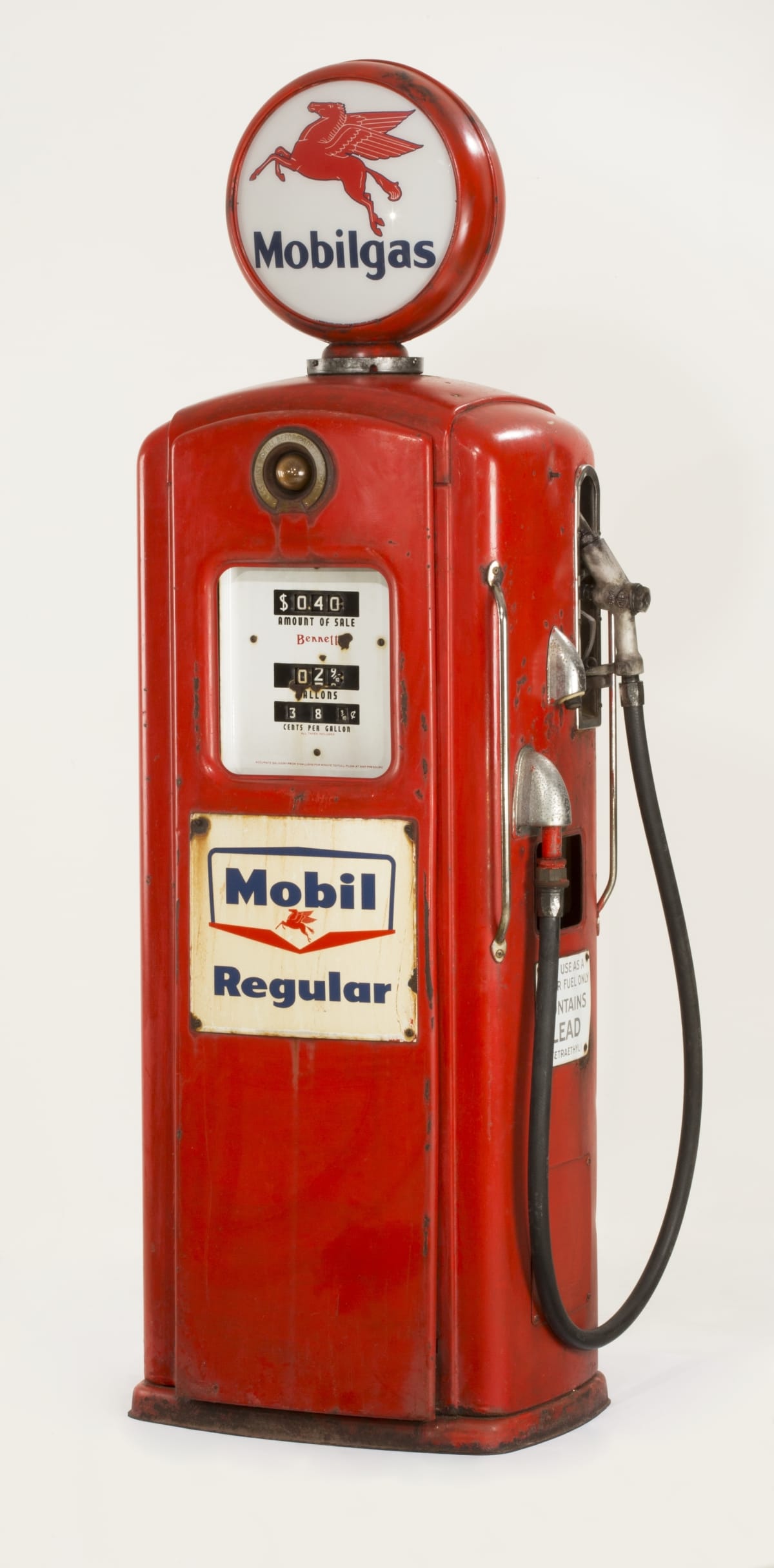
- 1946-1960
- Collections - Artifact
Mobil Gas Pump, 1946-1960
By the 1940s, "computing" pumps like this automatically calculated the amount of gasoline and the price. This type of pump did away with the price charts used by service station attendants. Mobil formed from a merger of Socony and Vacuum Oil in 1931 -- both with extensive networks of gas stations. Mobil began using Vacuum's flying red horse logo system-wide in 1934.
- A.F. Steiner Super Service Station at Harper and Harvard, Detroit, Michigan, August 1934 - As gasoline stations spread from downtowns to residential areas in the mid-1910s, oil companies were sensitive to residents' concerns about unsightly commercial buildings invading their neighborhoods. After all, the companies counted on those residents to become regular customers. Architects designed charming buildings, like this Spanish Mission style station, that were pleasing to the eye and complementary to a neighborhood's character.
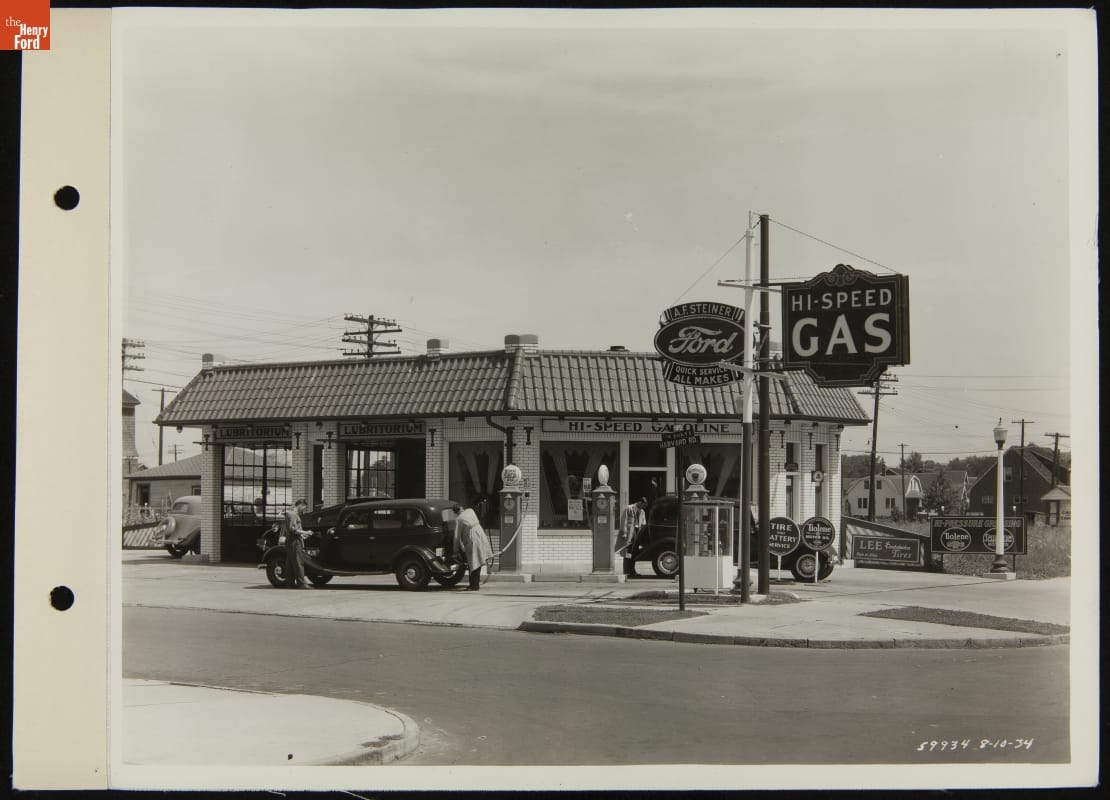
- August 10, 1934
- Collections - Artifact
A.F. Steiner Super Service Station at Harper and Harvard, Detroit, Michigan, August 1934
As gasoline stations spread from downtowns to residential areas in the mid-1910s, oil companies were sensitive to residents' concerns about unsightly commercial buildings invading their neighborhoods. After all, the companies counted on those residents to become regular customers. Architects designed charming buildings, like this Spanish Mission style station, that were pleasing to the eye and complementary to a neighborhood's character.
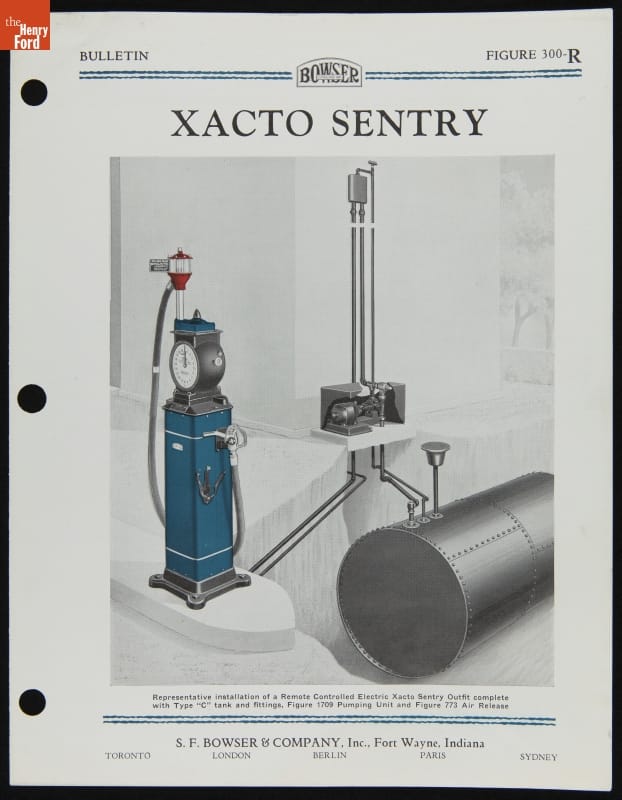
- Brochure Advertising the Xacto Sentry Pump Outfit with Type "C" Tank and Fittings, 1929 - S.F. Bowser & Company's Xacto Sentry gas pump brought a new level of accuracy to fuel measurement when it debuted in 1928. The pump's positive displacement meter measured gas by pumping it against a series of pistons that, in turn, moved the clock face gauge. The gauge only measured the quantity of fuel pumped. The attendant calculated the total sale price.
- 1929
- Collections - Artifact
Brochure Advertising the Xacto Sentry Pump Outfit with Type "C" Tank and Fittings, 1929
S.F. Bowser & Company's Xacto Sentry gas pump brought a new level of accuracy to fuel measurement when it debuted in 1928. The pump's positive displacement meter measured gas by pumping it against a series of pistons that, in turn, moved the clock face gauge. The gauge only measured the quantity of fuel pumped. The attendant calculated the total sale price.
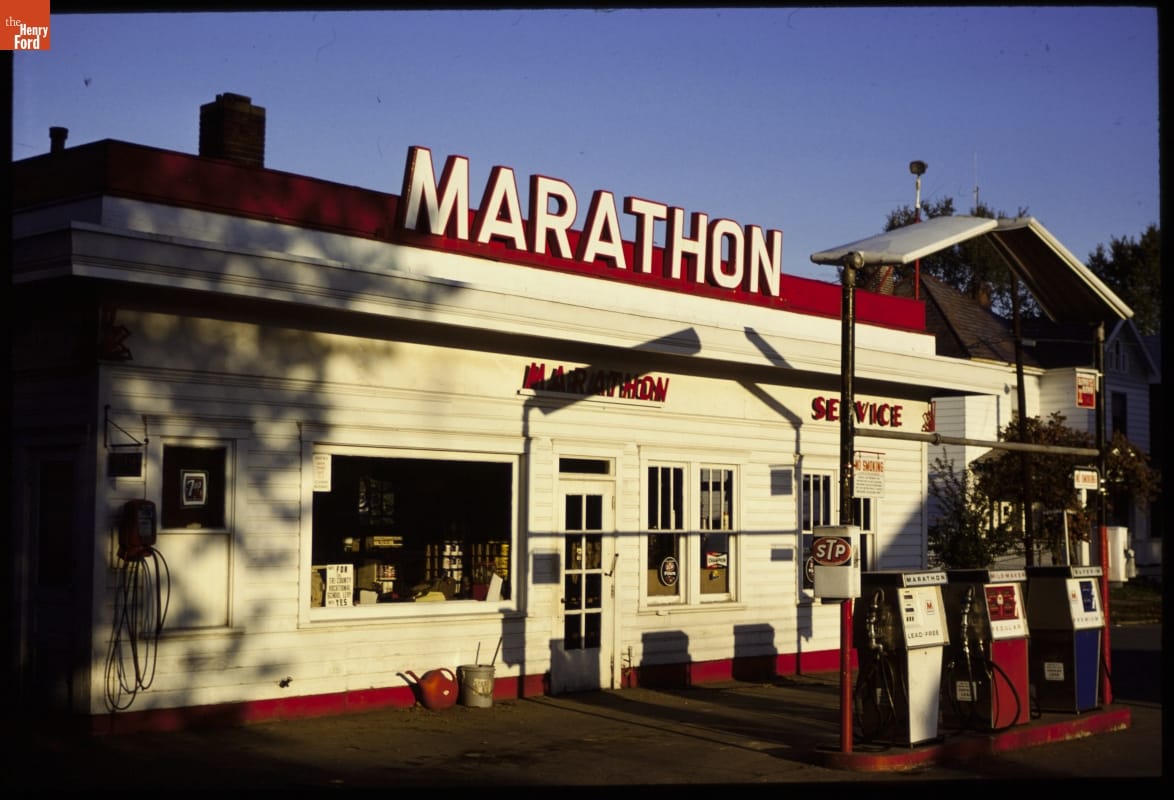
- Marathon Gas Station, New Lexington, Ohio, 1980 - In the mid-1970s, John Margolies began to assemble a visual record of America's built roadside landscape. Over the following three decades, he traveled thousands of miles to photograph the overlooked and often quickly vanishing structures that had grown out of American automobile culture and main street commerce. His photographs of hotels, motels, diners, service stations, drive-ins and attractions celebrate and capture a unique chapter of American history.
- 1977
- Collections - Artifact
Marathon Gas Station, New Lexington, Ohio, 1980
In the mid-1970s, John Margolies began to assemble a visual record of America's built roadside landscape. Over the following three decades, he traveled thousands of miles to photograph the overlooked and often quickly vanishing structures that had grown out of American automobile culture and main street commerce. His photographs of hotels, motels, diners, service stations, drive-ins and attractions celebrate and capture a unique chapter of American history.
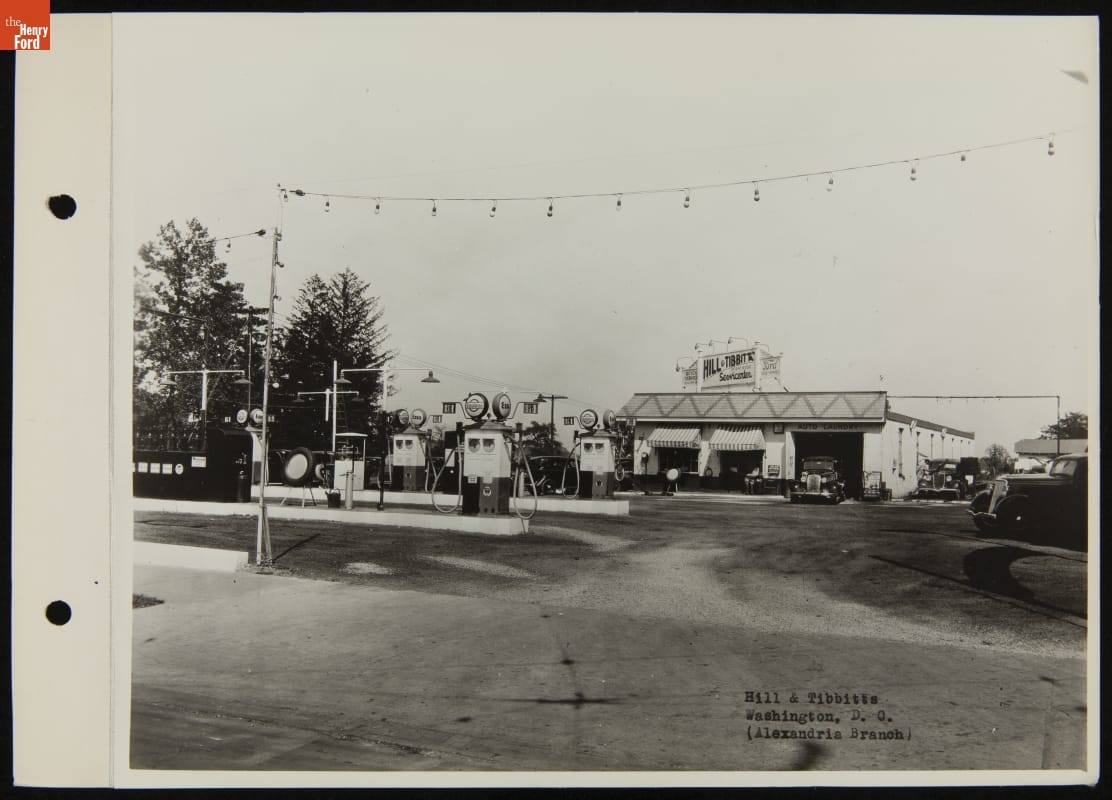
- Hill & Tibbit Super Service Station, Washington, D.C., 1934 - By 1920, gasoline retailers determined that "island" gas pumps, which drivers could approach from either side, provided the most efficient station layout. They also realized that profits weren't made on the gasoline itself. Retailers instead made money by servicing and repairing cars, or by offering amenities like the "auto laundry" car wash at this station in Washington, D.C.
- 1934
- Collections - Artifact
Hill & Tibbit Super Service Station, Washington, D.C., 1934
By 1920, gasoline retailers determined that "island" gas pumps, which drivers could approach from either side, provided the most efficient station layout. They also realized that profits weren't made on the gasoline itself. Retailers instead made money by servicing and repairing cars, or by offering amenities like the "auto laundry" car wash at this station in Washington, D.C.
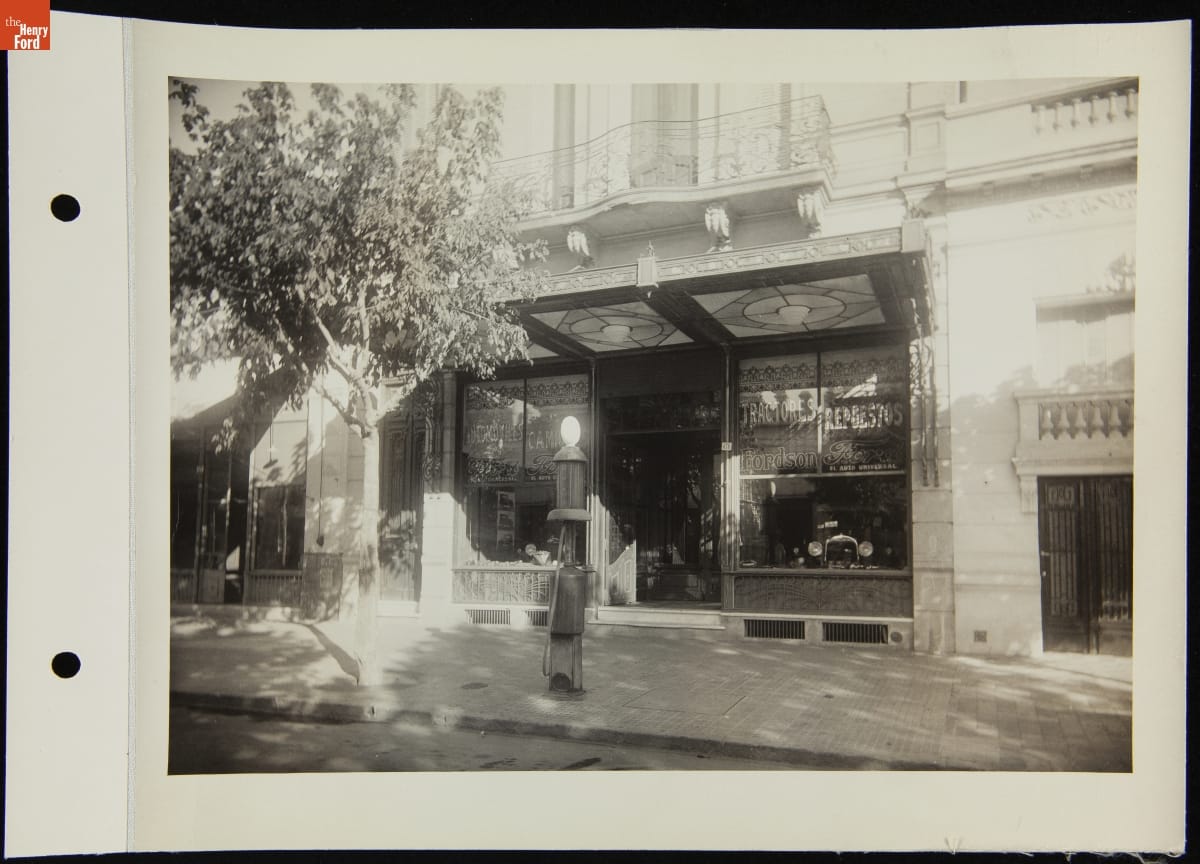
- Guzzetti & Co. Ford Dealership, Buenos Aires, Argentina, circa 1930 - Ford Motor Company operated sales and service branches in cities around the world. Ford formed an Argentine subsidiary, Ford Argentina S.C.A., in 1913. The company opened its first factory there, at Buenos Aires, in 1917. Another factory, at La Boca, followed in 1922. Ford also had South American subsidiaries based in Brazil and Venezuela.
- circa 1930
- Collections - Artifact
Guzzetti & Co. Ford Dealership, Buenos Aires, Argentina, circa 1930
Ford Motor Company operated sales and service branches in cities around the world. Ford formed an Argentine subsidiary, Ford Argentina S.C.A., in 1913. The company opened its first factory there, at Buenos Aires, in 1917. Another factory, at La Boca, followed in 1922. Ford also had South American subsidiaries based in Brazil and Venezuela.
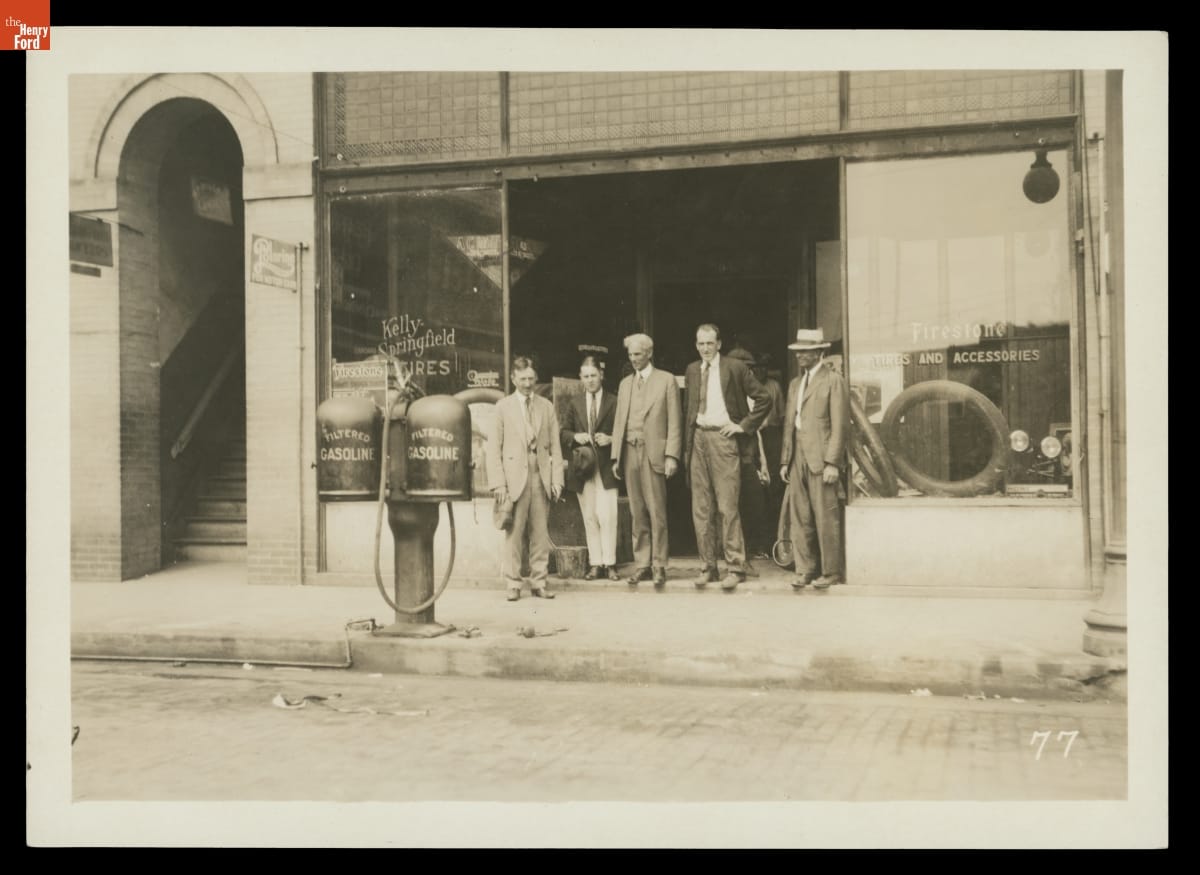
- Harvey Firestone, Harvey Firestone, Jr., and Henry Ford outside Harkrader Auto Supply, Bristol, Virginia, 1918 -
- 1918
- Collections - Artifact
Harvey Firestone, Harvey Firestone, Jr., and Henry Ford outside Harkrader Auto Supply, Bristol, Virginia, 1918
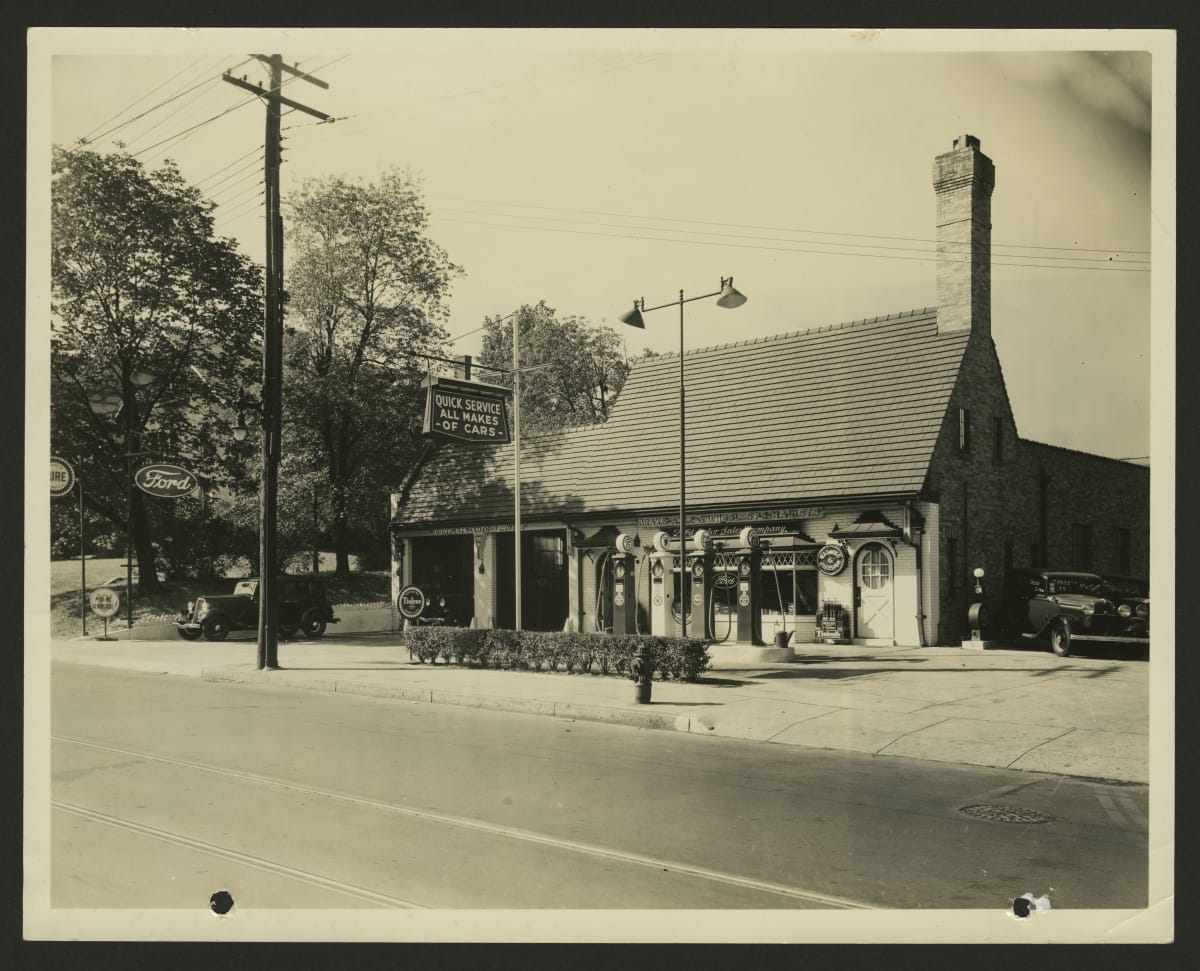
- Ford Neighborhood Service Station, 1933-1934 - Oil companies and service station owners enticed drivers to stop and fill up using various architectural styles. Pure Oil's English cottage design, as seen in this early 1930s photograph, evoked comfort and home-like qualities perhaps needed by road-weary travelers.
- 1933
- Collections - Artifact
Ford Neighborhood Service Station, 1933-1934
Oil companies and service station owners enticed drivers to stop and fill up using various architectural styles. Pure Oil's English cottage design, as seen in this early 1930s photograph, evoked comfort and home-like qualities perhaps needed by road-weary travelers.