
Search
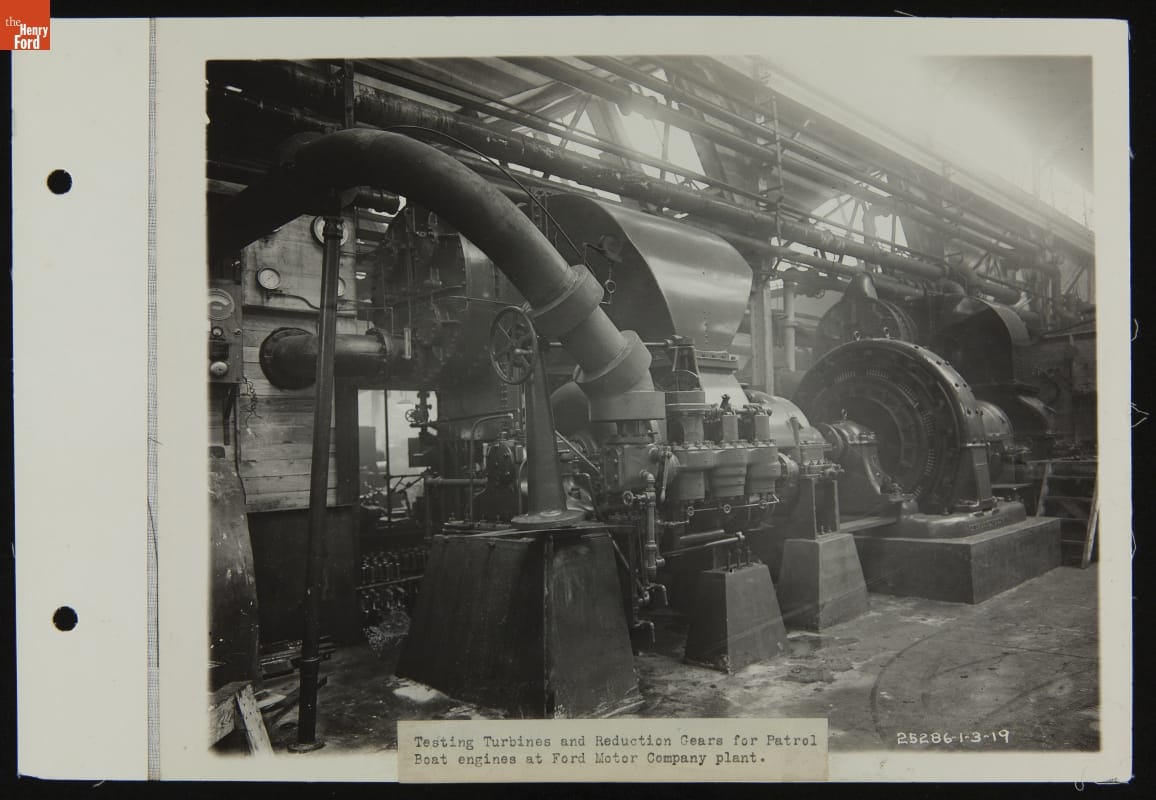
- Testing Turbines and Reduction Gears for Eagle Boat Engines at Ford Rouge Plant, June 1919 - Ford Motor Company built Eagle anti-submarine patrol boats for the U.S. Navy during World War I. While most of the work occurred in new facilities at the mouth of the Rouge River, Ford assembled the boats' turbine engines, boilers and propulsion systems at its Highland Park plant. The war ended before any of the Eagle patrol boats saw combat.
- June 13, 1919
- Collections - Artifact
Testing Turbines and Reduction Gears for Eagle Boat Engines at Ford Rouge Plant, June 1919
Ford Motor Company built Eagle anti-submarine patrol boats for the U.S. Navy during World War I. While most of the work occurred in new facilities at the mouth of the Rouge River, Ford assembled the boats' turbine engines, boilers and propulsion systems at its Highland Park plant. The war ended before any of the Eagle patrol boats saw combat.
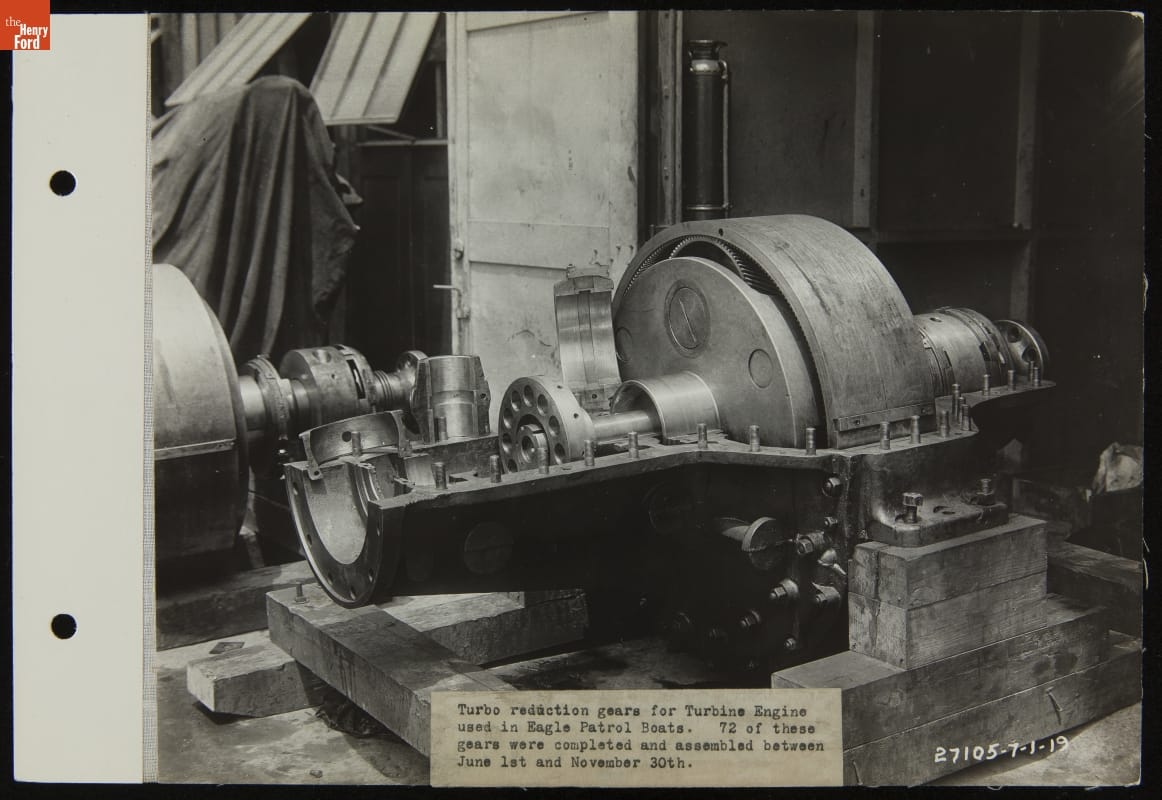
- Turbo Reduction Gears for Eagle Boat Turbine Engine, July 1919 - Ford Motor Company built Eagle anti-submarine patrol boats for the U.S. Navy during World War I. While most of the work occurred in new facilities at the mouth of the Rouge River, Ford assembled the boats' turbine engines, boilers and propulsion systems at its Highland Park plant. The war ended before any of the Eagle patrol boats saw combat.
- July 01, 1919
- Collections - Artifact
Turbo Reduction Gears for Eagle Boat Turbine Engine, July 1919
Ford Motor Company built Eagle anti-submarine patrol boats for the U.S. Navy during World War I. While most of the work occurred in new facilities at the mouth of the Rouge River, Ford assembled the boats' turbine engines, boilers and propulsion systems at its Highland Park plant. The war ended before any of the Eagle patrol boats saw combat.
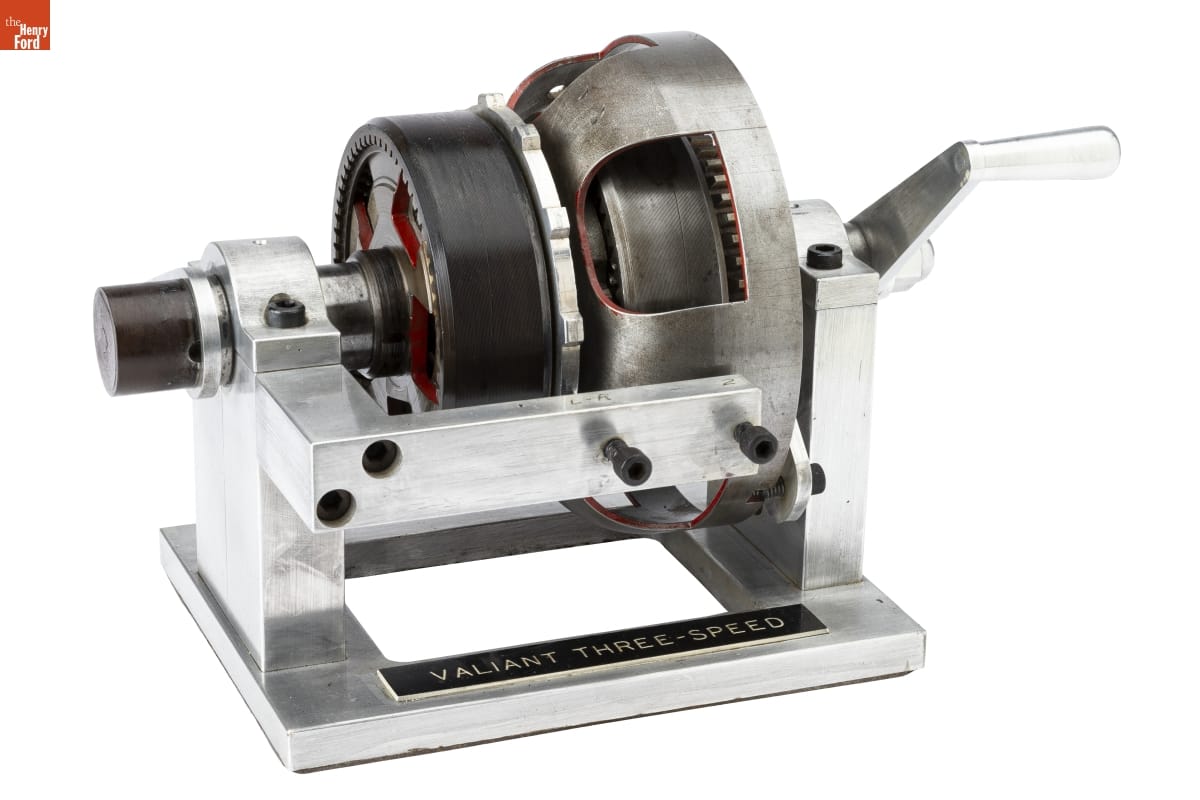
- Planetary Gearset Model, Made by Howard Simpson for Chrysler Corporation, circa 1959 - Following time at Ford Motor Company and Detroit Harvester, Howard Simpson retired to pursue work on planetary gearsets. His designs were licensed and manufactured by Ford, General Motors and Chrysler, and Simpson gearsets became common in automatic transmissions produced through the latter half of the 20th century. This model represents a three-speed unit created for Chrysler's Valiant compact car.
- circa 1959
- Collections - Artifact
Planetary Gearset Model, Made by Howard Simpson for Chrysler Corporation, circa 1959
Following time at Ford Motor Company and Detroit Harvester, Howard Simpson retired to pursue work on planetary gearsets. His designs were licensed and manufactured by Ford, General Motors and Chrysler, and Simpson gearsets became common in automatic transmissions produced through the latter half of the 20th century. This model represents a three-speed unit created for Chrysler's Valiant compact car.
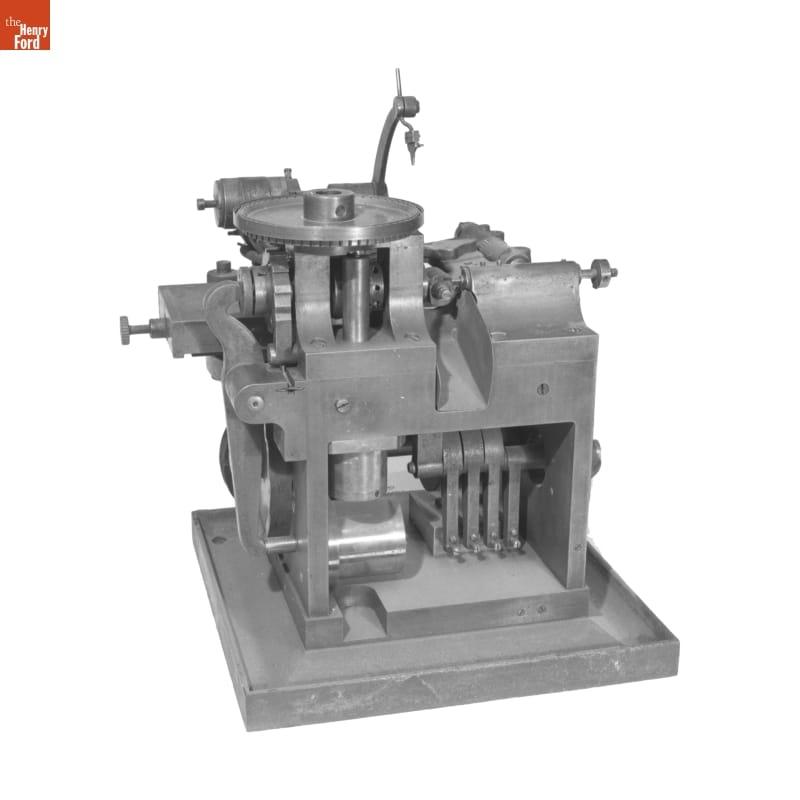
- Air-activated Gear Cutter, Used by the Waltham Watch Company, circa 1895 - The Waltham Watch Company was a world-famous example of a highly mechanized manufacturer of quality consumer goods. Specialized labor, new machines, and interchangeable parts combined to create the company's low-cost, high-grade watches. Duane Church, Waltham's superintendent of toolmakers, developed precision watchmaking machinery that produced interchangeable parts without the aid of gauges and templates. Church invented this gear cutter in the early 1890s.
- circa 1895
- Collections - Artifact
Air-activated Gear Cutter, Used by the Waltham Watch Company, circa 1895
The Waltham Watch Company was a world-famous example of a highly mechanized manufacturer of quality consumer goods. Specialized labor, new machines, and interchangeable parts combined to create the company's low-cost, high-grade watches. Duane Church, Waltham's superintendent of toolmakers, developed precision watchmaking machinery that produced interchangeable parts without the aid of gauges and templates. Church invented this gear cutter in the early 1890s.
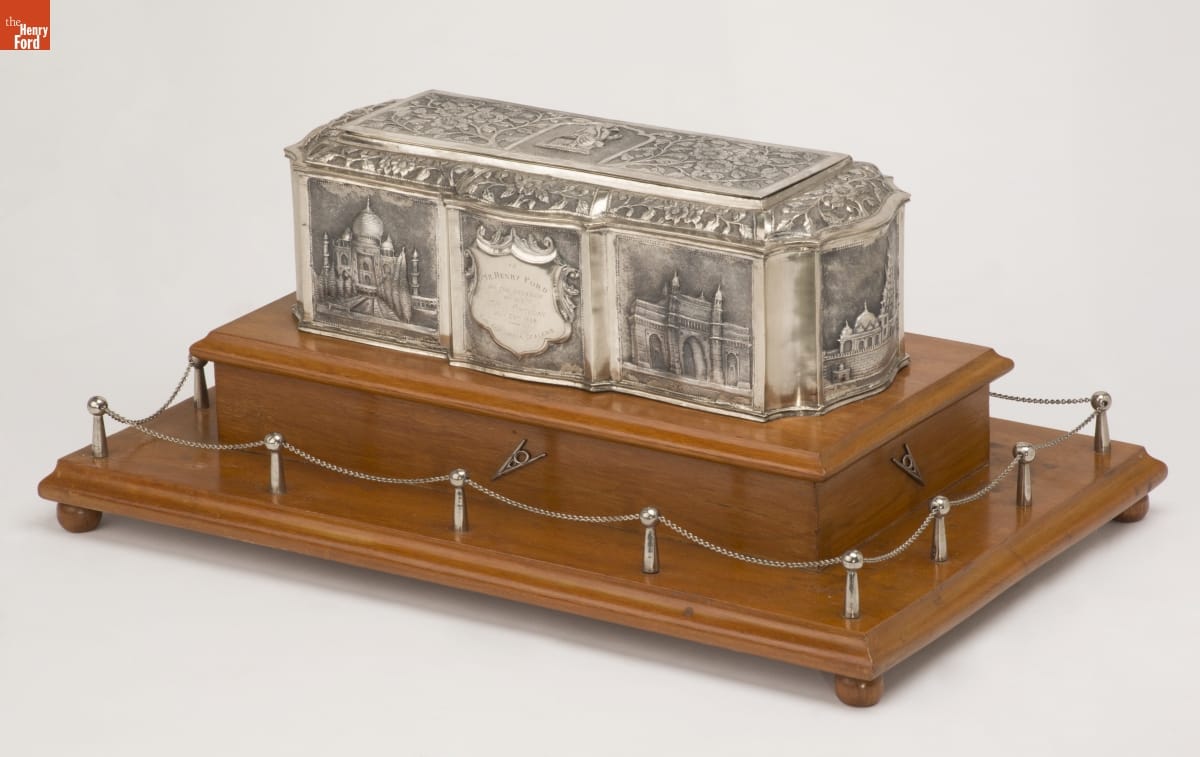
- Presentation Box with Scroll Given to Henry Ford by FordIndia Auto Dealers, July 30, 1938 - Henry Ford's corporate family was generous when it came to acknowledging their leader's enterprising and innovative strides forward. Within this elaborately rendered silver casket is a scroll signed by representatives of Fordindia marking the occasion of Henry Ford's 75th birthday. The inscription reveals the esteem and high regard which was felt by Ford employees towards their employer.
- 1938
- Collections - Artifact
Presentation Box with Scroll Given to Henry Ford by FordIndia Auto Dealers, July 30, 1938
Henry Ford's corporate family was generous when it came to acknowledging their leader's enterprising and innovative strides forward. Within this elaborately rendered silver casket is a scroll signed by representatives of Fordindia marking the occasion of Henry Ford's 75th birthday. The inscription reveals the esteem and high regard which was felt by Ford employees towards their employer.
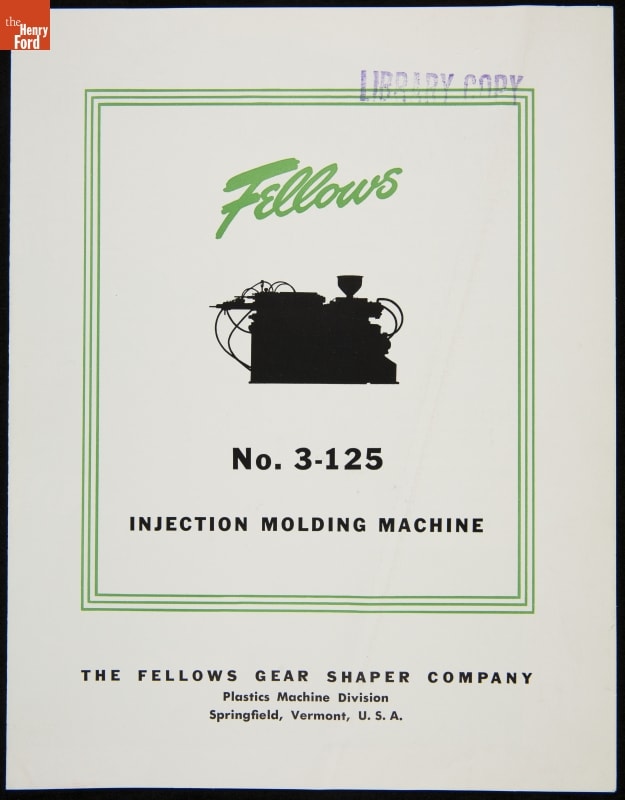
- Fellows No. 3-125 Injection Molding Machine, circa 1961 -
- circa 1961
- Collections - Artifact
Fellows No. 3-125 Injection Molding Machine, circa 1961
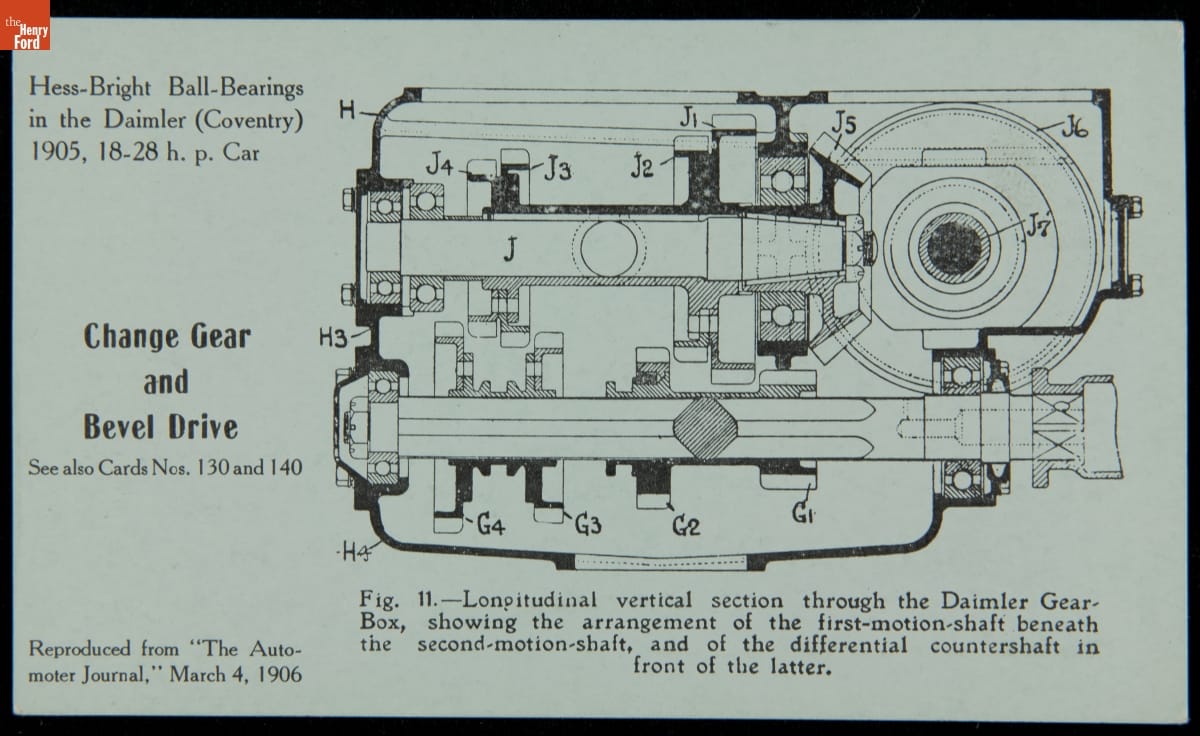
- Trade Card, Change Gear and Bevel Drive, Hess-Bright Manufacturing Co., circa 1906 - In the last third of the nineteenth century, an unprecedented variety of consumer goods and services flooded the American market. Advertisers, armed with new methods of color printing, bombarded potential customers with trade cards. Americans enjoyed and often saved the vibrant little advertisements found in product packages or distributed by local merchants. Many survive as historical records of commercialism in the United States.
- March 04, 1906
- Collections - Artifact
Trade Card, Change Gear and Bevel Drive, Hess-Bright Manufacturing Co., circa 1906
In the last third of the nineteenth century, an unprecedented variety of consumer goods and services flooded the American market. Advertisers, armed with new methods of color printing, bombarded potential customers with trade cards. Americans enjoyed and often saved the vibrant little advertisements found in product packages or distributed by local merchants. Many survive as historical records of commercialism in the United States.
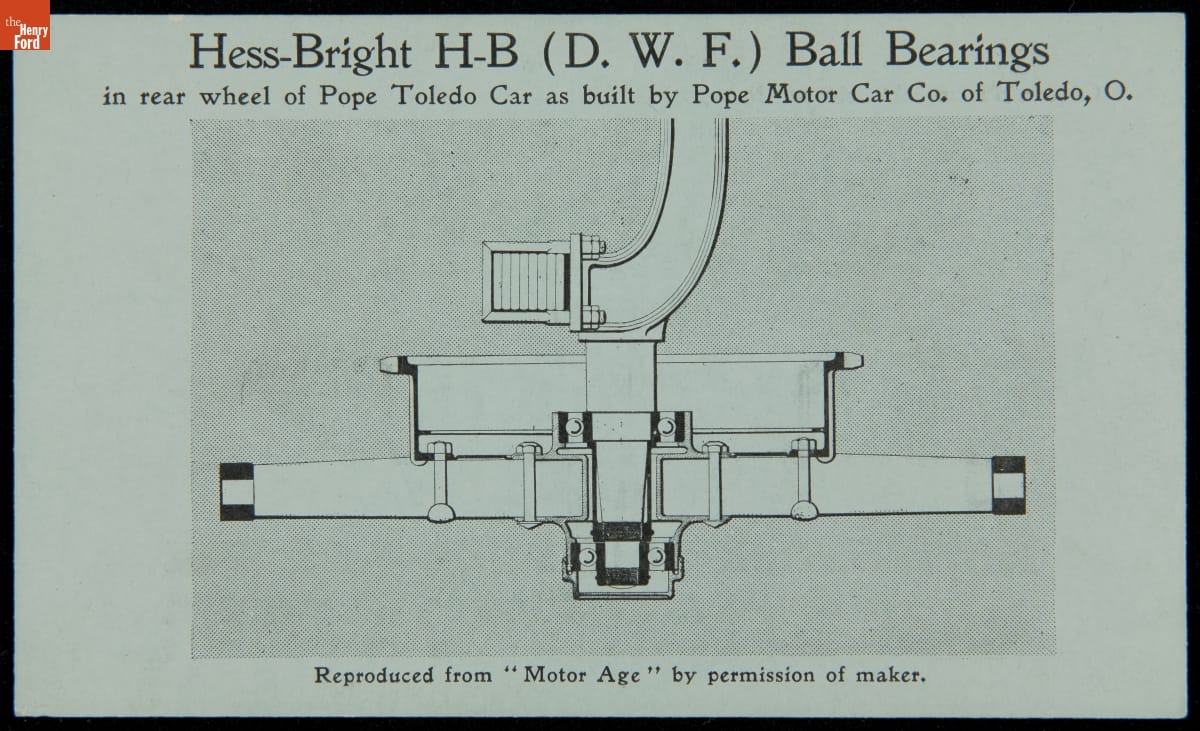
- Trade Card, Ball Bearings in Rear Wheel of Pope Toledo Car, Hess-Bright Manufacturing Co., circa 1905 - In the last third of the nineteenth century, an unprecedented variety of consumer goods and services flooded the American market. Advertisers, armed with new methods of color printing, bombarded potential customers with trade cards. Americans enjoyed and often saved the vibrant little advertisements found in product packages or distributed by local merchants. Many survive as historical records of commercialism in the United States.
- circa 1905
- Collections - Artifact
Trade Card, Ball Bearings in Rear Wheel of Pope Toledo Car, Hess-Bright Manufacturing Co., circa 1905
In the last third of the nineteenth century, an unprecedented variety of consumer goods and services flooded the American market. Advertisers, armed with new methods of color printing, bombarded potential customers with trade cards. Americans enjoyed and often saved the vibrant little advertisements found in product packages or distributed by local merchants. Many survive as historical records of commercialism in the United States.
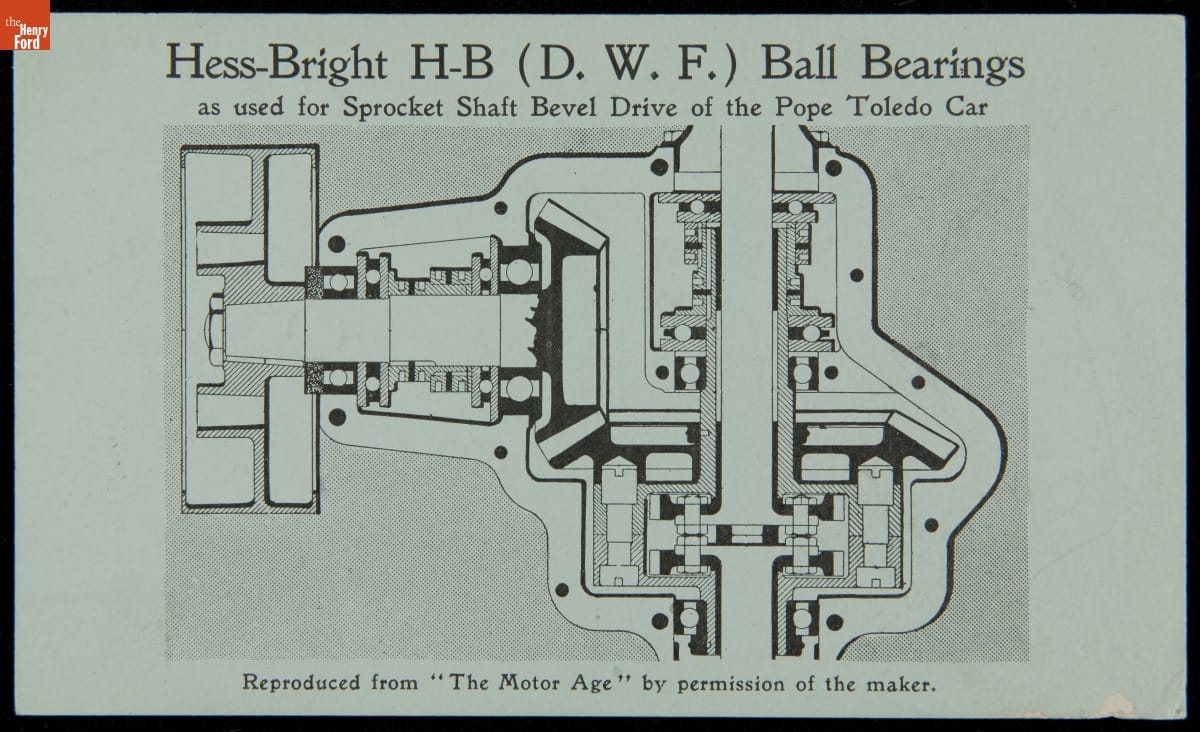
- Trade Card, Ball Bearings as Used for Sprocket Shaft Bevel Drive of the Pope Toledo Car, Hess-Bright Manufacturing Co., circa 1905 - In the last third of the nineteenth century, an unprecedented variety of consumer goods and services flooded the American market. Advertisers, armed with new methods of color printing, bombarded potential customers with trade cards. Americans enjoyed and often saved the vibrant little advertisements found in product packages or distributed by local merchants. Many survive as historical records of commercialism in the United States.
- circa 1905
- Collections - Artifact
Trade Card, Ball Bearings as Used for Sprocket Shaft Bevel Drive of the Pope Toledo Car, Hess-Bright Manufacturing Co., circa 1905
In the last third of the nineteenth century, an unprecedented variety of consumer goods and services flooded the American market. Advertisers, armed with new methods of color printing, bombarded potential customers with trade cards. Americans enjoyed and often saved the vibrant little advertisements found in product packages or distributed by local merchants. Many survive as historical records of commercialism in the United States.
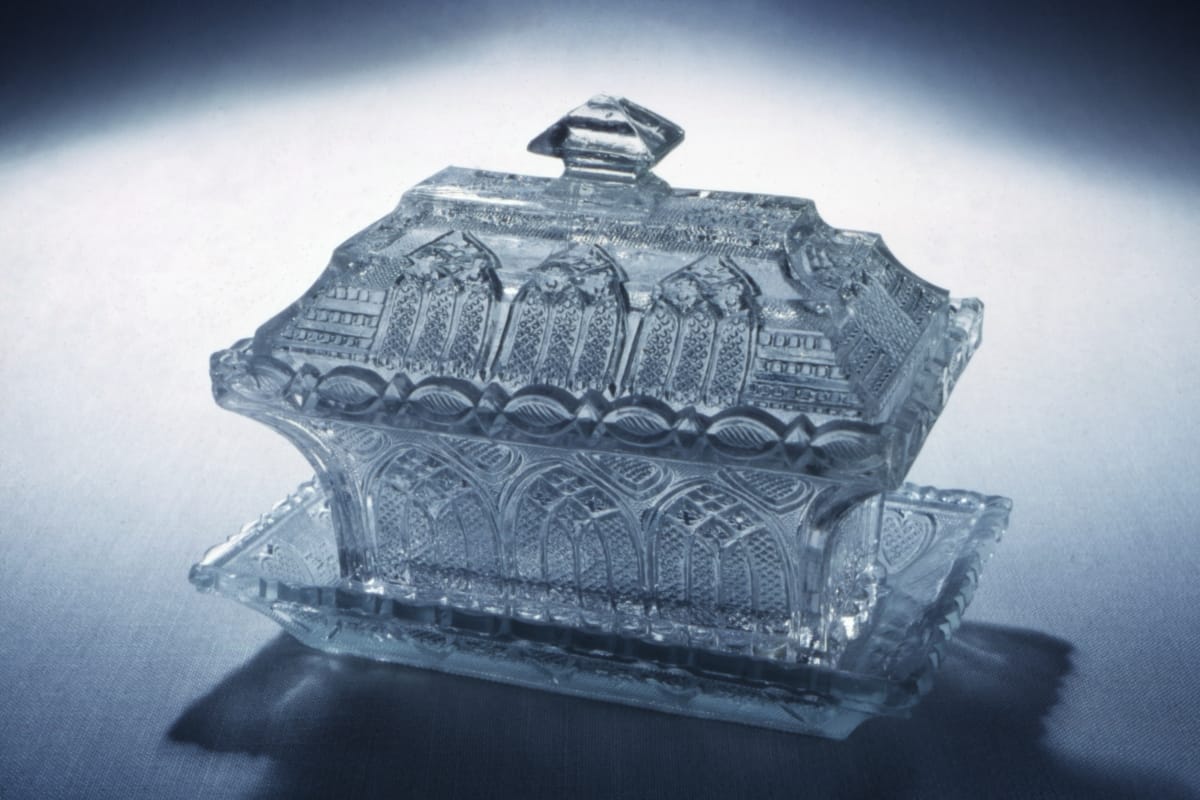
- Casket, 1830-1840 - This mold-made, pressed glass box was intended to hold a middle class lady's jewelry. It was made in the lacy glass technique, in which decoration covers the entire surface of the mold, and is raised against a background of small dots, to create a stippled appearance on the surface. The dots catch any ambient light, making the surface shimmer.
- 1830-1840
- Collections - Artifact
Casket, 1830-1840
This mold-made, pressed glass box was intended to hold a middle class lady's jewelry. It was made in the lacy glass technique, in which decoration covers the entire surface of the mold, and is raised against a background of small dots, to create a stippled appearance on the surface. The dots catch any ambient light, making the surface shimmer.