
Search
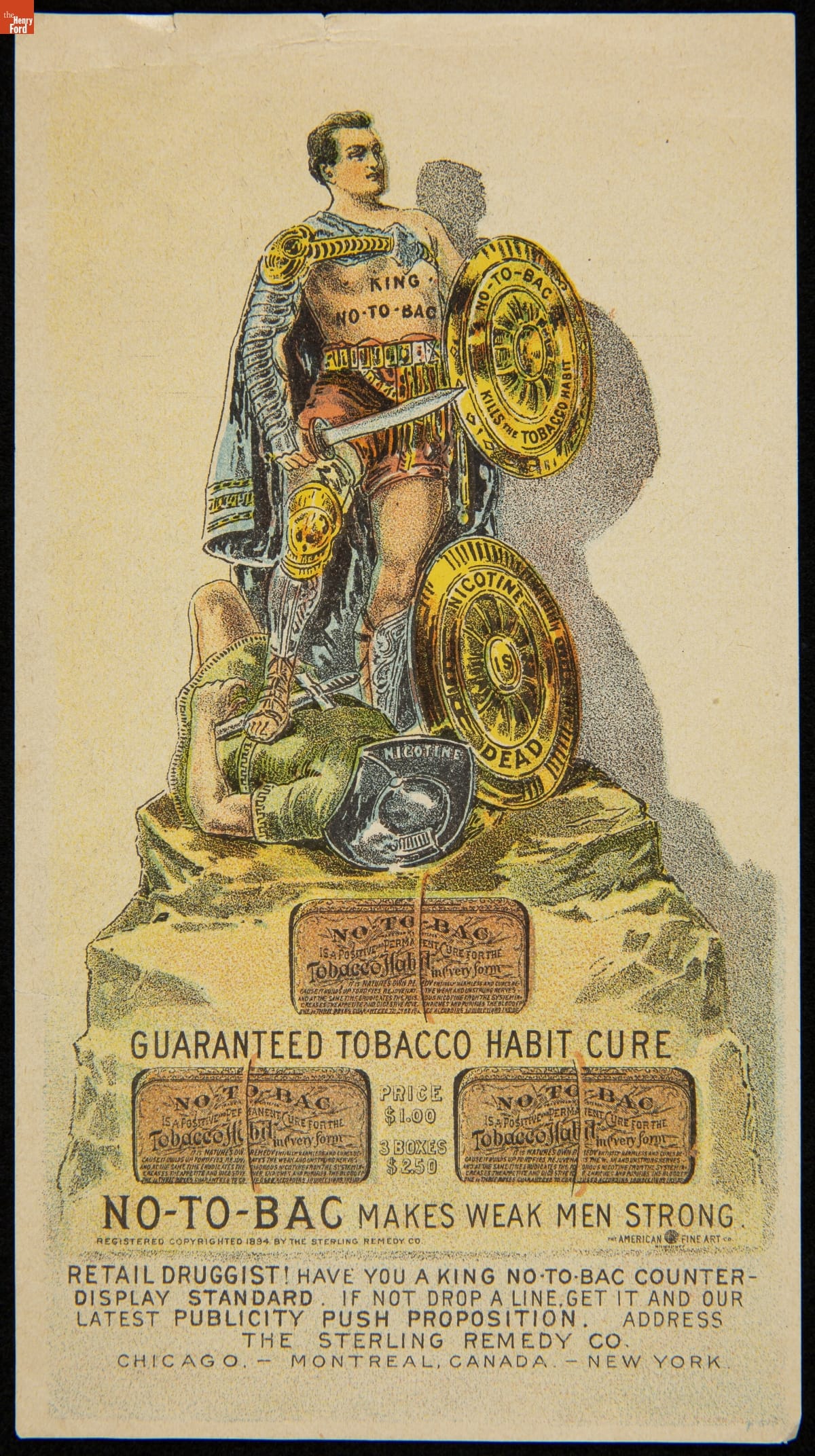
- Trade Card for "No-To-Bac" Tobacco, Sterling Products Co., circa 1894 - In the last third of the nineteenth century, an unprecedented variety of consumer goods and services flooded the American market. Advertisers, armed with new methods of color printing, bombarded potential customers with trade cards. Americans enjoyed and often saved the vibrant little advertisements found in product packages or distributed by local merchants. Many survive as historical records of commercialism in the United States.
- circa 1894
- Collections - Artifact
Trade Card for "No-To-Bac" Tobacco, Sterling Products Co., circa 1894
In the last third of the nineteenth century, an unprecedented variety of consumer goods and services flooded the American market. Advertisers, armed with new methods of color printing, bombarded potential customers with trade cards. Americans enjoyed and often saved the vibrant little advertisements found in product packages or distributed by local merchants. Many survive as historical records of commercialism in the United States.
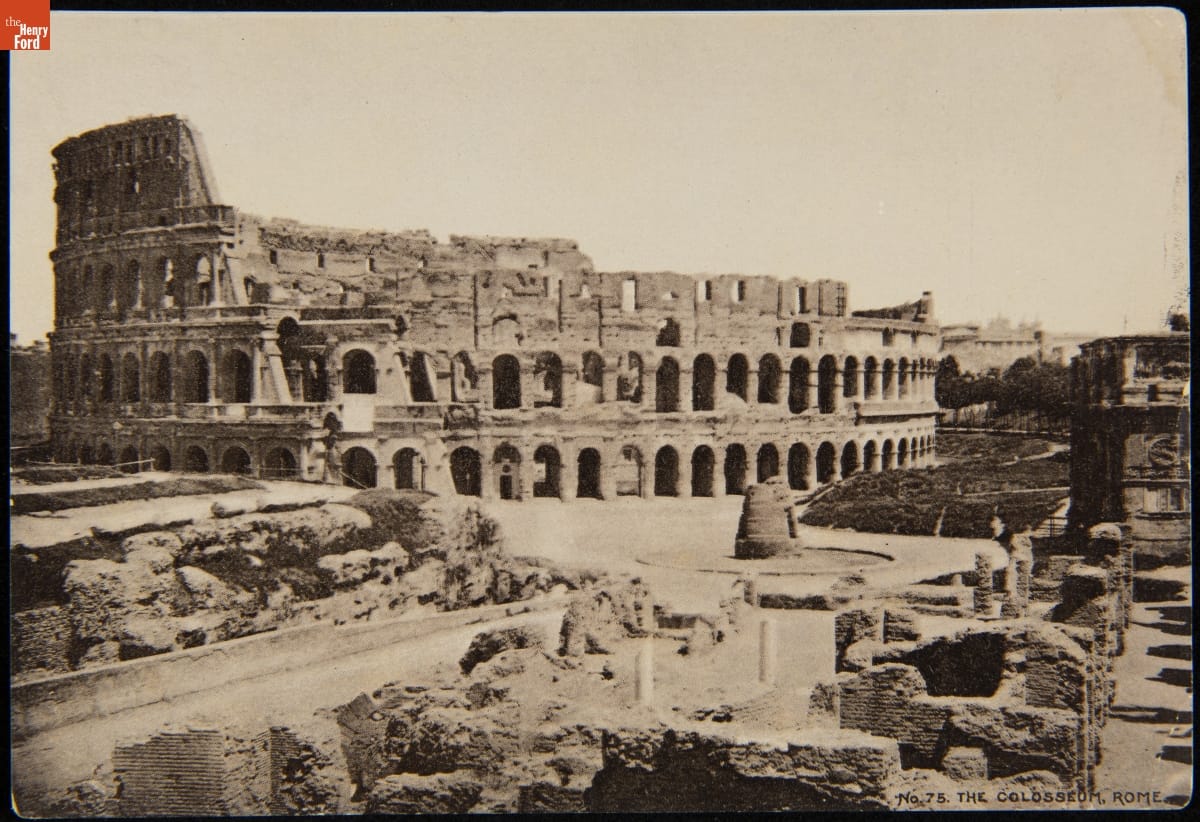
- Trade Card for C.I. Hood & Co. with Hood's Photos of the World, "Colosseum, Rome," 1890-1910 - In the late 19th century, trade cards were a major means of advertising goods and services. Patent medicine producer, C.I. Hood & Co., had its own advertising department, creating cookbooks, calendars, and, most abundantly, trade cards. The trade card series, "Hood's Photos of the World," became popular among consumers, as it offered views of far-away places, providing a window to the broader world.
- 1890-1910
- Collections - Artifact
Trade Card for C.I. Hood & Co. with Hood's Photos of the World, "Colosseum, Rome," 1890-1910
In the late 19th century, trade cards were a major means of advertising goods and services. Patent medicine producer, C.I. Hood & Co., had its own advertising department, creating cookbooks, calendars, and, most abundantly, trade cards. The trade card series, "Hood's Photos of the World," became popular among consumers, as it offered views of far-away places, providing a window to the broader world.
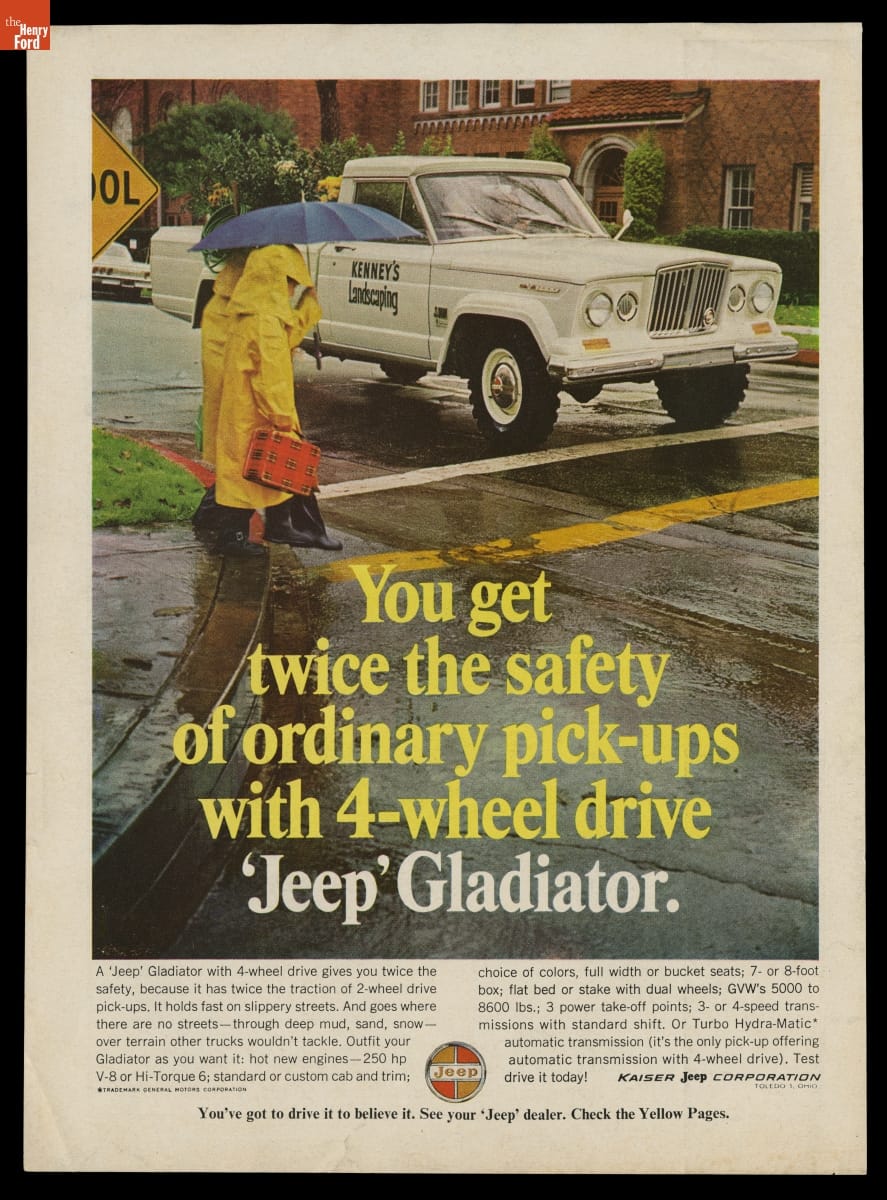
- "You Get Twice the Safety of Ordinary Pickups," Jeep Gladiator Advertisement, 1966 - The first pickups manufactured under the Jeep brand appeared for 1947. In time, these trucks evolved into a distinct series of vehicles. The Jeep Gladiator pickup debuted for 1963. Though it was redesignated as the J-series after 1971, the basic Gladiator design remained in production through 1988. Jeep revived the Gladiator name on an all-new pickup design for 2020.
- 1966
- Collections - Artifact
"You Get Twice the Safety of Ordinary Pickups," Jeep Gladiator Advertisement, 1966
The first pickups manufactured under the Jeep brand appeared for 1947. In time, these trucks evolved into a distinct series of vehicles. The Jeep Gladiator pickup debuted for 1963. Though it was redesignated as the J-series after 1971, the basic Gladiator design remained in production through 1988. Jeep revived the Gladiator name on an all-new pickup design for 2020.
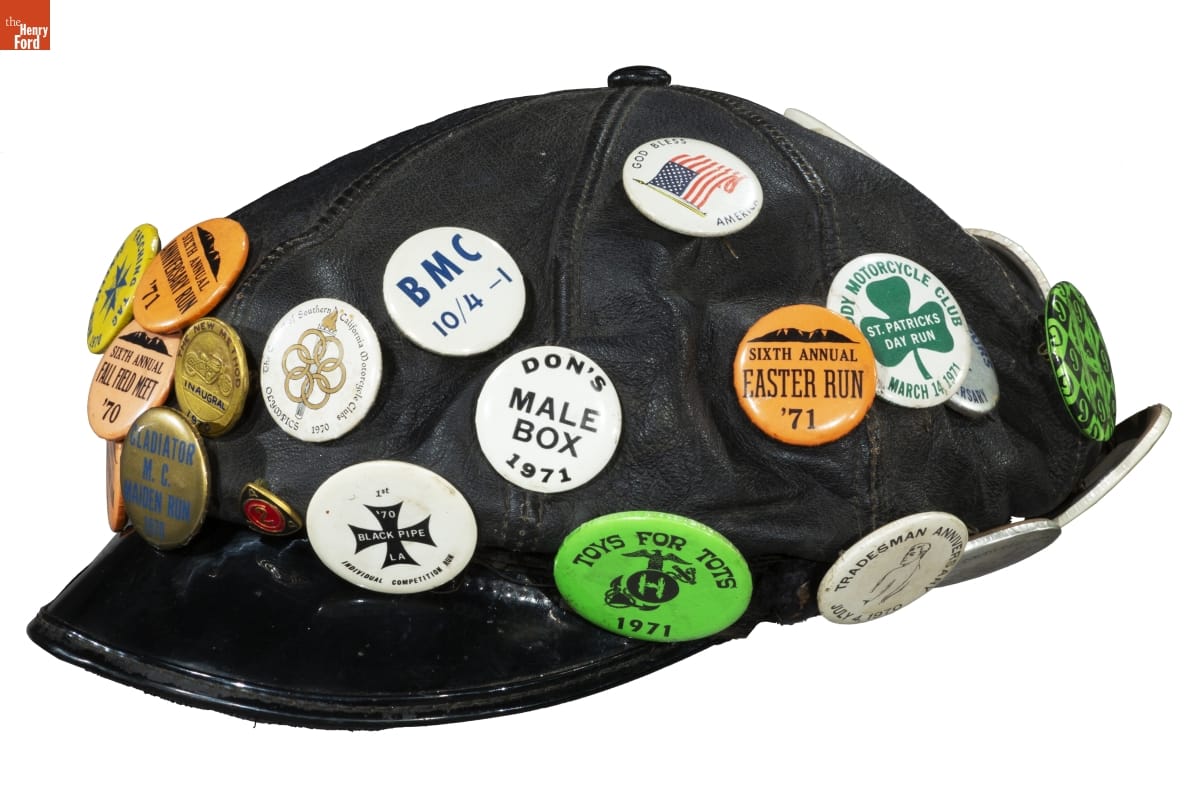
- Motorcycle Cap with Buttons Commemorating LGBTQ+ Events and Places, 1969-1971 - Gay motorcycle clubs began to form in California just after World War II, and leather was the staple material of their uniforms. This counterculture movement prioritized the hyper masculine, which appealed to many gay men who had long been stereotyped as effeminate. Biker clubs also provided a mobile social network when persecution and the threat of police raids were ever-present at established gay locales.
- 1969-1971
- Collections - Artifact
Motorcycle Cap with Buttons Commemorating LGBTQ+ Events and Places, 1969-1971
Gay motorcycle clubs began to form in California just after World War II, and leather was the staple material of their uniforms. This counterculture movement prioritized the hyper masculine, which appealed to many gay men who had long been stereotyped as effeminate. Biker clubs also provided a mobile social network when persecution and the threat of police raids were ever-present at established gay locales.