
Search
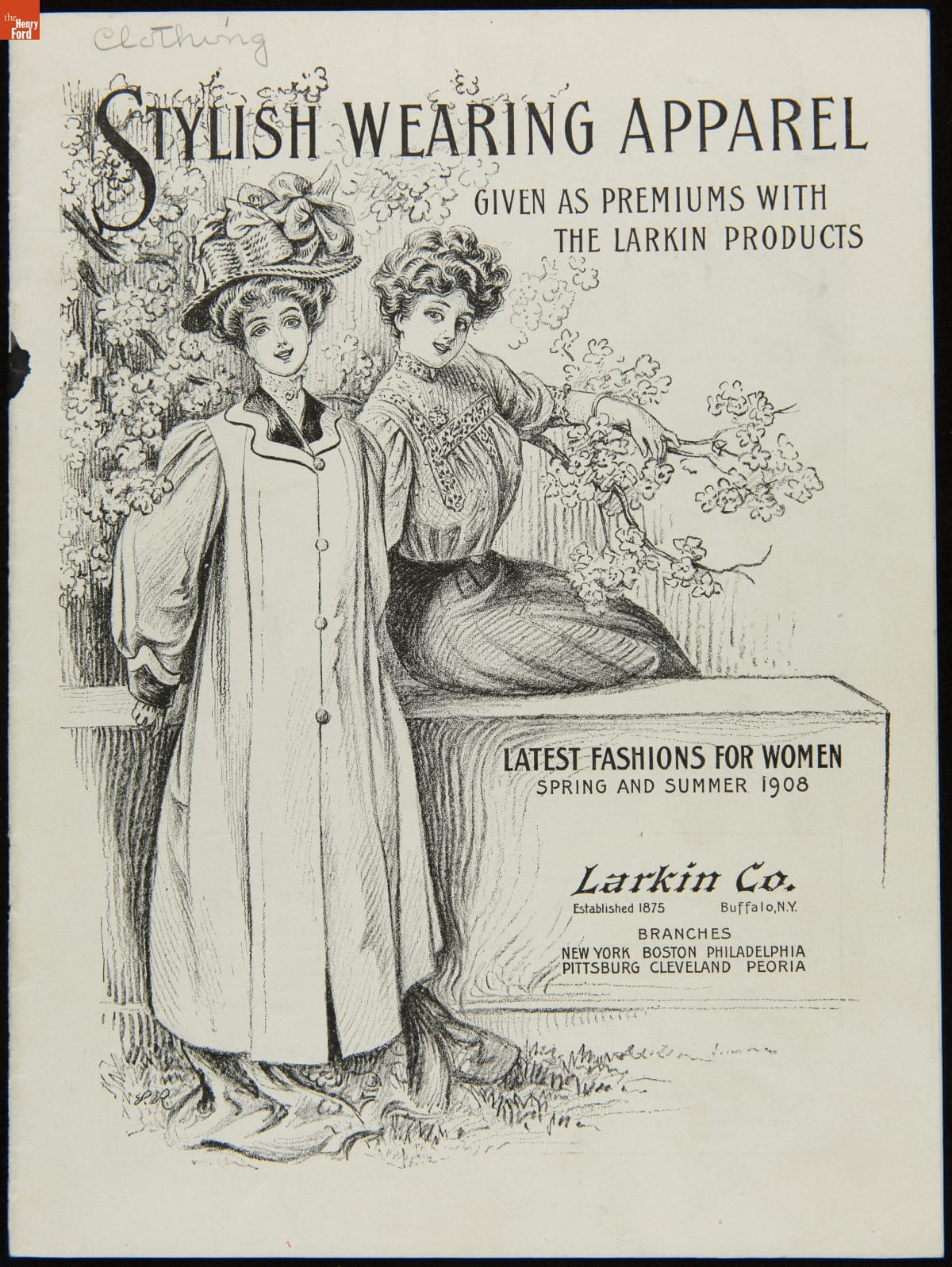
- Larkin Company Catalog, "Stylish Wearing Apparel Given as Premiums with the Larkin Products," Spring/Summer 1908 - John D. Larkin established a soap manufacturing company in 1875. He hired his brother-in-law, Elbert Hubbard, as a salesman. Hubbard developed "The Larkin Idea," a plan that sold goods directly to consumers through mail-order catalogs and offered incentivizing giveaways. It was a success. By the early 1900s, Larkin's catalogs contained pages of products and even more pages of premiums from which customers could choose.
- 1908
- Collections - Artifact
Larkin Company Catalog, "Stylish Wearing Apparel Given as Premiums with the Larkin Products," Spring/Summer 1908
John D. Larkin established a soap manufacturing company in 1875. He hired his brother-in-law, Elbert Hubbard, as a salesman. Hubbard developed "The Larkin Idea," a plan that sold goods directly to consumers through mail-order catalogs and offered incentivizing giveaways. It was a success. By the early 1900s, Larkin's catalogs contained pages of products and even more pages of premiums from which customers could choose.
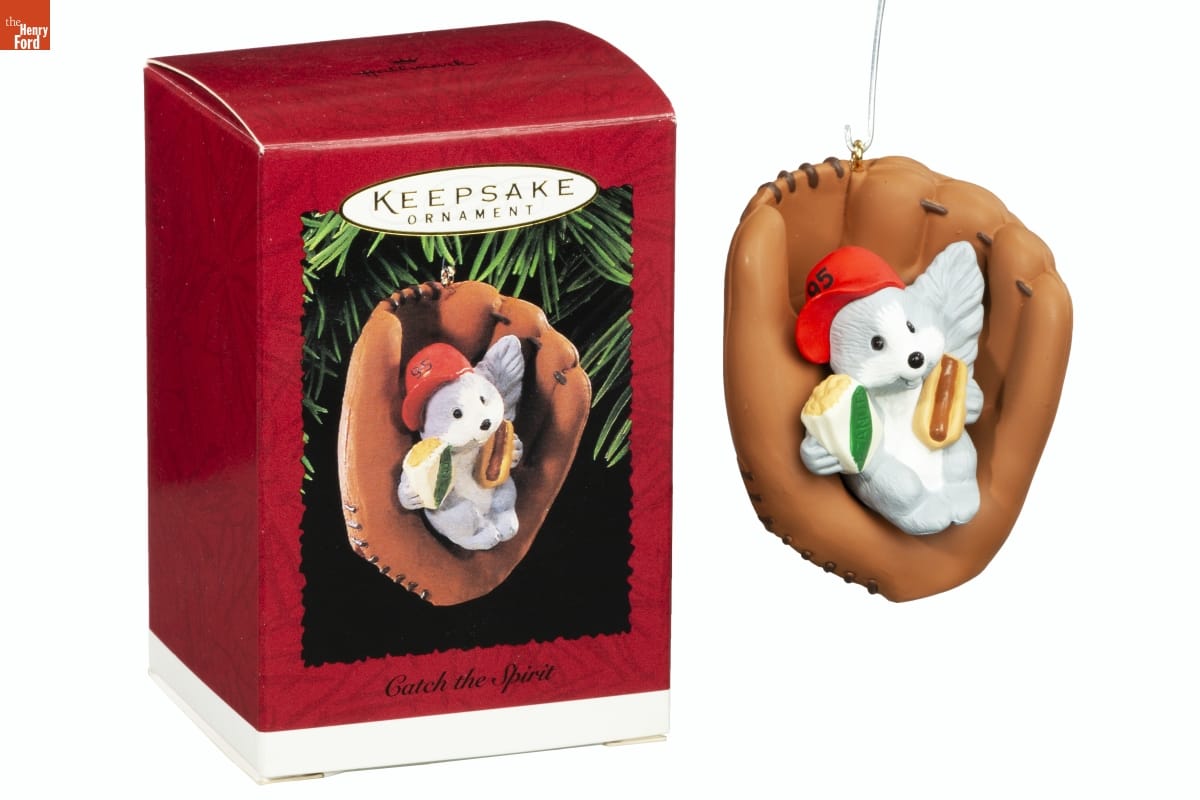
- Hallmark "Catch the Spirit" Christmas Ornament, 1995 - Already known for greeting cards, Hallmark introduced a line of Christmas ornaments in 1973. The company's annual release of an increasing array of ornaments revolutionized Christmas decorating, appealing to customers' interest in marking memories and milestones as well as expressing one's personality and unique tastes.
- 1995
- Collections - Artifact
Hallmark "Catch the Spirit" Christmas Ornament, 1995
Already known for greeting cards, Hallmark introduced a line of Christmas ornaments in 1973. The company's annual release of an increasing array of ornaments revolutionized Christmas decorating, appealing to customers' interest in marking memories and milestones as well as expressing one's personality and unique tastes.
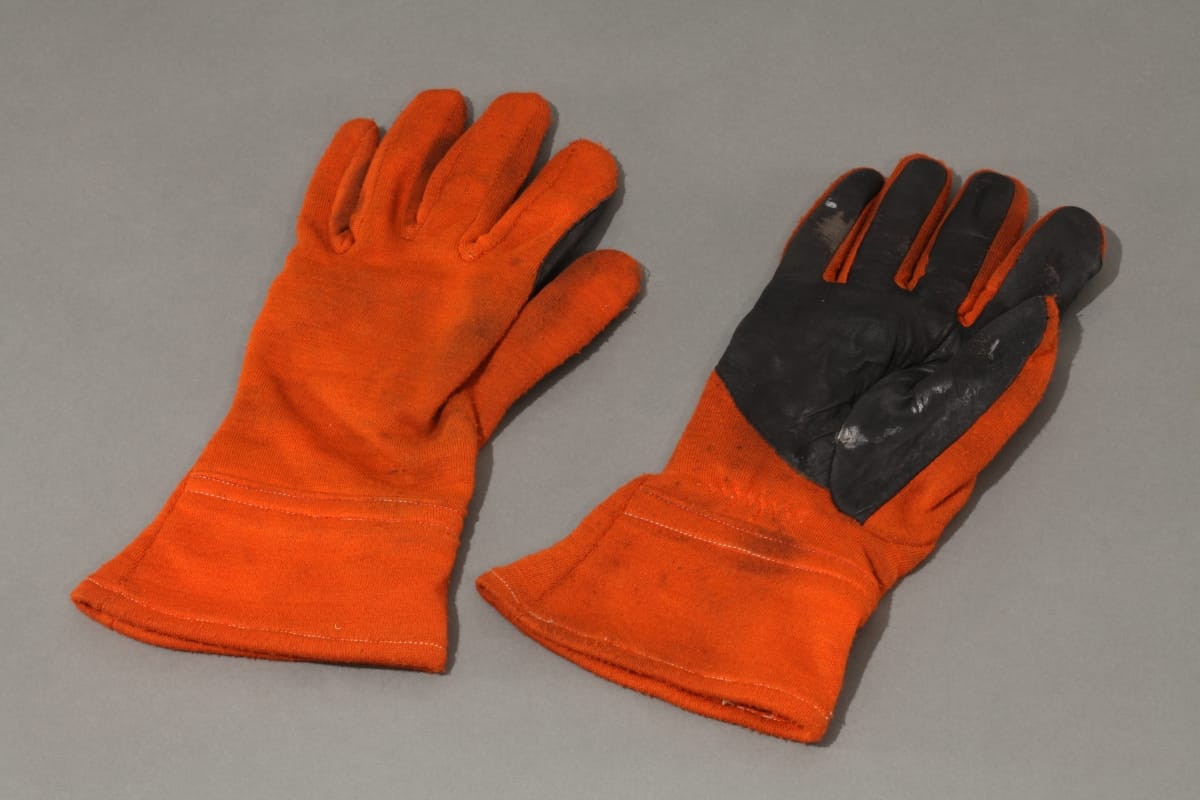
- Racing Gloves Worn by Jackie Stewart, 1971 - Famed Scottish race car driver Jackie Stewart wore these racing gloves during the Canadian-American Challenge Cup (CAN-AM) series in 1971. Though better known as a Formula 1 driver, the "Flying Scot" challenged the dominant teams in this sports racing car road series. Stewart finished third in the 1971 Can-Am Drivers Championship.
- 1971
- Collections - Artifact
Racing Gloves Worn by Jackie Stewart, 1971
Famed Scottish race car driver Jackie Stewart wore these racing gloves during the Canadian-American Challenge Cup (CAN-AM) series in 1971. Though better known as a Formula 1 driver, the "Flying Scot" challenged the dominant teams in this sports racing car road series. Stewart finished third in the 1971 Can-Am Drivers Championship.
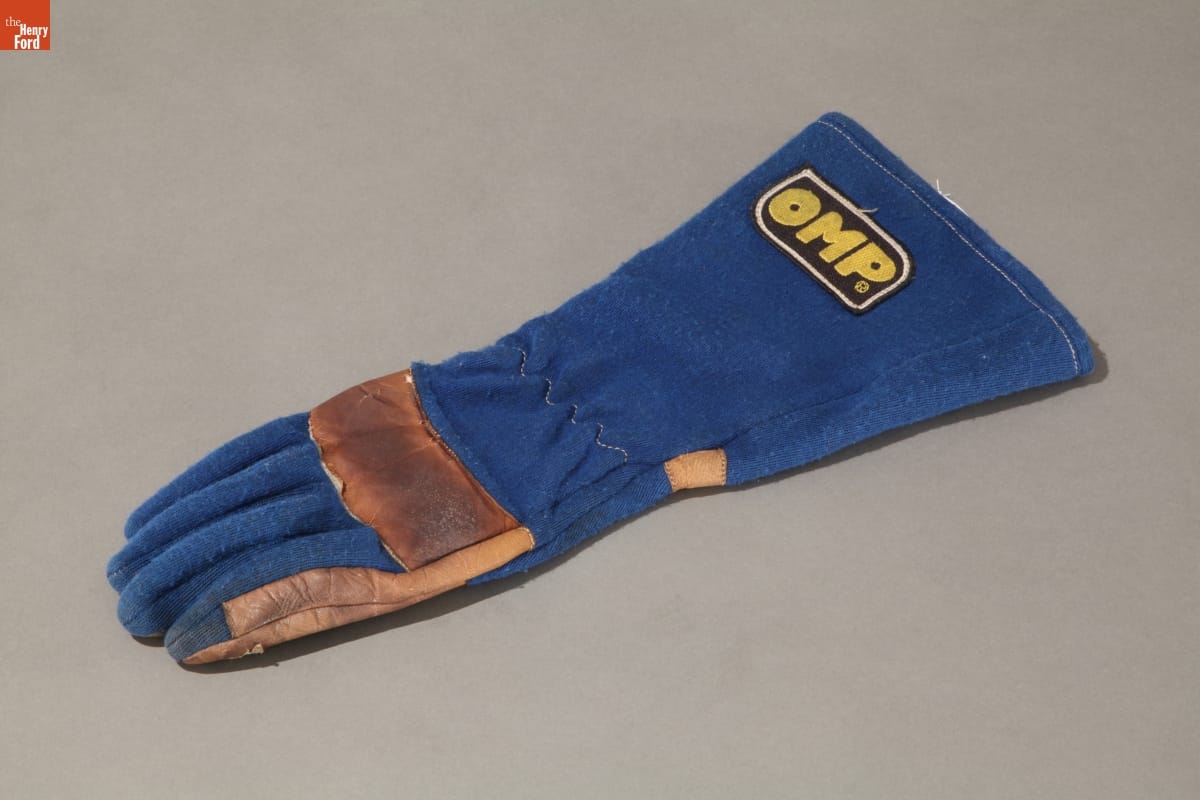
- Driving Glove Worn by Lyn St. James, circa 1986 - Lyn St. James's drive and determination led to a successful racing career. St. James has competed in top professional races worldwide since the mid-1970s. She established the Complete Driver Academy in 1994, where she continues to inspire and train future female race car drivers. This driving glove was part of her racing gear used in the mid-1980s.
- circa 1986
- Collections - Artifact
Driving Glove Worn by Lyn St. James, circa 1986
Lyn St. James's drive and determination led to a successful racing career. St. James has competed in top professional races worldwide since the mid-1970s. She established the Complete Driver Academy in 1994, where she continues to inspire and train future female race car drivers. This driving glove was part of her racing gear used in the mid-1980s.
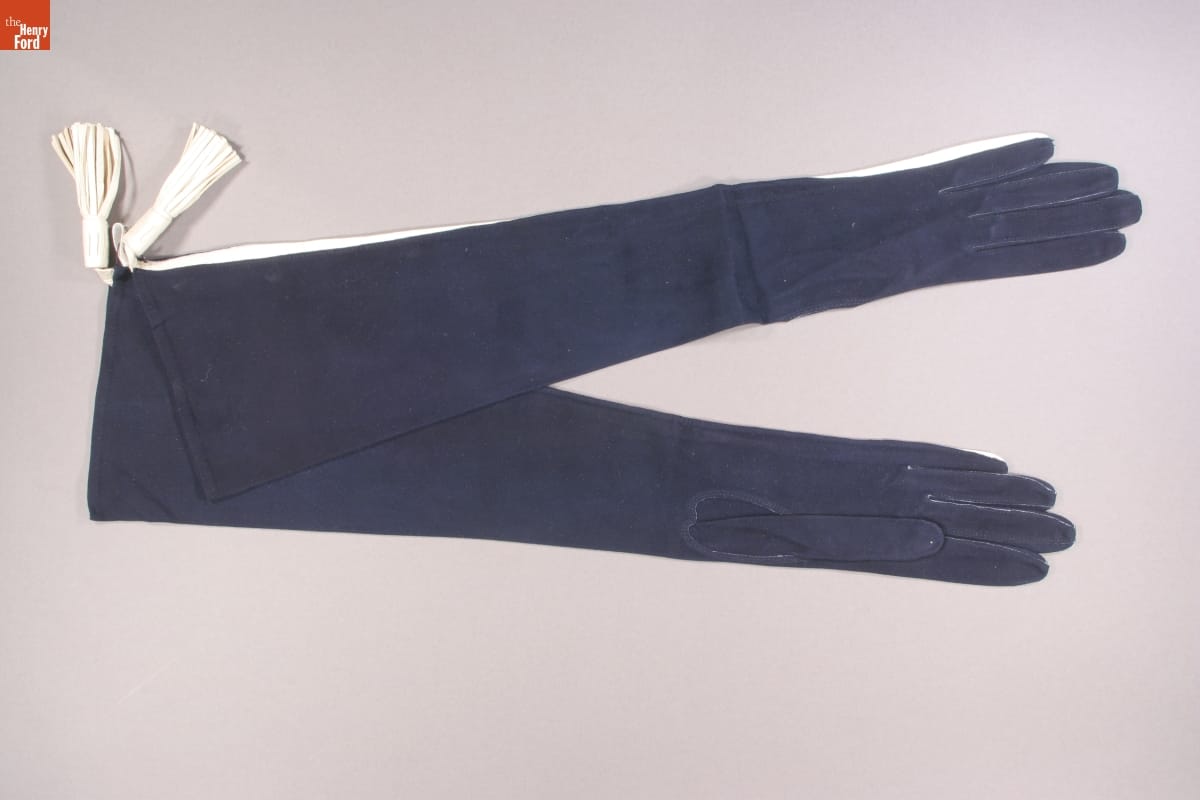
- Gloves Worn By Elizabeth Parke Firestone, 1940-1960 -
- 1940-1960
- Collections - Artifact
Gloves Worn By Elizabeth Parke Firestone, 1940-1960
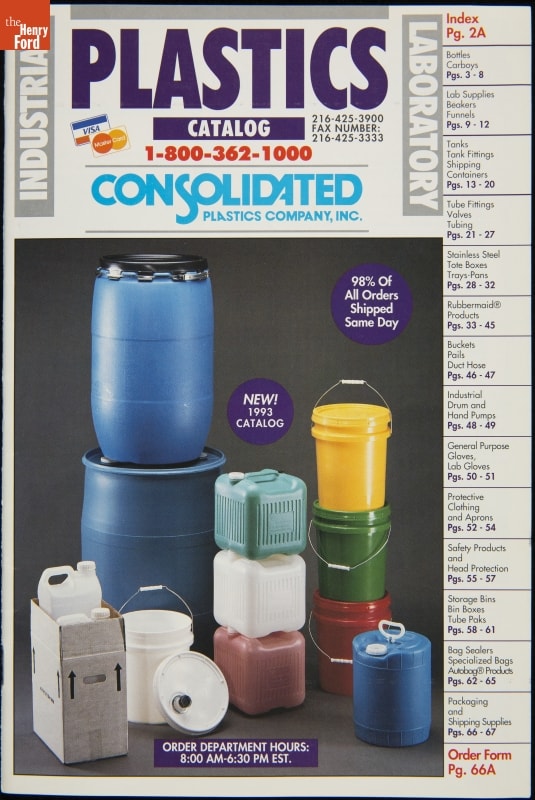
- Consolidated Plastics Company Catalog, "Industrial and Laboratory Plastics," 1993 -
- 1993
- Collections - Artifact
Consolidated Plastics Company Catalog, "Industrial and Laboratory Plastics," 1993
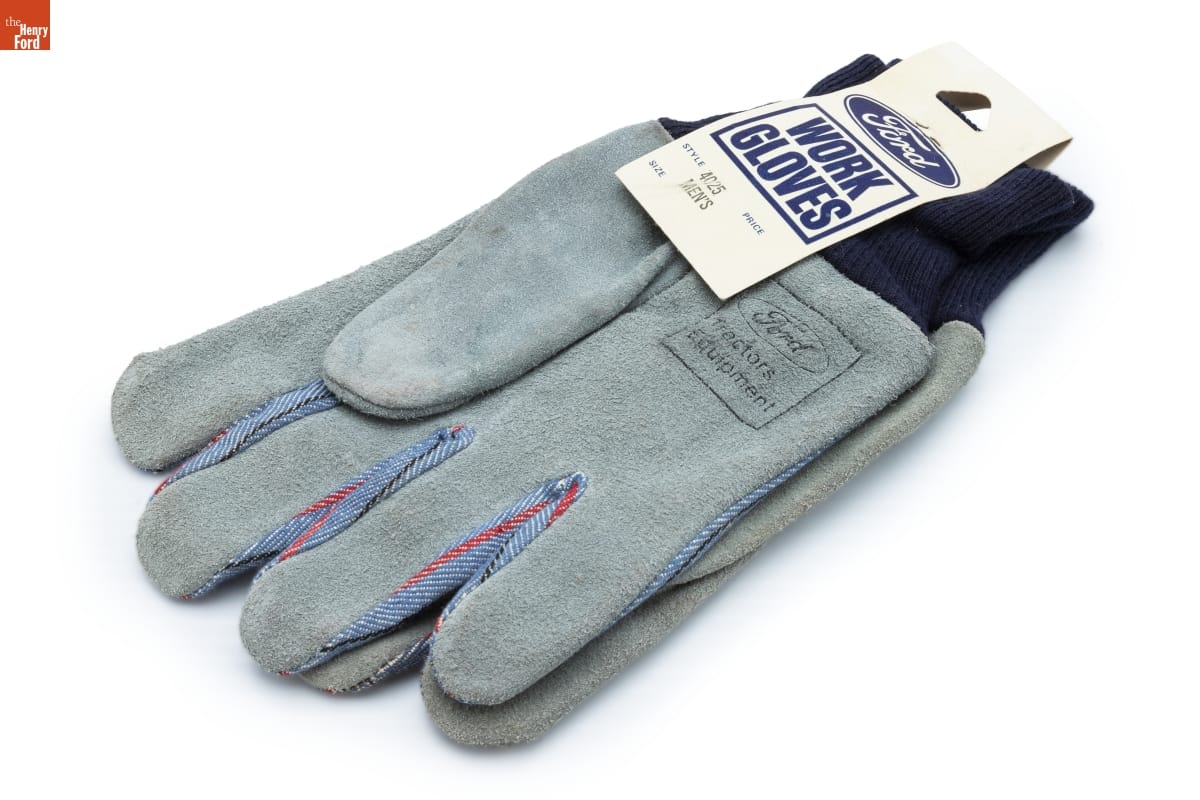
- Ford Work Gloves - Ford Motor Company's famous blue oval logo has appeared on countless items of clothing over the years -- shirts, shorts, hats, socks, and just about everything else imaginable. These gloves are different. They aren't meant to showcase an enthusiast's loyalty to the brand. They are heavy-duty work gloves that subtly promoted Ford tractors and farm equipment.
- Collections - Artifact
Ford Work Gloves
Ford Motor Company's famous blue oval logo has appeared on countless items of clothing over the years -- shirts, shorts, hats, socks, and just about everything else imaginable. These gloves are different. They aren't meant to showcase an enthusiast's loyalty to the brand. They are heavy-duty work gloves that subtly promoted Ford tractors and farm equipment.
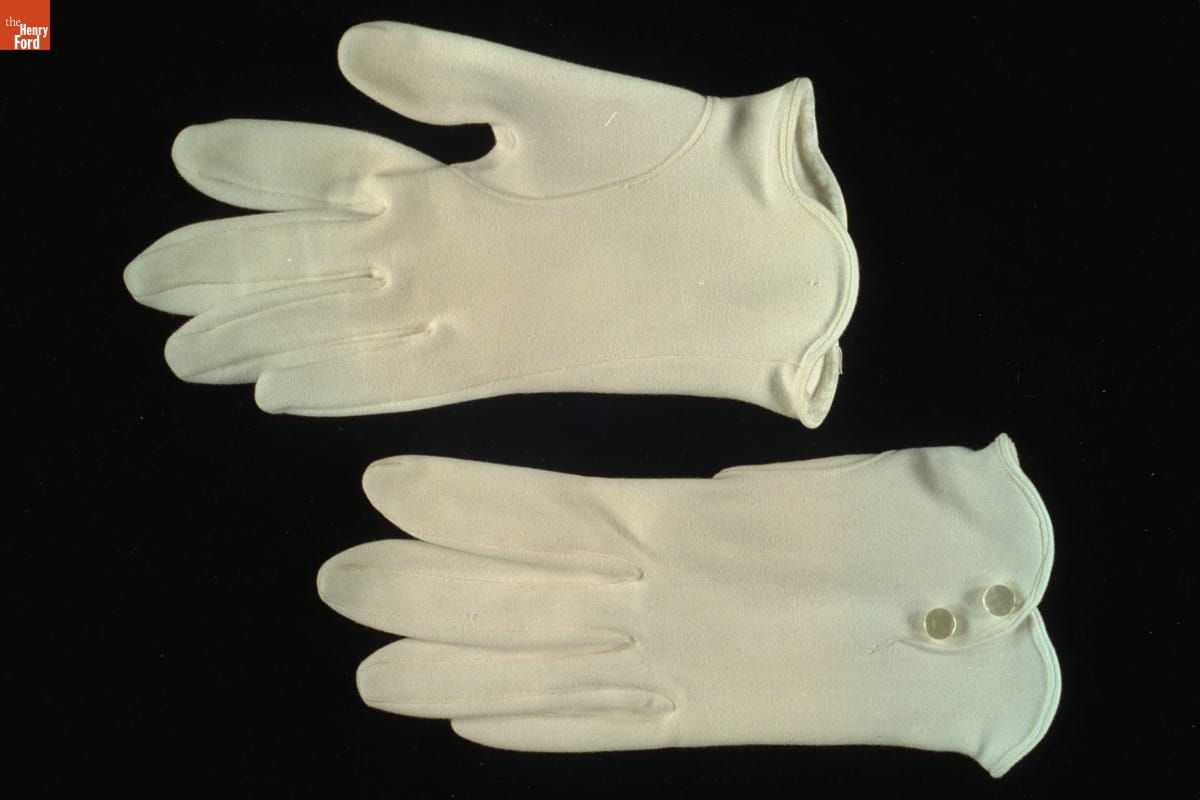
- Women's Gloves, 1960-1961 -
- 1960-1961
- Collections - Artifact
Women's Gloves, 1960-1961
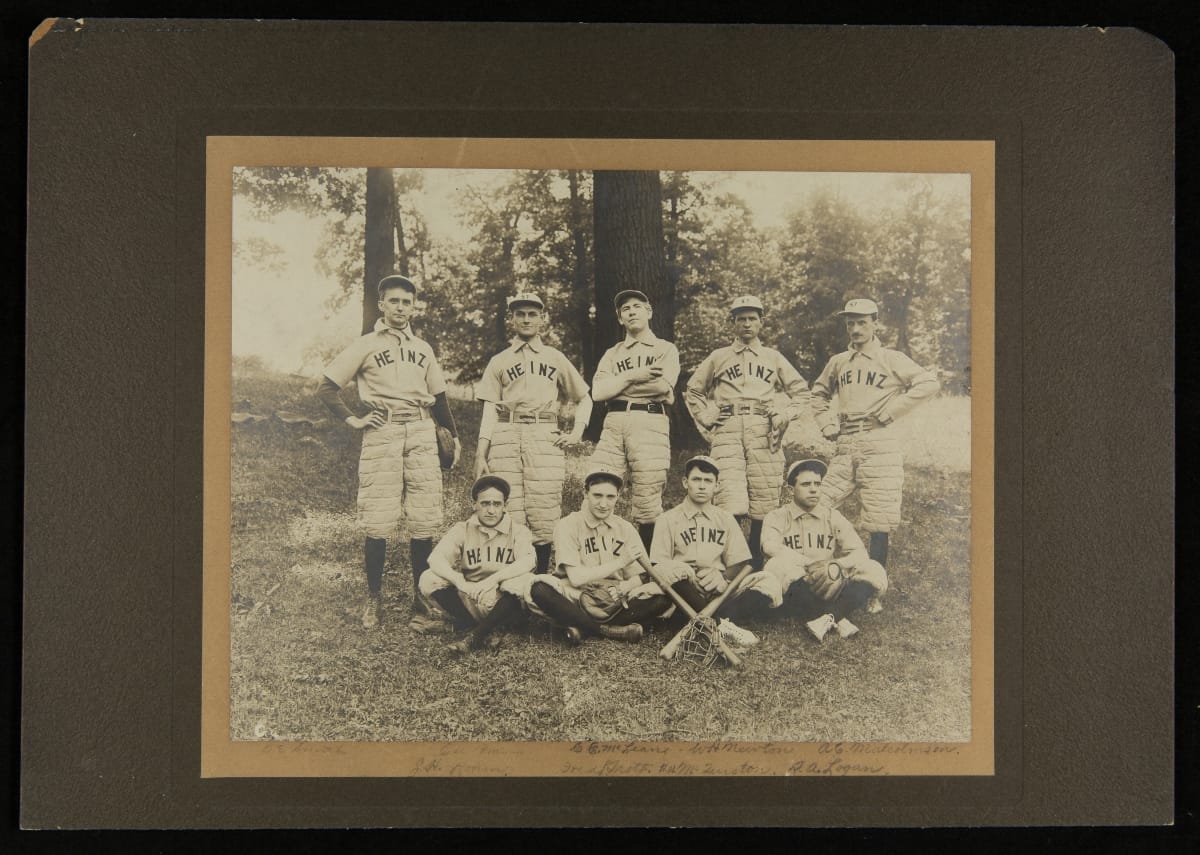
- H. J. Heinz Company Baseball Team, circa 1907 - The H.J. Heinz Company was at the forefront of employee welfare during the late 19th and early 20th centuries. Exemplary employee amenities such as a gymnasium, swimming pool, self-improvement classes, and large dining rooms supported a strong company culture. An additional recreational activity included the company baseball team, comprised of its employees.
- circa 1907
- Collections - Artifact
H. J. Heinz Company Baseball Team, circa 1907
The H.J. Heinz Company was at the forefront of employee welfare during the late 19th and early 20th centuries. Exemplary employee amenities such as a gymnasium, swimming pool, self-improvement classes, and large dining rooms supported a strong company culture. An additional recreational activity included the company baseball team, comprised of its employees.
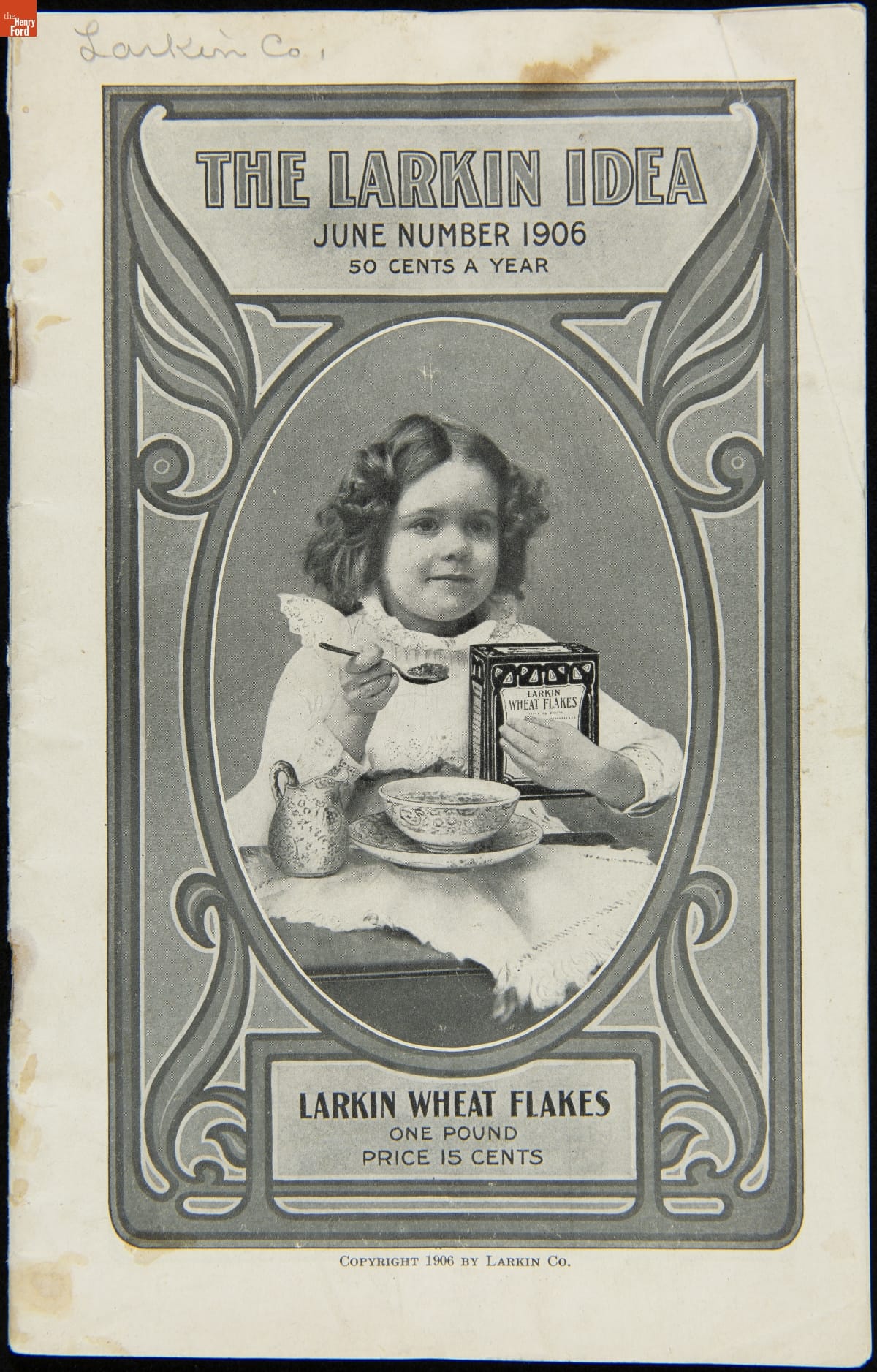
- Larkin Company Trade Catalog, "The Larkin Idea," June 1906 - John D. Larkin established a soap manufacturing company in 1875. He hired his brother-in-law, Elbert Hubbard, as a salesman. Hubbard developed "The Larkin Idea," a plan that sold goods directly to consumers through mail-order catalogs and offered incentivizing giveaways. It was a success. By the early 1900s, Larkin's catalogs contained pages of products and even more pages of premiums from which customers could choose.
- June 01, 1906
- Collections - Artifact
Larkin Company Trade Catalog, "The Larkin Idea," June 1906
John D. Larkin established a soap manufacturing company in 1875. He hired his brother-in-law, Elbert Hubbard, as a salesman. Hubbard developed "The Larkin Idea," a plan that sold goods directly to consumers through mail-order catalogs and offered incentivizing giveaways. It was a success. By the early 1900s, Larkin's catalogs contained pages of products and even more pages of premiums from which customers could choose.