
Search
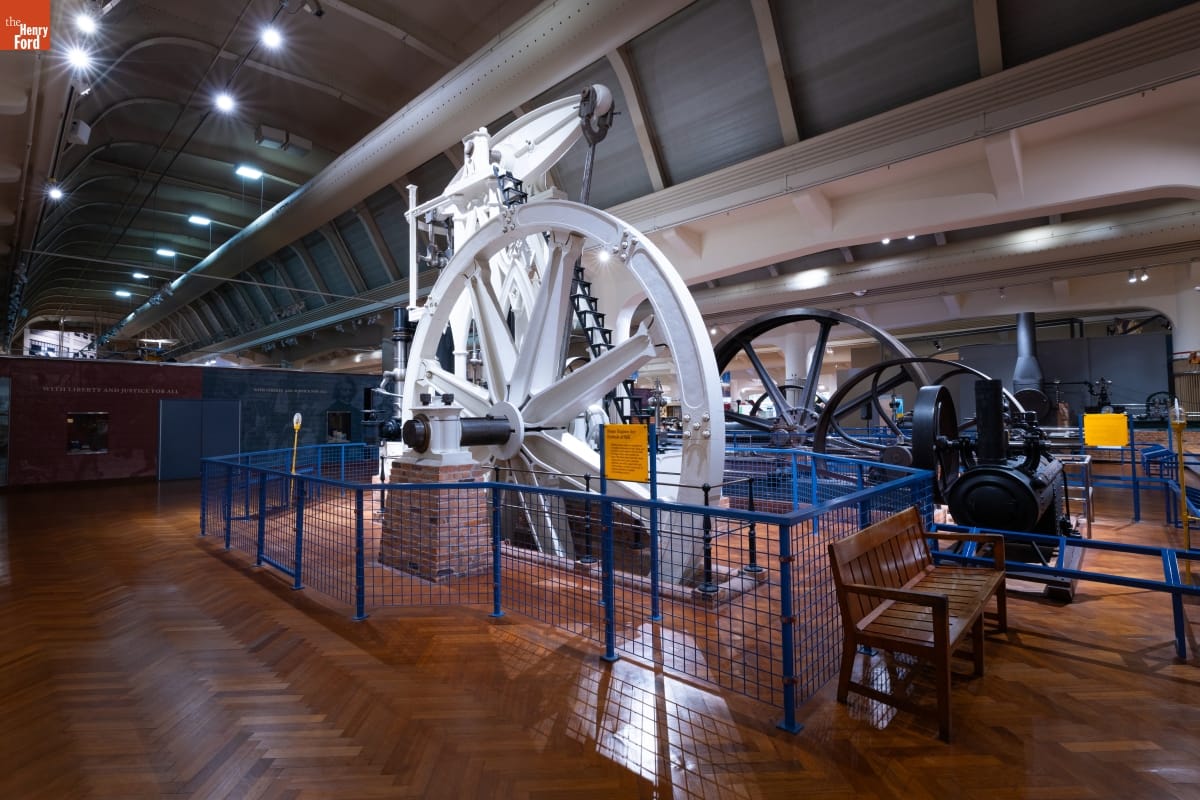
- Gothic Revival Beam Engine, circa 1855 - By the mid-1800s steam power had become widely adopted throughout settled areas of the United States. While refinements continued, the basic technology was accepted fully enough that it began to host contemporary decorative fashions. This engine's pronounced Gothic styling -- thoroughly digested into its (fairly advanced) engineering -- suggests the significance steam power had assumed both practically and philosophically.
- circa 1855
- Collections - Artifact
Gothic Revival Beam Engine, circa 1855
By the mid-1800s steam power had become widely adopted throughout settled areas of the United States. While refinements continued, the basic technology was accepted fully enough that it began to host contemporary decorative fashions. This engine's pronounced Gothic styling -- thoroughly digested into its (fairly advanced) engineering -- suggests the significance steam power had assumed both practically and philosophically.
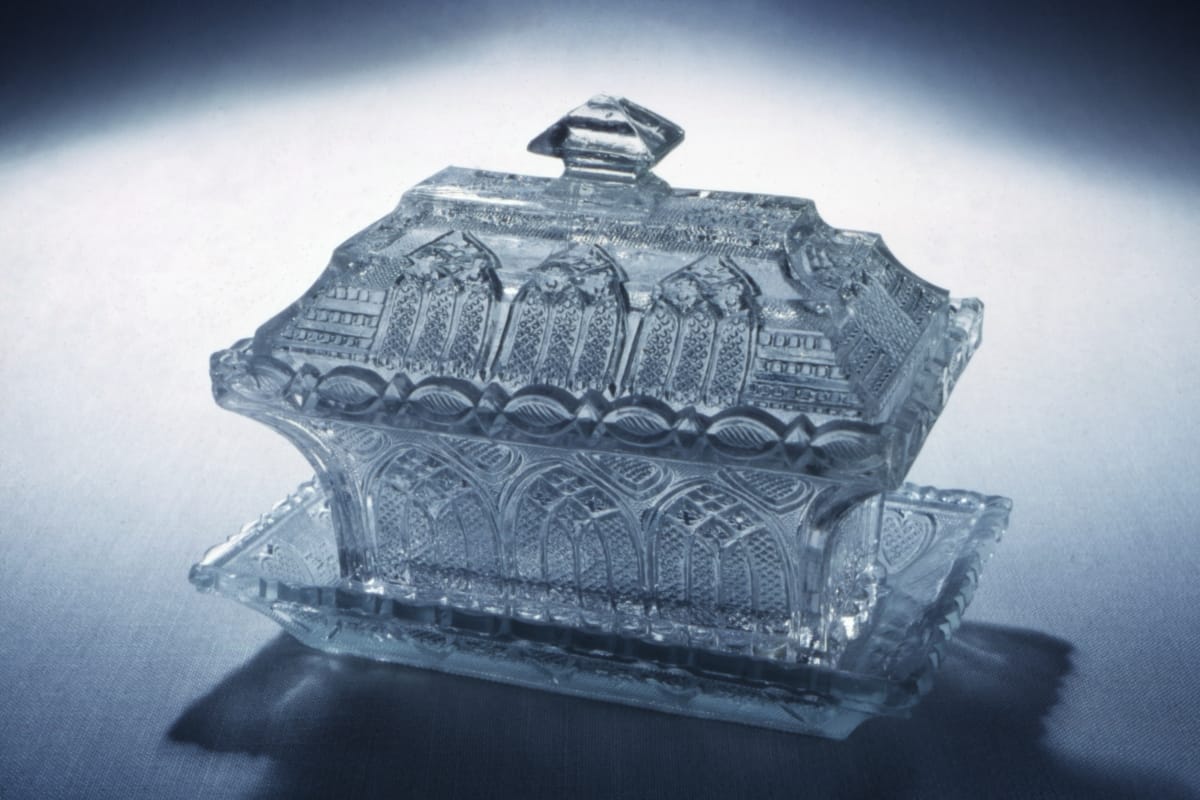
- Casket, 1830-1840 - This mold-made, pressed glass box was intended to hold a middle class lady's jewelry. It was made in the lacy glass technique, in which decoration covers the entire surface of the mold, and is raised against a background of small dots, to create a stippled appearance on the surface. The dots catch any ambient light, making the surface shimmer.
- 1830-1840
- Collections - Artifact
Casket, 1830-1840
This mold-made, pressed glass box was intended to hold a middle class lady's jewelry. It was made in the lacy glass technique, in which decoration covers the entire surface of the mold, and is raised against a background of small dots, to create a stippled appearance on the surface. The dots catch any ambient light, making the surface shimmer.
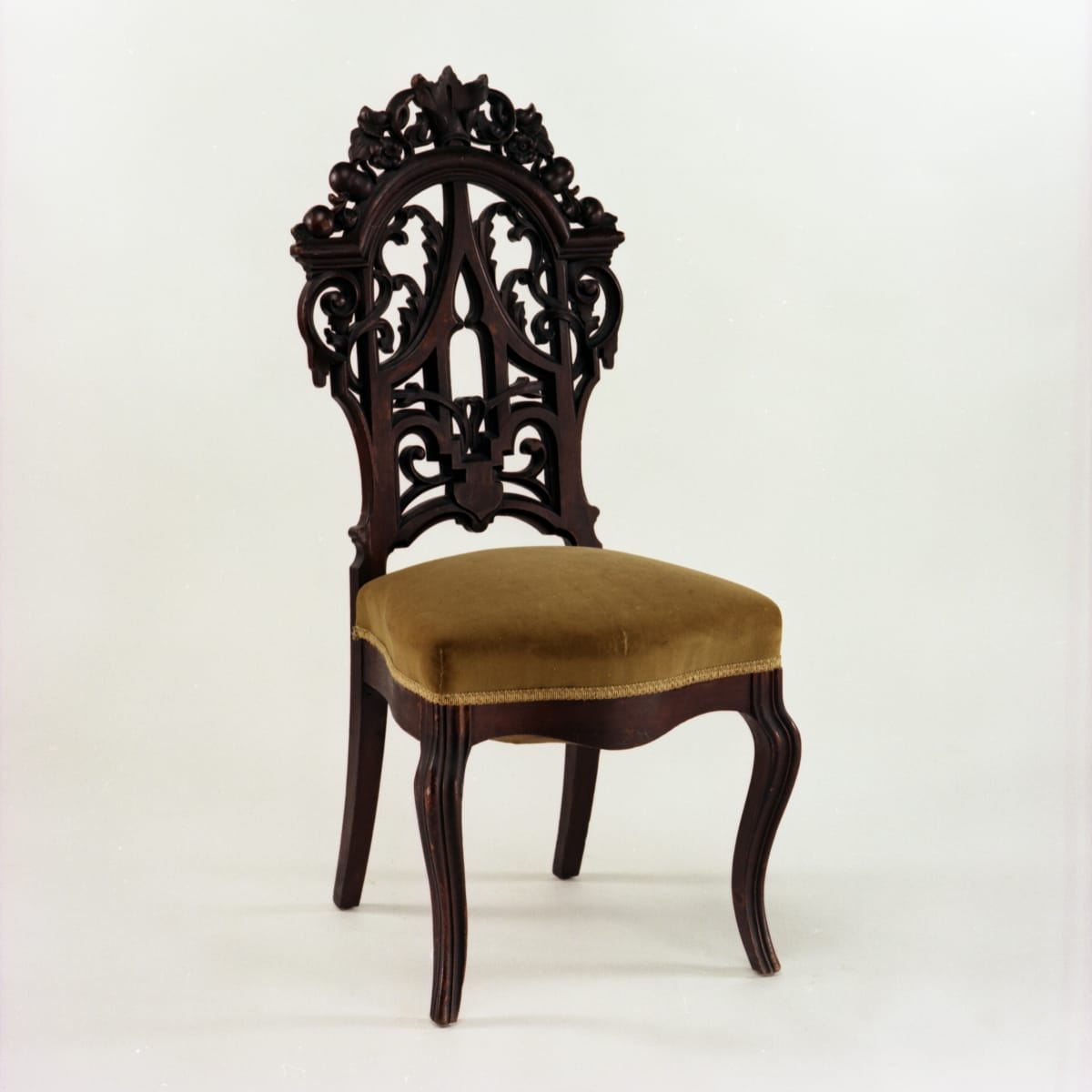
- Side Chair, 1855-1870 -
- 1855-1870
- Collections - Artifact
Side Chair, 1855-1870
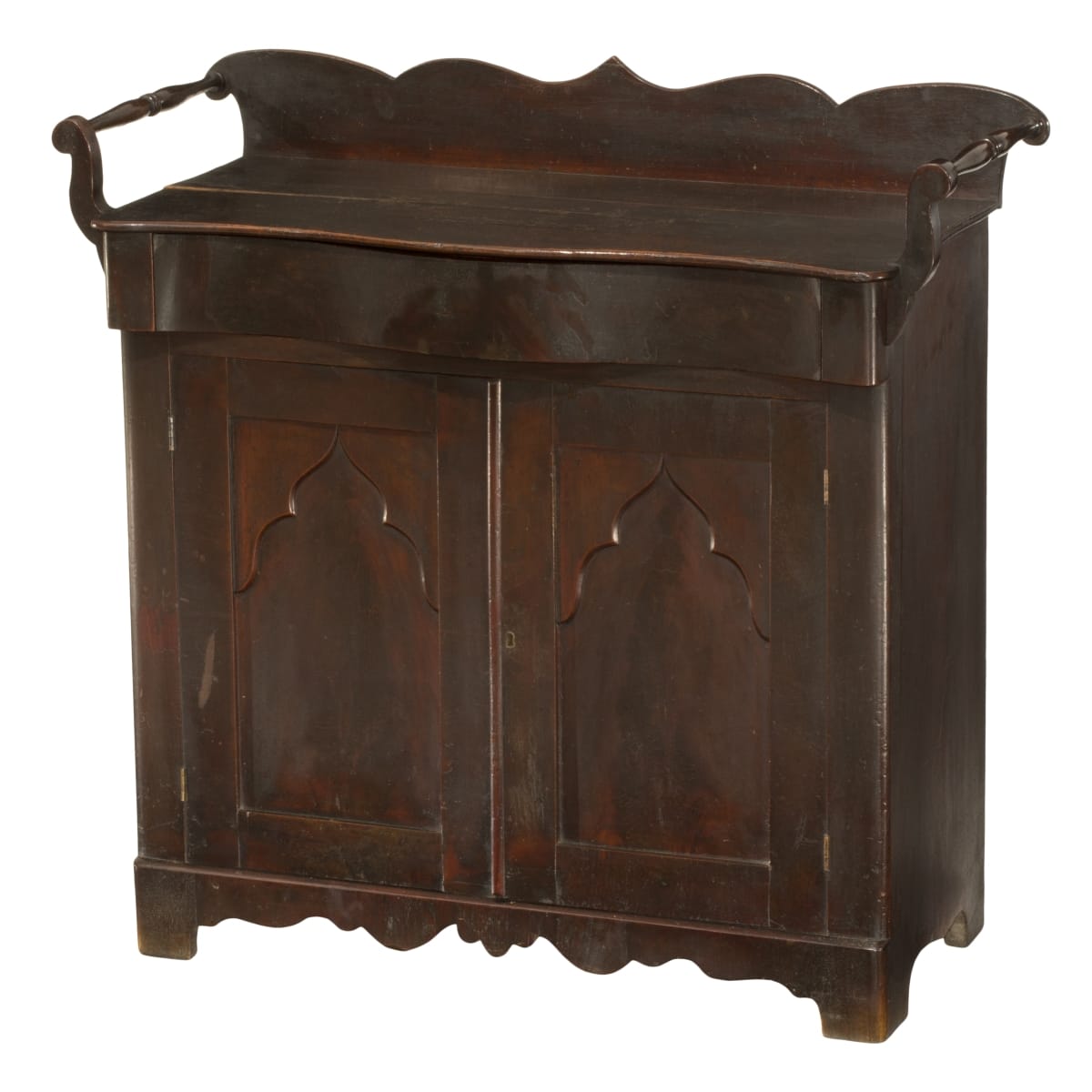
- Washstand Used in Abraham Lincoln's Springfield, Illinois Home, 1840-1860 - Mary Todd Lincoln selected this simple washstand for use in her Springfield, Illinois home. The Museum owns a matching wardrobe. Both pieces are good examples of the taste of the Lincolns in their early married life. Both are decorated with pointed arches in each door panels, identifying them as basic versions of the Gothic Revival style, popular in the early 19th century
- 1840-1860
- Collections - Artifact
Washstand Used in Abraham Lincoln's Springfield, Illinois Home, 1840-1860
Mary Todd Lincoln selected this simple washstand for use in her Springfield, Illinois home. The Museum owns a matching wardrobe. Both pieces are good examples of the taste of the Lincolns in their early married life. Both are decorated with pointed arches in each door panels, identifying them as basic versions of the Gothic Revival style, popular in the early 19th century
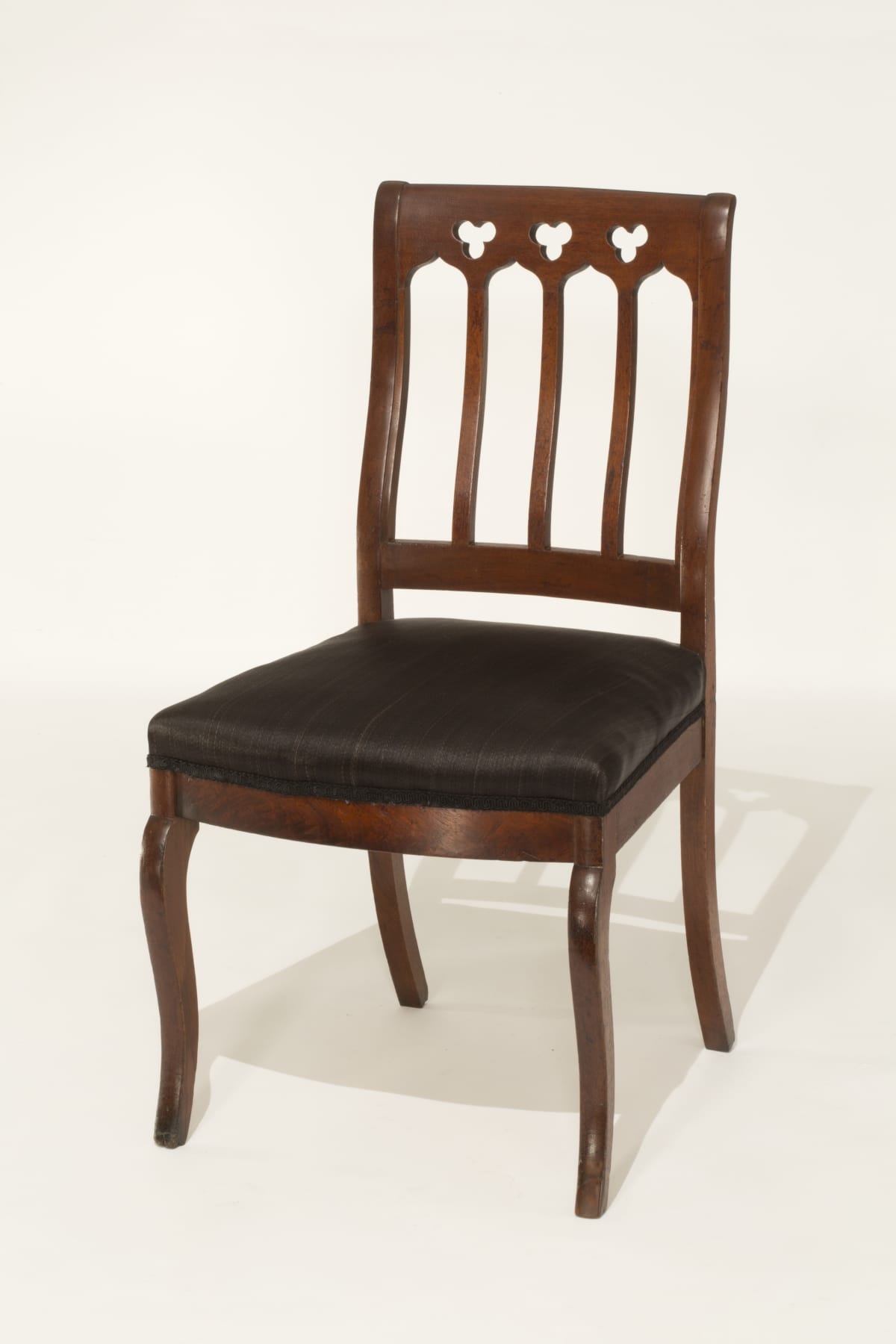
- Side Chair, Made by Joseph Meeks & Son, 1835-1860 - Meeks and Sons work spanned the 1820s to around 1860, when technology transformed furniture making from a craft to an industry. This chair dates from the 1830s, an example of the Gothic Revival style. Note the three part cut outs, known as trefoils above pointed arches, derived from medieval stained glass windows.
- 1835-1860
- Collections - Artifact
Side Chair, Made by Joseph Meeks & Son, 1835-1860
Meeks and Sons work spanned the 1820s to around 1860, when technology transformed furniture making from a craft to an industry. This chair dates from the 1830s, an example of the Gothic Revival style. Note the three part cut outs, known as trefoils above pointed arches, derived from medieval stained glass windows.
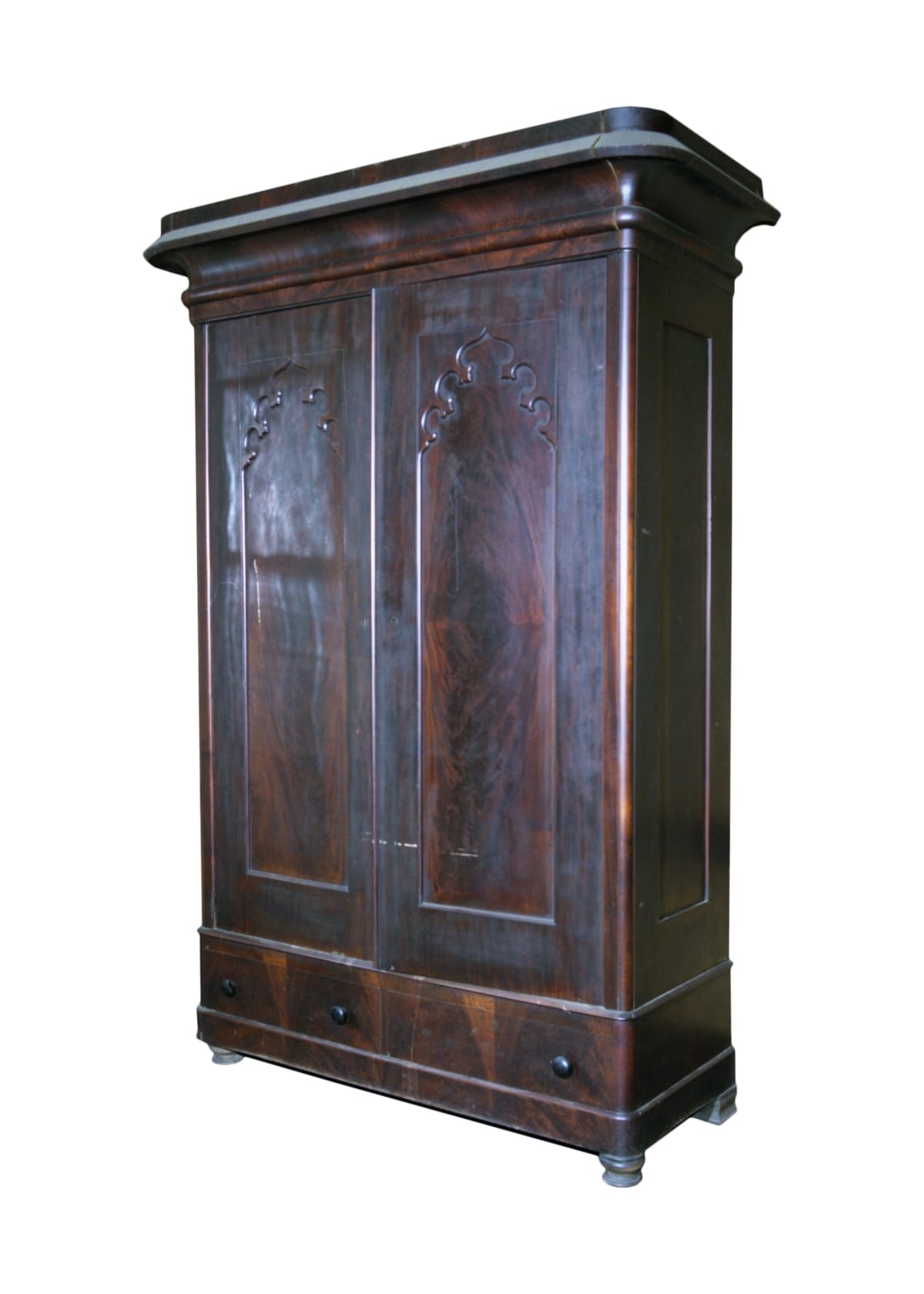
- Wardrobe Used in Abraham Lincoln's Springfield, Illinois Home, 1840-1860 - Mary Todd Lincoln selected this simple wardrobe for use in her Springfield, Illinois home. The Museum owns a matching washstand. Both pieces are good examples of the taste of the Lincolns in their early married life. Both are decorated with pointed arches in each door panels, identifying them as basic versions of the Gothic Revival style, popular in the early 19th century
- 1835-1855
- Collections - Artifact
Wardrobe Used in Abraham Lincoln's Springfield, Illinois Home, 1840-1860
Mary Todd Lincoln selected this simple wardrobe for use in her Springfield, Illinois home. The Museum owns a matching washstand. Both pieces are good examples of the taste of the Lincolns in their early married life. Both are decorated with pointed arches in each door panels, identifying them as basic versions of the Gothic Revival style, popular in the early 19th century
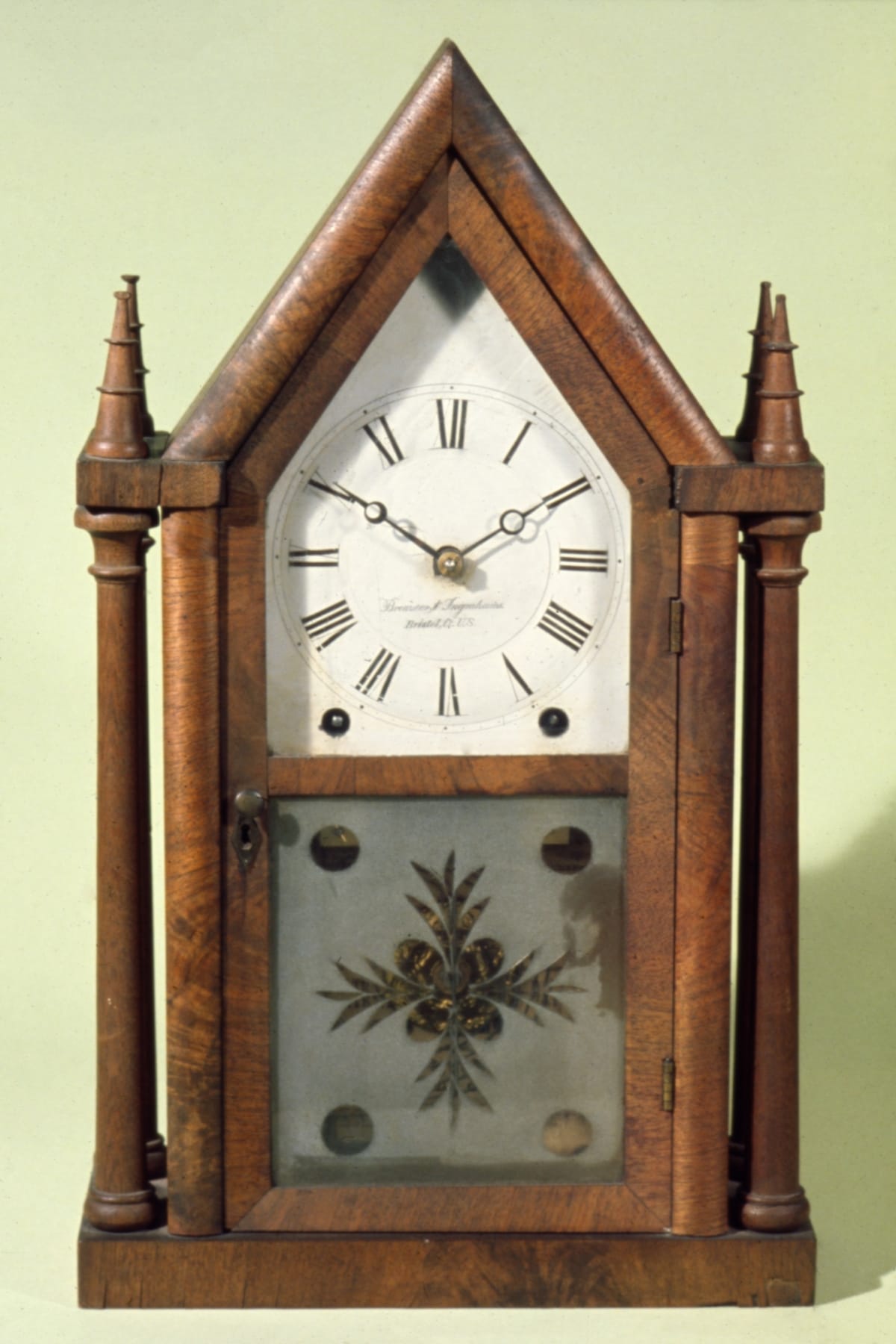
- Shelf Clock Made by Brewster and Ingrahams, 1844-1852 - This simple, mass produced clock is the type that was owned by many middle class Americans in the early years of the 19th century. The pointed top and the steeples suggest the popular Gothic Revival Style. The decorative floral etched glass is generic, suggesting no particular style. The overall effect would be perfect for a picturesque "cottage" interior.
- 1844-1852
- Collections - Artifact
Shelf Clock Made by Brewster and Ingrahams, 1844-1852
This simple, mass produced clock is the type that was owned by many middle class Americans in the early years of the 19th century. The pointed top and the steeples suggest the popular Gothic Revival Style. The decorative floral etched glass is generic, suggesting no particular style. The overall effect would be perfect for a picturesque "cottage" interior.
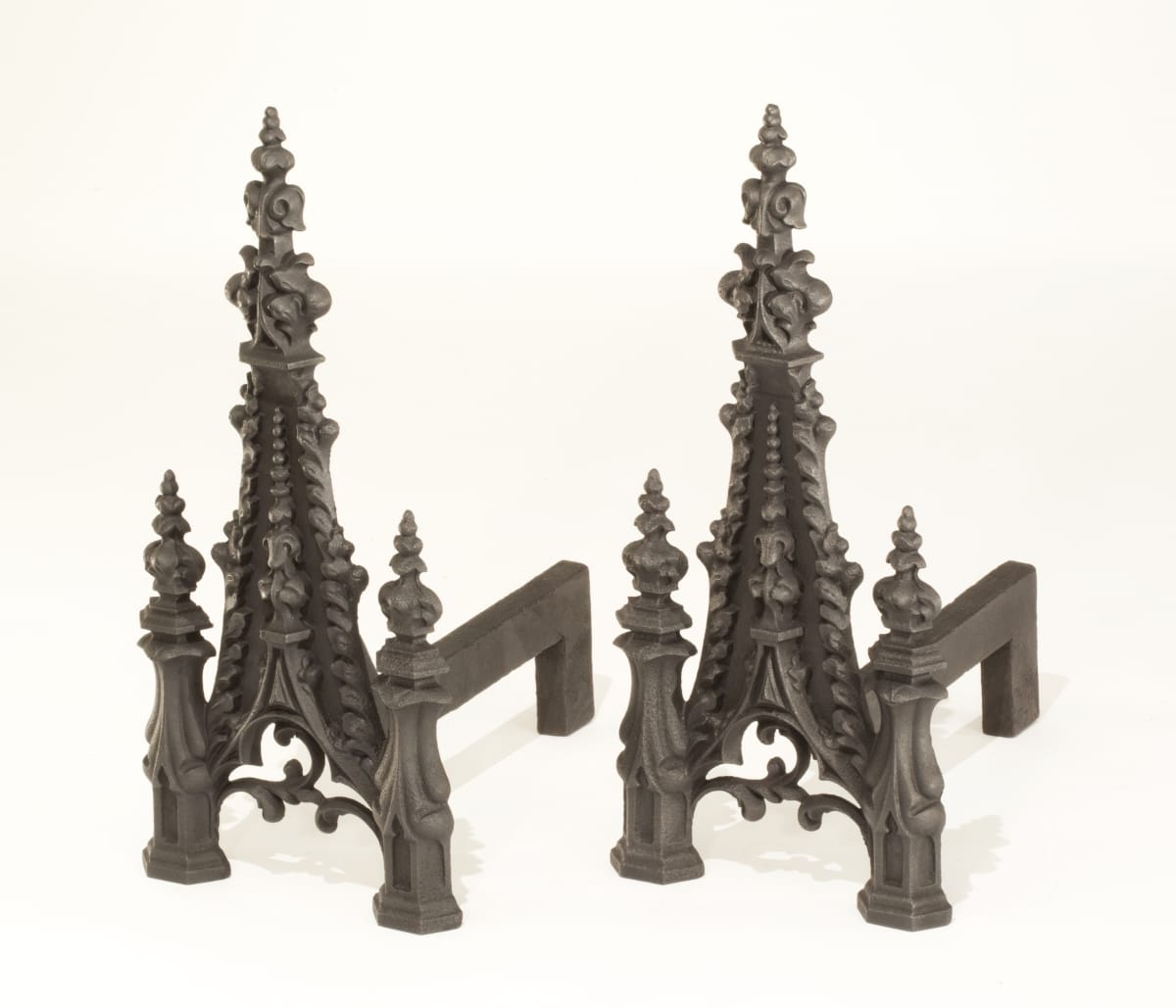
- Cast Iron Andirons, 1860-1869 - These tall cast iron andirons -- with their double "stack" of church spires -- are the very definition of the Gothic Revival decorative style. The asymmetrical C scrolls at the center bottom derive from stained glass windows. This mixture of design elements are lifted from a medieval cathedral -- although nothing like them ever existed in the Middle Ages.
- 1860-1869
- Collections - Artifact
Cast Iron Andirons, 1860-1869
These tall cast iron andirons -- with their double "stack" of church spires -- are the very definition of the Gothic Revival decorative style. The asymmetrical C scrolls at the center bottom derive from stained glass windows. This mixture of design elements are lifted from a medieval cathedral -- although nothing like them ever existed in the Middle Ages.
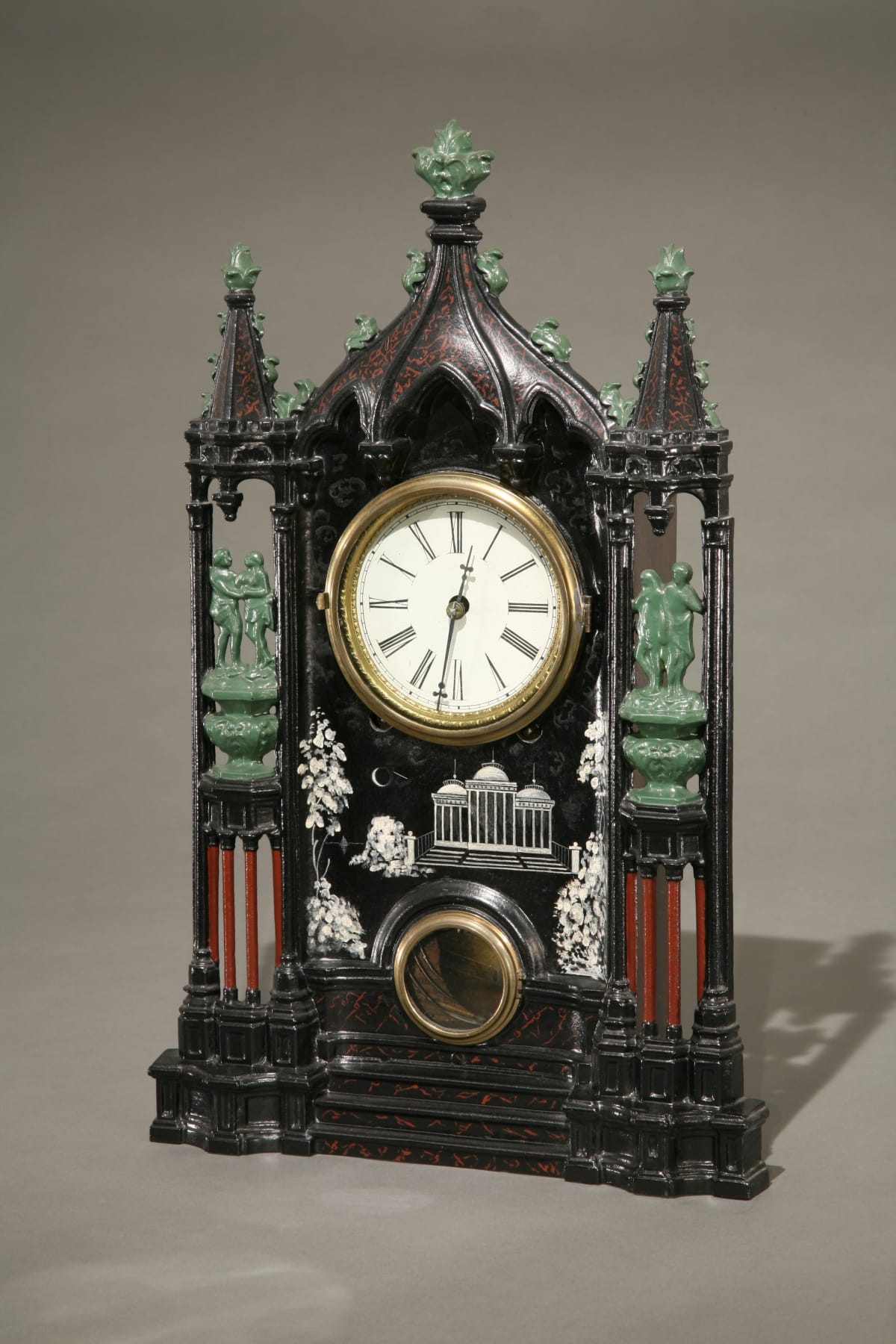
- Shelf Clock, 1850-1870 - By the 1840s, clockmakers were substituting small, light coil springs in clock movements for the previous bulky weights. No longer hindered by the size and weight of their internal mechanisms, clocks could take on all kind of different shapes and sizes. Clocks could even be made out of decorative cast iron, like this one.
- 1850-1870
- Collections - Artifact
Shelf Clock, 1850-1870
By the 1840s, clockmakers were substituting small, light coil springs in clock movements for the previous bulky weights. No longer hindered by the size and weight of their internal mechanisms, clocks could take on all kind of different shapes and sizes. Clocks could even be made out of decorative cast iron, like this one.
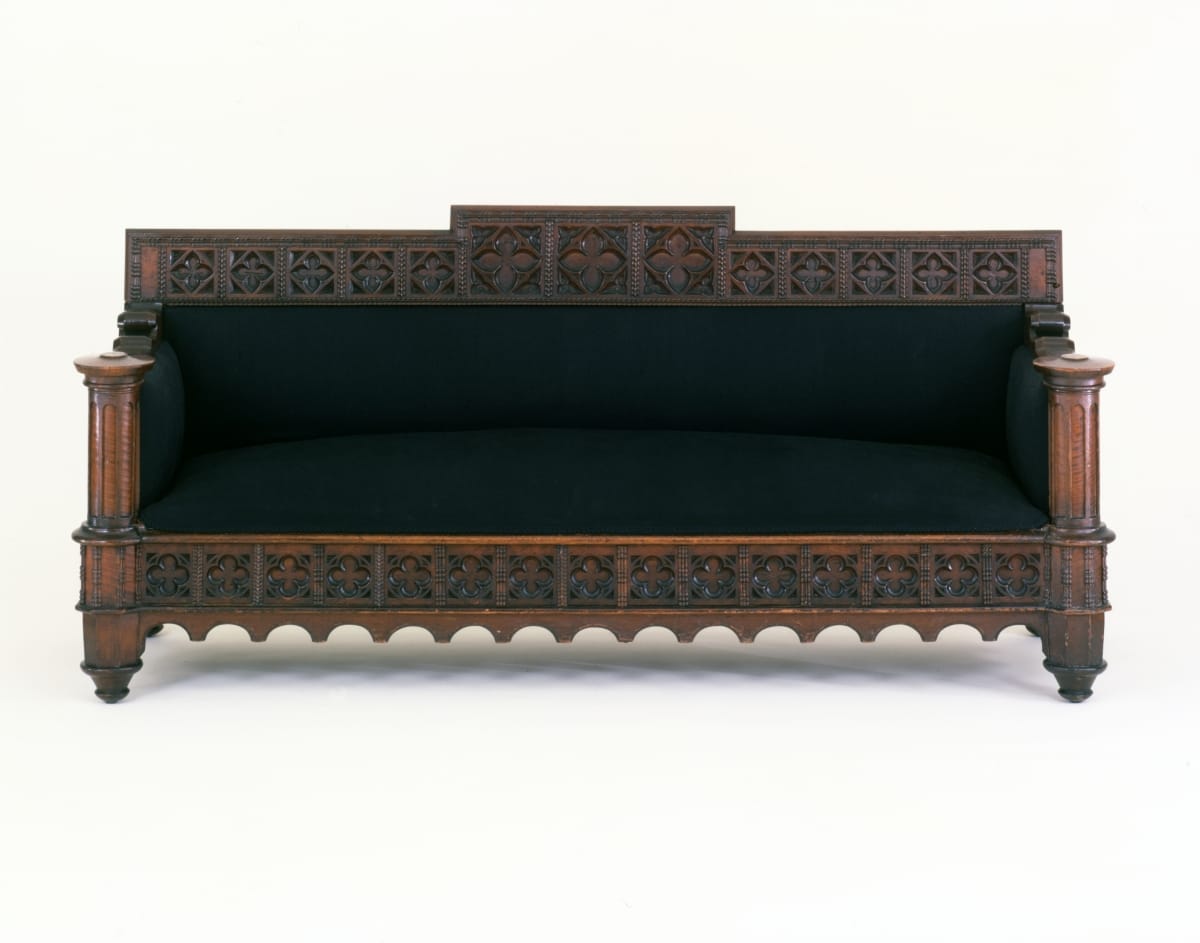
- Sofa, 1840-1860 - Gothic Revival furniture with this level of sophistication is rarely seen. The crest and seat rails consist of rows of quatrefoil, or four-part leaf forms, derived from medieval stained glass windows. This large scale piece was intended to make a fashion statement in a well-appointed Victorian interior.
- 1840-1860
- Collections - Artifact
Sofa, 1840-1860
Gothic Revival furniture with this level of sophistication is rarely seen. The crest and seat rails consist of rows of quatrefoil, or four-part leaf forms, derived from medieval stained glass windows. This large scale piece was intended to make a fashion statement in a well-appointed Victorian interior.