
Search
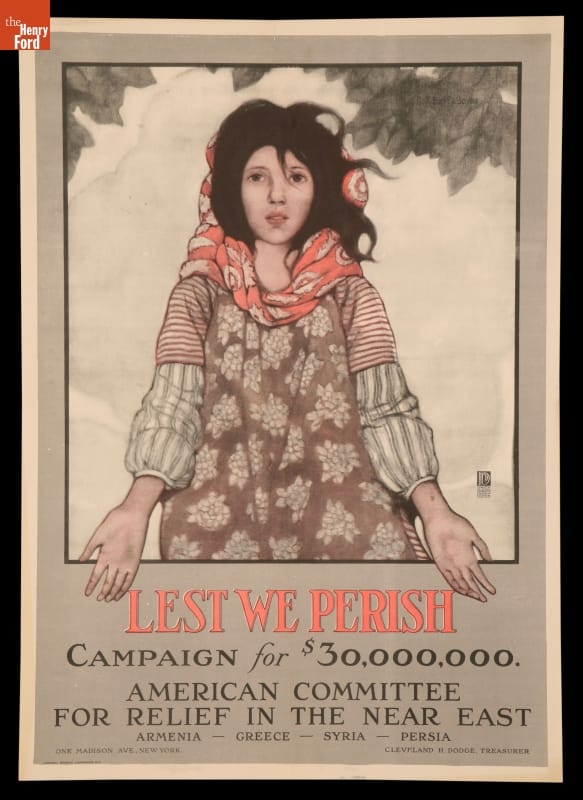
- World War I Poster, "Lest We Perish," circa 1917 - During the First World War, governments of all the warring nations used poster campaigns to encourage civilian and military support of the war effort. Artists widely used an innovative advertising technique for these posters that moved away from a factual depiction of a product's material or event's subject to an emphasis on appealing to the viewer's emotions.
- circa 1917
- Collections - Artifact
World War I Poster, "Lest We Perish," circa 1917
During the First World War, governments of all the warring nations used poster campaigns to encourage civilian and military support of the war effort. Artists widely used an innovative advertising technique for these posters that moved away from a factual depiction of a product's material or event's subject to an emphasis on appealing to the viewer's emotions.
- Dress Worn by Anastasia Tournas, 1914 -
- 1914
- Collections - Artifact
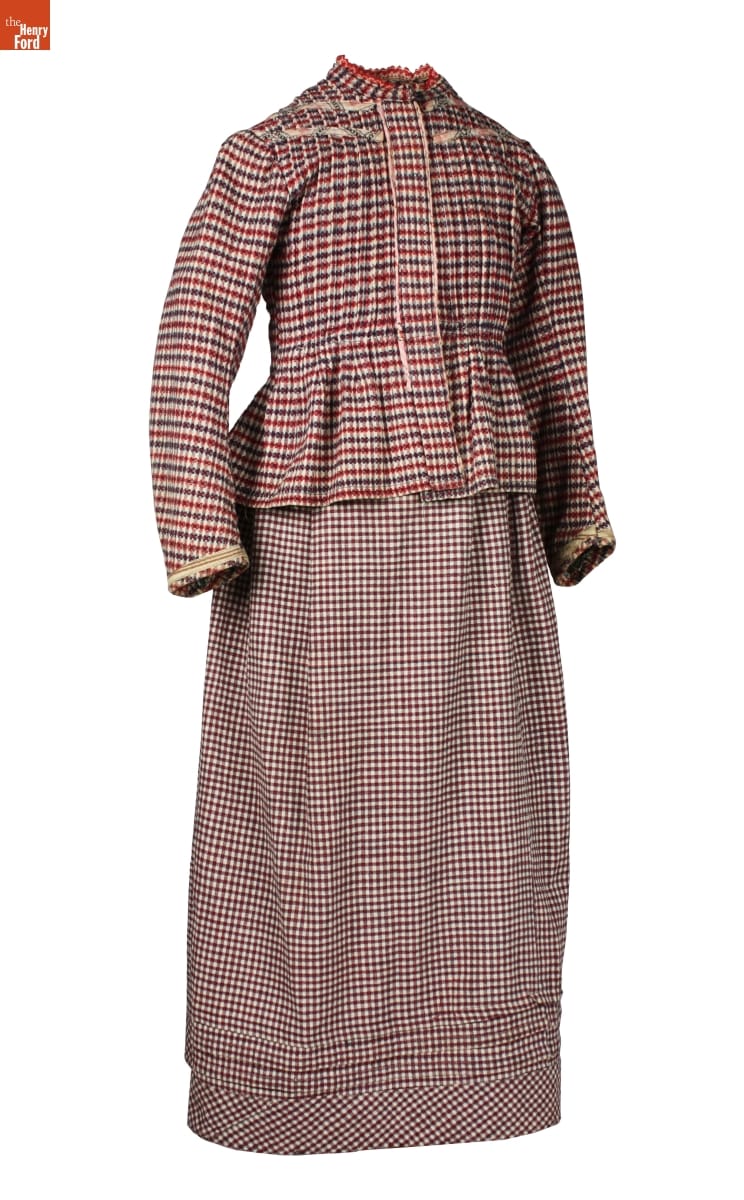
Dress Worn by Anastasia Tournas, 1914
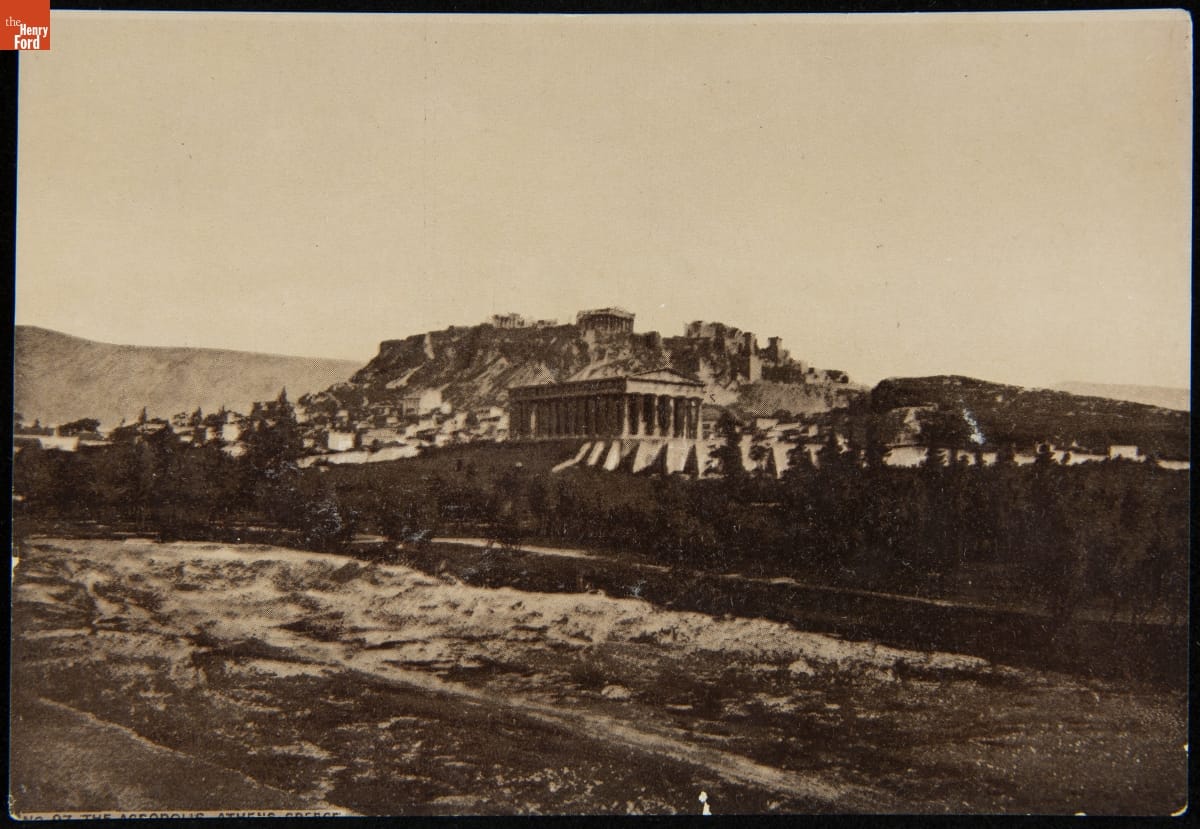
- Trade Card for C.I. Hood & Co. with Hood's Photos of the World, "The Acropolis, Athens, Greece," 1890-1910 - In the late 19th century, trade cards were a major means of advertising goods and services. Patent medicine producer, C.I. Hood & Co., had its own advertising department, creating cookbooks, calendars, and, most abundantly, trade cards. The trade card series, "Hood's Photos of the World," became popular among consumers, as it offered views of far-away places, providing a window to the broader world.
- 1890-1910
- Collections - Artifact
Trade Card for C.I. Hood & Co. with Hood's Photos of the World, "The Acropolis, Athens, Greece," 1890-1910
In the late 19th century, trade cards were a major means of advertising goods and services. Patent medicine producer, C.I. Hood & Co., had its own advertising department, creating cookbooks, calendars, and, most abundantly, trade cards. The trade card series, "Hood's Photos of the World," became popular among consumers, as it offered views of far-away places, providing a window to the broader world.
- TWA Greece Swizzle Stick, 1965-1975 - Diane Beers joined TWA as a flight attendant in 1965 but left to marry Richard Hill a year later -- a time when many airlines employed only single women in that job. Beers Hill continued her interest in the aviation industry. Her memorabilia collection included many airline swizzle sticks and stirrers for cocktails and coffee -- some delightfully shaped like airplane propellers.

- 1965-1975
- Collections - Artifact
TWA Greece Swizzle Stick, 1965-1975
Diane Beers joined TWA as a flight attendant in 1965 but left to marry Richard Hill a year later -- a time when many airlines employed only single women in that job. Beers Hill continued her interest in the aviation industry. Her memorabilia collection included many airline swizzle sticks and stirrers for cocktails and coffee -- some delightfully shaped like airplane propellers.
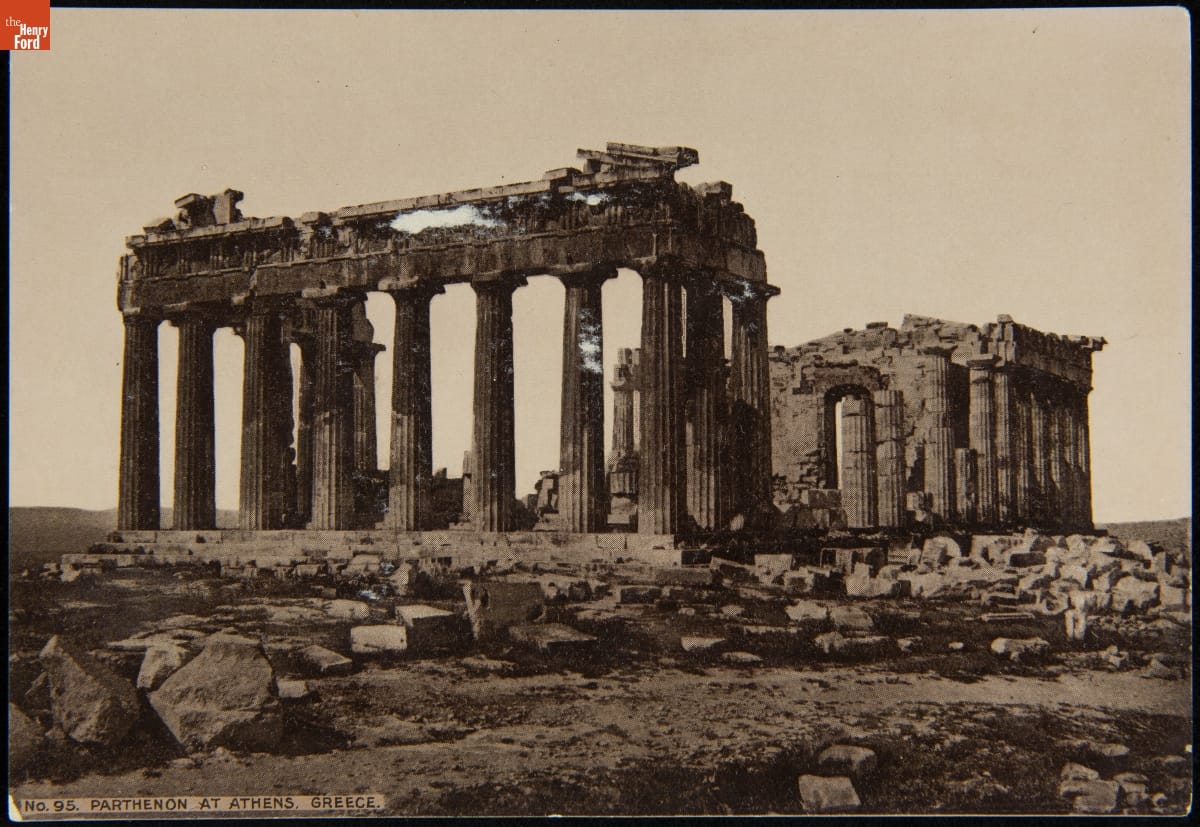
- Trade Card for C.I. Hood & Co. with Hood's Photos of the World, "Parthenon at Athens, Greece," 1890-1910 - In the late 19th century, trade cards were a major means of advertising goods and services. Patent medicine producer, C.I. Hood & Co., had its own advertising department, creating cookbooks, calendars, and, most abundantly, trade cards. The trade card series, "Hood's Photos of the World," became popular among consumers, as it offered views of far-away places, providing a window to the broader world.
- 1890-1910
- Collections - Artifact
Trade Card for C.I. Hood & Co. with Hood's Photos of the World, "Parthenon at Athens, Greece," 1890-1910
In the late 19th century, trade cards were a major means of advertising goods and services. Patent medicine producer, C.I. Hood & Co., had its own advertising department, creating cookbooks, calendars, and, most abundantly, trade cards. The trade card series, "Hood's Photos of the World," became popular among consumers, as it offered views of far-away places, providing a window to the broader world.
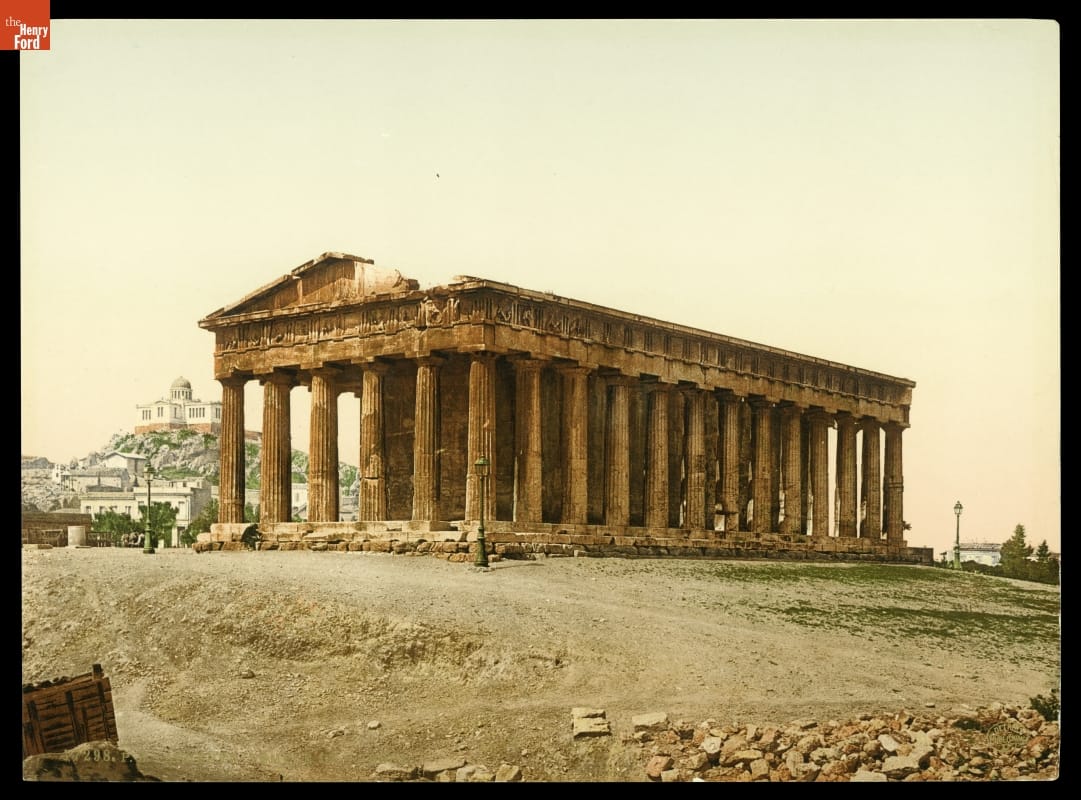
- Temple of Theseus, Athens, Greece, circa 1905 - From 1895 to 1924, the Detroit Publishing Company was one of the major image publishers in the world. The company had a wide-ranging stock of original photographs, including many scenes from around the world. These colorful prints were reproduced for ads, purchased to decorate homes and offices, bought as souvenirs, and used as teaching tools in schools and libraries.
- circa 1905
- Collections - Artifact
Temple of Theseus, Athens, Greece, circa 1905
From 1895 to 1924, the Detroit Publishing Company was one of the major image publishers in the world. The company had a wide-ranging stock of original photographs, including many scenes from around the world. These colorful prints were reproduced for ads, purchased to decorate homes and offices, bought as souvenirs, and used as teaching tools in schools and libraries.
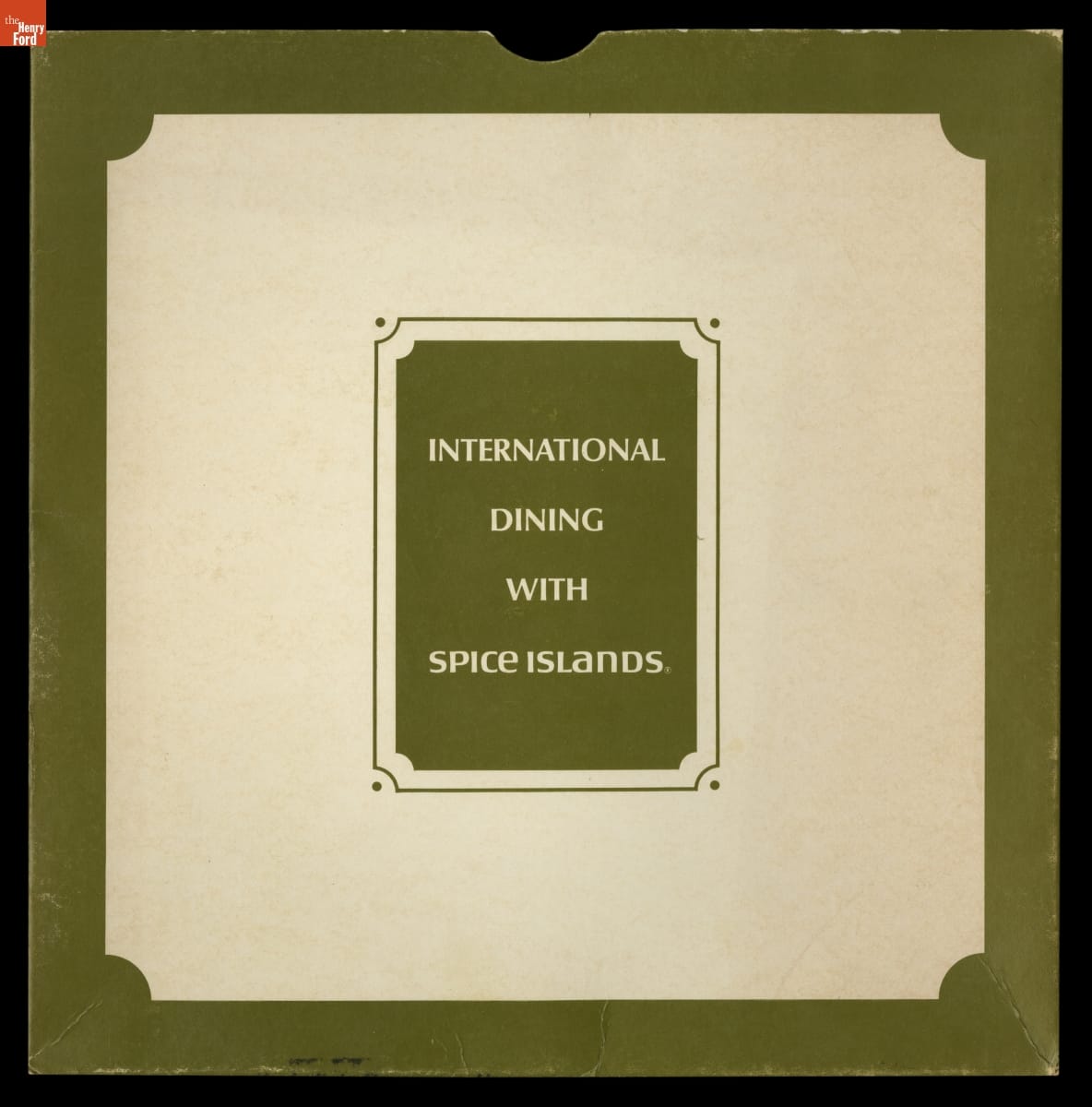
- "International Dining with Spice Islands" Recipe Booklets, 1967 - In 1963, the artist, activist, and educator Corita Kent worked in partnership with the American seasoning brand Spice Islands Company to create this publication, "International Dining with Spice Islands." Originally sold as a mail-in incentive, it contains culinary histories, recipes, and suggested menus that are aimed at demystifying global cuisine for American home chefs.
- 1967
- Collections - Artifact
"International Dining with Spice Islands" Recipe Booklets, 1967
In 1963, the artist, activist, and educator Corita Kent worked in partnership with the American seasoning brand Spice Islands Company to create this publication, "International Dining with Spice Islands." Originally sold as a mail-in incentive, it contains culinary histories, recipes, and suggested menus that are aimed at demystifying global cuisine for American home chefs.
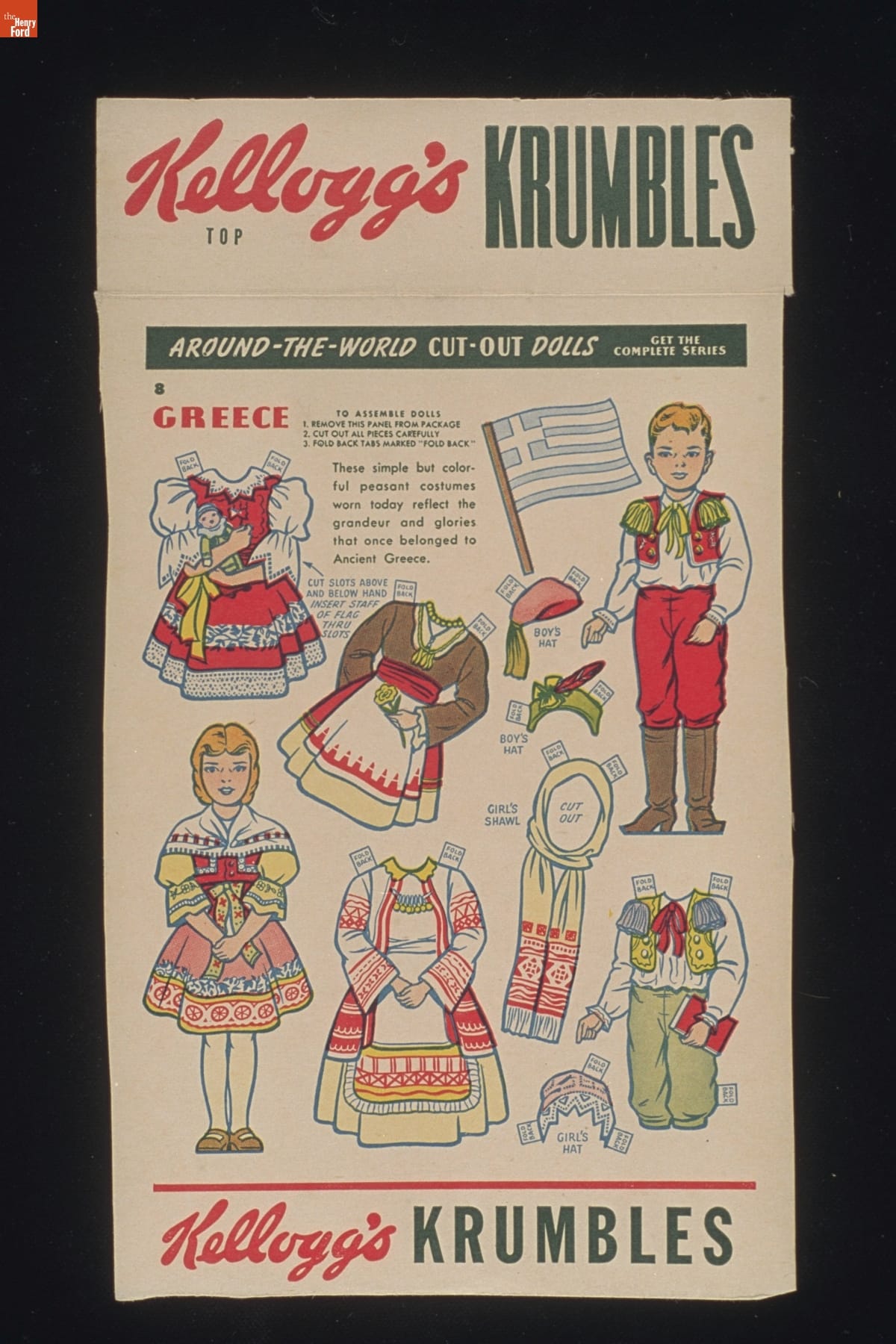
- Kellogg's Krumbles Around-the-World Cut-Out Dolls, Greece, 1946-1949 - The breakfast food manufacturer Kellogg's created attractive advertising premiums to entice customers to buy its products. In the late 1940s, as the United States became a global leader, the company printed cut-out paper dolls of children from around the world on the backs of Kellogg's Krumbles cereal boxes. Kellogg's Krumbles, a tasty toasted whole wheat cereal, was one of the company's best-selling products.
- 1946-1949
- Collections - Artifact
Kellogg's Krumbles Around-the-World Cut-Out Dolls, Greece, 1946-1949
The breakfast food manufacturer Kellogg's created attractive advertising premiums to entice customers to buy its products. In the late 1940s, as the United States became a global leader, the company printed cut-out paper dolls of children from around the world on the backs of Kellogg's Krumbles cereal boxes. Kellogg's Krumbles, a tasty toasted whole wheat cereal, was one of the company's best-selling products.
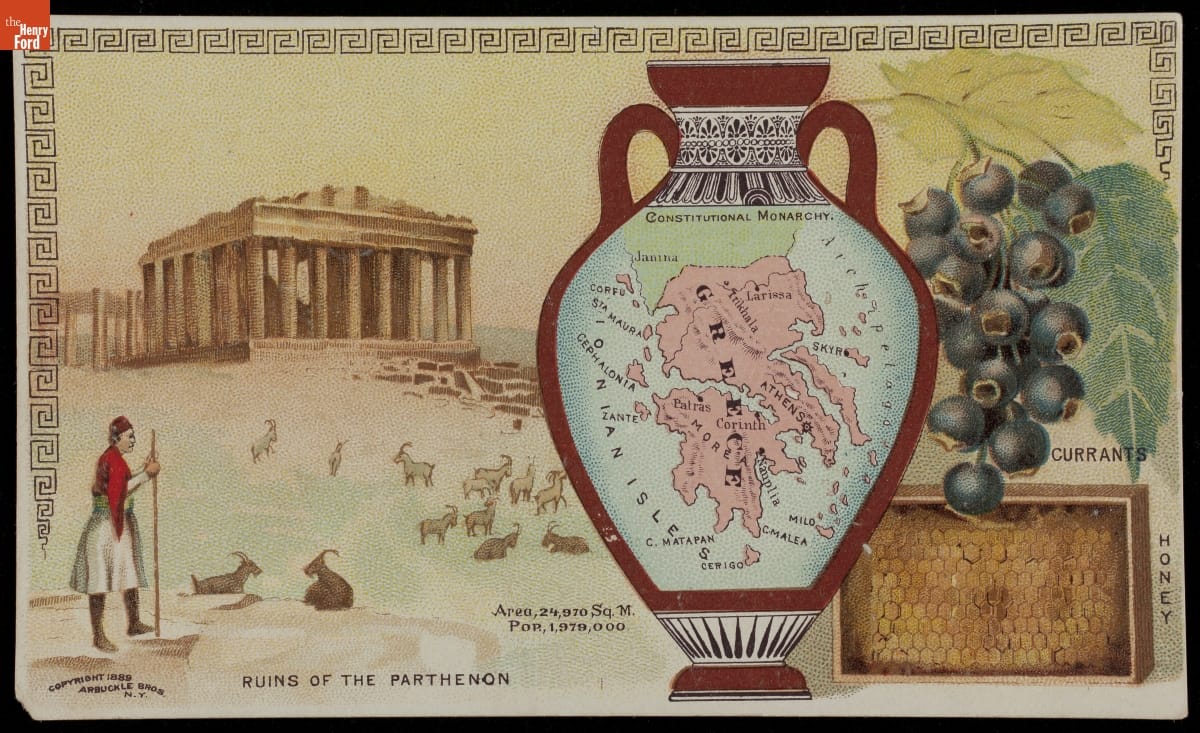
- Trade Card for Ariosa Coffee, Arbuckle Bros., "Ruins of Parthenon," 1889 - In the last third of the nineteenth century, an unprecedented variety of consumer goods and services flooded the American market. Advertisers, armed with new methods of color printing, bombarded potential customers with trade cards. Americans enjoyed and often saved the vibrant little advertisements found in product packages or distributed by local merchants. Many survive as historical records of commercialism in the United States.
- 1889
- Collections - Artifact
Trade Card for Ariosa Coffee, Arbuckle Bros., "Ruins of Parthenon," 1889
In the last third of the nineteenth century, an unprecedented variety of consumer goods and services flooded the American market. Advertisers, armed with new methods of color printing, bombarded potential customers with trade cards. Americans enjoyed and often saved the vibrant little advertisements found in product packages or distributed by local merchants. Many survive as historical records of commercialism in the United States.
- Hallmark "The Olympic Spirit Collection: Invitation to the Games" Christmas Ornament, 1996 - Already known for greeting cards, Hallmark introduced a line of Christmas ornaments in 1973. The company's annual release of an increasing array of ornaments revolutionized Christmas decorating, appealing to customers' interest in marking memories and milestones as well as expressing one's personality and unique tastes.
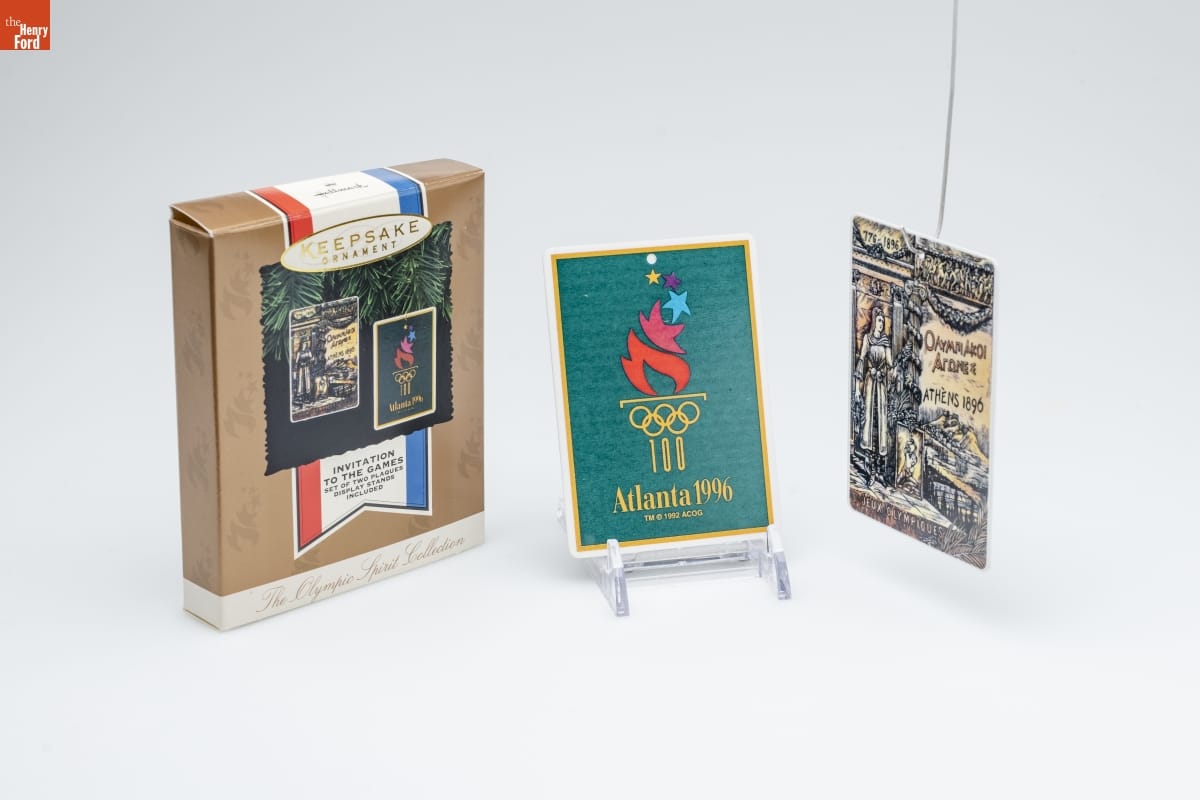
- 1896-1996
- Collections - Artifact
Hallmark "The Olympic Spirit Collection: Invitation to the Games" Christmas Ornament, 1996
Already known for greeting cards, Hallmark introduced a line of Christmas ornaments in 1973. The company's annual release of an increasing array of ornaments revolutionized Christmas decorating, appealing to customers' interest in marking memories and milestones as well as expressing one's personality and unique tastes.