
Search
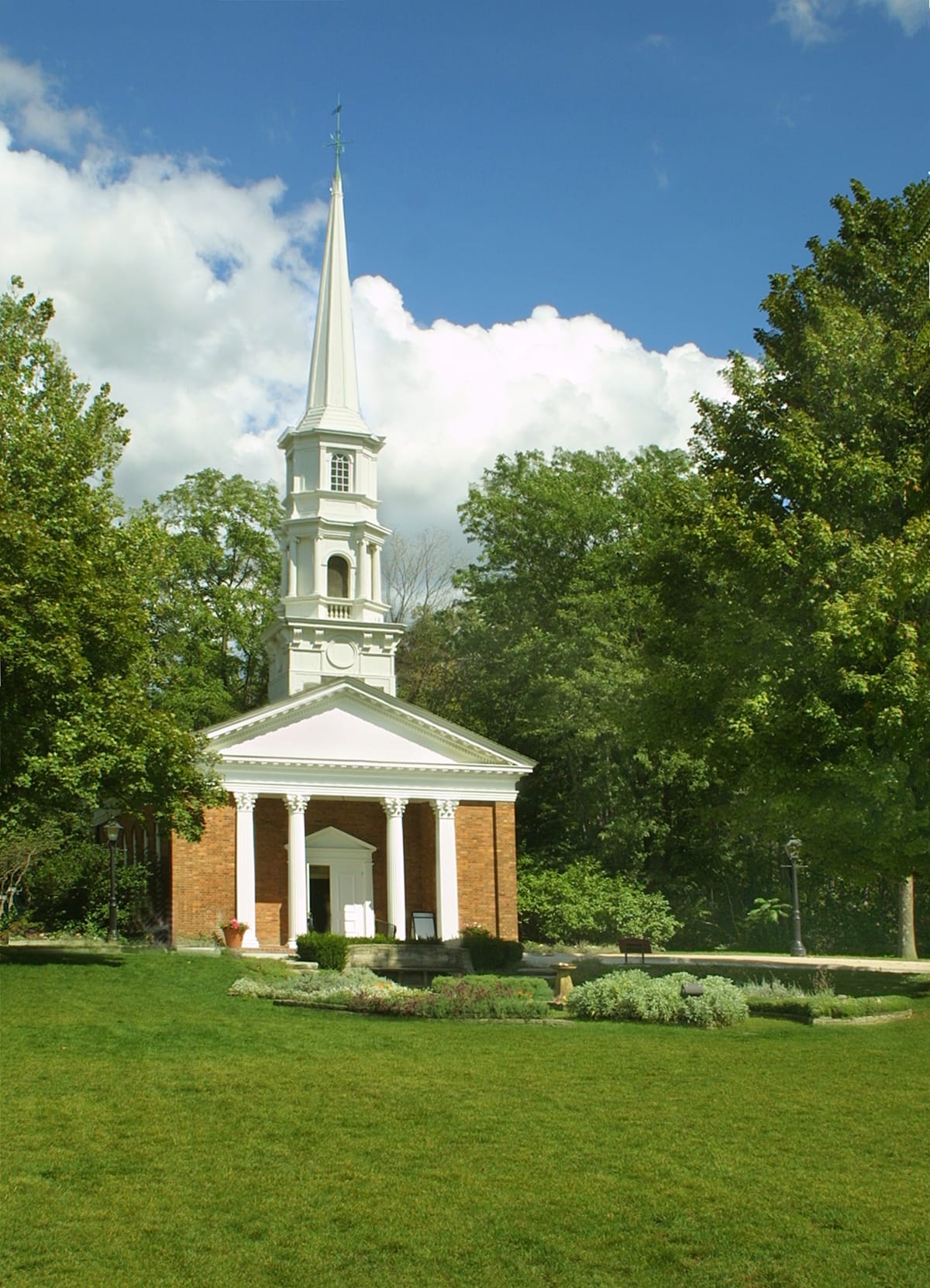
- Martha-Mary Chapel - Churches were a center of community life in the 1700s, a place where townspeople came together to attend services and socialize. The Martha-Mary Chapel, with its architecture inspired by New England's colonial-era churches, was built in Greenfield Village in 1929. This chapel was named after Henry Ford's mother, Mary Litogot Ford, and his mother-in-law, Martha Bench Bryant.
- 1929
- Collections - Artifact
Martha-Mary Chapel
Churches were a center of community life in the 1700s, a place where townspeople came together to attend services and socialize. The Martha-Mary Chapel, with its architecture inspired by New England's colonial-era churches, was built in Greenfield Village in 1929. This chapel was named after Henry Ford's mother, Mary Litogot Ford, and his mother-in-law, Martha Bench Bryant.
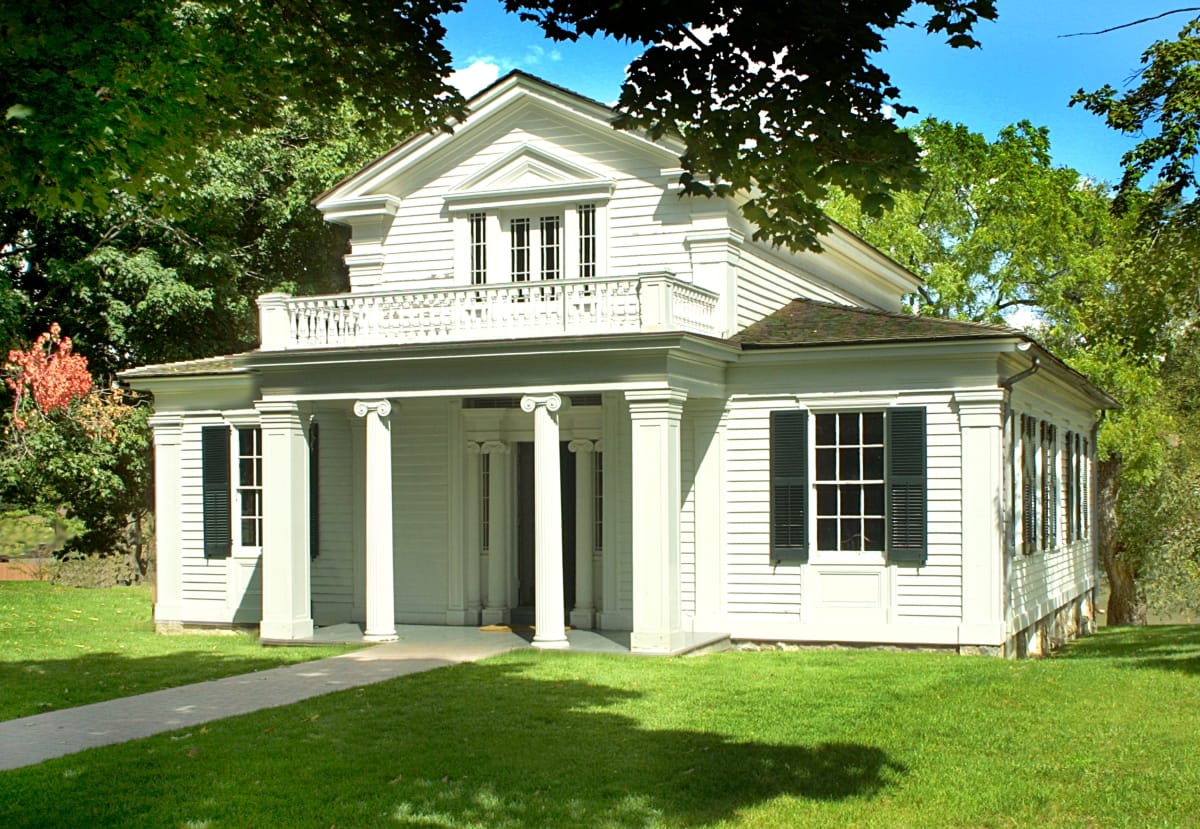
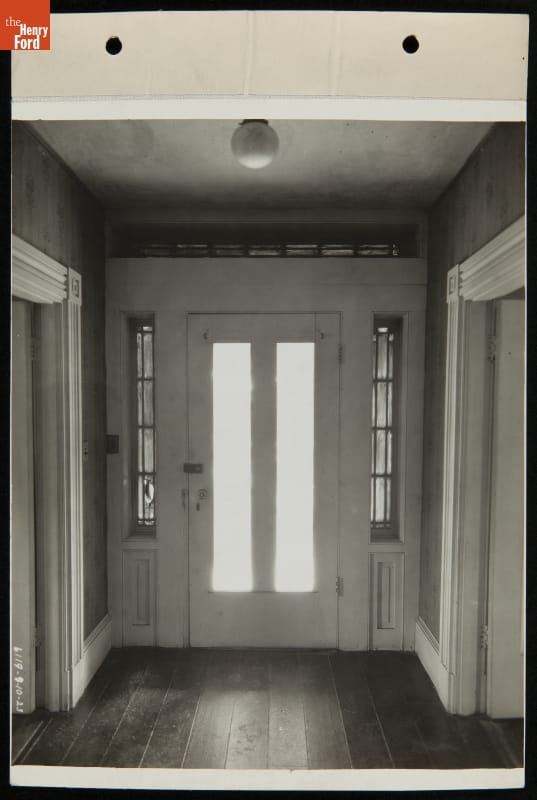
- Robert Frost Home - Robert Frost, one of America's greatest poets, had an extraordinary ability to put complex and deeply insightful ideas into everyday language. In the mid-1920s, Frost lived in this house while he was the University of Michigan's first poet-in-residence. Here, located away from the bustle of the Ann Arbor campus, his creative spirit and imagination soared as he wrote poetry and met with students.
- circa 1840
- Collections - Artifact
Robert Frost Home
Robert Frost, one of America's greatest poets, had an extraordinary ability to put complex and deeply insightful ideas into everyday language. In the mid-1920s, Frost lived in this house while he was the University of Michigan's first poet-in-residence. Here, located away from the bustle of the Ann Arbor campus, his creative spirit and imagination soared as he wrote poetry and met with students.
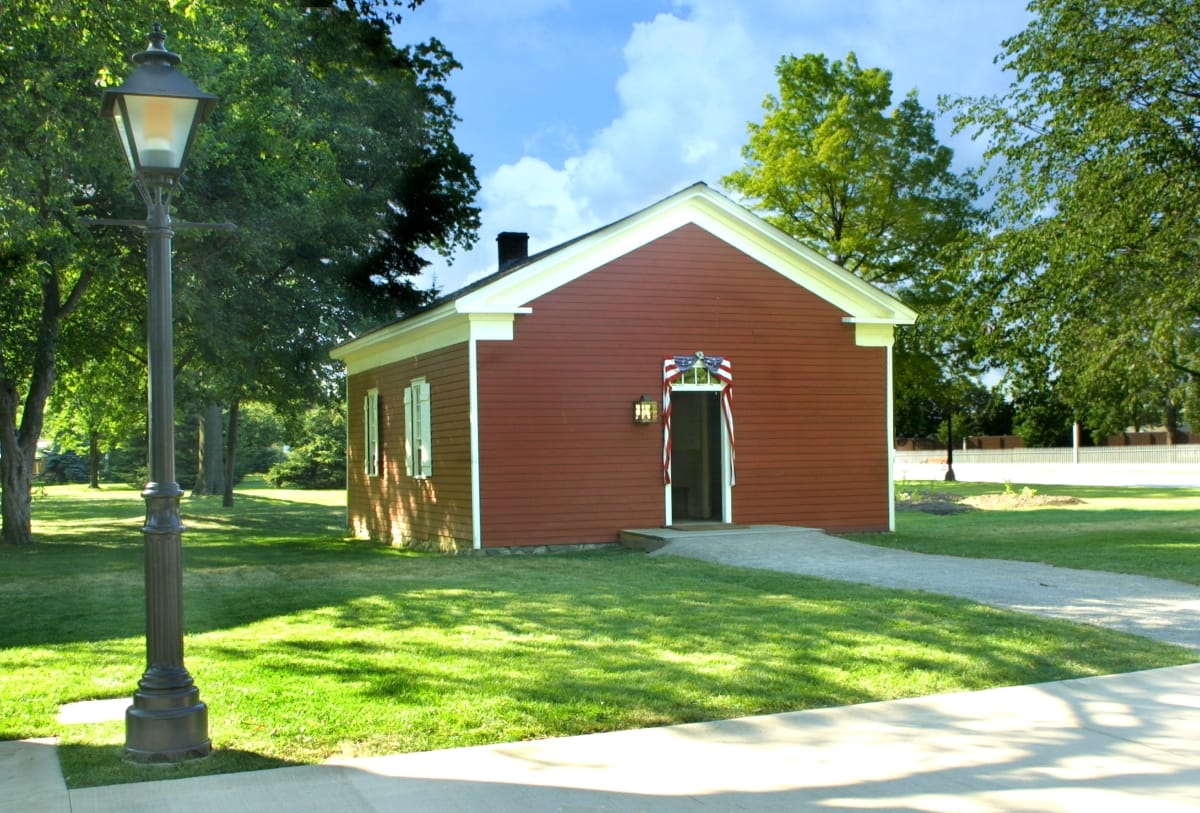
- Dr. Howard's Office - Alonson Howard practiced medicine in rural Tekonsha, Michigan, starting around the time of the Civil War. He was an "eclectic" physician, combining Western medicine and surgery with the herbal and homeopathic methods popular in the 19th century. This building was the waiting room, office and laboratory for Doc Howard and his patients. He also made herbal medicines here.
- circa 1839
- Collections - Artifact
Dr. Howard's Office
Alonson Howard practiced medicine in rural Tekonsha, Michigan, starting around the time of the Civil War. He was an "eclectic" physician, combining Western medicine and surgery with the herbal and homeopathic methods popular in the 19th century. This building was the waiting room, office and laboratory for Doc Howard and his patients. He also made herbal medicines here.
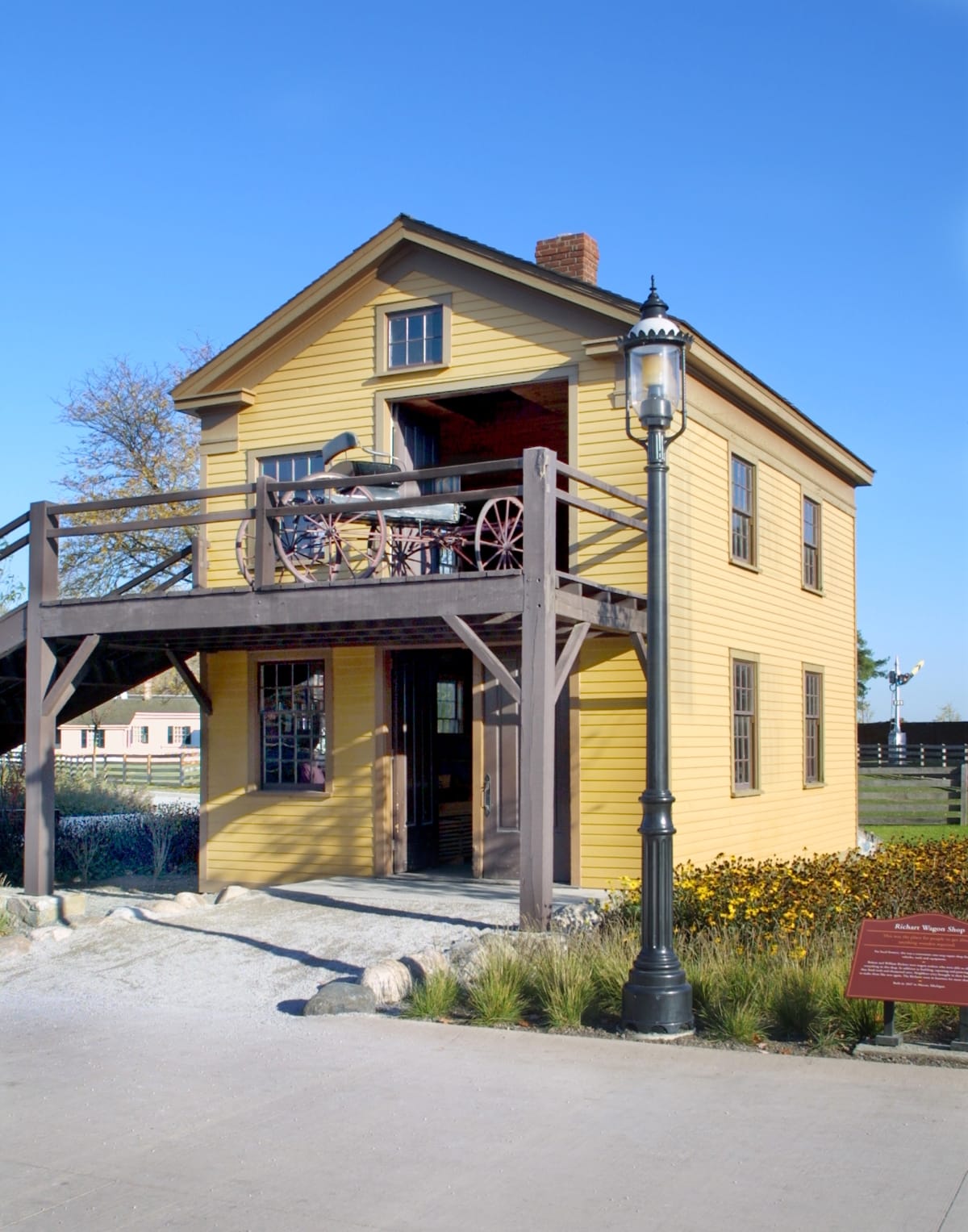
- Richart Wagon Shop - Wagon makers Robert and William Richart offered many services out of this shop, built in Macon, Michigan, in 1847. In addition to building, painting and repairing wagons, the Richarts fixed tools, sharpened saws and even mended household furniture. The Richarts remained in business for over 50 years. The shop building was moved to Greenfield Village in 1941.
- 1847
- Collections - Artifact
Richart Wagon Shop
Wagon makers Robert and William Richart offered many services out of this shop, built in Macon, Michigan, in 1847. In addition to building, painting and repairing wagons, the Richarts fixed tools, sharpened saws and even mended household furniture. The Richarts remained in business for over 50 years. The shop building was moved to Greenfield Village in 1941.
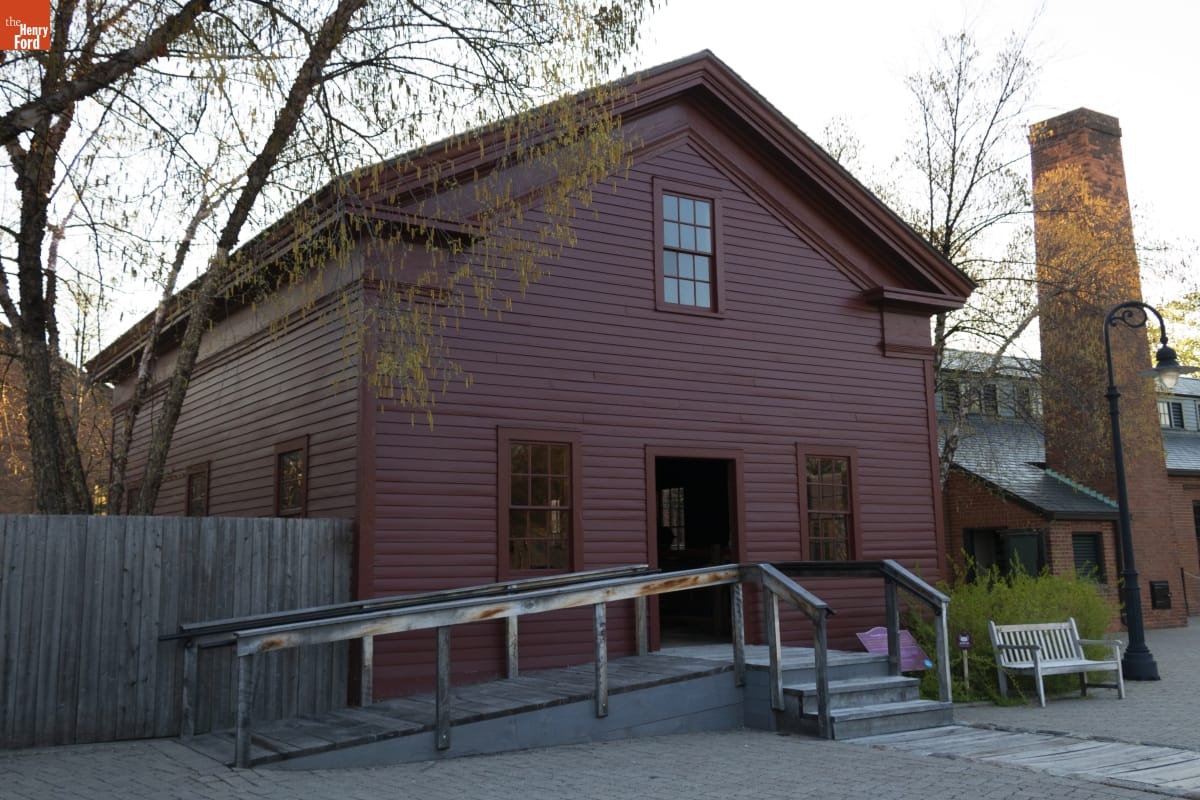
- Gunsolly Carding Mill - John Gunsolly operated this water-powered carding mill as well as a saw and cider mill on the Middle Rouge River near Plymouth, Michigan, beginning in the 1850s. Area farmers brought their wool to this mill to have it carded (combed) so it could be spun into thread.
- circa 1850
- Collections - Artifact
Gunsolly Carding Mill
John Gunsolly operated this water-powered carding mill as well as a saw and cider mill on the Middle Rouge River near Plymouth, Michigan, beginning in the 1850s. Area farmers brought their wool to this mill to have it carded (combed) so it could be spun into thread.
- Robert Frost Home at Its Original Site, Ann Arbor, Michigan, circa 1923 -
- September 10, 1923
- Collections - Artifact
Robert Frost Home at Its Original Site, Ann Arbor, Michigan, circa 1923
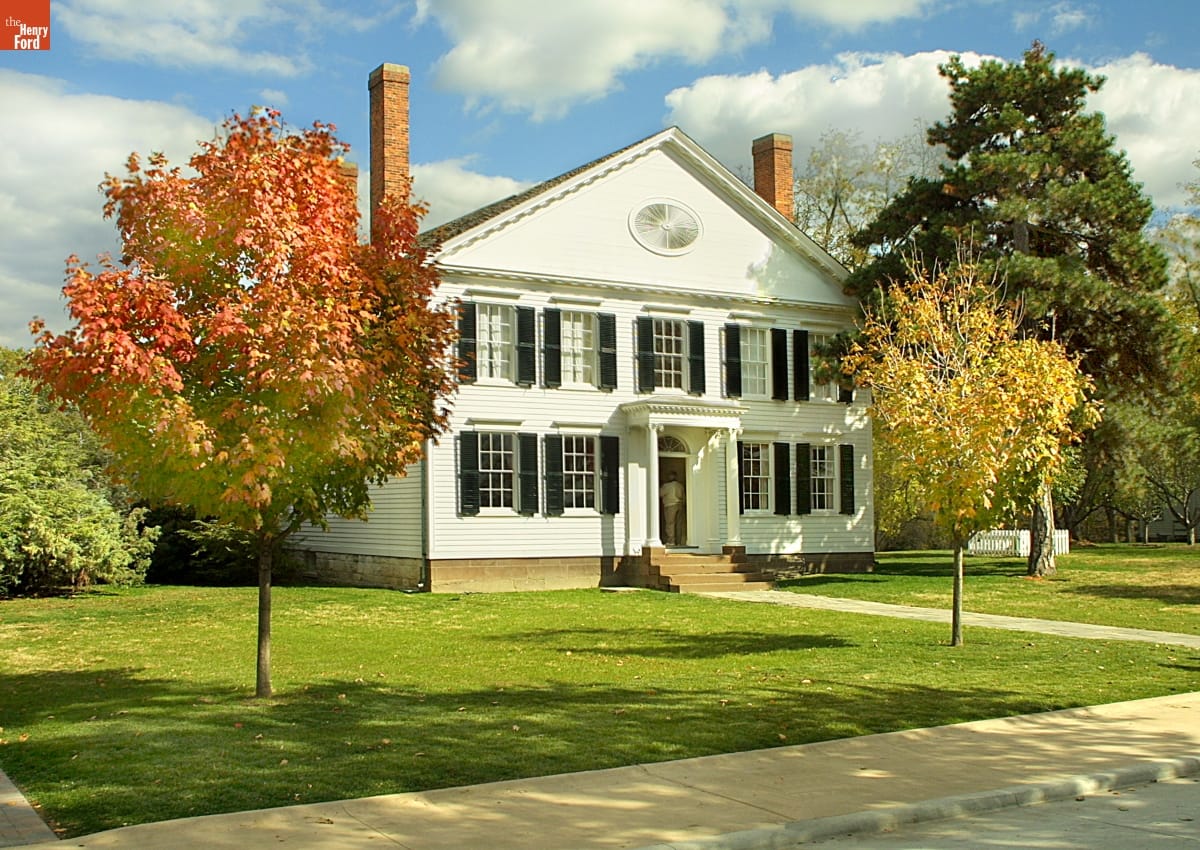
- Noah Webster Home - Noah Webster and his wife Rebecca had this comfortable New Haven, Connecticut, home built in their later years to be near family and friends, as well as the library at nearby Yale College. While living in this house, Webster published his famous American Dictionary of the English Language in 1828. His dictionary aimed to capture distinctively American words and spellings for the first time.
- 1823
- Collections - Artifact
Noah Webster Home
Noah Webster and his wife Rebecca had this comfortable New Haven, Connecticut, home built in their later years to be near family and friends, as well as the library at nearby Yale College. While living in this house, Webster published his famous American Dictionary of the English Language in 1828. His dictionary aimed to capture distinctively American words and spellings for the first time.
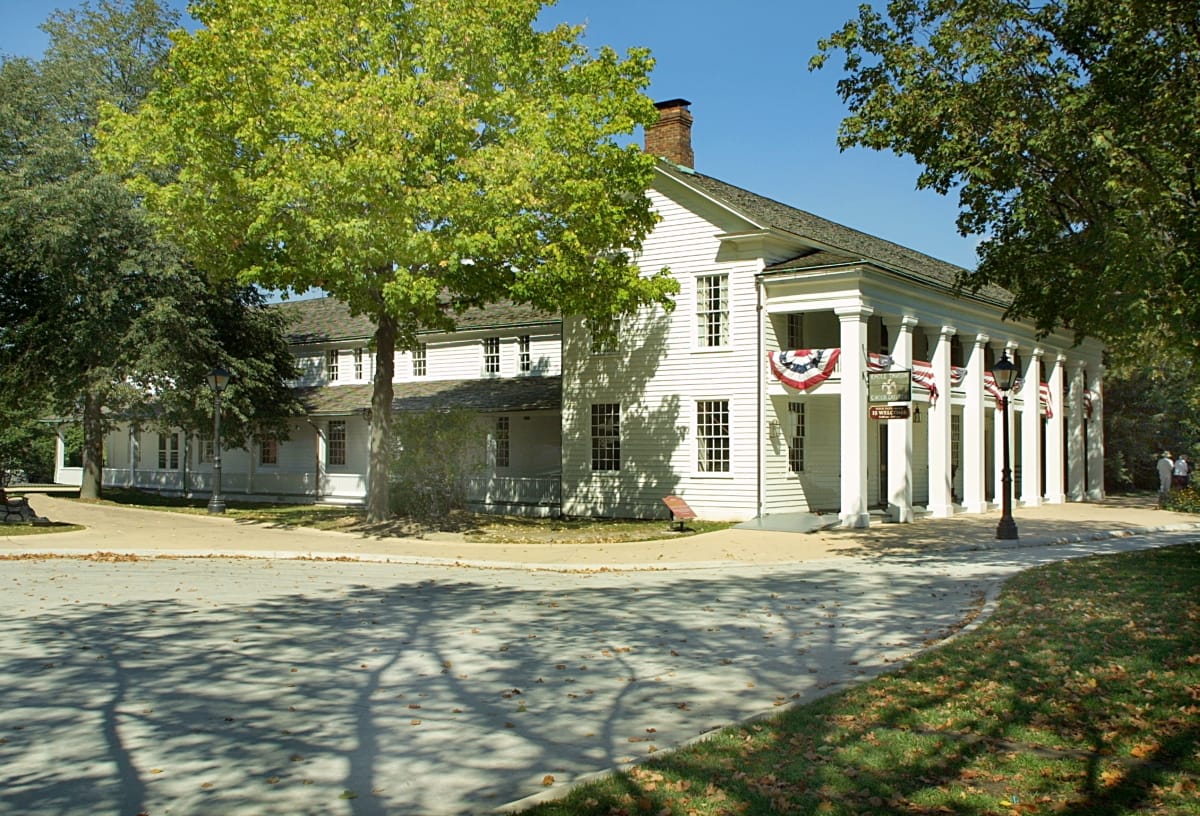
- Eagle Tavern - This stagecoach tavern was built in 1831 in Clinton, Michigan, 50 miles west of Detroit. Taverns dotted the American countryside during the first half of the 1800s, a period of massive migration, new settlement, and rapid change in a young America. From 1849-1854, farmer Calvin Wood operated this tavern, offering food, drink, and accommodations to travelers who passed through his village.
- circa 1850
- Collections - Artifact
Eagle Tavern
This stagecoach tavern was built in 1831 in Clinton, Michigan, 50 miles west of Detroit. Taverns dotted the American countryside during the first half of the 1800s, a period of massive migration, new settlement, and rapid change in a young America. From 1849-1854, farmer Calvin Wood operated this tavern, offering food, drink, and accommodations to travelers who passed through his village.
- Sounds of America Gallery (Foster Memorial) - This house was originally located in Lawrenceville, Pennsylvania, the town where composer Stephen Foster was born. When it was brought to Greenfield Village in 1934, the home was thought to be Foster's birthplace. Now called <EM>The Sounds of America Gallery</EM>, it houses a display of musical instruments.
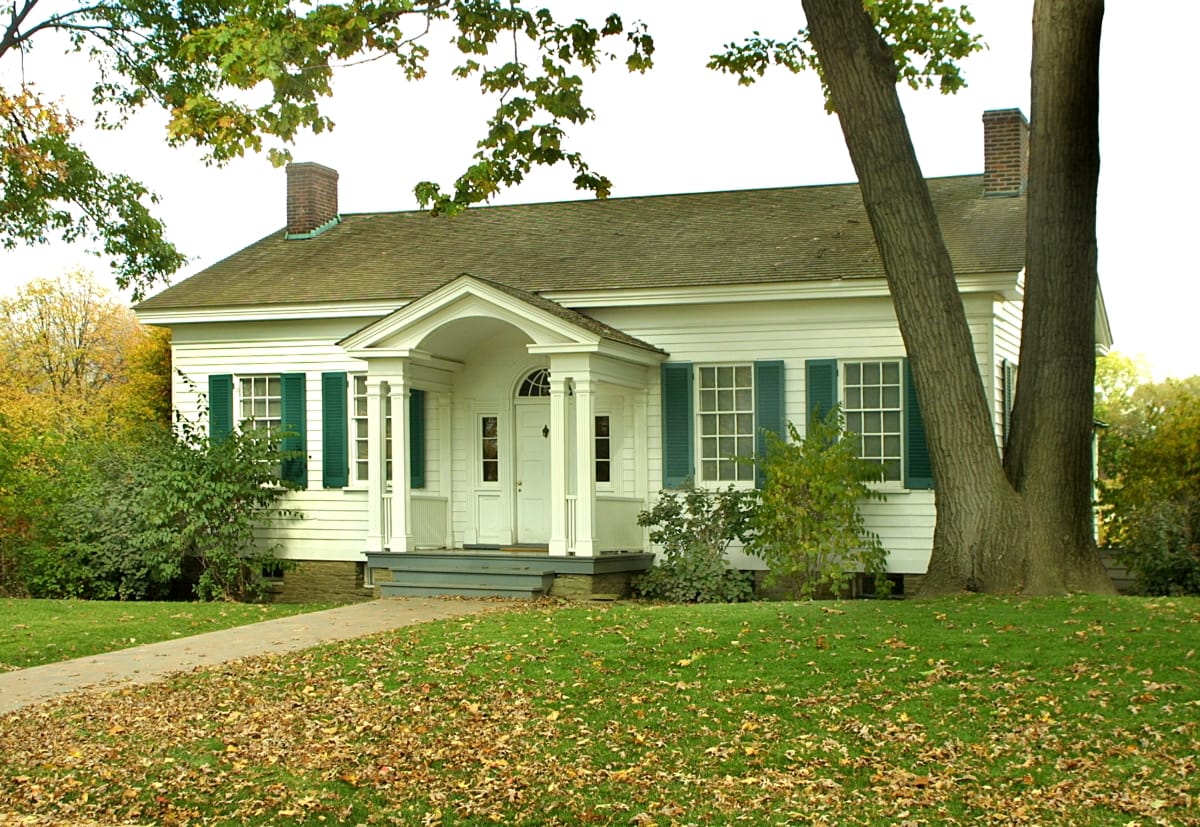
- circa 1830
- Collections - Artifact
Sounds of America Gallery (Foster Memorial)
This house was originally located in Lawrenceville, Pennsylvania, the town where composer Stephen Foster was born. When it was brought to Greenfield Village in 1934, the home was thought to be Foster's birthplace. Now called The Sounds of America Gallery, it houses a display of musical instruments.