
Search
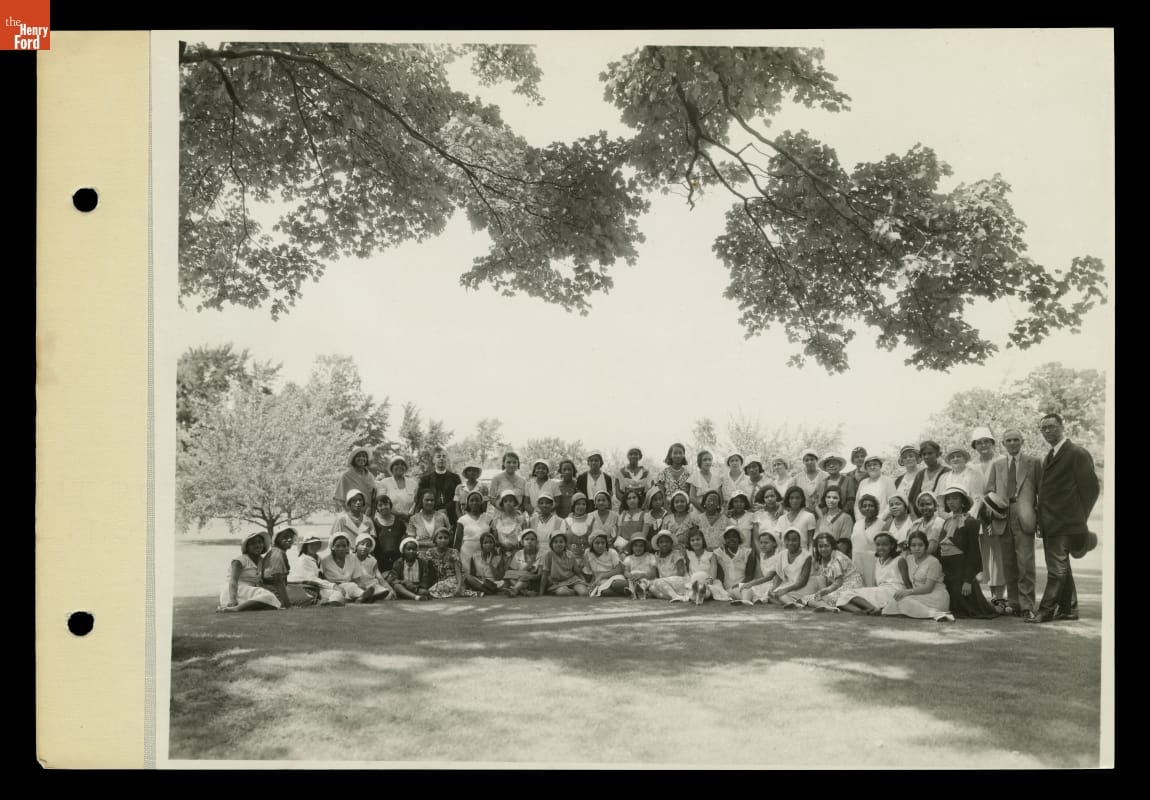
- Henry Ford and Clara Ford with Group on the Grounds of Fair Lane, 1932 - In the early 1910s, Henry and Clara Ford selected 1300 acres of farmland in Dearborn, Michigan, as the site for a new home. They called the estate Fair Lane. Surrounded by woods, meadows, gardens, and the nature they loved, Henry and Clara found this home a peaceful respite. Here they could wander the landscaped grounds, entertain guests, and play with grandchildren.
- July 09, 1932
- Collections - Artifact
Henry Ford and Clara Ford with Group on the Grounds of Fair Lane, 1932
In the early 1910s, Henry and Clara Ford selected 1300 acres of farmland in Dearborn, Michigan, as the site for a new home. They called the estate Fair Lane. Surrounded by woods, meadows, gardens, and the nature they loved, Henry and Clara found this home a peaceful respite. Here they could wander the landscaped grounds, entertain guests, and play with grandchildren.
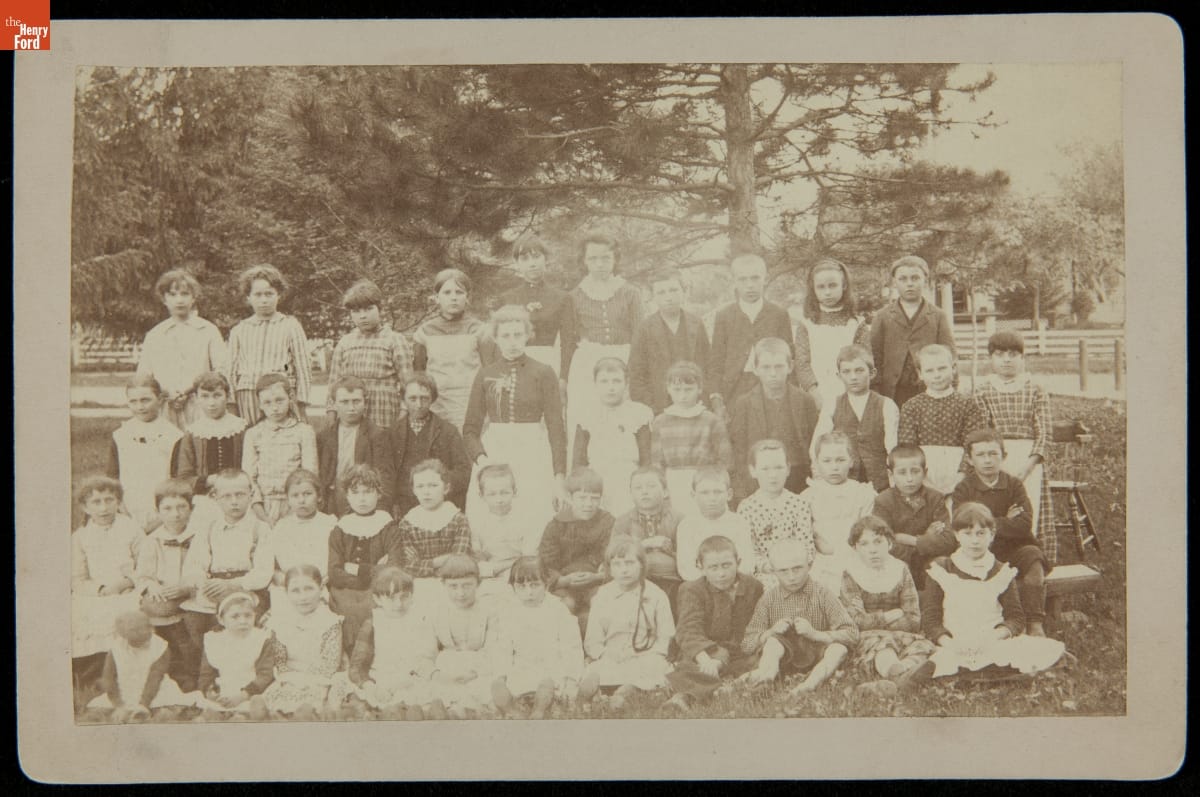
- Group of School Children and Teachers, Hillsdale, Michigan, circa 1890 - This cabinet card shows three teachers and 44 students posing outdoors, perhaps outside the school. This was not a one-room school; the students are approximately the same age. Hillsdale, Michigan, a busy railroad town, had a graded school system. The boys wear shirts, suspenders, and jackets; girls wear pinafores or aprons over their dresses. The teachers wear high-necked, long-sleeve dresses with aprons.
- circa 1890
- Collections - Artifact
Group of School Children and Teachers, Hillsdale, Michigan, circa 1890
This cabinet card shows three teachers and 44 students posing outdoors, perhaps outside the school. This was not a one-room school; the students are approximately the same age. Hillsdale, Michigan, a busy railroad town, had a graded school system. The boys wear shirts, suspenders, and jackets; girls wear pinafores or aprons over their dresses. The teachers wear high-necked, long-sleeve dresses with aprons.
- Weigman Family Portrait, circa 1890 -
- circa 1890
- Collections - Artifact
Weigman Family Portrait, circa 1890
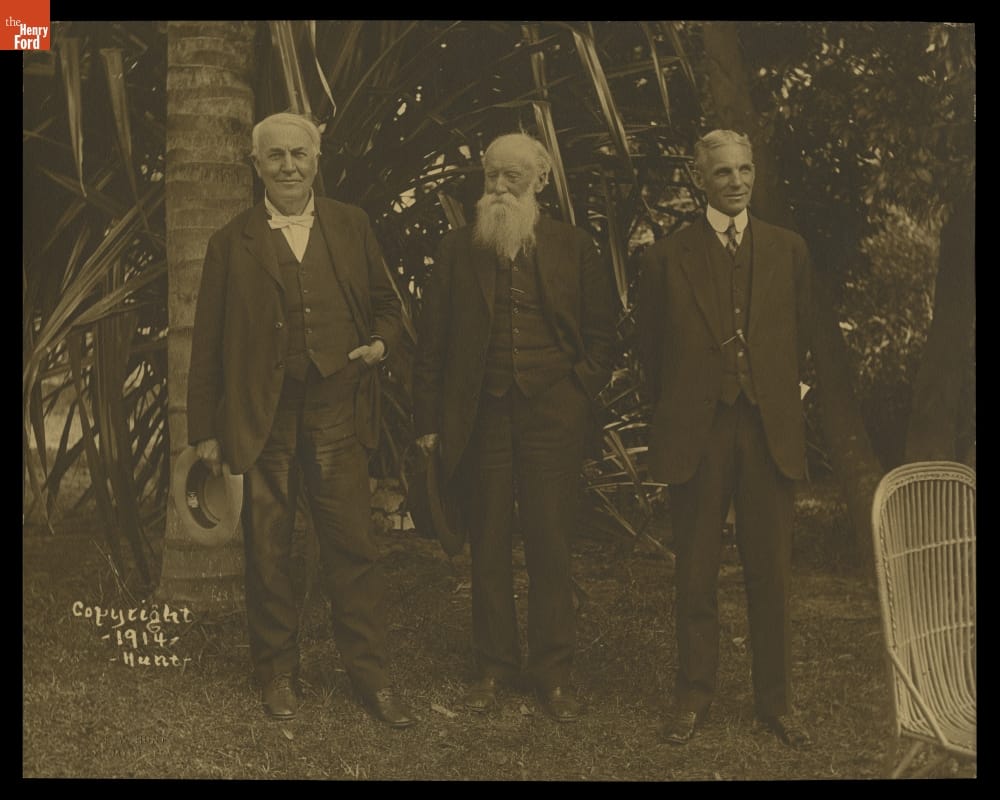
- Thomas Edison, John Burroughs and Henry Ford in Fort Myers, Florida, 1914 - John Burroughs (1837-1921) was an internationally known naturalist and writer. His writings appealed to Henry Ford, who invited Burroughs in 1914 to join him and Thomas Edison to explore the Florida Everglades together. This led to the more famous Vagabond camping trips of a few years later, which also involved Harvey Firestone.
- 1914
- Collections - Artifact
Thomas Edison, John Burroughs and Henry Ford in Fort Myers, Florida, 1914
John Burroughs (1837-1921) was an internationally known naturalist and writer. His writings appealed to Henry Ford, who invited Burroughs in 1914 to join him and Thomas Edison to explore the Florida Everglades together. This led to the more famous Vagabond camping trips of a few years later, which also involved Harvey Firestone.
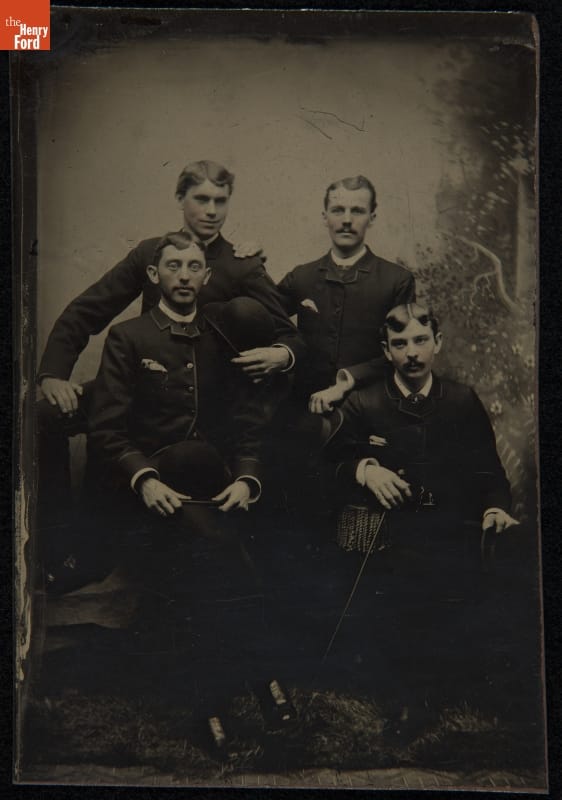
- Group of Young Men, circa 1885 - Tintype photographs peaked in popularity in the mid-19 century. Lacquered iron plates coated with light-sensitive collodion were exposed in cameras by photographers in formal studios and mobile booths at fairs. Compared to other processes, tintypes were inexpensive and could be produced in minutes--"instant photographs" of their day. Durable and lightweight, Civil War soldiers carried them as mementos of home.
- circa 1885
- Collections - Artifact
Group of Young Men, circa 1885
Tintype photographs peaked in popularity in the mid-19 century. Lacquered iron plates coated with light-sensitive collodion were exposed in cameras by photographers in formal studios and mobile booths at fairs. Compared to other processes, tintypes were inexpensive and could be produced in minutes--"instant photographs" of their day. Durable and lightweight, Civil War soldiers carried them as mementos of home.
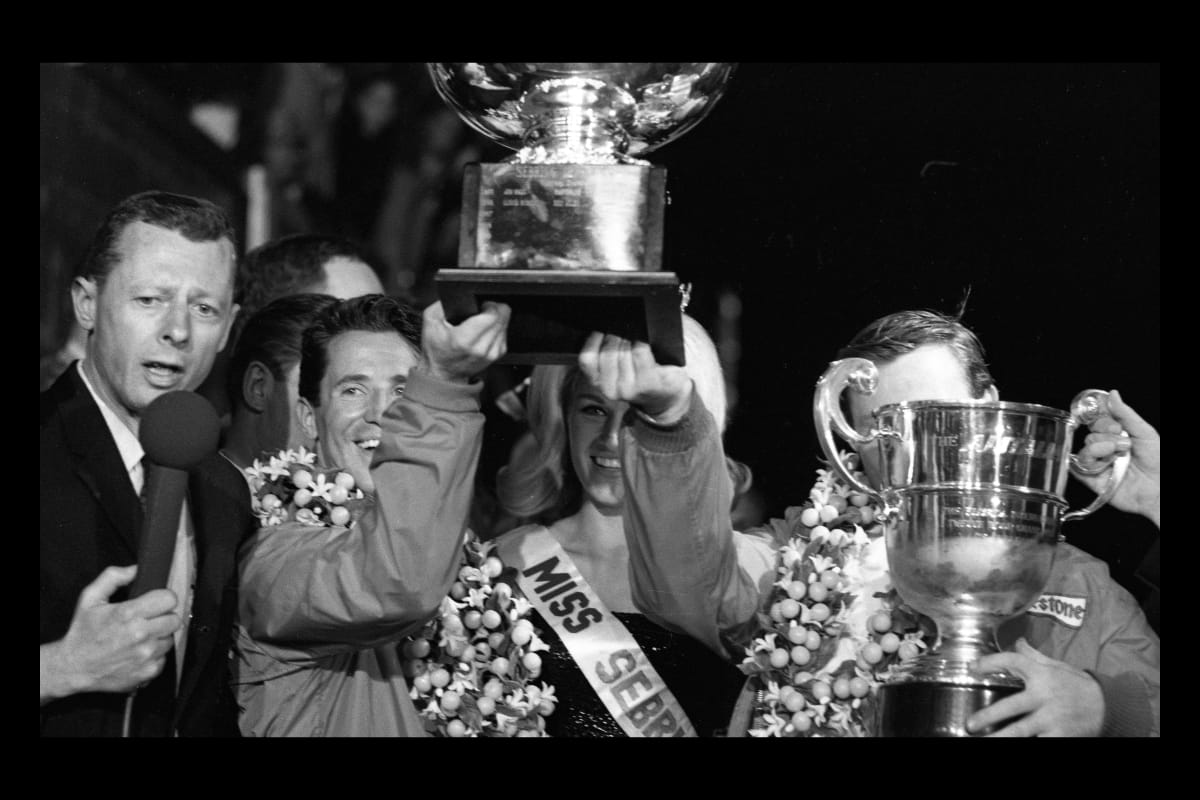
- Bruce McLaren and Mario Andretti after Winning the Sebring 12 Hours of Endurance Race, April 1967 - Bruce McLaren and Mario Andretti won the 1967 12 Hours of Sebring in the #1 Ford Mark IV. It was the all-new Mark IV's competition debut, making the victory all the more impressive. Sebring was a dress rehearsal for the 24 Hours of Le Mans later in the year. A Mark IV went on to win that race too.
- April 01, 1967
- Collections - Artifact
Bruce McLaren and Mario Andretti after Winning the Sebring 12 Hours of Endurance Race, April 1967
Bruce McLaren and Mario Andretti won the 1967 12 Hours of Sebring in the #1 Ford Mark IV. It was the all-new Mark IV's competition debut, making the victory all the more impressive. Sebring was a dress rehearsal for the 24 Hours of Le Mans later in the year. A Mark IV went on to win that race too.
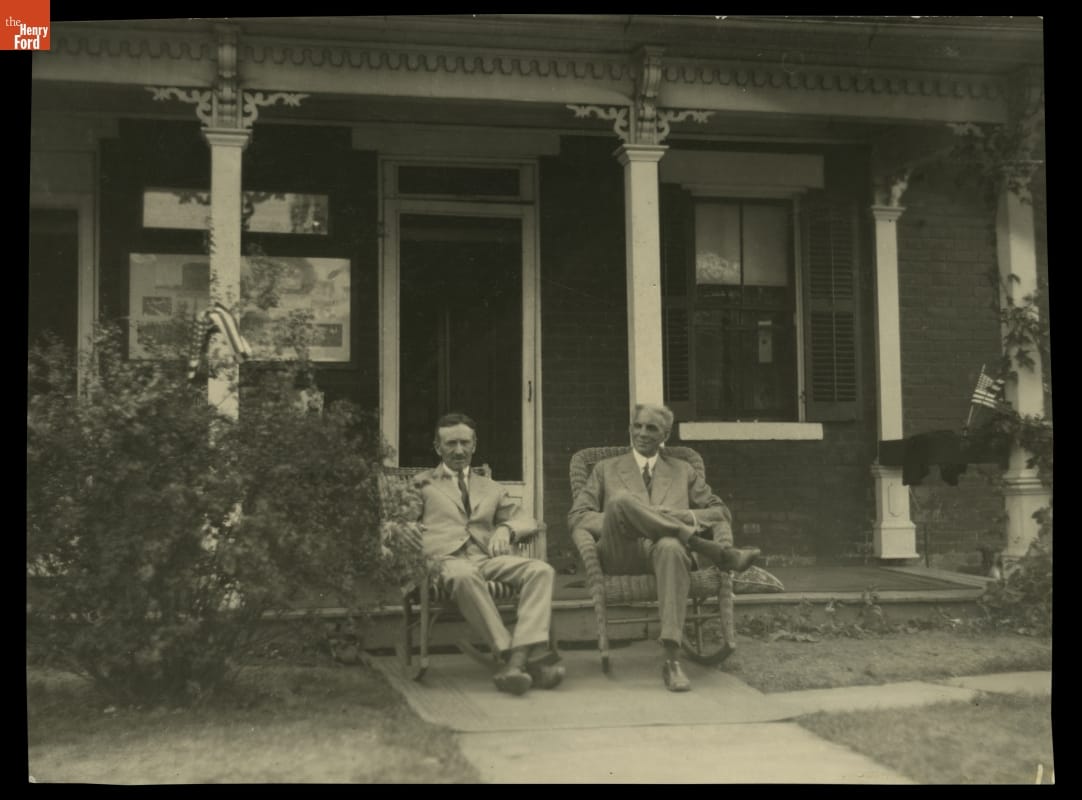
- Harvey Firestone and Henry Ford at Firestone Farm, Columbiana County, Ohio, 1918 - Henry Ford and Harvey Firestone went on several camping trips as "vagabonds," a group that also included Thomas Edison and naturalist John Burroughs. In August 1918, Ford met Firestone at his old homestead near Columbiana, Ohio, (now in Greenfield Village) before joining Edison and Burroughs in Pittsburgh. The foursome then traveled through Appalachian Mountains for the next couple weeks.
- 1918
- Collections - Artifact
Harvey Firestone and Henry Ford at Firestone Farm, Columbiana County, Ohio, 1918
Henry Ford and Harvey Firestone went on several camping trips as "vagabonds," a group that also included Thomas Edison and naturalist John Burroughs. In August 1918, Ford met Firestone at his old homestead near Columbiana, Ohio, (now in Greenfield Village) before joining Edison and Burroughs in Pittsburgh. The foursome then traveled through Appalachian Mountains for the next couple weeks.
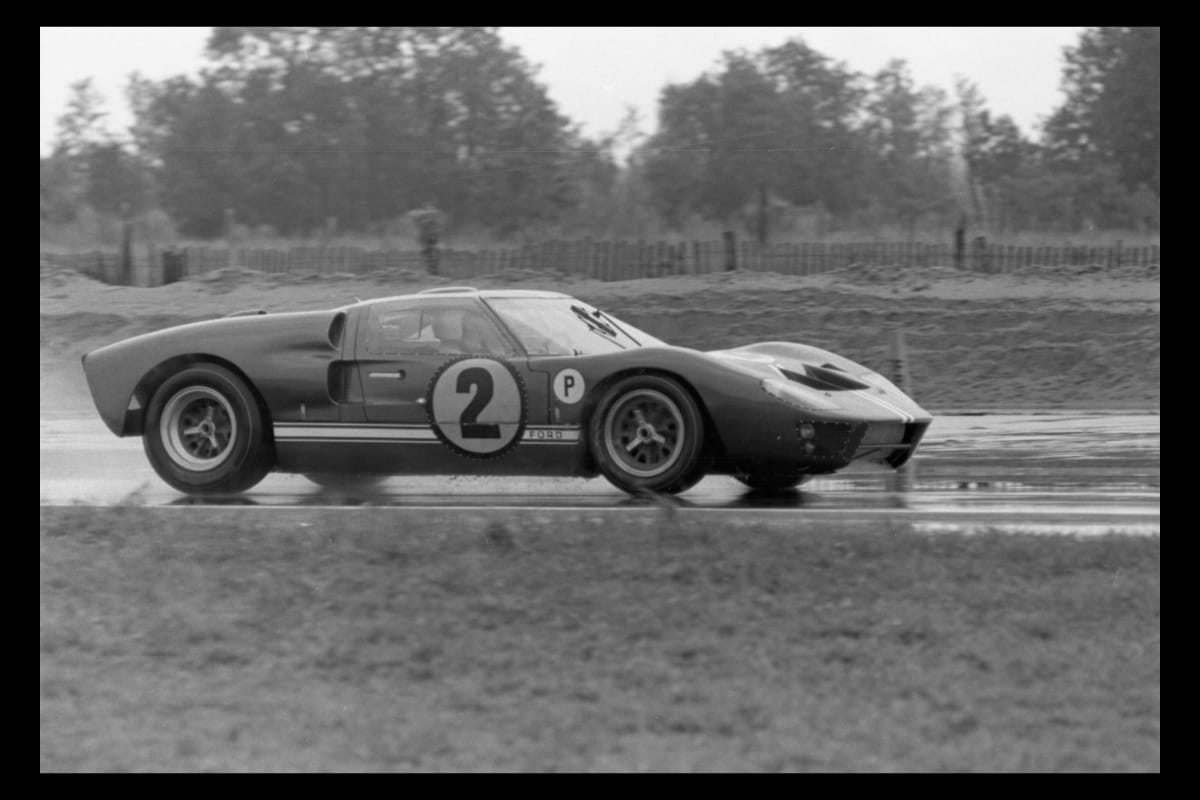
- Ford MkII b Race Car at the Sebring 12 Hours of Endurance Race, 1967 - Photographer Dave Friedman captured and preserved auto racing history. His work -- and his collection of works by other photographers -- documents key races, cars, drivers, and teams. This photo is from the 12 Hours of Sebring endurance race held in April 1967. A.J. Foyt and Lloyd Ruby shared driving duties in the #2 Ford GT40 Mark IIB. They finished second overall.
- 27 March 1967 - 02 April 1967
- Collections - Artifact
Ford MkII b Race Car at the Sebring 12 Hours of Endurance Race, 1967
Photographer Dave Friedman captured and preserved auto racing history. His work -- and his collection of works by other photographers -- documents key races, cars, drivers, and teams. This photo is from the 12 Hours of Sebring endurance race held in April 1967. A.J. Foyt and Lloyd Ruby shared driving duties in the #2 Ford GT40 Mark IIB. They finished second overall.
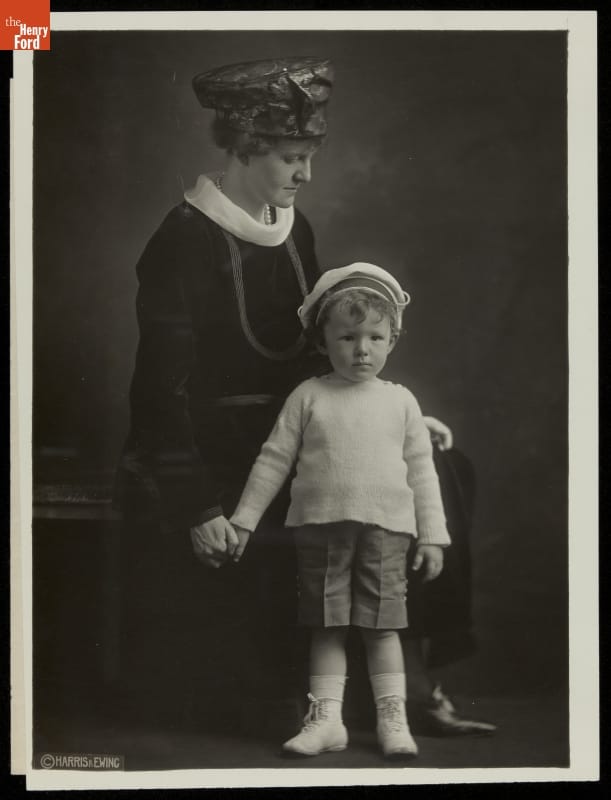
- Cornelia Pinchot with Her Son, Gifford Bryce Pinchot, 1917-1921 - Cornelia Pinchot, pictured here with her only child, was the wife of pioneer conservationist Gifford Pinchot and a Progressive Era reformer. Pinchot was active in the American fight for women's suffrage, which culminated with the ratification of the Nineteenth Amendment to the United States Constitution in 1920. The amendment prohibited the right to vote from being denied based on sex.
- 1917-1921
- Collections - Artifact
Cornelia Pinchot with Her Son, Gifford Bryce Pinchot, 1917-1921
Cornelia Pinchot, pictured here with her only child, was the wife of pioneer conservationist Gifford Pinchot and a Progressive Era reformer. Pinchot was active in the American fight for women's suffrage, which culminated with the ratification of the Nineteenth Amendment to the United States Constitution in 1920. The amendment prohibited the right to vote from being denied based on sex.
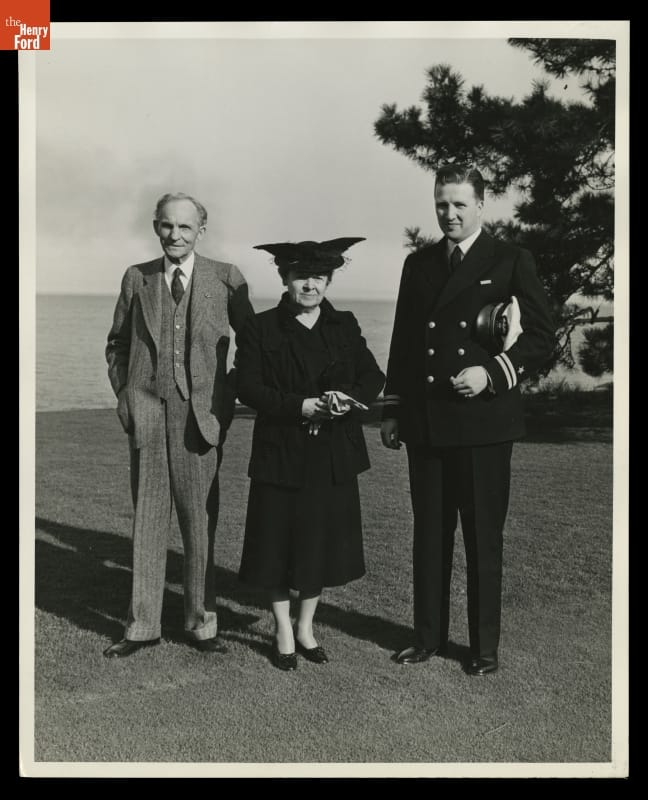
- Henry Ford, Clara Ford and Henry Ford II at Gaukler Point, Michigan, April 1943 - Henry Ford II posed with his grandparents, Henry and Clara Ford. The young Ford served in the U.S. Navy during World War II but, following the death of his father Edsel Ford in May 1943, he was released from duty to return to Ford Motor Company. Henry Ford II was appointed company president in September 1945, after his ailing grandfather resigned.
- April 01, 1943
- Collections - Artifact
Henry Ford, Clara Ford and Henry Ford II at Gaukler Point, Michigan, April 1943
Henry Ford II posed with his grandparents, Henry and Clara Ford. The young Ford served in the U.S. Navy during World War II but, following the death of his father Edsel Ford in May 1943, he was released from duty to return to Ford Motor Company. Henry Ford II was appointed company president in September 1945, after his ailing grandfather resigned.