
Search
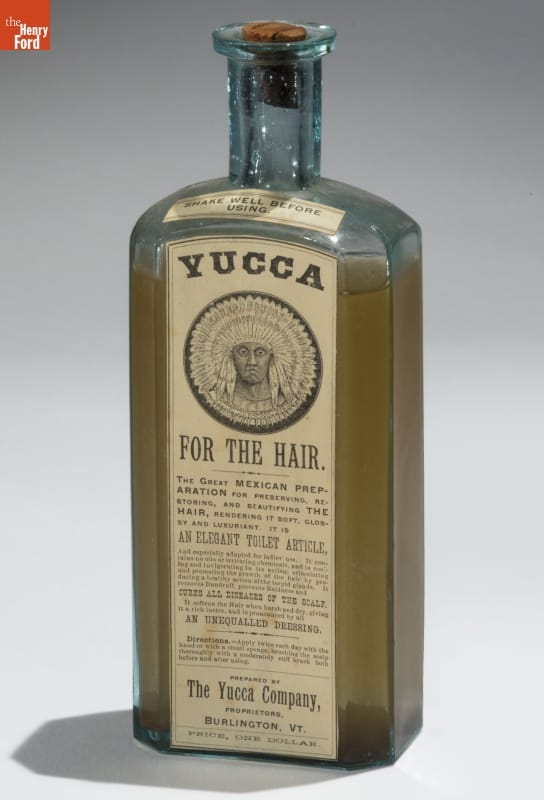
- Yucca for the Hair and Scalp, 1890-1901 - People have sought a cure for hair loss for thousands of years. In the late nineteenth-century, the makers of "Yucca for the Hair" marketed their concoction as a cure for baldness, dandruff, and other diseases of the scalp. The proprietors of this patent medicine claimed the plant-based extract invigorated the scalp, promoted hair growth and rendered hair "soft, glossy and luxuriant."
- 1890-1901
- Collections - Artifact
Yucca for the Hair and Scalp, 1890-1901
People have sought a cure for hair loss for thousands of years. In the late nineteenth-century, the makers of "Yucca for the Hair" marketed their concoction as a cure for baldness, dandruff, and other diseases of the scalp. The proprietors of this patent medicine claimed the plant-based extract invigorated the scalp, promoted hair growth and rendered hair "soft, glossy and luxuriant."
- "Sparkle Pretty Kenya" Doll, 1995 -
- 1995
- Collections - Artifact
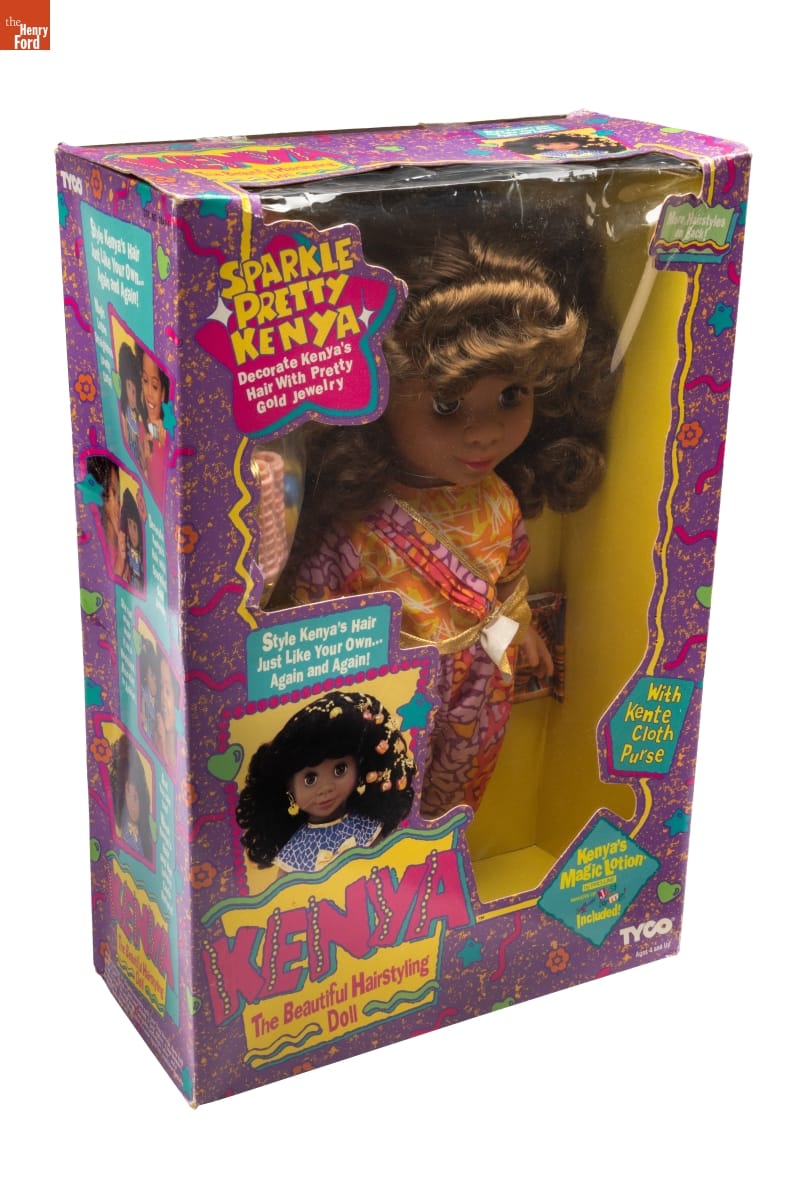
"Sparkle Pretty Kenya" Doll, 1995
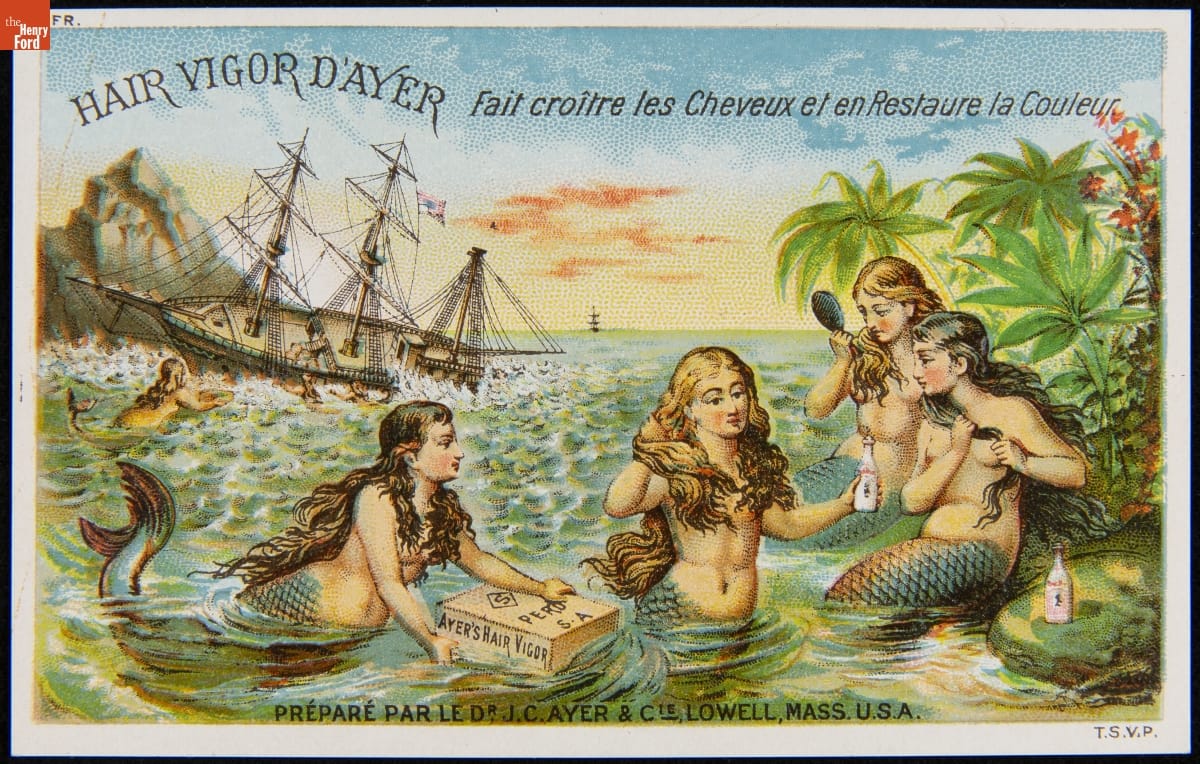
- Trade Card for Ayer's Hair Vigor, 1880-1900 - James C. Ayer (1818-1878), a purveyor of patent medicines in the 19th century, claimed his treatments could cure colds, coughs, and other ailments, purify the blood, and invigorate the hair. Ayer--and later his company--successfully marketed his products by printing thousands of trade cards, almanacs, and newspaper and magazine ads. Ayer's company continued production well into the 20th century.
- 1880-1900
- Collections - Artifact
Trade Card for Ayer's Hair Vigor, 1880-1900
James C. Ayer (1818-1878), a purveyor of patent medicines in the 19th century, claimed his treatments could cure colds, coughs, and other ailments, purify the blood, and invigorate the hair. Ayer--and later his company--successfully marketed his products by printing thousands of trade cards, almanacs, and newspaper and magazine ads. Ayer's company continued production well into the 20th century.
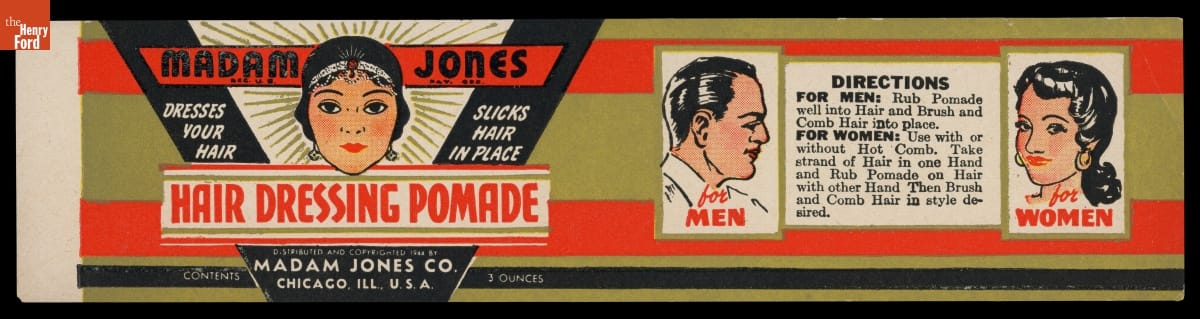
- Product Label for Madam Jones Hair Dressing Pomade, 1944 - Valmor Products Company, founded in the mid-1920s, sold beauty products to Black Americans. The company's product packaging was designed by Charles Dawson, a successful Black commercial artist whose illustrations of attractive modern Black Americans contributed to a burgeoning culture of positive Black identity. But the company's legacy is complicated--many of its products pushed a white assimilatory ideal, promising effects like skin lightening.
- 1944
- Collections - Artifact
Product Label for Madam Jones Hair Dressing Pomade, 1944
Valmor Products Company, founded in the mid-1920s, sold beauty products to Black Americans. The company's product packaging was designed by Charles Dawson, a successful Black commercial artist whose illustrations of attractive modern Black Americans contributed to a burgeoning culture of positive Black identity. But the company's legacy is complicated--many of its products pushed a white assimilatory ideal, promising effects like skin lightening.
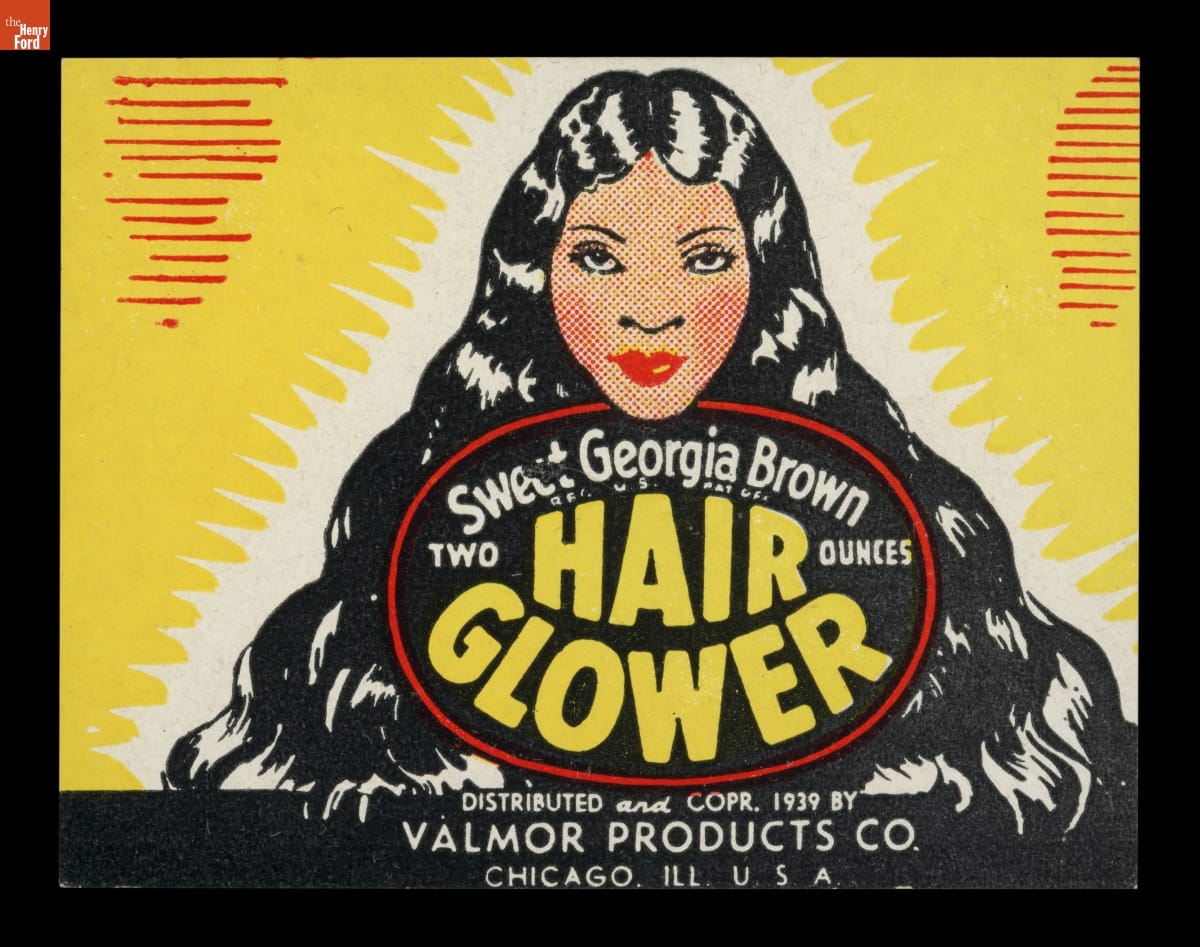
- Product Label for Sweet Georgia Brown Hair Glower, 1939 - Valmor Products Company, founded in the mid-1920s, sold beauty products to Black Americans. The company's product packaging was designed by Charles Dawson, a successful Black commercial artist whose illustrations of attractive modern Black Americans contributed to a burgeoning culture of positive Black identity. But the company's legacy is complicated--many of its products pushed a white assimilatory ideal, promising effects like skin lightening.
- 1939
- Collections - Artifact
Product Label for Sweet Georgia Brown Hair Glower, 1939
Valmor Products Company, founded in the mid-1920s, sold beauty products to Black Americans. The company's product packaging was designed by Charles Dawson, a successful Black commercial artist whose illustrations of attractive modern Black Americans contributed to a burgeoning culture of positive Black identity. But the company's legacy is complicated--many of its products pushed a white assimilatory ideal, promising effects like skin lightening.
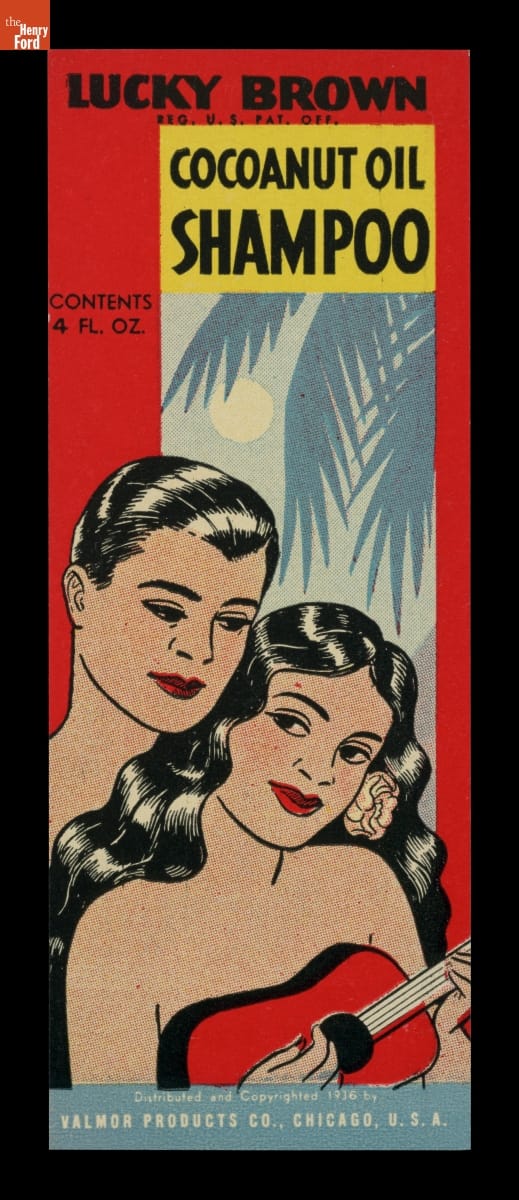
- Product Label for Lucky Brown Cocoanut Oil Shampoo, 1936 - Valmor Products Company, founded in the mid-1920s, sold beauty products to Black Americans. The company's product packaging was designed by Charles Dawson, a successful Black commercial artist whose illustrations of attractive modern Black Americans contributed to a burgeoning culture of positive Black identity. But the company's legacy is complicated--many of its products pushed a white assimilatory ideal, promising effects like skin lightening.
- 1936
- Collections - Artifact
Product Label for Lucky Brown Cocoanut Oil Shampoo, 1936
Valmor Products Company, founded in the mid-1920s, sold beauty products to Black Americans. The company's product packaging was designed by Charles Dawson, a successful Black commercial artist whose illustrations of attractive modern Black Americans contributed to a burgeoning culture of positive Black identity. But the company's legacy is complicated--many of its products pushed a white assimilatory ideal, promising effects like skin lightening.
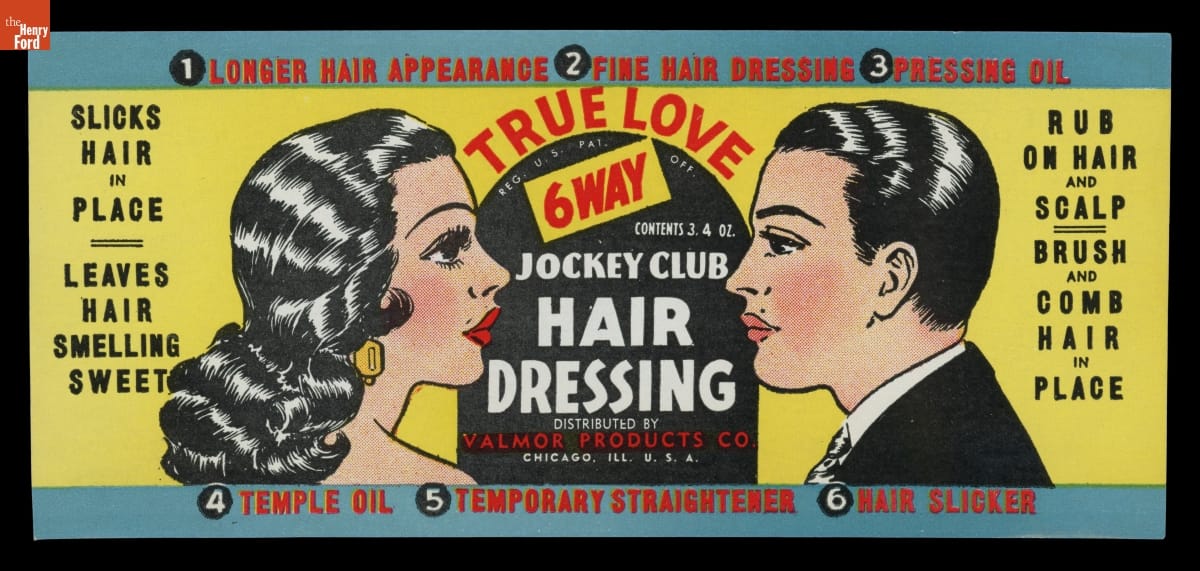
- Product Label for True Love 6Way Jockey Club Hair Dressing, 1926-1946 - Valmor Products Company, founded in the mid-1920s, sold beauty products to Black Americans. The company's product packaging was designed by Charles Dawson, a successful Black commercial artist whose illustrations of attractive modern Black Americans contributed to a burgeoning culture of positive Black identity. But the company's legacy is complicated--many of its products pushed a white assimilatory ideal, promising effects like skin lightening.
- 1926-1946
- Collections - Artifact
Product Label for True Love 6Way Jockey Club Hair Dressing, 1926-1946
Valmor Products Company, founded in the mid-1920s, sold beauty products to Black Americans. The company's product packaging was designed by Charles Dawson, a successful Black commercial artist whose illustrations of attractive modern Black Americans contributed to a burgeoning culture of positive Black identity. But the company's legacy is complicated--many of its products pushed a white assimilatory ideal, promising effects like skin lightening.
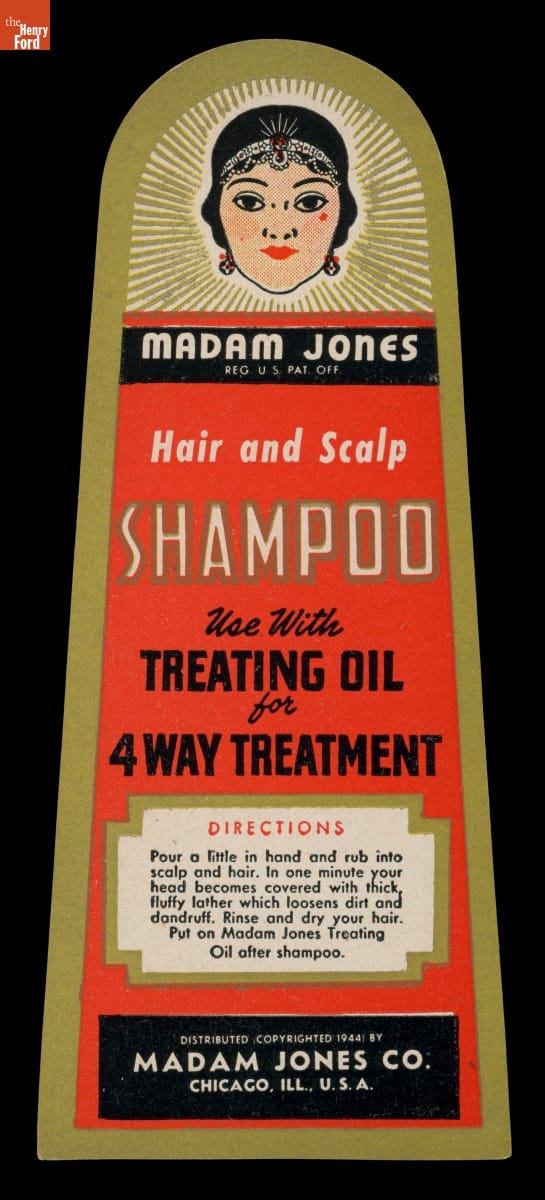
- Product Label for Madam Jones Hair and Scalp Shampoo, 1944 - Valmor Products Company, founded in the mid-1920s, sold beauty products to Black Americans. The company's product packaging was designed by Charles Dawson, a successful Black commercial artist whose illustrations of attractive modern Black Americans contributed to a burgeoning culture of positive Black identity. But the company's legacy is complicated--many of its products pushed a white assimilatory ideal, promising effects like skin lightening.
- 1944
- Collections - Artifact
Product Label for Madam Jones Hair and Scalp Shampoo, 1944
Valmor Products Company, founded in the mid-1920s, sold beauty products to Black Americans. The company's product packaging was designed by Charles Dawson, a successful Black commercial artist whose illustrations of attractive modern Black Americans contributed to a burgeoning culture of positive Black identity. But the company's legacy is complicated--many of its products pushed a white assimilatory ideal, promising effects like skin lightening.
- Yucca for the Hair and Scalp, 1890-1901 - People have sought a cure for hair loss for thousands of years. In the late nineteenth-century, the makers of "Yucca for the Hair" marketed their concoction as a cure for baldness, dandruff, and other diseases of the scalp. The proprietors of this patent medicine claimed the plant-based extract invigorated the scalp, promoted hair growth and rendered hair "soft, glossy and luxuriant."
- 1890-1901
- Collections - Artifact
Yucca for the Hair and Scalp, 1890-1901
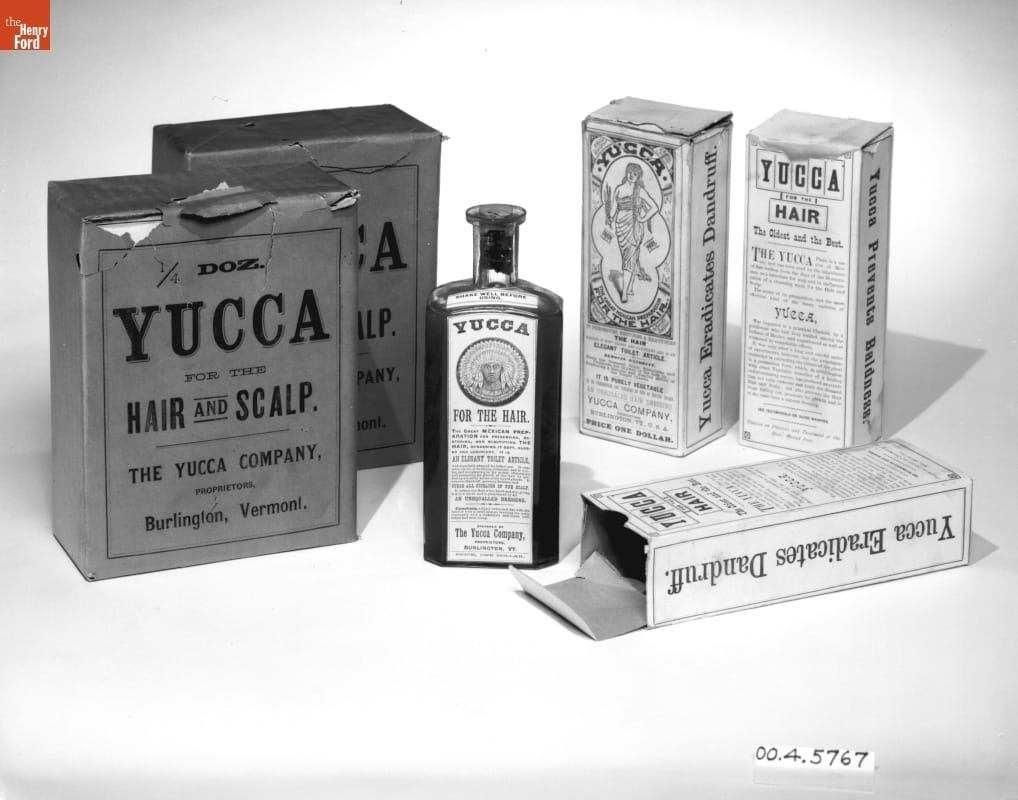
People have sought a cure for hair loss for thousands of years. In the late nineteenth-century, the makers of "Yucca for the Hair" marketed their concoction as a cure for baldness, dandruff, and other diseases of the scalp. The proprietors of this patent medicine claimed the plant-based extract invigorated the scalp, promoted hair growth and rendered hair "soft, glossy and luxuriant."
- Yucca for the Hair and Scalp, 1890-1901 - People have sought a cure for hair loss for thousands of years. In the late nineteenth-century, the makers of "Yucca for the Hair" marketed their concoction as a cure for baldness, dandruff, and other diseases of the scalp. The proprietors of this patent medicine claimed the plant-based extract invigorated the scalp, promoted hair growth and rendered hair "soft, glossy and luxuriant."
- 1890-1901
- Collections - Artifact
Yucca for the Hair and Scalp, 1890-1901
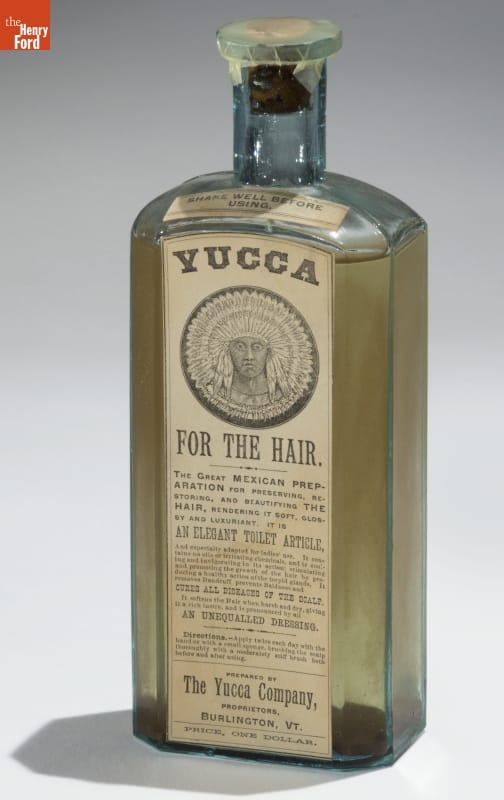
People have sought a cure for hair loss for thousands of years. In the late nineteenth-century, the makers of "Yucca for the Hair" marketed their concoction as a cure for baldness, dandruff, and other diseases of the scalp. The proprietors of this patent medicine claimed the plant-based extract invigorated the scalp, promoted hair growth and rendered hair "soft, glossy and luxuriant."