
Search
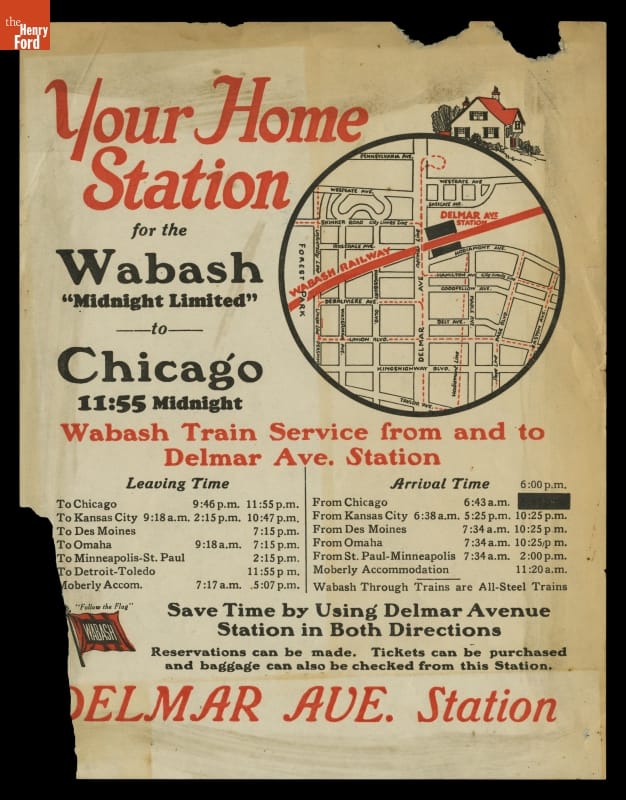
- Handbill and Timetable for Wabash Railway's "Midnight Limited," Leaving from Delmar Avenue Station, St. Louis, Missouri, 1929 - The Wabash Railway, with origins dating back to 1838, was a strong Midwestern carrier until Amtrak took over the national passenger railroad system in 1971. In 1928, the Wabash Railway erected the Delmar Avenue Station, providing west-end and suburban St. Louis residents -- particularly businessmen -- convenient access to their railroad system without having to go all the way downtown.
- 1929
- Collections - Artifact
Handbill and Timetable for Wabash Railway's "Midnight Limited," Leaving from Delmar Avenue Station, St. Louis, Missouri, 1929
The Wabash Railway, with origins dating back to 1838, was a strong Midwestern carrier until Amtrak took over the national passenger railroad system in 1971. In 1928, the Wabash Railway erected the Delmar Avenue Station, providing west-end and suburban St. Louis residents -- particularly businessmen -- convenient access to their railroad system without having to go all the way downtown.
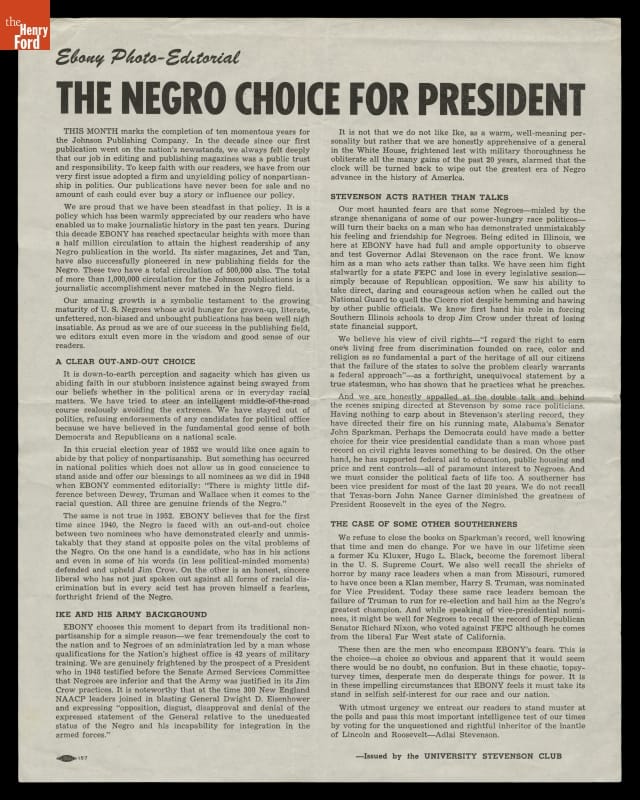
- Handbill, "The Negro Choice for President," 1952 -
- 1952
- Collections - Artifact
Handbill, "The Negro Choice for President," 1952
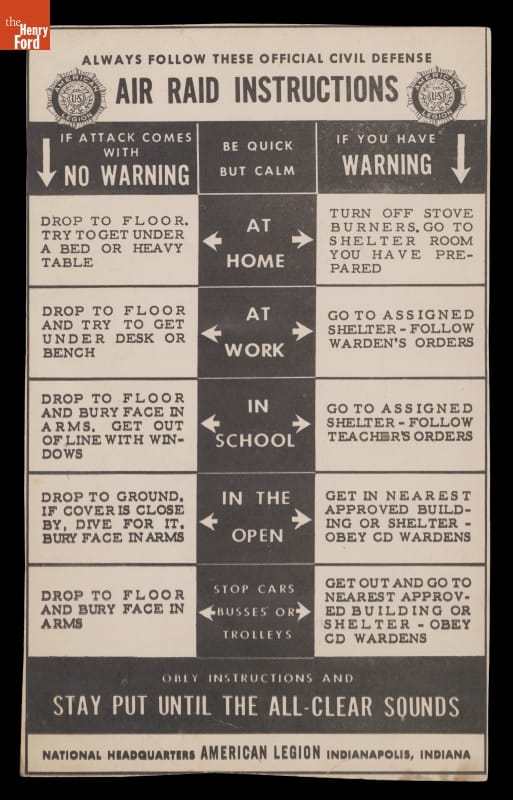
- Official Civil Defense Air Raid Instructions, 1950-1958 -
- 1950-1958
- Collections - Artifact
Official Civil Defense Air Raid Instructions, 1950-1958
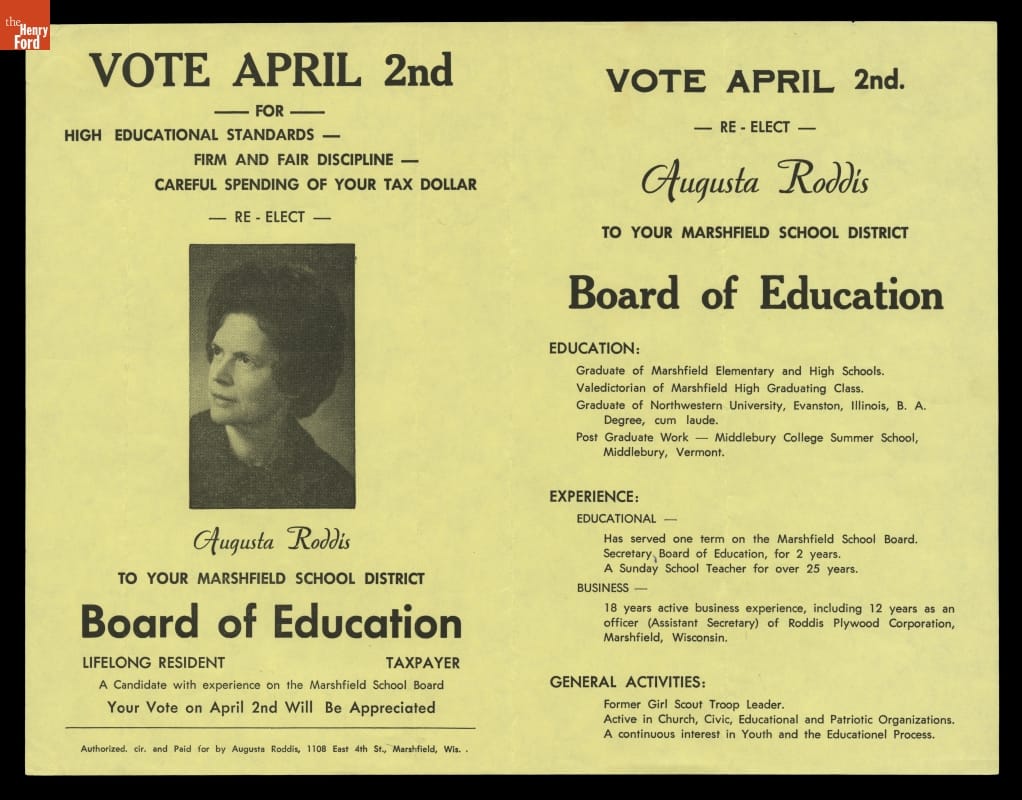
- School Board Election Flyer for Augusta Roddis, 1974 -
- 1974
- Collections - Artifact
School Board Election Flyer for Augusta Roddis, 1974
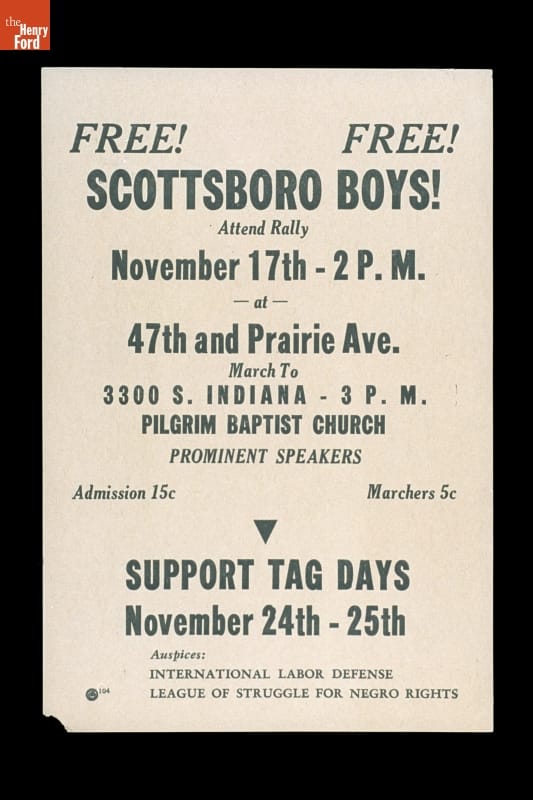
- Handbill for a Rally in Support of the Scottsboro Boys, Pilgrim Baptist Church, Chicago, Illinois, November 17, 1933 - In 1931, nine black youths were unjustly accused of raping two white women in Alabama. White juries quickly convicted and sentenced eight of the defendants to death. The International Labor Defense, the legal arm of the Communist Party of the United States, issued this handbill to rally public support to combat this injustice and to free the "Scottsboro Boys."
- November 17, 1933
- Collections - Artifact
Handbill for a Rally in Support of the Scottsboro Boys, Pilgrim Baptist Church, Chicago, Illinois, November 17, 1933
In 1931, nine black youths were unjustly accused of raping two white women in Alabama. White juries quickly convicted and sentenced eight of the defendants to death. The International Labor Defense, the legal arm of the Communist Party of the United States, issued this handbill to rally public support to combat this injustice and to free the "Scottsboro Boys."
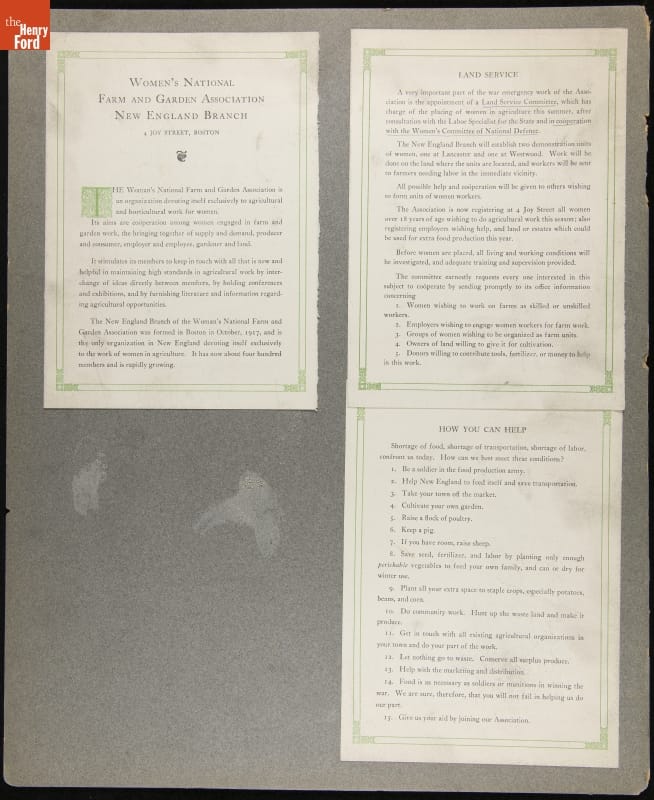
- "Woman's National Farm and Garden Association New England Branch," 1918 - After the United States entered World War I in 1917, Americans worried about labor and food shortages as a result of men going off to fight. Organizations like the Woman's Land Army of America and the Woman's National Farm and Garden Association recruited and trained women to perform agricultural work across the country.
- 1918
- Collections - Artifact
"Woman's National Farm and Garden Association New England Branch," 1918
After the United States entered World War I in 1917, Americans worried about labor and food shortages as a result of men going off to fight. Organizations like the Woman's Land Army of America and the Woman's National Farm and Garden Association recruited and trained women to perform agricultural work across the country.
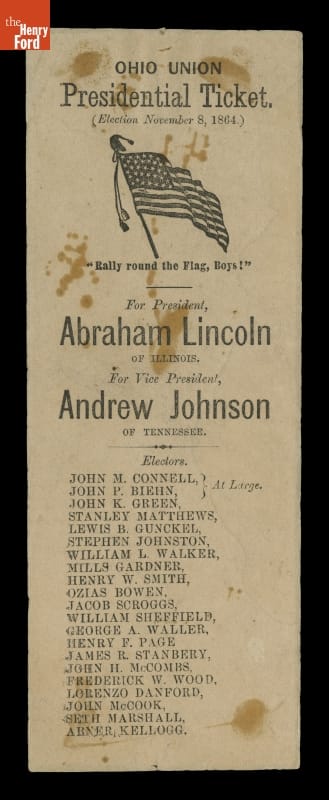
- Ohio National Union Party Ticket for the 1864 Presidential Election - After a gloomy summer of Union defeats and casualty lists, President Lincoln's re-election hopes seemed slim. But finally, several Union victories gave him the needed public support to win the 1864 election by a landslide. The phrase "Rally round the Flag, Boys!" was part of a Lincoln-Johnson campaign song modified from the 1862 patriotic song, "The Battle Cry of Freedom."
- November 08, 1864
- Collections - Artifact
Ohio National Union Party Ticket for the 1864 Presidential Election
After a gloomy summer of Union defeats and casualty lists, President Lincoln's re-election hopes seemed slim. But finally, several Union victories gave him the needed public support to win the 1864 election by a landslide. The phrase "Rally round the Flag, Boys!" was part of a Lincoln-Johnson campaign song modified from the 1862 patriotic song, "The Battle Cry of Freedom."
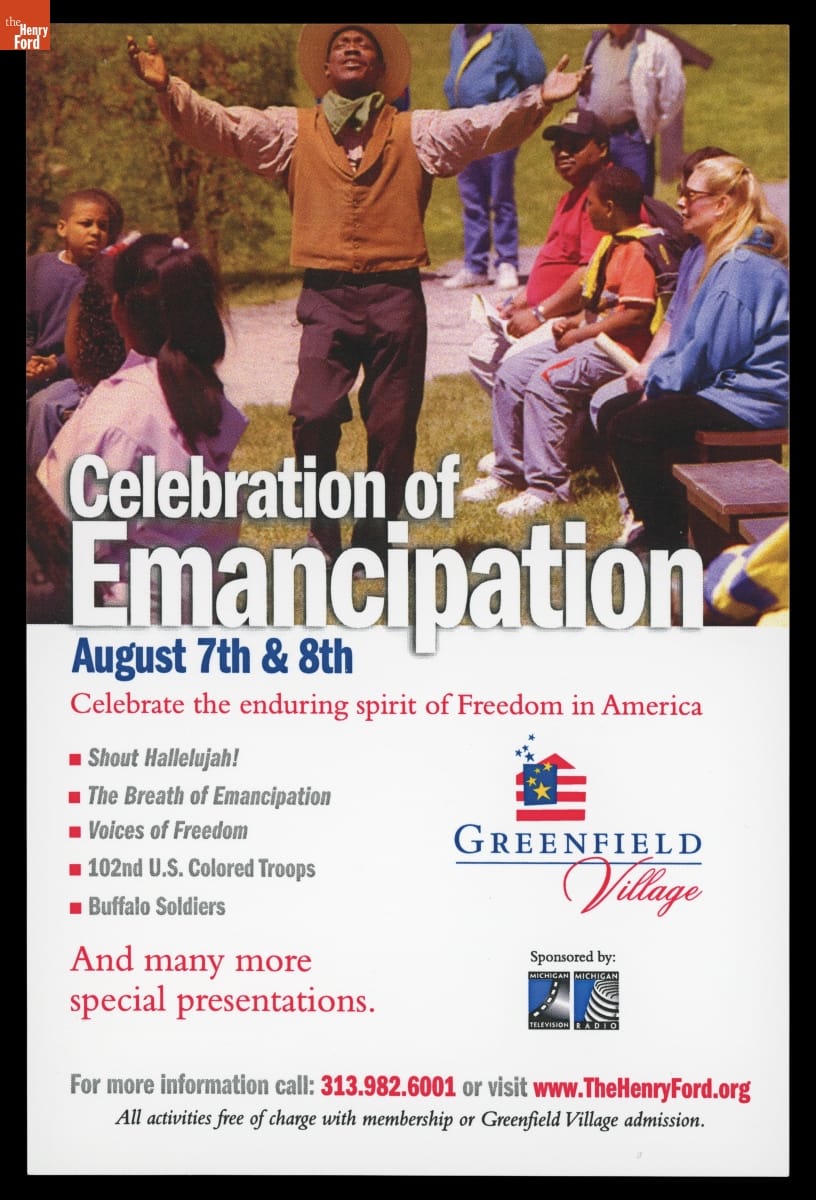
- Advertising Handbill, "Celebration of Emancipation" at Greenfield Village, August 2004 -
- 07 August 2004 - 08 August 2004
- Collections - Artifact
Advertising Handbill, "Celebration of Emancipation" at Greenfield Village, August 2004
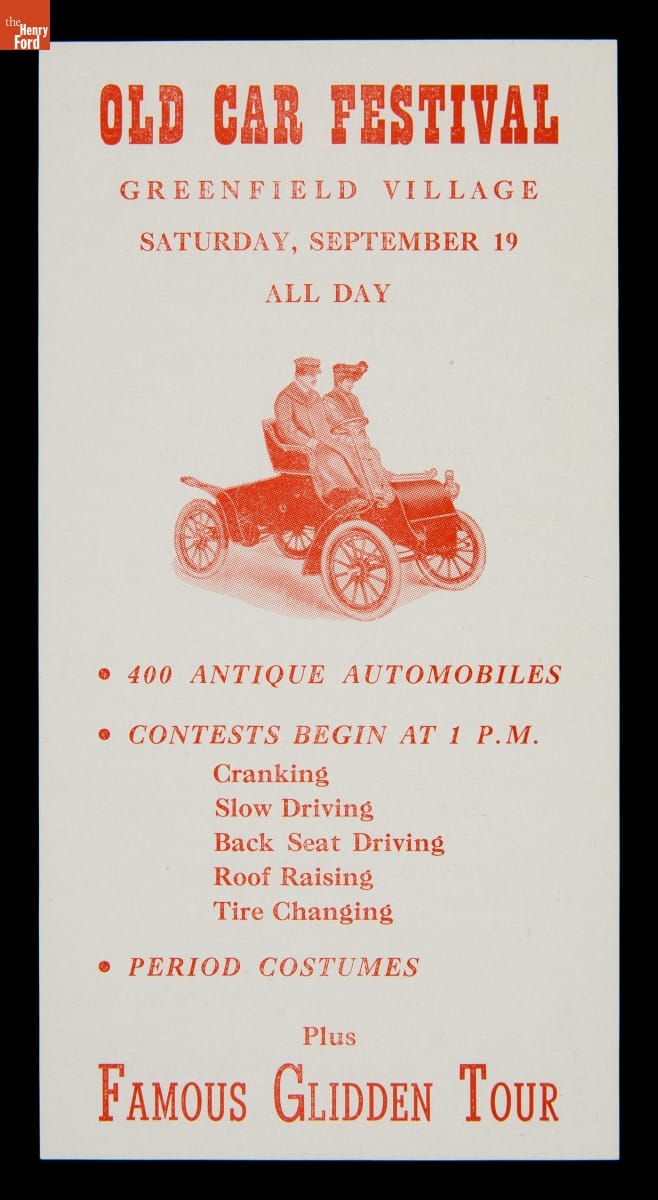
- Advertising for Old Car Festival at Greenfield Village, September 19, 1953 - Held annually since 1951, The Henry Ford's Old Car Festival is the longest-running antique automobile show in the United States. While its specific events, activities and featured time periods have evolved over the decades, Old Car Festival's enthusiastic celebration of early American motoring remains unchanged.
- September 19, 1953
- Collections - Artifact
Advertising for Old Car Festival at Greenfield Village, September 19, 1953
Held annually since 1951, The Henry Ford's Old Car Festival is the longest-running antique automobile show in the United States. While its specific events, activities and featured time periods have evolved over the decades, Old Car Festival's enthusiastic celebration of early American motoring remains unchanged.
- Congress of Racial Equality Handbill, "Don't Buy at Woolworth," 1960 - In 1960, four African-American students sat down at a Woolworth lunch counter in Greensboro, North Carolina, and were refused service. This poster, produced by the Congress on Racial Equality (CORE), urged Americans to boycott the national five-and-dime chain. It was hoped that the loss of customer dollars would spur company officials to end the segregationist policies found in its southern stores.

- 1960
- Collections - Artifact
Congress of Racial Equality Handbill, "Don't Buy at Woolworth," 1960
In 1960, four African-American students sat down at a Woolworth lunch counter in Greensboro, North Carolina, and were refused service. This poster, produced by the Congress on Racial Equality (CORE), urged Americans to boycott the national five-and-dime chain. It was hoped that the loss of customer dollars would spur company officials to end the segregationist policies found in its southern stores.