
Search
- Ford Reliability Tour at Ford Airport, Dearborn, Michigan, 1930 - From 1925-1931, Ford Motor Company sponsored annual air tours to promote reliability and safety in commercial aircraft. Pilots flew to pre-determined cities, and their airplanes were rated on the ability to take off and land quickly and maintain consistent speeds. The 1930 tour included 18 entries and visited 29 cities in the United States and Canada.
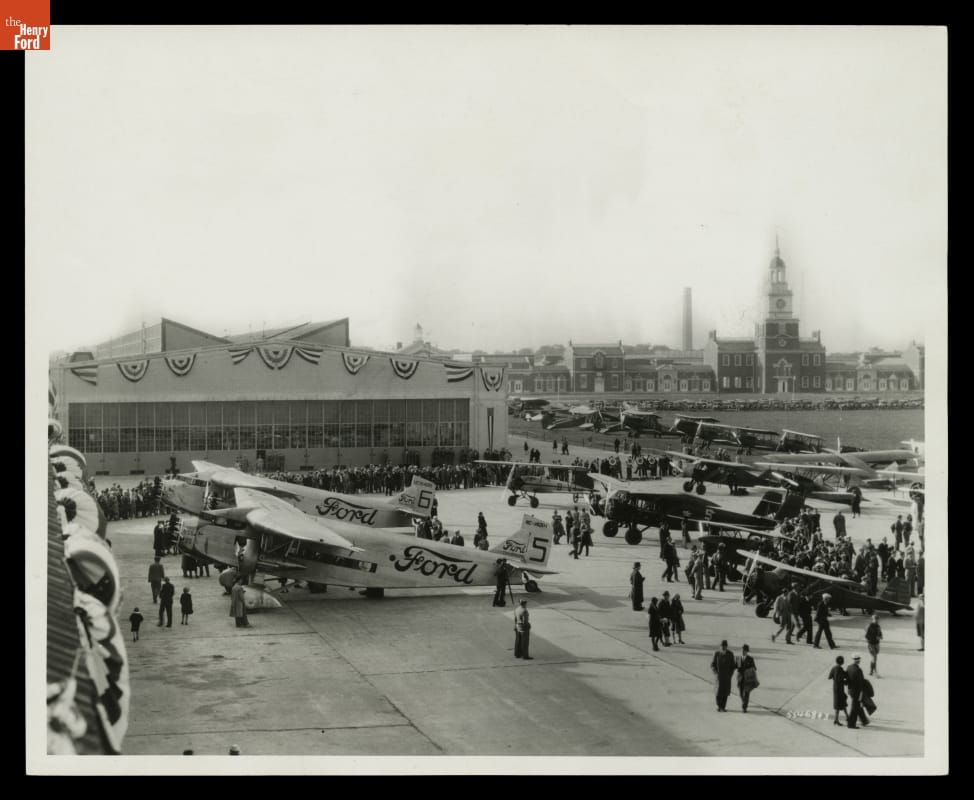
- September 27, 1930
- Collections - Artifact
Ford Reliability Tour at Ford Airport, Dearborn, Michigan, 1930
From 1925-1931, Ford Motor Company sponsored annual air tours to promote reliability and safety in commercial aircraft. Pilots flew to pre-determined cities, and their airplanes were rated on the ability to take off and land quickly and maintain consistent speeds. The 1930 tour included 18 entries and visited 29 cities in the United States and Canada.
- Group from Edison Institute Schools Visit the Piccard Stratosphere Flight Balloon at Ford Airport, September 1934 - The Piccard stratosphere flight departed from Ford Airport field on October 23, 1934. Spouses Jean and Jeannette Piccard ascended 10.9 miles in a metal gondola carried by a hydrogen balloon. This image was taken at one of the airport's hangars in September of 1934, and depicts the Piccards with a group of visiting children from the Edison Institute School.
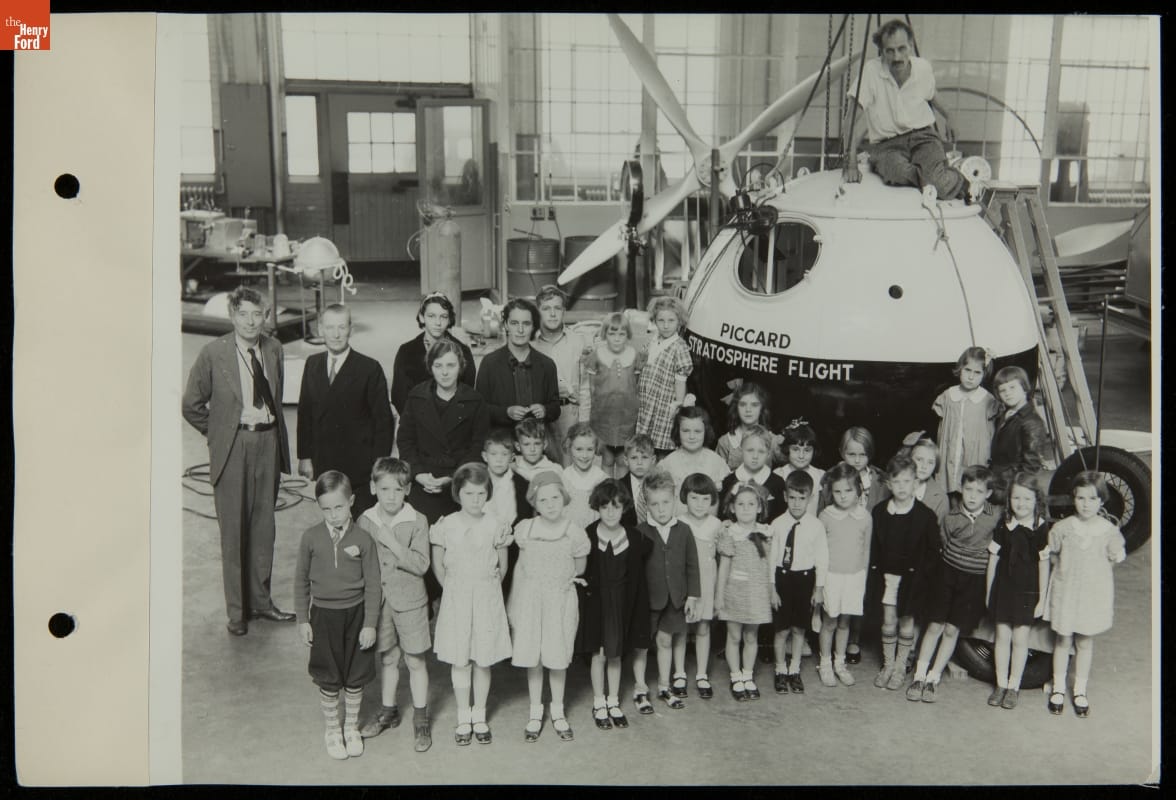
- September 17, 1934
- Collections - Artifact
Group from Edison Institute Schools Visit the Piccard Stratosphere Flight Balloon at Ford Airport, September 1934
The Piccard stratosphere flight departed from Ford Airport field on October 23, 1934. Spouses Jean and Jeannette Piccard ascended 10.9 miles in a metal gondola carried by a hydrogen balloon. This image was taken at one of the airport's hangars in September of 1934, and depicts the Piccards with a group of visiting children from the Edison Institute School.
- Airship "Graf Zeppelin" Arriving at Lakehurst, New Jersey Naval Hangar, August 4, 1929 - Launched in 1928, Germany's <em>Graf Zeppelin</em> was the most successful of the passenger airships that provided intercontinental service during the 1930s. It made 590 flights and traveled more than a million miles in its nine-year career. Despite its exemplary safety record, <em>Graf Zeppelin</em> was retired following the loss of the airship <em>Hindenburg</em> in 1937.
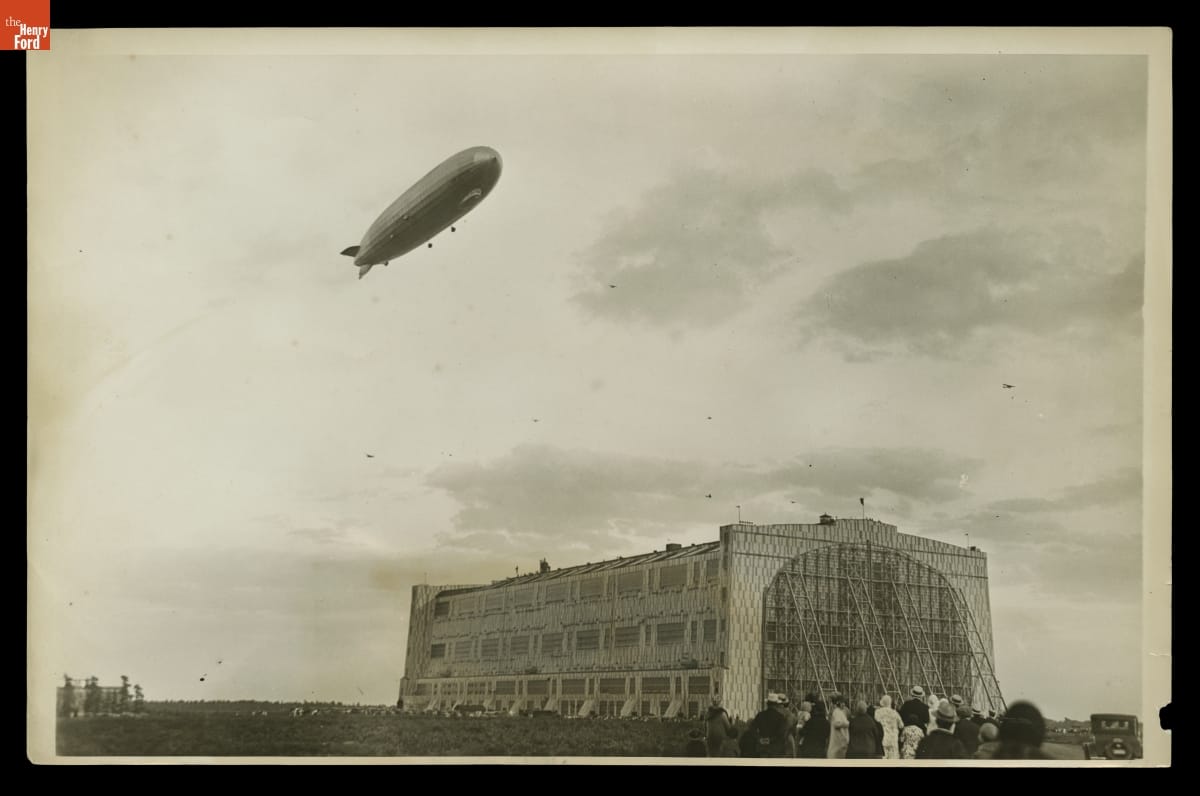
- August 04, 1929
- Collections - Artifact
Airship "Graf Zeppelin" Arriving at Lakehurst, New Jersey Naval Hangar, August 4, 1929
Launched in 1928, Germany's Graf Zeppelin was the most successful of the passenger airships that provided intercontinental service during the 1930s. It made 590 flights and traveled more than a million miles in its nine-year career. Despite its exemplary safety record, Graf Zeppelin was retired following the loss of the airship Hindenburg in 1937.
- Aerial View, B-24 Liberators Outside Hangar/Gas House at Ford Motor Company Willow Run Bomber Plant, September 1945 - During World War II, Ford Motor Company built 8,685 B-24 Liberator bomber airplanes at its Willow Run plant. The massive Willow Run complex included a seven million square-foot main building, a hospital, worker housing, an airport, and numerous support structures like this hangar in which planes were fueled.
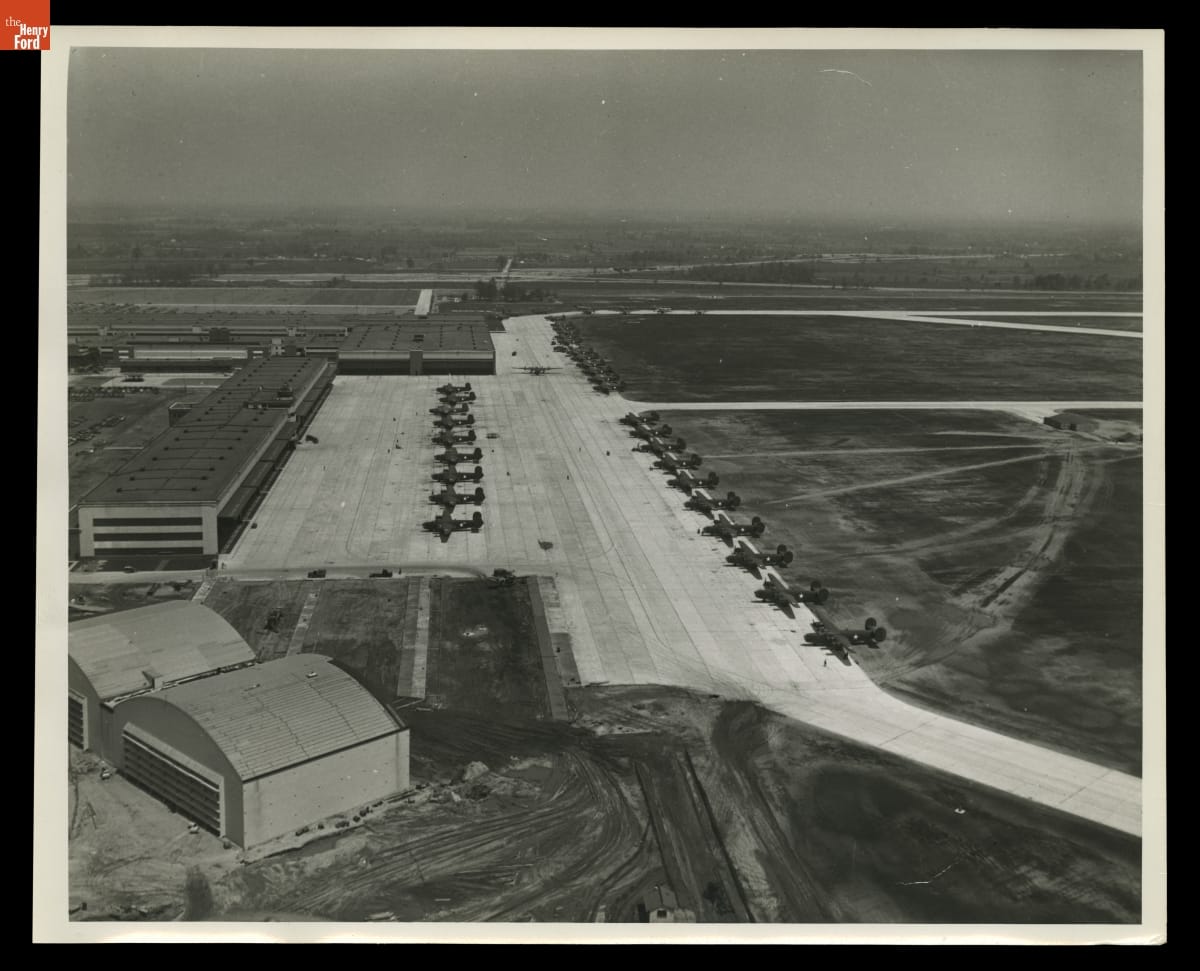
- September 01, 1945
- Collections - Artifact
Aerial View, B-24 Liberators Outside Hangar/Gas House at Ford Motor Company Willow Run Bomber Plant, September 1945
During World War II, Ford Motor Company built 8,685 B-24 Liberator bomber airplanes at its Willow Run plant. The massive Willow Run complex included a seven million square-foot main building, a hospital, worker housing, an airport, and numerous support structures like this hangar in which planes were fueled.
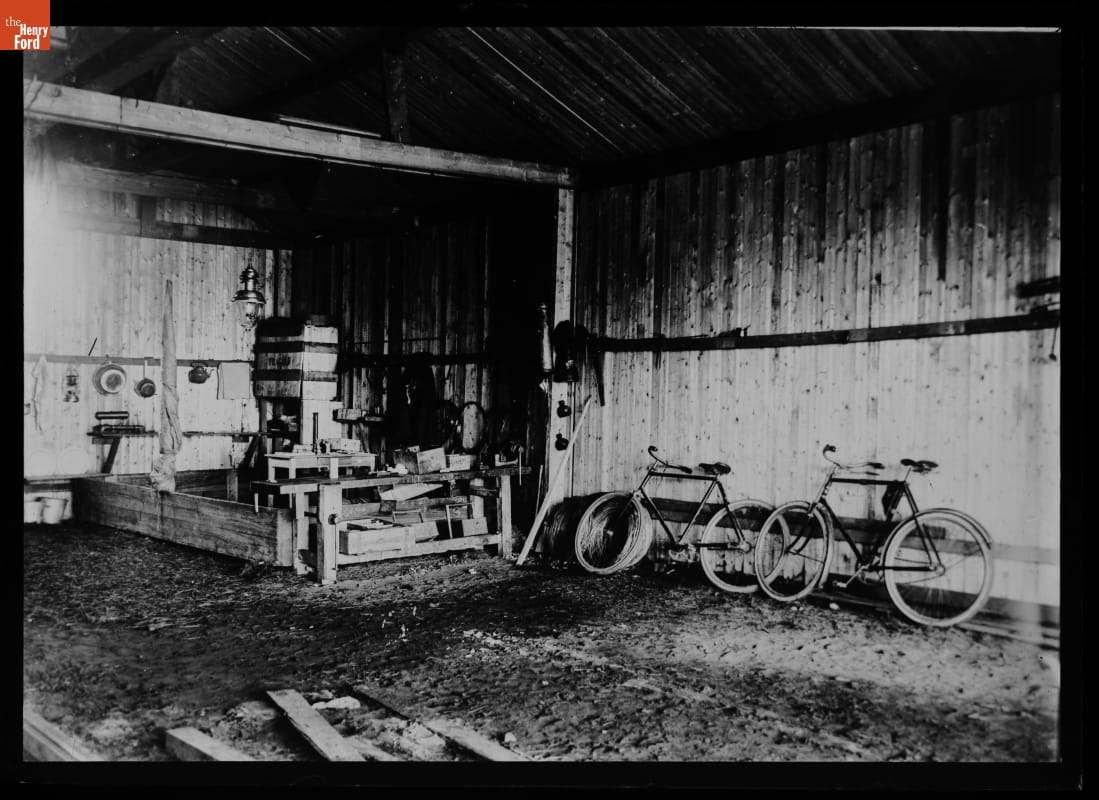
- Interior of the Hangar at Camp d'Auvours, near Le Mans, France, 1908-1909 - Just as he and his brother had done in North Carolina earlier in the decade, Wilbur Wright used a simple wooden hangar as his base of operations during his demonstration flights in France in 1908-1909. In addition to a workbench and tools for the airplane, the hangar included cooking utensils and a pantry stocked with canned goods.
- 1908-1909
- Collections - Artifact
Interior of the Hangar at Camp d'Auvours, near Le Mans, France, 1908-1909
Just as he and his brother had done in North Carolina earlier in the decade, Wilbur Wright used a simple wooden hangar as his base of operations during his demonstration flights in France in 1908-1909. In addition to a workbench and tools for the airplane, the hangar included cooking utensils and a pantry stocked with canned goods.
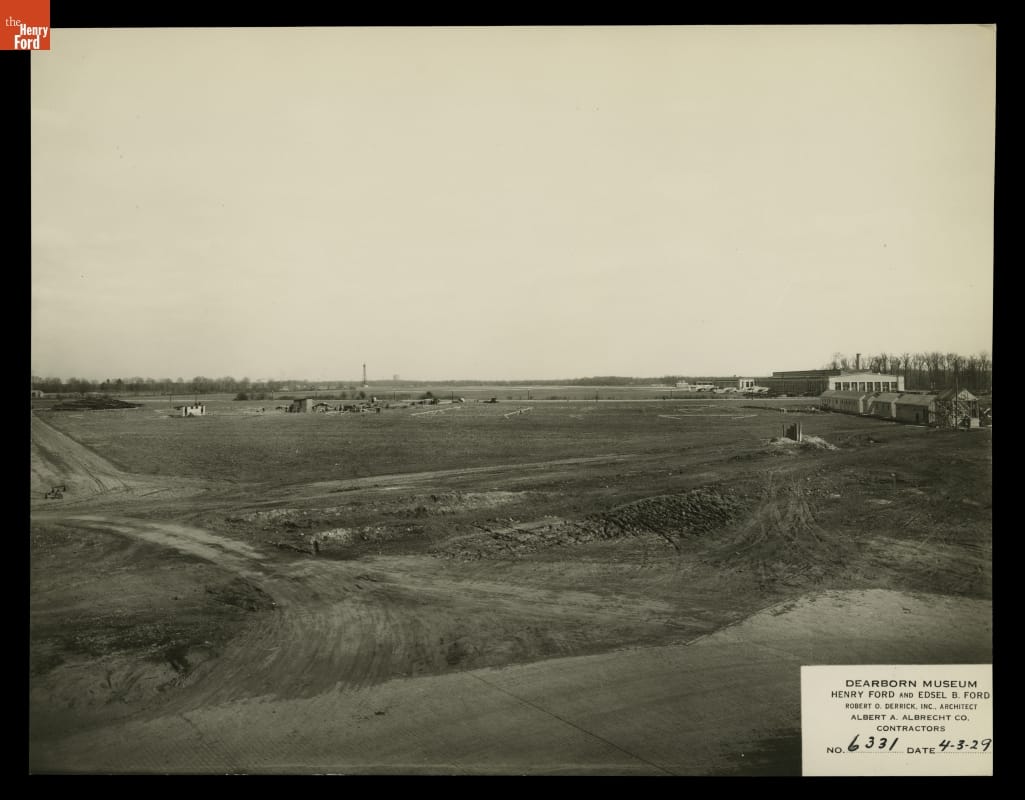
- Looking Toward Ford Airport across the Henry Ford Museum Construction Site, April 3, 1929 - Henry Ford commissioned architect Robert O. Derrick to design the museum building for his Edison Institute. It was built on this site in Dearborn, Michigan, between Ford Motor Company's Engineering Laboratory and Ford Airport. In late October 1929, the completed front portion of the building hosted the Light's Golden Jubilee banquet, but the museum wasn't fully finished until the mid-1930s.
- April 03, 1929
- Collections - Artifact
Looking Toward Ford Airport across the Henry Ford Museum Construction Site, April 3, 1929
Henry Ford commissioned architect Robert O. Derrick to design the museum building for his Edison Institute. It was built on this site in Dearborn, Michigan, between Ford Motor Company's Engineering Laboratory and Ford Airport. In late October 1929, the completed front portion of the building hosted the Light's Golden Jubilee banquet, but the museum wasn't fully finished until the mid-1930s.
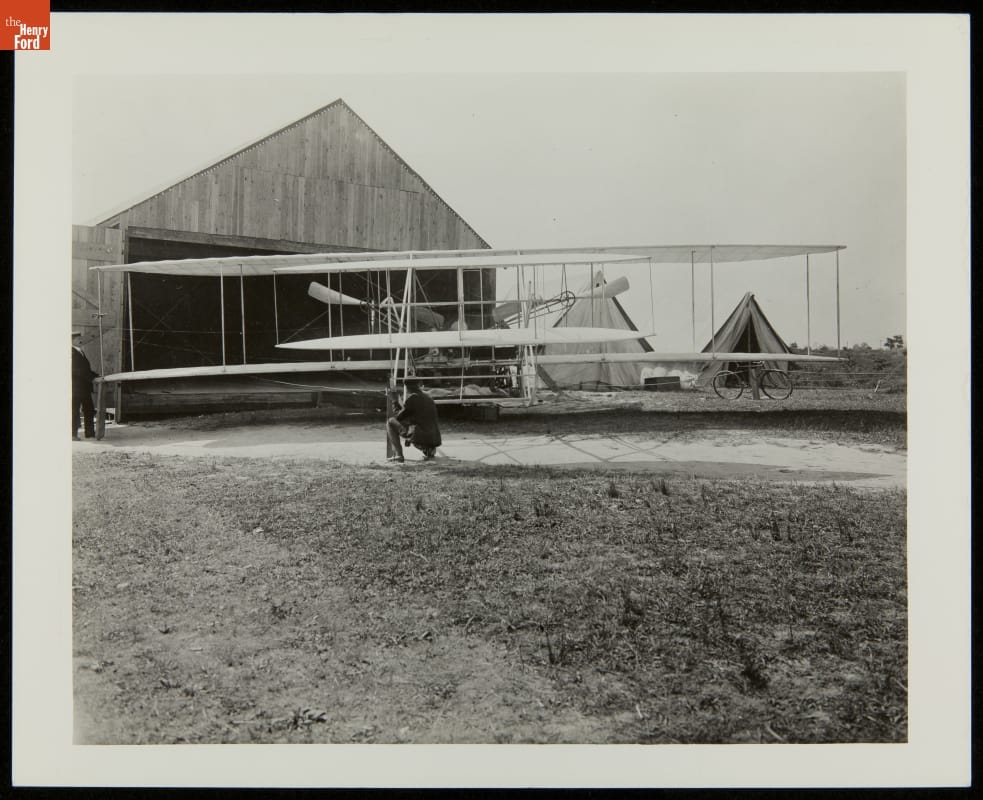
- Wright Airplane outside Hangar at Fort Myer, Virginia, September 1908 - While his brother was demonstrating their airplane in France, Orville Wright made demonstration flights of his own for the United States Army Signal Corps at Fort Myer, Virginia. All went well until September 17, 1908, when a cracked propeller caused the plane to crash. Orville survived with serious injuries, but passenger Lt. Thomas Selfridge was killed -- the first airplane fatality.
- September 01, 1908
- Collections - Artifact
Wright Airplane outside Hangar at Fort Myer, Virginia, September 1908
While his brother was demonstrating their airplane in France, Orville Wright made demonstration flights of his own for the United States Army Signal Corps at Fort Myer, Virginia. All went well until September 17, 1908, when a cracked propeller caused the plane to crash. Orville survived with serious injuries, but passenger Lt. Thomas Selfridge was killed -- the first airplane fatality.
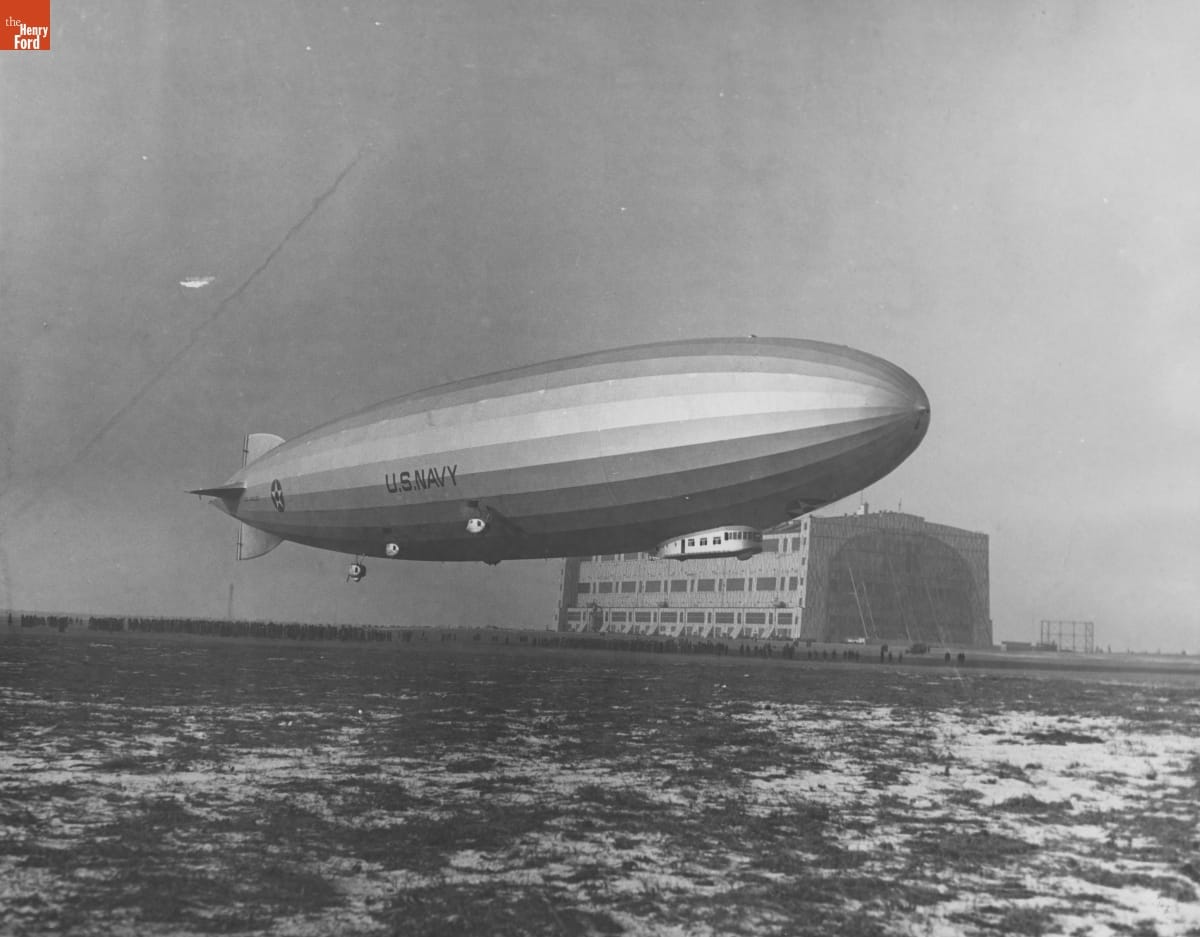
- Zeppelin "Los Angeles" Leaving Hangar at Lakehurst, New Jersey, 1926 - In the 1920s and 1930s, the U.S. Navy experimented with rigid airships both as reconnaissance craft and as flying aircraft carriers. The helium-lifted ships proved too fragile for military service as three of the four built were lost in storms. Only the USS <EM>Los Angeles</EM> avoided disaster. It was decommissioned and dismantled in 1939.
- 1926
- Collections - Artifact
Zeppelin "Los Angeles" Leaving Hangar at Lakehurst, New Jersey, 1926
In the 1920s and 1930s, the U.S. Navy experimented with rigid airships both as reconnaissance craft and as flying aircraft carriers. The helium-lifted ships proved too fragile for military service as three of the four built were lost in storms. Only the USS Los Angeles avoided disaster. It was decommissioned and dismantled in 1939.
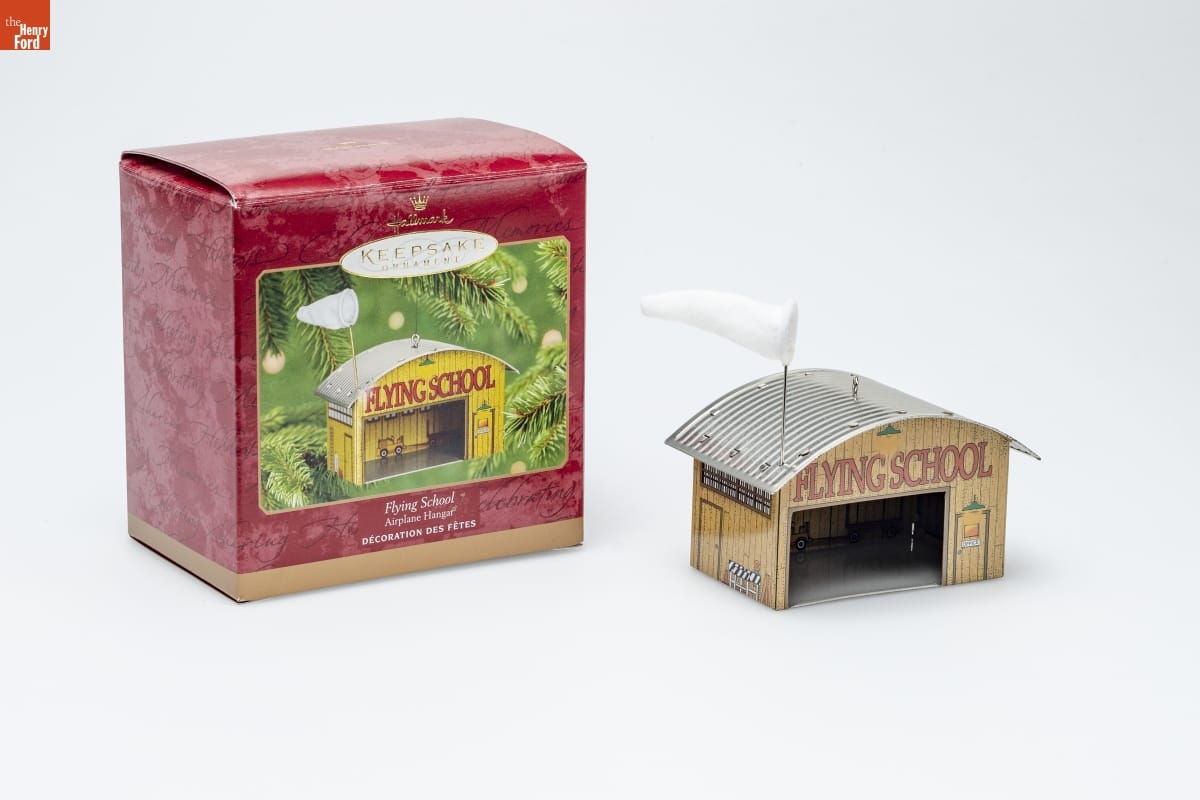
- Hallmark "Airplane Hangar: Flying School" Christmas Ornament, 2001 - Already known for greeting cards, Hallmark introduced a line of Christmas ornaments in 1973. The company's annual release of an increasing array of ornaments revolutionized Christmas decorating, appealing to customers' interest in marking memories and milestones as well as expressing one's personality and unique tastes.
- 2001
- Collections - Artifact
Hallmark "Airplane Hangar: Flying School" Christmas Ornament, 2001
Already known for greeting cards, Hallmark introduced a line of Christmas ornaments in 1973. The company's annual release of an increasing array of ornaments revolutionized Christmas decorating, appealing to customers' interest in marking memories and milestones as well as expressing one's personality and unique tastes.
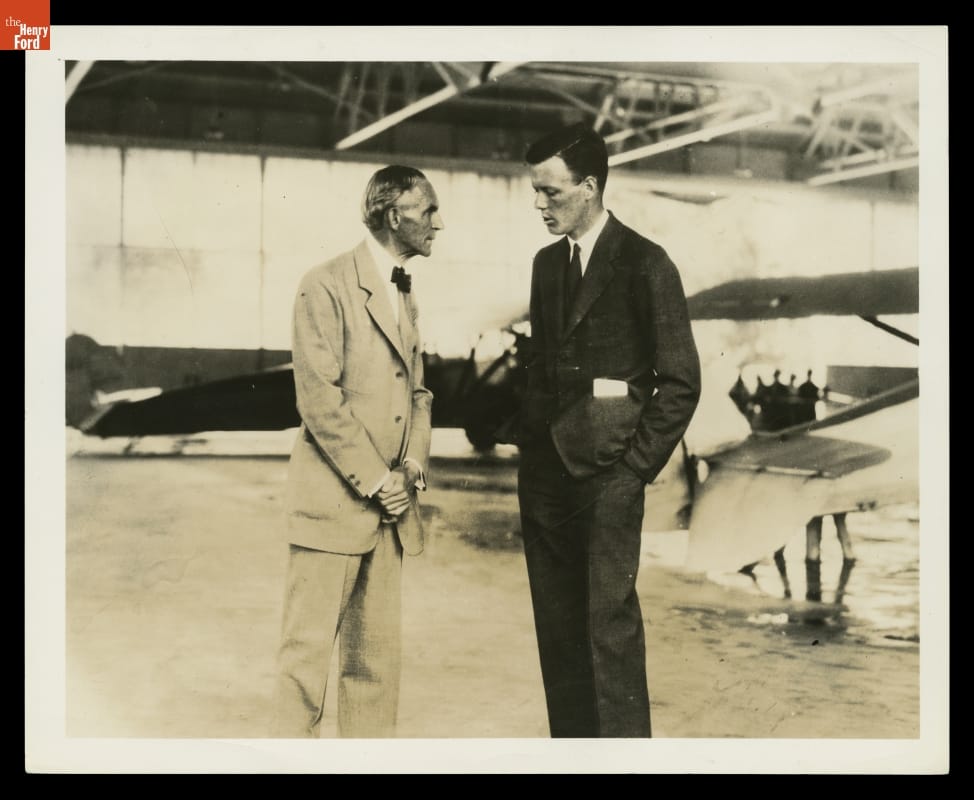
- Henry Ford and Charles Lindbergh at Ford Airport, August 1927 - In 1927, Charles Lindbergh flew his <EM>Spirit of St. Louis</EM> to Ford Airport in Dearborn, Michigan. The pair was newly famous for completing the first non-stop flight from New York to Paris. During their visit, Henry Ford accepted Lindbergh's invitation for a ride. Though Ford had been invested in aviation since 1909, this was his first trip in an airplane.
- August 01, 1927
- Collections - Artifact
Henry Ford and Charles Lindbergh at Ford Airport, August 1927
In 1927, Charles Lindbergh flew his Spirit of St. Louis to Ford Airport in Dearborn, Michigan. The pair was newly famous for completing the first non-stop flight from New York to Paris. During their visit, Henry Ford accepted Lindbergh's invitation for a ride. Though Ford had been invested in aviation since 1909, this was his first trip in an airplane.