
Search
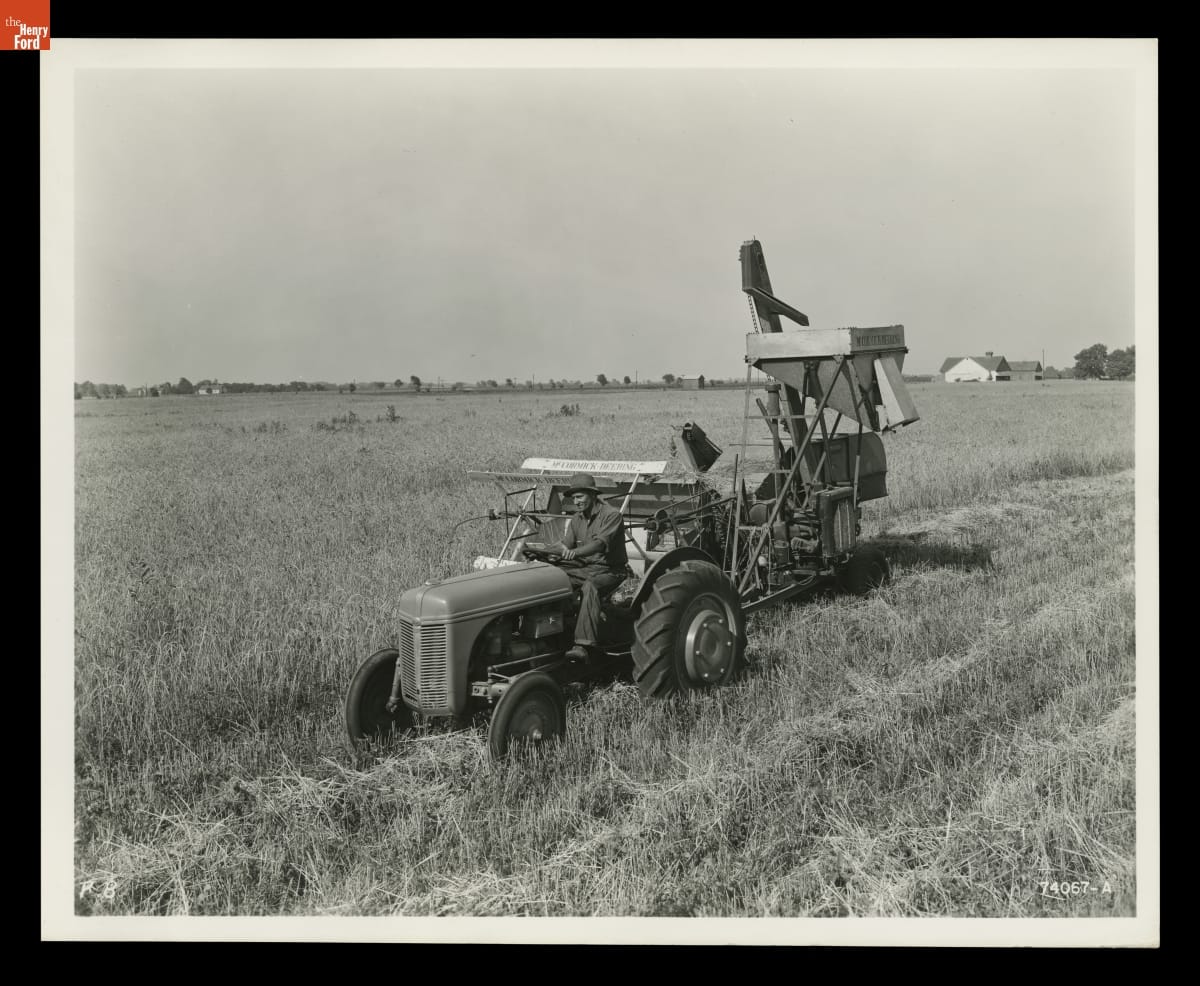
- Man Harvesting Wheat Using a Ford-Ferguson Tractor with Combine Attached, Indiana, August 1940 - Ford Motor Company introduced the 9N tractor in 1939. It featured the "Ferguson System:" a 3-point hydraulic hitch-and-lift system invented by Irishman Harry Ferguson. Ferguson's revolutionary hitch kept agricultural implements, like the combine seen here, in line with the tractor. It also provided stability. By 1940, nearly 8 percent of tractors sold in the U.S. were 9Ns.
- August 05, 1940
- Collections - Artifact
Man Harvesting Wheat Using a Ford-Ferguson Tractor with Combine Attached, Indiana, August 1940
Ford Motor Company introduced the 9N tractor in 1939. It featured the "Ferguson System:" a 3-point hydraulic hitch-and-lift system invented by Irishman Harry Ferguson. Ferguson's revolutionary hitch kept agricultural implements, like the combine seen here, in line with the tractor. It also provided stability. By 1940, nearly 8 percent of tractors sold in the U.S. were 9Ns.
- FMC Cascade Tomato Harvester in Use, circa 1985 -
- circa 1985
- Collections - Artifact
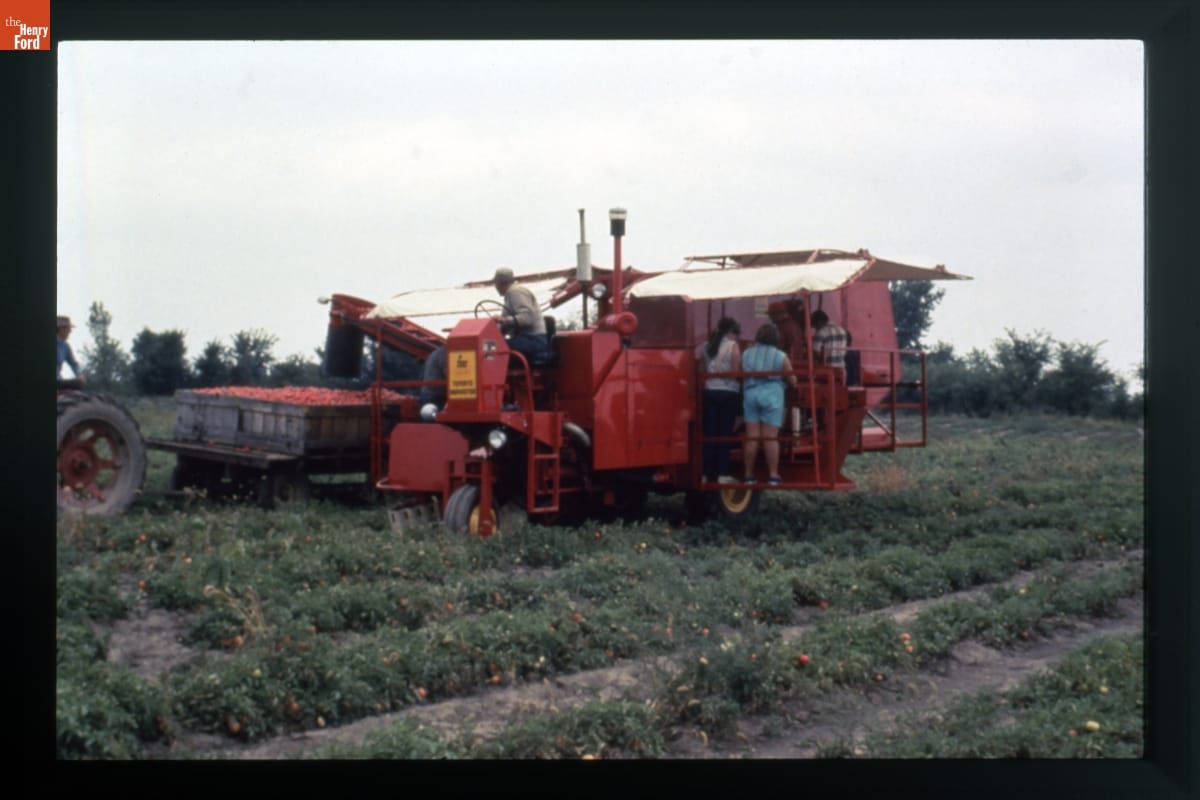
FMC Cascade Tomato Harvester in Use, circa 1985
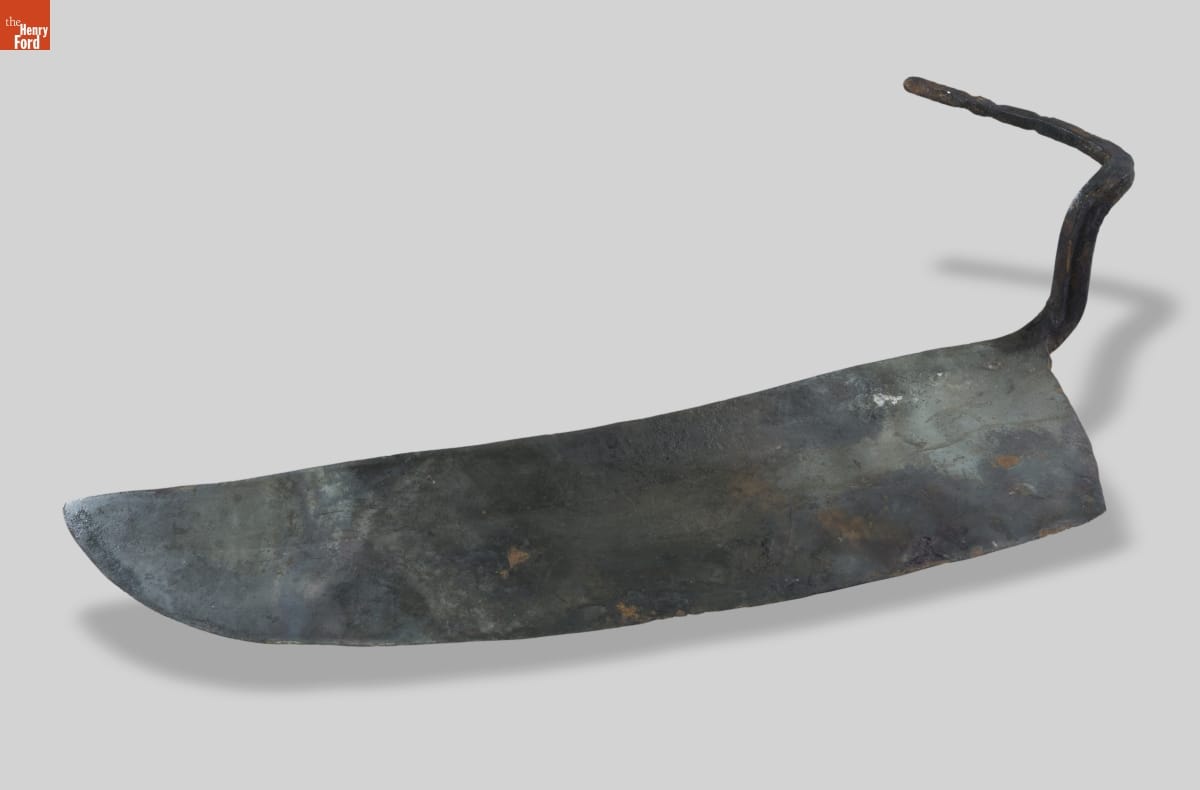
- Hay Knife - Farm families cut and cured enough grass each summer to feed hay to their livestock all winter. Stored hay settled over time and farmers used special knives made by blacksmiths to cut out chunks for feed. The smiths forged wrought-iron blades with a long cutting edge. The wooden handle was set on a tang (a pointed metal extension of the handle) and secured with a metal collar for durability.
- Collections - Artifact
Hay Knife
Farm families cut and cured enough grass each summer to feed hay to their livestock all winter. Stored hay settled over time and farmers used special knives made by blacksmiths to cut out chunks for feed. The smiths forged wrought-iron blades with a long cutting edge. The wooden handle was set on a tang (a pointed metal extension of the handle) and secured with a metal collar for durability.
- Scythe Blade -
- Collections - Artifact
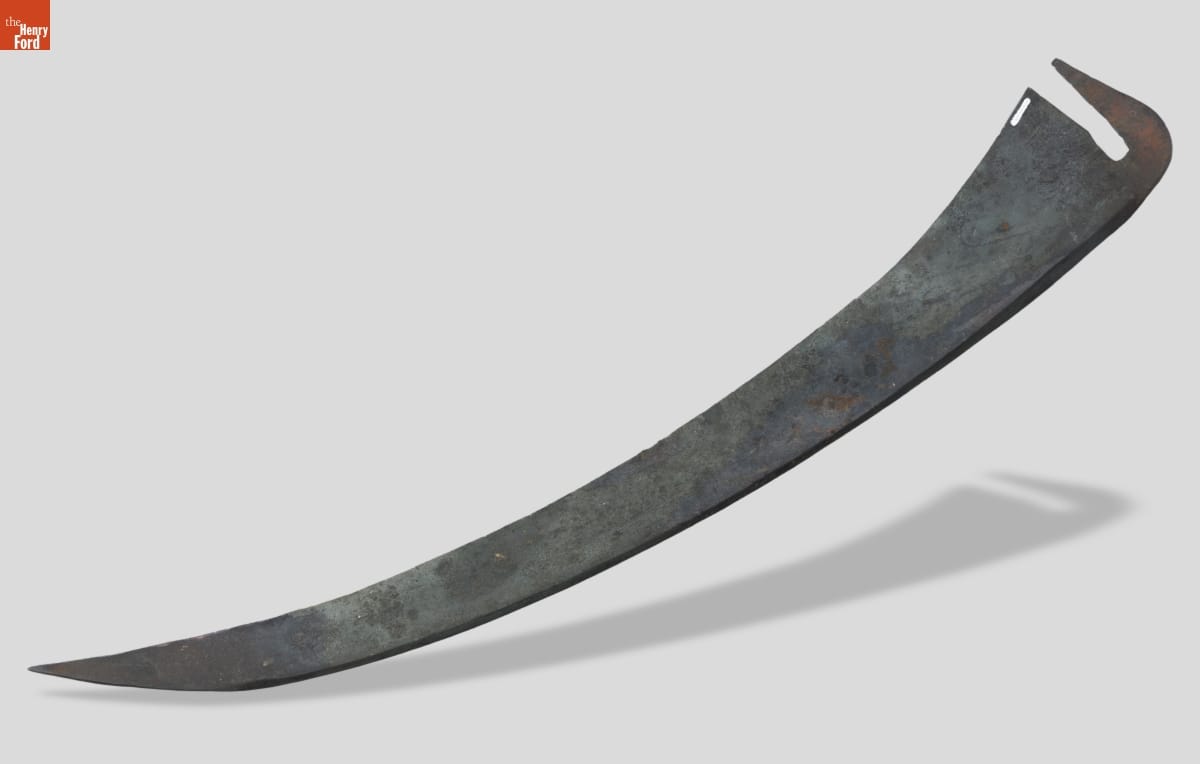
Scythe Blade
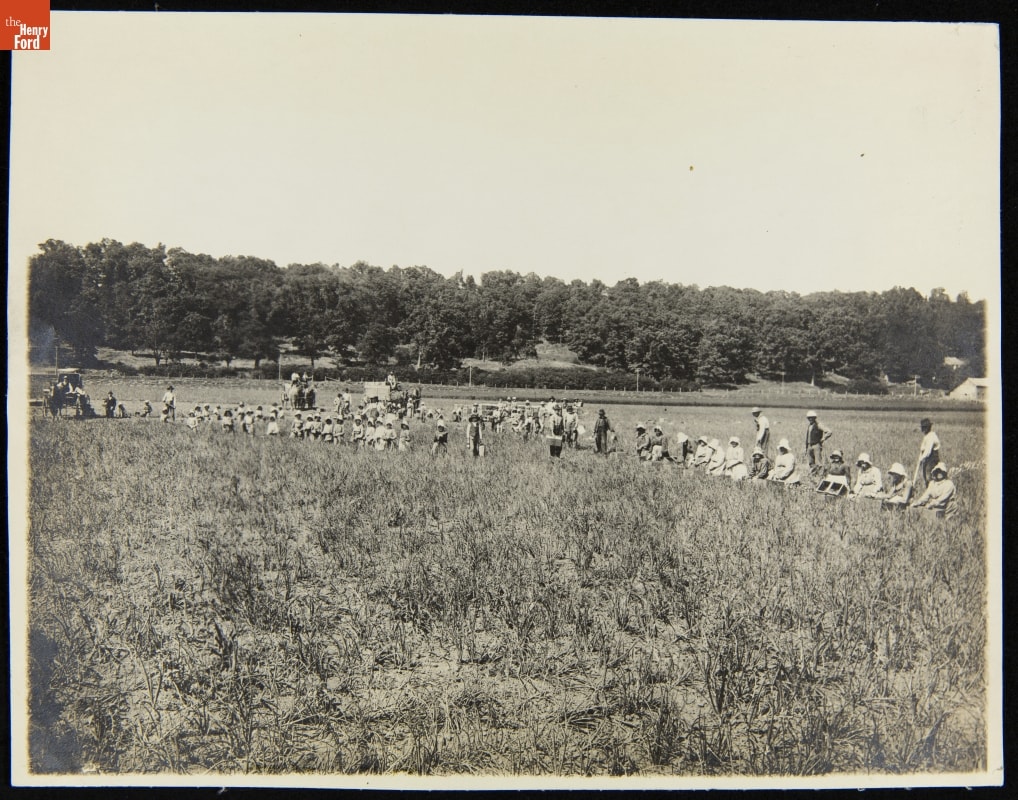
- Workers in an Onion Field, H. J. Heinz Company, circa 1910 - Entrepreneur H.J. Heinz recognized that producing the highest quality products began with where the ingredients were grown and how they were harvested. He took great care in managing every aspect of the process to ensure the best ingredients for his line of pickled foods, preserves, and condiments. This photograph shows workers spread out across one of Heinz's many onion fields.
- circa 1910
- Collections - Artifact
Workers in an Onion Field, H. J. Heinz Company, circa 1910
Entrepreneur H.J. Heinz recognized that producing the highest quality products began with where the ingredients were grown and how they were harvested. He took great care in managing every aspect of the process to ensure the best ingredients for his line of pickled foods, preserves, and condiments. This photograph shows workers spread out across one of Heinz's many onion fields.
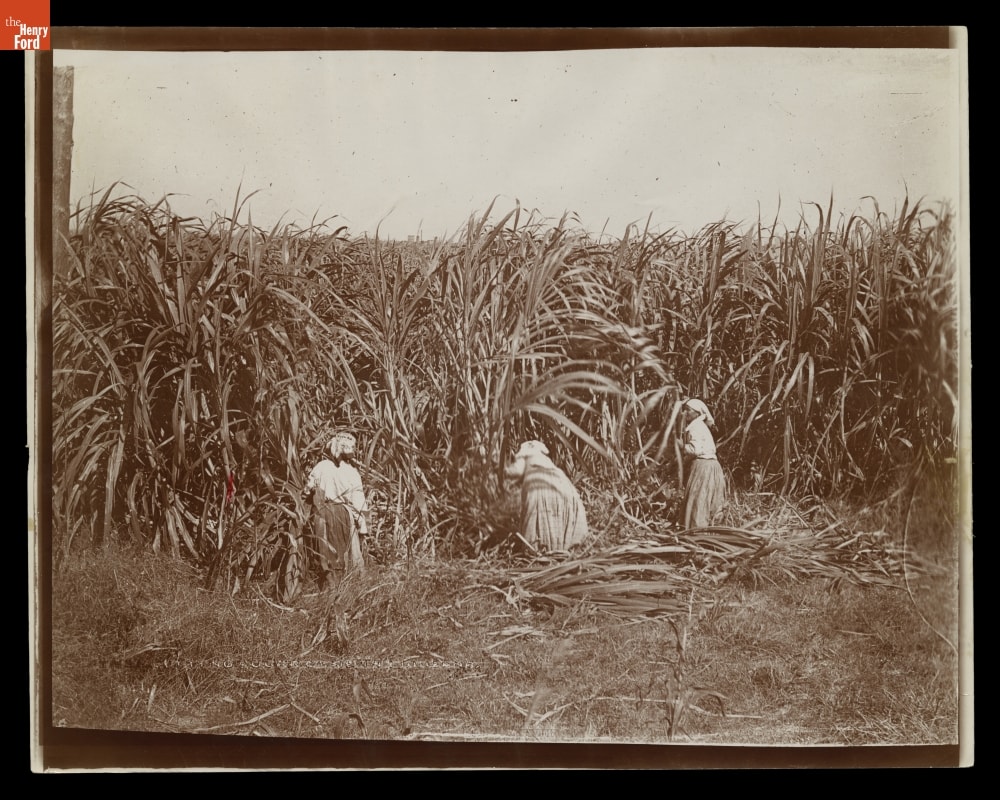
- Women Cutting Sugar Cane, Baton Rouge, Louisiana, 1912 - From 1895 to 1924, the Detroit Publishing Company was one of the major image publishers in the world. The company's wide-ranging stock of original photographs documented life and landscapes from across the nation and around the globe. From the tens of thousands of negatives, the company created prints, postcards, lantern slides, panoramas, and other merchandise for sale to educators, businessmen, advertisers, homeowners and travelers.
- circa 1890
- Collections - Artifact
Women Cutting Sugar Cane, Baton Rouge, Louisiana, 1912
From 1895 to 1924, the Detroit Publishing Company was one of the major image publishers in the world. The company's wide-ranging stock of original photographs documented life and landscapes from across the nation and around the globe. From the tens of thousands of negatives, the company created prints, postcards, lantern slides, panoramas, and other merchandise for sale to educators, businessmen, advertisers, homeowners and travelers.
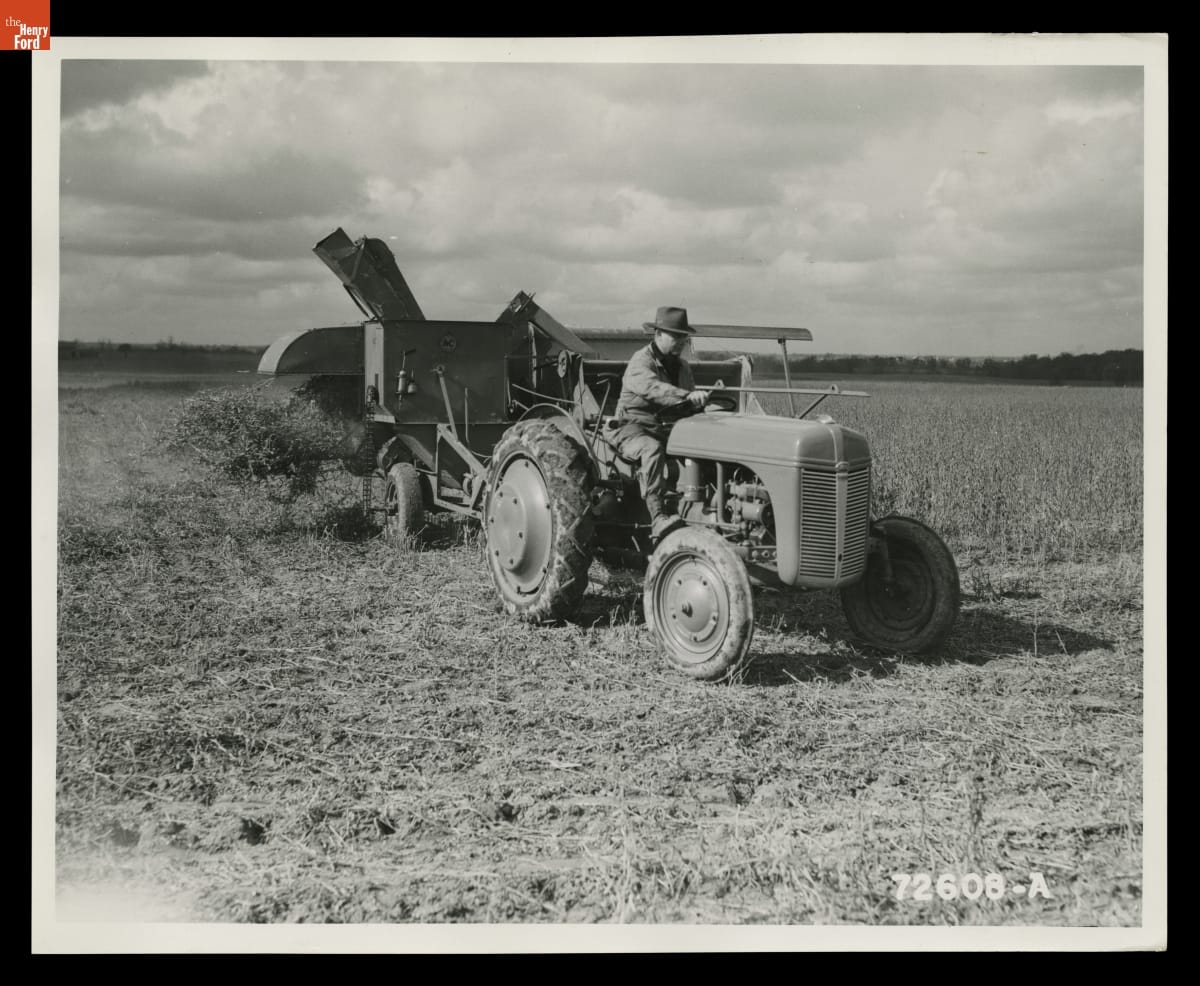
- Ford-Ferguson Model 9N Tractor Pulling a Combine, Macon, Michigan, November 1939 - Henry Ford acquired thousands of acres of farmland in southeast Michigan, collectively known as the Ford Farms. Much of the Farms' acreage was dedicated to one of Ford's agricultural interests at that time: soybeans. This 1939 image shows a tractor-drawn combine harvesting soybeans in Macon, Michigan.
- November 01, 1939
- Collections - Artifact
Ford-Ferguson Model 9N Tractor Pulling a Combine, Macon, Michigan, November 1939
Henry Ford acquired thousands of acres of farmland in southeast Michigan, collectively known as the Ford Farms. Much of the Farms' acreage was dedicated to one of Ford's agricultural interests at that time: soybeans. This 1939 image shows a tractor-drawn combine harvesting soybeans in Macon, Michigan.
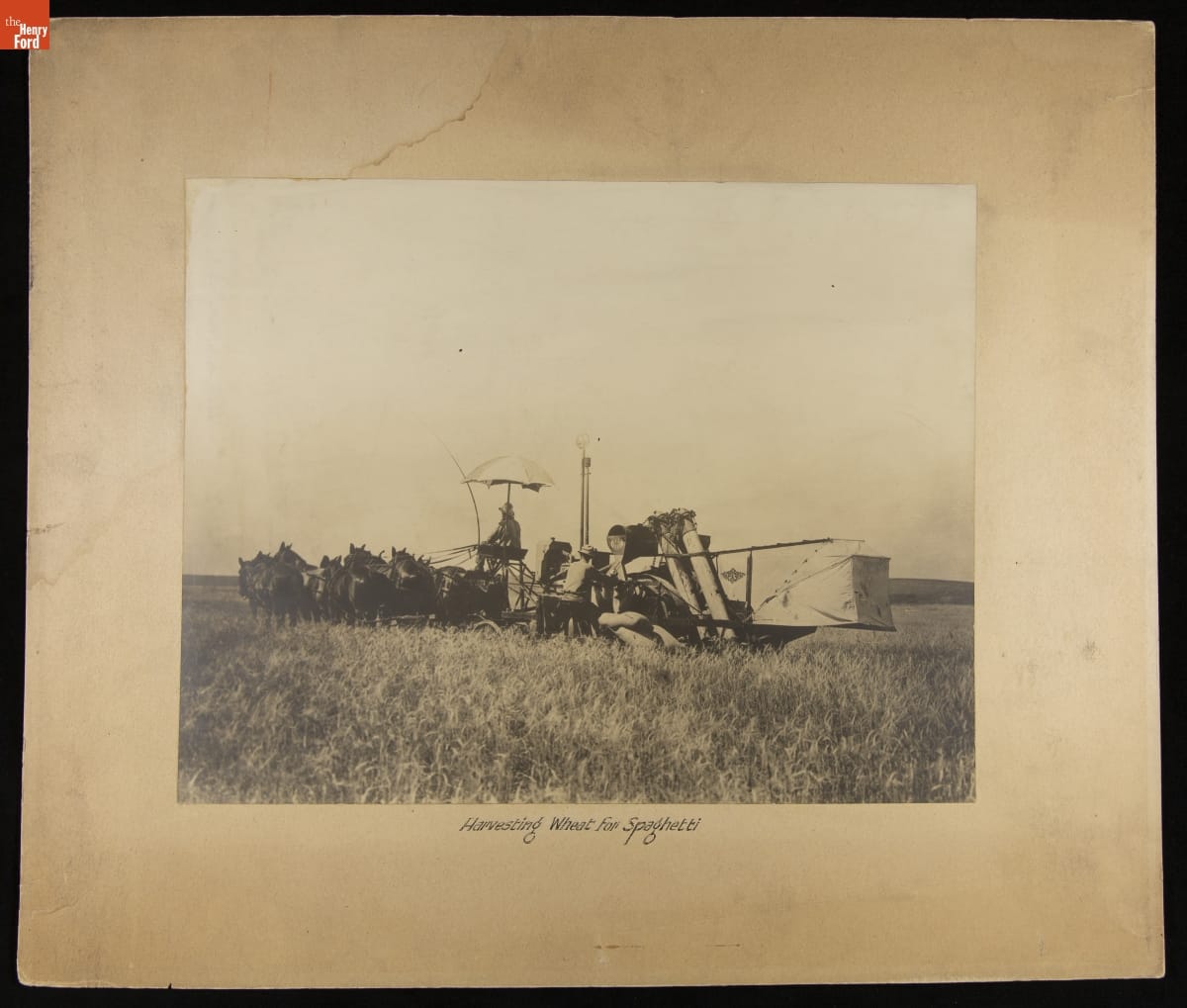
- Harvesting Wheat for Spaghetti, H. J. Heinz Company, 1930-1940 - Entrepreneur H.J. Heinz recognized that producing the highest quality products began with where the ingredients were grown and how they were harvested. The H.J. Heinz Company took great care in managing every aspect of the process to ensure the best ingredients were used in its products. In this photograph, workers are harvesting wheat for the company's heat-and-serve spaghetti products.
- 1930-1940
- Collections - Artifact
Harvesting Wheat for Spaghetti, H. J. Heinz Company, 1930-1940
Entrepreneur H.J. Heinz recognized that producing the highest quality products began with where the ingredients were grown and how they were harvested. The H.J. Heinz Company took great care in managing every aspect of the process to ensure the best ingredients were used in its products. In this photograph, workers are harvesting wheat for the company's heat-and-serve spaghetti products.
- Advertising Layout Photograph of Heinz Employees Sealing Bottles, 1909 - Before complete mechanization of the manufacturing process, many tasks at the Heinz factory were done by hand. Photographs of this process were often taken and then modified for advertising and publications. Pictured here are employees sealing bottles.
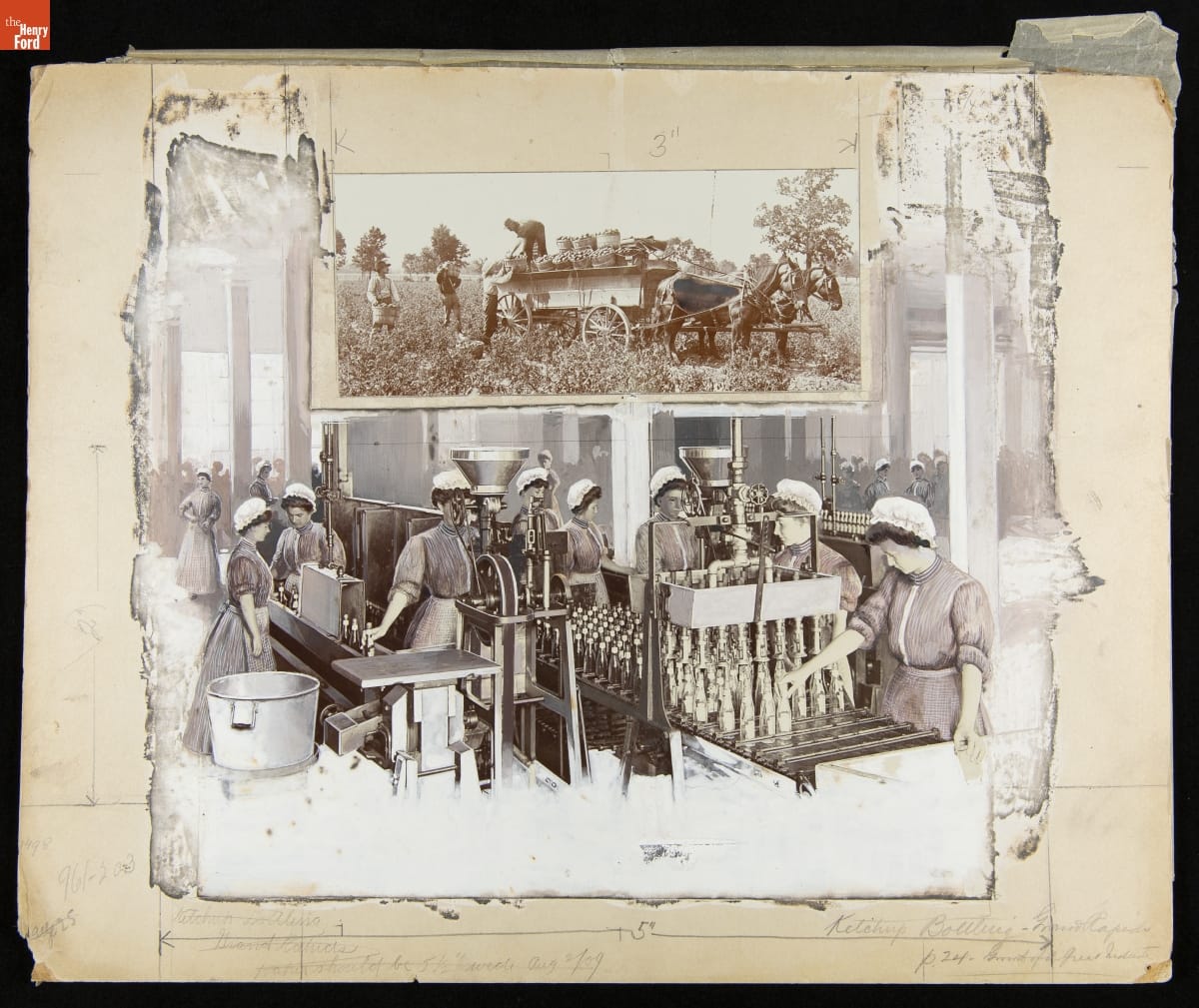
- 1909
- Collections - Artifact
Advertising Layout Photograph of Heinz Employees Sealing Bottles, 1909
Before complete mechanization of the manufacturing process, many tasks at the Heinz factory were done by hand. Photographs of this process were often taken and then modified for advertising and publications. Pictured here are employees sealing bottles.
- Employees Lynn and Sue Jones Harvesting Vegetables in Greenfield Village, August 1979 -
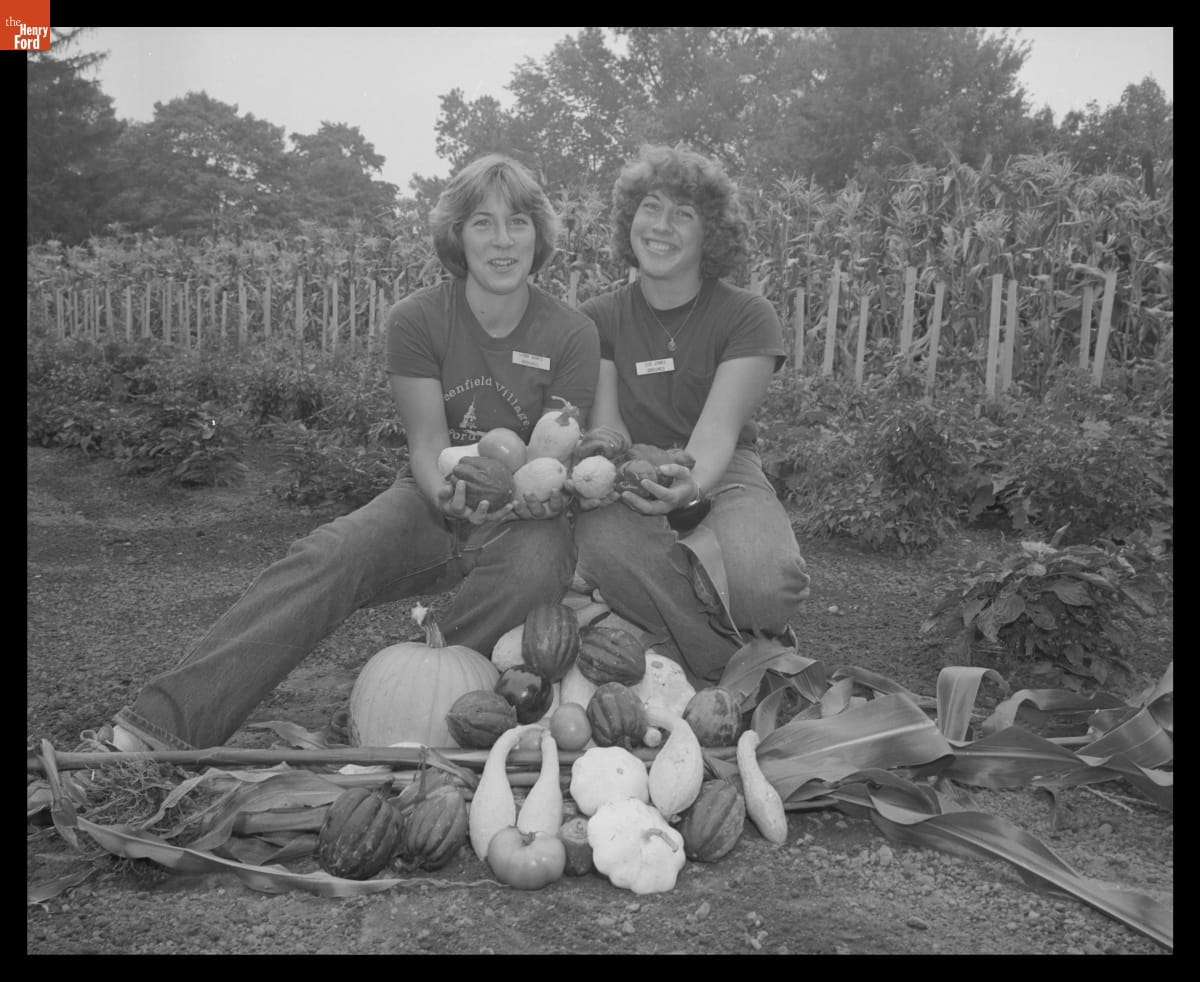
- August 22, 1979
- Collections - Artifact
Employees Lynn and Sue Jones Harvesting Vegetables in Greenfield Village, August 1979