
Search
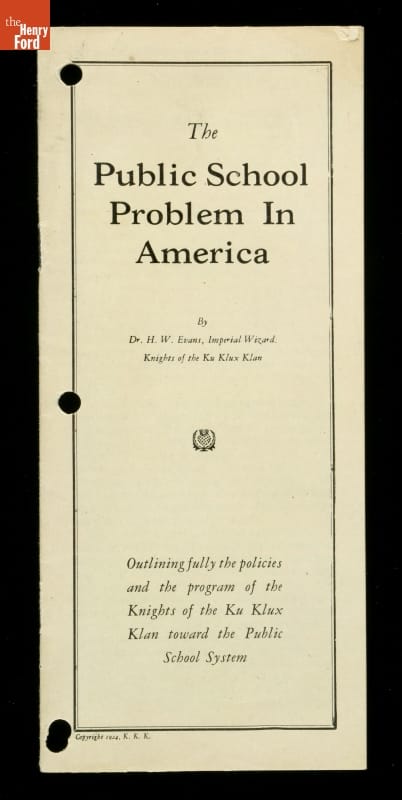
- "The Public School Problem in America," 1924 - This 1924 Ku Klux Klan-authored pamphlet attacked the problems of the American public educational system -- lack of school funding and high rates of illiteracy. The pamphlet also stirred up fears about immigrants and Catholics -- targets of Klan assaults. These groups, the Klan believed, were not becoming assimilated into an American way of life because of poor schooling or the role of church-dominated institutions.
- 1924
- Collections - Artifact
"The Public School Problem in America," 1924
This 1924 Ku Klux Klan-authored pamphlet attacked the problems of the American public educational system -- lack of school funding and high rates of illiteracy. The pamphlet also stirred up fears about immigrants and Catholics -- targets of Klan assaults. These groups, the Klan believed, were not becoming assimilated into an American way of life because of poor schooling or the role of church-dominated institutions.
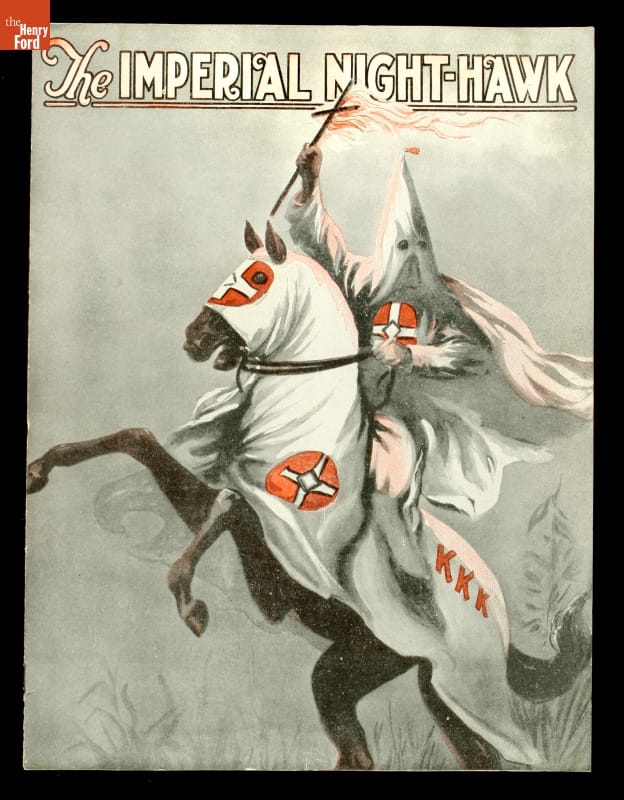
- Periodical, "Imperial Knight-Hawk," Knights of the Ku Klux Klan, June 25, 1924 - The Knights of the Ku Klux Klan published <EM>The Imperial Night-Hawk</EM>. This periodical kept members apprised of Klan activity throughout the country. Of course, the organization's illegal activities and vigilantism were not found on these pages.
- June 25, 1924
- Collections - Artifact
Periodical, "Imperial Knight-Hawk," Knights of the Ku Klux Klan, June 25, 1924
The Knights of the Ku Klux Klan published The Imperial Night-Hawk. This periodical kept members apprised of Klan activity throughout the country. Of course, the organization's illegal activities and vigilantism were not found on these pages.
- "Segregation or Death," circa 1957 - White supremacists agitated for continued segregation after the 1954 Brown v. Board of Education decision. This pamphlet laid out their racist view arguing for the continued separation of whites and blacks. Civil Rights activists urged Americans to reject this mindset and to continue the march toward equality.

- 1957
- Collections - Artifact
"Segregation or Death," circa 1957
White supremacists agitated for continued segregation after the 1954 Brown v. Board of Education decision. This pamphlet laid out their racist view arguing for the continued separation of whites and blacks. Civil Rights activists urged Americans to reject this mindset and to continue the march toward equality.
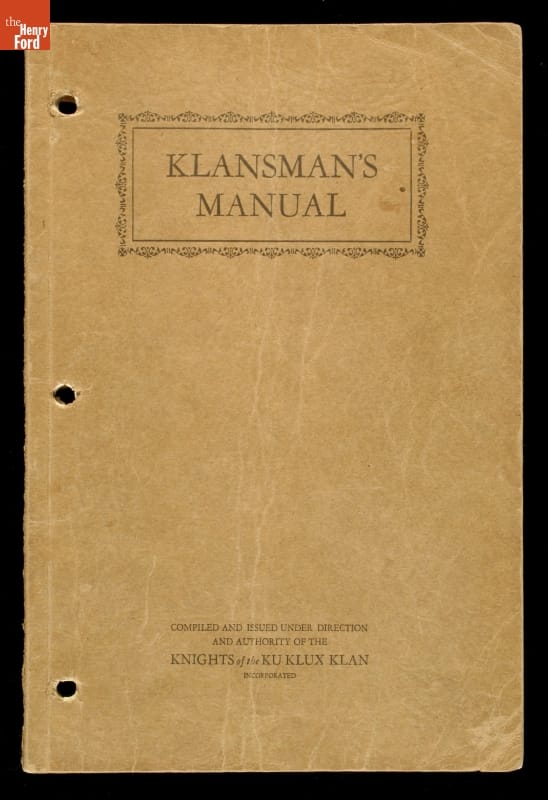
- "Klansman's Manual," Knights of the Ku Klux Klan, 1924 - The Ku Klux Klan created this manual for it members in 1924. It laid out the guiding principles of the organization. Their goal was to preserve the supremacy -- or supreme power -- of the "White Race" and stem the perceived threat of non-Protestant and foreign influences to America.
- 1924
- Collections - Artifact
"Klansman's Manual," Knights of the Ku Klux Klan, 1924
The Ku Klux Klan created this manual for it members in 1924. It laid out the guiding principles of the organization. Their goal was to preserve the supremacy -- or supreme power -- of the "White Race" and stem the perceived threat of non-Protestant and foreign influences to America.
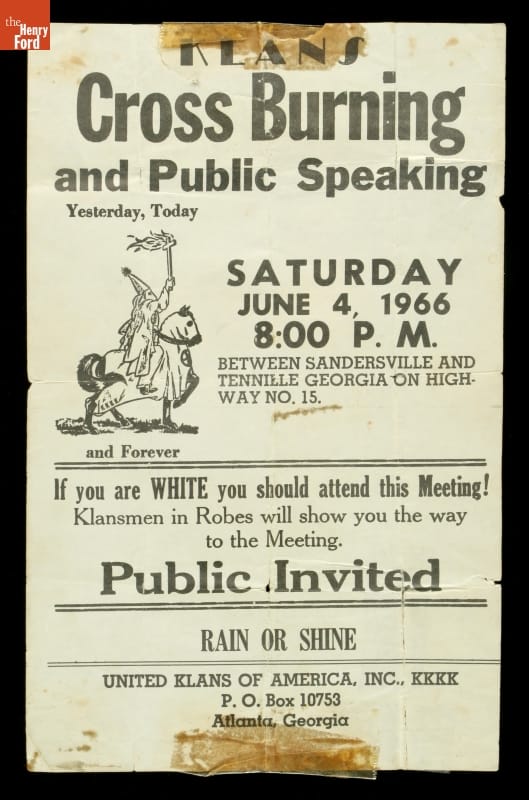
- Broadside,"Klans Cross Burning and Public Speaking," June 4, 1966 - This 1966 broadside urged those who were "WHITE" to attend a Ku Klux Klan cross burning in Georgia. The Klan created fear and produced violence and murders with the goal of preserving the supremacy of the "White Race." Their terror efforts ultimately failed to deter Americans, both black and white, from seeking equality.
- June 04, 1966
- Collections - Artifact
Broadside,"Klans Cross Burning and Public Speaking," June 4, 1966
This 1966 broadside urged those who were "WHITE" to attend a Ku Klux Klan cross burning in Georgia. The Klan created fear and produced violence and murders with the goal of preserving the supremacy of the "White Race." Their terror efforts ultimately failed to deter Americans, both black and white, from seeking equality.
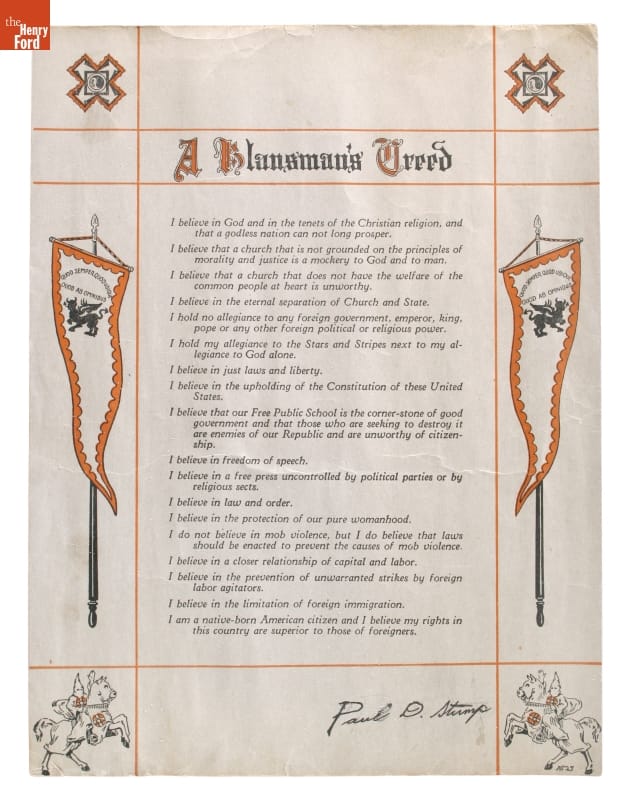
- Anti-immigrant Ku Klux Klan Creed, circa 1922 - Many native-born Americans viewed immigrants with fear at the beginning of the 20th century. Economic instability and social tensions were blamed on foreigners, and the "immigrant problem" became a national focus. This anti-immigrant document released from the Ku Klux Klan announces members' belief in protecting traditional American ideals from immigrants, reflecting the fear that many native-born Americans felt.
- circa 1922
- Collections - Artifact
Anti-immigrant Ku Klux Klan Creed, circa 1922
Many native-born Americans viewed immigrants with fear at the beginning of the 20th century. Economic instability and social tensions were blamed on foreigners, and the "immigrant problem" became a national focus. This anti-immigrant document released from the Ku Klux Klan announces members' belief in protecting traditional American ideals from immigrants, reflecting the fear that many native-born Americans felt.
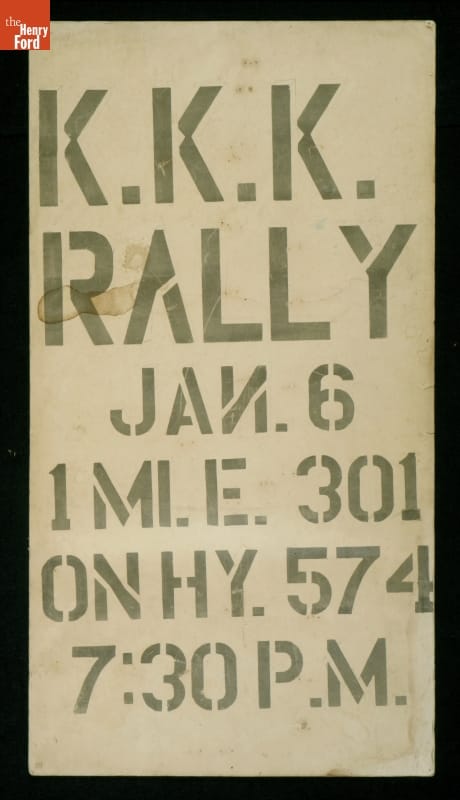
- Poster, "K.K.K. Rally," circa 1950 - This broadside from about 1950 announced a Ku Klux Klan rally. The Klan created fear and produced violence and murders with the goal of preserving the supremacy of the "White Race." Their terrorist efforts ultimately failed to deter Americans, both black and white, from seeking equality.
- circa 1950
- Collections - Artifact
Poster, "K.K.K. Rally," circa 1950
This broadside from about 1950 announced a Ku Klux Klan rally. The Klan created fear and produced violence and murders with the goal of preserving the supremacy of the "White Race." Their terrorist efforts ultimately failed to deter Americans, both black and white, from seeking equality.
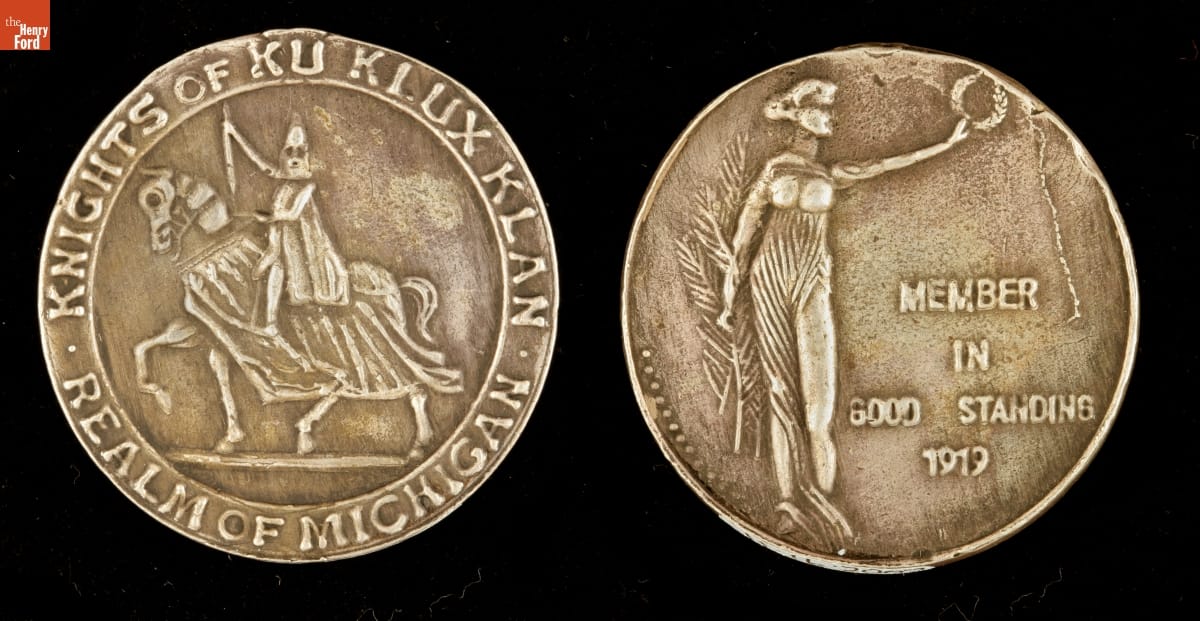
- Token, "Knights of Ku Klux Klan, Realm of Michigan, Member in Good Standing," 1919 - The Ku Klux Klan was reborn in the late 1910s and flourished but began to decline in the mid-1920s. It never completely disappeared, however. This token from 1919 shows a member's "good standing" in the KKK's Michigan realm. The innocuous figures (the hooded knight and goddess-like woman) belie the hatred, vigilantism, and violence found under the hood of the Klan.
- 1919
- Collections - Artifact
Token, "Knights of Ku Klux Klan, Realm of Michigan, Member in Good Standing," 1919
The Ku Klux Klan was reborn in the late 1910s and flourished but began to decline in the mid-1920s. It never completely disappeared, however. This token from 1919 shows a member's "good standing" in the KKK's Michigan realm. The innocuous figures (the hooded knight and goddess-like woman) belie the hatred, vigilantism, and violence found under the hood of the Klan.
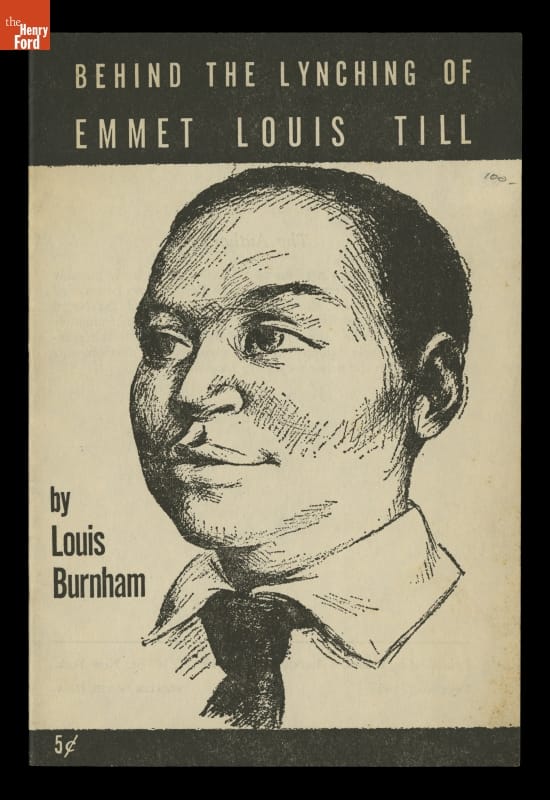
- Brochure, "Behind the Lynching of Emmet Louis Till," 1955 - In August 1955, a Black fourteen-year-old boy named Emmett Till was abducted from a relative's house while visiting family in Mississippi. Two white men accused him of teasing a white woman and lynched Till as punishment--his mutilated corpse was later pulled from the Tallahatchie River. An all-white jury found his murderers--who later admitted to the act--not guilty. The murder and acquittal were evidence of the Deep South's violent social codes. Till's mother insisted on displaying her son's disfigured body in an open casket for all to see. Outrage spurred community organization that ignited the modern Civil Rights movement.
- December 01, 1955
- Collections - Artifact
Brochure, "Behind the Lynching of Emmet Louis Till," 1955
In August 1955, a Black fourteen-year-old boy named Emmett Till was abducted from a relative's house while visiting family in Mississippi. Two white men accused him of teasing a white woman and lynched Till as punishment--his mutilated corpse was later pulled from the Tallahatchie River. An all-white jury found his murderers--who later admitted to the act--not guilty. The murder and acquittal were evidence of the Deep South's violent social codes. Till's mother insisted on displaying her son's disfigured body in an open casket for all to see. Outrage spurred community organization that ignited the modern Civil Rights movement.
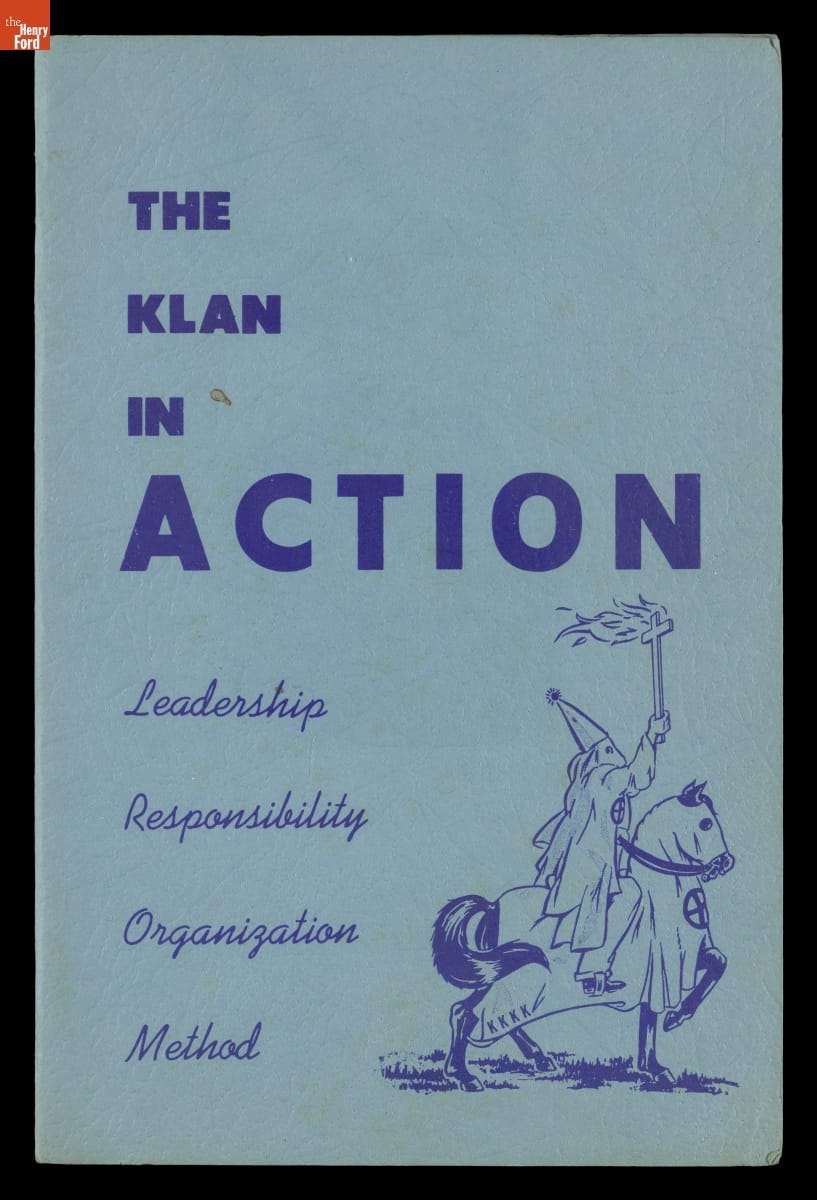
- "The Klan in Action: Leadership, Responsibility, Organization, Method," 1960-1961 - This pamphlet lays out the organizational structure of the Ku Klux Klan. It reads like many fraternal organizational by-laws (complete with made-up leadership terms.) However, the true purpose behind the organization is not mentioned. The pamphlet ignores the underlying belief in white supremacy on which the order was founded, and the hatred, vigilantism, and violence employed to meet that un-American goal.
- 1960-1961
- Collections - Artifact
"The Klan in Action: Leadership, Responsibility, Organization, Method," 1960-1961
This pamphlet lays out the organizational structure of the Ku Klux Klan. It reads like many fraternal organizational by-laws (complete with made-up leadership terms.) However, the true purpose behind the organization is not mentioned. The pamphlet ignores the underlying belief in white supremacy on which the order was founded, and the hatred, vigilantism, and violence employed to meet that un-American goal.