
Search
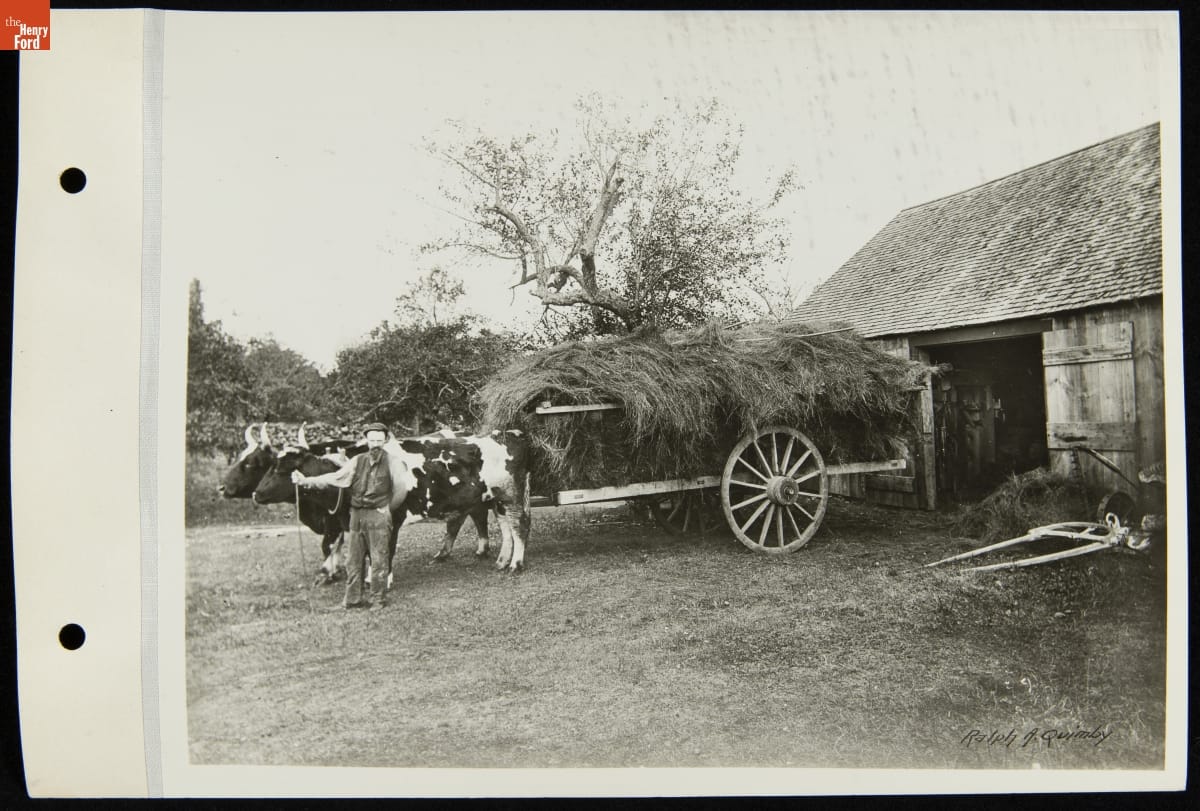
- Hay Wagon Drawn by Oxen, York, Maine, 1890 -
- April 16, 1929
- Collections - Artifact
Hay Wagon Drawn by Oxen, York, Maine, 1890
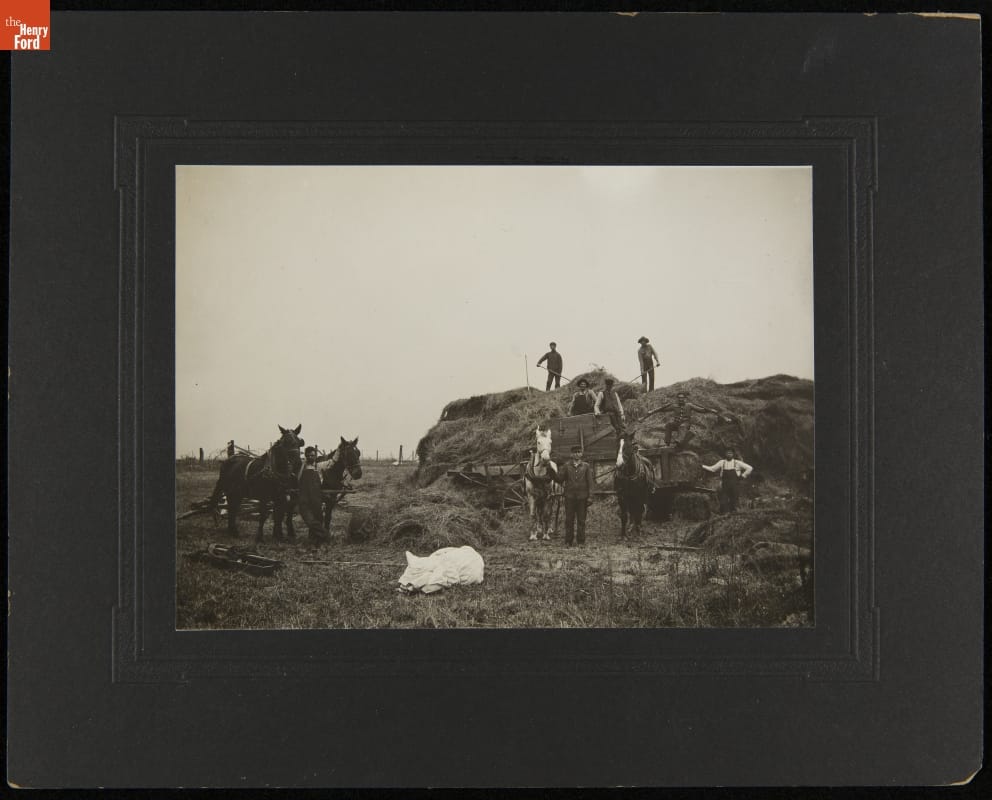
- Photograph, "Hay Press and Work Crew," 1915-1925 -
- 1915-1925
- Collections - Artifact
Photograph, "Hay Press and Work Crew," 1915-1925
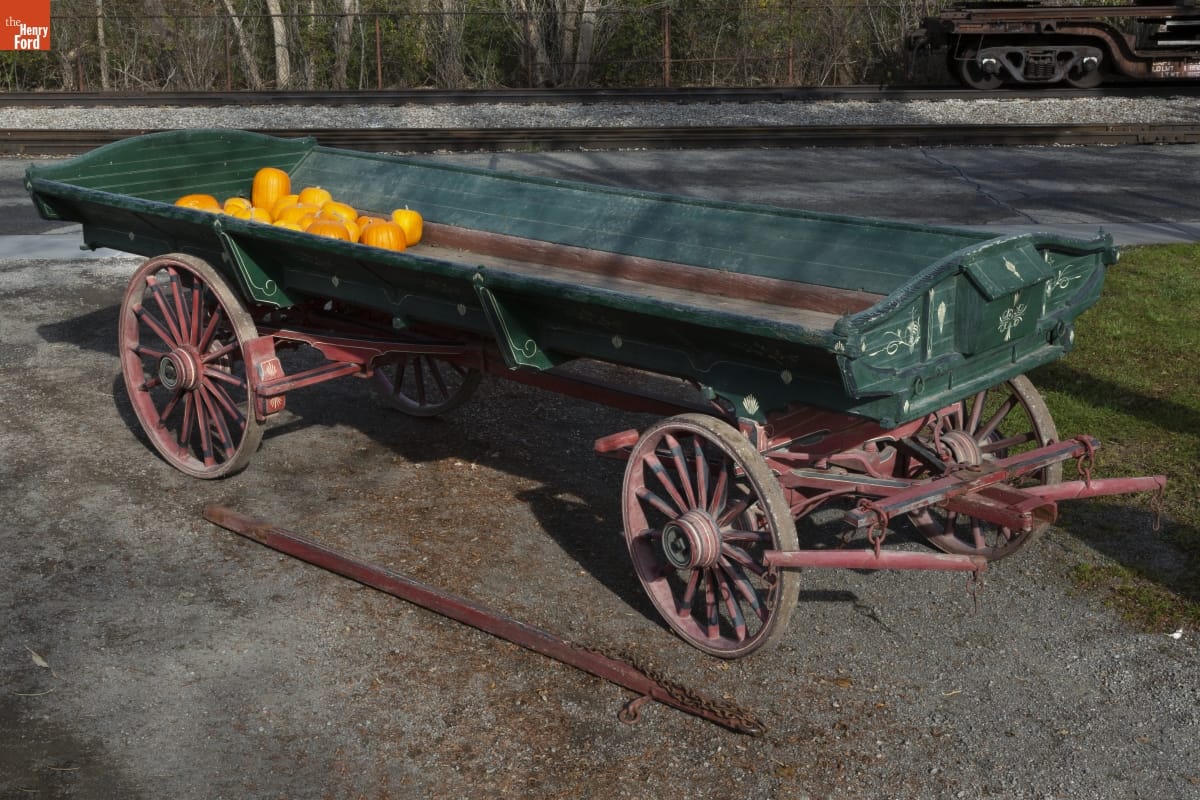
- Pennyslvania-Style Hay Wagon, 1911 - Farmers used hay, made of dried grasses, to feed their livestock when pastures were covered in snow or affected by drought. Wagons like this one, with its shallow boat-shaped body, carried hay from the fields to the barn for storage. The Gruber Wagon Works of Pennsylvania built this wagon for Isaac Speicher in May 1911.
- May 01, 1911
- Collections - Artifact
Pennyslvania-Style Hay Wagon, 1911
Farmers used hay, made of dried grasses, to feed their livestock when pastures were covered in snow or affected by drought. Wagons like this one, with its shallow boat-shaped body, carried hay from the fields to the barn for storage. The Gruber Wagon Works of Pennsylvania built this wagon for Isaac Speicher in May 1911.
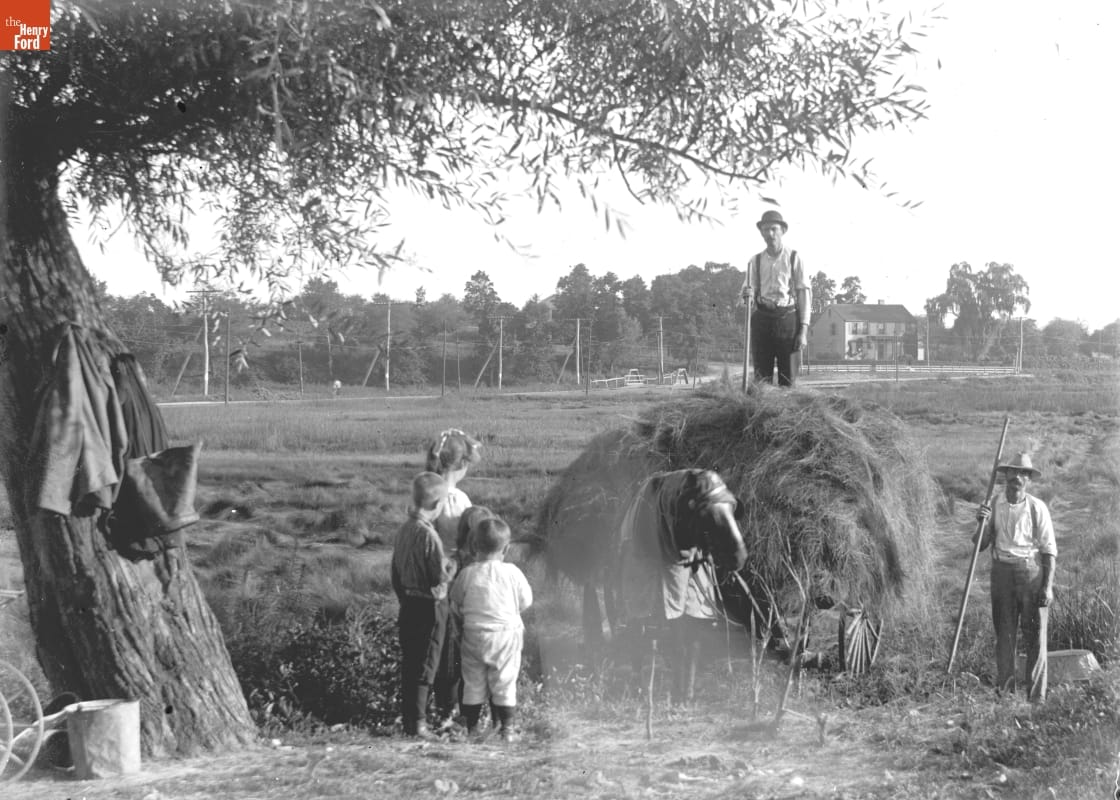
- Hay Wagon Coming up from a Meadow, Flushing, New York, circa 1900 - This photographic negative gives a glimpse of farm life circa 1900. Most farms were family operations and everyone, including children, had a job to do. People and horses were the primary power sources for most farm work. But technology, like electricity, was becoming more widely available, even in rural in farmhouses.
- circa 1900
- Collections - Artifact
Hay Wagon Coming up from a Meadow, Flushing, New York, circa 1900
This photographic negative gives a glimpse of farm life circa 1900. Most farms were family operations and everyone, including children, had a job to do. People and horses were the primary power sources for most farm work. But technology, like electricity, was becoming more widely available, even in rural in farmhouses.
- Haying on the Meadows, Northfield, Massachusetts, circa 1900 - Oxen were the main source of power on many American farms before the development of portable steam and internal combustion engines. Farmers making hay might use oxen to haul loaded wagons (as shown here) or other haying equipment including mowers, rakes, tedders, and loaders. Using specially designed treadmills, oxen could also power presses and operate hay forks.
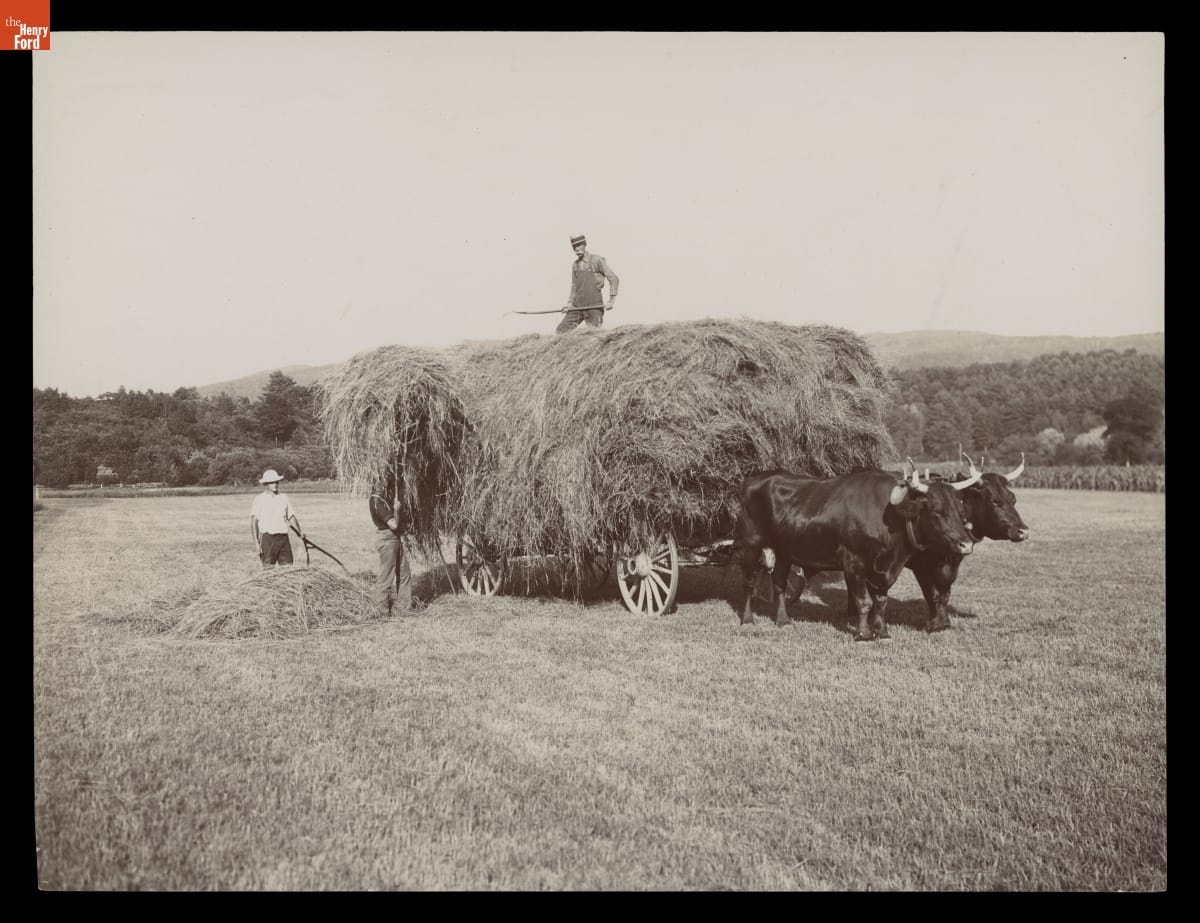
- circa 1900
- Collections - Artifact
Haying on the Meadows, Northfield, Massachusetts, circa 1900
Oxen were the main source of power on many American farms before the development of portable steam and internal combustion engines. Farmers making hay might use oxen to haul loaded wagons (as shown here) or other haying equipment including mowers, rakes, tedders, and loaders. Using specially designed treadmills, oxen could also power presses and operate hay forks.
- "Herald," Volume VI, February 11, 1939 to January 19, 1940 - The students of the Greenfield Village and Associated Schools of the Edison Institute began publishing the <em>Herald</em> in 1934. They took the name from a weekly newspaper printed and sold by Thomas Alva Edison when he worked for the Grand Trunk Railroad in 1862-63. The students' version included articles on academic, social, and recreational activities. The publication continued until 1952.
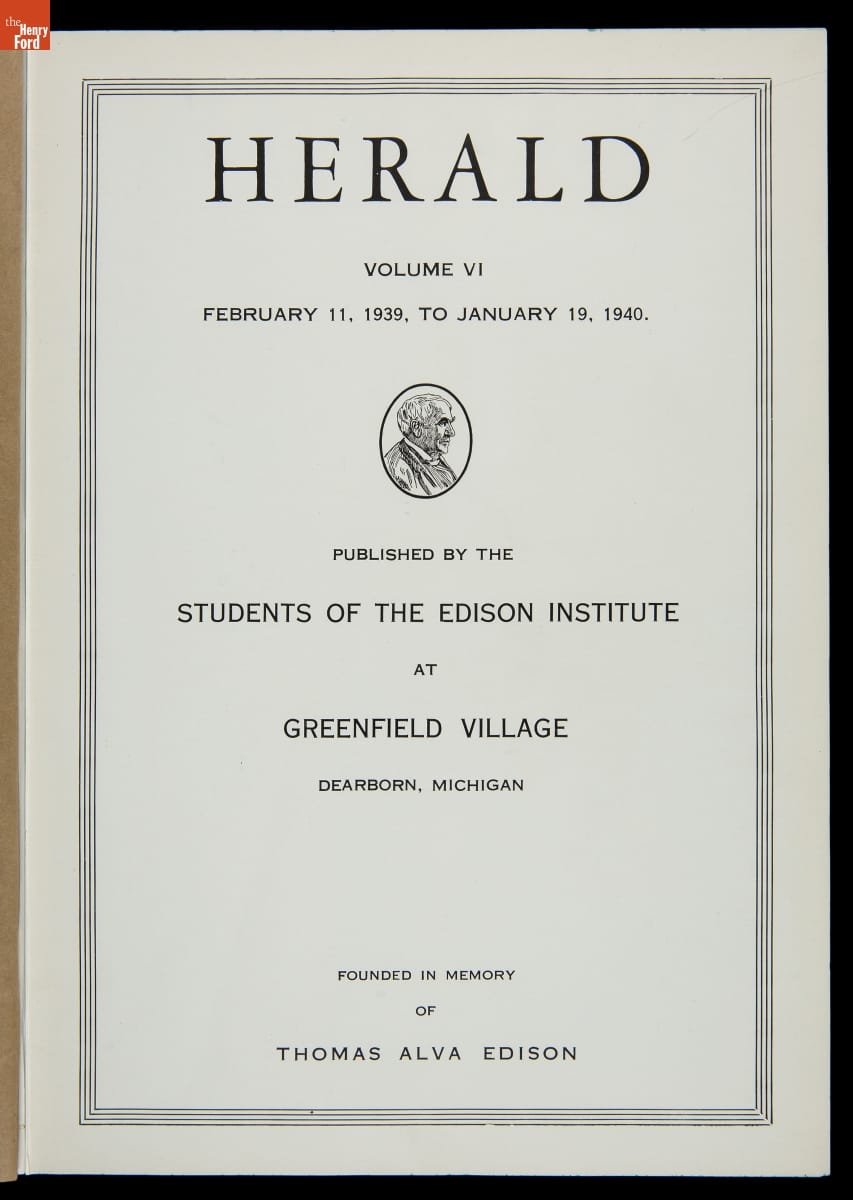
- 11 February 1939-19 January 1940
- Collections - Artifact
"Herald," Volume VI, February 11, 1939 to January 19, 1940
The students of the Greenfield Village and Associated Schools of the Edison Institute began publishing the Herald in 1934. They took the name from a weekly newspaper printed and sold by Thomas Alva Edison when he worked for the Grand Trunk Railroad in 1862-63. The students' version included articles on academic, social, and recreational activities. The publication continued until 1952.
- Hay Wagon Drawn by Oxen, York, Maine, 1890 -
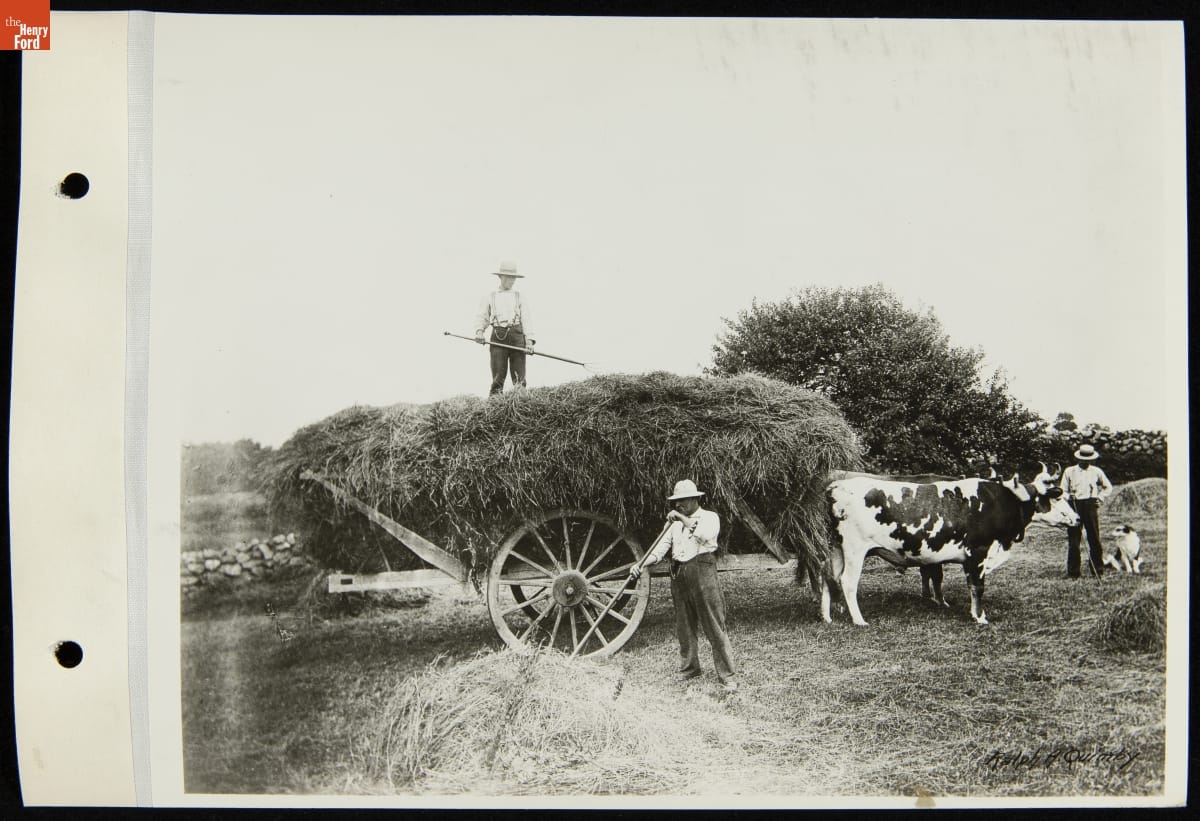
- April 16, 1929
- Collections - Artifact
Hay Wagon Drawn by Oxen, York, Maine, 1890
- Oxen Team Pulling a Hay Wagon in a Parade, July 4, 1940 -
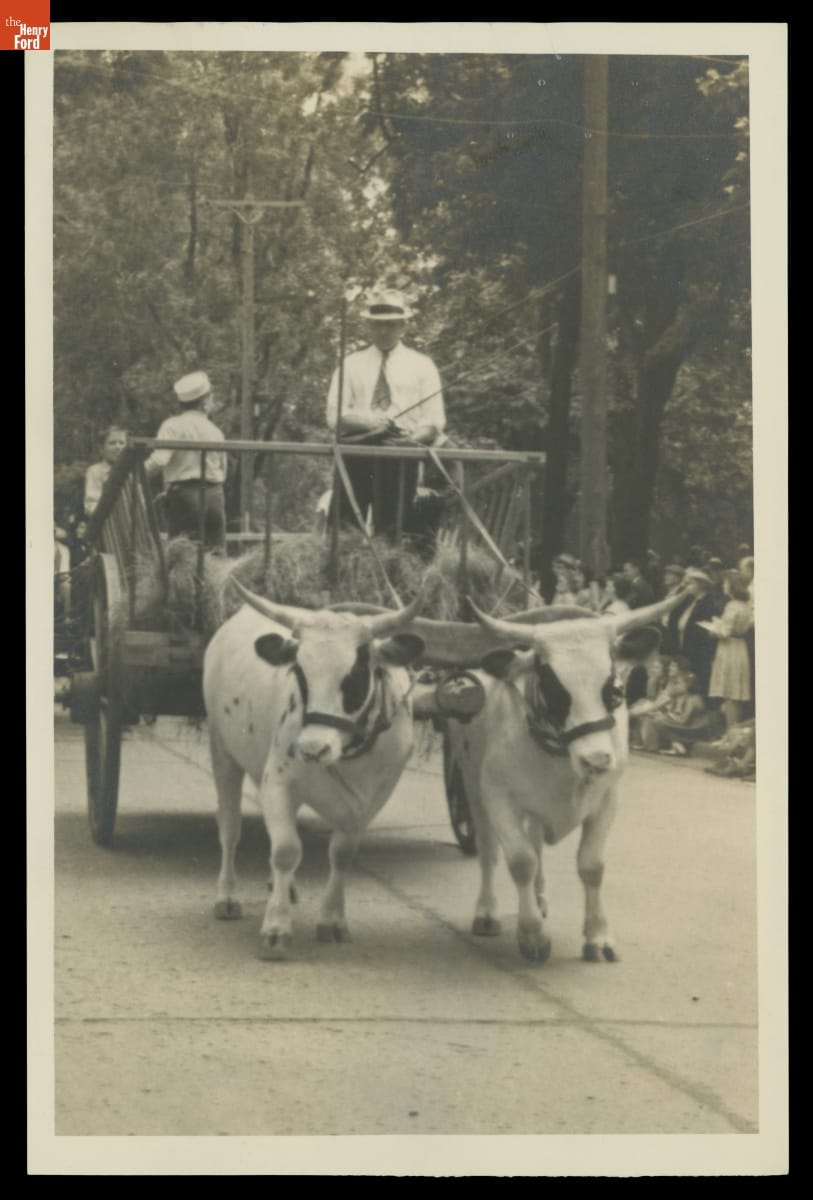
- July 04, 1940
- Collections - Artifact
Oxen Team Pulling a Hay Wagon in a Parade, July 4, 1940
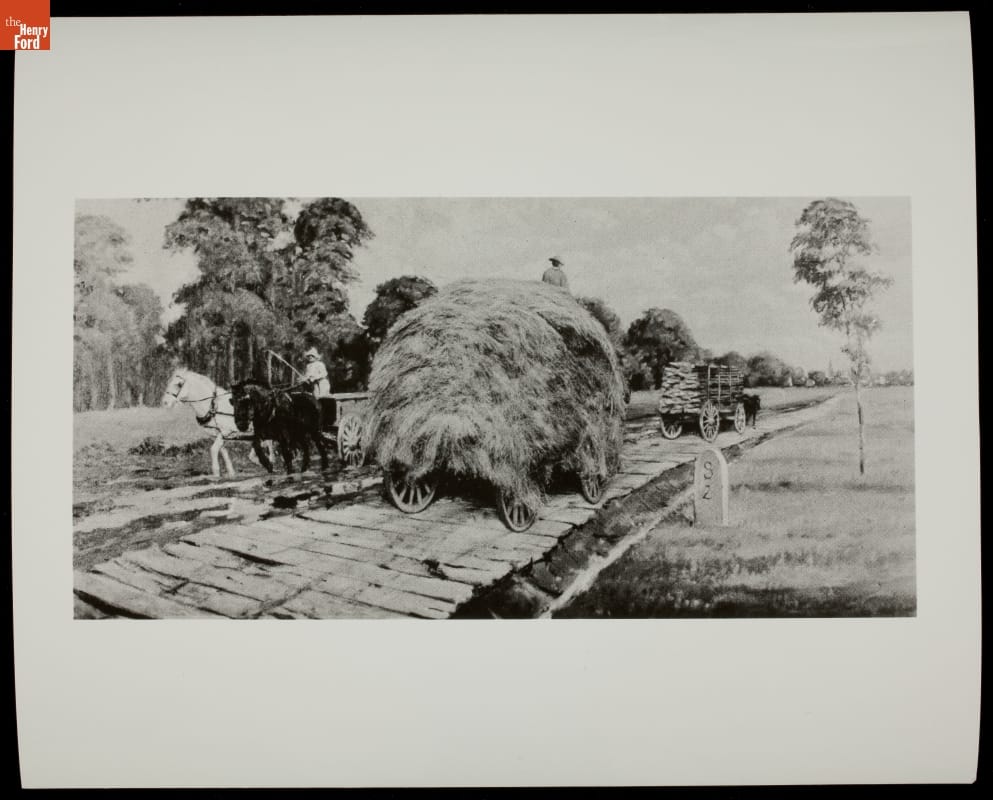
- Photo of Graphic Depicting a Loaded Hay Wagon on a Wooden Road, circa 1845 - Popular Mechanics selected this illustration for its 1952 <EM>Picture History of American Transportation</EM>. The image depicts poor American road conditions, which the book cites as a primary cause for the development of canals throughout the country in the 1800s.
- circa 1845
- Collections - Artifact
Photo of Graphic Depicting a Loaded Hay Wagon on a Wooden Road, circa 1845
Popular Mechanics selected this illustration for its 1952 Picture History of American Transportation. The image depicts poor American road conditions, which the book cites as a primary cause for the development of canals throughout the country in the 1800s.
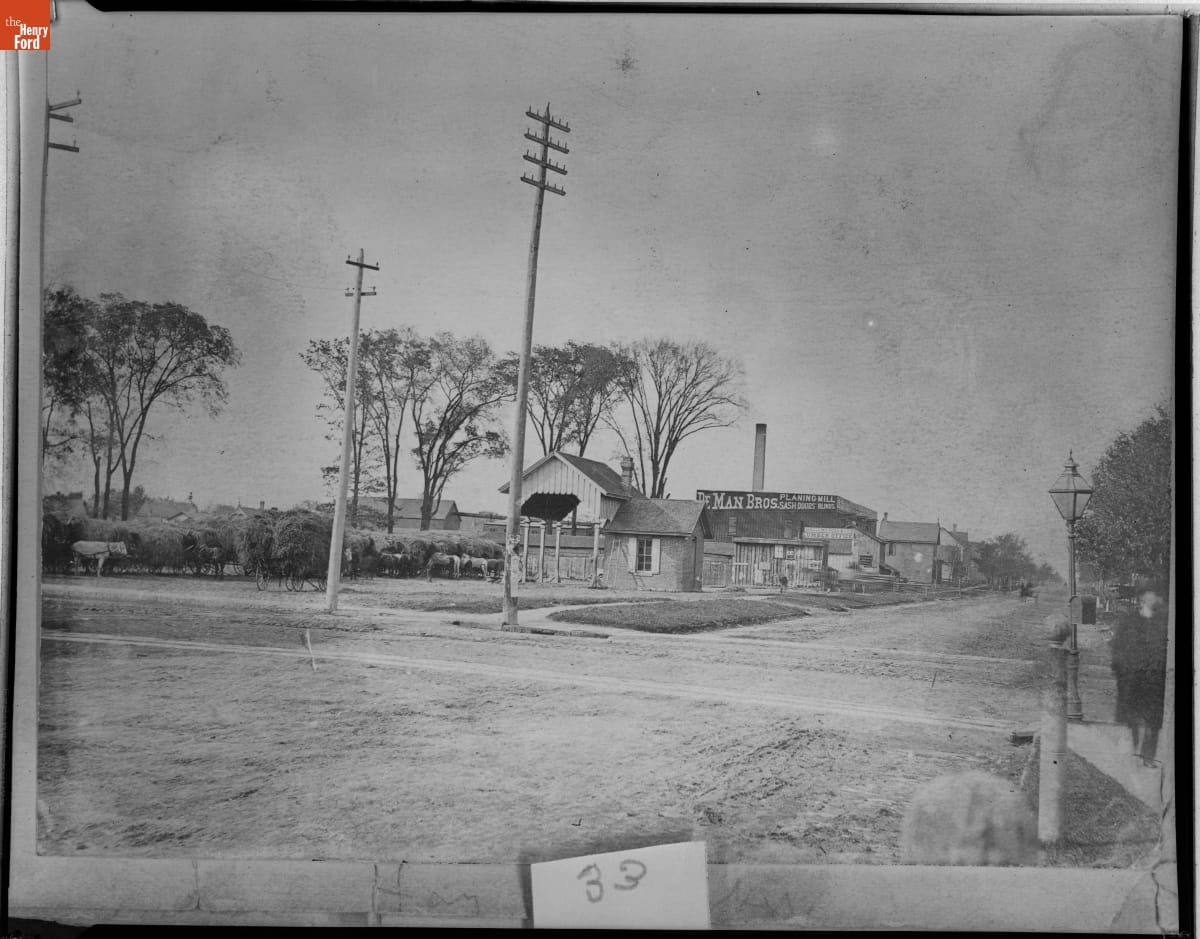
- The Hay Market and DeMan Bros. Lumberyard, Detroit, Michigan, 1880-1890 -
- 1880-1890
- Collections - Artifact
The Hay Market and DeMan Bros. Lumberyard, Detroit, Michigan, 1880-1890