
Hay Wagon Coming up from a Meadow, Flushing, New York, circa 1900
THF38312 / Hay Wagon Coming up from a Meadow, Flushing, New York, circa 1900
01
Artifact Overview
This photographic negative gives a glimpse of farm life circa 1900. Most farms were family operations and everyone, including children, had a job to do. People and horses were the primary power sources for most farm work. But technology, like electricity, was becoming more widely available, even in rural in farmhouses.
Artifact Details
Artifact
Negative (Photograph)
Subject Date
circa 1900
Creators
Place of Creation
Collection Title
Location
By Request in the Benson Ford Research Center
Object ID
32.351.312
Credit
From the Collections of The Henry Ford. Gift of Betty R. K. Pierce.
Material
Glass (Material)
Technique
Gelatin dry plate process
Dimensions
Height: 5 in
Width: 5 in
Keywords |
|---|
02
Related Content
 Set
SetAmerica's Industrial Revolution
- 61 Artifacts
The Model T's distinction as a landmark car design can be traced in large part to machines like this -- a high capacity precision machine tool that performed just two production steps on the car engine's cylinder block. The Model T as a design achievement is inseparable from many hundreds of engineering, materials, and production innovations.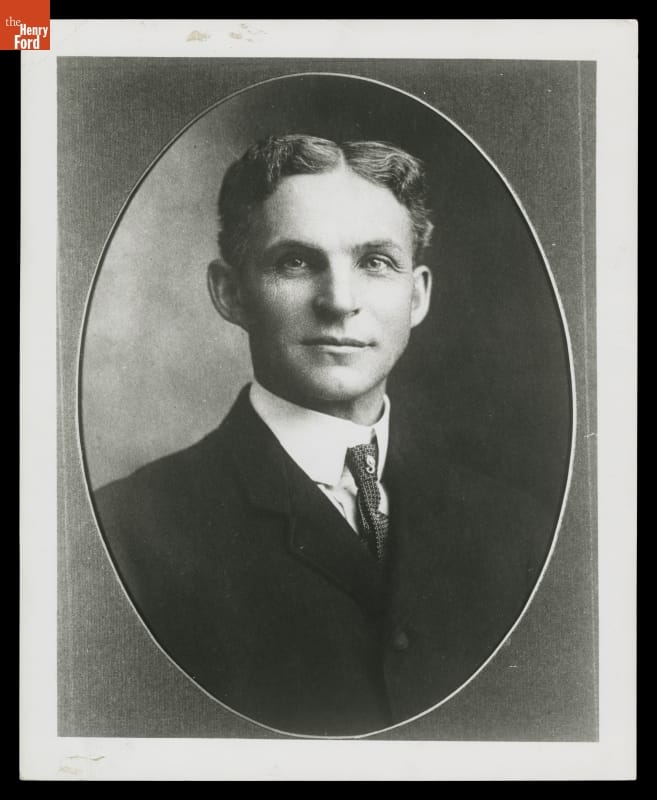 Set
SetLesson: Urbanization
- 7 Artifacts
Henry Ford sat for the official Ford Motor Company portrait in 1904. The company was his third. Ford had success in building cars, but his first company failed and he was forced out of the second. By the time this portrait was taken, Ford Motor Company had survived its first year and was selling its first cars, the Model A.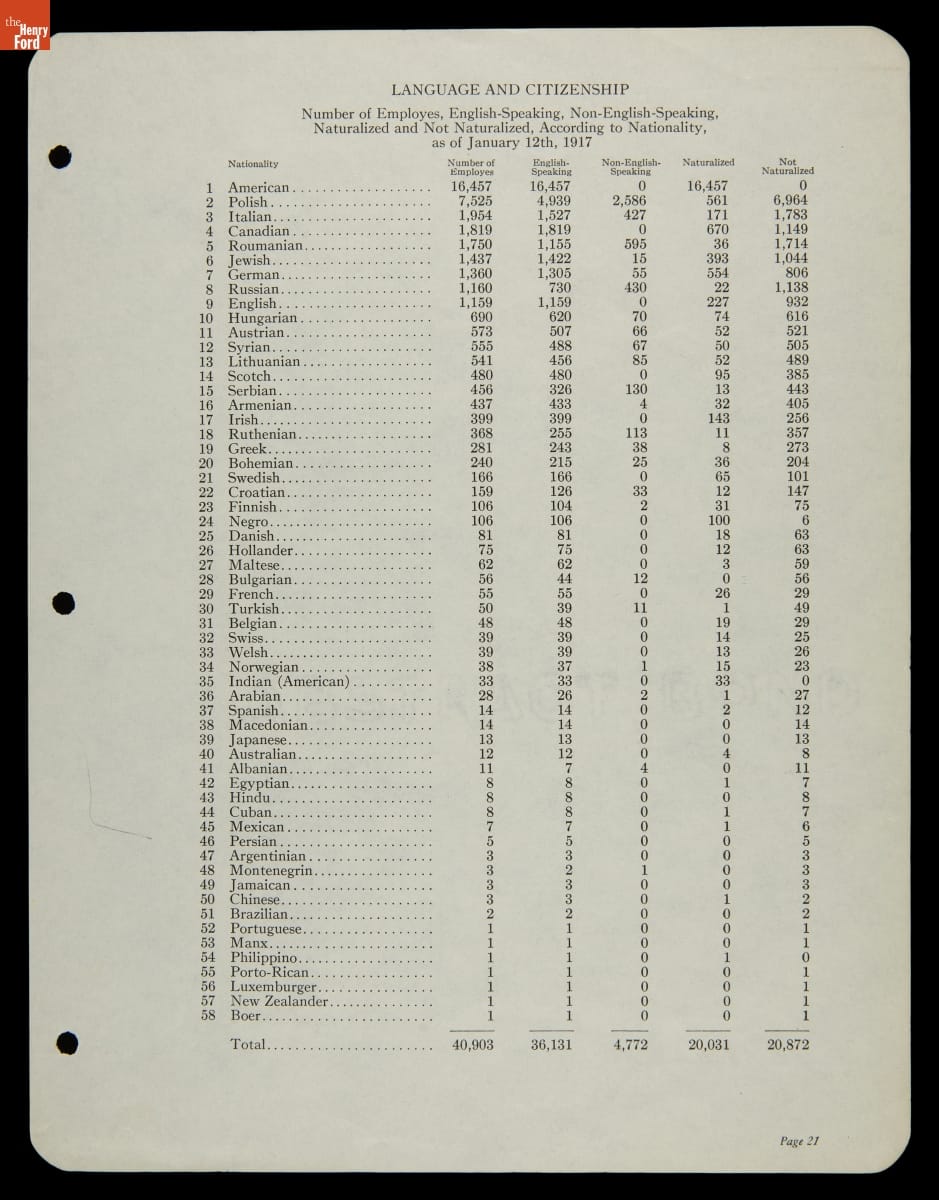 Set
SetLesson: Finding Jobs, Finding Problems
- 12 Artifacts
This document is from the publication "Educational Statistics Home Plant, as of January 12th, 1917." It classifies employees by nationality as English speakers and American citizens. The document was produced by the Ford Sociological (or Educational) Department, which ensured that employees were responsible with their pay. Ford required workers to learn English in order to earn the $5 per day wage.