
Search
- Hay Knife - Farm families cut and cured enough grass each summer to feed hay to their livestock all winter. Stored hay settled over time and farmers used special knives made by blacksmiths to cut out chunks for feed. The smiths forged wrought-iron blades with a long cutting edge. The wooden handle was set on a tang (a pointed metal extension of the handle) and secured with a metal collar for durability.
- Collections - Artifact
Hay Knife
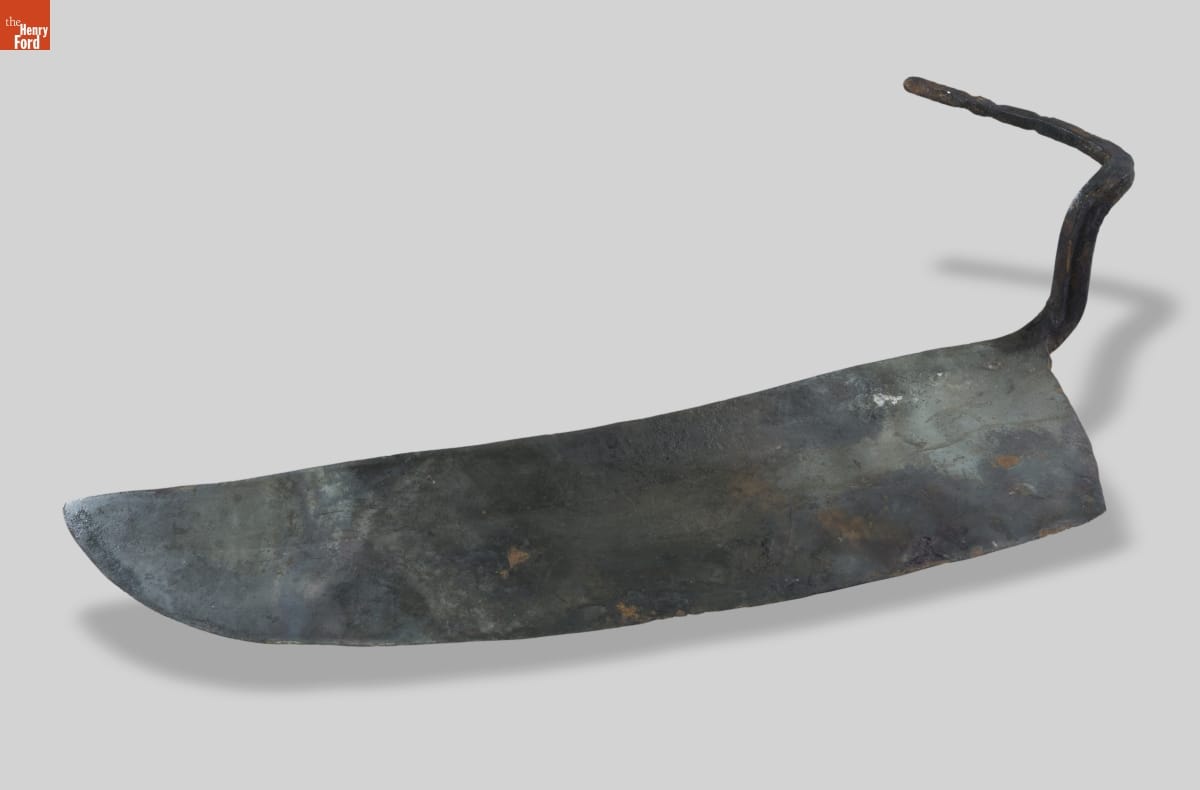
Farm families cut and cured enough grass each summer to feed hay to their livestock all winter. Stored hay settled over time and farmers used special knives made by blacksmiths to cut out chunks for feed. The smiths forged wrought-iron blades with a long cutting edge. The wooden handle was set on a tang (a pointed metal extension of the handle) and secured with a metal collar for durability.
- Hay Rake, 1825-1835 - This rake was common from the 1700s to the 1840s. Two horses dragged the rake over the field, reducing physical labor and time needed to harvest the scythe-cut hay. A farmer or a field hand walked behind holding the two wooden handles to keep the rake's teeth parallel to the ground. The operator stopped periodically and tipped the rake to deposit the hay into windrows.
- 1825-1835
- Collections - Artifact
Hay Rake, 1825-1835
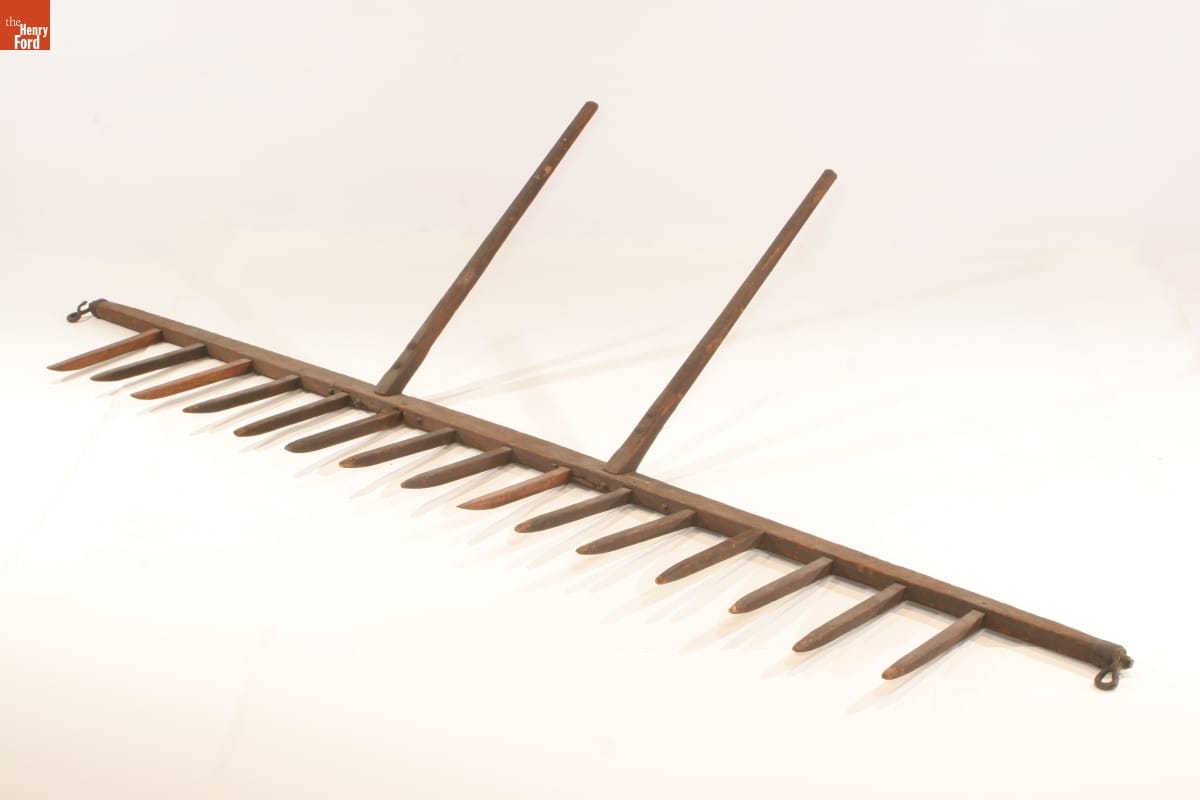
This rake was common from the 1700s to the 1840s. Two horses dragged the rake over the field, reducing physical labor and time needed to harvest the scythe-cut hay. A farmer or a field hand walked behind holding the two wooden handles to keep the rake's teeth parallel to the ground. The operator stopped periodically and tipped the rake to deposit the hay into windrows.
- Hay Knife, circa 1850 -
- circa 1850
- Collections - Artifact
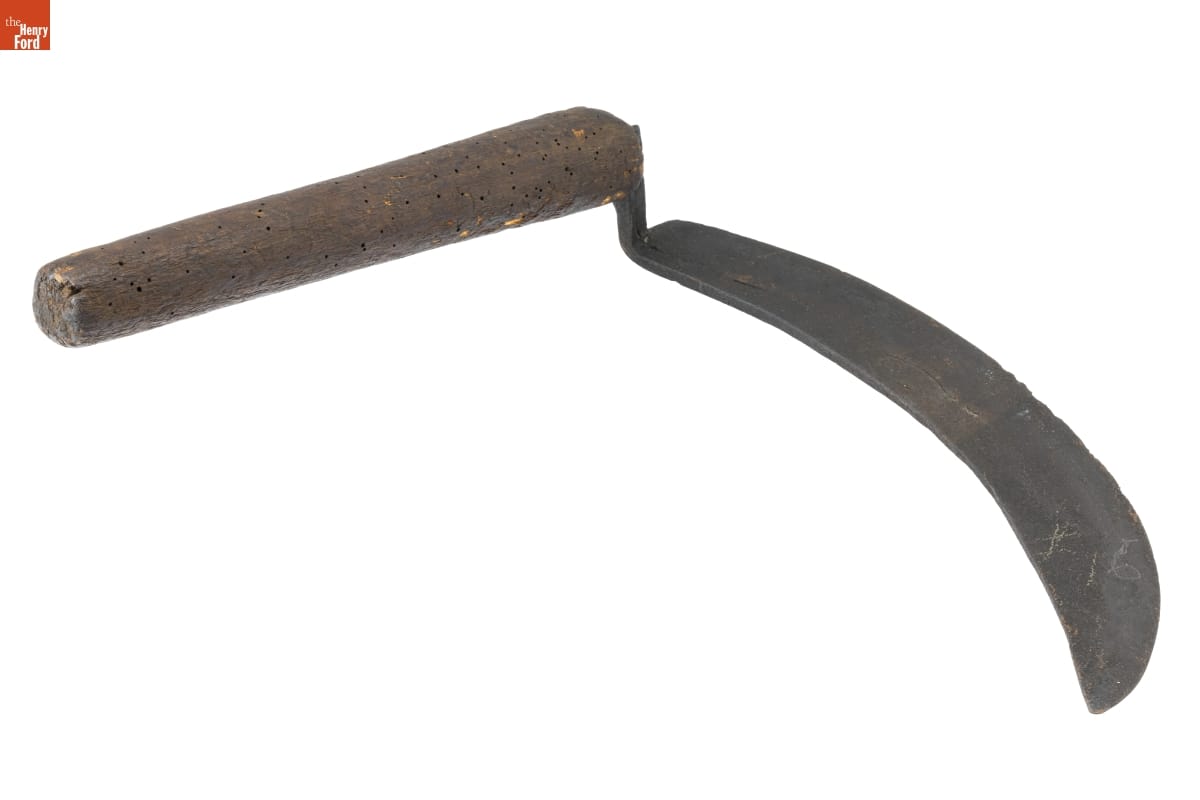
Hay Knife, circa 1850
- Hay Hook, circa 1850 -
- circa 1850
- Collections - Artifact
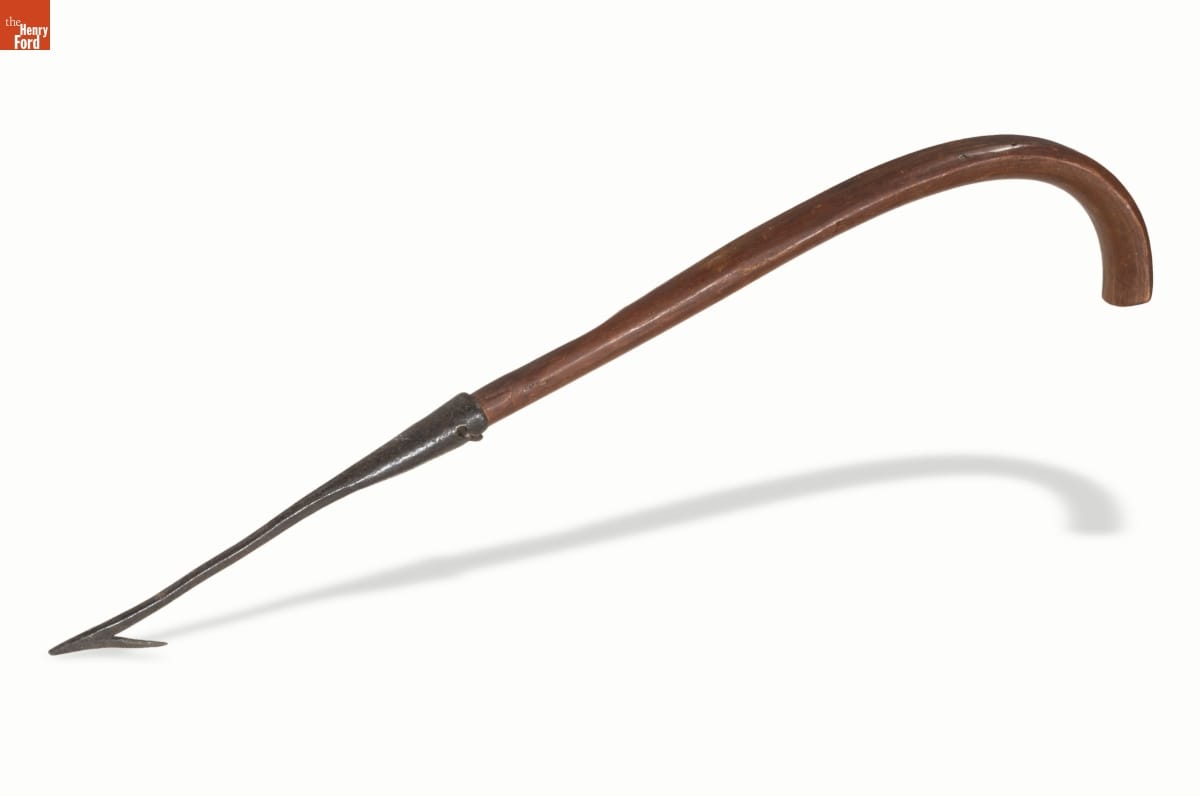
Hay Hook, circa 1850
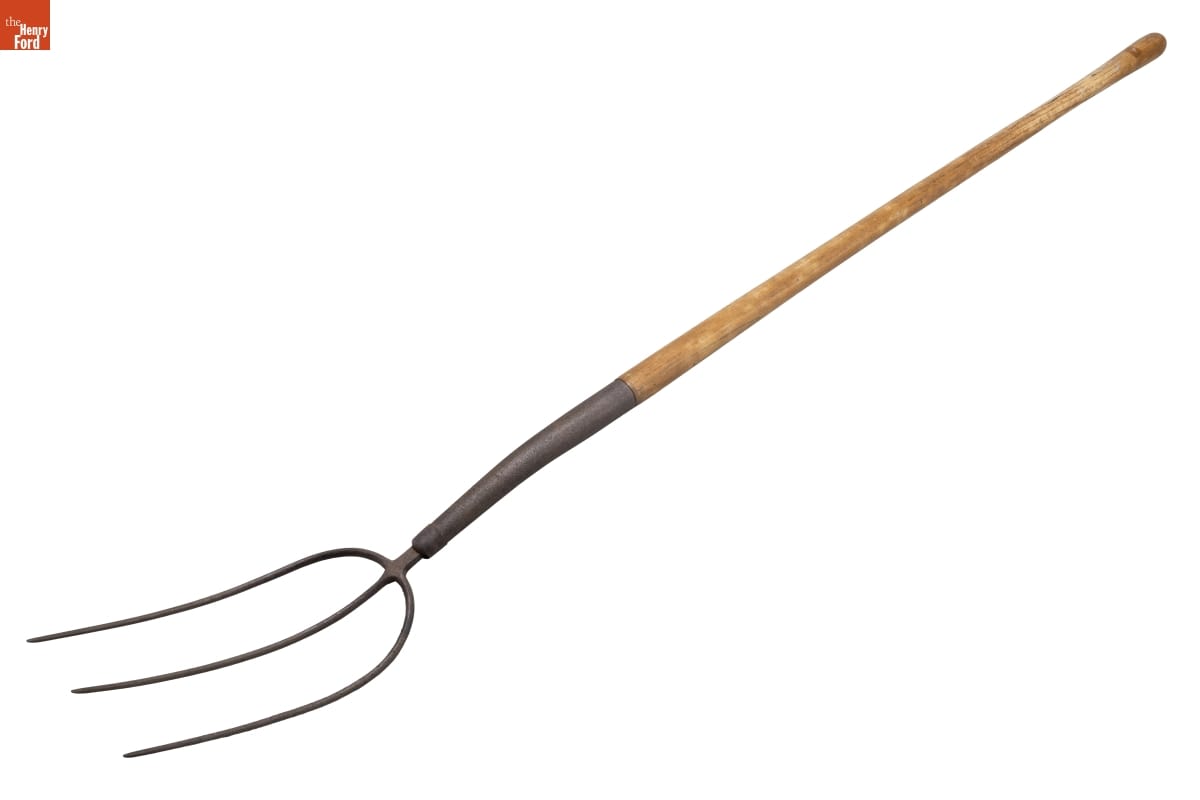
- Hay Fork, circa 1880 -
- circa 1880
- Collections - Artifact
Hay Fork, circa 1880
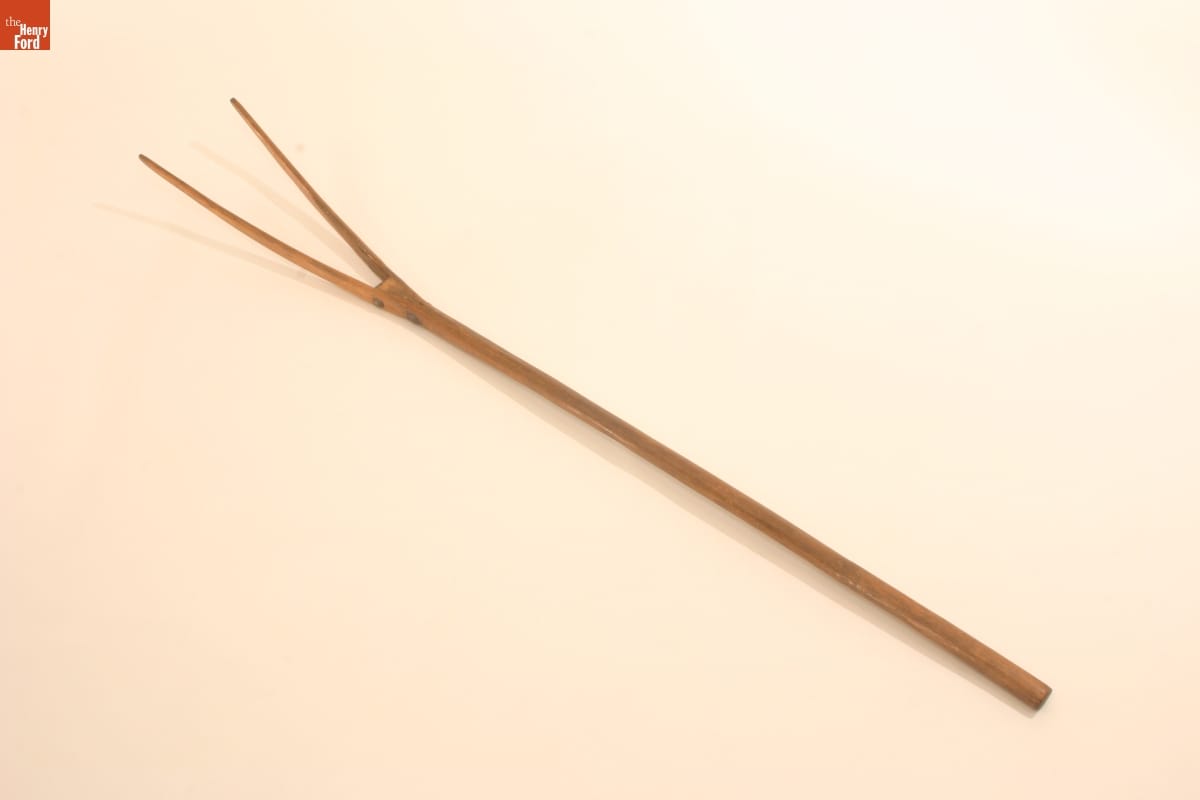
- Pitchfork, circa 1870 - Forks worked as extensions of farmers' arms, allowing them to skewer, lift, and move larger quantities of grain, straw or hay than they could do with just their hands. This fork started as a square wooden piece of ash or hickory. Riving (or separating) one end and bending the tines (or points) created two- and three-tine forks that farmers used to move bundles of grain or hay cut from stacks.
- circa 1870
- Collections - Artifact
Pitchfork, circa 1870
Forks worked as extensions of farmers' arms, allowing them to skewer, lift, and move larger quantities of grain, straw or hay than they could do with just their hands. This fork started as a square wooden piece of ash or hickory. Riving (or separating) one end and bending the tines (or points) created two- and three-tine forks that farmers used to move bundles of grain or hay cut from stacks.
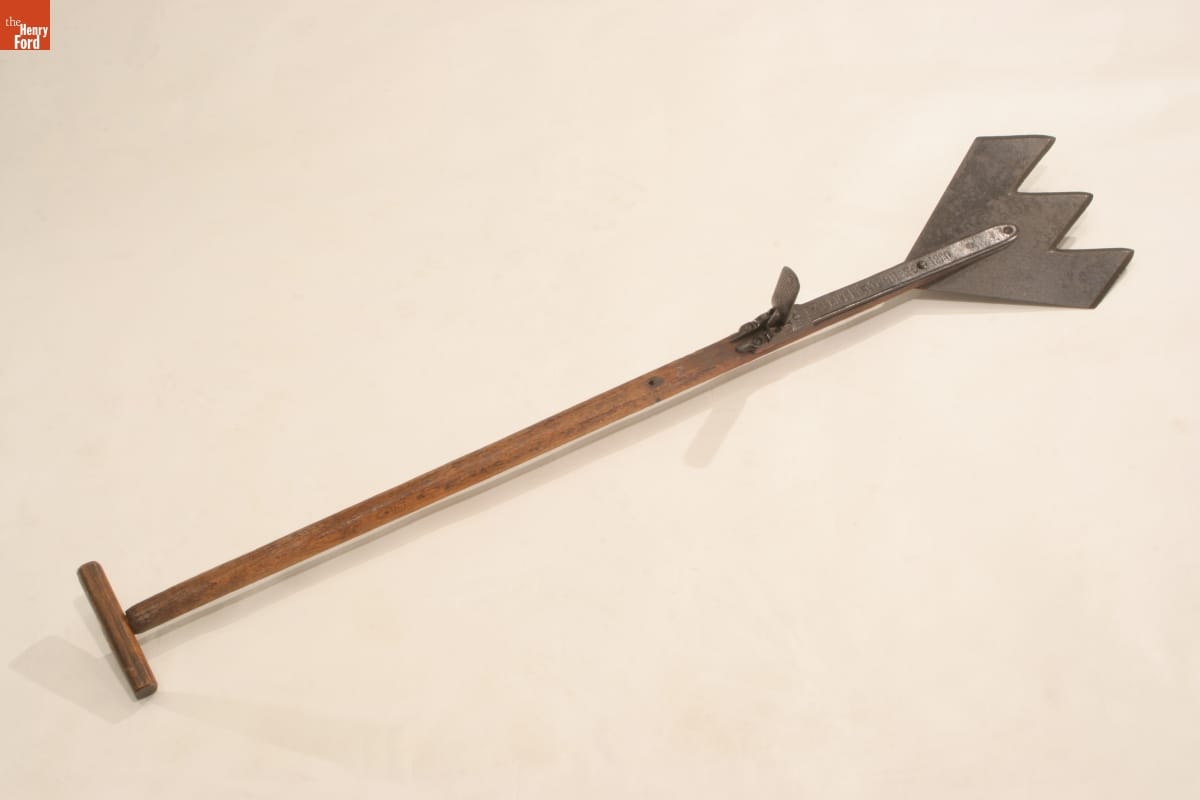
- Hay Knife, circa 1885 - Farm families cut and cured enough grass each summer to make hay to feed their livestock all winter. Stored hay settled over time and farmers used special knives to cut out chunks for feed. Daison E. Haskell's invention added a hinged footrest to the shaft of a knife. Farmers stepped on Haskell's pedal and forced the cutting edge deeper into the haystack. This hay knife resembles Henry O. Turner's 1878 design.
- circa 1885
- Collections - Artifact
Hay Knife, circa 1885
Farm families cut and cured enough grass each summer to make hay to feed their livestock all winter. Stored hay settled over time and farmers used special knives to cut out chunks for feed. Daison E. Haskell's invention added a hinged footrest to the shaft of a knife. Farmers stepped on Haskell's pedal and forced the cutting edge deeper into the haystack. This hay knife resembles Henry O. Turner's 1878 design.
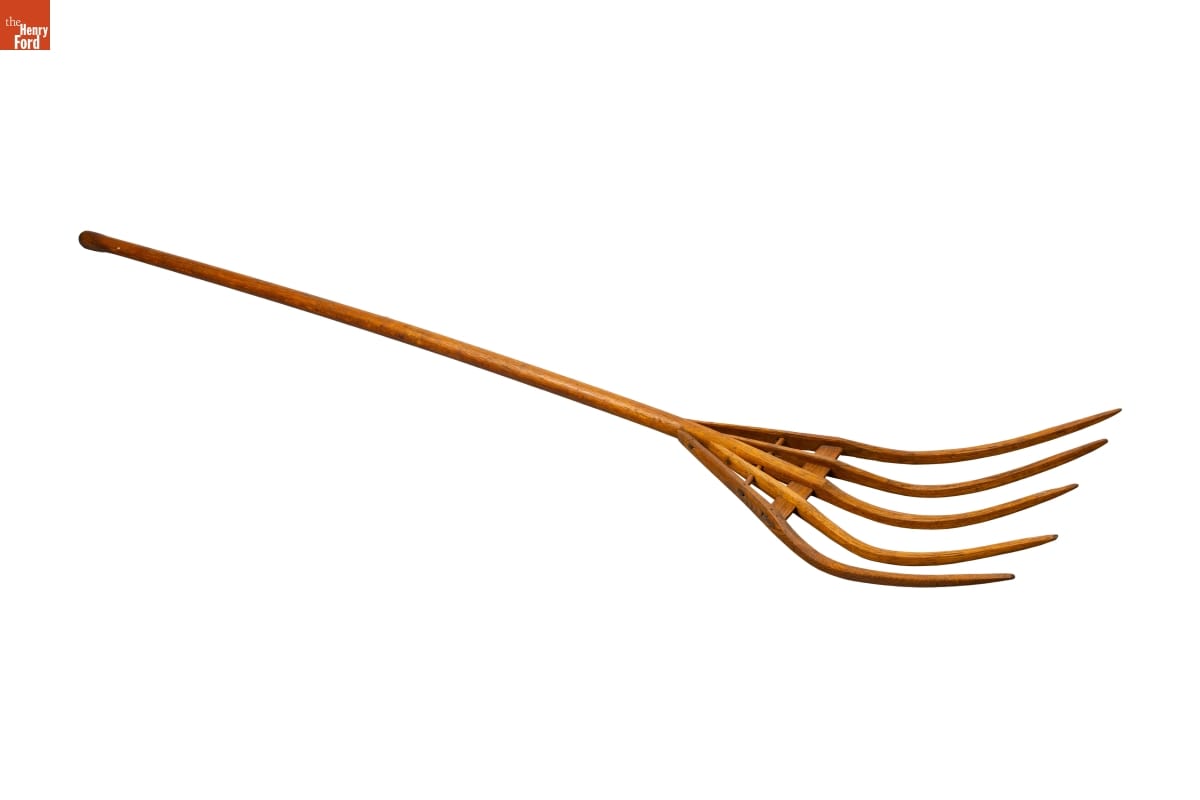
- Hay Fork, circa 1885 -
- circa 1885
- Collections - Artifact
Hay Fork, circa 1885
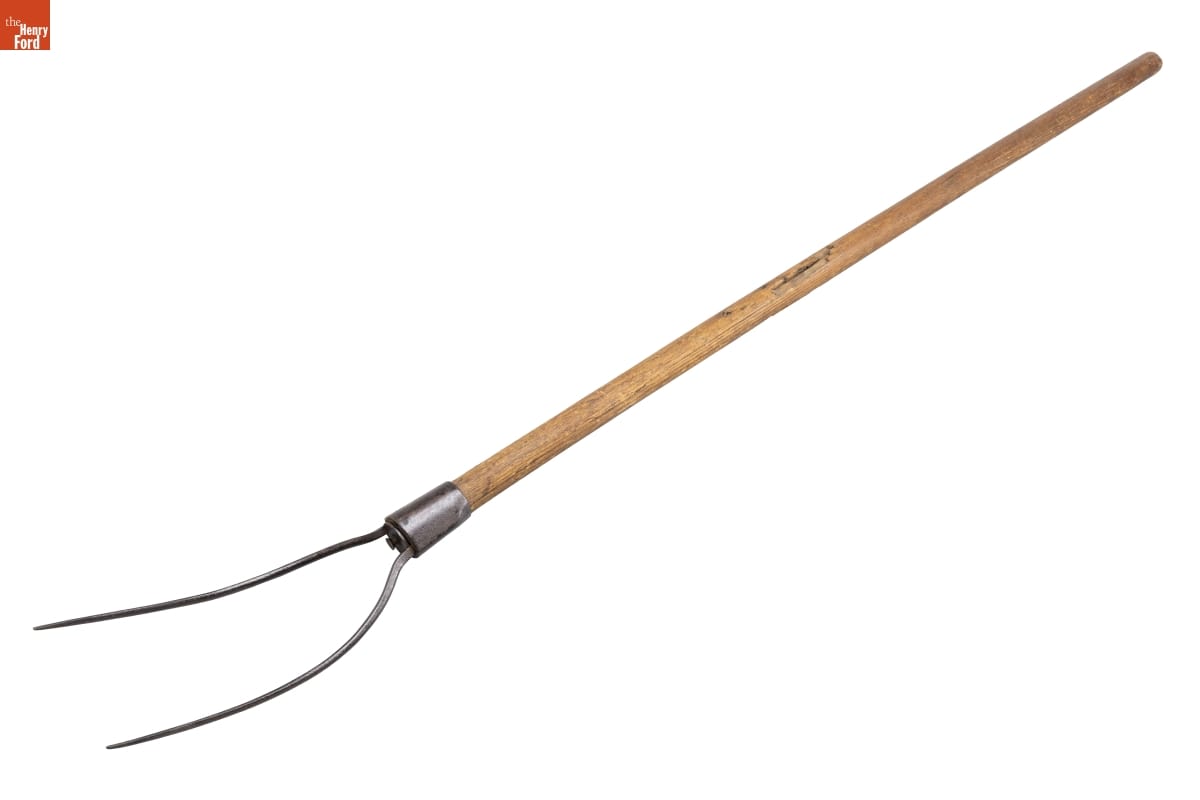
- Sheaf Fork, circa 1875 - Pitchforks worked as extensions of farmers' arms, allowing them to skewer, lift, and move larger quantities of hay, sheaves of grain, or straw than they could do with just their hands. They used different fork designs for different jobs. Two- and three-tine forks like this (with short metal points) worked best to pitch bundles of grain from field to wagon to thresher.
- circa 1875
- Collections - Artifact
Sheaf Fork, circa 1875
Pitchforks worked as extensions of farmers' arms, allowing them to skewer, lift, and move larger quantities of hay, sheaves of grain, or straw than they could do with just their hands. They used different fork designs for different jobs. Two- and three-tine forks like this (with short metal points) worked best to pitch bundles of grain from field to wagon to thresher.
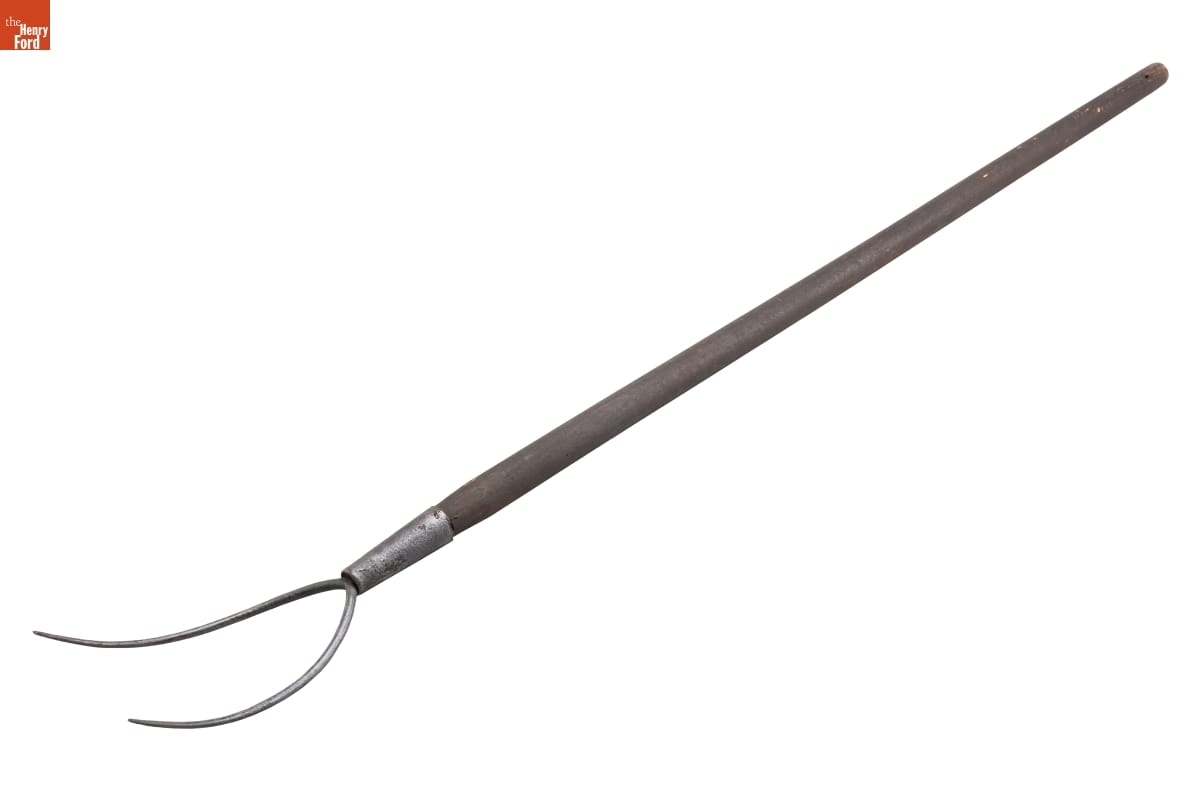
- Sheaf Fork - Pitchforks worked as extensions of farmers' arms, allowing them to skewer, lift, and move larger quantities of hay, sheaves of grain, or straw than they could do with just their hands. They used different fork designs for different jobs. Two- and three-tine forks like this (with short metal points) worked best to pitch bundles of grain from field to wagon to thresher.
- Collections - Artifact
Sheaf Fork
Pitchforks worked as extensions of farmers' arms, allowing them to skewer, lift, and move larger quantities of hay, sheaves of grain, or straw than they could do with just their hands. They used different fork designs for different jobs. Two- and three-tine forks like this (with short metal points) worked best to pitch bundles of grain from field to wagon to thresher.