
Search
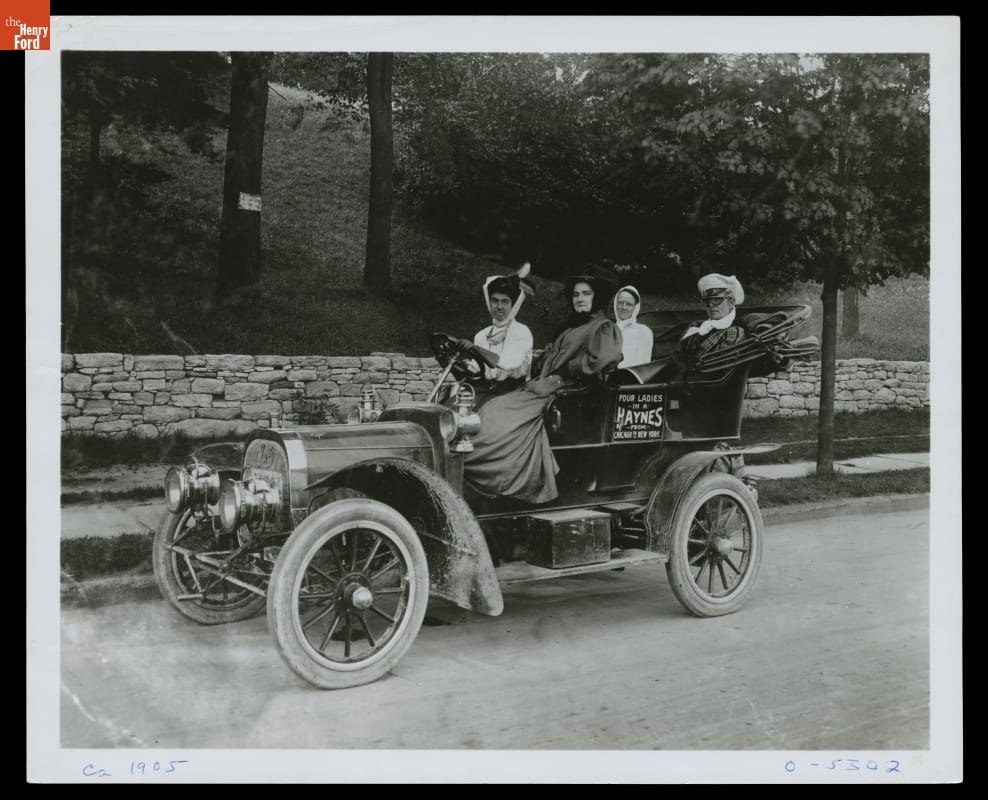
- Four Ladies in a Haynes Automobile Traveling From Chicago to New York, circa 1905 - Into the 1920s, many people -- especially men -- considered women to be unfit to drive. Some thought them emotionally unstable, physically weak, and mentally deficient. Others claimed that driving was just plain unfeminine. A few brave, adventurous women set out to prove the naysayers wrong. Women like the ones in this photograph paved the way for a wider acceptance.
- circa 1905
- Collections - Artifact
Four Ladies in a Haynes Automobile Traveling From Chicago to New York, circa 1905
Into the 1920s, many people -- especially men -- considered women to be unfit to drive. Some thought them emotionally unstable, physically weak, and mentally deficient. Others claimed that driving was just plain unfeminine. A few brave, adventurous women set out to prove the naysayers wrong. Women like the ones in this photograph paved the way for a wider acceptance.
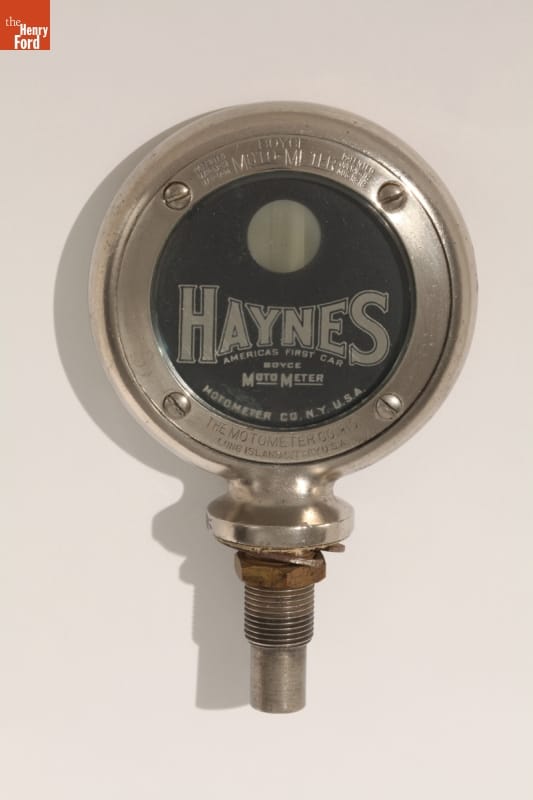
- Haynes Motometer, circa 1925 - Automobiles often came without temperature gauges before the early 1930s, so enterprising manufacturers sold aftermarket motometers. Mounted on a car's radiator, these devices measured and displayed coolant water vapor temperature, notifying drivers if their automobiles were in danger of overheating. Moto-Meter Co. Inc. dominated the American market, producing the popular Boyce motometer and others featuring an automotive manufacturer's name or logo.
- circa 1925
- Collections - Artifact
Haynes Motometer, circa 1925
Automobiles often came without temperature gauges before the early 1930s, so enterprising manufacturers sold aftermarket motometers. Mounted on a car's radiator, these devices measured and displayed coolant water vapor temperature, notifying drivers if their automobiles were in danger of overheating. Moto-Meter Co. Inc. dominated the American market, producing the popular Boyce motometer and others featuring an automotive manufacturer's name or logo.
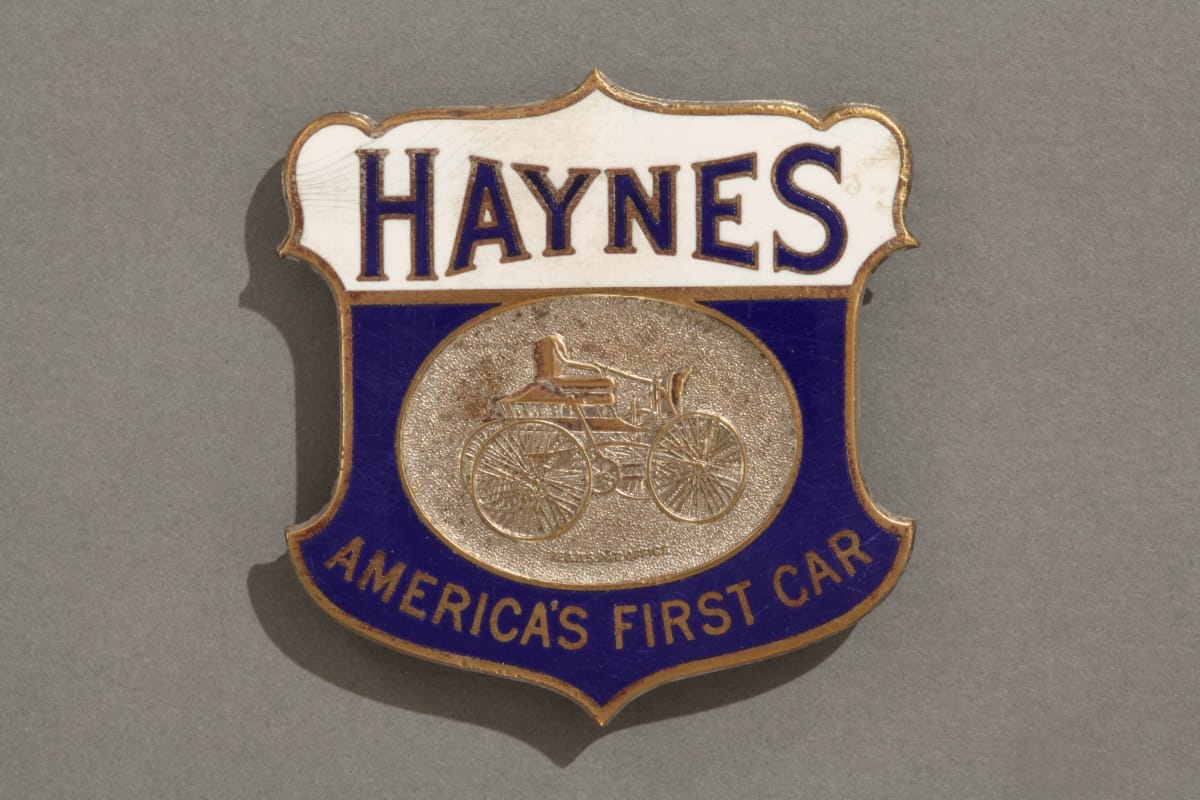
- Haynes Automobile Emblem, 1920-1930 - Elwood Haynes and Elmer and Edgar Apperson completed their first automobile in 1894, with Haynes designing the vehicle and the Apperson brothers building it. They organized the Haynes-Apperson Company of Kokomo, Indiana, in 1898. The Appersons left in 1901, but Haynes continued manufacturing cars until 1924. Haynes frequently -- though exaggeratingly -- promoted his company as the maker of "America's first car."
- 1920-1930
- Collections - Artifact
Haynes Automobile Emblem, 1920-1930
Elwood Haynes and Elmer and Edgar Apperson completed their first automobile in 1894, with Haynes designing the vehicle and the Apperson brothers building it. They organized the Haynes-Apperson Company of Kokomo, Indiana, in 1898. The Appersons left in 1901, but Haynes continued manufacturing cars until 1924. Haynes frequently -- though exaggeratingly -- promoted his company as the maker of "America's first car."
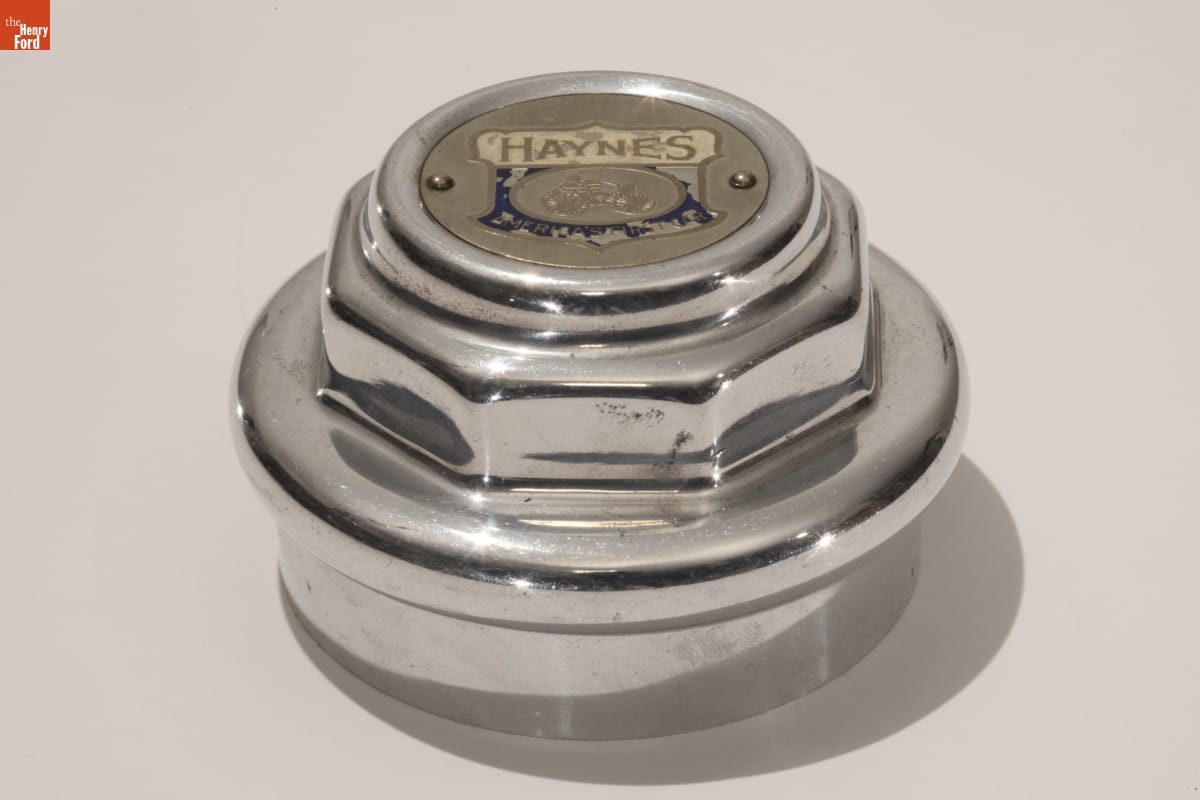
- Haynes Hubcap, 1920-1925 - An automobile manufacturer's badge is fundamental to the company's brand identity -- just as the maker's name is often important to <EM>our</EM> identity as consumers and drivers. Early automobile badges tended to be small and often discreetly located; today they have evolved into enlarged, prominently placed, and frequently symmetrical logos -- easy to recognize, even at a glance in a rear-view mirror.
- 1920-1925
- Collections - Artifact
Haynes Hubcap, 1920-1925
An automobile manufacturer's badge is fundamental to the company's brand identity -- just as the maker's name is often important to our identity as consumers and drivers. Early automobile badges tended to be small and often discreetly located; today they have evolved into enlarged, prominently placed, and frequently symmetrical logos -- easy to recognize, even at a glance in a rear-view mirror.
- Haynes Hubcap, 1920-1925 - Early automobile wheels had a central hub with a greased wheel bearing. Hub caps kept grease in and dust out. As wheels evolved and hubcaps became functionally unnecessary, they remained important to both manufacturers -- who branded wheel covers with maker names or logos -- and consumers -- who identified with hubcaps as statements about their cars and themselves.
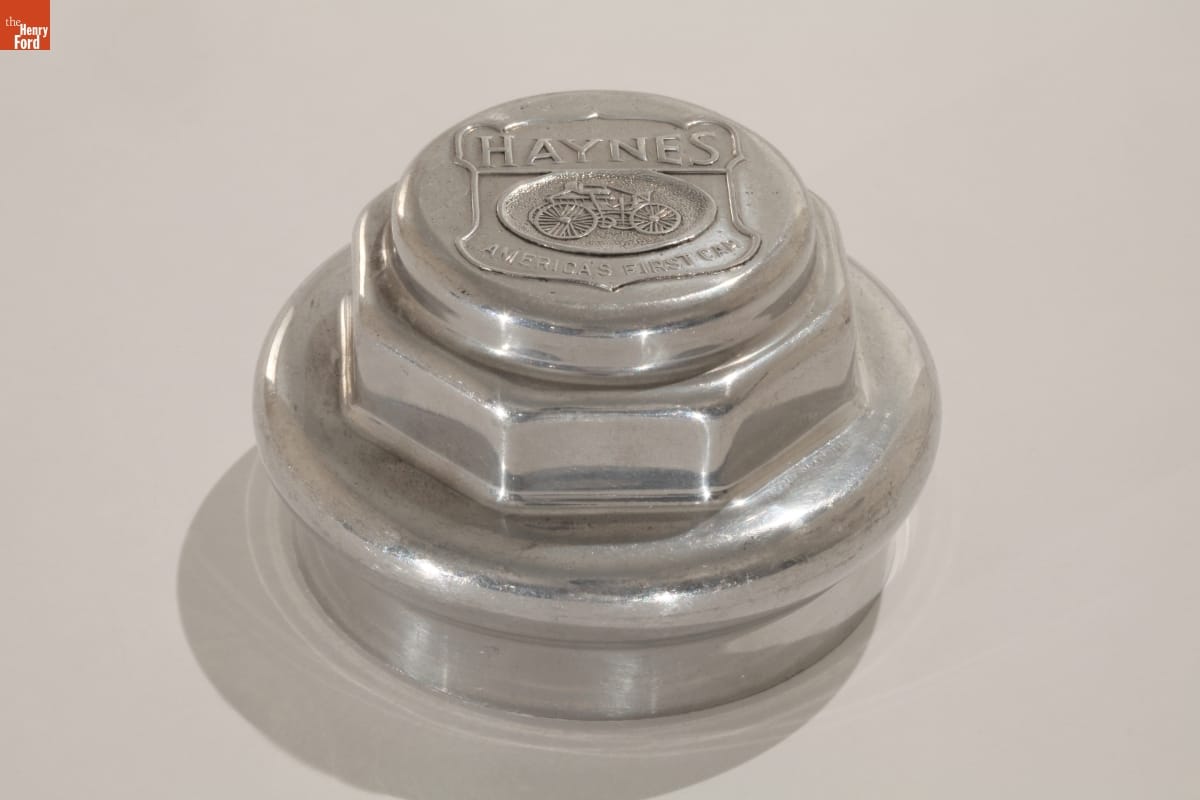
- 1920-1925
- Collections - Artifact
Haynes Hubcap, 1920-1925
Early automobile wheels had a central hub with a greased wheel bearing. Hub caps kept grease in and dust out. As wheels evolved and hubcaps became functionally unnecessary, they remained important to both manufacturers -- who branded wheel covers with maker names or logos -- and consumers -- who identified with hubcaps as statements about their cars and themselves.