
Search
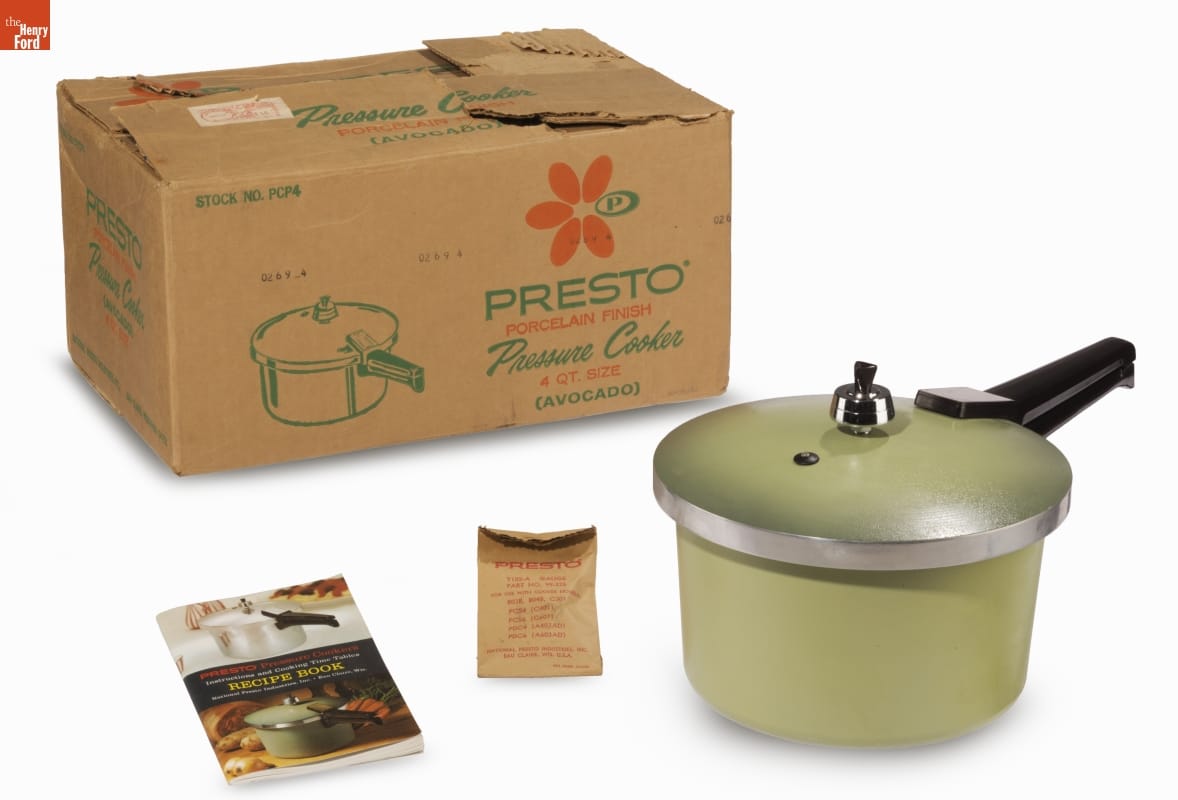
- Presto Model A409A Pressure Cooker, circa 1968 - The National Pressure Cooker Company introduced the first saucepan-style pressure cooker under the brand name "Presto" in 1939. Fueled by its popularity, the company -- eventually renamed National Presto Industries -- expanded and diversified while continuing to produce an ever-improving line of pressure cookers. In the 1960s and 1970s, distinctive styling by Mel Boldt and Associates helped set Presto pressure cookers apart from the competition.
- circa 1968
- Collections - Artifact
Presto Model A409A Pressure Cooker, circa 1968
The National Pressure Cooker Company introduced the first saucepan-style pressure cooker under the brand name "Presto" in 1939. Fueled by its popularity, the company -- eventually renamed National Presto Industries -- expanded and diversified while continuing to produce an ever-improving line of pressure cookers. In the 1960s and 1970s, distinctive styling by Mel Boldt and Associates helped set Presto pressure cookers apart from the competition.
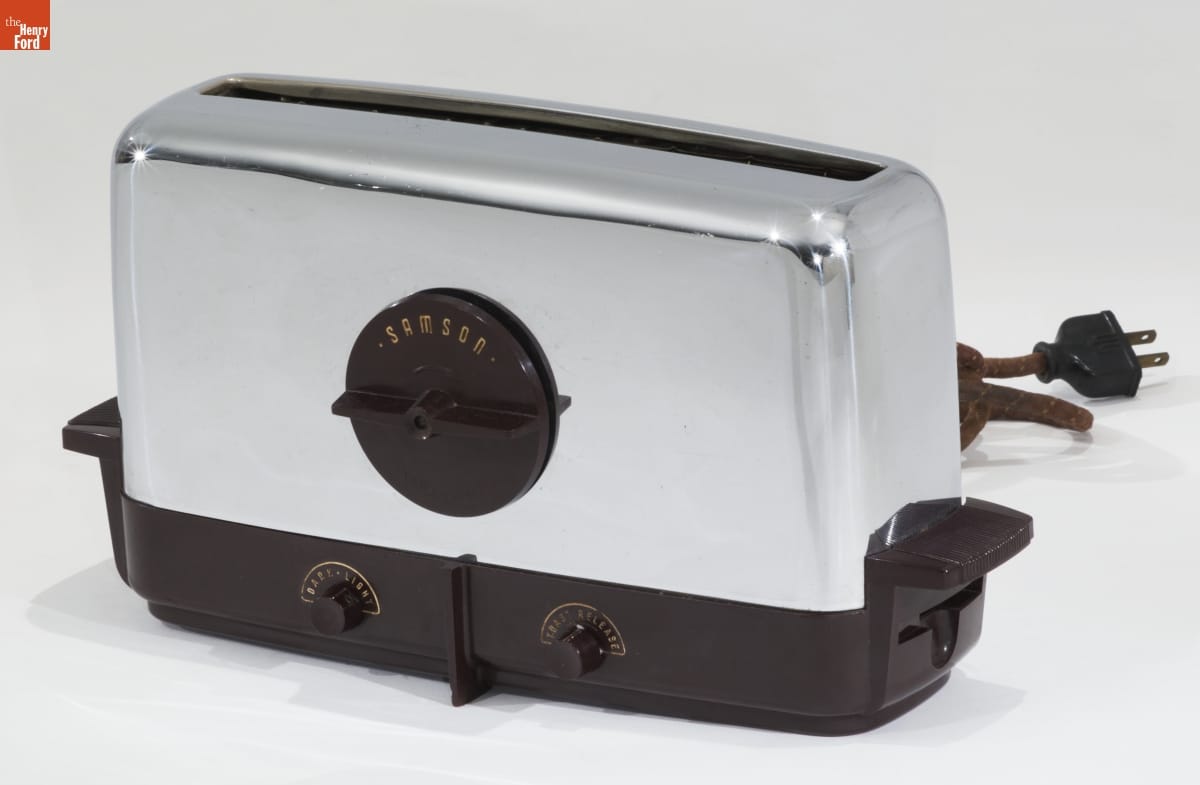
- Samson United Corporation "Tandem Toaster," 1947 -
- 1947
- Collections - Artifact
Samson United Corporation "Tandem Toaster," 1947
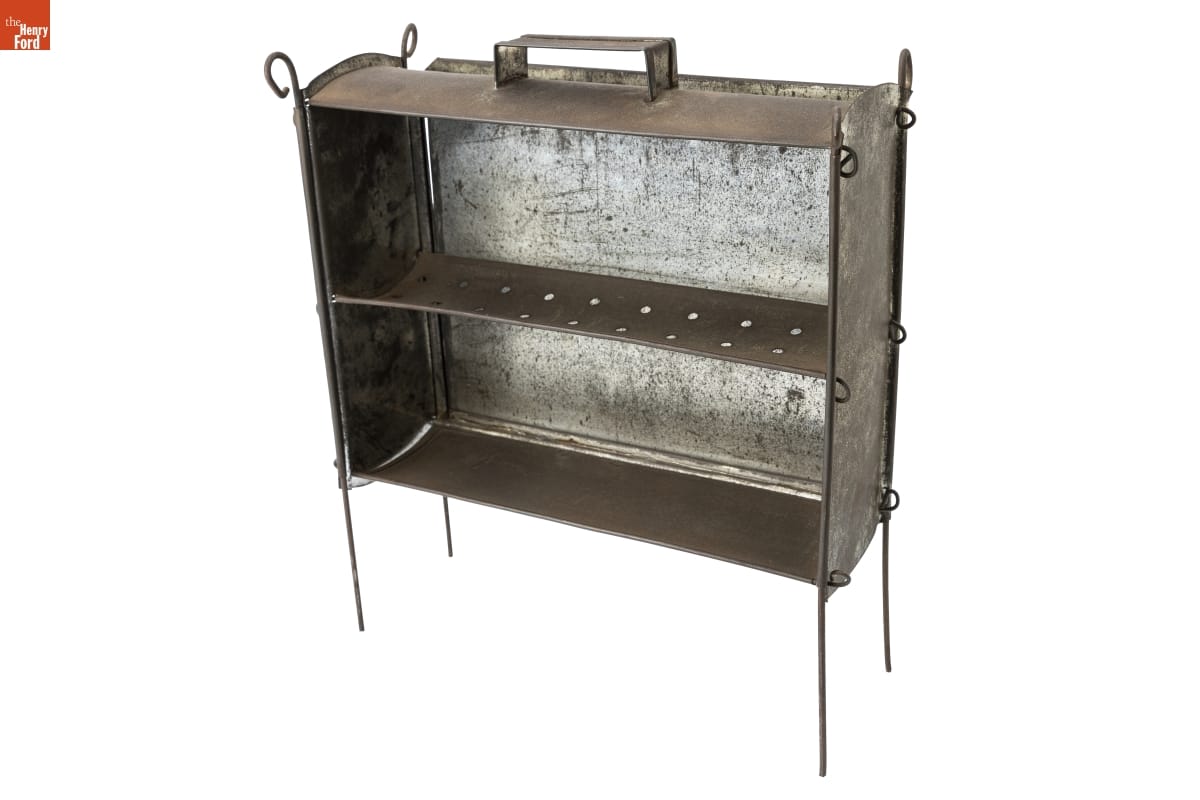
- Reflector Oven - Tin-plated iron, commonly called "tin," was the dominant material for utilitarian items in 19th-century America. Local tinsmiths produced an almost endless range of goods. But as more durable and lower maintenance materials emerged, handmade tinware came to be considered a folk art or heritage craft. This 20th-century example was produced in the Greenfield Village tin shop using historical tinsmithing tools and techniques.
- Collections - Artifact
Reflector Oven
Tin-plated iron, commonly called "tin," was the dominant material for utilitarian items in 19th-century America. Local tinsmiths produced an almost endless range of goods. But as more durable and lower maintenance materials emerged, handmade tinware came to be considered a folk art or heritage craft. This 20th-century example was produced in the Greenfield Village tin shop using historical tinsmithing tools and techniques.
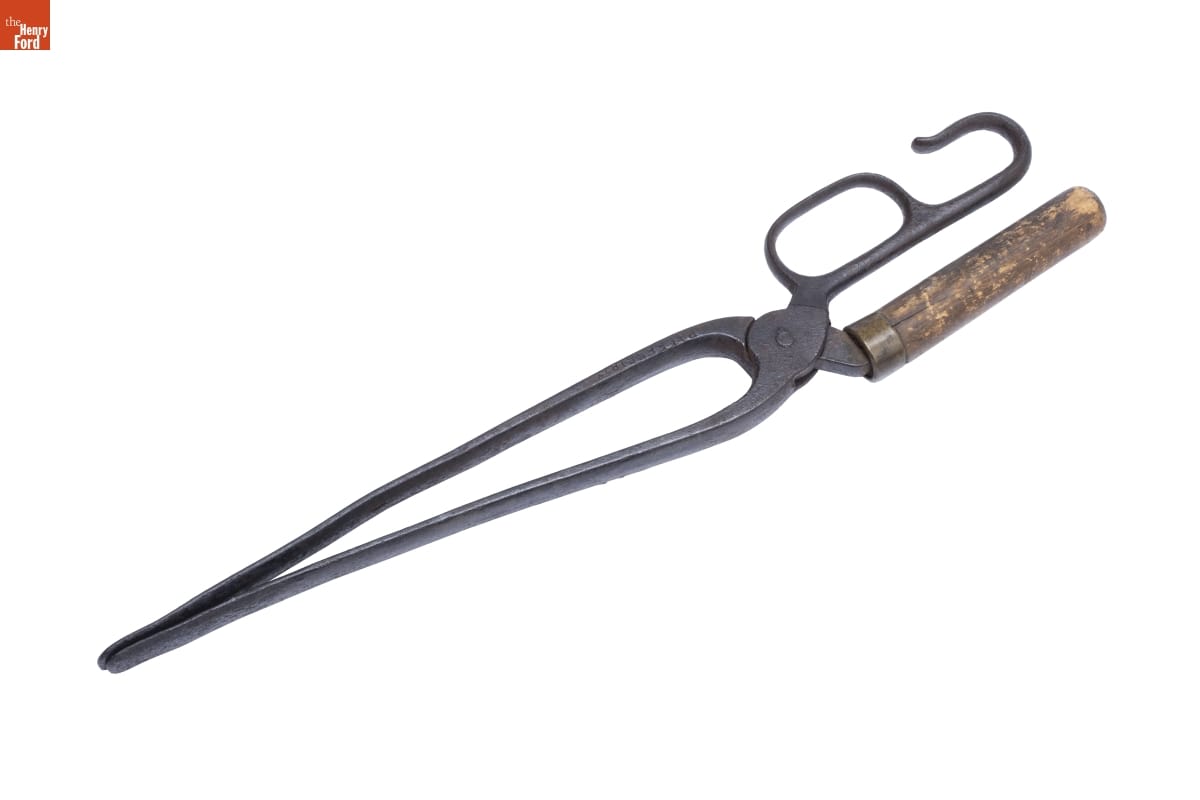
- Stove Tongs, 1877-1890 -
- 1877-1890
- Collections - Artifact
Stove Tongs, 1877-1890
- Knoblock Pyramid Toaster, circa 1909 -
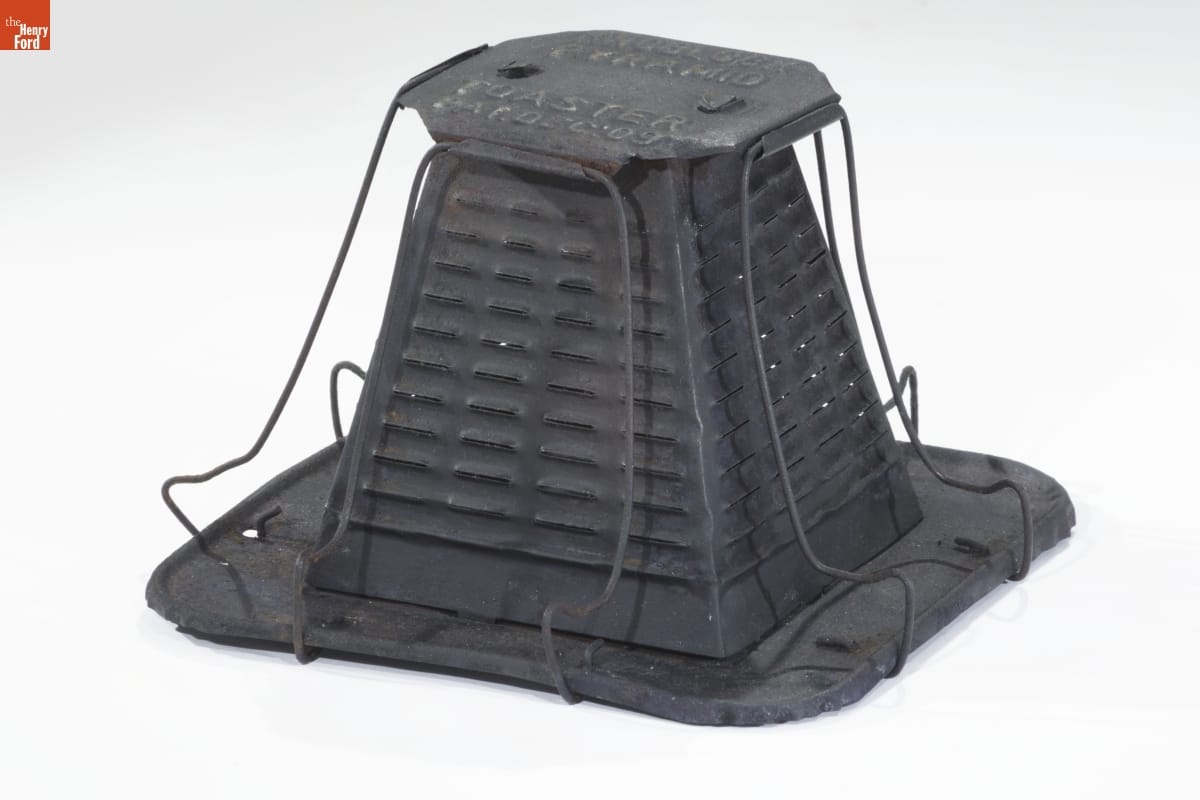
- circa 1909
- Collections - Artifact
Knoblock Pyramid Toaster, circa 1909
- Advertisement for Proctor Automatic Pop-up Toaster, " Beautiful and Makes Beautiful Toast!," 1949 -
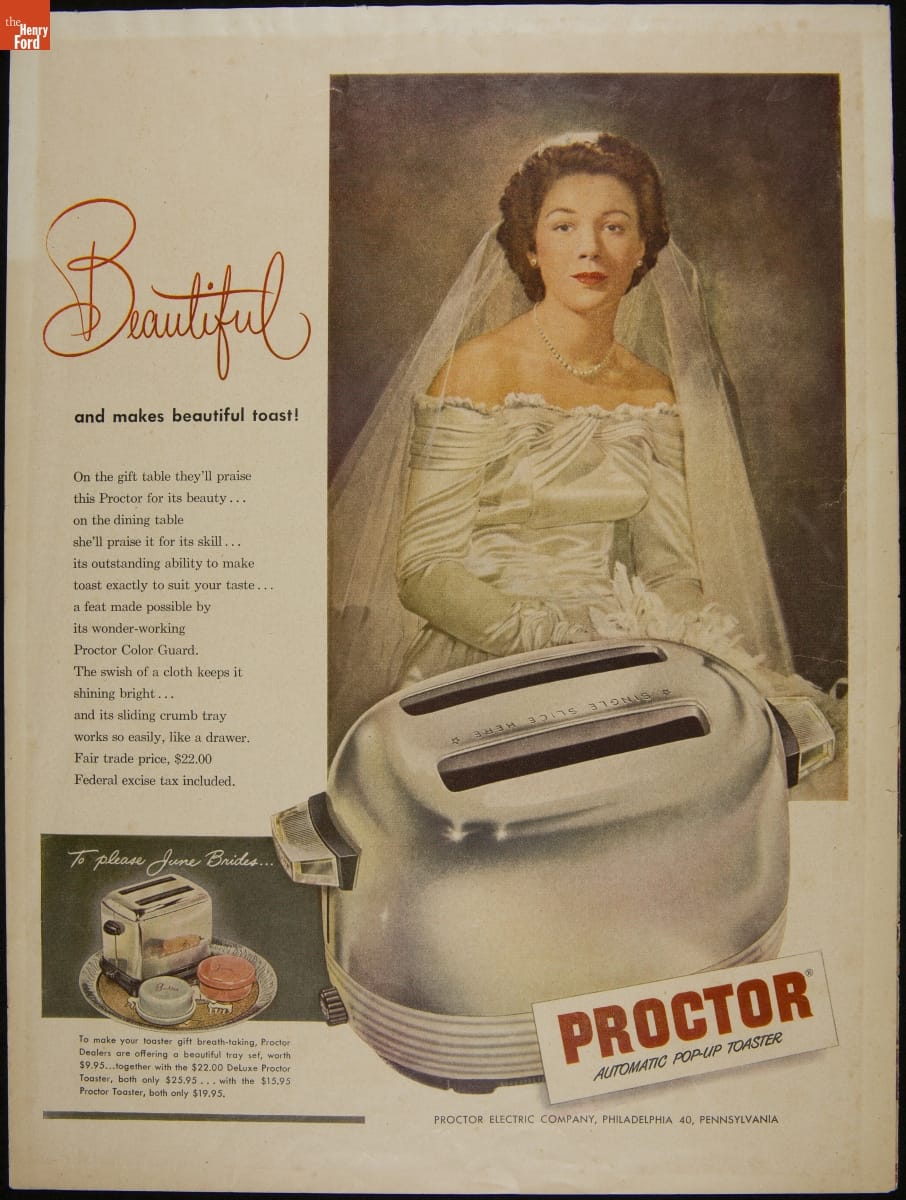
- June 13, 1949
- Collections - Artifact
Advertisement for Proctor Automatic Pop-up Toaster, " Beautiful and Makes Beautiful Toast!," 1949
- Advertisement for Toastmaster Toasters, "Just Set it for the Kind of Toast You Want," 1928 -
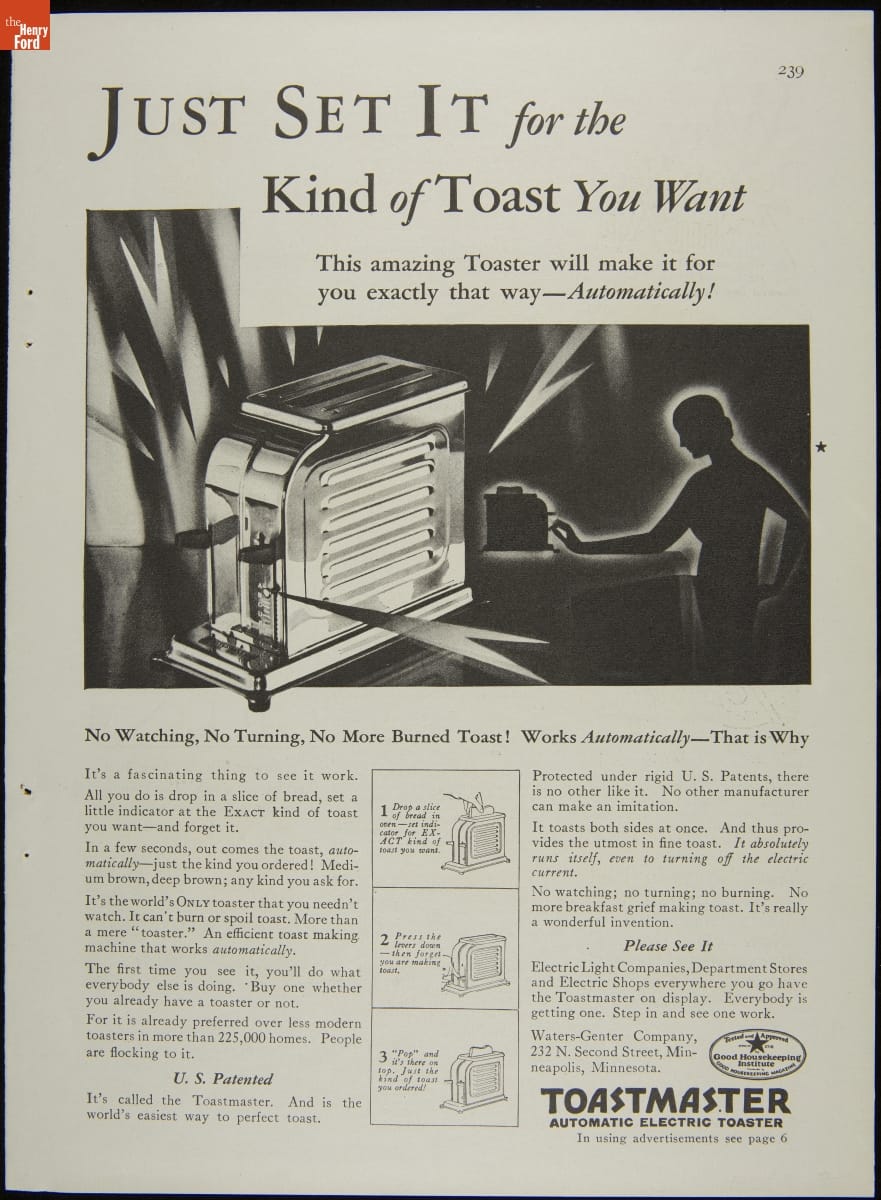
- November 01, 1928
- Collections - Artifact
Advertisement for Toastmaster Toasters, "Just Set it for the Kind of Toast You Want," 1928
- Advertisement for Toastmaster Appliances, "Welcome a Tradition into Your Home," 1959 -
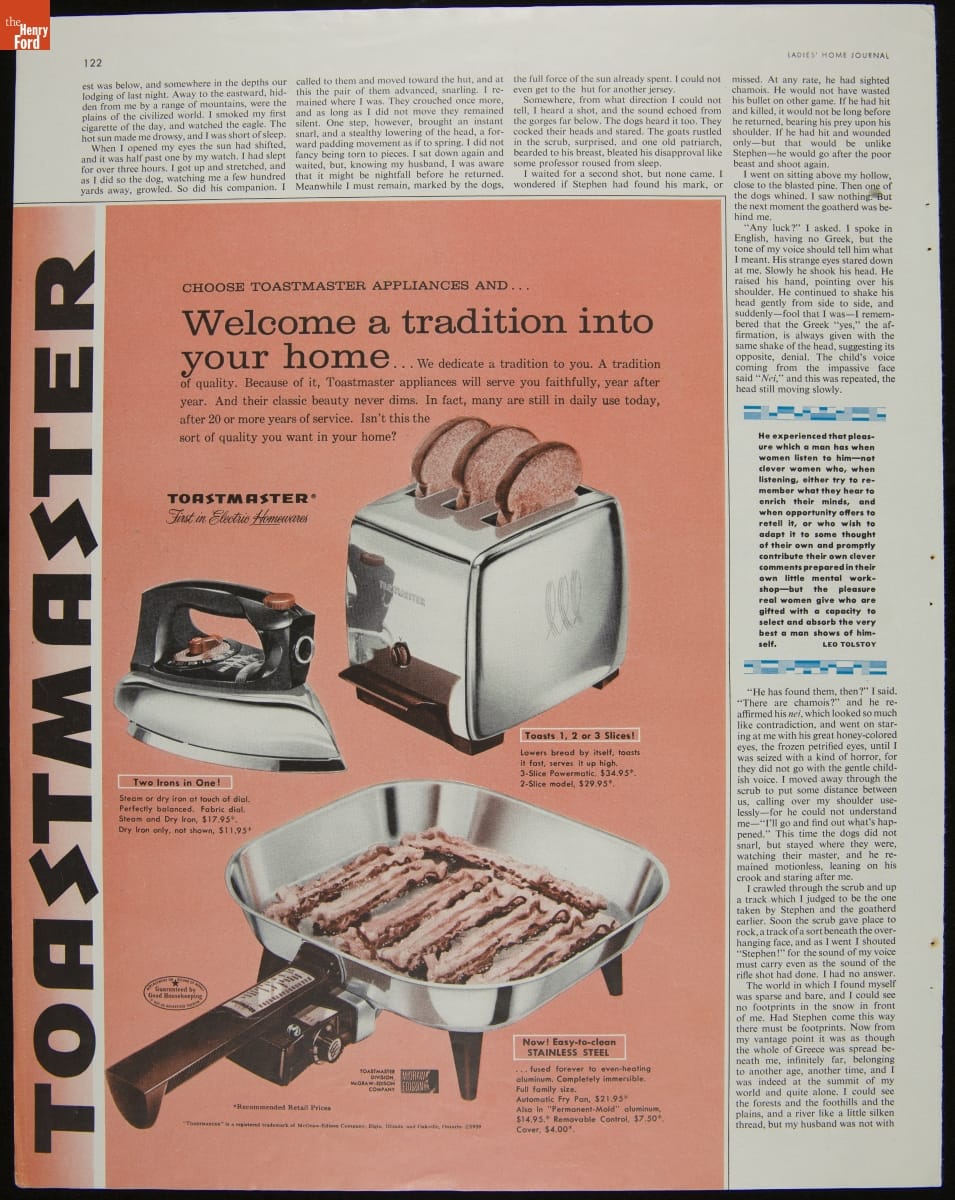
- September 01, 1959
- Collections - Artifact
Advertisement for Toastmaster Appliances, "Welcome a Tradition into Your Home," 1959
- Advertisement for Toastmaster Toasters, "The Toaster that Gives you a Helping Handle," circa 1970 -
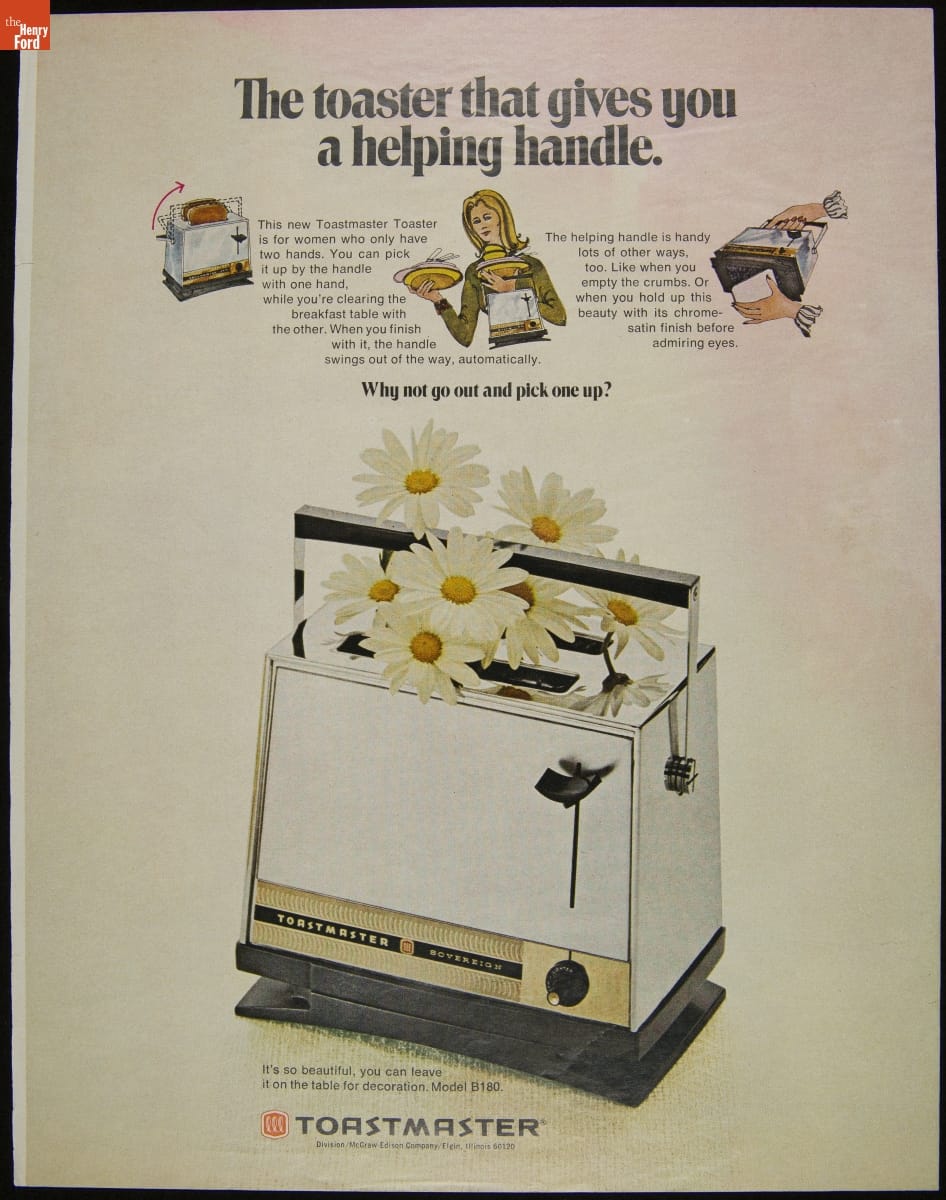
- circa 1970
- Collections - Artifact
Advertisement for Toastmaster Toasters, "The Toaster that Gives you a Helping Handle," circa 1970
- Wards Signature Electric Bun Warmer, 1960-1971 -
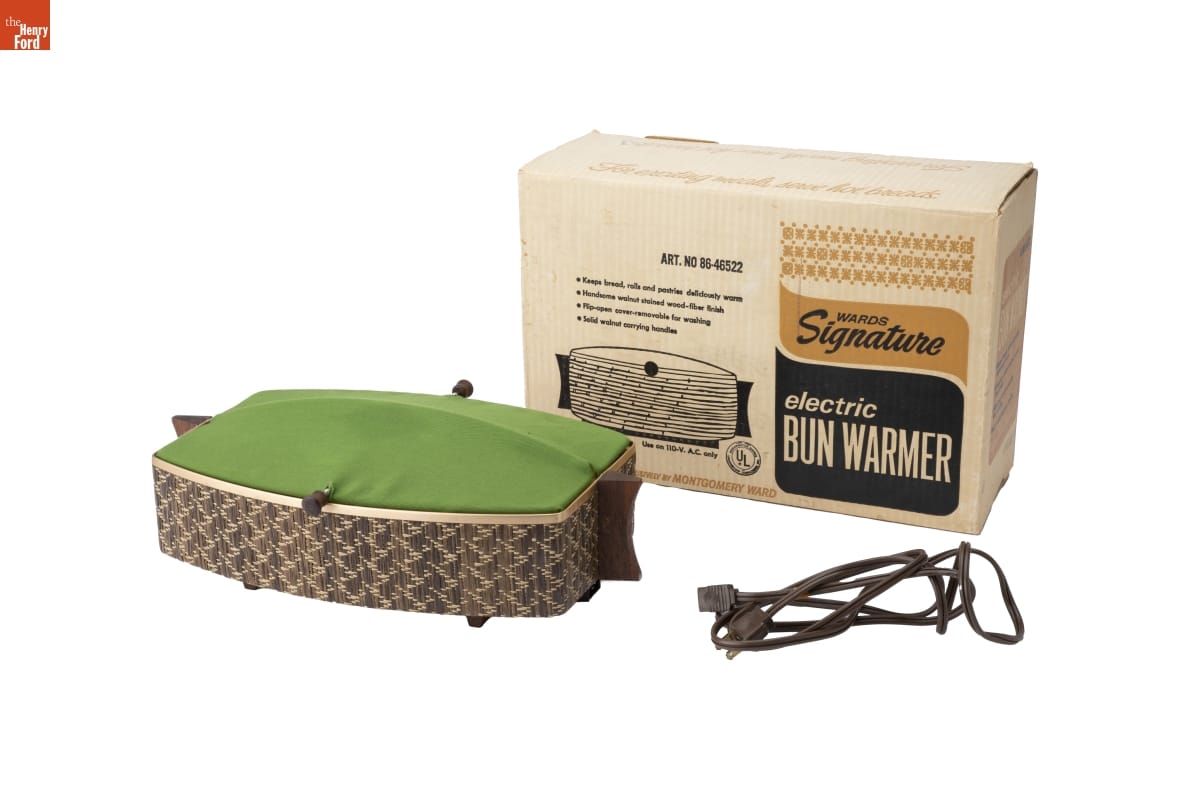
- 1960-1971
- Collections - Artifact
Wards Signature Electric Bun Warmer, 1960-1971