
Search
- Pennant, "Pimlico Preakness, Baltimore, Maryland," 1940-1965 -
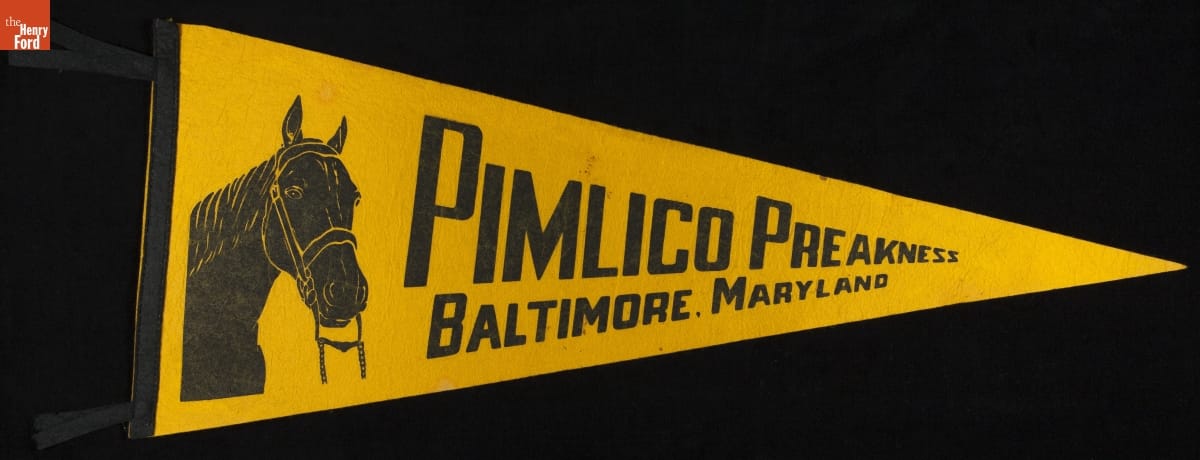
- 1940-1965
- Collections - Artifact
Pennant, "Pimlico Preakness, Baltimore, Maryland," 1940-1965
- Advertising Poster for the "Fortieth Hillsdale Fair," HIllsdale, Michigan, 1890 -
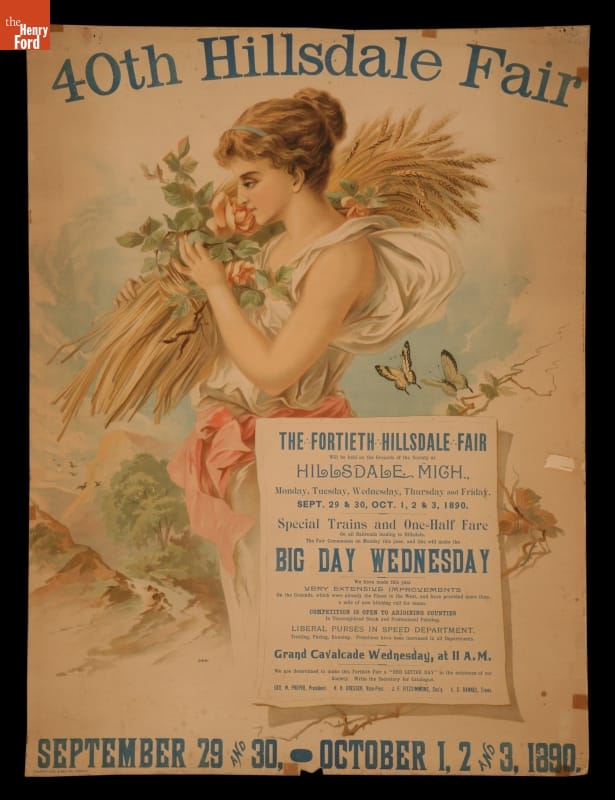
- 29 September 1890-03 October 1890
- Collections - Artifact
Advertising Poster for the "Fortieth Hillsdale Fair," HIllsdale, Michigan, 1890
- Hampden Park Racetrack, Springfield, Massachusetts, circa 1885 - American bicycle racing flourished in the late 19th century. Horse tracks could be converted for bicycle racing -- a shorter oval was created while still using the stretch in front of the grandstands. This photograph shows the Hampden Park race track in Springfield, Massachusetts. On the back is a drawing showing the bicycle oval in relation to the horse racing track.
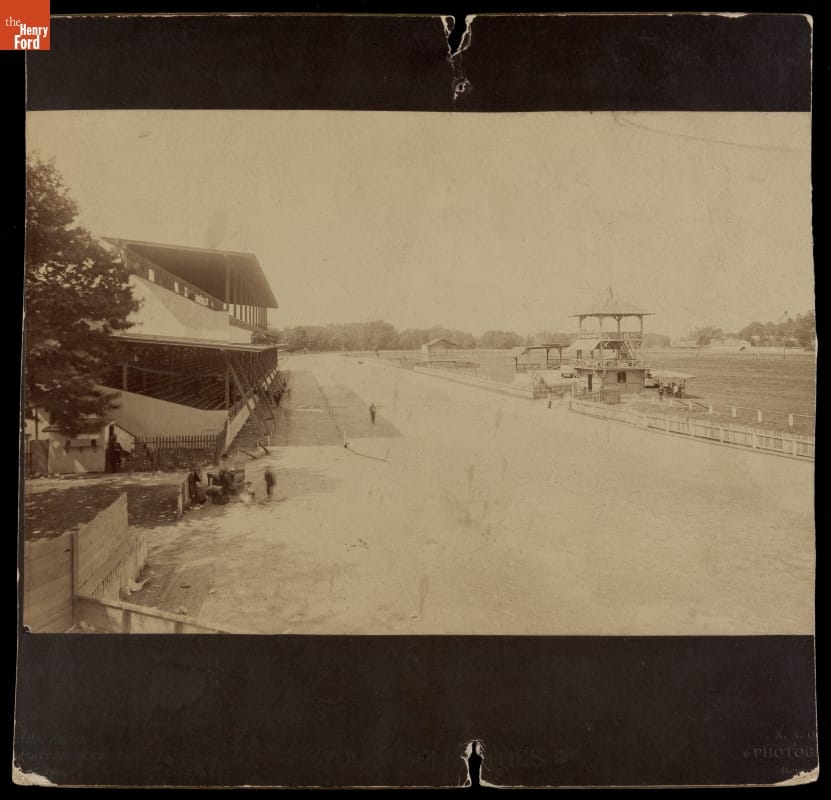
- circa 1885
- Collections - Artifact
Hampden Park Racetrack, Springfield, Massachusetts, circa 1885
American bicycle racing flourished in the late 19th century. Horse tracks could be converted for bicycle racing -- a shorter oval was created while still using the stretch in front of the grandstands. This photograph shows the Hampden Park race track in Springfield, Massachusetts. On the back is a drawing showing the bicycle oval in relation to the horse racing track.
- Horse "Lady Suffolk" Weathervane, 1840-1860 - Weathervanes point into the direction of the wind. This helped viewers anticipate weather changes before local forecasts became common after 1920. Functional weathervanes required a basic pointing device and directional arms, but manufacturers added decorative elements, or ornaments, to appeal to consumer interests. They most often featured horses. This example with a crimped copper mane and tail depicts Lady Suffolk, a famous racehorse.
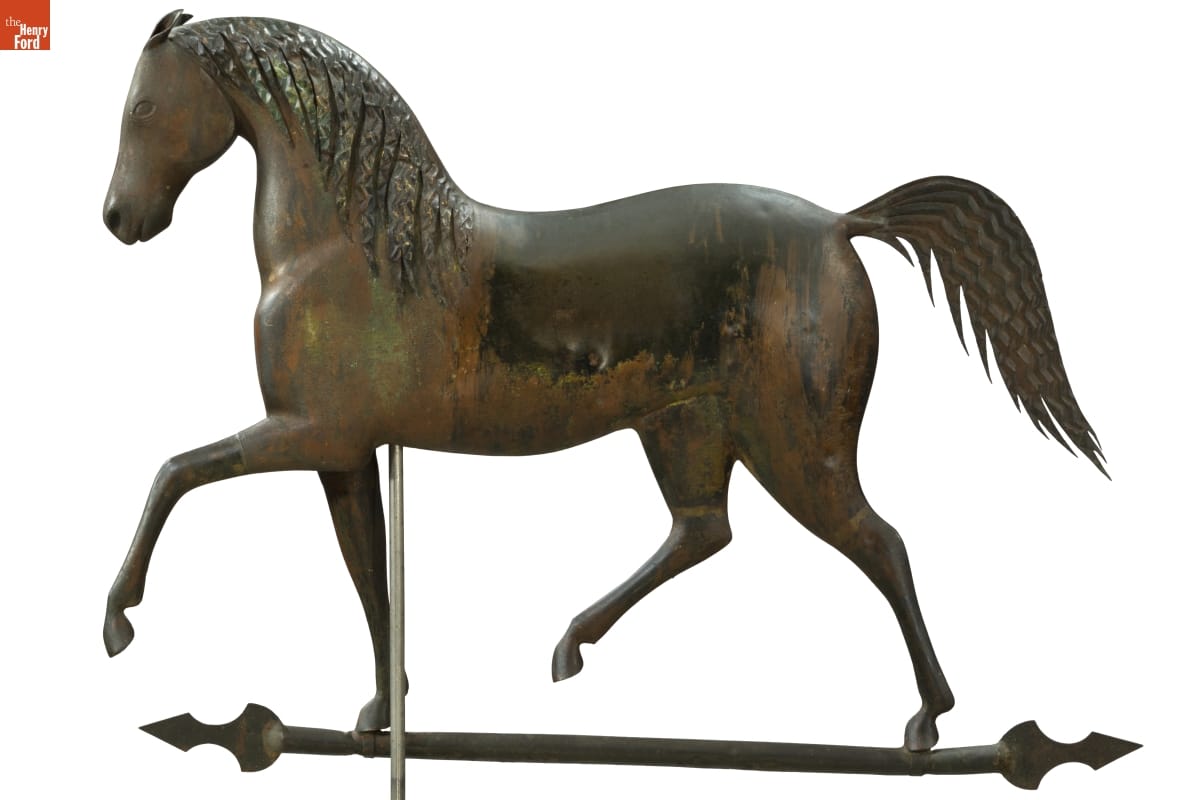
- 1840-1860
- Collections - Artifact
Horse "Lady Suffolk" Weathervane, 1840-1860
Weathervanes point into the direction of the wind. This helped viewers anticipate weather changes before local forecasts became common after 1920. Functional weathervanes required a basic pointing device and directional arms, but manufacturers added decorative elements, or ornaments, to appeal to consumer interests. They most often featured horses. This example with a crimped copper mane and tail depicts Lady Suffolk, a famous racehorse.
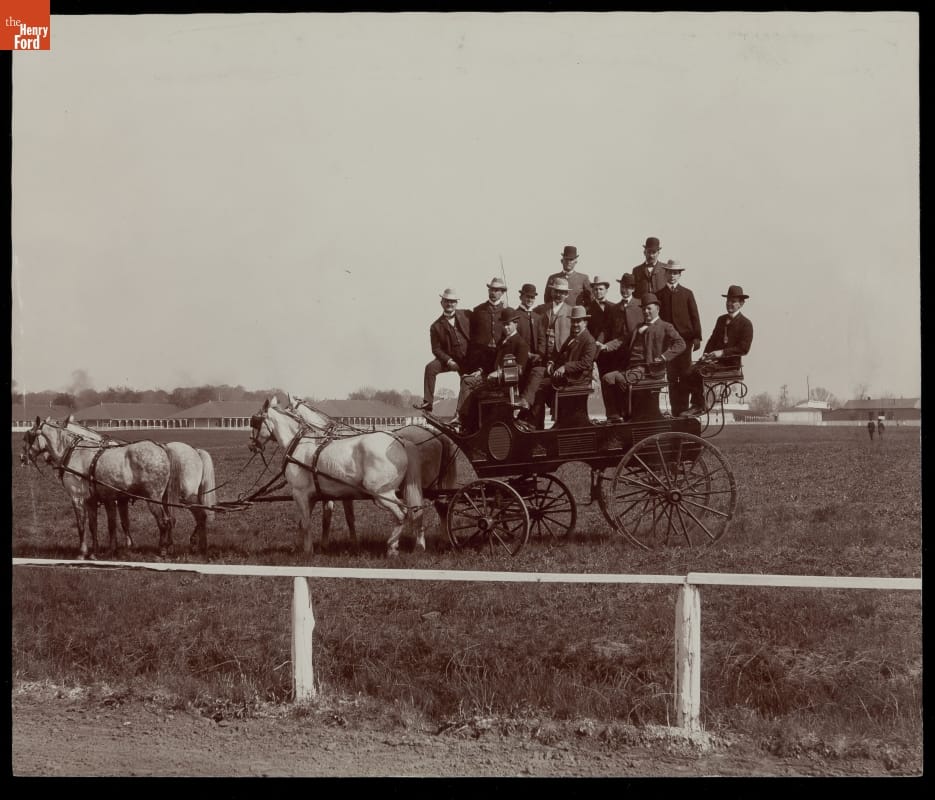
- Governor Beckham and Party at the Races, Derby Day, Louisville, Kentucky, 1901 - From 1895 to 1924, the Detroit Publishing Company was one of the world's major image publishers. The company had a wide-ranging stock of original photographs. Among them was this image showing a group of spectators - including Kentucky governor J. C. W. Beckham - aboard a coach at the 27th running of the Kentucky Derby horse race in Louisville, 1901.
- 1901
- Collections - Artifact
Governor Beckham and Party at the Races, Derby Day, Louisville, Kentucky, 1901
From 1895 to 1924, the Detroit Publishing Company was one of the world's major image publishers. The company had a wide-ranging stock of original photographs. Among them was this image showing a group of spectators - including Kentucky governor J. C. W. Beckham - aboard a coach at the 27th running of the Kentucky Derby horse race in Louisville, 1901.
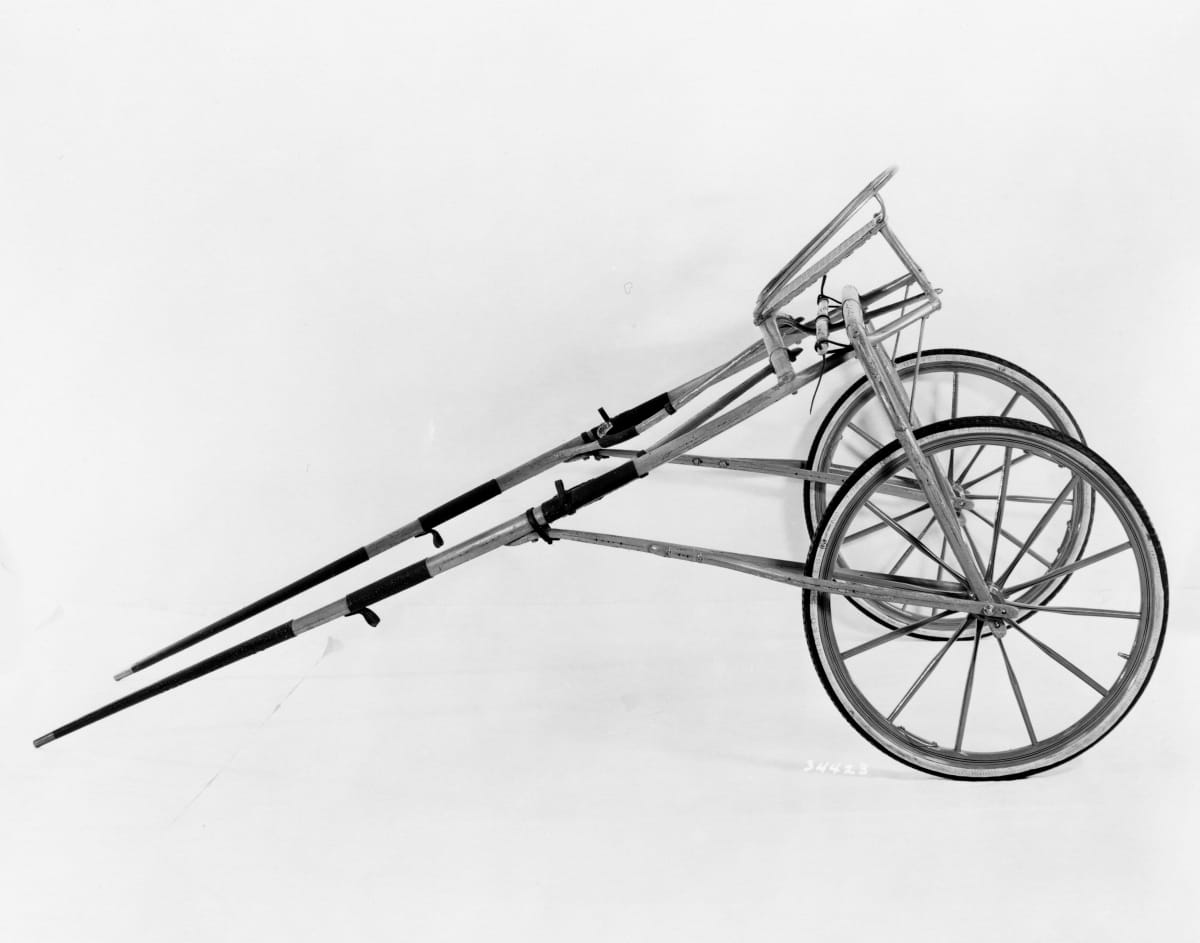
- Sulky, 1892-1893 - Harness racing enjoyed wide popularity in the late 19th century with competitions staged at dirt tracks, at state and county fairs, and sometimes on the streets. The "bicycle" sulky -- named for its bicycle-style wheels -- quickly proved superior over wooden high-wheel sulkies when introduced in 1892. Alma Bedford of Coldwater, Michigan, built this bicycle sulky and later manufactured them commercially.
- 1892-1893
- Collections - Artifact
Sulky, 1892-1893
Harness racing enjoyed wide popularity in the late 19th century with competitions staged at dirt tracks, at state and county fairs, and sometimes on the streets. The "bicycle" sulky -- named for its bicycle-style wheels -- quickly proved superior over wooden high-wheel sulkies when introduced in 1892. Alma Bedford of Coldwater, Michigan, built this bicycle sulky and later manufactured them commercially.
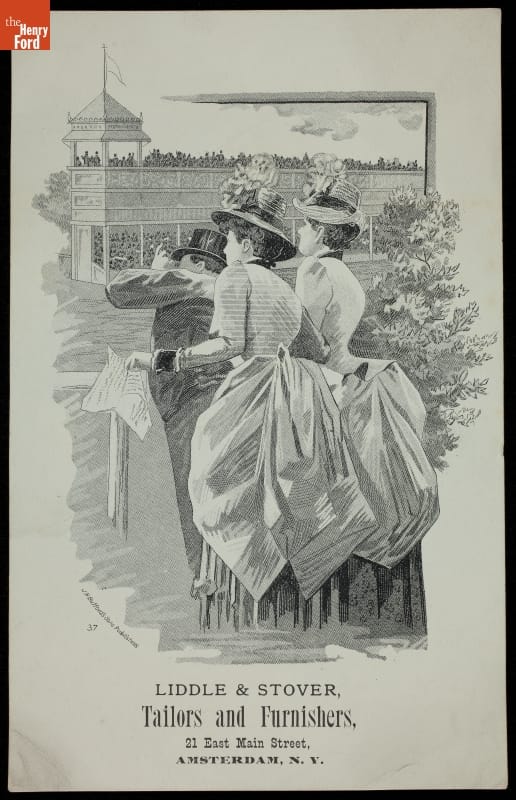
- Trade Card for Liddle & Stover Tailors, J.H. Bufford & Co., 1885 - In the last third of the nineteenth century, an unprecedented variety of consumer goods and services flooded the American market. Advertisers bombarded potential customers with trade cards. Americans enjoyed and saved the often illustrated little advertisements found in product packages or distributed by local merchants. Many survive as historical records of commercialism in the United States.
- 1885
- Collections - Artifact
Trade Card for Liddle & Stover Tailors, J.H. Bufford & Co., 1885
In the last third of the nineteenth century, an unprecedented variety of consumer goods and services flooded the American market. Advertisers bombarded potential customers with trade cards. Americans enjoyed and saved the often illustrated little advertisements found in product packages or distributed by local merchants. Many survive as historical records of commercialism in the United States.
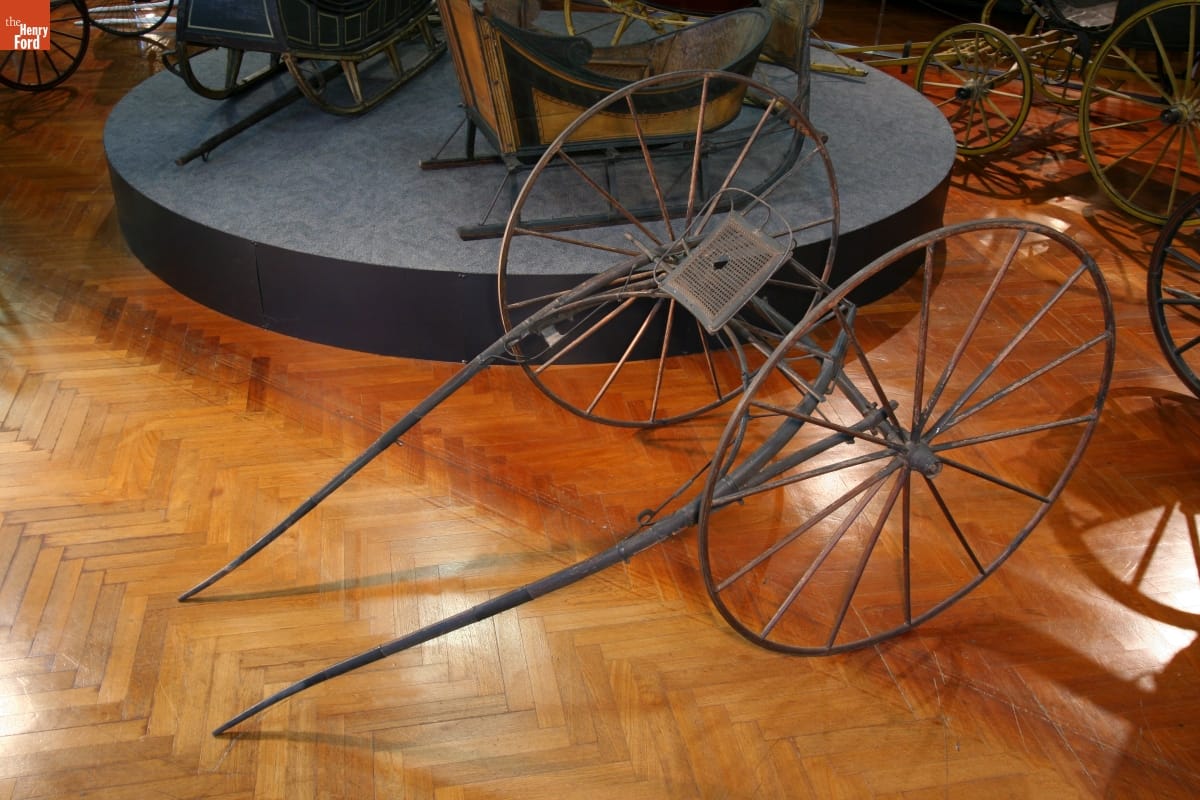
- Sulky, circa 1865 - Mid-19th-century Americans loved harness racing. The minimalistic sulky was essential to the sport. The lightweight little cart consisted only of what was necessary: wheels and axle, driver's seat, and a pair of shafts. When harnessed to a fast trotting horse, this high-wheeled sulky might reach 25 miles per hour or more on a race track.
- circa 1865
- Collections - Artifact
Sulky, circa 1865
Mid-19th-century Americans loved harness racing. The minimalistic sulky was essential to the sport. The lightweight little cart consisted only of what was necessary: wheels and axle, driver's seat, and a pair of shafts. When harnessed to a fast trotting horse, this high-wheeled sulky might reach 25 miles per hour or more on a race track.
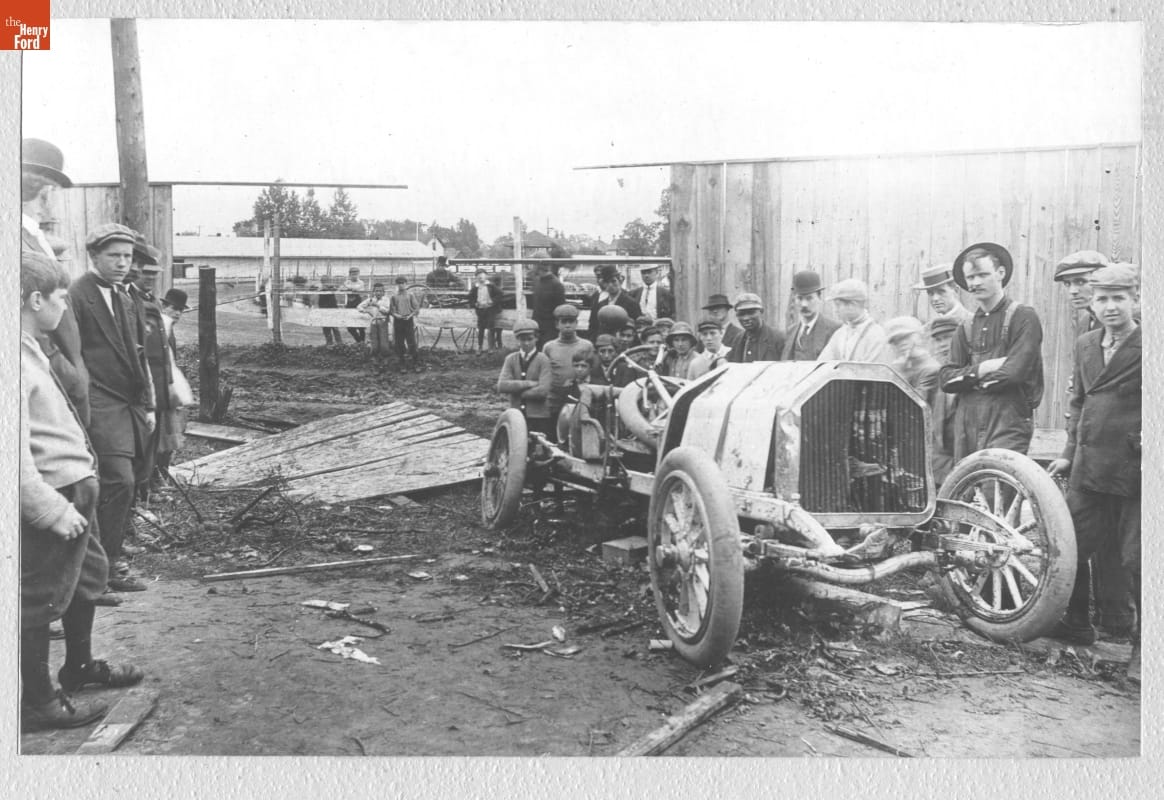
- Damaged Race Car After a Racing Accident, 1905-1915 - Automobile racing has been a dangerous sport for drivers and fans. The thrill and excitement of pushing powerful machines to their limits at unheard of speeds drew drivers to the sport and fans to the roadsides and tracks. Sometimes, things could go very wrong as in this photo showing the aftermath of a car that broke through a wooden fence. It is not known how the driver, and fans, fared but it is safe to assume that everyone had a thrill that day.
- 1905-1915
- Collections - Artifact
Damaged Race Car After a Racing Accident, 1905-1915
Automobile racing has been a dangerous sport for drivers and fans. The thrill and excitement of pushing powerful machines to their limits at unheard of speeds drew drivers to the sport and fans to the roadsides and tracks. Sometimes, things could go very wrong as in this photo showing the aftermath of a car that broke through a wooden fence. It is not known how the driver, and fans, fared but it is safe to assume that everyone had a thrill that day.
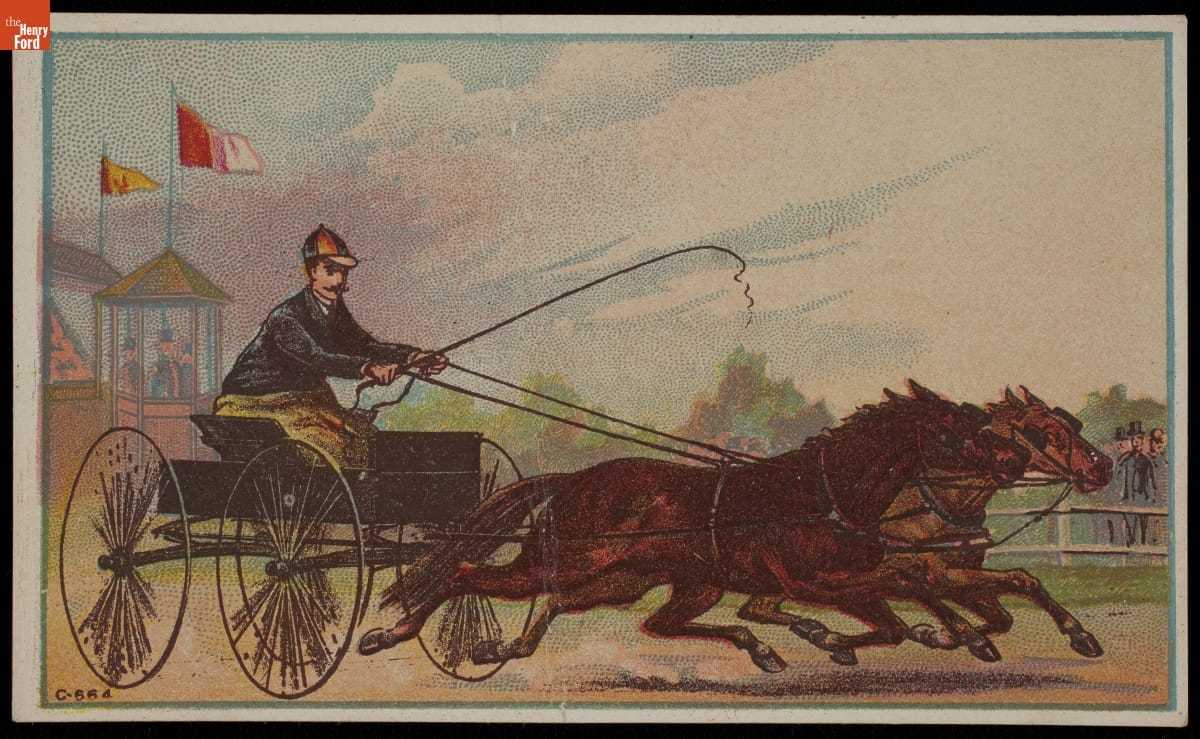
- Trade Card for Carriages and Buggies, Royal J. Ford, circa 1891 - In the last third of the nineteenth century, an unprecedented variety of consumer goods and services flooded the American market. Advertisers, armed with new methods of color printing, bombarded potential customers with trade cards. Americans enjoyed and often saved the vibrant little advertisements found in product packages or distributed by local merchants. Many survive as historical records of commercialism in the United States.
- circa 1891
- Collections - Artifact
Trade Card for Carriages and Buggies, Royal J. Ford, circa 1891
In the last third of the nineteenth century, an unprecedented variety of consumer goods and services flooded the American market. Advertisers, armed with new methods of color printing, bombarded potential customers with trade cards. Americans enjoyed and often saved the vibrant little advertisements found in product packages or distributed by local merchants. Many survive as historical records of commercialism in the United States.