
Search
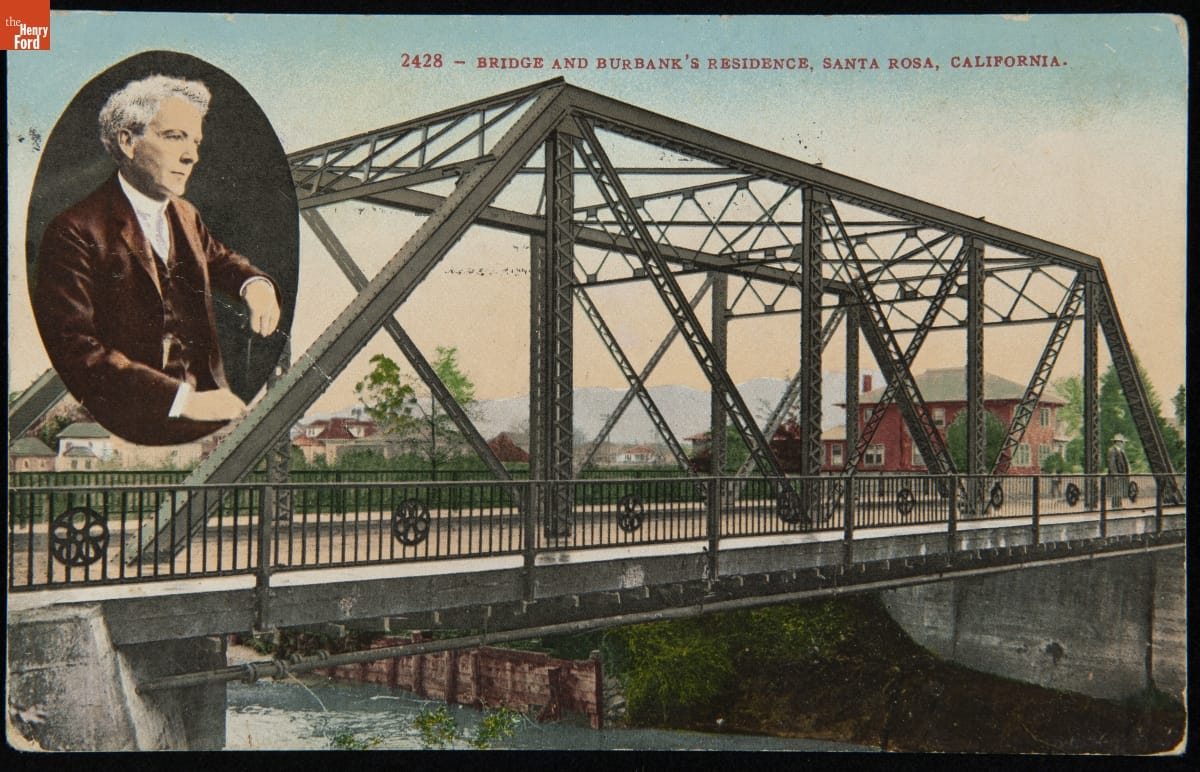
- Bridge and Burbank's Residence, Santa Rosa, California, 1913 - The reconstruction of Santa Rosa, California, after the 1906 earthquake, privileged automobiles over railways. This steel-truss bridge afforded easier pedestrian and automobile access to Luther Burbank's experimental gardens. Burbank's new home, completed by December 1906, is visible through the trusses. During the 1960s, urban renewal and flood control projects destroyed Burbank's 1906 home and buried Santa Rosa Creek.
- October 17, 1913
- Collections - Artifact
Bridge and Burbank's Residence, Santa Rosa, California, 1913
The reconstruction of Santa Rosa, California, after the 1906 earthquake, privileged automobiles over railways. This steel-truss bridge afforded easier pedestrian and automobile access to Luther Burbank's experimental gardens. Burbank's new home, completed by December 1906, is visible through the trusses. During the 1960s, urban renewal and flood control projects destroyed Burbank's 1906 home and buried Santa Rosa Creek.
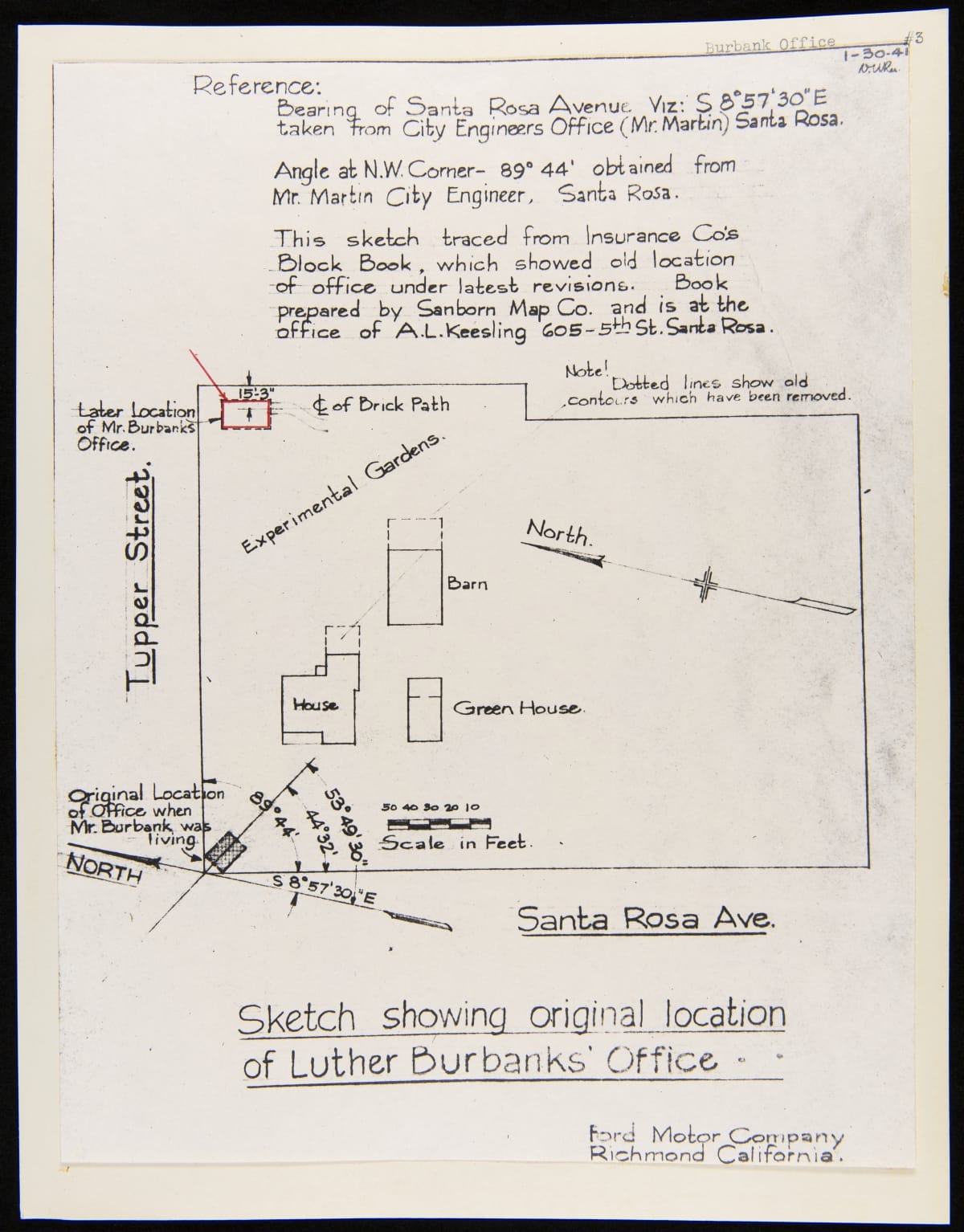
- Sketch Showing Original Location of Luther Burbank Garden Office, Santa Rosa, California, January 30, 1941 - Luther Burbank (1849-1926), a much-heralded American horticulturalist, gained a reputation for selectively breeding more than 800 new fruits, vegetables, flowers, and other plants. He opened a "Bureau of Information" in 1910 to sell seeds and souvenirs. Burbank's widow described it as the "little office" when she offered it to Henry Ford in 1928. This map documents its original locations in Santa Rosa, California.
- January 30, 1941
- Collections - Artifact
Sketch Showing Original Location of Luther Burbank Garden Office, Santa Rosa, California, January 30, 1941
Luther Burbank (1849-1926), a much-heralded American horticulturalist, gained a reputation for selectively breeding more than 800 new fruits, vegetables, flowers, and other plants. He opened a "Bureau of Information" in 1910 to sell seeds and souvenirs. Burbank's widow described it as the "little office" when she offered it to Henry Ford in 1928. This map documents its original locations in Santa Rosa, California.
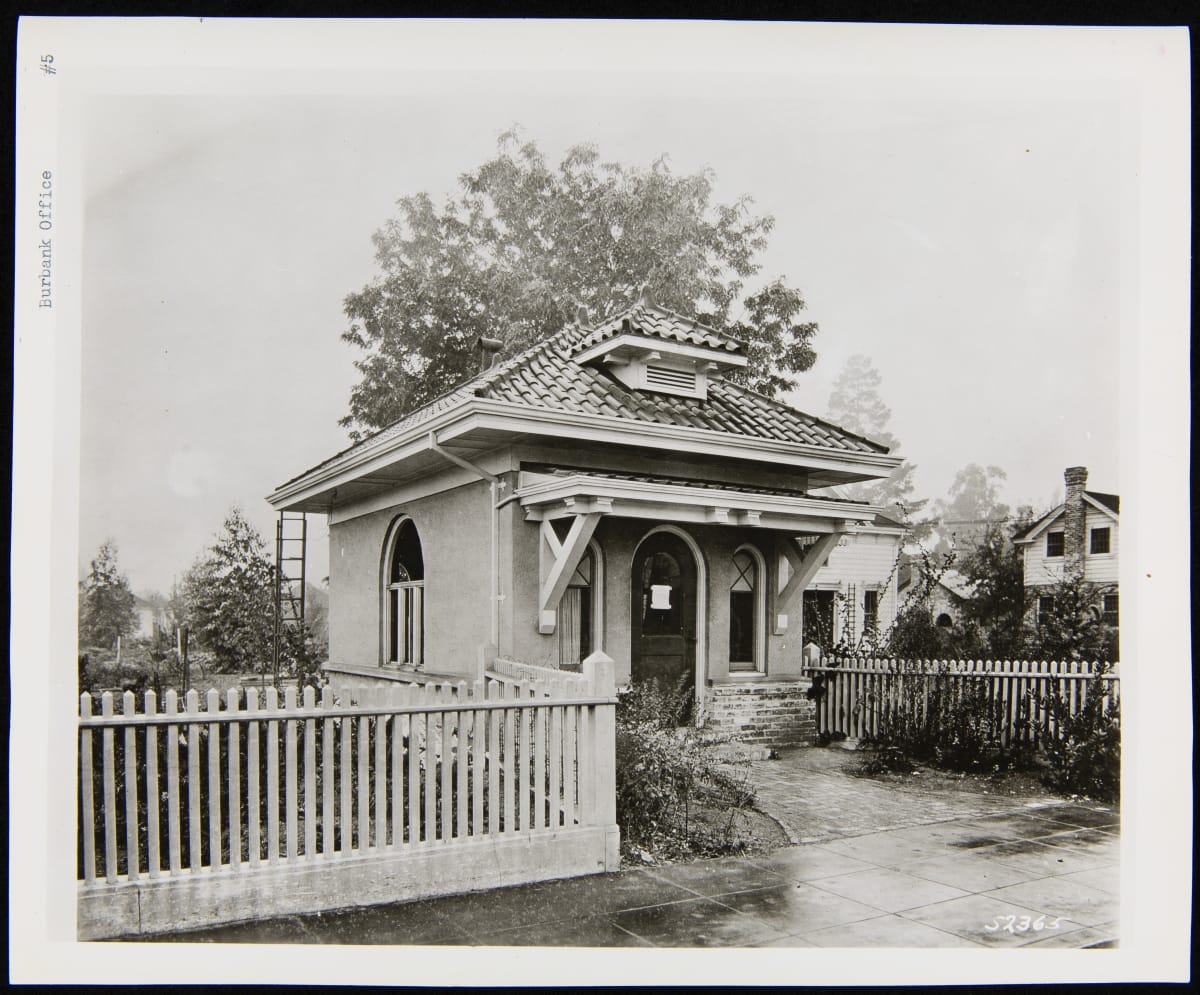
- Burbank Experimental Gardens Information Office, 1928 - Luther Burbank (1849-1926), a much-heralded American horticulturalist, gained a reputation for selectively breeding more than 800 new fruits, vegetables, flowers, and other plants. He opened this building in 1910 to sell seeds and souvenirs to inquisitive patrons. It served many purposes over the years and was moved once before Burbank's widow sent it to Henry Ford in 1928 for inclusion in Greenfield Village.
- 1928
- Collections - Artifact
Burbank Experimental Gardens Information Office, 1928
Luther Burbank (1849-1926), a much-heralded American horticulturalist, gained a reputation for selectively breeding more than 800 new fruits, vegetables, flowers, and other plants. He opened this building in 1910 to sell seeds and souvenirs to inquisitive patrons. It served many purposes over the years and was moved once before Burbank's widow sent it to Henry Ford in 1928 for inclusion in Greenfield Village.
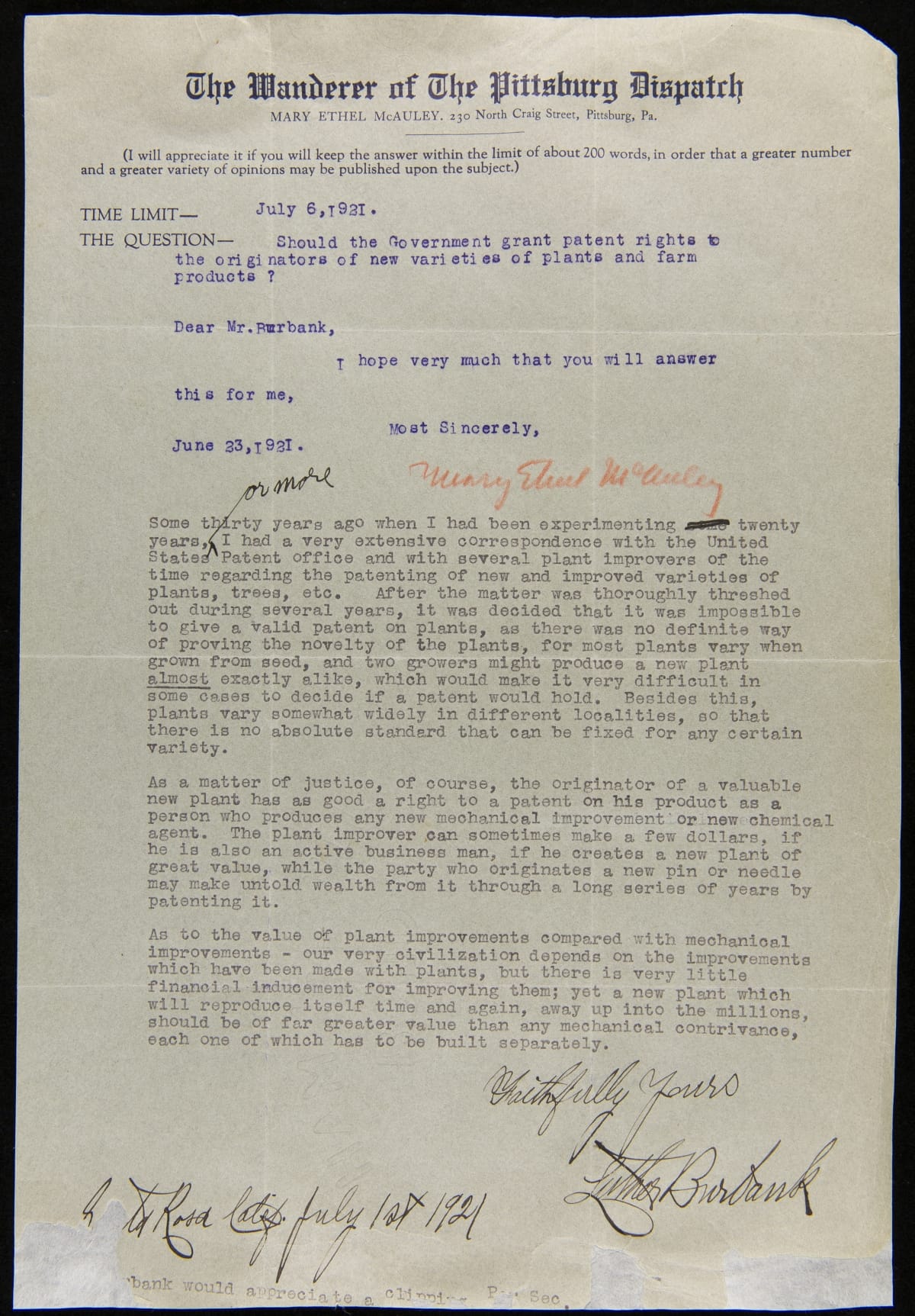
- Letter from Luther Burbank to Mary Ethel McAuley of the Pittsburgh Dispatch, July 1, 1921 -
- July 01, 1921
- Collections - Artifact
Letter from Luther Burbank to Mary Ethel McAuley of the Pittsburgh Dispatch, July 1, 1921
- William S. Porte, Vegetable Breeder for the U.S. Department of Agriculture with the New Pan American Tomato, 1941 -
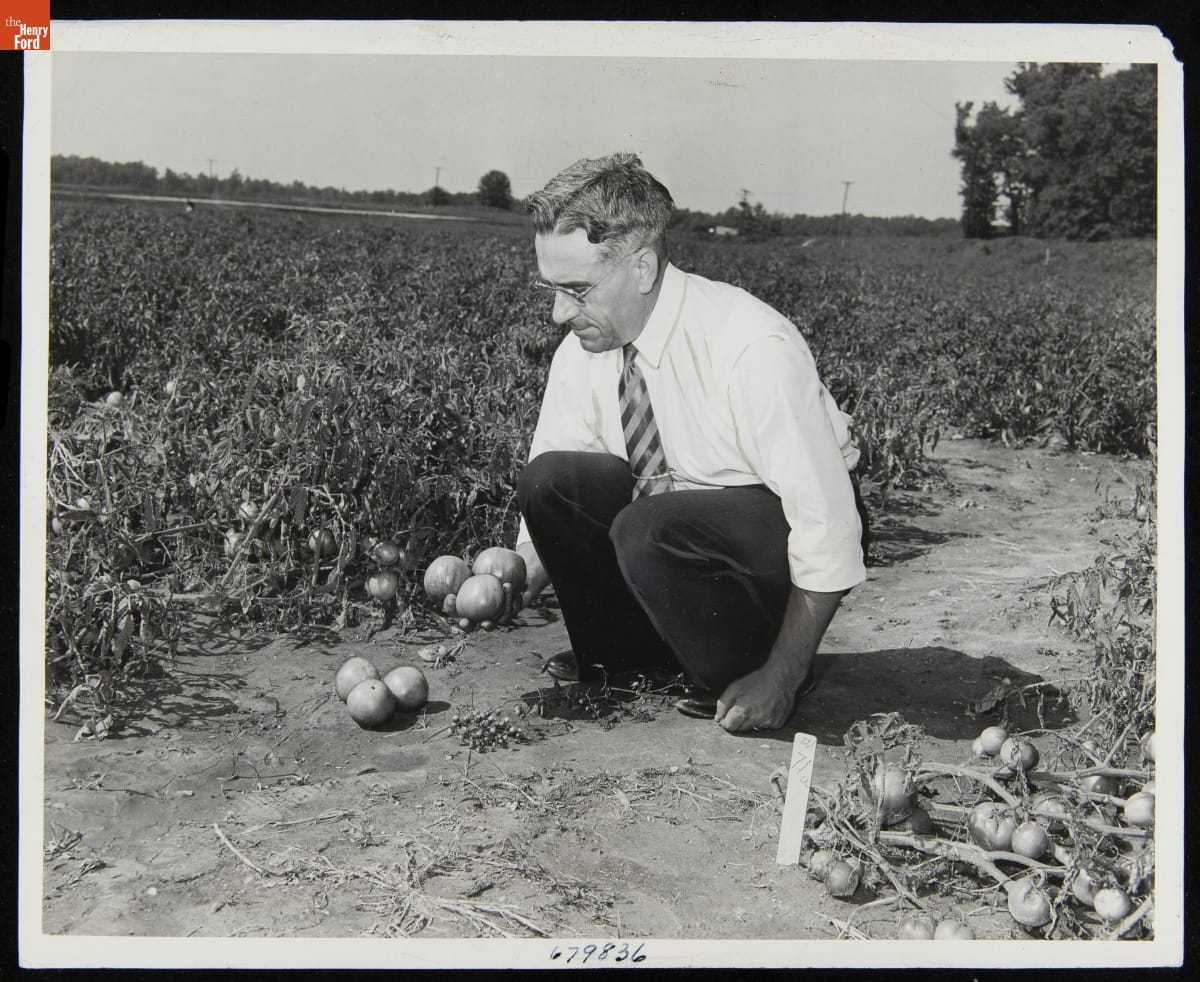
- September 01, 1941
- Collections - Artifact
William S. Porte, Vegetable Breeder for the U.S. Department of Agriculture with the New Pan American Tomato, 1941
- Luther Burbank: His Life and Work, 1915 -
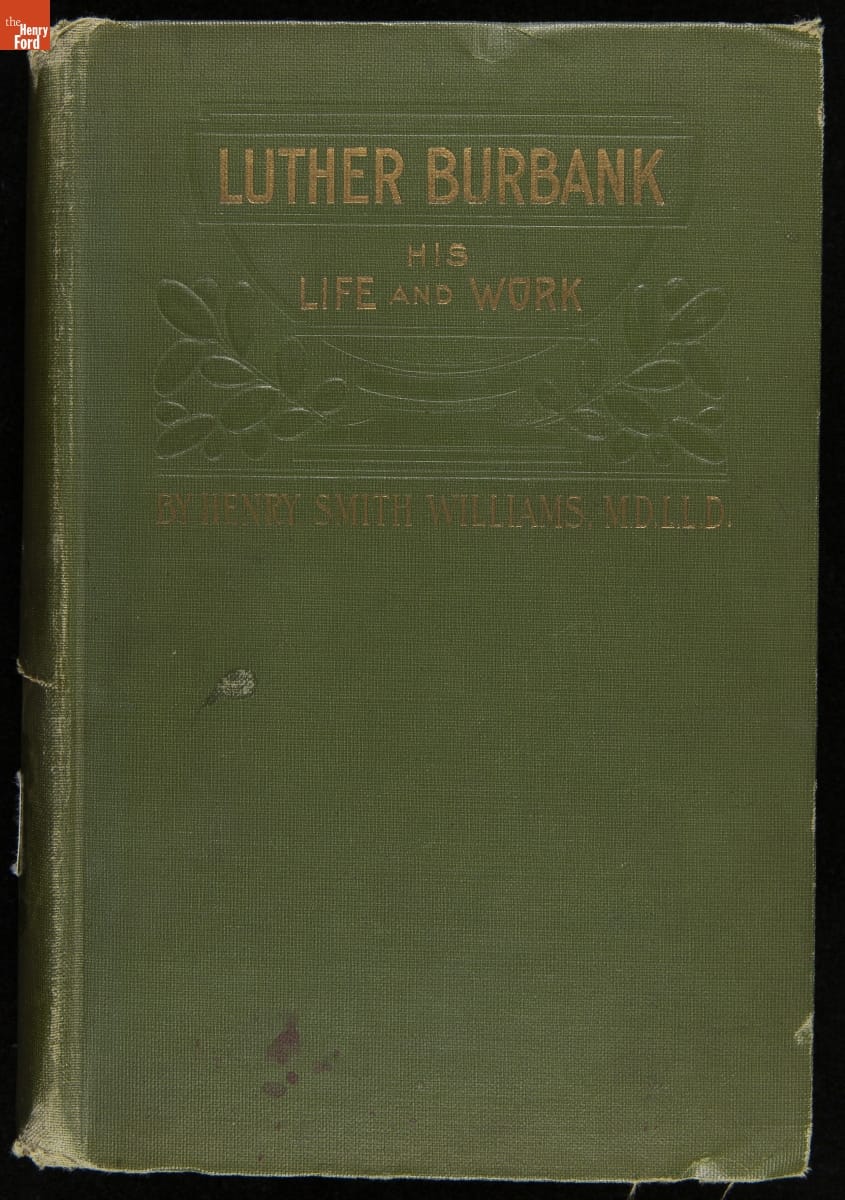
- 1915
- Collections - Artifact
Luther Burbank: His Life and Work, 1915
- Luther Burbank Planting a "Paradox," a Type of Walnut Tree He Created, Burbank Park, Santa Rosa, California, March 1925 -
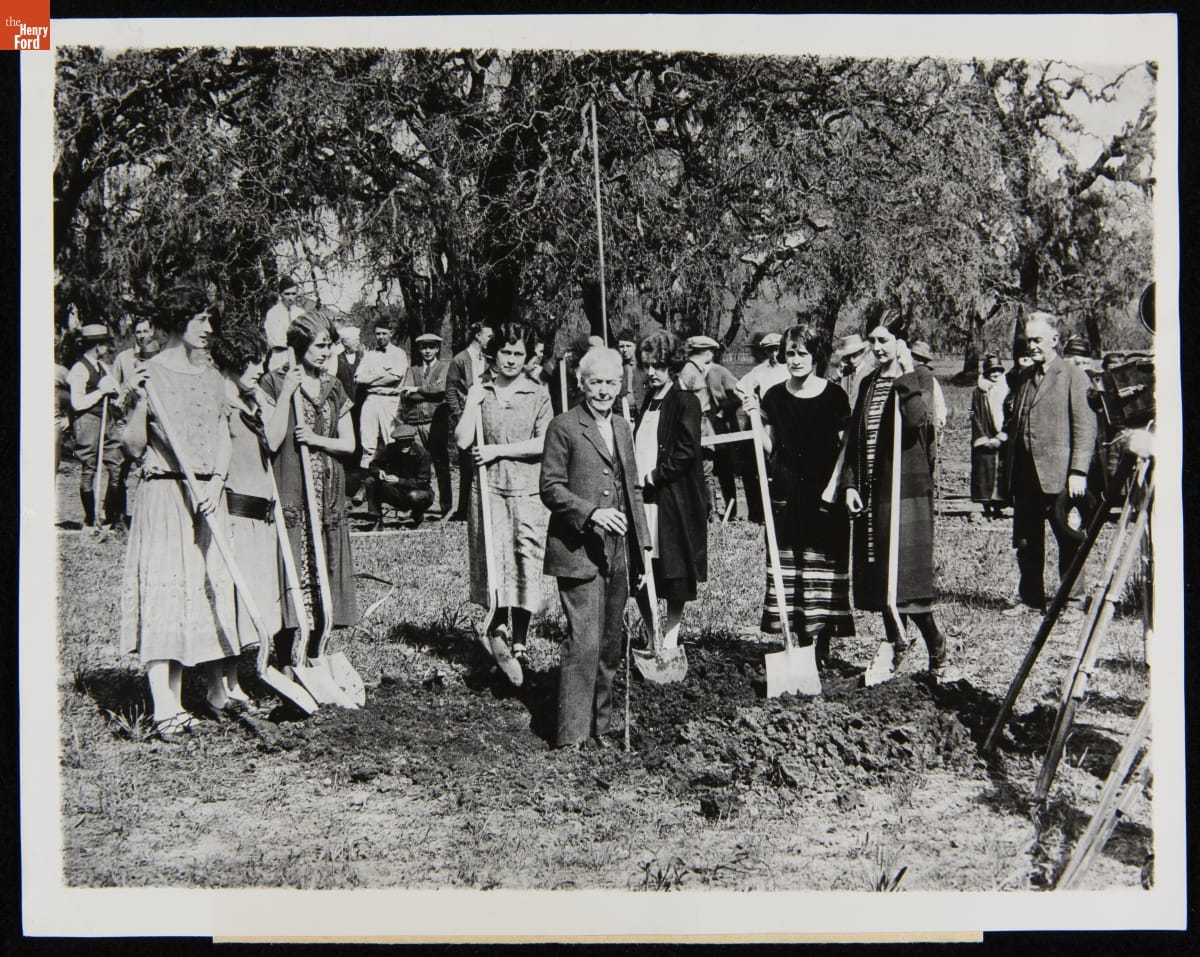
- March 01, 1925
- Collections - Artifact
Luther Burbank Planting a "Paradox," a Type of Walnut Tree He Created, Burbank Park, Santa Rosa, California, March 1925
- Burbank's Experimental Farm, Sebastopol, Near Santa Rosa, California, 1913 - Luther Burbank (1849-1926), a much-heralded American horticulturalist, gained a reputation for selectively breeding more than 800 new fruits, vegetables, flowers, and other plants. He relocated from Massachusetts to California in 1875 and bought land in Sebastopol starting in 1885. Burbank employed around 15 laborers by 1913 on this 18-acre experimental plot. They cultivated lilies, as this postcard depicts, and other plants.
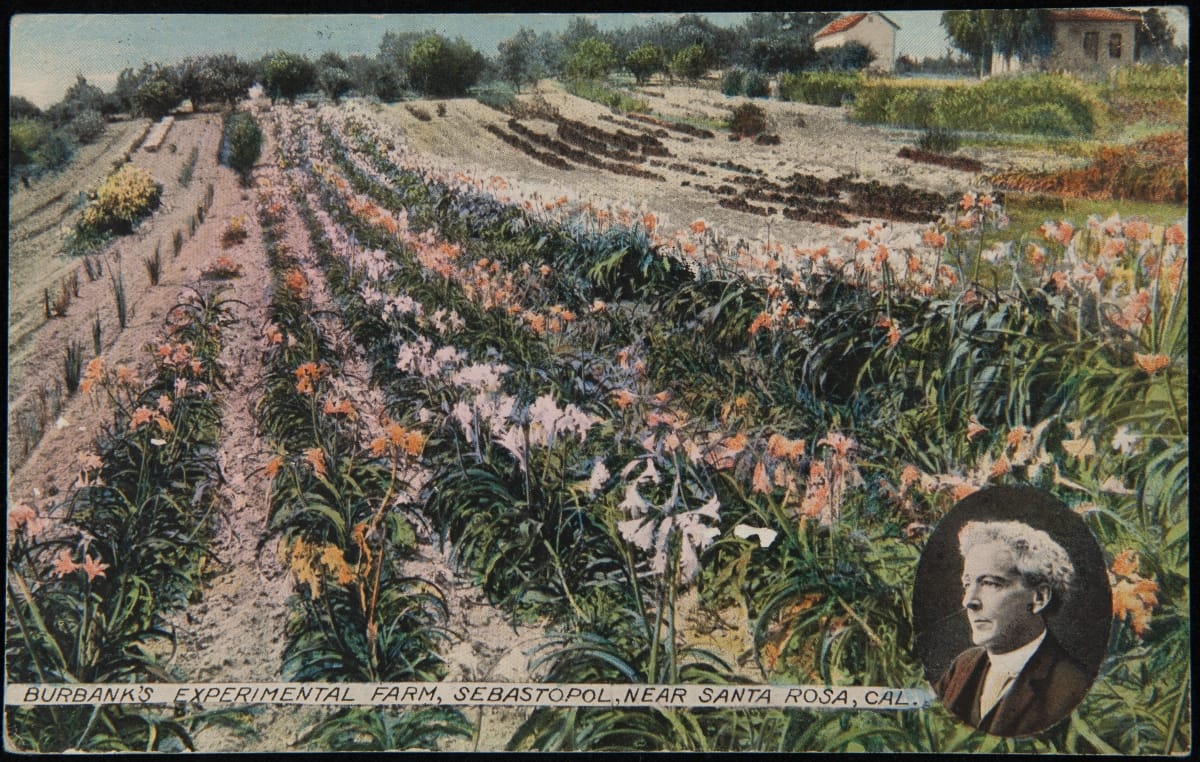
- November 02, 1913
- Collections - Artifact
Burbank's Experimental Farm, Sebastopol, Near Santa Rosa, California, 1913
Luther Burbank (1849-1926), a much-heralded American horticulturalist, gained a reputation for selectively breeding more than 800 new fruits, vegetables, flowers, and other plants. He relocated from Massachusetts to California in 1875 and bought land in Sebastopol starting in 1885. Burbank employed around 15 laborers by 1913 on this 18-acre experimental plot. They cultivated lilies, as this postcard depicts, and other plants.
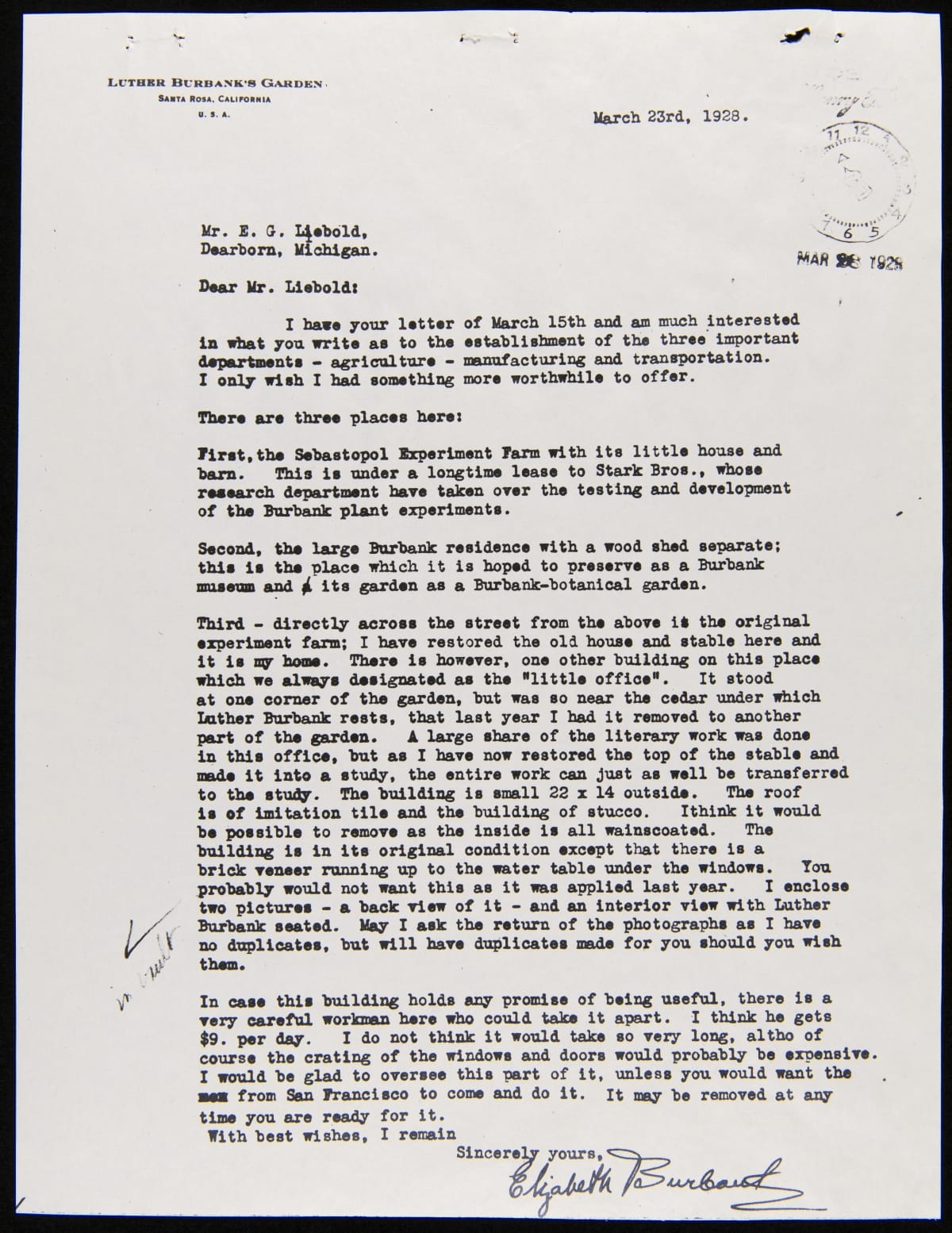
- Letter from Elizabeth Burbank to E.G. Liebold regarding Donation of the "Little Office," March 23, 1928 - Luther Burbank (1849-1926), a much-heralded American horticulturalist, gained a reputation for selectively breeding more than 800 new fruits, vegetables, flowers, and other plants. He opened a "Bureau of Information" in 1910 to sell seeds and souvenirs, but it served other purposes over the years. Burbank's widow called the building the "little office" when she offered it to Henry Ford in 1928 for inclusion in Greenfield Village.
- March 23, 1928
- Collections - Artifact
Letter from Elizabeth Burbank to E.G. Liebold regarding Donation of the "Little Office," March 23, 1928
Luther Burbank (1849-1926), a much-heralded American horticulturalist, gained a reputation for selectively breeding more than 800 new fruits, vegetables, flowers, and other plants. He opened a "Bureau of Information" in 1910 to sell seeds and souvenirs, but it served other purposes over the years. Burbank's widow called the building the "little office" when she offered it to Henry Ford in 1928 for inclusion in Greenfield Village.
- The Mentor, August 1923 -
- August 01, 1923
- Collections - Artifact
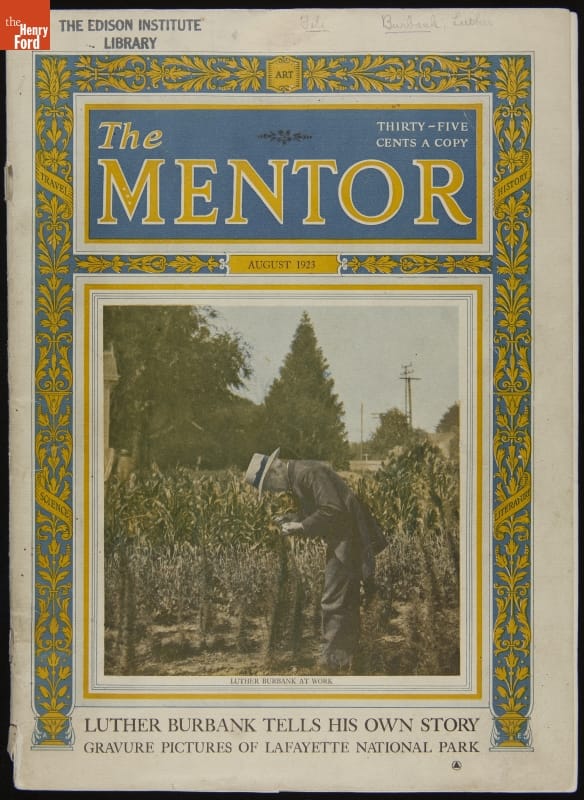
The Mentor, August 1923