
Search
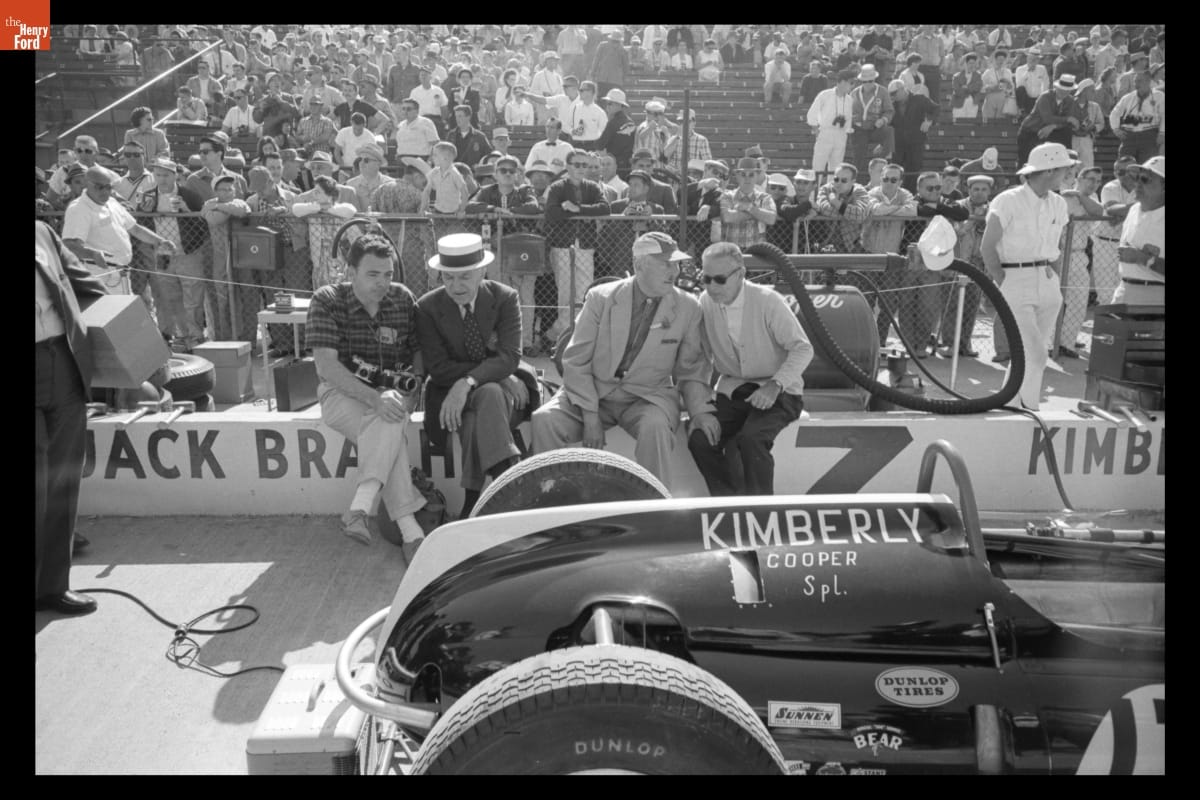
- Kimberly Cooper Special Driven by Jack Brabham in Indianapolis 500, May 30, 1961 - This image shows the atypically low-slung, rear-engined Kimberly Cooper-Climax Special during the 1961 Indianapolis 500 race. Though it only managed a ninth-place finish, the little car changed American auto racing. The Cooper-Climax started a revolution in a sport that had been dominated by big front-engined cars for 50 years. Since 1965, every Indianapolis 500 winner has had a rear-mounted engine.
- May 30, 1961
- Collections - Artifact
Kimberly Cooper Special Driven by Jack Brabham in Indianapolis 500, May 30, 1961
This image shows the atypically low-slung, rear-engined Kimberly Cooper-Climax Special during the 1961 Indianapolis 500 race. Though it only managed a ninth-place finish, the little car changed American auto racing. The Cooper-Climax started a revolution in a sport that had been dominated by big front-engined cars for 50 years. Since 1965, every Indianapolis 500 winner has had a rear-mounted engine.
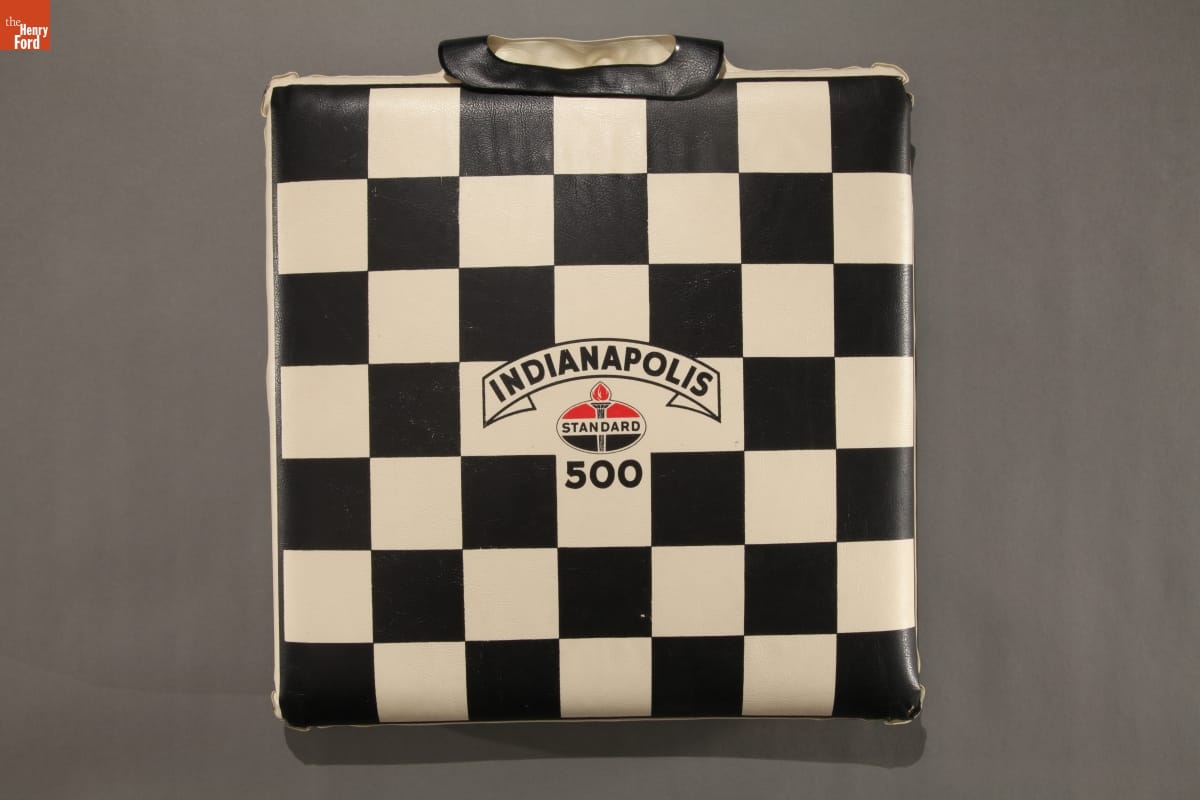
- Indianapolis 500 Seat Cushion, 1950-1970 - Souvenirs can provide a lifelong remembrance of places and events. Each May, Indianapolis 500 race fans have eagerly purchased souvenirs to use and take home. Checkered flag cushions, like this one from the mid twentieth century, provided a comfortable seat for fans when they were not on their feet cheering on their favorite driver.
- 1950-1970
- Collections - Artifact
Indianapolis 500 Seat Cushion, 1950-1970
Souvenirs can provide a lifelong remembrance of places and events. Each May, Indianapolis 500 race fans have eagerly purchased souvenirs to use and take home. Checkered flag cushions, like this one from the mid twentieth century, provided a comfortable seat for fans when they were not on their feet cheering on their favorite driver.
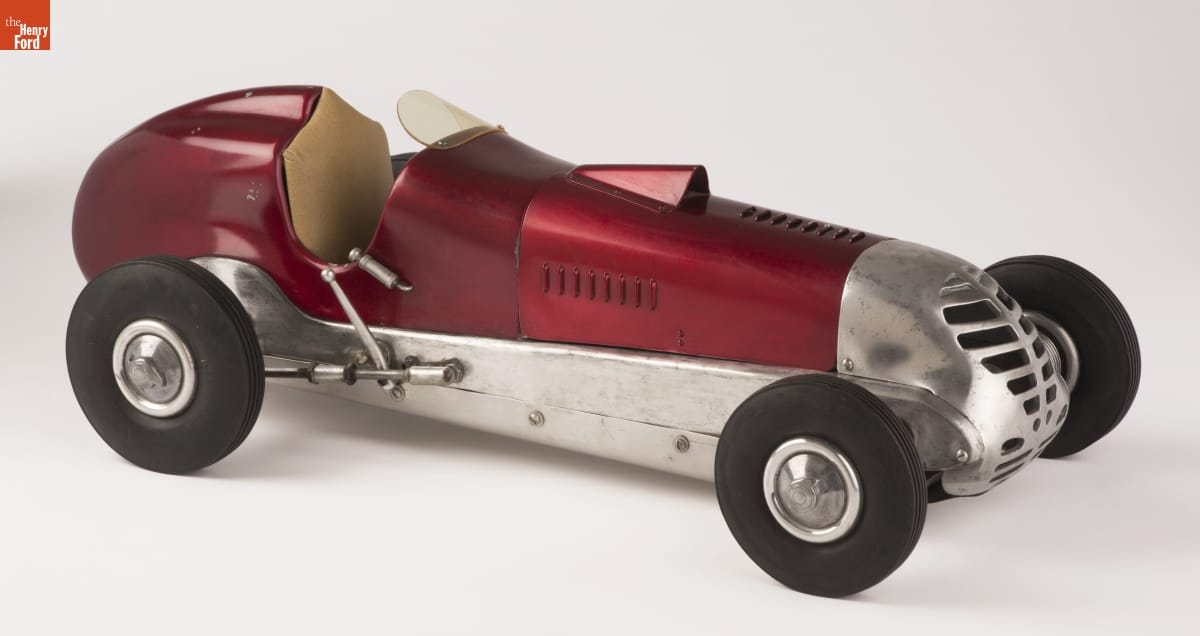
- Korn "Indianapolis" Gas-Powered Racing Tether Car, 1940-1941 - Tether cars, gas-powered model race cars, were popular in the 1930s and 1940s. They were raced individually while tethered to a central pivot, or against each other on a scaled-down board track. This magnesium-bodied model of an Indianapolis-style racer was built by Barney (B.B.) Korn. While Korn's models weren't particularly fast, they were exceptional in their fine detail and craftsmanship.
- 1940-1941
- Collections - Artifact
Korn "Indianapolis" Gas-Powered Racing Tether Car, 1940-1941
Tether cars, gas-powered model race cars, were popular in the 1930s and 1940s. They were raced individually while tethered to a central pivot, or against each other on a scaled-down board track. This magnesium-bodied model of an Indianapolis-style racer was built by Barney (B.B.) Korn. While Korn's models weren't particularly fast, they were exceptional in their fine detail and craftsmanship.
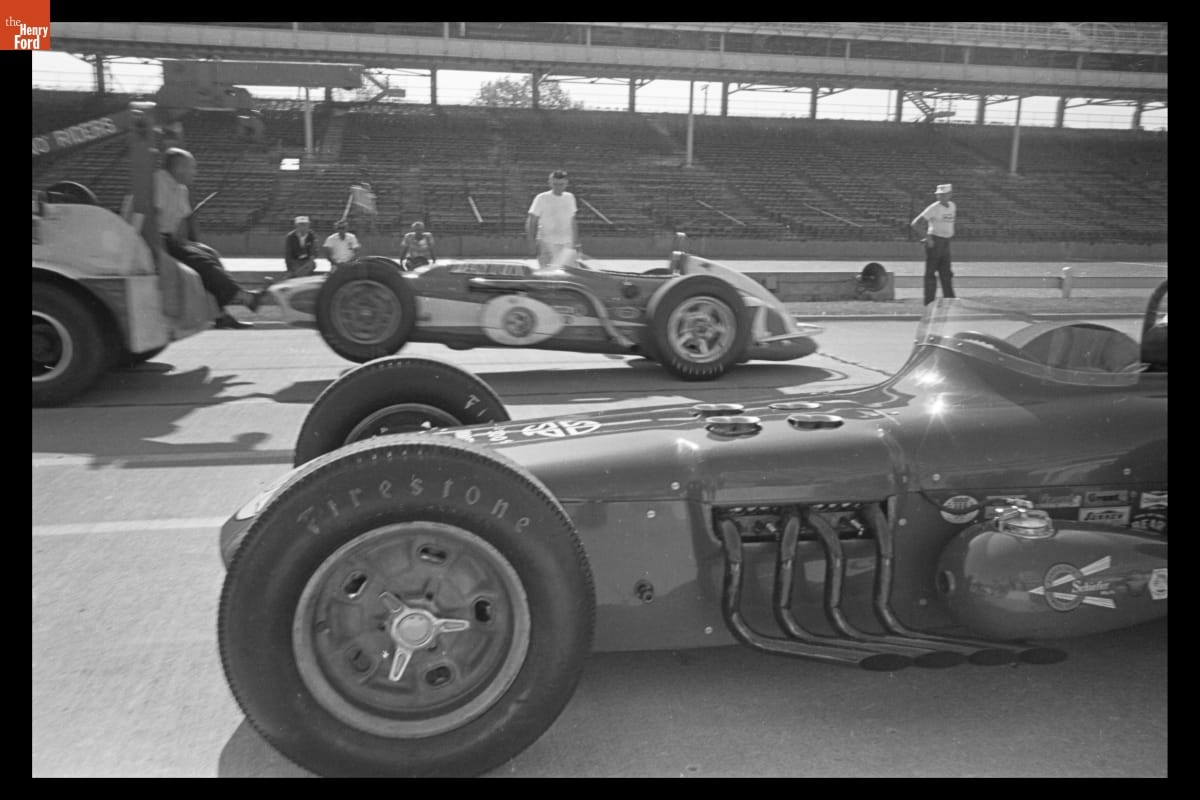
- Indianapolis 500 Qualifying Race, May 1961 - Dave Friedman has captured and preserved auto racing history through his photography. His work -- and his collection of works by other photographers -- documents key races, vehicles, drivers, and teams. In 1961, the Indianapolis 500 celebrated the 50th anniversary of its first running. A.J. Foyt prevailed over Eddie Sachs to take the first of his four Indy 500 victories.
- May 01, 1961
- Collections - Artifact
Indianapolis 500 Qualifying Race, May 1961
Dave Friedman has captured and preserved auto racing history through his photography. His work -- and his collection of works by other photographers -- documents key races, vehicles, drivers, and teams. In 1961, the Indianapolis 500 celebrated the 50th anniversary of its first running. A.J. Foyt prevailed over Eddie Sachs to take the first of his four Indy 500 victories.
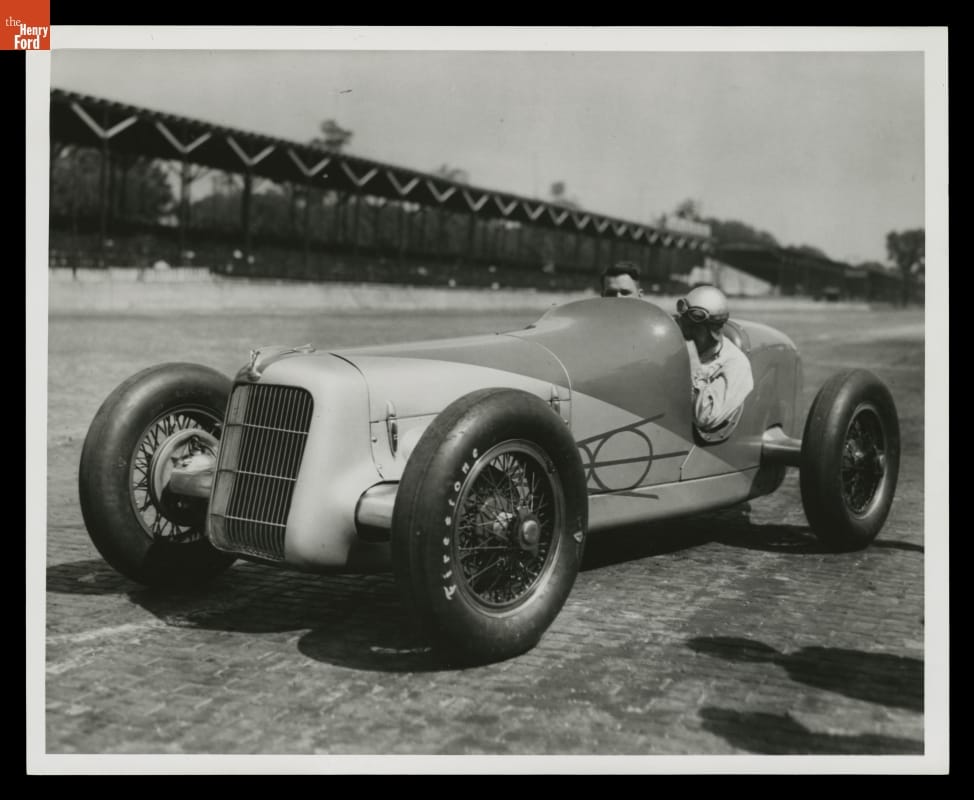
- Ford-Miller Special Race Car at the 1935 Indianapolis 500 Race - Race car builder Harry Miller and entrepreneur Preston Tucker convinced Ford Motor Company to sponsor ten Miller-designed cars at the 1935 Indianapolis 500. The front-wheel-drive racers used Ford V-8 engines under their streamlined bodies. Unfortunately, Miller did not have enough time to thoroughly test the cars and mechanical problems prevented all of them from finishing the race.
- May 30, 1935
- Collections - Artifact
Ford-Miller Special Race Car at the 1935 Indianapolis 500 Race
Race car builder Harry Miller and entrepreneur Preston Tucker convinced Ford Motor Company to sponsor ten Miller-designed cars at the 1935 Indianapolis 500. The front-wheel-drive racers used Ford V-8 engines under their streamlined bodies. Unfortunately, Miller did not have enough time to thoroughly test the cars and mechanical problems prevented all of them from finishing the race.
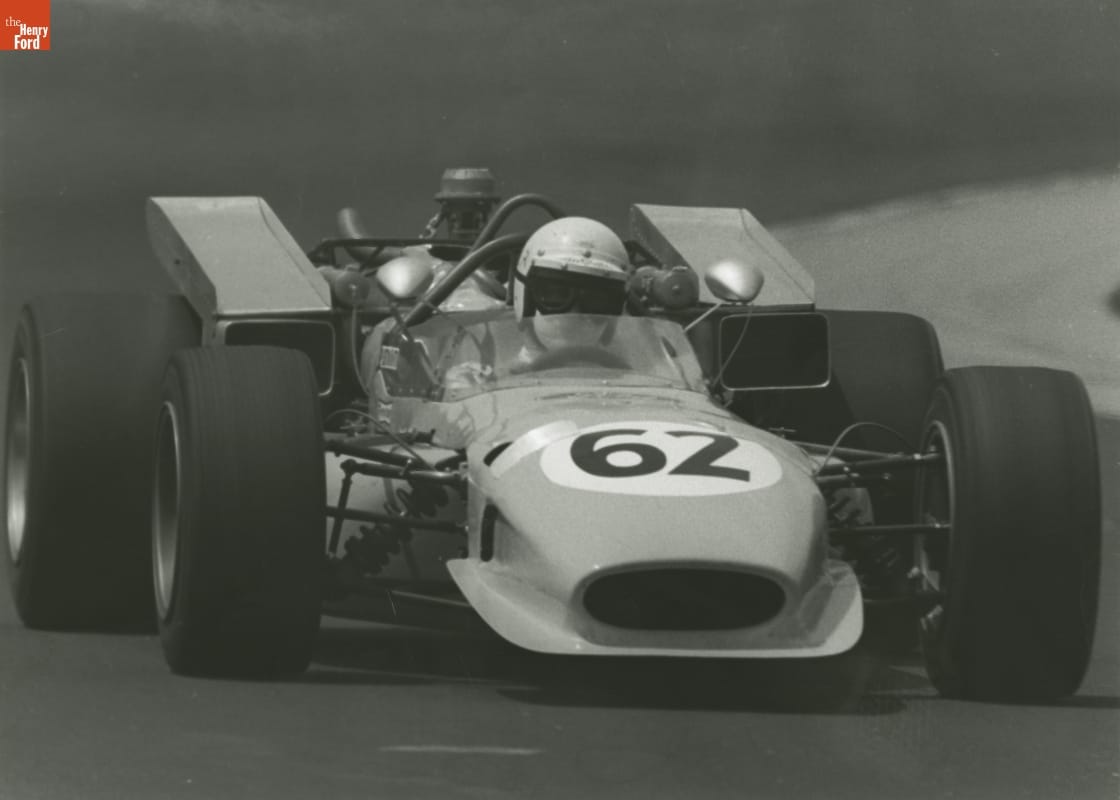
- George Follmer in Number 62 Race Car on the Speedway, Indianapolis, Indiana, May 30, 1969 - George Follmer drives car Number 62 at the Indianapolis speedway in this photograph from 1969. Race car designers experimented with many wing shapes to create downforce and help cars stick to the track.
- May 30, 1969
- Collections - Artifact
George Follmer in Number 62 Race Car on the Speedway, Indianapolis, Indiana, May 30, 1969
George Follmer drives car Number 62 at the Indianapolis speedway in this photograph from 1969. Race car designers experimented with many wing shapes to create downforce and help cars stick to the track.
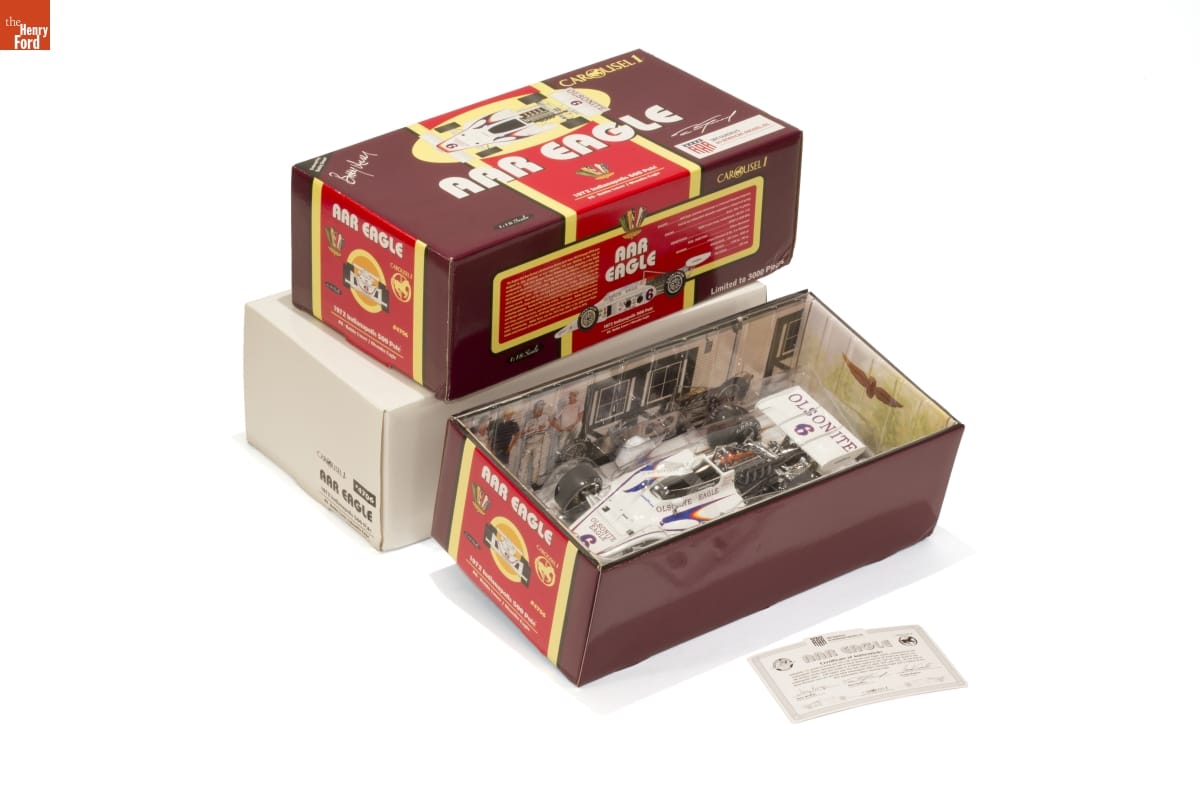
- Scale Model of Eagle #6 Race Car, Driven by Bobby Unser at 1972 Indianapolis 500 - Bobby Unser competed in the 1972 Indianapolis 500 in an Olsonite Eagle designed and built by Dan Gurney's All American Racers. Unser won the pole position with a qualifying speed of 195.940 miles per hour, but his actual race wasn't so successful. While Unser led the first 30 laps, a broken ignition rotor forced him out on lap 31.
- 1972-1973
- Collections - Artifact
Scale Model of Eagle #6 Race Car, Driven by Bobby Unser at 1972 Indianapolis 500
Bobby Unser competed in the 1972 Indianapolis 500 in an Olsonite Eagle designed and built by Dan Gurney's All American Racers. Unser won the pole position with a qualifying speed of 195.940 miles per hour, but his actual race wasn't so successful. While Unser led the first 30 laps, a broken ignition rotor forced him out on lap 31.
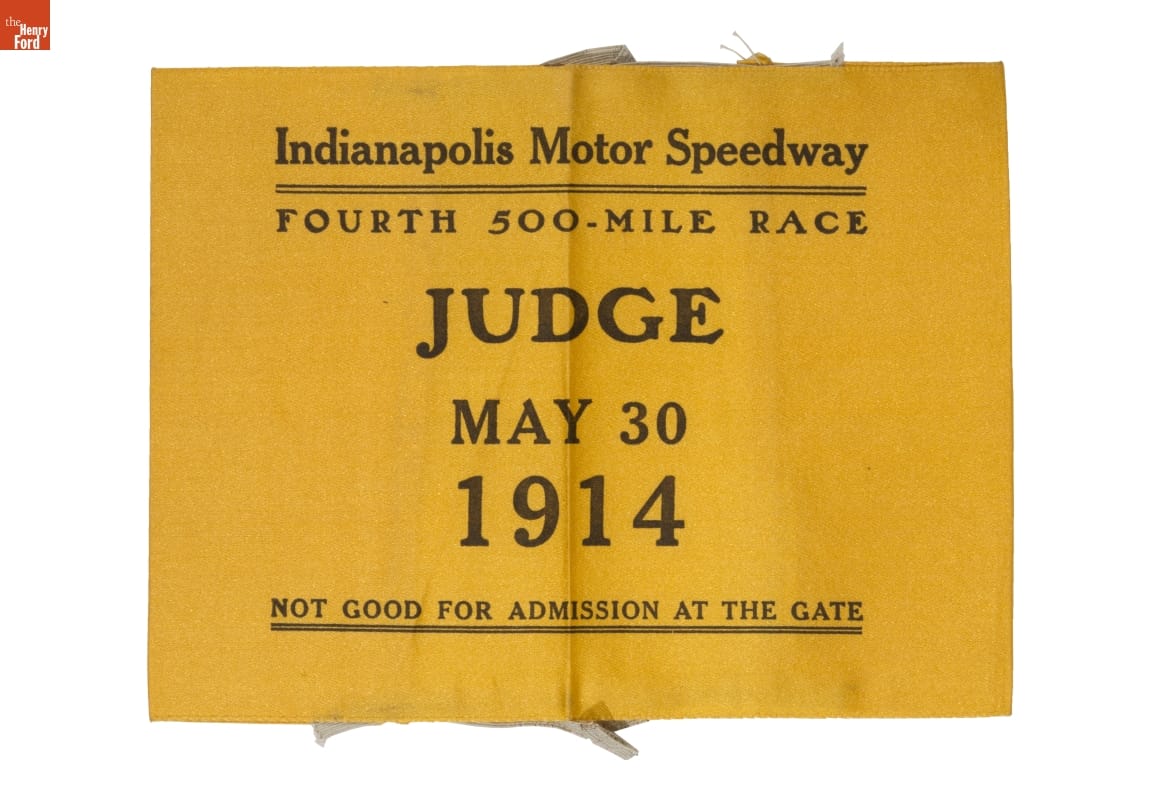
- Official's Armband from Indianapolis 500 Automobile Race, 1914 - The fourth annual Indianapolis 500 took place on May 30, 1914. French driver Rene Thomas, with riding mechanic Robert Laly, took the checkered flag in a French-built Delage. Thomas set a new average race speed record of 82.47 miles per hour. In fact, Europe dominated the 1914 race. French and Belgian drivers finished in five of the top six places.
- May 30, 1914
- Collections - Artifact
Official's Armband from Indianapolis 500 Automobile Race, 1914
The fourth annual Indianapolis 500 took place on May 30, 1914. French driver Rene Thomas, with riding mechanic Robert Laly, took the checkered flag in a French-built Delage. Thomas set a new average race speed record of 82.47 miles per hour. In fact, Europe dominated the 1914 race. French and Belgian drivers finished in five of the top six places.
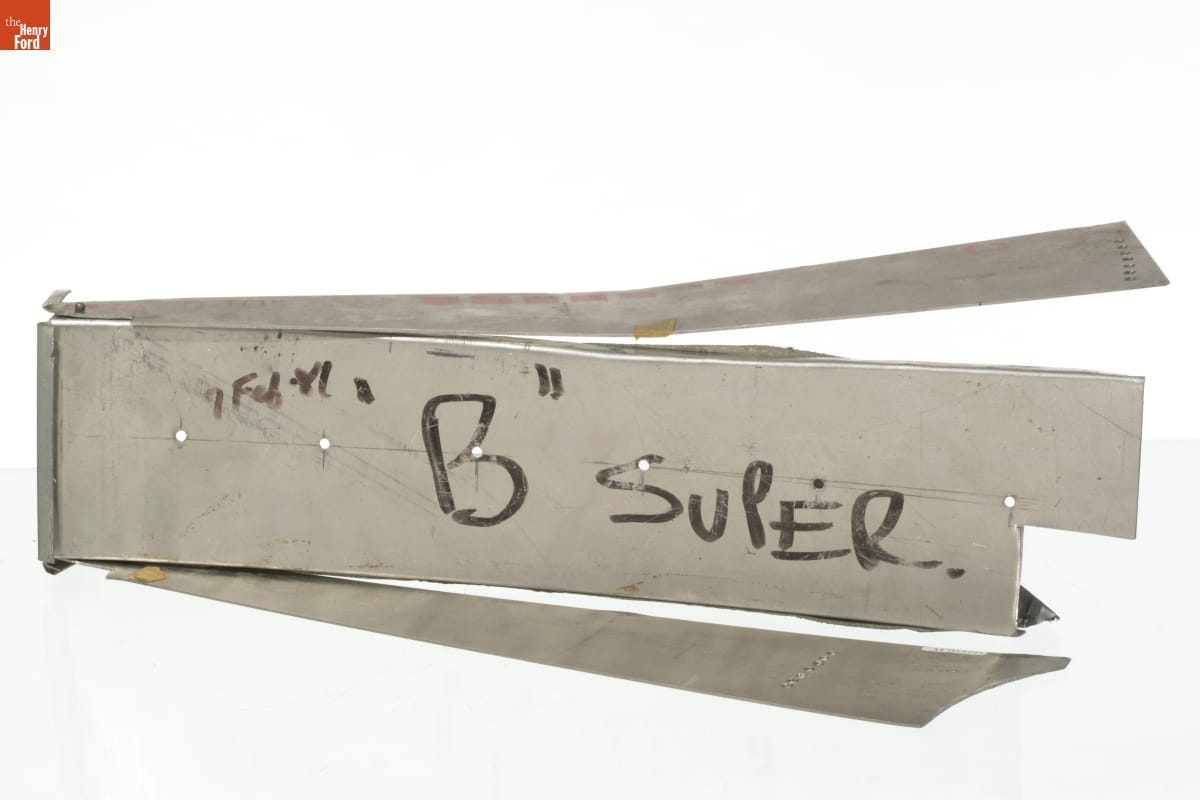
- Scale Model of Indy Car Side Pod Tunnel Used for Airflow Testing, 1981 - Bobby Unser tested scale model body parts, like this one, to design a better race car. He used a flow bench -- typically used to analyze engine parts -- to determine which design would most effectively push a car closer to the racing surface. This downward force provides greater traction for higher cornering speed. Unser's innovative approach allowed for more development while reducing the amount of full-scale wind tunnel and track testing.
- February 07, 1981
- Collections - Artifact
Scale Model of Indy Car Side Pod Tunnel Used for Airflow Testing, 1981
Bobby Unser tested scale model body parts, like this one, to design a better race car. He used a flow bench -- typically used to analyze engine parts -- to determine which design would most effectively push a car closer to the racing surface. This downward force provides greater traction for higher cornering speed. Unser's innovative approach allowed for more development while reducing the amount of full-scale wind tunnel and track testing.
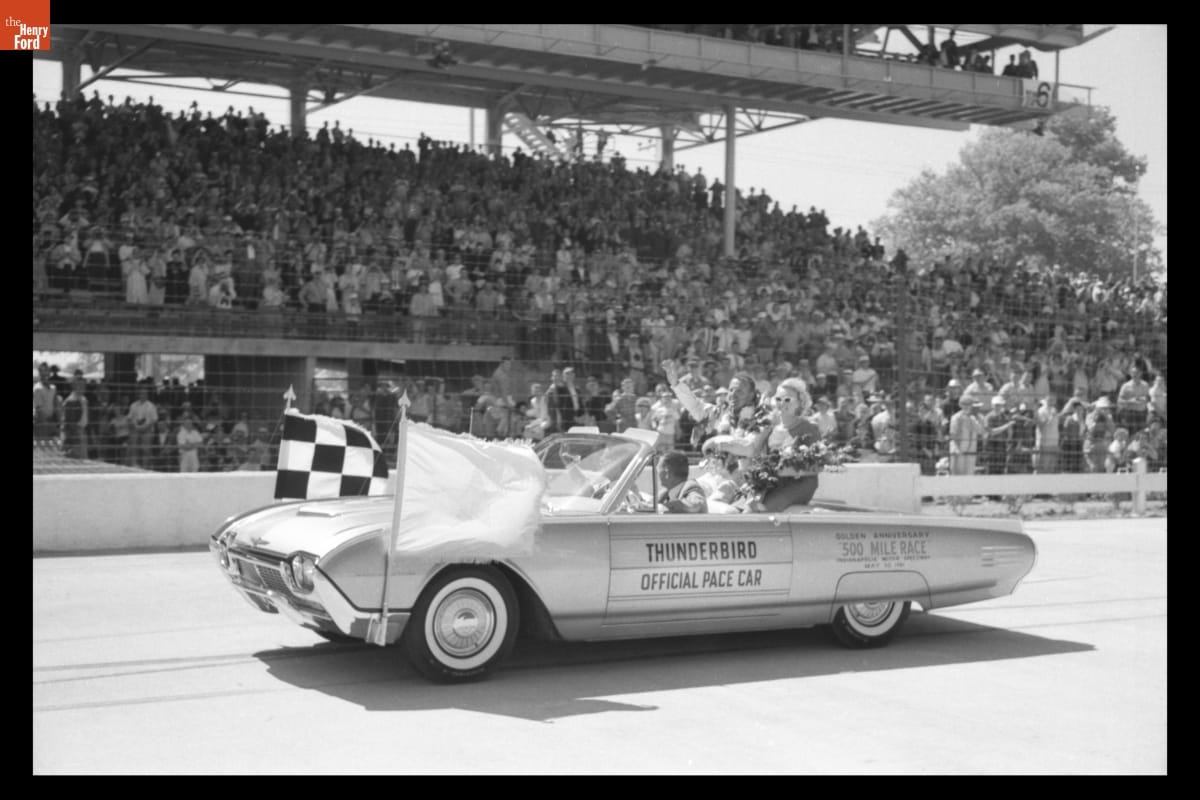
- Ford Thunderbird, Official Pace Car at Indianapolis 500, May 30, 1961 - The Indianapolis 500 features a "rolling start" in which entrants follow a pace car into the green flag. Officials chose each year's pace car based on design or engineering, or to celebrate major milestones. For 1961, Ford Motor Company supplied a gold-painted Thunderbird to commemorate the race's 50th anniversary. Winner A.J. Foyt took a victory lap in the car.
- May 30, 1961
- Collections - Artifact
Ford Thunderbird, Official Pace Car at Indianapolis 500, May 30, 1961
The Indianapolis 500 features a "rolling start" in which entrants follow a pace car into the green flag. Officials chose each year's pace car based on design or engineering, or to celebrate major milestones. For 1961, Ford Motor Company supplied a gold-painted Thunderbird to commemorate the race's 50th anniversary. Winner A.J. Foyt took a victory lap in the car.