
Search
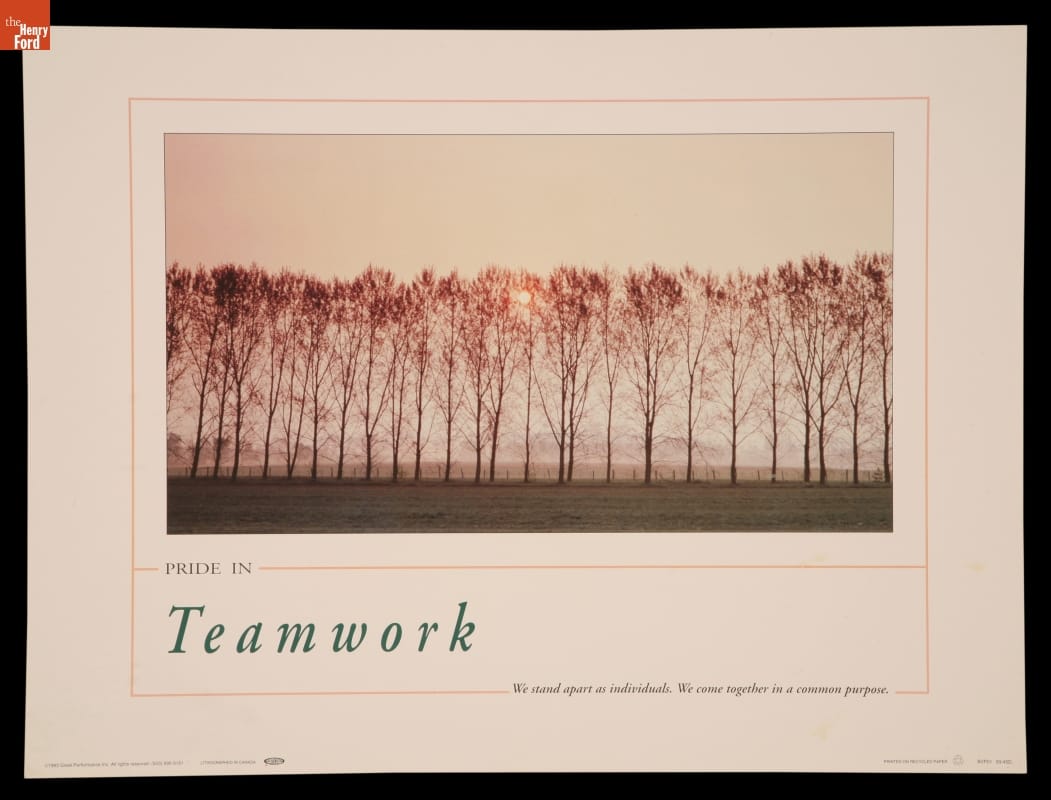
- Motivational Poster, "Pride in Teamwork," 1993 -
- 1993
- Collections - Artifact
Motivational Poster, "Pride in Teamwork," 1993
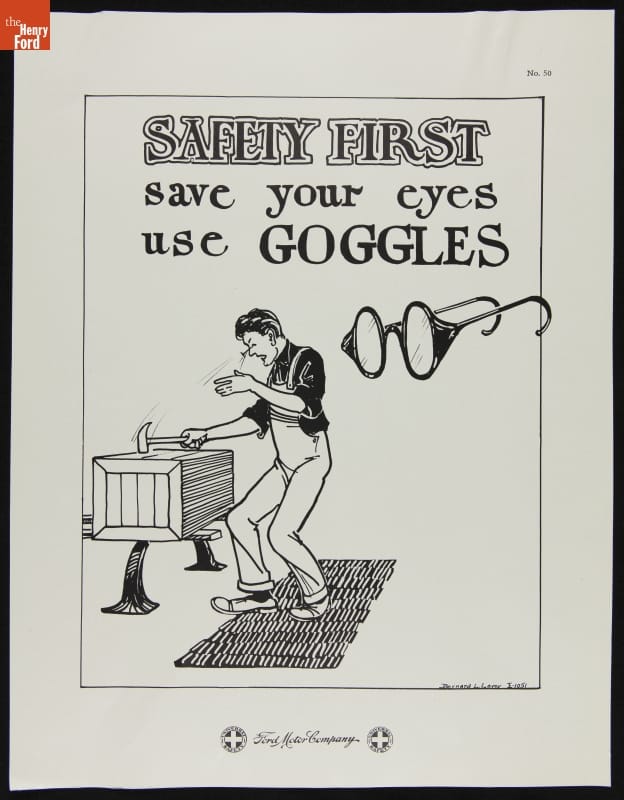
- Ford Motor Company Worker Safety Poster, "Safety First. Save Your Eyes, Use Goggles," 1924 - Ford Motor Company took safety seriously. Its safety department improved dangerous machines, encouraged careful work habits, published safety bulletins and posters, and even organized safety rallies, parades and picnics. This poster encouraged employees to wear safety goggles to reduce the risk of eye injuries. Safe workplaces were in everyone's best interest.
- 1924
- Collections - Artifact
Ford Motor Company Worker Safety Poster, "Safety First. Save Your Eyes, Use Goggles," 1924
Ford Motor Company took safety seriously. Its safety department improved dangerous machines, encouraged careful work habits, published safety bulletins and posters, and even organized safety rallies, parades and picnics. This poster encouraged employees to wear safety goggles to reduce the risk of eye injuries. Safe workplaces were in everyone's best interest.
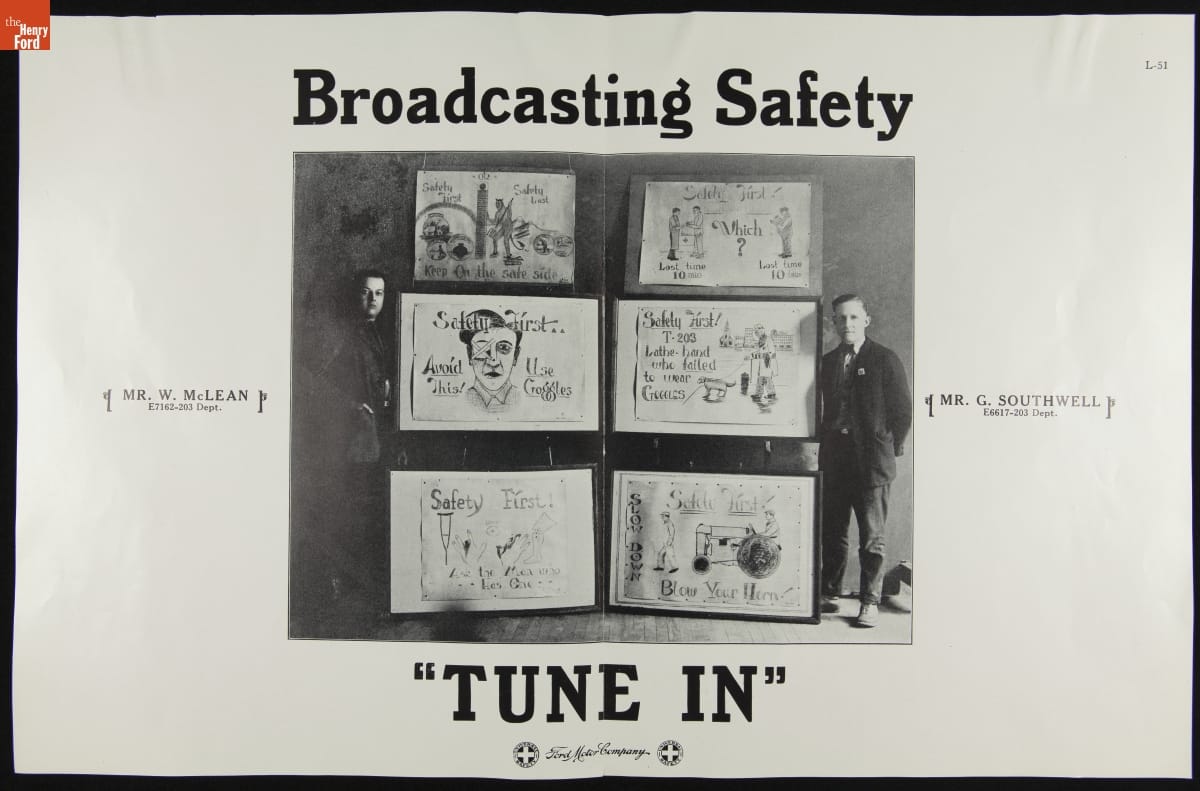
- Ford Motor Company Worker Safety Posters, "Tune In, Universal Safety," 1924 - Ford Motor Company borrowed language from the new medium of radio for this 1924 worker safety campaign, encouraging employees to "Tune In" as the company was "Broadcasting Safety" through a series of accident-prevention posters. Safe working habits were in everyone's best interest -- from the worker who risked debilitating injury and loss of pay, to the company that faced lost productivity.
- 1924
- Collections - Artifact
Ford Motor Company Worker Safety Posters, "Tune In, Universal Safety," 1924
Ford Motor Company borrowed language from the new medium of radio for this 1924 worker safety campaign, encouraging employees to "Tune In" as the company was "Broadcasting Safety" through a series of accident-prevention posters. Safe working habits were in everyone's best interest -- from the worker who risked debilitating injury and loss of pay, to the company that faced lost productivity.
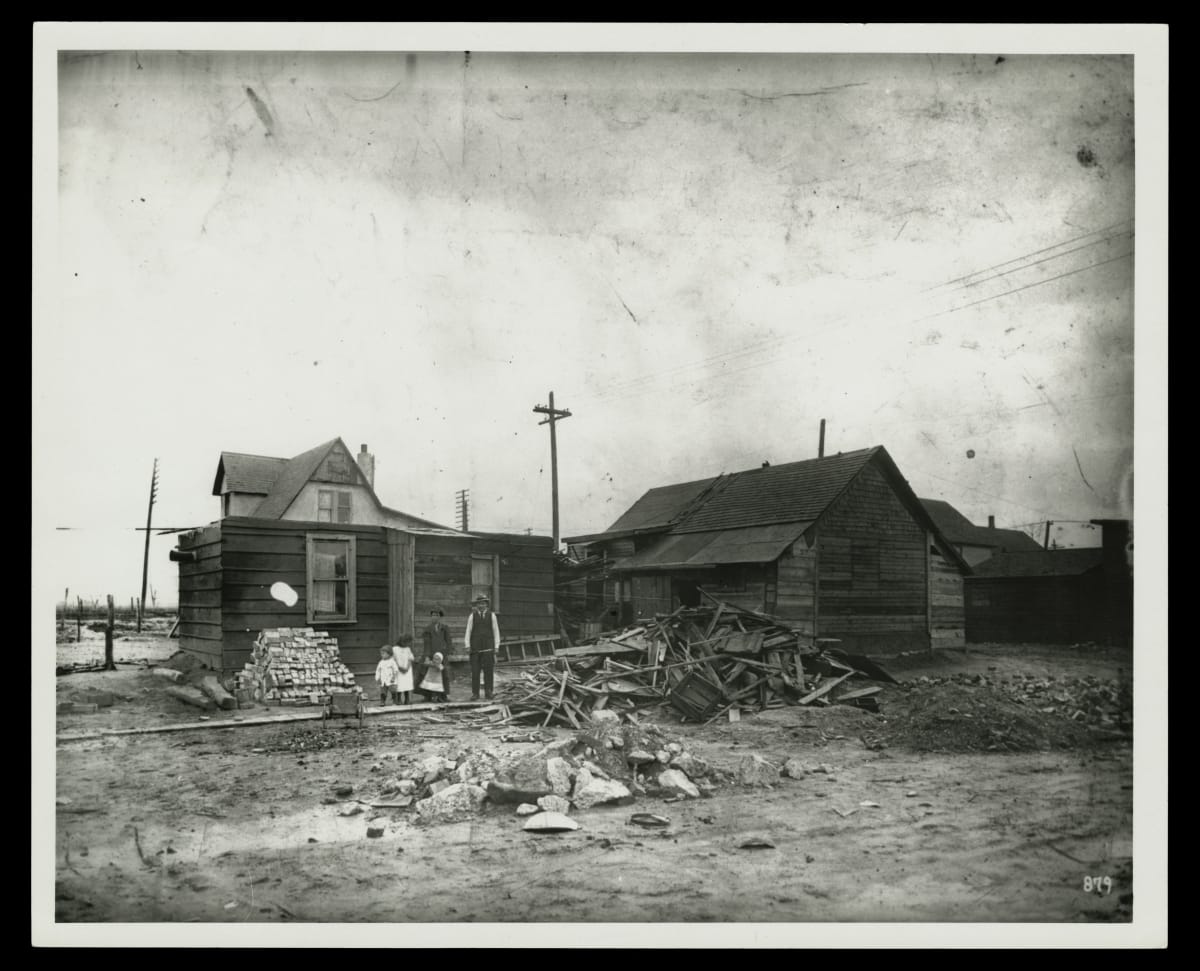
- Undesirable Home Surroundings Found on First Investigation, Ford Sociological Department, 1914-1915 - Ford Motor Company established its Sociological Department in 1914. The department established rules and conditions that Ford employees had to meet to qualify for the company's Five Dollar Day pay rate. Department officials monitored employees both at work and at home. This photograph documented what the department considered to be undesirable living conditions at an employee's house.
- 1914-1915
- Collections - Artifact
Undesirable Home Surroundings Found on First Investigation, Ford Sociological Department, 1914-1915
Ford Motor Company established its Sociological Department in 1914. The department established rules and conditions that Ford employees had to meet to qualify for the company's Five Dollar Day pay rate. Department officials monitored employees both at work and at home. This photograph documented what the department considered to be undesirable living conditions at an employee's house.
- Undesirable Employee Home Conditions, Ford Sociological Department, circa 1914 - Ford Motor Company established its Sociological Department in 1914. The department established rules and conditions that Ford employees had to meet to qualify for the company's Five Dollar Day pay rate. Department officials monitored employees both at work and at home. This photograph documented what the department considered to be undesirable living conditions at an employee's house.
- circa 1914
- Collections - Artifact
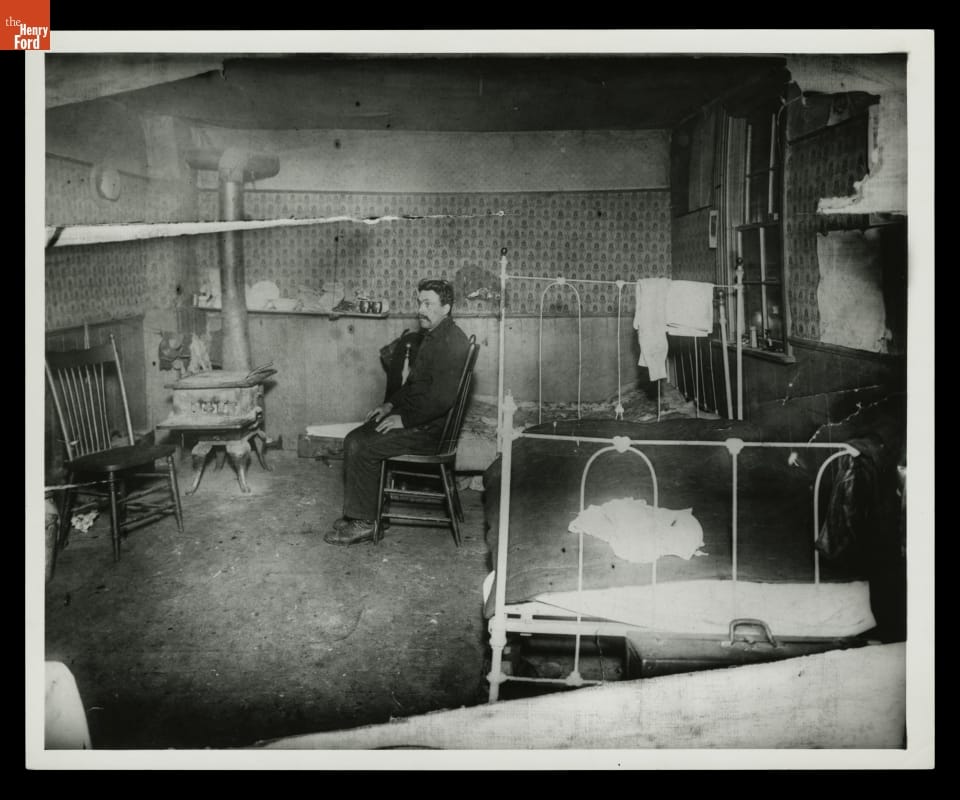
Undesirable Employee Home Conditions, Ford Sociological Department, circa 1914
Ford Motor Company established its Sociological Department in 1914. The department established rules and conditions that Ford employees had to meet to qualify for the company's Five Dollar Day pay rate. Department officials monitored employees both at work and at home. This photograph documented what the department considered to be undesirable living conditions at an employee's house.
- "Putting the Disabled Veteran Back to Work," Ford Press Release by Harley L. Krieger, July 31, 1946 - More than 670,000 American soldiers were wounded in World War II. Many of them returned home with lasting injuries. Ford Motor Company made special efforts to hire veterans with disabilities, offering training programs individually adapted to people based on their specific injuries.
- July 31, 1946
- Collections - Artifact
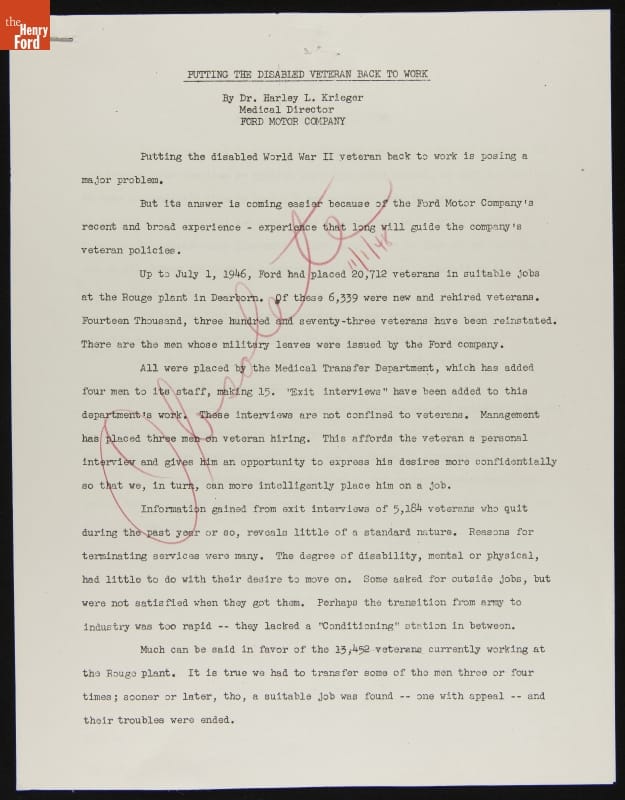
"Putting the Disabled Veteran Back to Work," Ford Press Release by Harley L. Krieger, July 31, 1946
More than 670,000 American soldiers were wounded in World War II. Many of them returned home with lasting injuries. Ford Motor Company made special efforts to hire veterans with disabilities, offering training programs individually adapted to people based on their specific injuries.
- Checking on Ford Employees Home Conditions, Views from "Factory Facts From Ford," 1917 - Beyond revolutionizing America's industrial production, Henry Ford and other managers at Ford Motor Company instituted a wide-reaching corporate welfare program that opened up the most intimate and personal details of employee's personal, family, and financial life to investigators from the Sociological Department. After the announcement of the $5 per day profit sharing plan in January 1914, Henry Ford wanted to ensure that employees, many of whom were non-English speaking immigrants, did not squander the funds. To this end, the Ford Sociological Department was created to investigate and monitor the personal and work lives of employees to the extent that investigators (later called Advisors) conducted home visits, checked bank deposits, and monitored children's school attendance as well as divorce filings. In addition, the Sociological Department advisors provided hygiene instruction, financial and legal advice, and worked with the English School to teach Ford's immigrant workers English.
- 1917
- Collections - Artifact
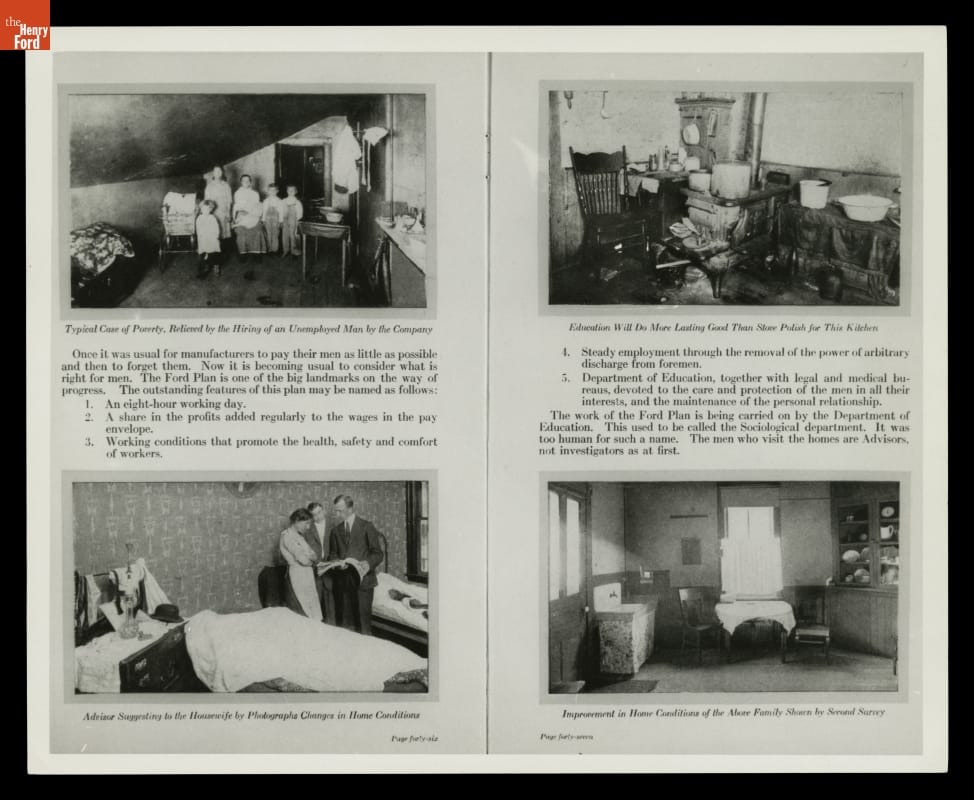
Checking on Ford Employees Home Conditions, Views from "Factory Facts From Ford," 1917
Beyond revolutionizing America's industrial production, Henry Ford and other managers at Ford Motor Company instituted a wide-reaching corporate welfare program that opened up the most intimate and personal details of employee's personal, family, and financial life to investigators from the Sociological Department. After the announcement of the $5 per day profit sharing plan in January 1914, Henry Ford wanted to ensure that employees, many of whom were non-English speaking immigrants, did not squander the funds. To this end, the Ford Sociological Department was created to investigate and monitor the personal and work lives of employees to the extent that investigators (later called Advisors) conducted home visits, checked bank deposits, and monitored children's school attendance as well as divorce filings. In addition, the Sociological Department advisors provided hygiene instruction, financial and legal advice, and worked with the English School to teach Ford's immigrant workers English.
- American Locomotive Company Annual Report, 1950 - The American Locomotive Company, established in 1901, wisely transitioned from manufacturing steam locomotives to diesel-electric units in the 1920s. ALCO locomotives, built in partnership with General Electric, were popular with American railroads until GE ended the collaboration in 1953 and became a direct competitor. ALCO's market share fell steadily until the company was forced to end production in 1969.
- 1950
- Collections - Artifact
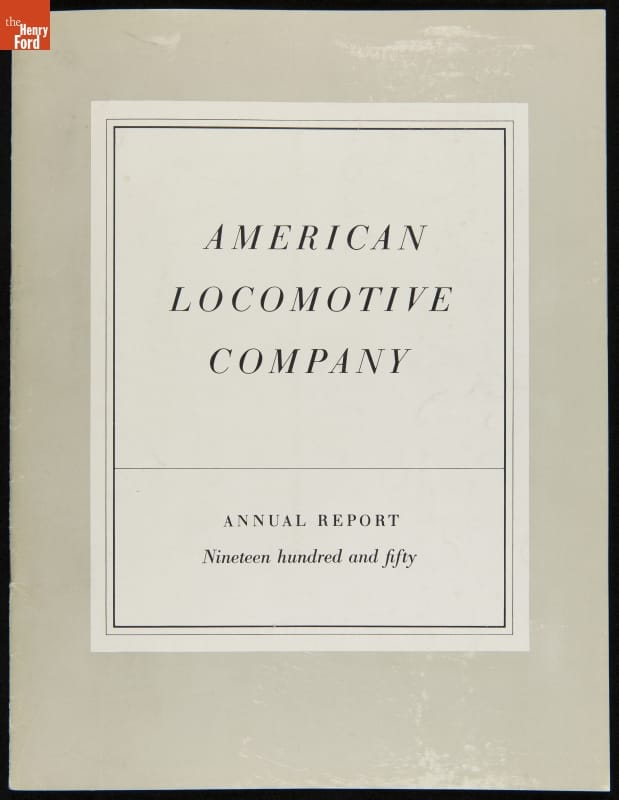
American Locomotive Company Annual Report, 1950
The American Locomotive Company, established in 1901, wisely transitioned from manufacturing steam locomotives to diesel-electric units in the 1920s. ALCO locomotives, built in partnership with General Electric, were popular with American railroads until GE ended the collaboration in 1953 and became a direct competitor. ALCO's market share fell steadily until the company was forced to end production in 1969.
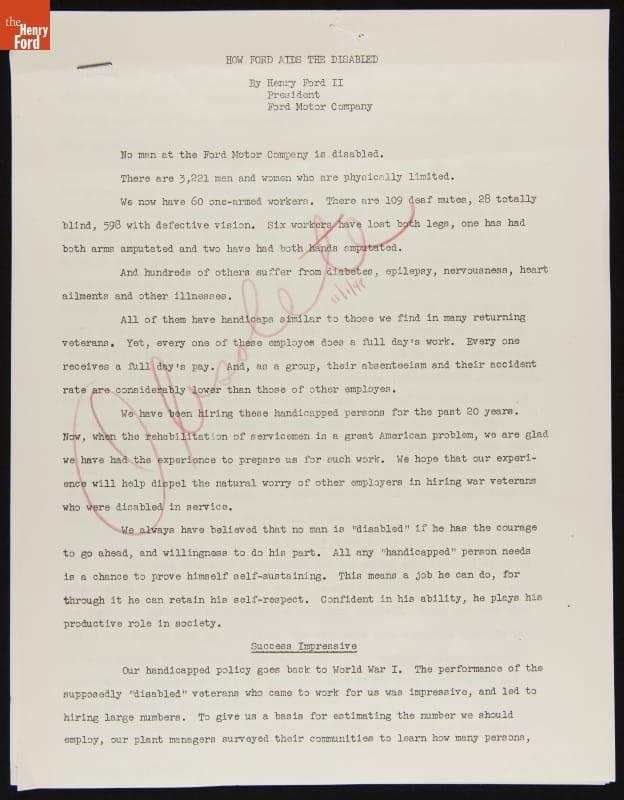
- "How Ford Aids the Disabled," Ford Press Release, May 13, 1947 - More than 670,000 American soldiers were wounded in World War II. Many of them returned home with lasting injuries. Ford Motor Company made special efforts to hire veterans with disabilities, offering training programs individually adapted to people based on their specific injuries.
- May 13, 1947
- Collections - Artifact
"How Ford Aids the Disabled," Ford Press Release, May 13, 1947
More than 670,000 American soldiers were wounded in World War II. Many of them returned home with lasting injuries. Ford Motor Company made special efforts to hire veterans with disabilities, offering training programs individually adapted to people based on their specific injuries.
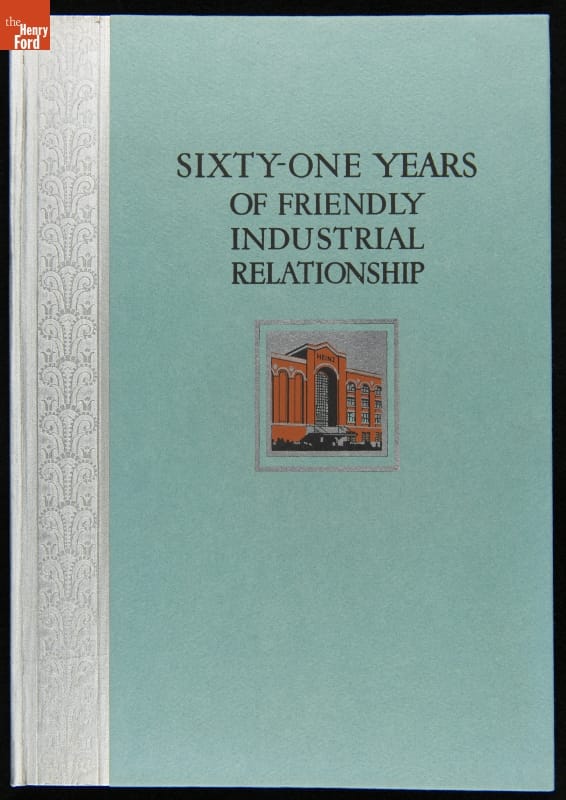
- Book for the Dedication of Heinz Company Auditorium, "Sixty-One Years of Friendly Industrial Relationship," 1931 - H.J. Heinz valued a strong relationship between his company and its employees. This "friendly industrial relationship" continued long after he passed and became the focal point for the H.J. Heinz Company's 61st anniversary in 1930. To honor and continue this relationship, the company dedicated a new employee auditorium and service building. This book features speeches and addresses from the dedication ceremony.
- November 08, 1930
- Collections - Artifact
Book for the Dedication of Heinz Company Auditorium, "Sixty-One Years of Friendly Industrial Relationship," 1931
H.J. Heinz valued a strong relationship between his company and its employees. This "friendly industrial relationship" continued long after he passed and became the focal point for the H.J. Heinz Company's 61st anniversary in 1930. To honor and continue this relationship, the company dedicated a new employee auditorium and service building. This book features speeches and addresses from the dedication ceremony.