
Checking on Ford Employees Home Conditions, Views from "Factory Facts From Ford," 1917
THF118466 / Checking on Ford Employees Home Conditions, Views from "Factory Facts From Ford," 1917
01
Artifact Overview
Beyond revolutionizing America's industrial production, Henry Ford and other managers at Ford Motor Company instituted a wide-reaching corporate welfare program that opened up the most intimate and personal details of employee's personal, family, and financial life to investigators from the Sociological Department. After the announcement of the $5 per day profit sharing plan in January 1914, Henry Ford wanted to ensure that employees, many of whom were non-English speaking immigrants, did not squander the funds. To this end, the Ford Sociological Department was created to investigate and monitor the personal and work lives of employees to the extent that investigators (later called Advisors) conducted home visits, checked bank deposits, and monitored children's school attendance as well as divorce filings. In addition, the Sociological Department advisors provided hygiene instruction, financial and legal advice, and worked with the English School to teach Ford's immigrant workers English.
Artifact Details
Artifact
Photographic print
Subject Date
1917
Collection Title
Location
By Request in the Benson Ford Research Center
Object ID
84.1.1660.P.O.5100
Credit
From the Collections of The Henry Ford. Gift of Ford Motor Company.
Material
Paper (Fiber product)
Technique
Gelatin silver process
Color
Black-and-white (Colors)
Dimensions
Height: 8.25 in
Width: 10.25 in
Keywords |
|---|
02
Related Content
 Set
SetThe Most Popular Digital Collections Artifacts of 2018
- 50 Artifacts
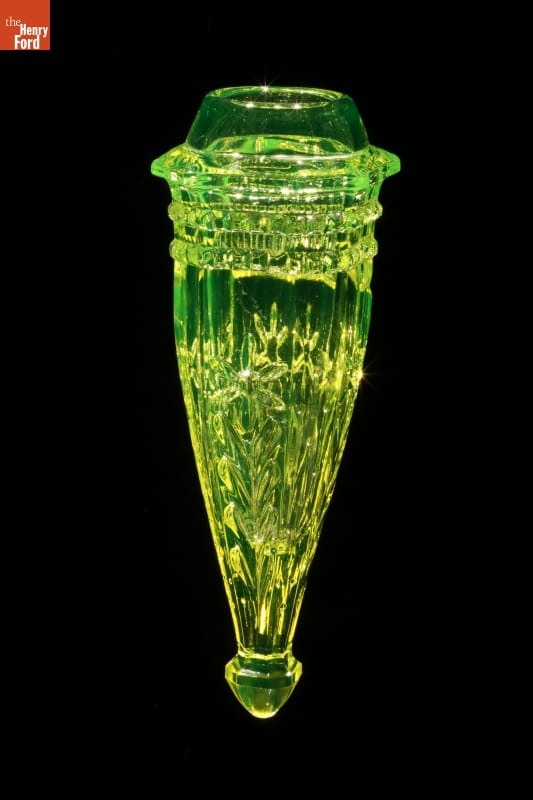
Early luxury vehicles sometimes contained bud vases for flowers. The flowers, whether real or silk, freshened up the interior. This pressed glass bud vase from The Henry Ford's 1922 Detroit Electric car has molded flowers on its sides.