
Search
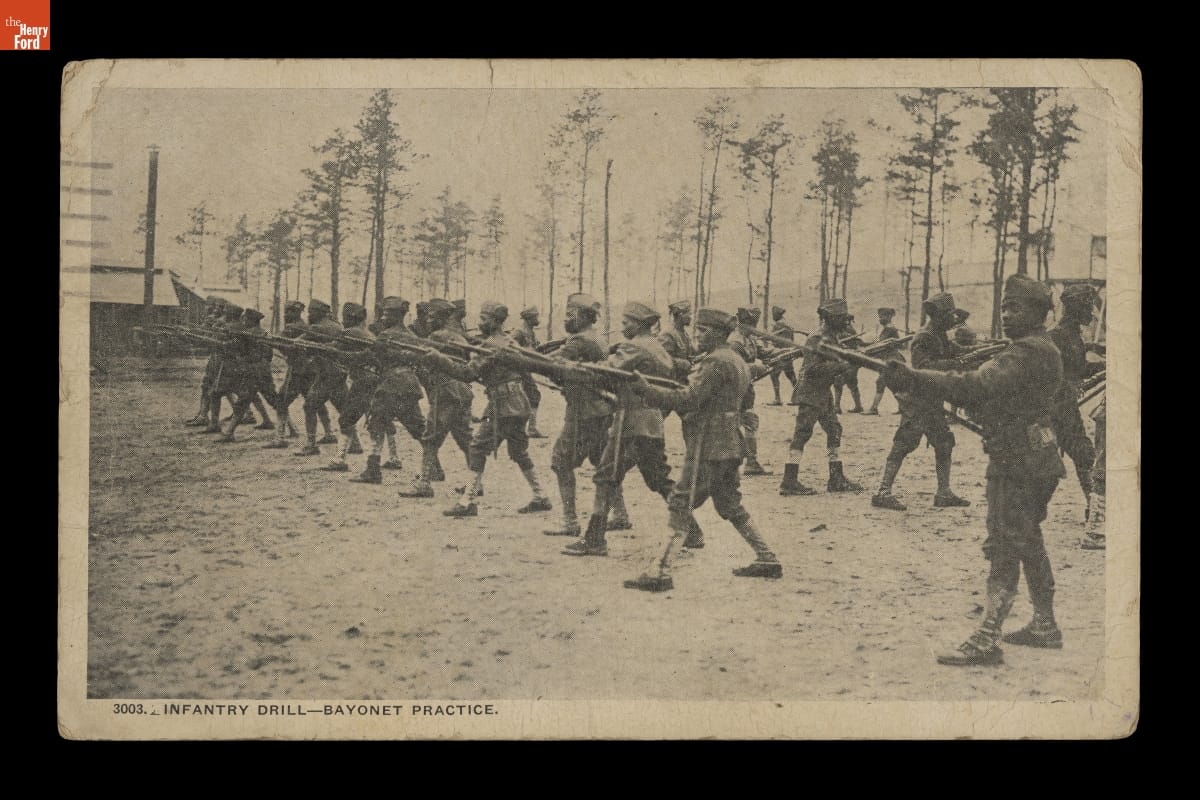
- "Infantry Drill - Bayonet Practice," Black Soldiers in World War I - Andrew Purnell Jr. (1898-1975) was born in Selma, Alabama. He joined the all-Black 303rd Stevedore Regiment (with later unit designations) in December 1917. Private Purnell was stationed in Bordeaux, France. He returned to the U.S. in 1919, married, and worked as a railroad freight handler. Like many service members, Purnell kept cards, letters, photographs, and souvenirs from his time in the military.
- 1917-1918
- Collections - Artifact
"Infantry Drill - Bayonet Practice," Black Soldiers in World War I
Andrew Purnell Jr. (1898-1975) was born in Selma, Alabama. He joined the all-Black 303rd Stevedore Regiment (with later unit designations) in December 1917. Private Purnell was stationed in Bordeaux, France. He returned to the U.S. in 1919, married, and worked as a railroad freight handler. Like many service members, Purnell kept cards, letters, photographs, and souvenirs from his time in the military.
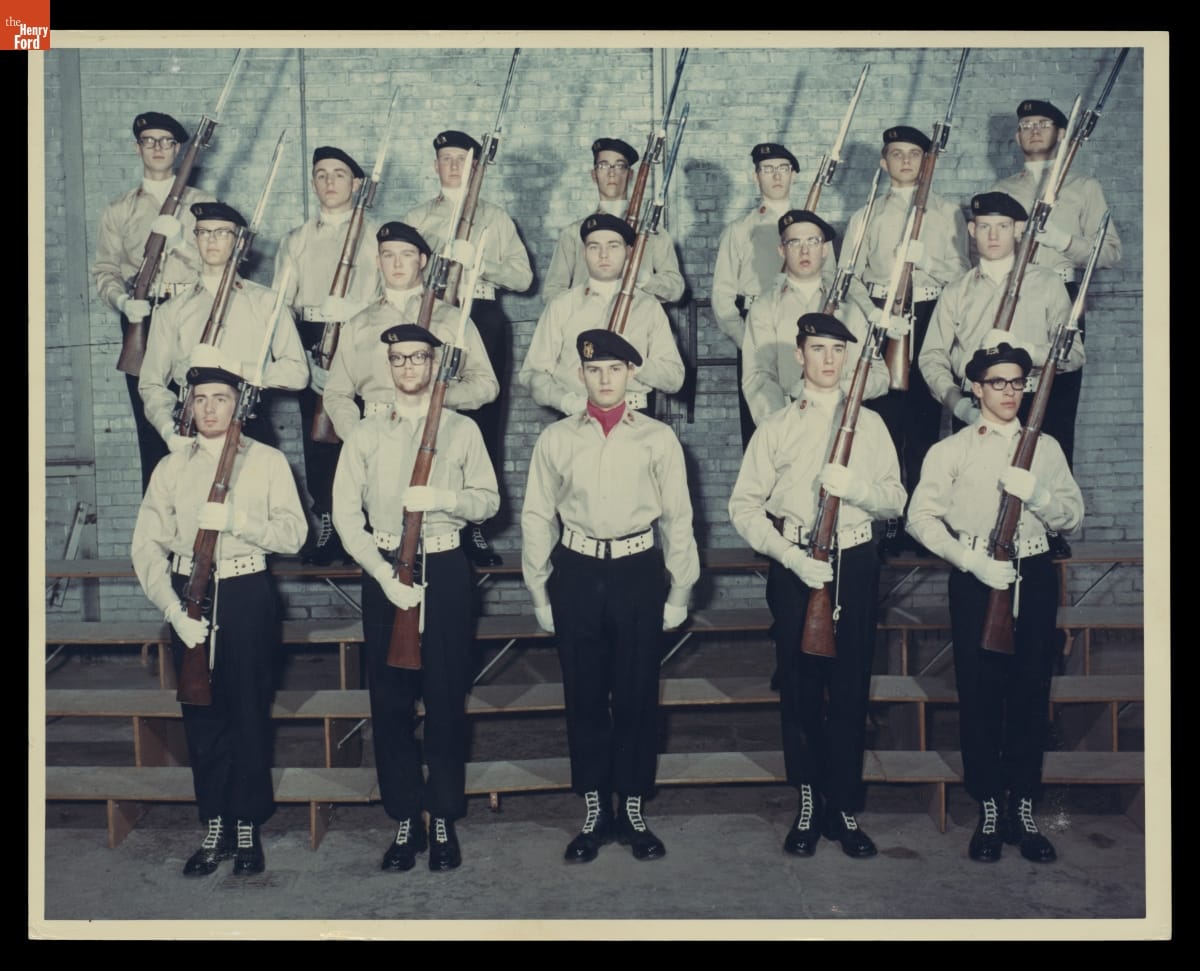
- Rose Rifles Drill Team, Rose Polytechnic Institute, 1965 -
- 1966
- Collections - Artifact
Rose Rifles Drill Team, Rose Polytechnic Institute, 1965
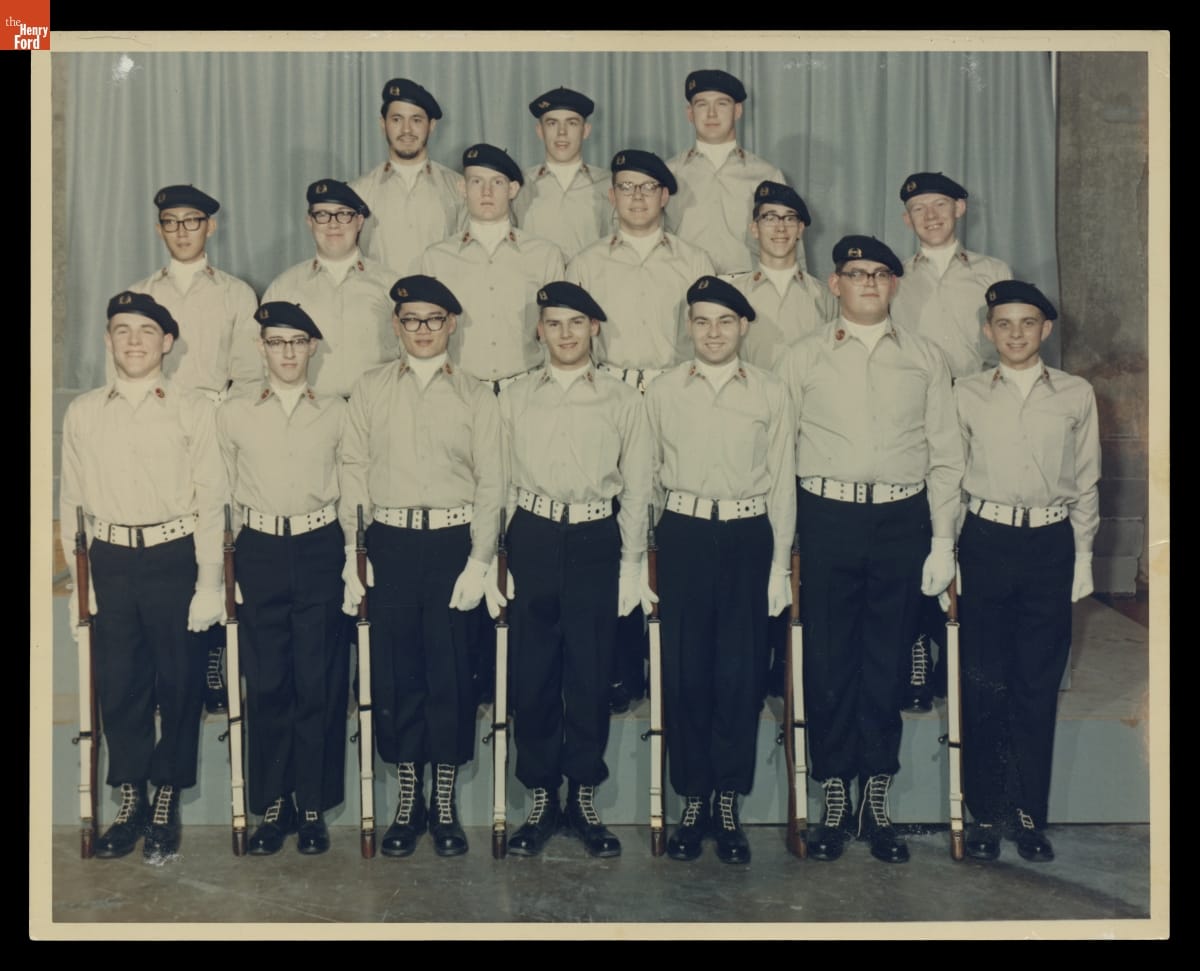
- Rose Rifles Drill Team, Rose Polytechnic Institute, 1965 -
- 1965
- Collections - Artifact
Rose Rifles Drill Team, Rose Polytechnic Institute, 1965
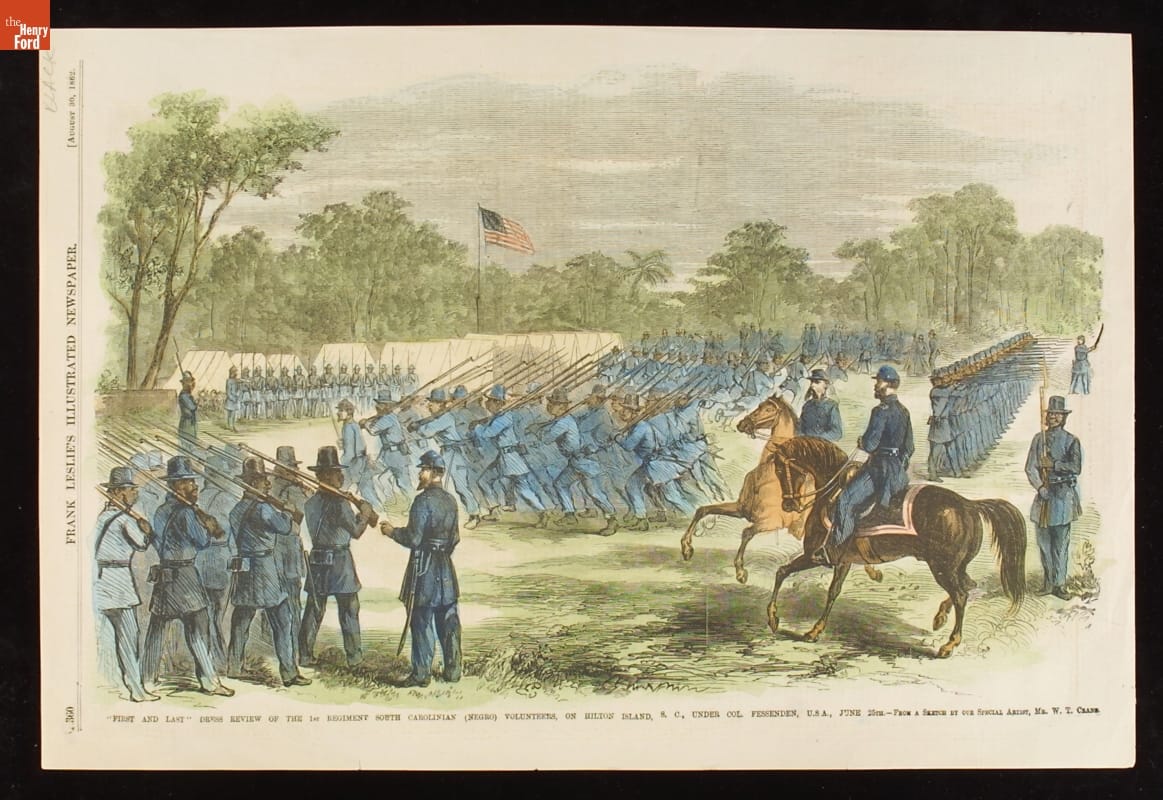
- "First and Last Dress Review of 1st Regiment South Carolinian (Negro) Volunteers," 1862 - As the Civil War wore on, the Union army desperately needed reinforcements and began to actively recruit African Americans. Separated into their own regiments, African Americans fought bravely--often surprising those who led them. This, the first South Carolina Volunteer Infantry, was praised by its leaders after raiding Confederate picket posts, salt works, and sawmills along the Georgia/Florida coast.
- June 25, 1862
- Collections - Artifact
"First and Last Dress Review of 1st Regiment South Carolinian (Negro) Volunteers," 1862
As the Civil War wore on, the Union army desperately needed reinforcements and began to actively recruit African Americans. Separated into their own regiments, African Americans fought bravely--often surprising those who led them. This, the first South Carolina Volunteer Infantry, was praised by its leaders after raiding Confederate picket posts, salt works, and sawmills along the Georgia/Florida coast.