
Search
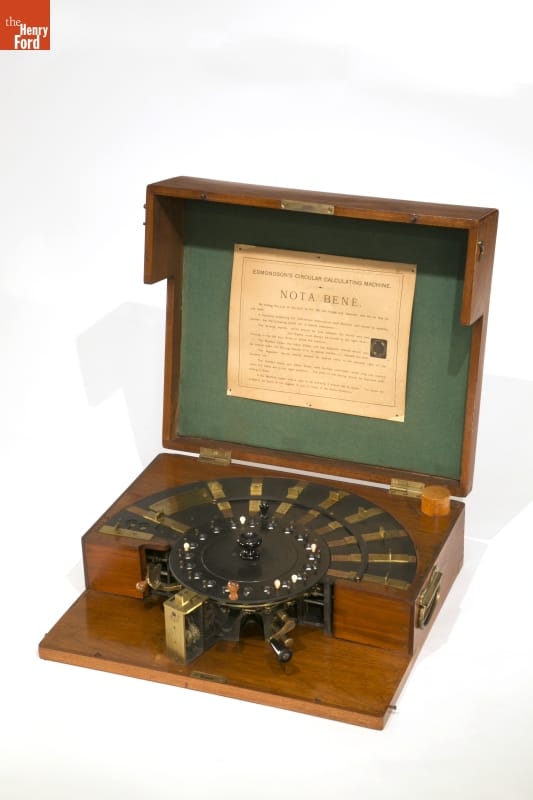
- Patent Model of Edmondson's Circular Calculating Machine, 1883 - Mechanical calculators used gears, cogs, levers, and rotating drums to solve mathematical problems indirectly. While Edmondson's Circular Calculator was rugged and reliable, its "stepped drum" system required people to slide plates and levers, making it difficult to master and time-consuming to operate. By the late 19th century, improved adding machines became popular, helping to reduce the common errors of human calculation.
- 1883
- Collections - Artifact
Patent Model of Edmondson's Circular Calculating Machine, 1883
Mechanical calculators used gears, cogs, levers, and rotating drums to solve mathematical problems indirectly. While Edmondson's Circular Calculator was rugged and reliable, its "stepped drum" system required people to slide plates and levers, making it difficult to master and time-consuming to operate. By the late 19th century, improved adding machines became popular, helping to reduce the common errors of human calculation.
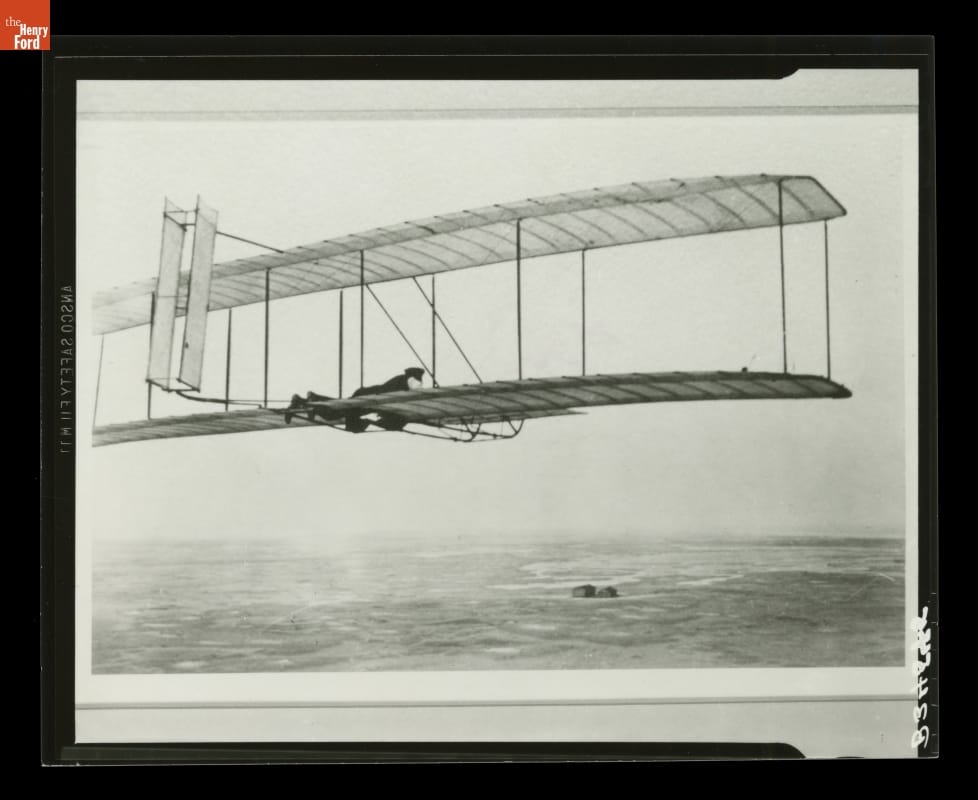
- Wright Brothers Piloting Their 1902 Glider in 1903, Kill Devil Hills, North Carolina - The Wright brothers' 1902 glider was their third aircraft tested at Kill Devil Hills in as many years. It was also the first built with aerodynamic calculations based on the Wrights' own wind tunnel tests. The improvements in performance were stunning. The brothers made more than 700 glides in 1902. Many were over 500 feet long, and some exceeded 600 feet.
- October 21, 1903
- Collections - Artifact
Wright Brothers Piloting Their 1902 Glider in 1903, Kill Devil Hills, North Carolina
The Wright brothers' 1902 glider was their third aircraft tested at Kill Devil Hills in as many years. It was also the first built with aerodynamic calculations based on the Wrights' own wind tunnel tests. The improvements in performance were stunning. The brothers made more than 700 glides in 1902. Many were over 500 feet long, and some exceeded 600 feet.
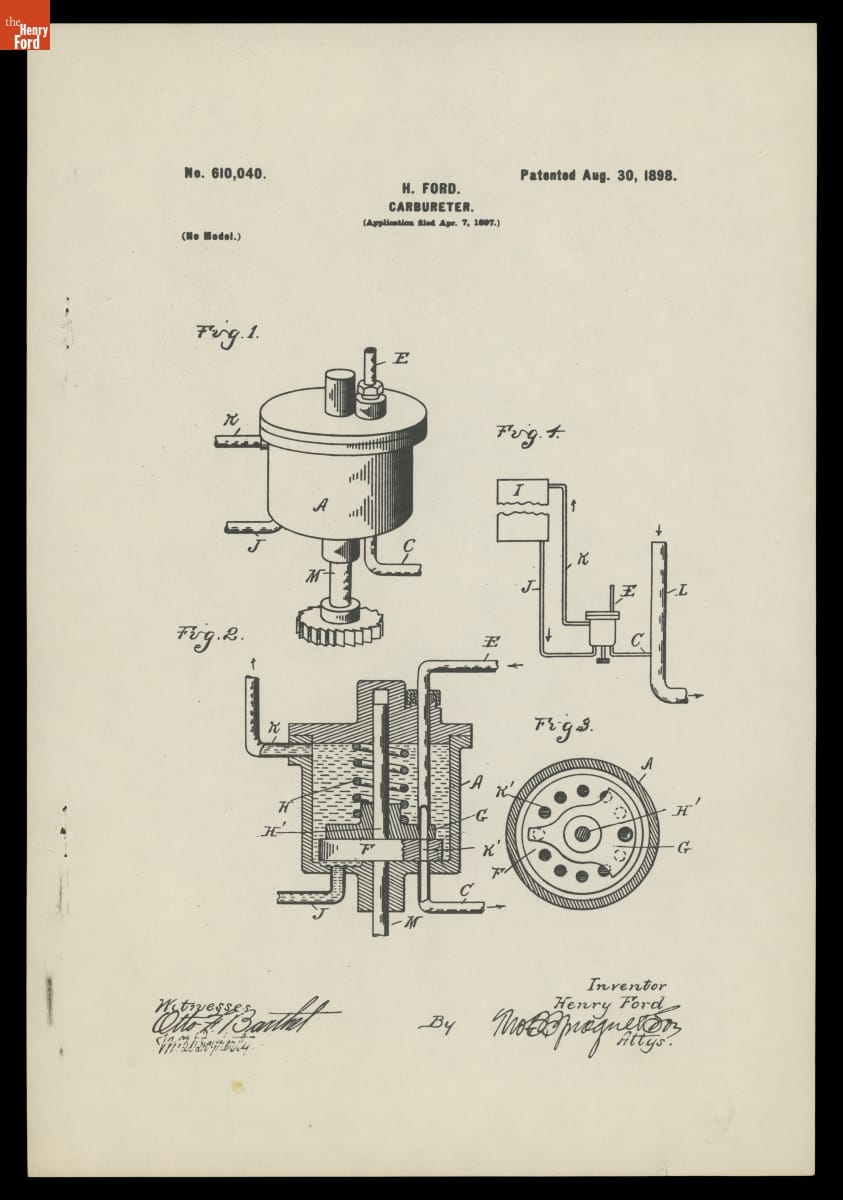
- Patent #610,040, Carburetor Improvements by Henry Ford, Granted August 30, 1898 - Henry Ford received a patent in August 1898 for an improved automobile carburetor -- the device that mixes the fuel and air sent to an engine's cylinders. It was part of Ford's work to design and build his first marketable automobile. Ford's first company, the Detroit Automobile Company, was formed in July 1899 but closed after 15 months.
- August 30, 1898
- Collections - Artifact
Patent #610,040, Carburetor Improvements by Henry Ford, Granted August 30, 1898
Henry Ford received a patent in August 1898 for an improved automobile carburetor -- the device that mixes the fuel and air sent to an engine's cylinders. It was part of Ford's work to design and build his first marketable automobile. Ford's first company, the Detroit Automobile Company, was formed in July 1899 but closed after 15 months.
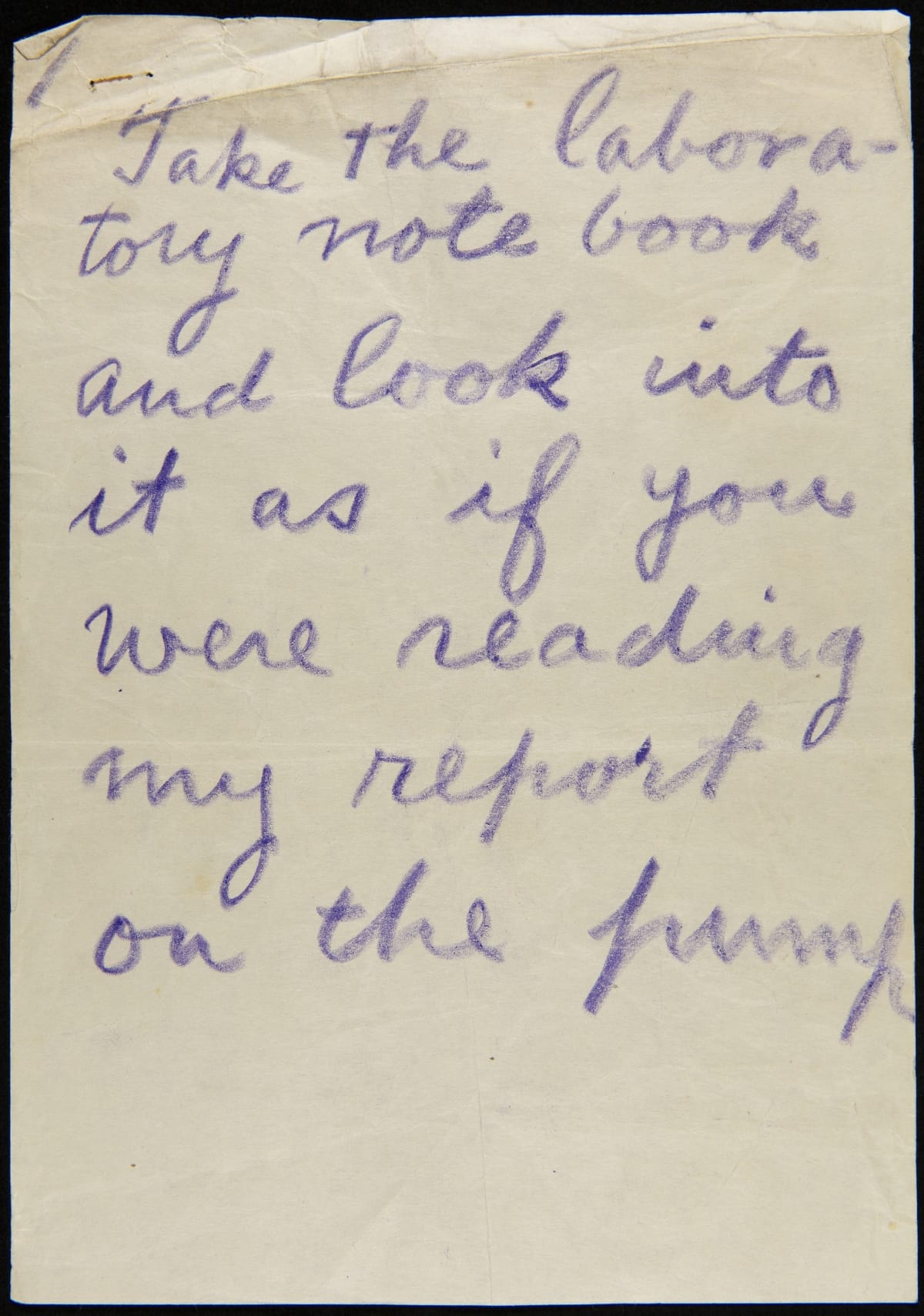
- Francis Jehl's Notes to Thomas Edison for the Incandescent Lamp Lighting during Light's Golden Jubilee, 1929 - To celebrate the 50th anniversary of the incandescent electric lamp, Henry Ford hosted the Light's Golden Jubilee event in Dearborn, Michigan. During the festivities, Thomas Edison and former assistant Francis Jehl re-enacted the 1879 test of Edison's first successful light bulb in Greenfield Village's detailed reproduction of his Menlo Park Laboratory. Jehl provided the elderly inventor with handwritten notes to help guide Edison through the re-enactment.
- October 21, 1929
- Collections - Artifact
Francis Jehl's Notes to Thomas Edison for the Incandescent Lamp Lighting during Light's Golden Jubilee, 1929
To celebrate the 50th anniversary of the incandescent electric lamp, Henry Ford hosted the Light's Golden Jubilee event in Dearborn, Michigan. During the festivities, Thomas Edison and former assistant Francis Jehl re-enacted the 1879 test of Edison's first successful light bulb in Greenfield Village's detailed reproduction of his Menlo Park Laboratory. Jehl provided the elderly inventor with handwritten notes to help guide Edison through the re-enactment.
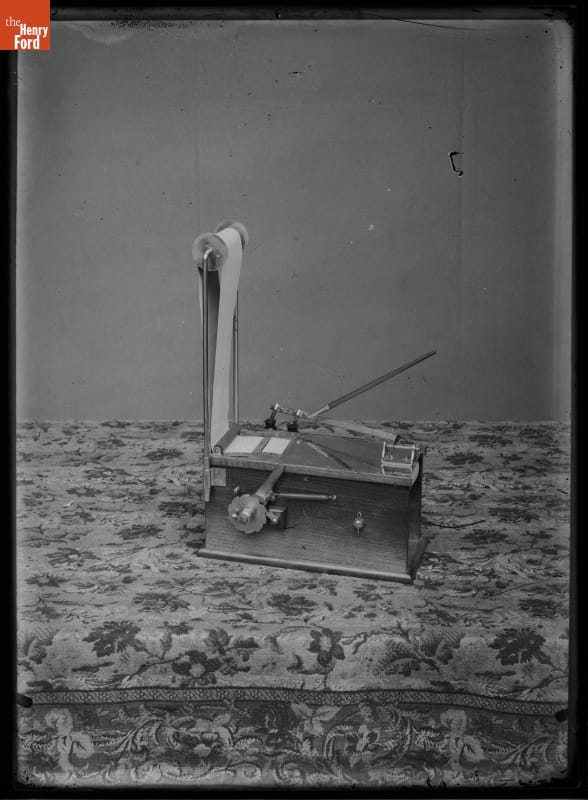
- Calculating and Printing Machine, Made by Leon Bollee, France, circa 1900 - Leon Bollee manufactured automobiles in France from 1895 until his death in 1913. He also invented a series of mechanical calculating machines -- forerunners of the electric calculator. Bollee made an important contribution to aviation when he provided Wilbur Wright with workspace and a crew of mechanics for Wright's successful airplane demonstrations at Le Mans, France, in 1908.
- circa 1900
- Collections - Artifact
Calculating and Printing Machine, Made by Leon Bollee, France, circa 1900
Leon Bollee manufactured automobiles in France from 1895 until his death in 1913. He also invented a series of mechanical calculating machines -- forerunners of the electric calculator. Bollee made an important contribution to aviation when he provided Wilbur Wright with workspace and a crew of mechanics for Wright's successful airplane demonstrations at Le Mans, France, in 1908.
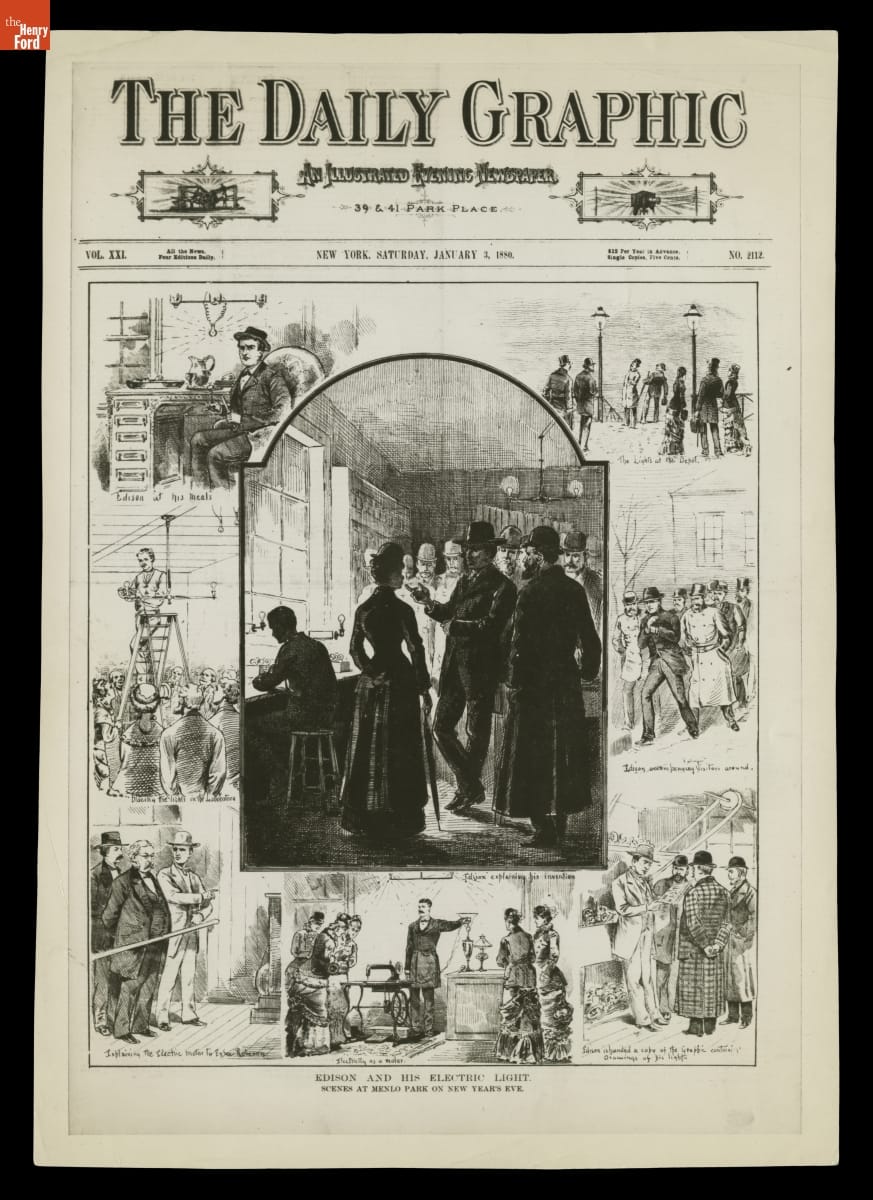
- Cover of The Daily Graphic Newspaper for January 3, 1880, "Edison and His Electric Light" -
- December 31, 1879
- Collections - Artifact
Cover of The Daily Graphic Newspaper for January 3, 1880, "Edison and His Electric Light"
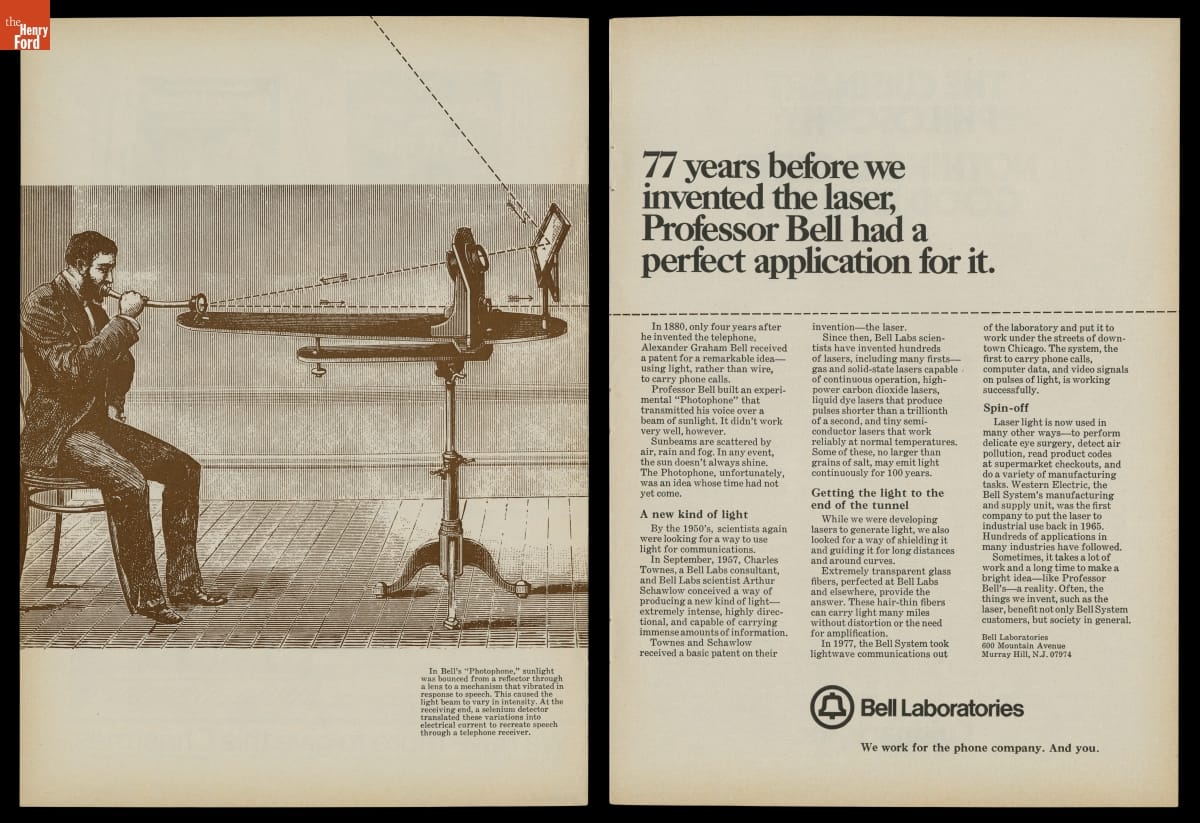
- "77 Years Before We Invented the Laser Professor Bell Had a Perfect Application for It," Bell Labs Advertisement, 1978 -
- December 04, 1978
- Collections - Artifact
"77 Years Before We Invented the Laser Professor Bell Had a Perfect Application for It," Bell Labs Advertisement, 1978
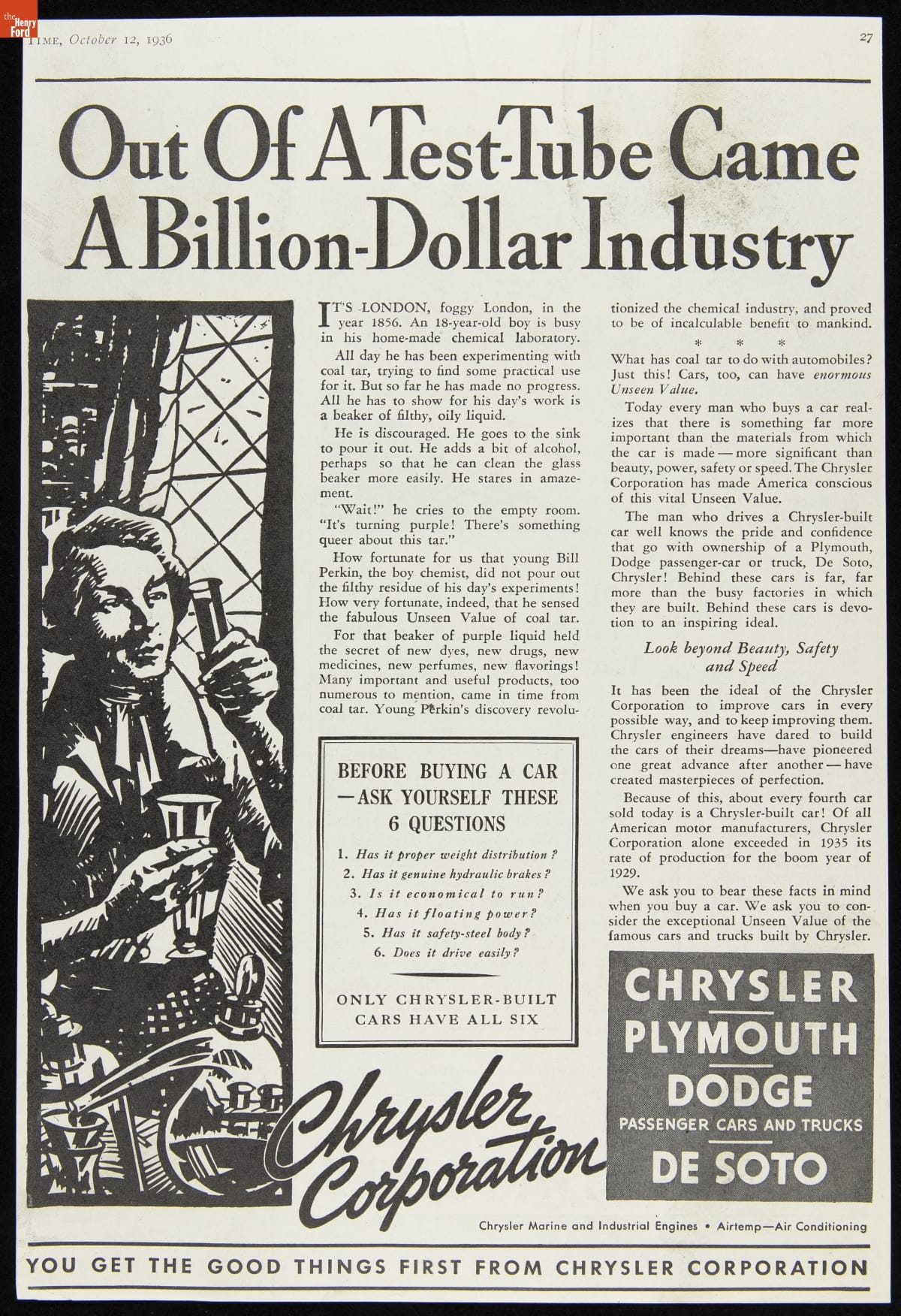
- Chrysler Corporation Advertisement, "Out of a Test-Tube Came a Billion-Dollar Industry," October 1936 - In this 1936 advertisement, Chrysler Corporation suggested that behind each of its vehicles was "something far more important than the materials from which the car is made." The ad made a comparison to British chemist William Henry Perkin who, in 1856, discovered a synthetic dye. Perkin recognized something special in his dye, just as Chrysler drivers did in their automobiles.
- October 12, 1936
- Collections - Artifact
Chrysler Corporation Advertisement, "Out of a Test-Tube Came a Billion-Dollar Industry," October 1936
In this 1936 advertisement, Chrysler Corporation suggested that behind each of its vehicles was "something far more important than the materials from which the car is made." The ad made a comparison to British chemist William Henry Perkin who, in 1856, discovered a synthetic dye. Perkin recognized something special in his dye, just as Chrysler drivers did in their automobiles.
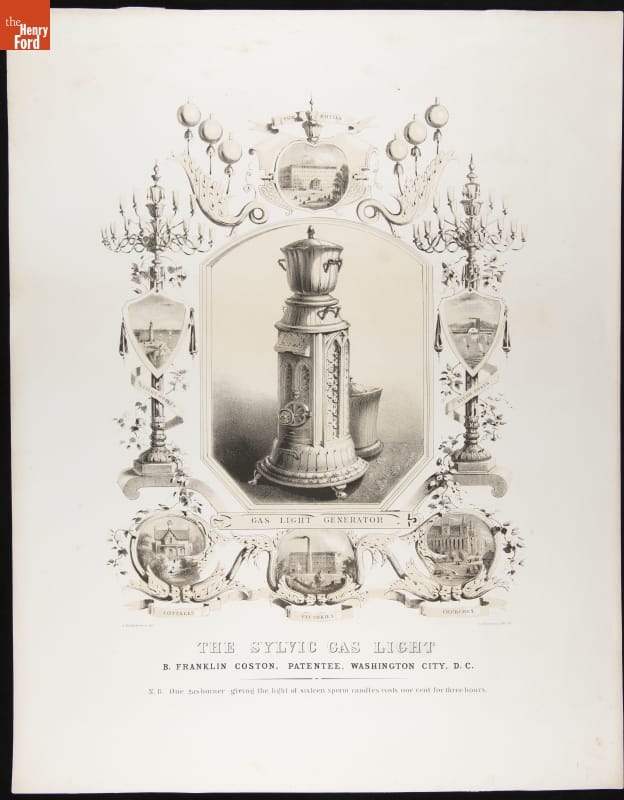
- Sylvic Gas Light, B. Franklin Coston, Patentee, Washington City, D.C. N.B., Gas Light Generator, 1845 -
- 1845
- Collections - Artifact
Sylvic Gas Light, B. Franklin Coston, Patentee, Washington City, D.C. N.B., Gas Light Generator, 1845
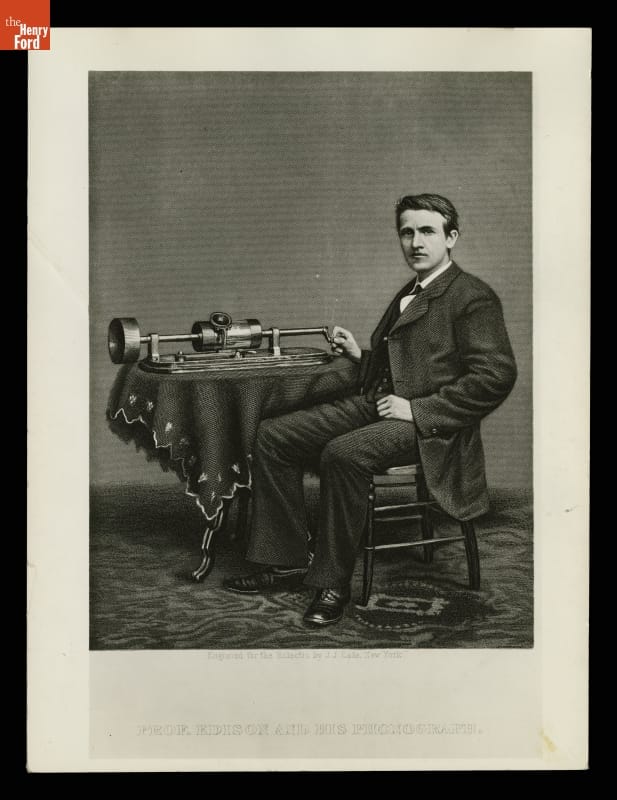
- Thomas Edison and His Phonograph, 1878 - In 1877, Thomas Edison and his laboratory assistants created a machine that could - for the first time - record and reproduce sound. Called the phonograph, it made Edison an overnight celebrity. While in Washington, D.C., to present to the National Academy of Sciences in 1878, Edison sat with his phonograph for well-known Civil War photographer Mathew Brady.
- April 01, 1878
- Collections - Artifact
Thomas Edison and His Phonograph, 1878
In 1877, Thomas Edison and his laboratory assistants created a machine that could - for the first time - record and reproduce sound. Called the phonograph, it made Edison an overnight celebrity. While in Washington, D.C., to present to the National Academy of Sciences in 1878, Edison sat with his phonograph for well-known Civil War photographer Mathew Brady.