
Search
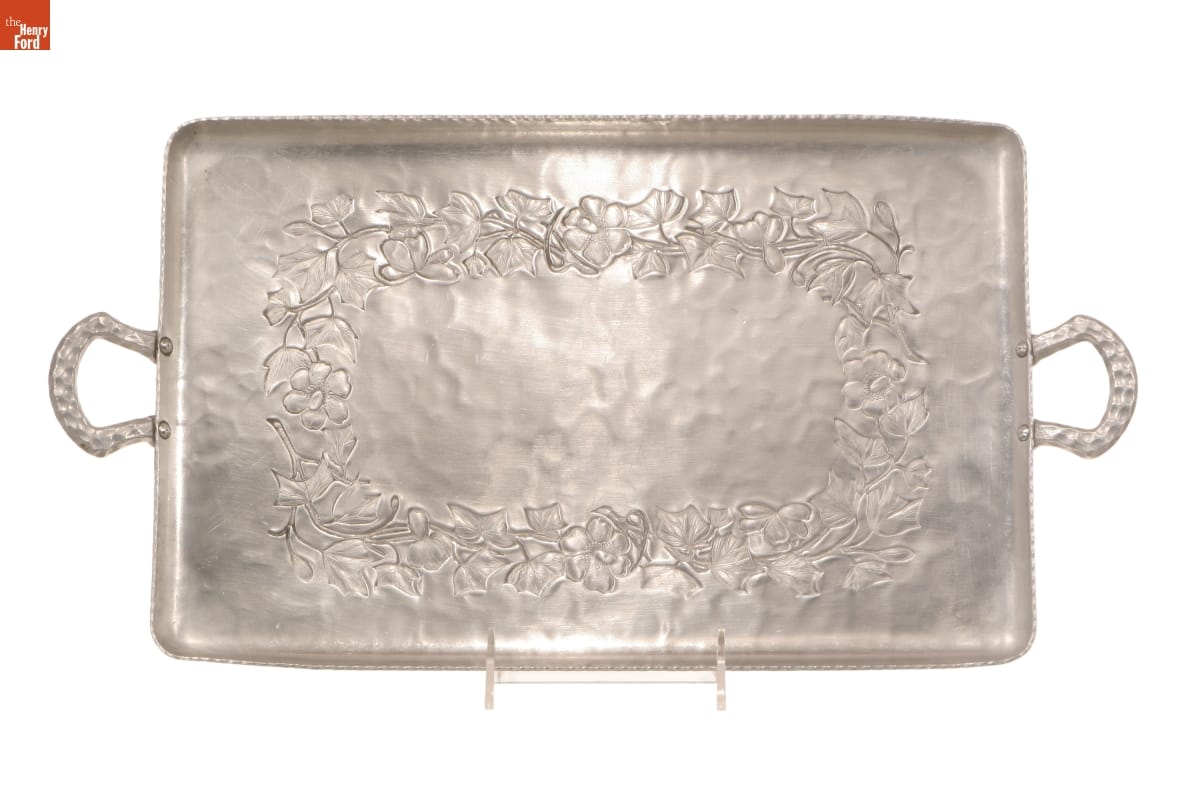
- Everlast "Forged Flowers and Ivy Intaglio" Tray, 1938-1949 - In 1932, Louis Schnitzer and Nathan Gelfman formed Everlast Metal Products Corporation, producing high-quality, hand-forged aluminum giftware. In an era of growing uniformity via factory production, the "made by hand" aspect of these products held an aesthetic appeal for consumers. This piece is an example of the aluminum giftware sold by Everlast.
- 1938-1949
- Collections - Artifact
Everlast "Forged Flowers and Ivy Intaglio" Tray, 1938-1949
In 1932, Louis Schnitzer and Nathan Gelfman formed Everlast Metal Products Corporation, producing high-quality, hand-forged aluminum giftware. In an era of growing uniformity via factory production, the "made by hand" aspect of these products held an aesthetic appeal for consumers. This piece is an example of the aluminum giftware sold by Everlast.
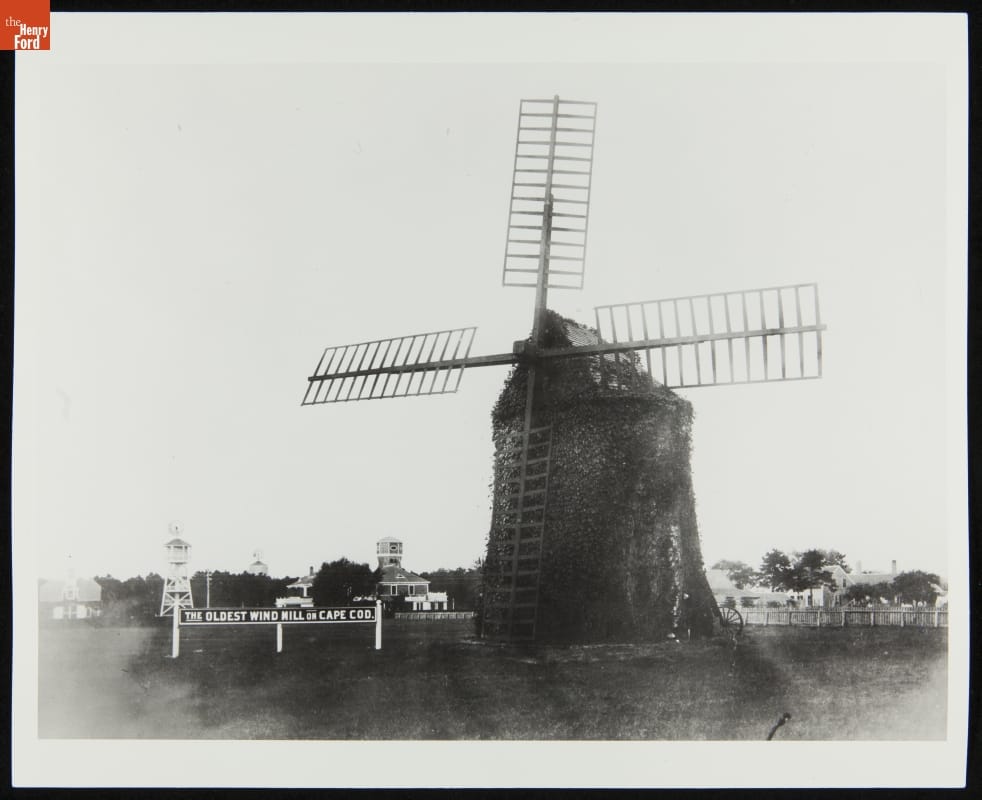
- Farris Windmill on Cape Cod, Massachusetts - Built in the mid-1600s, the Farris windmill is said to be the oldest windmill in the United States. It operated in Cape Cod, Massachusetts -- ocean breezes moved the sails that turned the grain milling machinery inside. In 1935, the Ford Dealers of the United States and Canada purchased the windmill and moved it to Greenfield Village as a gift for Henry and Edsel Ford.
- 1890-1936
- Collections - Artifact
Farris Windmill on Cape Cod, Massachusetts
Built in the mid-1600s, the Farris windmill is said to be the oldest windmill in the United States. It operated in Cape Cod, Massachusetts -- ocean breezes moved the sails that turned the grain milling machinery inside. In 1935, the Ford Dealers of the United States and Canada purchased the windmill and moved it to Greenfield Village as a gift for Henry and Edsel Ford.
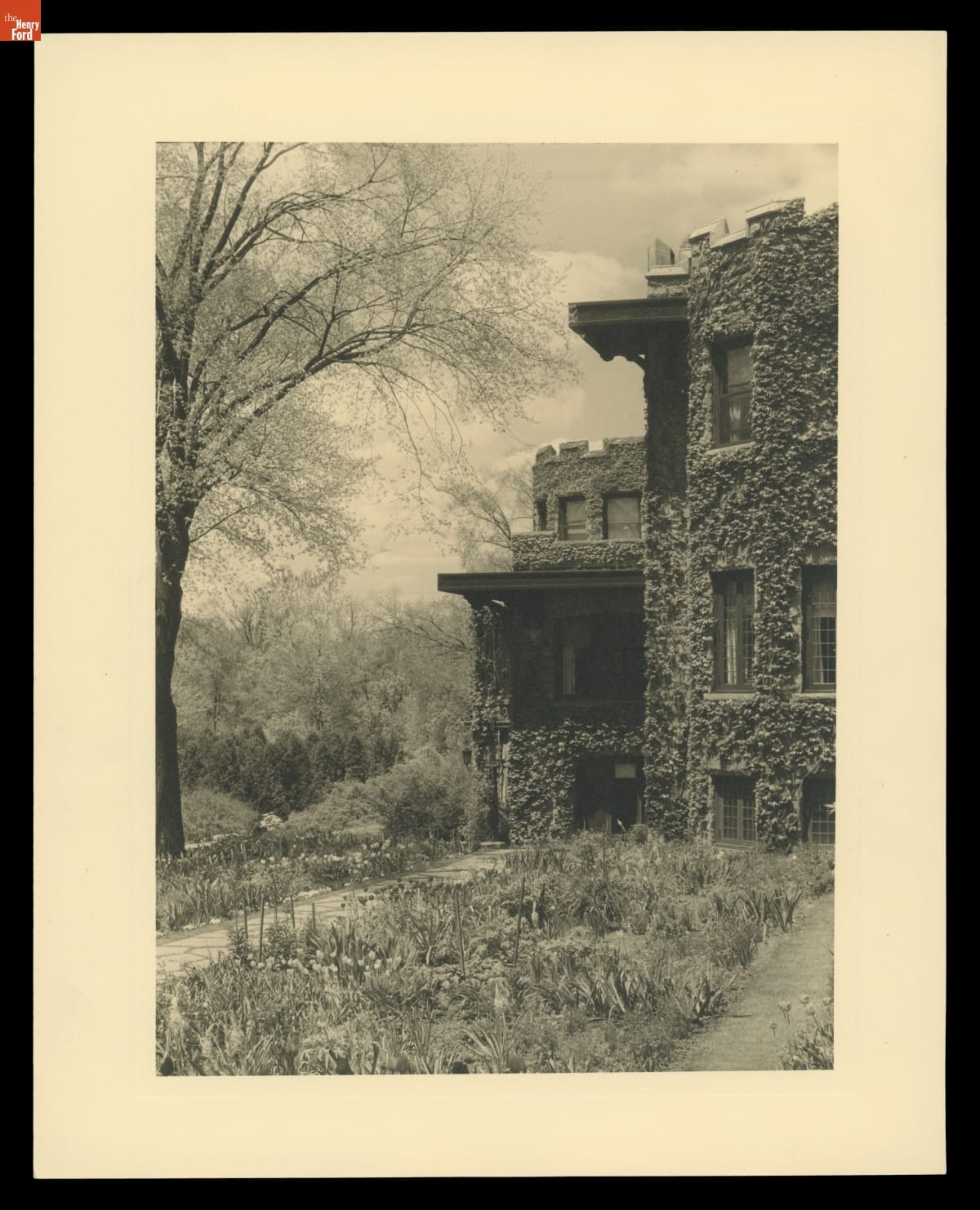
- Blue Garden at Fair Lane Estate, Dearborn, Michigan, May 1932 - In the early 1910s, Henry and Clara Ford selected 1,300 acres of farmland in Dearborn, Michigan, as the site for a new home. They would call the estate Fair Lane. In 1916 the couple moved into the newly constructed, 56-room mansion. Henry and Clara would find their new home a peaceful respite -- surrounded by woods, meadows, gardens, and the nature they loved.
- May 17, 1932
- Collections - Artifact
Blue Garden at Fair Lane Estate, Dearborn, Michigan, May 1932
In the early 1910s, Henry and Clara Ford selected 1,300 acres of farmland in Dearborn, Michigan, as the site for a new home. They would call the estate Fair Lane. In 1916 the couple moved into the newly constructed, 56-room mansion. Henry and Clara would find their new home a peaceful respite -- surrounded by woods, meadows, gardens, and the nature they loved.
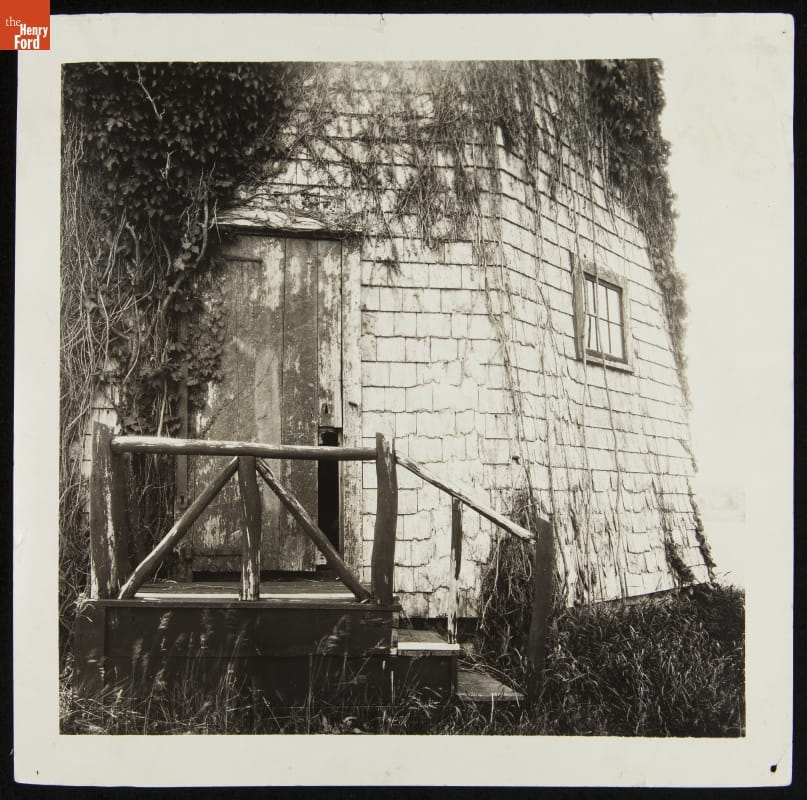
- Farris Windmill on Cape Cod, Massachusetts - Built in the mid-1600s, the Farris windmill is said to be the oldest windmill in the United States. It operated in Cape Cod, Massachusetts -- ocean breezes moved the sails that turned the grain milling machinery inside. In 1935, the Ford Dealers of the United States and Canada purchased the windmill and moved it to Greenfield Village as a gift for Henry and Edsel Ford.
- 1890-1936
- Collections - Artifact
Farris Windmill on Cape Cod, Massachusetts
Built in the mid-1600s, the Farris windmill is said to be the oldest windmill in the United States. It operated in Cape Cod, Massachusetts -- ocean breezes moved the sails that turned the grain milling machinery inside. In 1935, the Ford Dealers of the United States and Canada purchased the windmill and moved it to Greenfield Village as a gift for Henry and Edsel Ford.
- Scotch Settlement School--People--Folder 2 of 2--Item 15 -
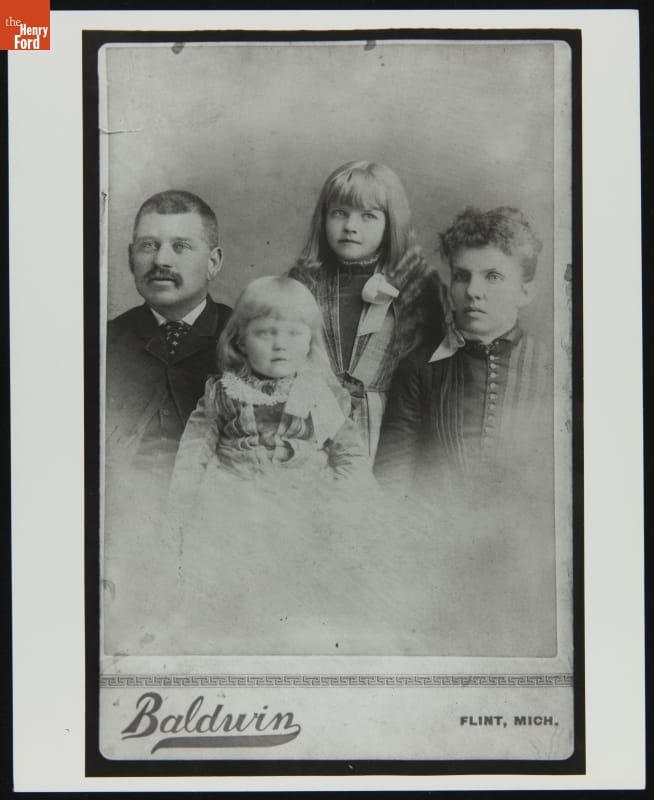
- circa 1892
- Collections - Artifact
Scotch Settlement School--People--Folder 2 of 2--Item 15
- Edison Institute Staff Bowling Activity, January 21, 1957 - Staff members from the Edison Institute, today's The Henry Ford, gathered for a game of bowling in January 1957. After-work sports teams and leagues provided employees with opportunities for recreation and socializing. They also helped build camaraderie among co-workers. These bowlers included, from left to right, Ivy Axford, Kenneth Metcalf, Kenneth Schwartz, Robert Cheyne, David Glick, and Ronald Kanack.
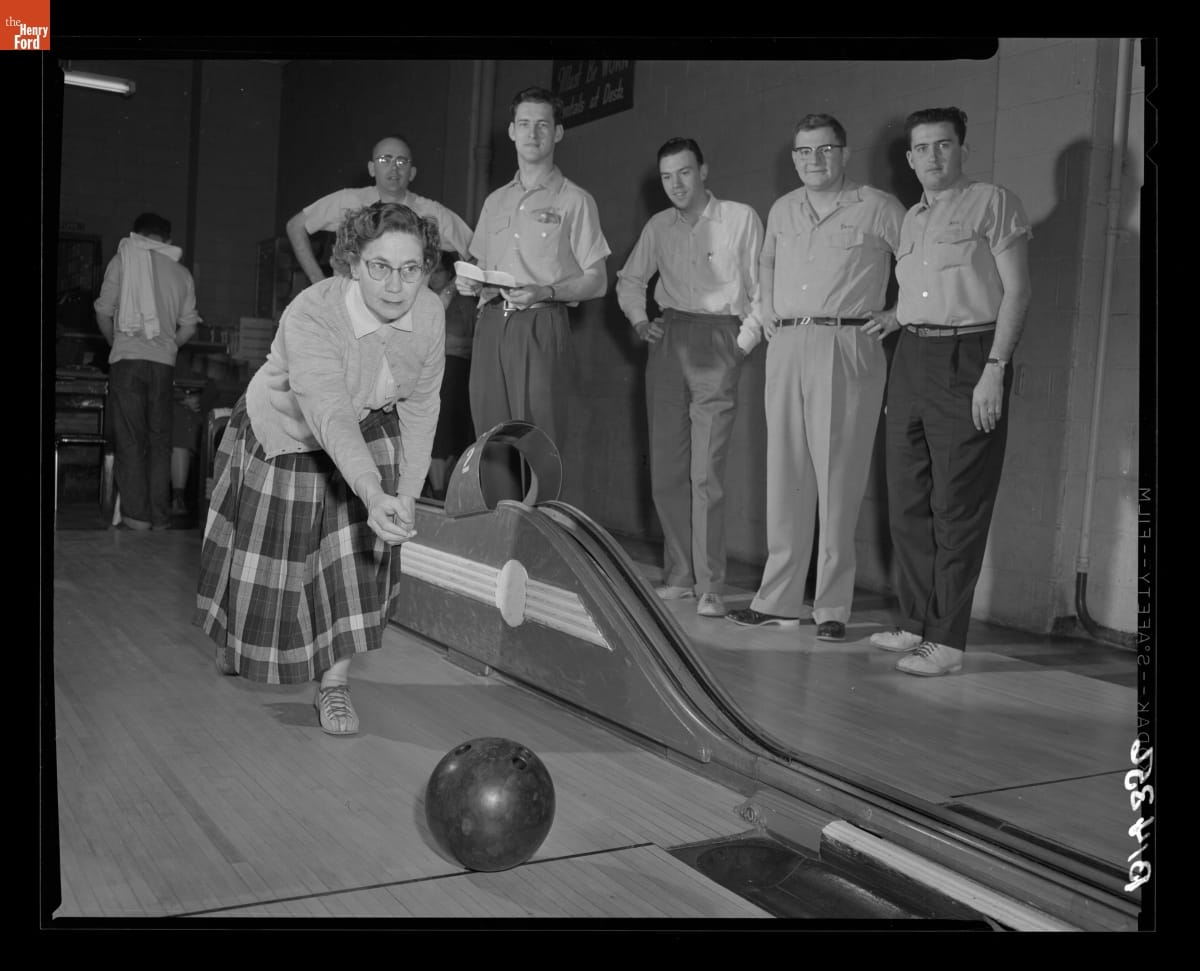
- January 21, 1957
- Collections - Artifact
Edison Institute Staff Bowling Activity, January 21, 1957
Staff members from the Edison Institute, today's The Henry Ford, gathered for a game of bowling in January 1957. After-work sports teams and leagues provided employees with opportunities for recreation and socializing. They also helped build camaraderie among co-workers. These bowlers included, from left to right, Ivy Axford, Kenneth Metcalf, Kenneth Schwartz, Robert Cheyne, David Glick, and Ronald Kanack.
- Farris Windmill on Cape Cod, Massachusetts - Built in the mid-1600s, the Farris windmill is said to be the oldest windmill in the United States. It operated in Cape Cod, Massachusetts -- ocean breezes moved the sails that turned the grain milling machinery inside. In 1935, the Ford Dealers of the United States and Canada purchased the windmill and moved it to Greenfield Village as a gift for Henry and Edsel Ford.
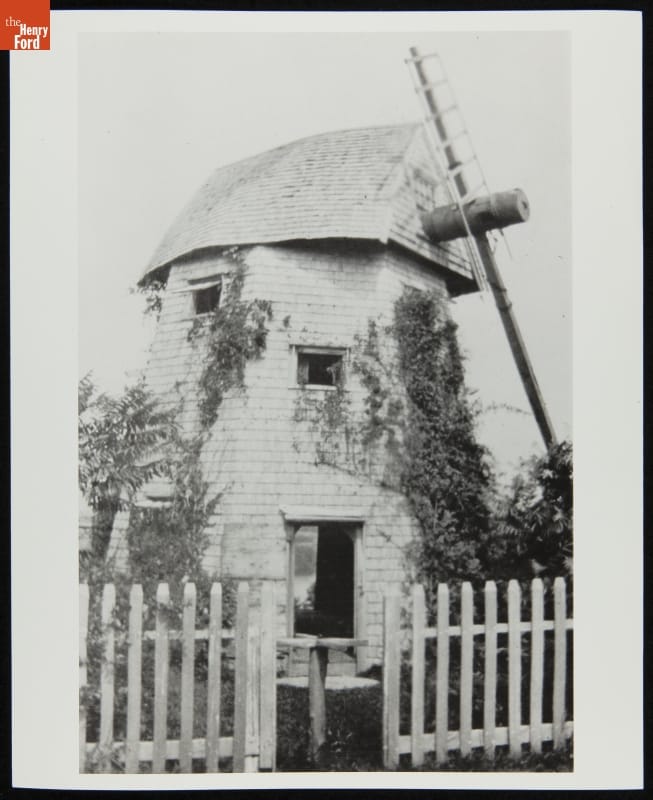
- 1890-1936
- Collections - Artifact
Farris Windmill on Cape Cod, Massachusetts
Built in the mid-1600s, the Farris windmill is said to be the oldest windmill in the United States. It operated in Cape Cod, Massachusetts -- ocean breezes moved the sails that turned the grain milling machinery inside. In 1935, the Ford Dealers of the United States and Canada purchased the windmill and moved it to Greenfield Village as a gift for Henry and Edsel Ford.
- Tumbler, 1855-1870 - Nineteenth-century American glassmakers experimented with new methods to create products for a growing consumer market. In the 1820s, pressing glass into metal molds by machine was perfected, and by the mid-1800s, manufacturers were creating a variety of inexpensive pressed glass housewares. America's middle-class consumers could now decorate their homes with attractive glass bowls, creamers, dishes, plates, vases, and other tableware.
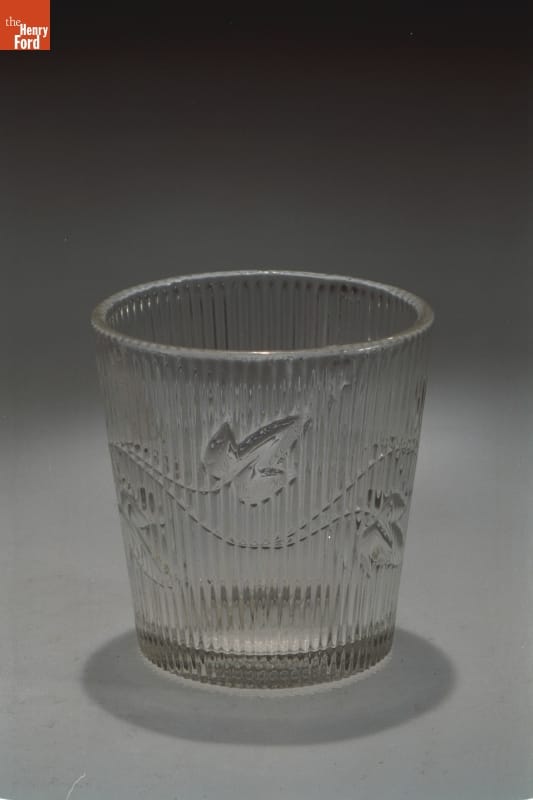
- 1855-1870
- Collections - Artifact
Tumbler, 1855-1870
Nineteenth-century American glassmakers experimented with new methods to create products for a growing consumer market. In the 1820s, pressing glass into metal molds by machine was perfected, and by the mid-1800s, manufacturers were creating a variety of inexpensive pressed glass housewares. America's middle-class consumers could now decorate their homes with attractive glass bowls, creamers, dishes, plates, vases, and other tableware.