
Search
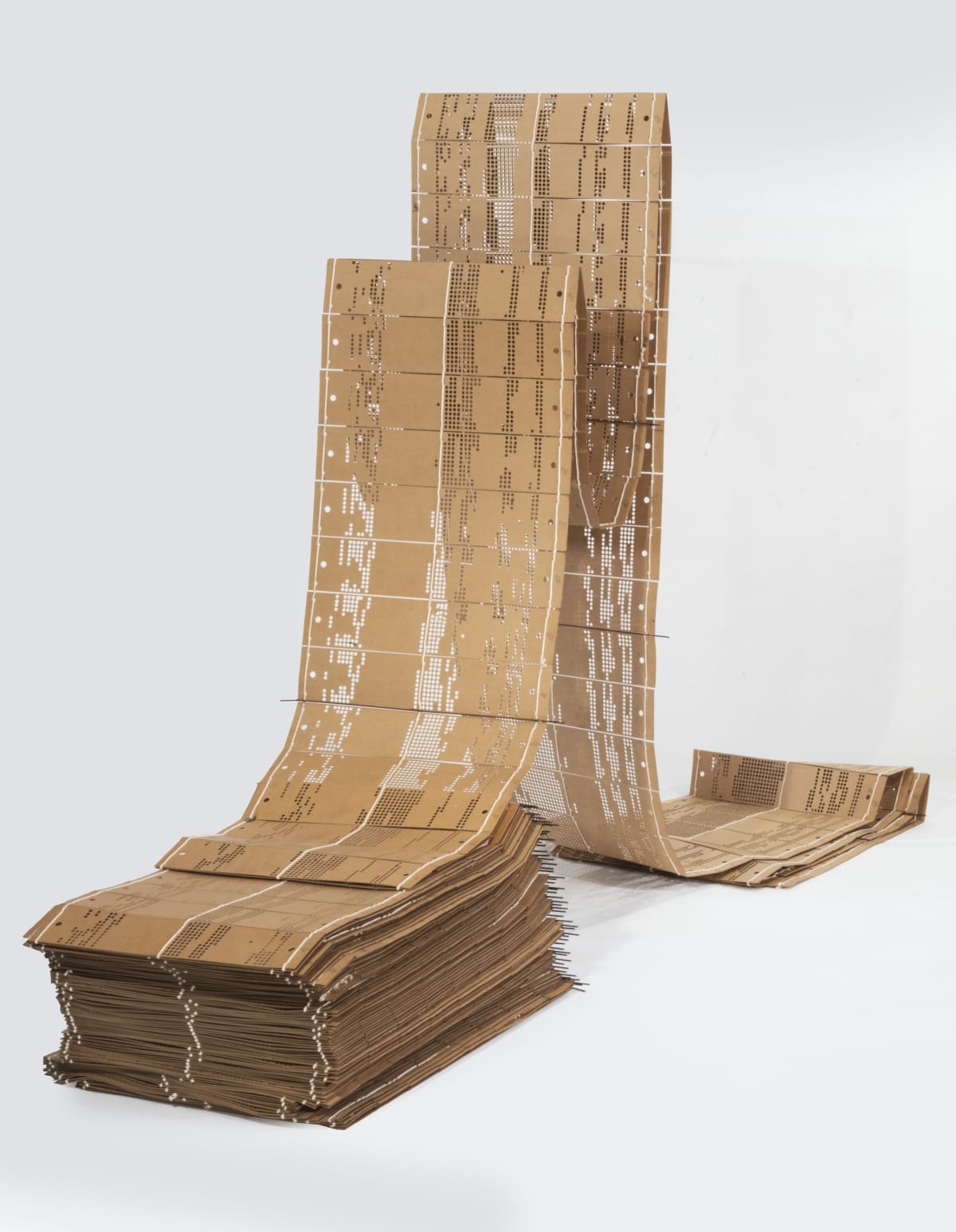
- Punched Cards for Jacquard Loom, Used at Scalamandre, Inc., Long Island, NY, 1930-1970 -
- 1930-1970
- Collections - Artifact
Punched Cards for Jacquard Loom, Used at Scalamandre, Inc., Long Island, NY, 1930-1970
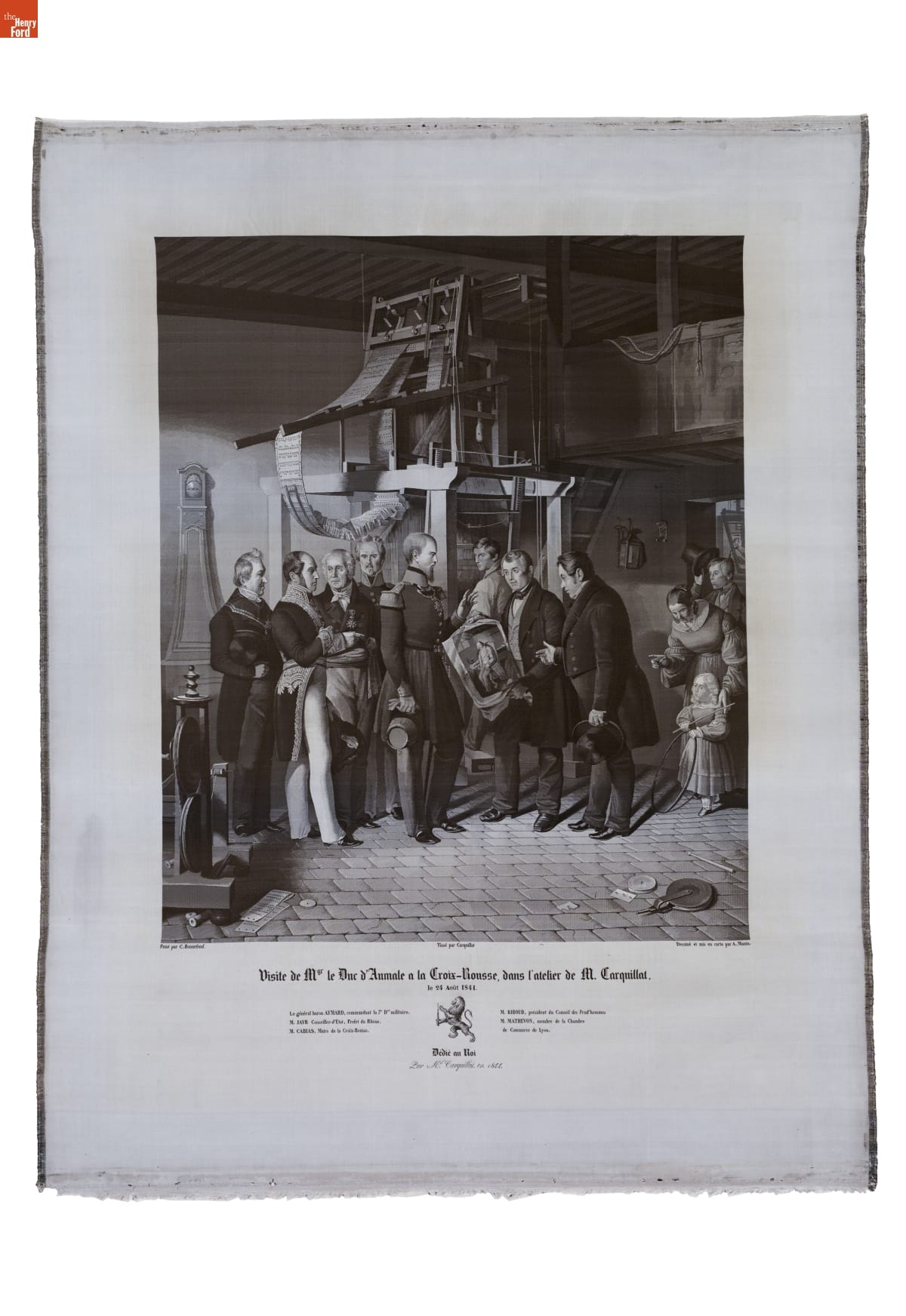
- Woven Silk Depiction of a Jacquard Loom in M. Carquillat's Workshop, 1844 -
- 1844
- Collections - Artifact
Woven Silk Depiction of a Jacquard Loom in M. Carquillat's Workshop, 1844
- Jacquard Loom, 1934 - Joseph-Marie Jacquard's loom, first developed in 1801, is programmable. It used a series of punched cards to control the lifting of each individual warp thread to weave a figured fabric. With this loom, weavers could create intricate patterns more easily, faster, and with better accuracy. Punch card technology became the basis for computer data storage during the 20th century.

- 1934
- Collections - Artifact
Jacquard Loom, 1934
Joseph-Marie Jacquard's loom, first developed in 1801, is programmable. It used a series of punched cards to control the lifting of each individual warp thread to weave a figured fabric. With this loom, weavers could create intricate patterns more easily, faster, and with better accuracy. Punch card technology became the basis for computer data storage during the 20th century.
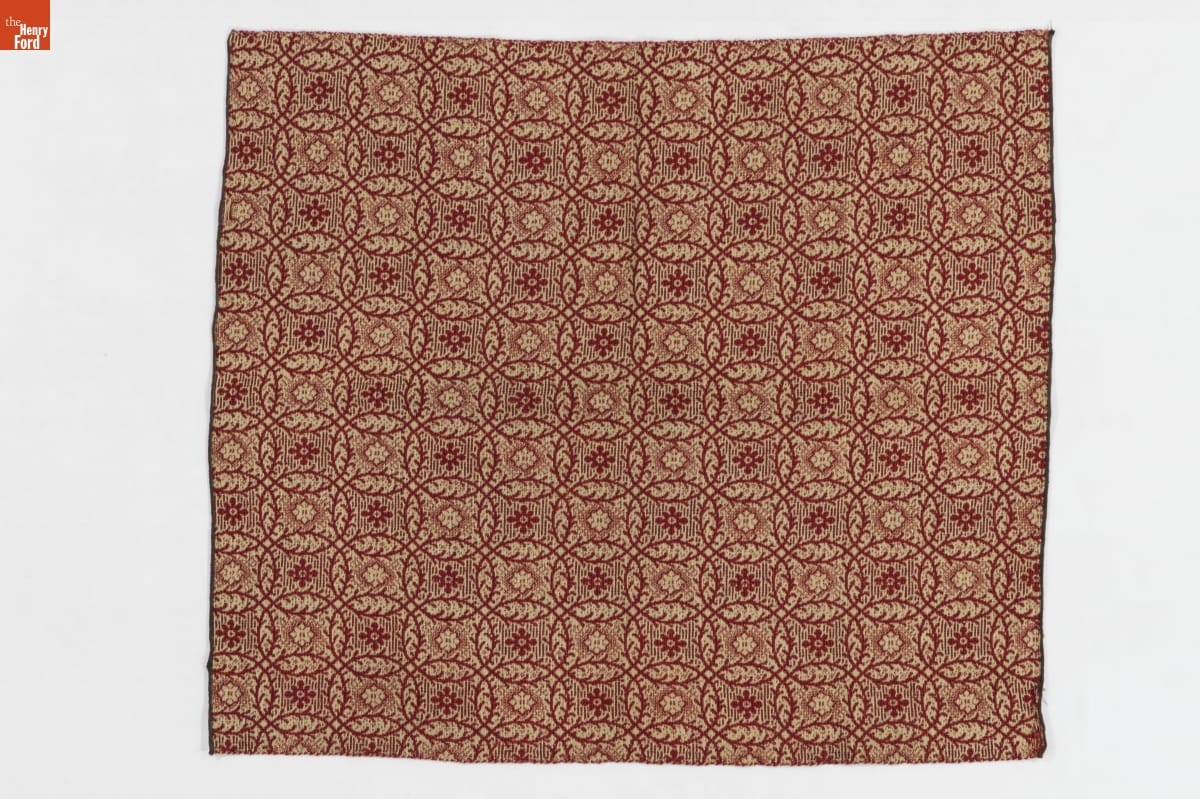
- Section of Ingrain Carpet, circa 1900 -
- circa 1900
- Collections - Artifact
Section of Ingrain Carpet, circa 1900
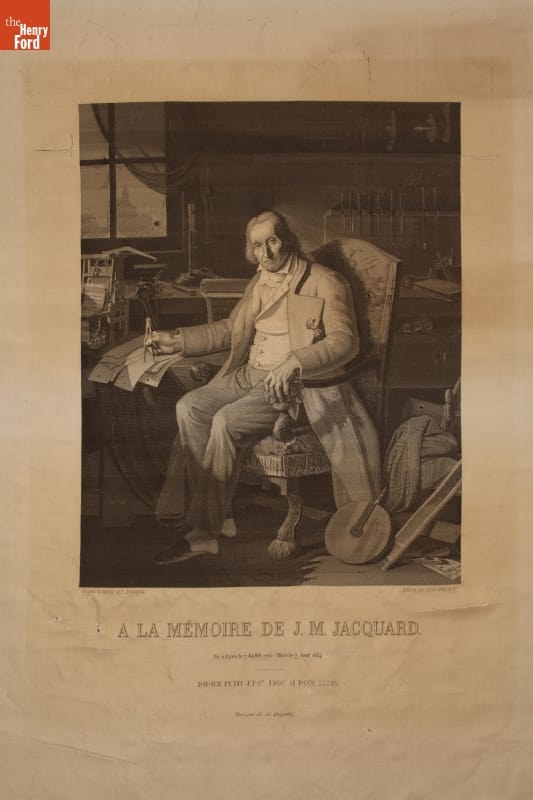
- Portrait of Joseph-Marie Jacquard, 1839 - This portrait of French inventor Joseph-Marie Jacquard (1752 - 1834) was woven of fine silk using the mechanism that he developed and patented in 1804. Jacquard's device employs punched cards to store the intricate pattern design and to control the loom. These loom cards eventually led to the data cards used in early digital computers.
- 1831
- Collections - Artifact
Portrait of Joseph-Marie Jacquard, 1839
This portrait of French inventor Joseph-Marie Jacquard (1752 - 1834) was woven of fine silk using the mechanism that he developed and patented in 1804. Jacquard's device employs punched cards to store the intricate pattern design and to control the loom. These loom cards eventually led to the data cards used in early digital computers.
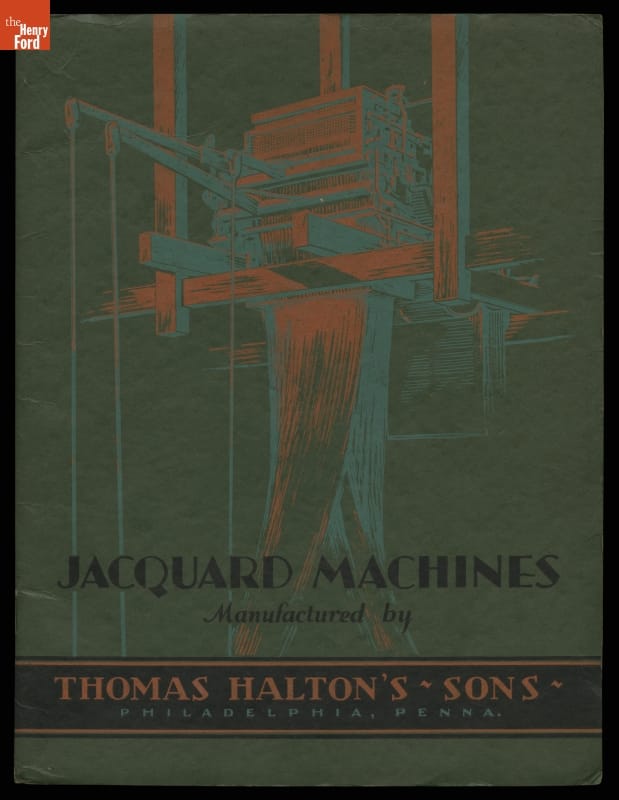
- Catalog for Thomas Halton's Sons "Jacquard Machines," circa 1927 -
- circa 1927
- Collections - Artifact
Catalog for Thomas Halton's Sons "Jacquard Machines," circa 1927