
Search
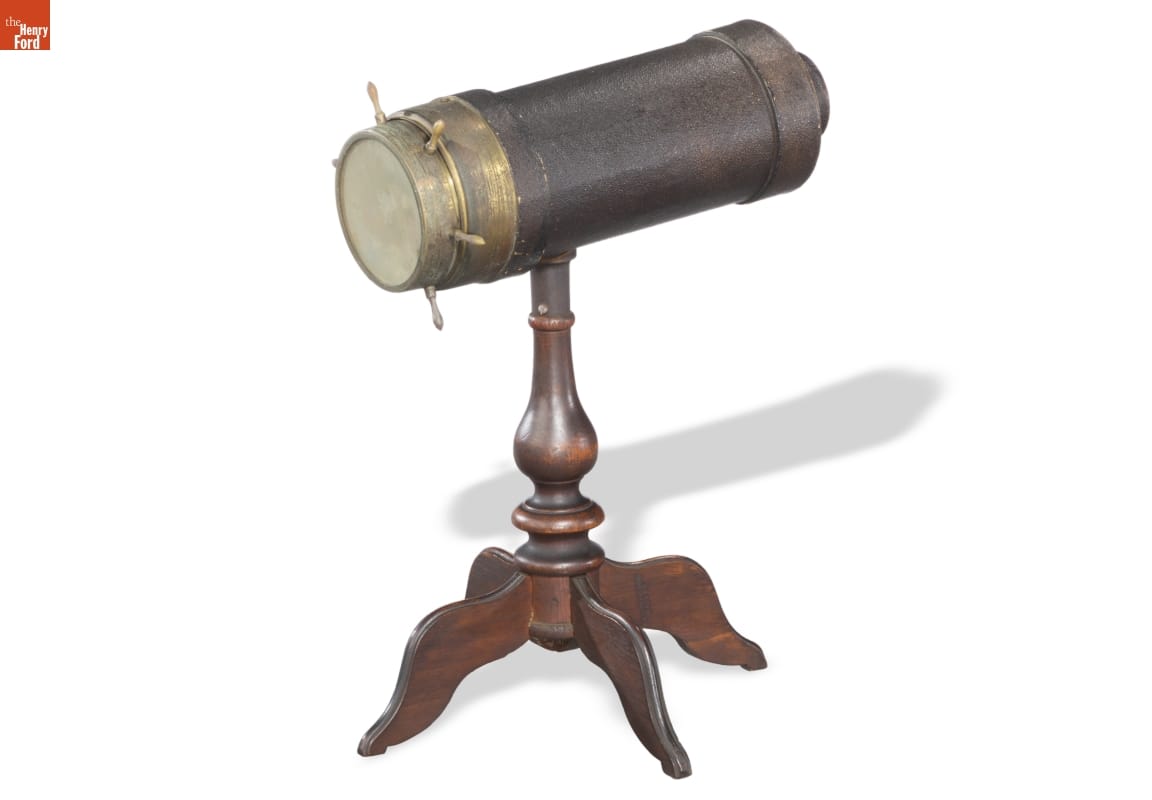
- C. G. Bush Kaleidoscope, 1874-1900 - Kaleidoscopes provide a visual feast for the eye. Angled mirrors enclosed in a tube create beautiful, ever-changing symmetrical patterns from bits of colorful glass and other translucent material. In the late 1800s, Charles Bush placed small liquid-filled vials in his kaleidoscopes. The moving liquid and bubbles in the vials provided a unique component to this optical experience.
- 1874-1900
- Collections - Artifact
C. G. Bush Kaleidoscope, 1874-1900
Kaleidoscopes provide a visual feast for the eye. Angled mirrors enclosed in a tube create beautiful, ever-changing symmetrical patterns from bits of colorful glass and other translucent material. In the late 1800s, Charles Bush placed small liquid-filled vials in his kaleidoscopes. The moving liquid and bubbles in the vials provided a unique component to this optical experience.
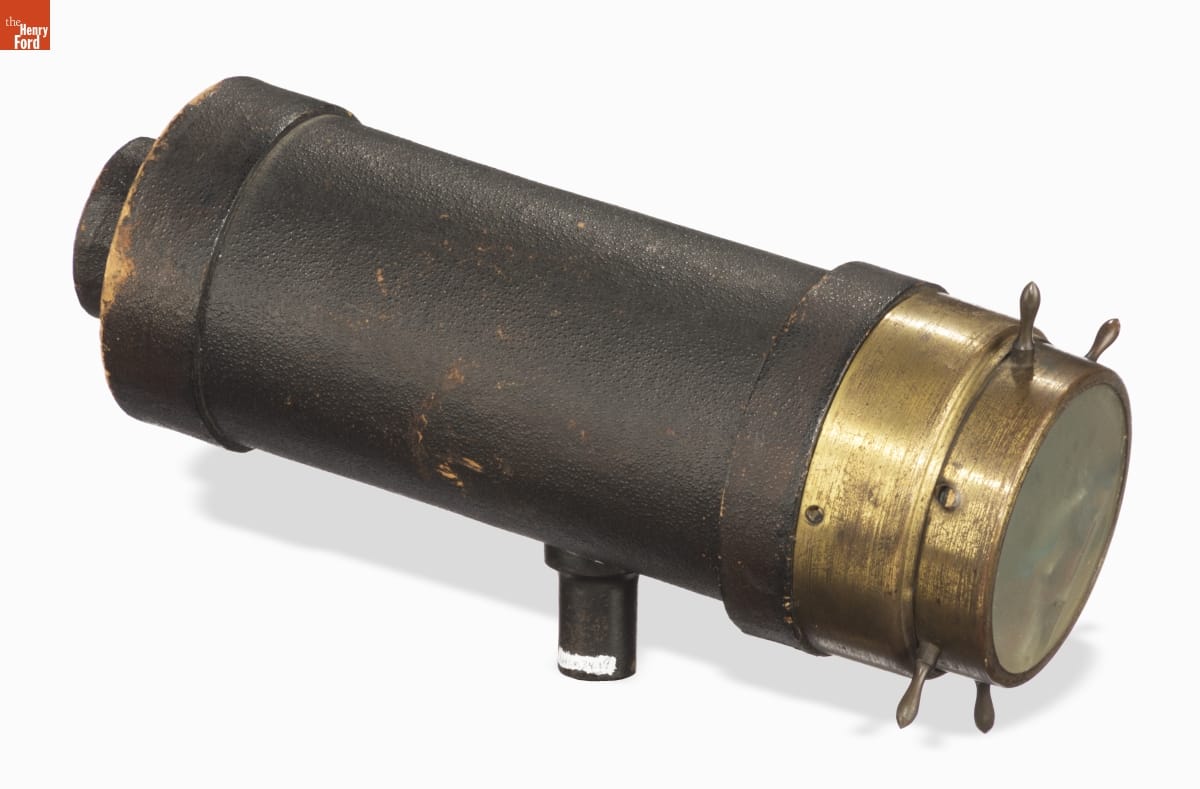
- Kaleidoscope - Kaleidoscopes provide a visual feast for the eye. Angled mirrors enclosed in a tube create beautiful, ever-changing symmetrical patterns from bits of colorful glass and other translucent material. Kaleidoscopes have mesmerized children and adults since the mid-1810s, when Scottish-born David Brewster invented the first one.
- Collections - Artifact
Kaleidoscope
Kaleidoscopes provide a visual feast for the eye. Angled mirrors enclosed in a tube create beautiful, ever-changing symmetrical patterns from bits of colorful glass and other translucent material. Kaleidoscopes have mesmerized children and adults since the mid-1810s, when Scottish-born David Brewster invented the first one.
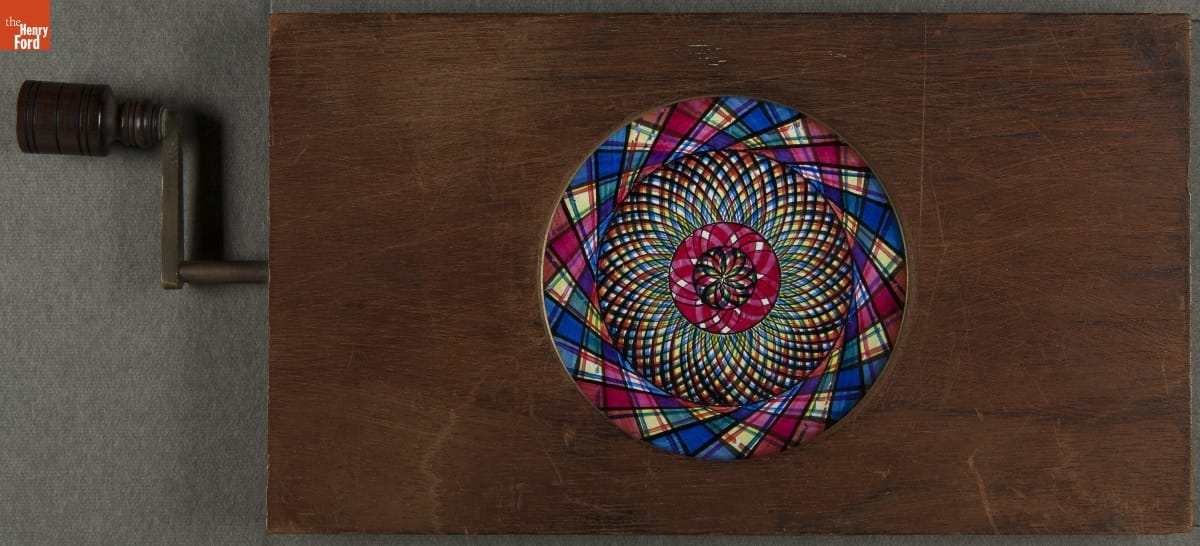
- Mechanical Chromatrope Lantern Slide, 1860-1900 - Magic lanterns use a concave mirror and light source to project images on glass slides with painted or photographic scenes. Developed in the 17th century, magic lanterns predate slide projectors and motion pictures. In the hands of magicians, they became "lanterns of fright," projecting wondrous images and apparitions. Slide themes ranged widely: exotic travel, folklore, advertising, history, science, and art.
- 1860-1900
- Collections - Artifact
Mechanical Chromatrope Lantern Slide, 1860-1900
Magic lanterns use a concave mirror and light source to project images on glass slides with painted or photographic scenes. Developed in the 17th century, magic lanterns predate slide projectors and motion pictures. In the hands of magicians, they became "lanterns of fright," projecting wondrous images and apparitions. Slide themes ranged widely: exotic travel, folklore, advertising, history, science, and art.
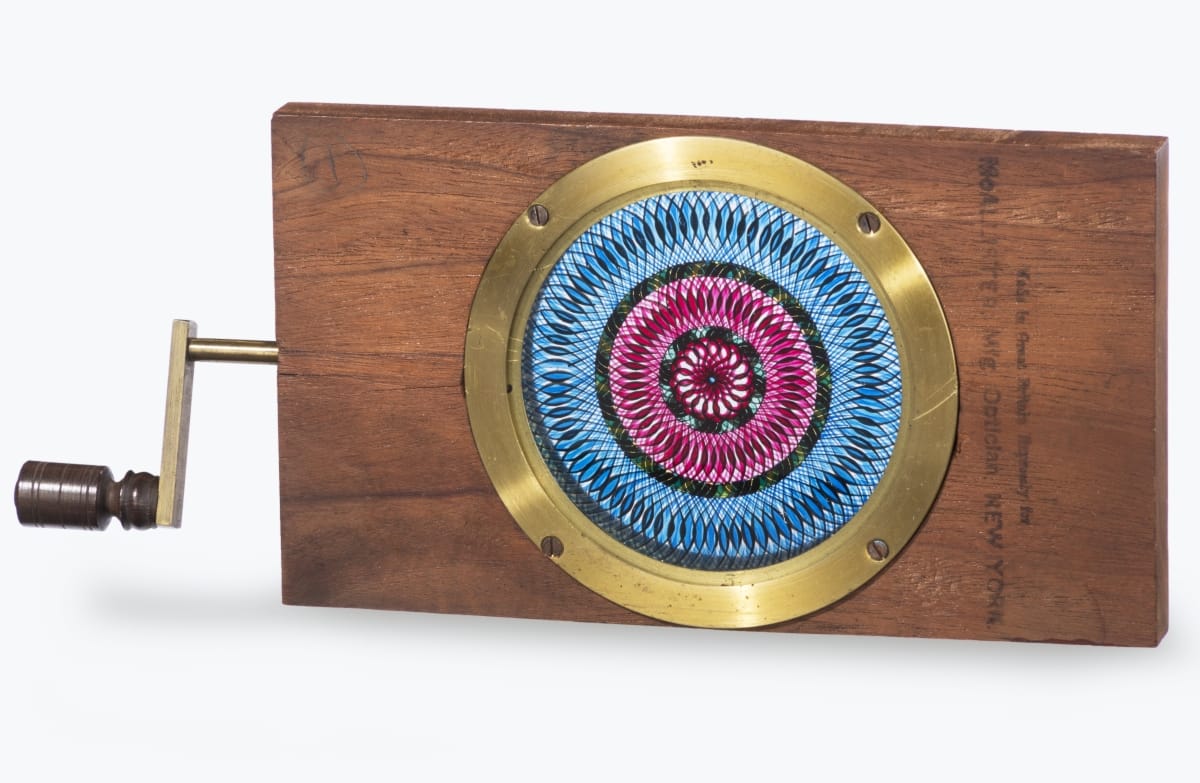
- T.H. McAllister Chromatrope Magic Lantern Slide, 1860-1900 - Magic lanterns use a concave mirror and light source to project images on glass slides with painted or photographic scenes. Developed in the 17th century, magic lanterns predate slide projectors and motion pictures. In the hands of magicians, they became "lanterns of fright," projecting wondrous images and apparitions. Slide themes ranged widely: exotic travel, folklore, advertising, history, science, and art.
- 1860-1900
- Collections - Artifact
T.H. McAllister Chromatrope Magic Lantern Slide, 1860-1900
Magic lanterns use a concave mirror and light source to project images on glass slides with painted or photographic scenes. Developed in the 17th century, magic lanterns predate slide projectors and motion pictures. In the hands of magicians, they became "lanterns of fright," projecting wondrous images and apparitions. Slide themes ranged widely: exotic travel, folklore, advertising, history, science, and art.
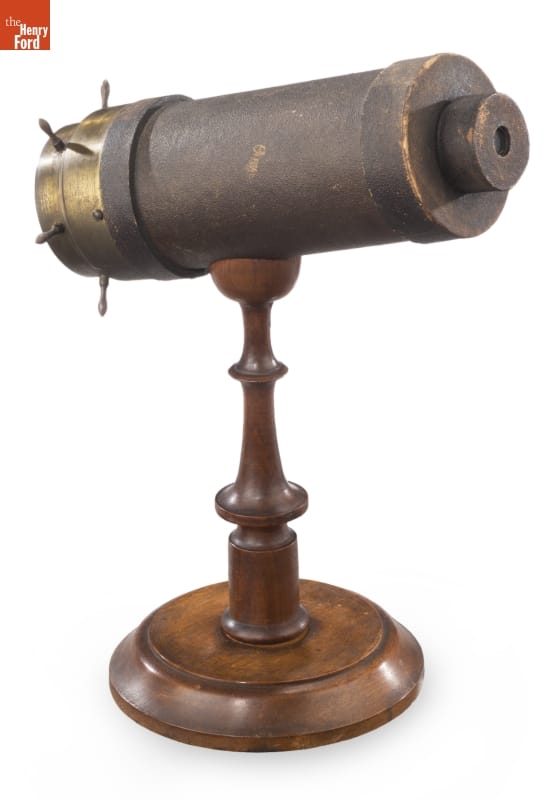
- Kaleidoscope - Kaleidoscopes provide a visual feast for the eye. Angled mirrors enclosed in a tube create beautiful, ever-changing symmetrical patterns from bits of colorful glass and other translucent material. Kaleidoscopes have mesmerized children and adults since the mid-1810s, when Scottish-born David Brewster invented the first one.
- Collections - Artifact
Kaleidoscope
Kaleidoscopes provide a visual feast for the eye. Angled mirrors enclosed in a tube create beautiful, ever-changing symmetrical patterns from bits of colorful glass and other translucent material. Kaleidoscopes have mesmerized children and adults since the mid-1810s, when Scottish-born David Brewster invented the first one.
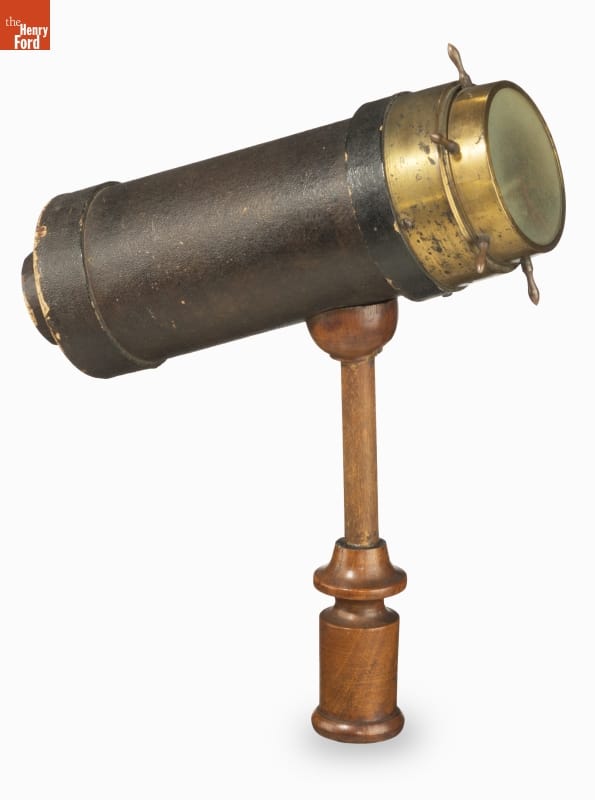
- Kaleidoscope - Kaleidoscopes provide a visual feast for the eye. Angled mirrors enclosed in a tube create beautiful, ever-changing symmetrical patterns from bits of colorful glass and other translucent material. Kaleidoscopes have mesmerized children and adults since the mid-1810s, when Scottish-born David Brewster invented the first one.
- Collections - Artifact
Kaleidoscope
Kaleidoscopes provide a visual feast for the eye. Angled mirrors enclosed in a tube create beautiful, ever-changing symmetrical patterns from bits of colorful glass and other translucent material. Kaleidoscopes have mesmerized children and adults since the mid-1810s, when Scottish-born David Brewster invented the first one.