
C. G. Bush Kaleidoscope, 1874-1900
THF170263 / C. G. Bush Kaleidoscope, 1874-1900
01
Artifact Overview
Kaleidoscopes provide a visual feast for the eye. Angled mirrors enclosed in a tube create beautiful, ever-changing symmetrical patterns from bits of colorful glass and other translucent material. In the late 1800s, Charles Bush placed small liquid-filled vials in his kaleidoscopes. The moving liquid and bubbles in the vials provided a unique component to this optical experience.
Artifact Details
Artifact
Kaleidoscope
Date Made
1874-1900
Location
Not on exhibit to the public.
Object ID
30.1442.44
Credit
From the Collections of The Henry Ford.
Material
Wood (Plant material)
Metal
Glass (Material)
Color
Brown
Black (Color)
Gold (Color)
White (Color)
Dimensions
Height: 12.25 in
Width: 11 in
Length: 9.5 in
Inscriptions
stamped on leg:
C. G. BUSH / PATENTED NOV. 17, 1874
Keywords |
|---|
02
Related Content
 Set
SetExposed Collections—2017-2020 IMLS Grant Project
- 20 Artifacts
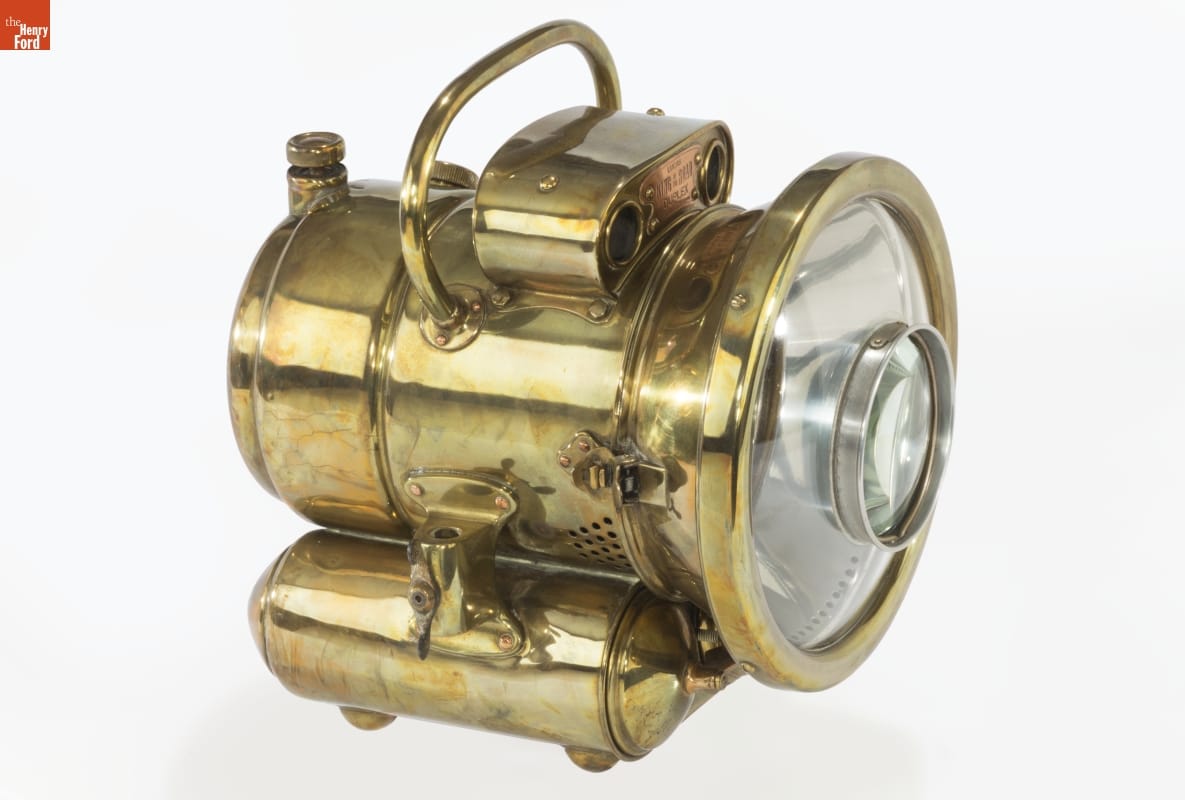
Drivers in the early 1900s attached headlights to their automobiles to help light their way at night. To use this "King of the Road" model, automobilists filled the chambers with calcium carbide and then added water creating acetylene gas. Igniting the gas burner produced a strong white light. The lamp's lens and parabolic reflector cast a broad beam lighting the road ahead.