
Search
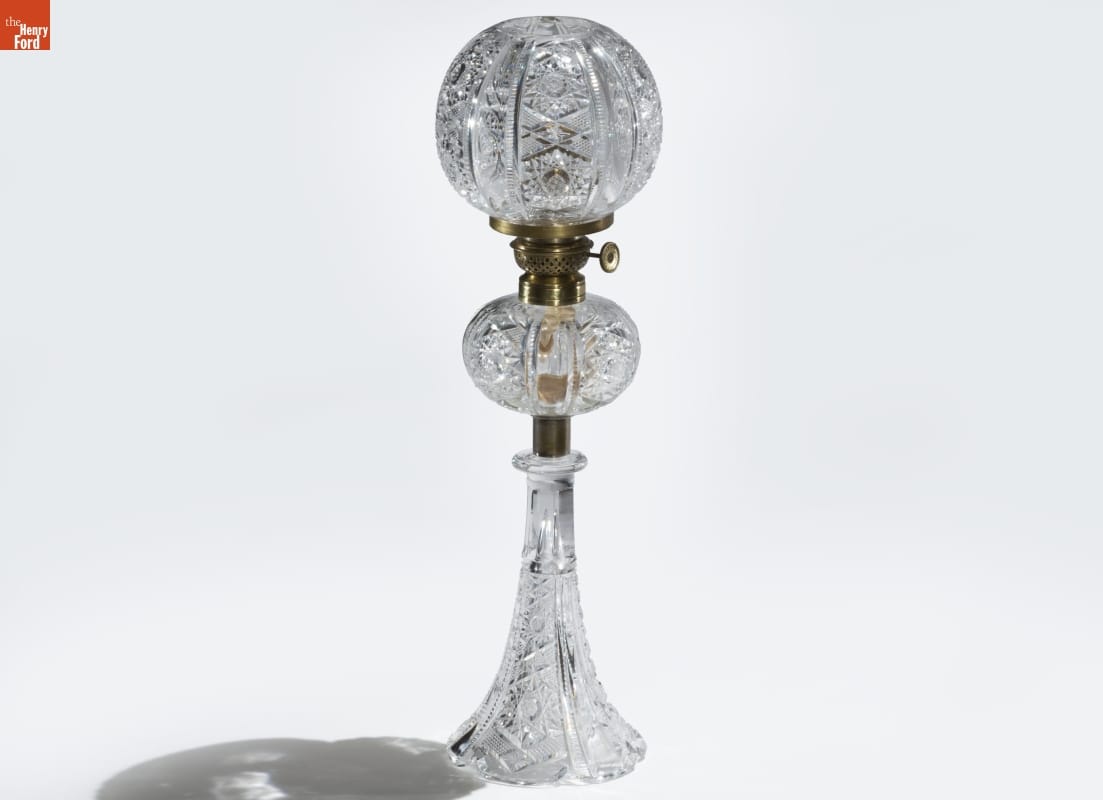
- Kerosene Lamp, 1895-1905 -
- 1895-1905
- Collections - Artifact
Kerosene Lamp, 1895-1905
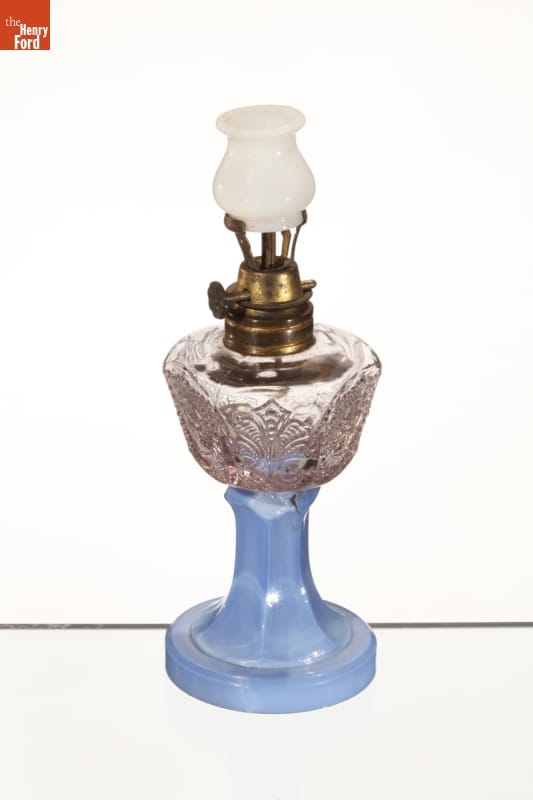
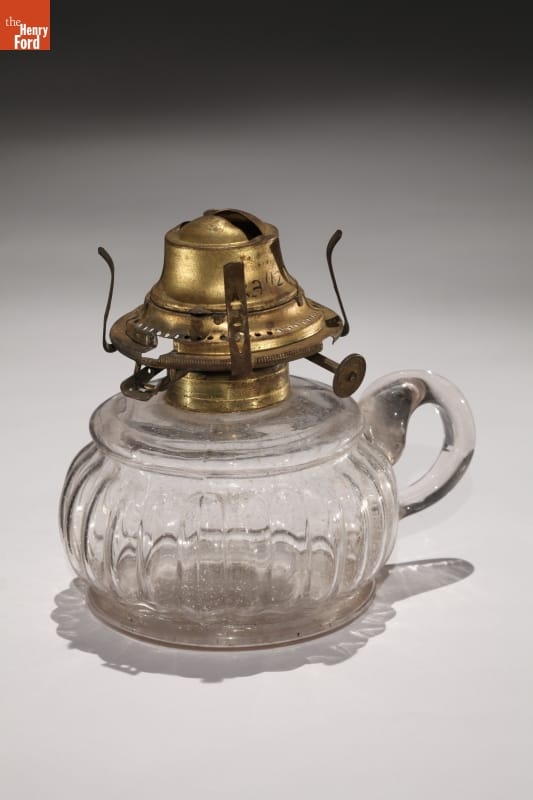
- Kerosene Lamp, circa 1880 - Miniature lamps burned kerosene, a fuel popular after the Civil War. These lamps were marketed with a pressed glass font in a variety of colors -- white, milk glass or teal. It would be used as a bedside lamp or carried from room to room.
- circa 1880
- Collections - Artifact
Kerosene Lamp, circa 1880
Miniature lamps burned kerosene, a fuel popular after the Civil War. These lamps were marketed with a pressed glass font in a variety of colors -- white, milk glass or teal. It would be used as a bedside lamp or carried from room to room.
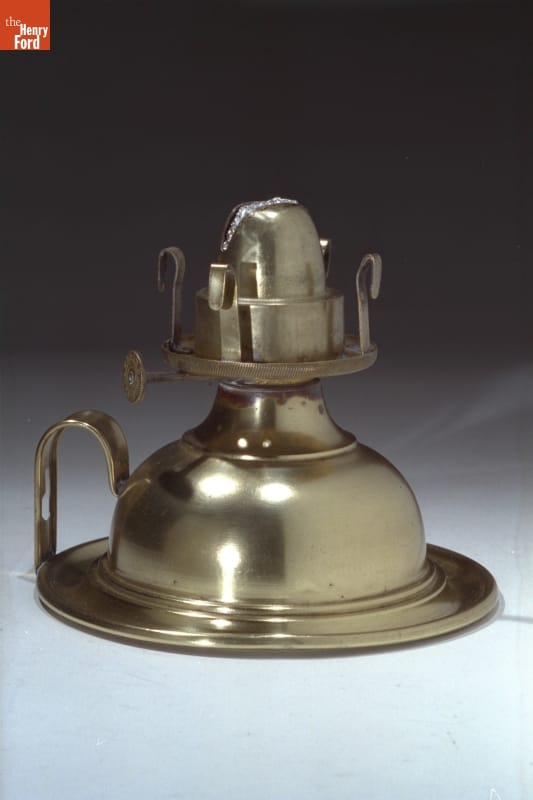
- Kerosene Lamp, circa 1868 -
- circa 1868
- Collections - Artifact
Kerosene Lamp, circa 1868
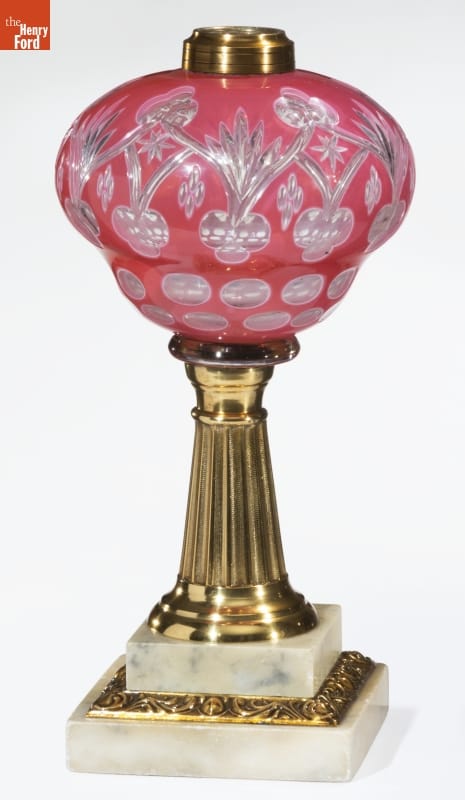
- Kerosene Lamp, 1860-1875 -
- 1860-1875
- Collections - Artifact
Kerosene Lamp, 1860-1875
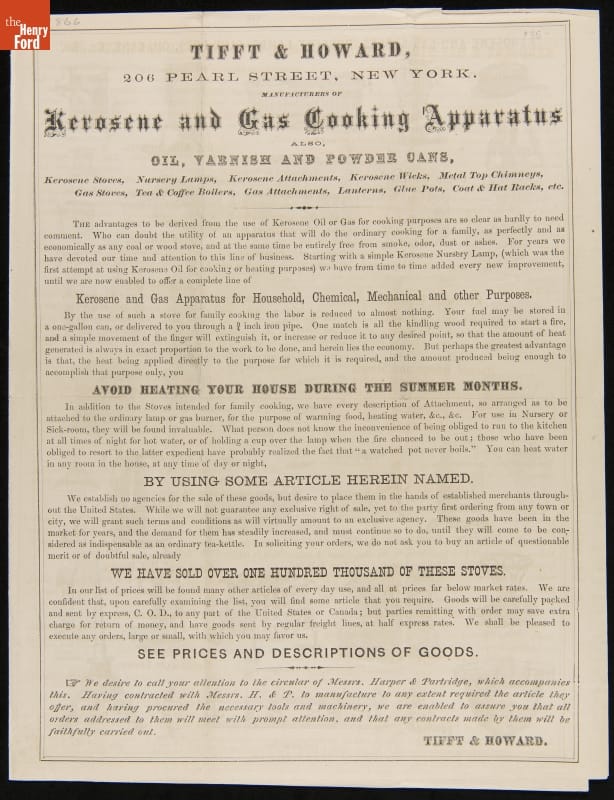
- "Kerosene and Gas Cooking Apparatus," 1866 -
- 1866
- Collections - Artifact
"Kerosene and Gas Cooking Apparatus," 1866
- Patent Model of Lamp Extinguisher, 1878 - From 1790 to 1880, the U.S. Patent Office required applicants to submit a miniature model along with diagrams and written descriptions detailing the operation of their invention. Patent models could be no larger than 12" by 12" by 12". Though they were usually not operational, these models helped explain an inventor's idea and protect it from competitors.
- April 02, 1878
- Collections - Artifact
Patent Model of Lamp Extinguisher, 1878
From 1790 to 1880, the U.S. Patent Office required applicants to submit a miniature model along with diagrams and written descriptions detailing the operation of their invention. Patent models could be no larger than 12" by 12" by 12". Though they were usually not operational, these models helped explain an inventor's idea and protect it from competitors.
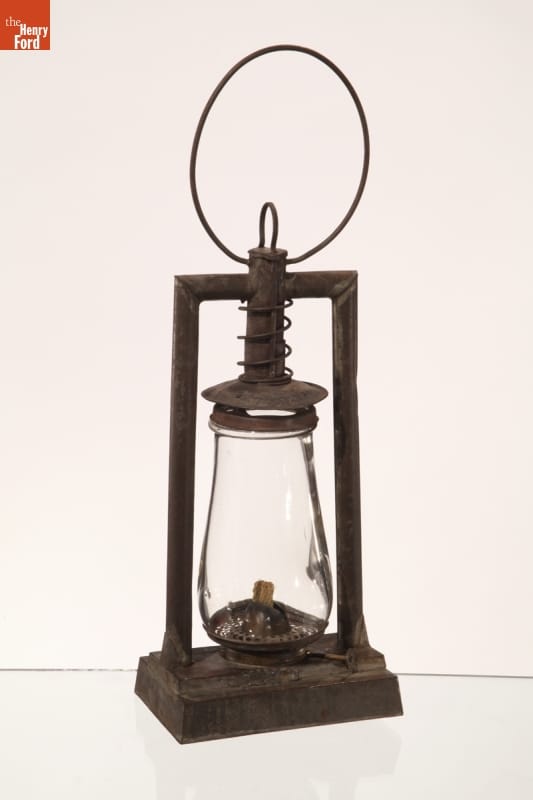
- Kerosene Lantern, circa 1875 - "Hot Glass Lanterns" were a type of kerosene lantern used in a barn or agriculture setting. They get their name because as they burn, the air is reused and drawn back into the flame. An early form of a Dietz brand kerosene lantern, it was illustrated in their 1874 catalogue.
- circa 1875
- Collections - Artifact
Kerosene Lantern, circa 1875
"Hot Glass Lanterns" were a type of kerosene lantern used in a barn or agriculture setting. They get their name because as they burn, the air is reused and drawn back into the flame. An early form of a Dietz brand kerosene lantern, it was illustrated in their 1874 catalogue.
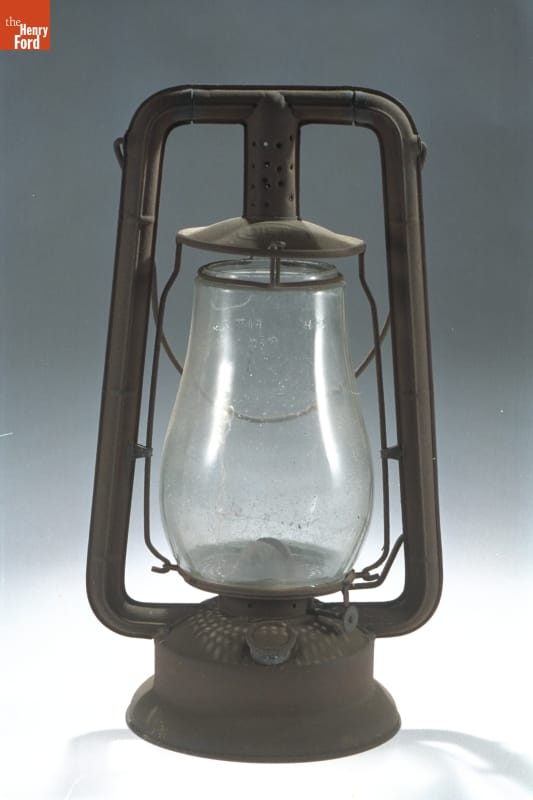
- "Monarch" Kerosene Lantern, circa 1910 -
- circa 1910
- Collections - Artifact
"Monarch" Kerosene Lantern, circa 1910
- Double Arm Student Lamp, circa 1900 -
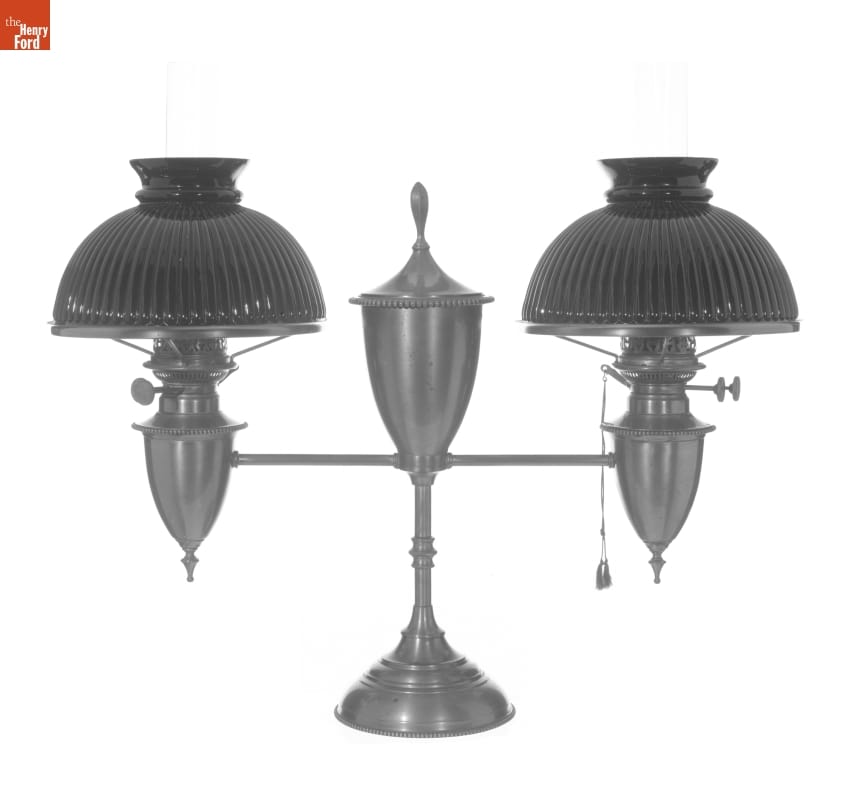
- circa 1900
- Collections - Artifact
Double Arm Student Lamp, circa 1900
- Patent Model of Lamp Extinguisher, 1879 - From 1790 to 1880, the U.S. Patent Office required applicants to submit a miniature model along with diagrams and written descriptions detailing the operation of their invention. Patent models could be no larger than 12" by 12" by 12". Though they were usually not operational, these models helped explain an inventor's idea and protect it from competitors.
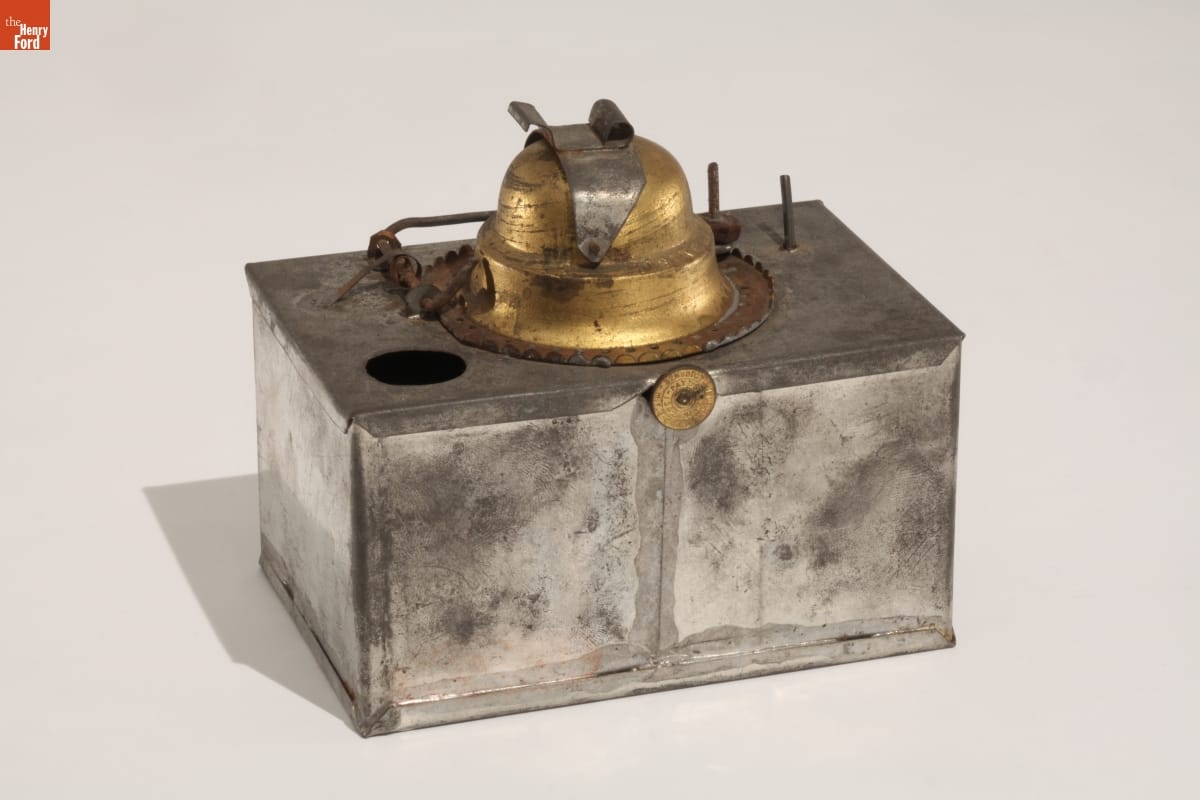
- February 04, 1879
- Collections - Artifact
Patent Model of Lamp Extinguisher, 1879
From 1790 to 1880, the U.S. Patent Office required applicants to submit a miniature model along with diagrams and written descriptions detailing the operation of their invention. Patent models could be no larger than 12" by 12" by 12". Though they were usually not operational, these models helped explain an inventor's idea and protect it from competitors.