
Search
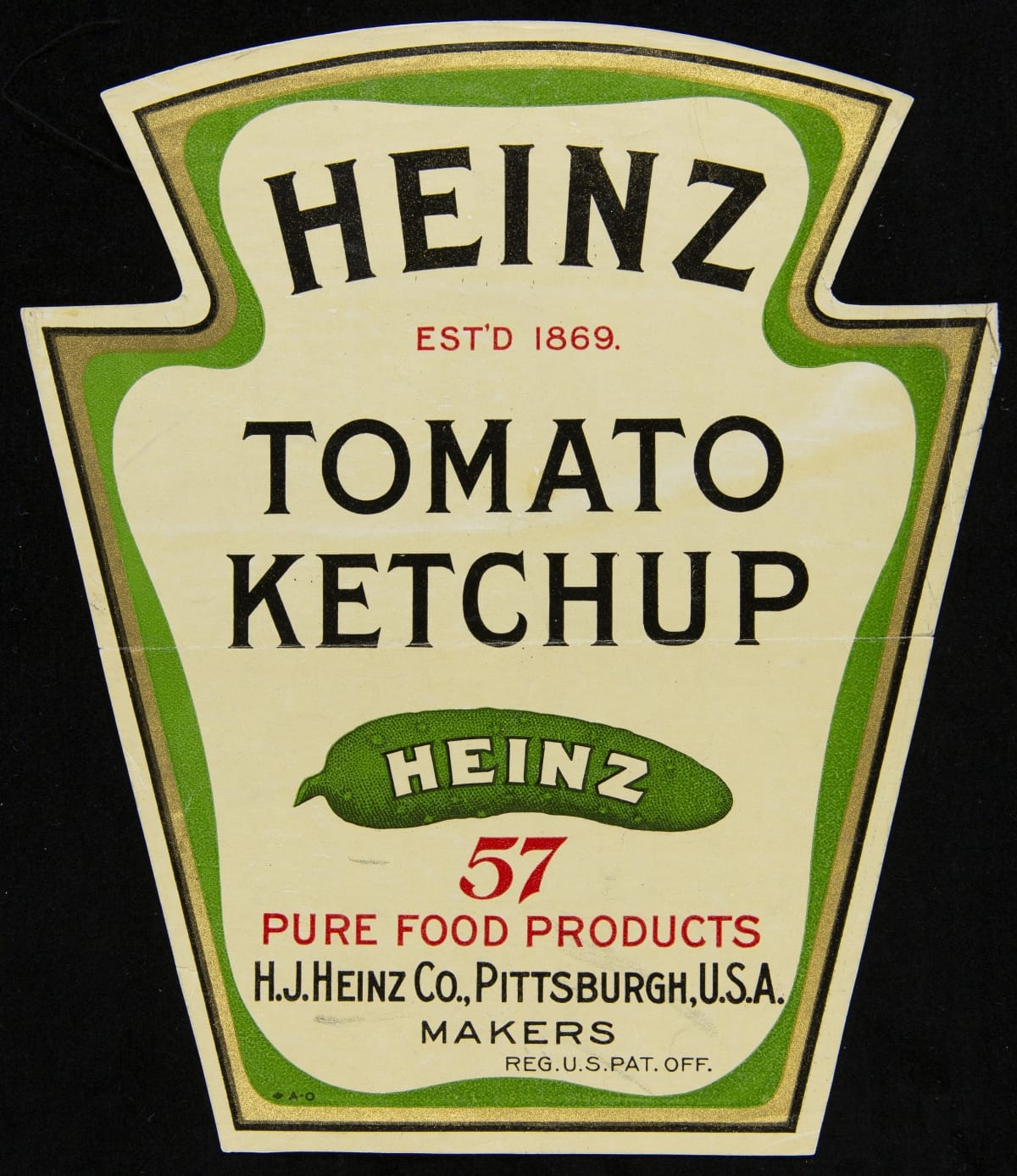
- Label, "H. J. Heinz Brand Tomato Ketchup," circa 1900 - Manufacturers of similar products sought ways to make their companies' goods stand out on store shelves. Some companies established a uniform label design for their multi-product offerings -- a strategy which helped customers distinguish one brand over another. H.J. Heinz products were identified by the famous Heinz pickle and signature "keystone" logo. These design features are still found on Heinz products today.
- circa 1900
- Collections - Artifact
Label, "H. J. Heinz Brand Tomato Ketchup," circa 1900
Manufacturers of similar products sought ways to make their companies' goods stand out on store shelves. Some companies established a uniform label design for their multi-product offerings -- a strategy which helped customers distinguish one brand over another. H.J. Heinz products were identified by the famous Heinz pickle and signature "keystone" logo. These design features are still found on Heinz products today.
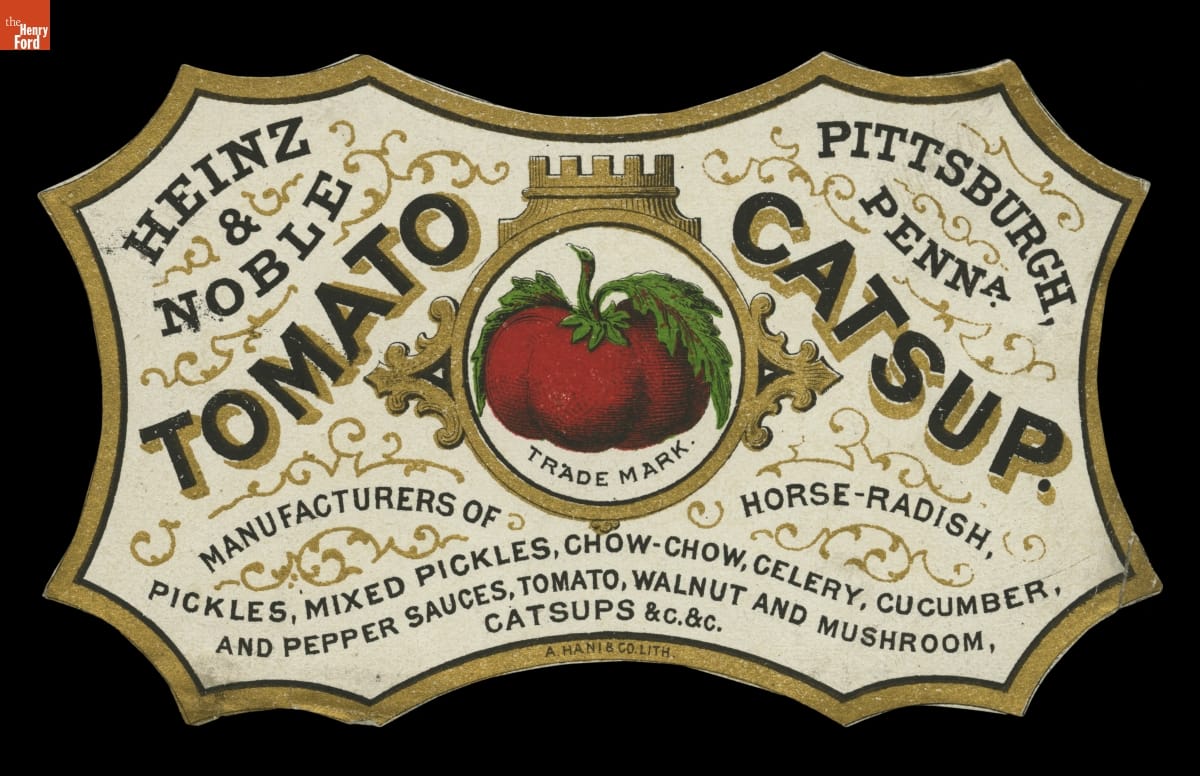
- Product Label for Bottled Tomato Catsup by Heinz, Noble & Company, circa 1873 - Henry J. Heinz introduced tomato ketchup as one of his first bottled condiments in the 1870s. To ensure his success among competing ketchup manufacturers, Heinz employed innovative product packaging. Eye-catching labels attracted customers, and clear glass bottles revealed a high-quality product. By about 1905, the H.J. Heinz Company had become the largest ketchup producer in the nation.
- circa 1873
- Collections - Artifact
Product Label for Bottled Tomato Catsup by Heinz, Noble & Company, circa 1873
Henry J. Heinz introduced tomato ketchup as one of his first bottled condiments in the 1870s. To ensure his success among competing ketchup manufacturers, Heinz employed innovative product packaging. Eye-catching labels attracted customers, and clear glass bottles revealed a high-quality product. By about 1905, the H.J. Heinz Company had become the largest ketchup producer in the nation.
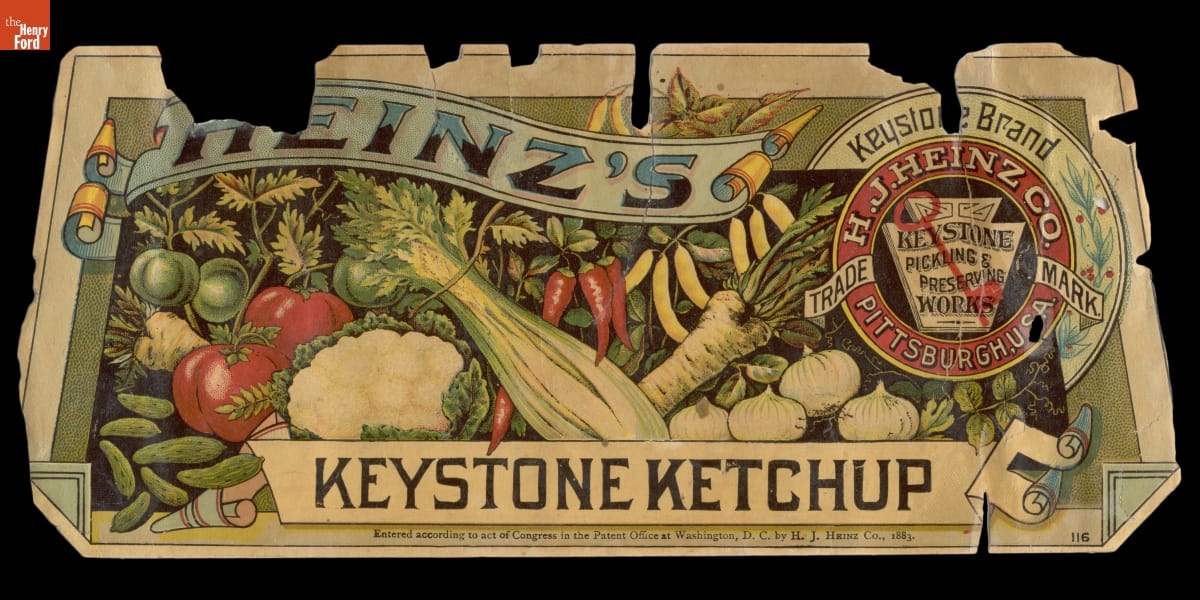
- Product Label, "Heinz's Keystone Ketchup," 1883 - The H.J. Heinz Company pioneered the concept of prepared and packaged foods and brand name identification. Attractive labels, such as this colorful design for "Heinz's Keystone Ketchup," helped catch the attention of potential customers--hopefully encouraging them to purchase Heinz products rather than those of a competitor.
- 1883
- Collections - Artifact
Product Label, "Heinz's Keystone Ketchup," 1883
The H.J. Heinz Company pioneered the concept of prepared and packaged foods and brand name identification. Attractive labels, such as this colorful design for "Heinz's Keystone Ketchup," helped catch the attention of potential customers--hopefully encouraging them to purchase Heinz products rather than those of a competitor.
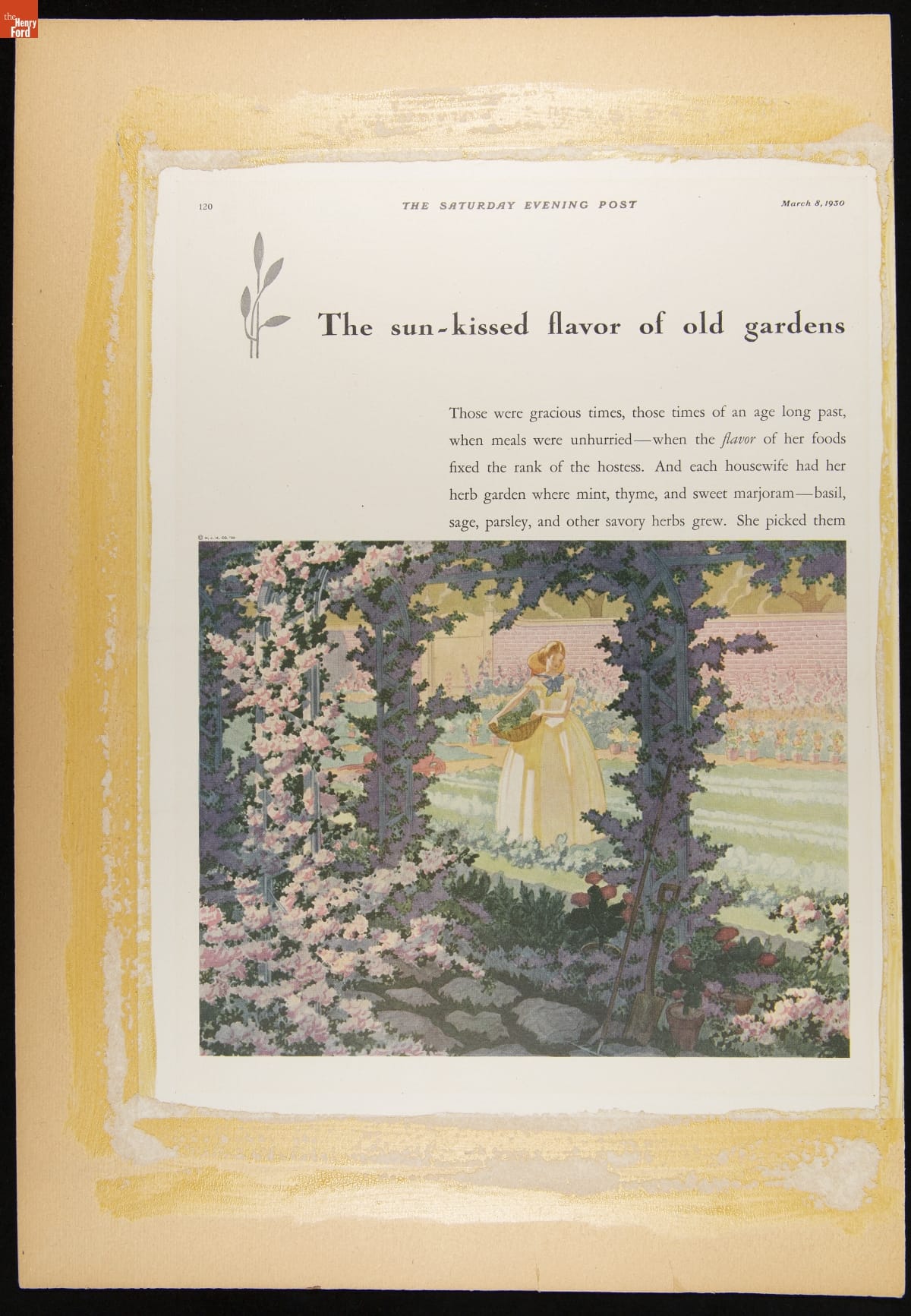
- "The Sun-Kissed Flavor of Old Gardens," Heinz Company Advertisement, March 8, 1930 - This two-page tear sheet advertising layout was created to be published in the Saturday Evening Post on March 8, 1930. The advertisement describes how old ways of cooking were painstaking and time consuming, whereas Heinz products exhibit the same great taste of old recipes without all the hassle.
- March 08, 1930
- Collections - Artifact
"The Sun-Kissed Flavor of Old Gardens," Heinz Company Advertisement, March 8, 1930
This two-page tear sheet advertising layout was created to be published in the Saturday Evening Post on March 8, 1930. The advertisement describes how old ways of cooking were painstaking and time consuming, whereas Heinz products exhibit the same great taste of old recipes without all the hassle.
- Product Label for Tomato Catsup by Heinz, Noble & Co., 1872-1873 - Henry J. Heinz introduced tomato ketchup as one of his first bottled condiments in the 1870s. To ensure his success among competing ketchup manufacturers, Heinz employed innovative product packaging. Eye-catching labels attracted customers, and clear glass bottles revealed a high-quality product. By about 1905, the H.J. Heinz Company had become the largest ketchup producer in the nation.
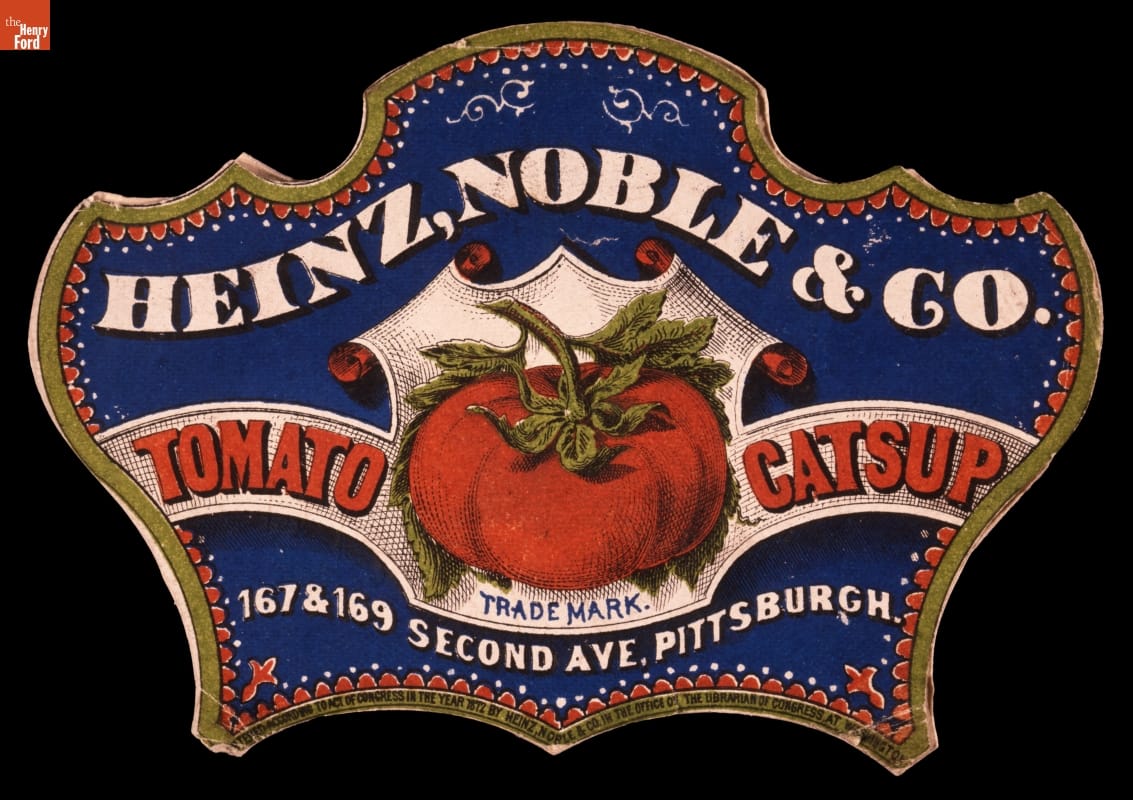
- 1872-1873
- Collections - Artifact
Product Label for Tomato Catsup by Heinz, Noble & Co., 1872-1873
Henry J. Heinz introduced tomato ketchup as one of his first bottled condiments in the 1870s. To ensure his success among competing ketchup manufacturers, Heinz employed innovative product packaging. Eye-catching labels attracted customers, and clear glass bottles revealed a high-quality product. By about 1905, the H.J. Heinz Company had become the largest ketchup producer in the nation.
- Advertising Layout Photograph of Heinz Employees Sealing Bottles, 1909 - Before complete mechanization of the manufacturing process, many tasks at the Heinz factory were done by hand. Photographs of this process were often taken and then modified for advertising and publications. Pictured here are employees sealing bottles.
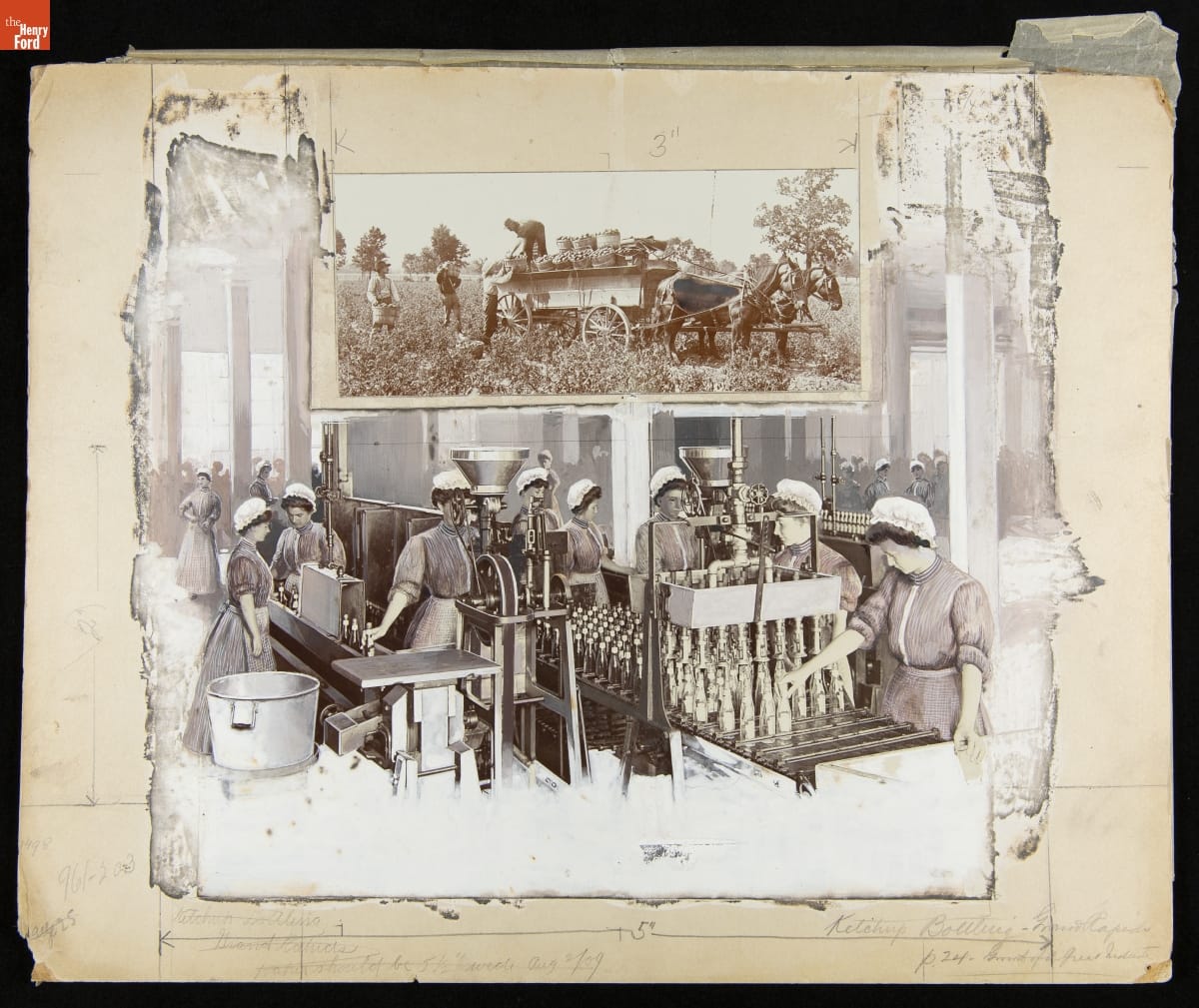
- 1909
- Collections - Artifact
Advertising Layout Photograph of Heinz Employees Sealing Bottles, 1909
Before complete mechanization of the manufacturing process, many tasks at the Heinz factory were done by hand. Photographs of this process were often taken and then modified for advertising and publications. Pictured here are employees sealing bottles.
- Photograph Album of Heinz Company Employees and Friends, 1880-1933 - Company scrapbooks are often reminders of the company's history, significant moments in time, and the employees who worked there. This album, compiled by the H. J. Heinz Company, includes photographs and portraits of H. J. Heinz, company sales personnel, employees, and friends of H. J. Heinz.
- 1880-1933
- Collections - Artifact
Photograph Album of Heinz Company Employees and Friends, 1880-1933
Company scrapbooks are often reminders of the company's history, significant moments in time, and the employees who worked there. This album, compiled by the H. J. Heinz Company, includes photographs and portraits of H. J. Heinz, company sales personnel, employees, and friends of H. J. Heinz.
- Photograph Album of Heinz Company Ground and Electric Signs, 1908-1945 - Company scrapbooks are often reminders of the company's history, significant moments in time, and the employees who worked there. This album, compiled by the H. J. Heinz Company, includes photographs of various ground and electric signs. Heinz never missed an opportunity to promote his products. These signs were erected to encourage customers to buy his products and contributed in making Heinz a household name.
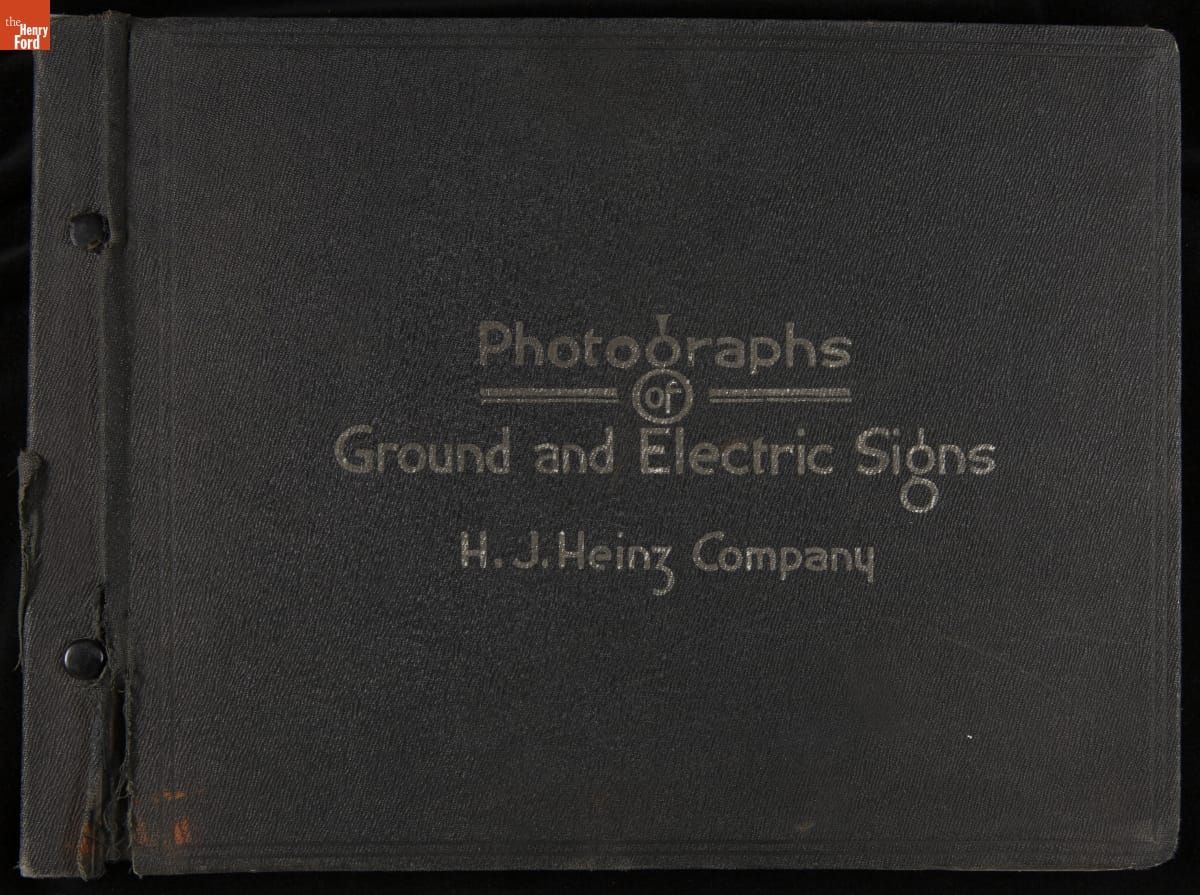
- 1908-1945
- Collections - Artifact
Photograph Album of Heinz Company Ground and Electric Signs, 1908-1945
Company scrapbooks are often reminders of the company's history, significant moments in time, and the employees who worked there. This album, compiled by the H. J. Heinz Company, includes photographs of various ground and electric signs. Heinz never missed an opportunity to promote his products. These signs were erected to encourage customers to buy his products and contributed in making Heinz a household name.
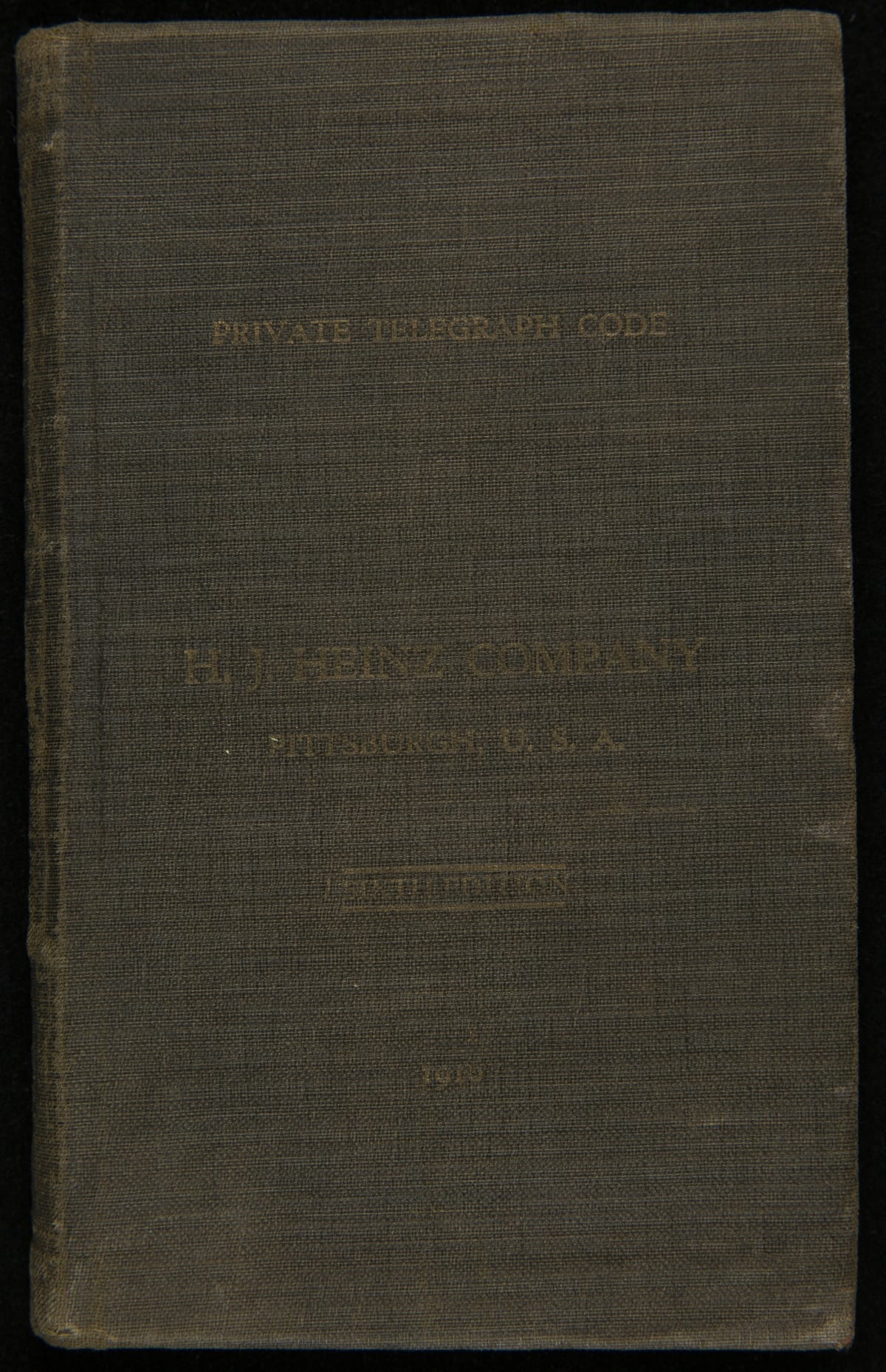
- H. J. Heinz Company Private Telegraph Code Book, April 1916 - Before telephones, a telegraph was used to transmit messages. Once sent, the message was written or printed and delivered by hand. This was an expensive mode of communication (often charging per word), encouraging companies to create unique codes for phrases to reduce cost. This Telegraph Code Book was used by the H.J. Heinz Company.
- April 01, 1916
- Collections - Artifact
H. J. Heinz Company Private Telegraph Code Book, April 1916
Before telephones, a telegraph was used to transmit messages. Once sent, the message was written or printed and delivered by hand. This was an expensive mode of communication (often charging per word), encouraging companies to create unique codes for phrases to reduce cost. This Telegraph Code Book was used by the H.J. Heinz Company.
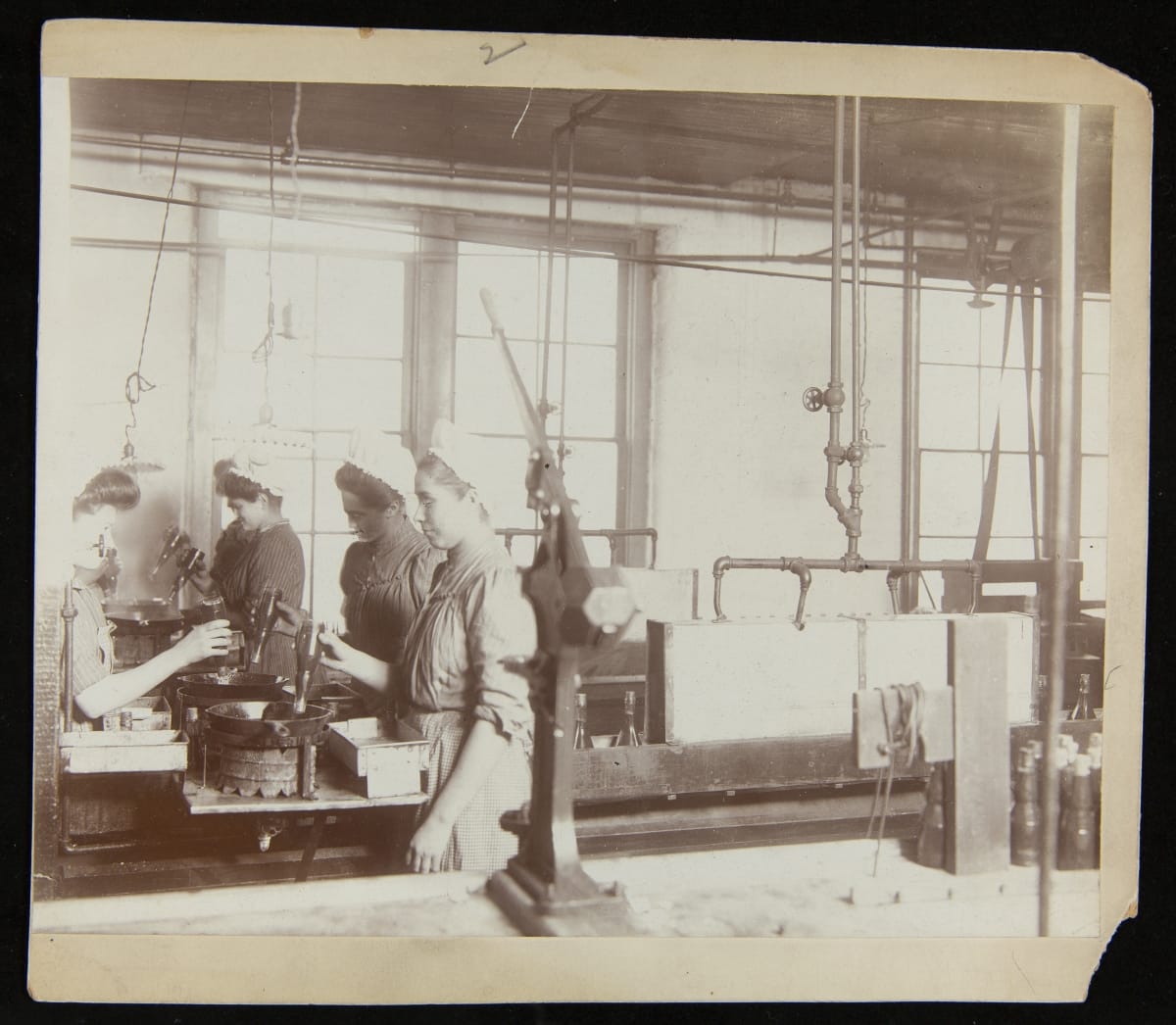
- Employees in the Ketchup Department, H. J. Heinz Company, Pittsburgh, Pennsylvania, circa 1910 - Before complete mechanization of the manufacturing process, many tasks at the Heinz factory were done by hand. The H. J. Heinz Company documented the many departments of the manufacturing process through photographs. This photograph shows employees working in the Ketchup Department.
- circa 1910
- Collections - Artifact
Employees in the Ketchup Department, H. J. Heinz Company, Pittsburgh, Pennsylvania, circa 1910
Before complete mechanization of the manufacturing process, many tasks at the Heinz factory were done by hand. The H. J. Heinz Company documented the many departments of the manufacturing process through photographs. This photograph shows employees working in the Ketchup Department.