
Search
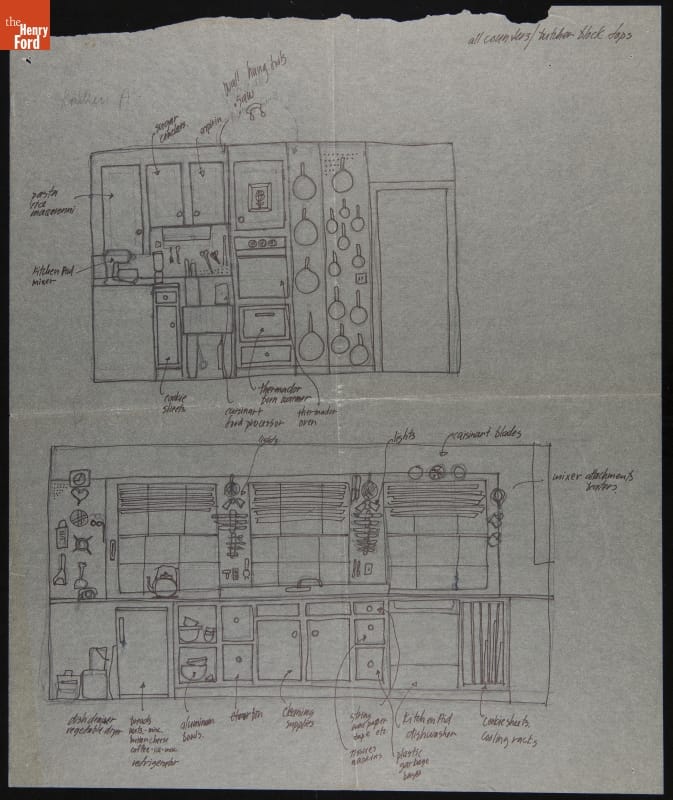
- Ink and Pencil Sketch by Jean Beirise of a Wall in Julia Child's Kitchen, 1977 - In 1977, "Julia's Kitchen: A Design Anatomy" was published as the first in a series of "design anatomies" by <em>Design Quarterly</em>. In this issue, designer Bill Stumpf and his team examined how Julia Child -- a chef well-versed in the functions of a kitchen -- designed her own kitchen. Numerous sketches and photographs, as well as hours of interviews with Paul and Julia Child, informed the issue.
- 1977
- Collections - Artifact
Ink and Pencil Sketch by Jean Beirise of a Wall in Julia Child's Kitchen, 1977
In 1977, "Julia's Kitchen: A Design Anatomy" was published as the first in a series of "design anatomies" by Design Quarterly. In this issue, designer Bill Stumpf and his team examined how Julia Child -- a chef well-versed in the functions of a kitchen -- designed her own kitchen. Numerous sketches and photographs, as well as hours of interviews with Paul and Julia Child, informed the issue.
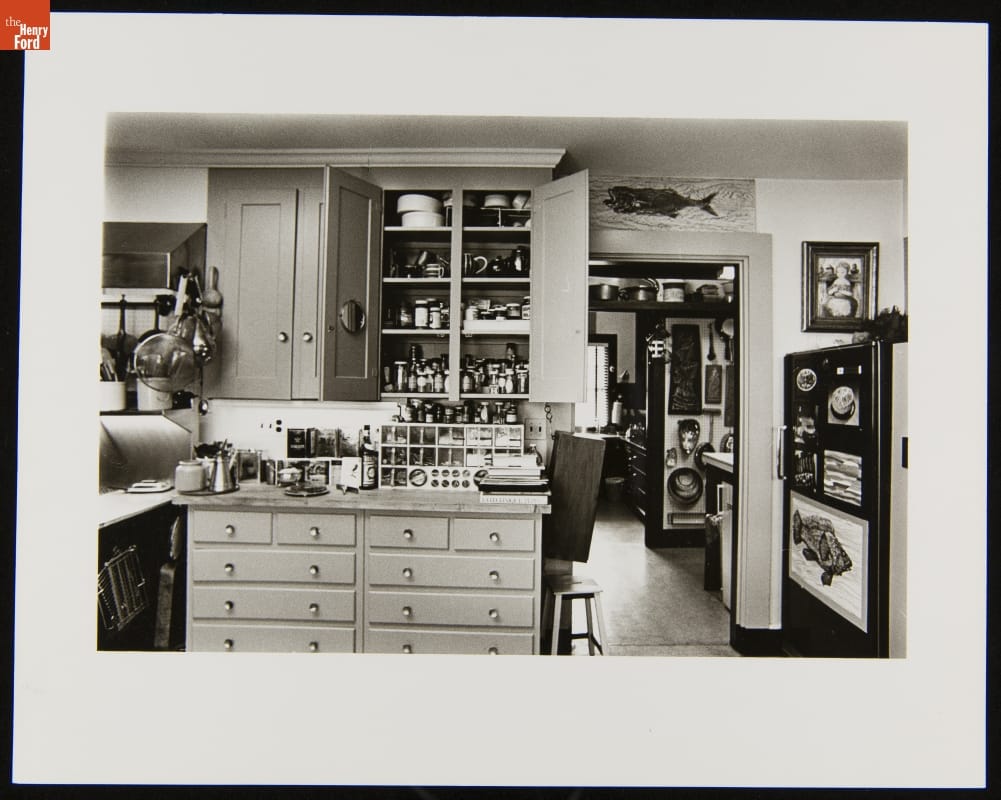
- Kitchen Cabinets and Refrigerator in Julia Child's Kitchen, 1977 - In 1977, "Julia's Kitchen: A Design Anatomy" was published as the first in a series of "design anatomies" by <em>Design Quarterly</em>. In this issue, designer Bill Stumpf and his team examined how Julia Child -- a chef well-versed in the functions of a kitchen -- designed her own kitchen. Numerous sketches and photographs, as well as hours of interviews with Paul and Julia Child, informed the issue.
- 1977
- Collections - Artifact
Kitchen Cabinets and Refrigerator in Julia Child's Kitchen, 1977
In 1977, "Julia's Kitchen: A Design Anatomy" was published as the first in a series of "design anatomies" by Design Quarterly. In this issue, designer Bill Stumpf and his team examined how Julia Child -- a chef well-versed in the functions of a kitchen -- designed her own kitchen. Numerous sketches and photographs, as well as hours of interviews with Paul and Julia Child, informed the issue.
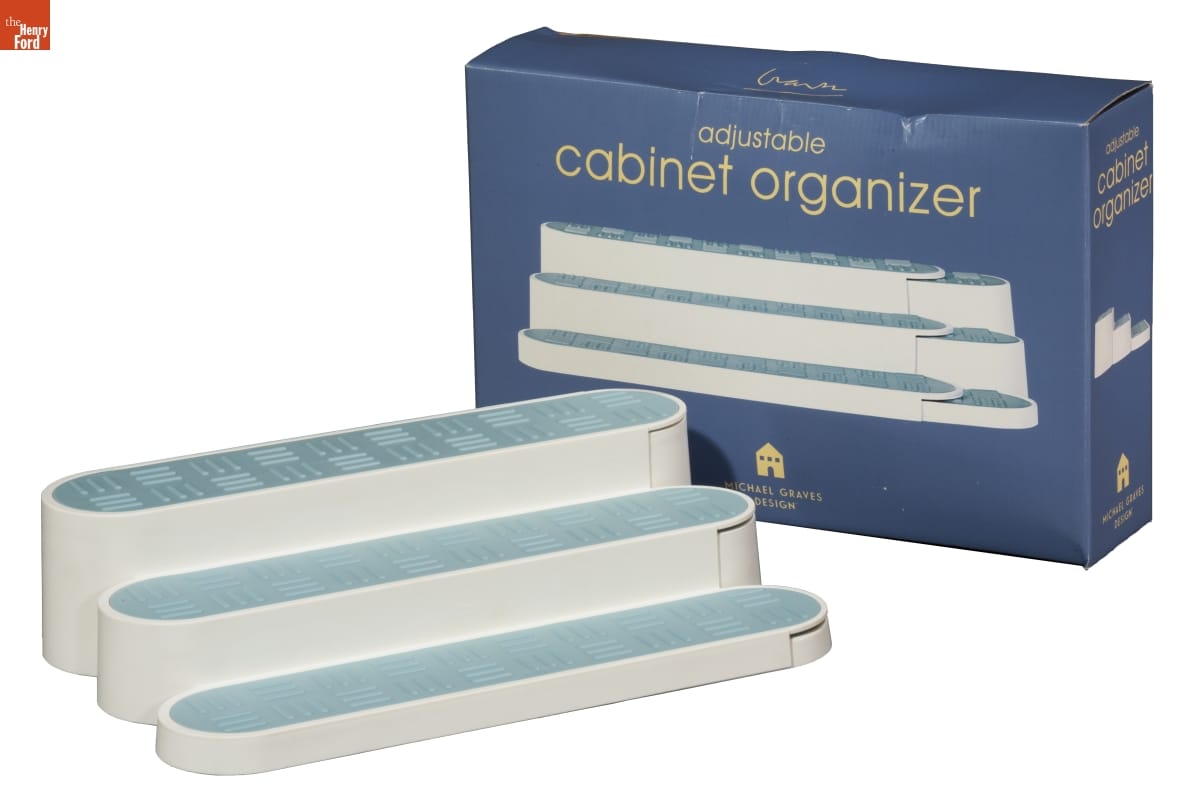
- Adjustable Cabinet Organizer, 2002 - Starting in the early 1980s--and already established as an internationally recognized architect--Michael Graves began to pursue a parallel career as a product designer. Over the following three and a half decades he and his collaborators designed everything from humble household goods to limited edition luxury items for clients as diverse as Steuben, Alessi, Target, J. C. Penney, and Disney.
- 2002
- Collections - Artifact
Adjustable Cabinet Organizer, 2002
Starting in the early 1980s--and already established as an internationally recognized architect--Michael Graves began to pursue a parallel career as a product designer. Over the following three and a half decades he and his collaborators designed everything from humble household goods to limited edition luxury items for clients as diverse as Steuben, Alessi, Target, J. C. Penney, and Disney.
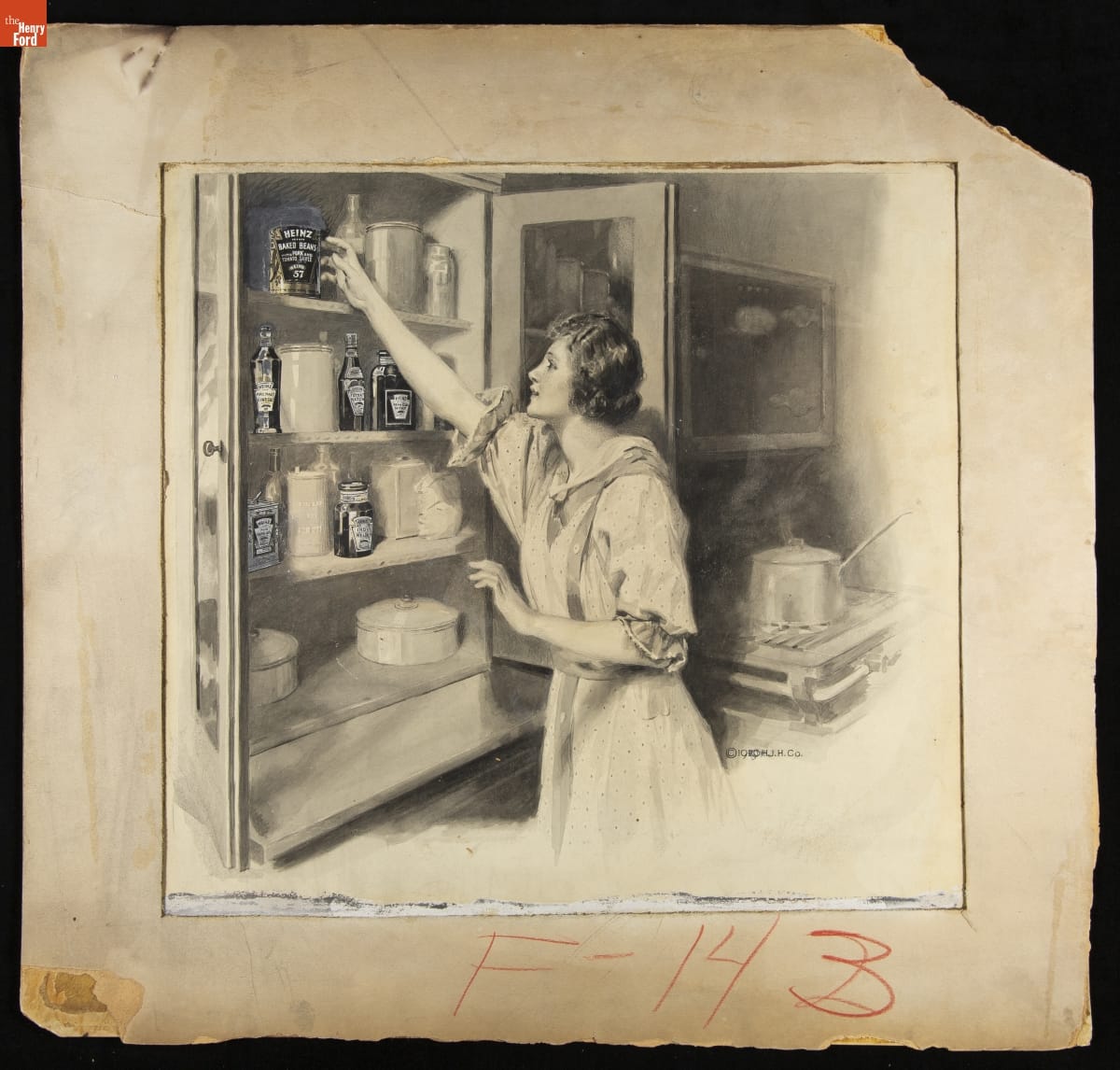
- Advertising Layout Illustration of a Woman in a Kitchen Choosing from a Variety of Heinz Products, 1920 - The H.J. Heinz Company employed ambitious and comprehensive advertising strategies to meet consumers at home, in stores, and everywhere in between. Product marketing strongly targeted housewives and women, assuring them that Heinz products were superior. These advertisements, like the one seen here, typically featured a woman purchasing, preparing, cooking, or serving Heinz products to their families.
- 1920
- Collections - Artifact
Advertising Layout Illustration of a Woman in a Kitchen Choosing from a Variety of Heinz Products, 1920
The H.J. Heinz Company employed ambitious and comprehensive advertising strategies to meet consumers at home, in stores, and everywhere in between. Product marketing strongly targeted housewives and women, assuring them that Heinz products were superior. These advertisements, like the one seen here, typically featured a woman purchasing, preparing, cooking, or serving Heinz products to their families.
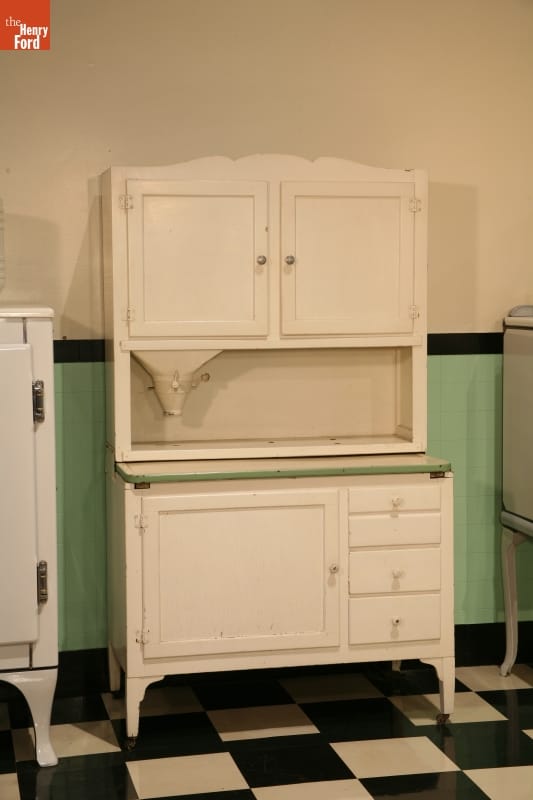
- Kitchen Cabinet, 1915-1930 - Early 20th century scientific management theories -- efficient, convenient, orderly work processes -- even influenced the home. This "Hoosier" style cabinet helped housewives organize food preparation. Baking supplies and kitchen utensils could be stored inside. The white enameled porcelain surface offered a convenient, sanitary workspace to mix ingredients or cut up food -- and then could easily be wiped clean.
- 1915-1930
- Collections - Artifact
Kitchen Cabinet, 1915-1930
Early 20th century scientific management theories -- efficient, convenient, orderly work processes -- even influenced the home. This "Hoosier" style cabinet helped housewives organize food preparation. Baking supplies and kitchen utensils could be stored inside. The white enameled porcelain surface offered a convenient, sanitary workspace to mix ingredients or cut up food -- and then could easily be wiped clean.
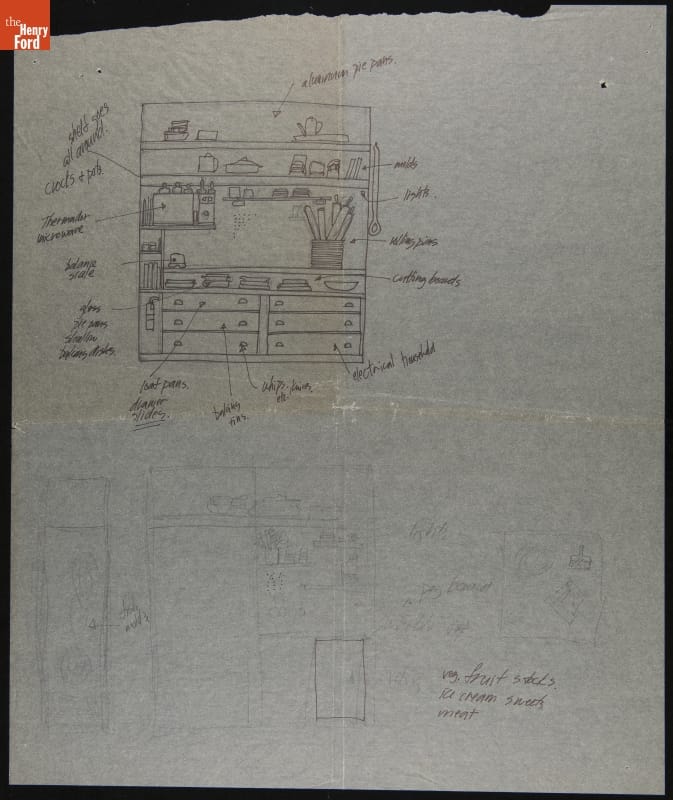
- Cabinets in Julia Child's Kitchen, Ink and Pencil Sketch by Jean Beirise, 1977 - In 1977, "Julia's Kitchen: A Design Anatomy" was published as the first in a series of "design anatomies" by <em>Design Quarterly</em>. In this issue, designer Bill Stumpf and his team examined how Julia Child -- a chef well-versed in the functions of a kitchen -- designed her own kitchen. Numerous sketches and photographs, as well as hours of interviews with Paul and Julia Child, informed the issue.
- 1977
- Collections - Artifact
Cabinets in Julia Child's Kitchen, Ink and Pencil Sketch by Jean Beirise, 1977
In 1977, "Julia's Kitchen: A Design Anatomy" was published as the first in a series of "design anatomies" by Design Quarterly. In this issue, designer Bill Stumpf and his team examined how Julia Child -- a chef well-versed in the functions of a kitchen -- designed her own kitchen. Numerous sketches and photographs, as well as hours of interviews with Paul and Julia Child, informed the issue.