
Search
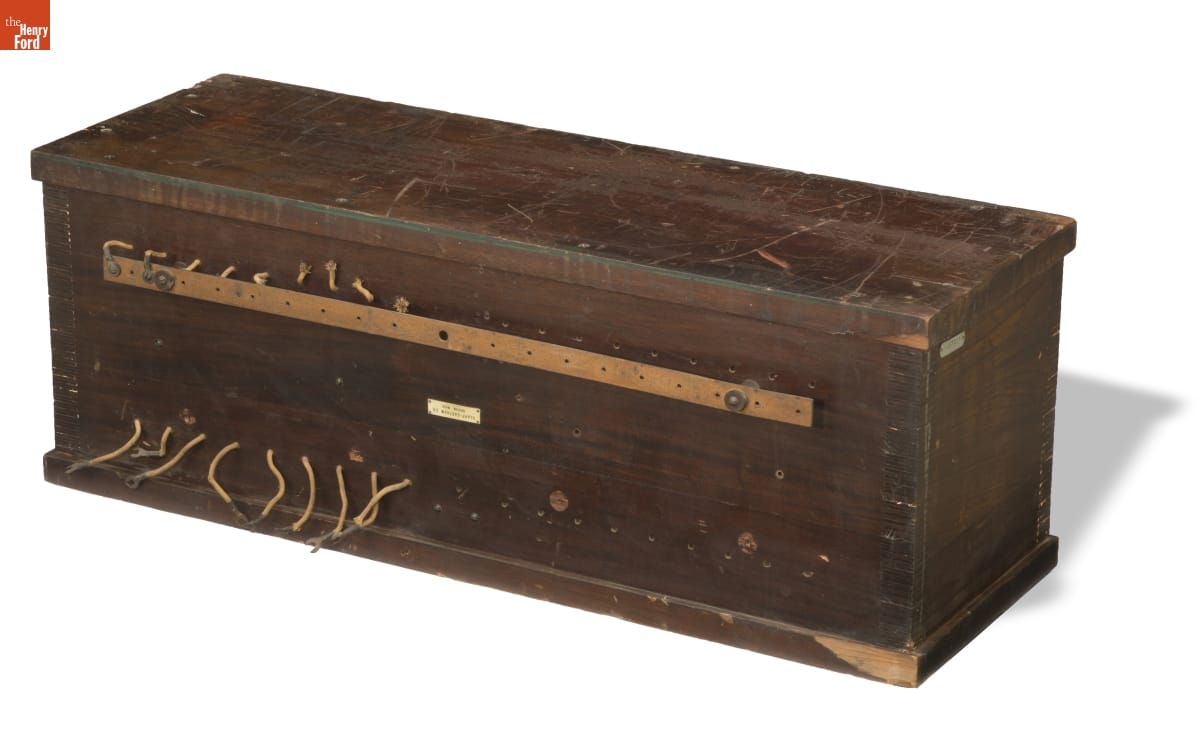
- Fixed Condenser, Used in the Hammond Radio Research Laboratory, circa 1911 - John Hays Hammond, Jr., was largely responsible for launching the field of radio control. In 1926, he built a medieval-inspired castle in Gloucester, Massachusetts. This site served as his home and research laboratory. With over 400 patents to his name, Hammond developed ideas for radio control, autopilot function, and targeted missile detonation. This device was used in Hammond's laboratory.
- circa 1911
- Collections - Artifact
Fixed Condenser, Used in the Hammond Radio Research Laboratory, circa 1911
John Hays Hammond, Jr., was largely responsible for launching the field of radio control. In 1926, he built a medieval-inspired castle in Gloucester, Massachusetts. This site served as his home and research laboratory. With over 400 patents to his name, Hammond developed ideas for radio control, autopilot function, and targeted missile detonation. This device was used in Hammond's laboratory.
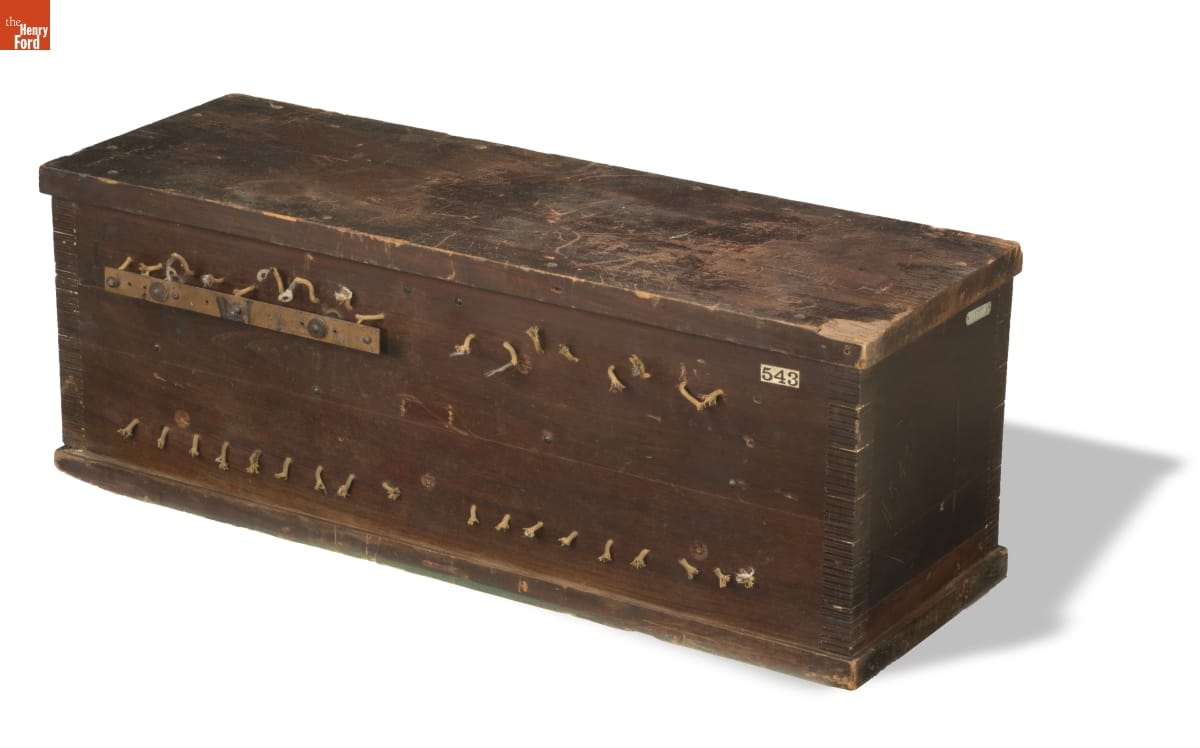
- Fixed Condenser, Used in the Hammond Radio Research Laboratory, circa 1911 - John Hays Hammond, Jr., was largely responsible for launching the field of radio control. In 1926, he built a medieval-inspired castle in Gloucester, Massachusetts. This site served as his home and research laboratory. With over 400 patents to his name, Hammond developed ideas for radio control, autopilot function, and targeted missile detonation. This device was used in Hammond's laboratory.
- circa 1911
- Collections - Artifact
Fixed Condenser, Used in the Hammond Radio Research Laboratory, circa 1911
John Hays Hammond, Jr., was largely responsible for launching the field of radio control. In 1926, he built a medieval-inspired castle in Gloucester, Massachusetts. This site served as his home and research laboratory. With over 400 patents to his name, Hammond developed ideas for radio control, autopilot function, and targeted missile detonation. This device was used in Hammond's laboratory.
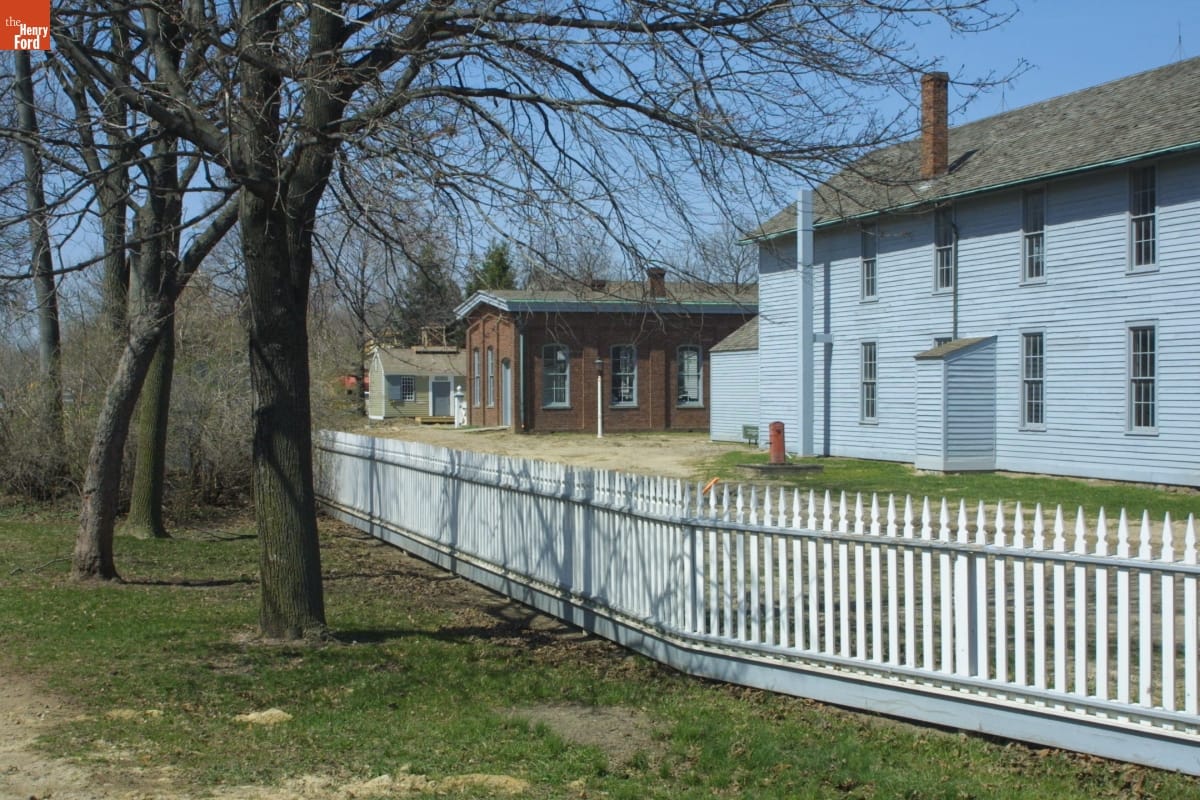
- Menlo Park Laboratory Complex during the Greenfield Village Restoration Project, April 2003 - By 2000, Greenfield Village began showing its age. Buildings and crumbling infrastructure desperately needed repair. Museum planners envisioned a revitalized village. They created themed "Historic Districts" by relocating and refurbishing the historic structures. Workers repaved streets and upgraded water, sewer, electric, and gas lines. In June 2003, nine months after restoration began, visitors passed through a new entrance into a reborn Greenfield Village.
- April 01, 2003
- Collections - Artifact
Menlo Park Laboratory Complex during the Greenfield Village Restoration Project, April 2003
By 2000, Greenfield Village began showing its age. Buildings and crumbling infrastructure desperately needed repair. Museum planners envisioned a revitalized village. They created themed "Historic Districts" by relocating and refurbishing the historic structures. Workers repaved streets and upgraded water, sewer, electric, and gas lines. In June 2003, nine months after restoration began, visitors passed through a new entrance into a reborn Greenfield Village.
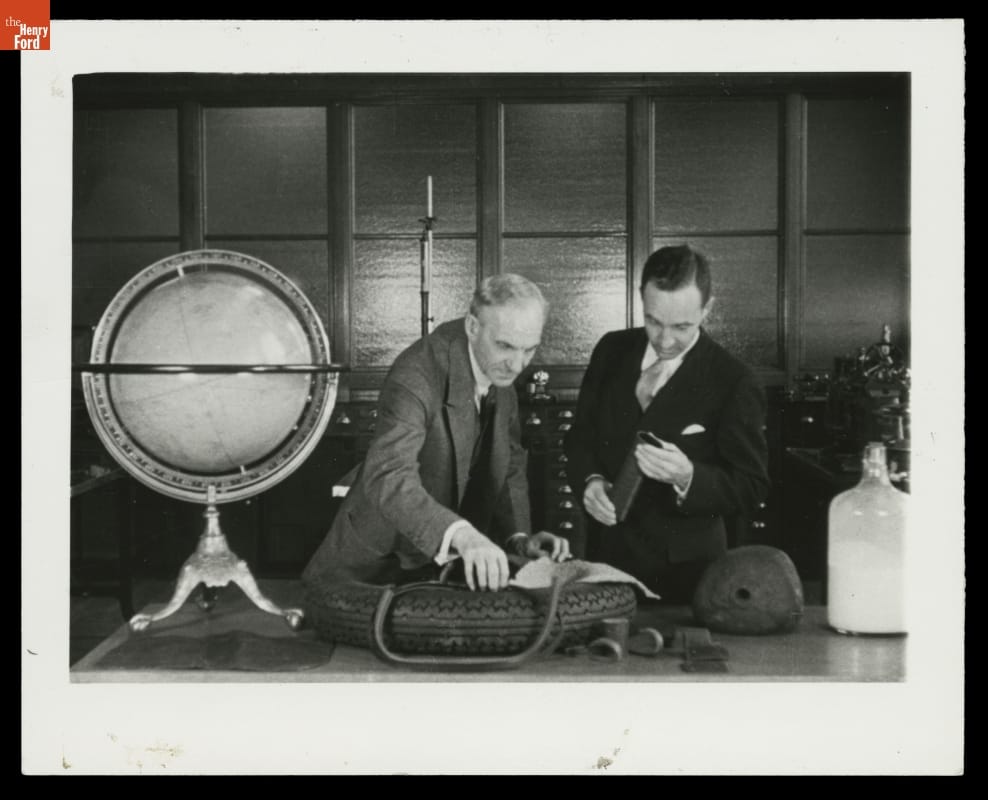
- Henry Ford and Edsel Ford Examining Tire in Laboratory, circa 1935 - Henry Ford and Edsel Ford were photographed inspecting a tire circa 1935. Ford Motor Company began construction of its own tire plant, at the Rouge factory complex, in 1937. Two years later, the plant was turning out as many as 16,000 tires each day. Nearly eight million "Ford" branded tires were made before World War II ended production in 1942.
- circa 1935
- Collections - Artifact
Henry Ford and Edsel Ford Examining Tire in Laboratory, circa 1935
Henry Ford and Edsel Ford were photographed inspecting a tire circa 1935. Ford Motor Company began construction of its own tire plant, at the Rouge factory complex, in 1937. Two years later, the plant was turning out as many as 16,000 tires each day. Nearly eight million "Ford" branded tires were made before World War II ended production in 1942.
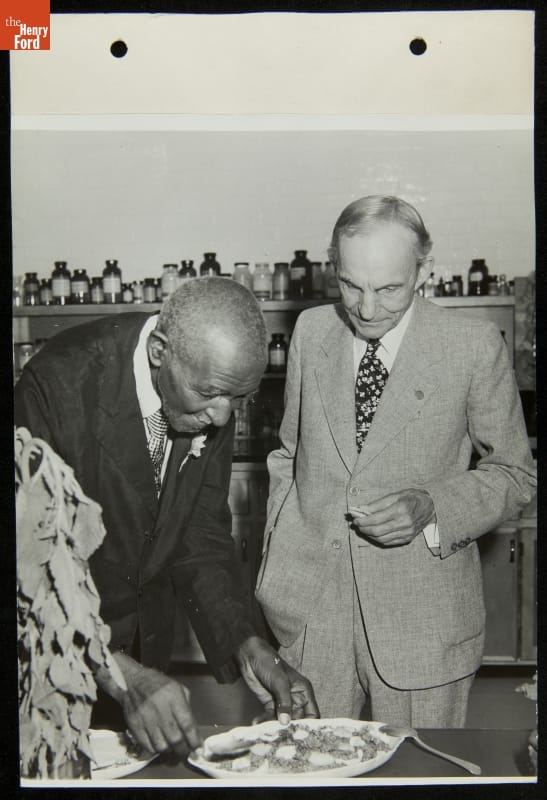
- George Washington Carver and Henry Ford at the Carver Nutrition Laboratory, Dearborn, Michigan, 1942 - George Washington Carver and Henry Ford shared not only an interest in using agricultural products in industry ("chemurgy"), but also some quirky ideas about diet. Here, Carver and Ford share a sandwich of "weed spread," made with wild bergamot, narrow-leafed plantain, purslane, pigweed, milkweed, dandelion, lamb's quarters and wild radish. They shared this meal at Ford Motor Company's George Washington Carver Nutrition Laboratory during Carver's 1942 Dearborn visit.
- July 21, 1942
- Collections - Artifact
George Washington Carver and Henry Ford at the Carver Nutrition Laboratory, Dearborn, Michigan, 1942
George Washington Carver and Henry Ford shared not only an interest in using agricultural products in industry ("chemurgy"), but also some quirky ideas about diet. Here, Carver and Ford share a sandwich of "weed spread," made with wild bergamot, narrow-leafed plantain, purslane, pigweed, milkweed, dandelion, lamb's quarters and wild radish. They shared this meal at Ford Motor Company's George Washington Carver Nutrition Laboratory during Carver's 1942 Dearborn visit.
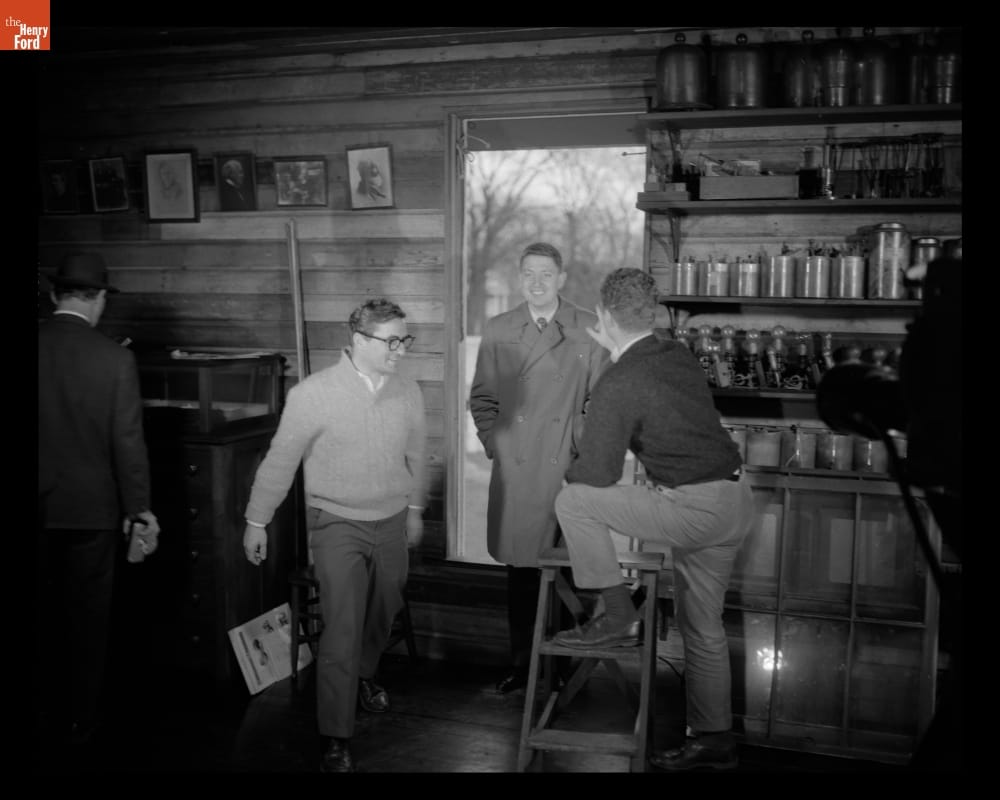
- Videotaping the ABC-TV "Discovery 64" Show in Greenfield Village, Director, Host and Producer inside Menlo Park Laboratory, November 1963 - <EM>Discovery 64</EM> was a half hour children's educational show on ABC. It explored history, science, art, current events and other subjects important in a child's world. In November 1963, the show filmed three programs at the Henry Ford Museum and Greenfield Village. Production set up in the museum's Street of Shops and at various locations in the village including Edison's Menlo Park Laboratory.
- November 01, 1963
- Collections - Artifact
Videotaping the ABC-TV "Discovery 64" Show in Greenfield Village, Director, Host and Producer inside Menlo Park Laboratory, November 1963
Discovery 64 was a half hour children's educational show on ABC. It explored history, science, art, current events and other subjects important in a child's world. In November 1963, the show filmed three programs at the Henry Ford Museum and Greenfield Village. Production set up in the museum's Street of Shops and at various locations in the village including Edison's Menlo Park Laboratory.
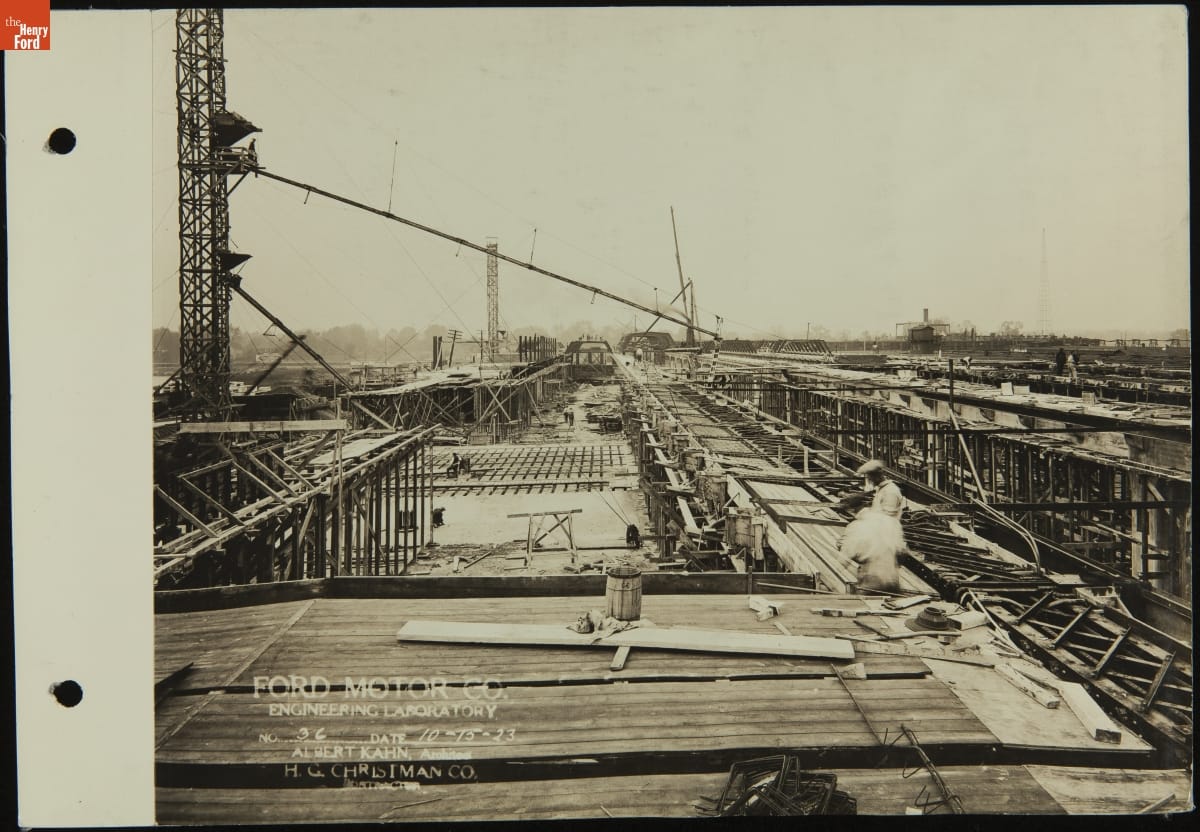
- Ford Motor Company--Plant Construction--Dearborn Engineering Lab--1923-1924--Item34 - In 1923, construction began on Ford Motor Company's first purpose-built engineering laboratory building. The massive Albert Kahn-designed structure -- essentially a single light-filled room -- housed tool design, production engineering, and experimental engineering research departments. It also housed the offices and presses for the <EM>Dearborn Independent</EM>, and space for Henry Ford's growing artifact collection. The building was completed in December 1924.
- October 15, 1923
- Collections - Artifact
Ford Motor Company--Plant Construction--Dearborn Engineering Lab--1923-1924--Item34
In 1923, construction began on Ford Motor Company's first purpose-built engineering laboratory building. The massive Albert Kahn-designed structure -- essentially a single light-filled room -- housed tool design, production engineering, and experimental engineering research departments. It also housed the offices and presses for the Dearborn Independent, and space for Henry Ford's growing artifact collection. The building was completed in December 1924.
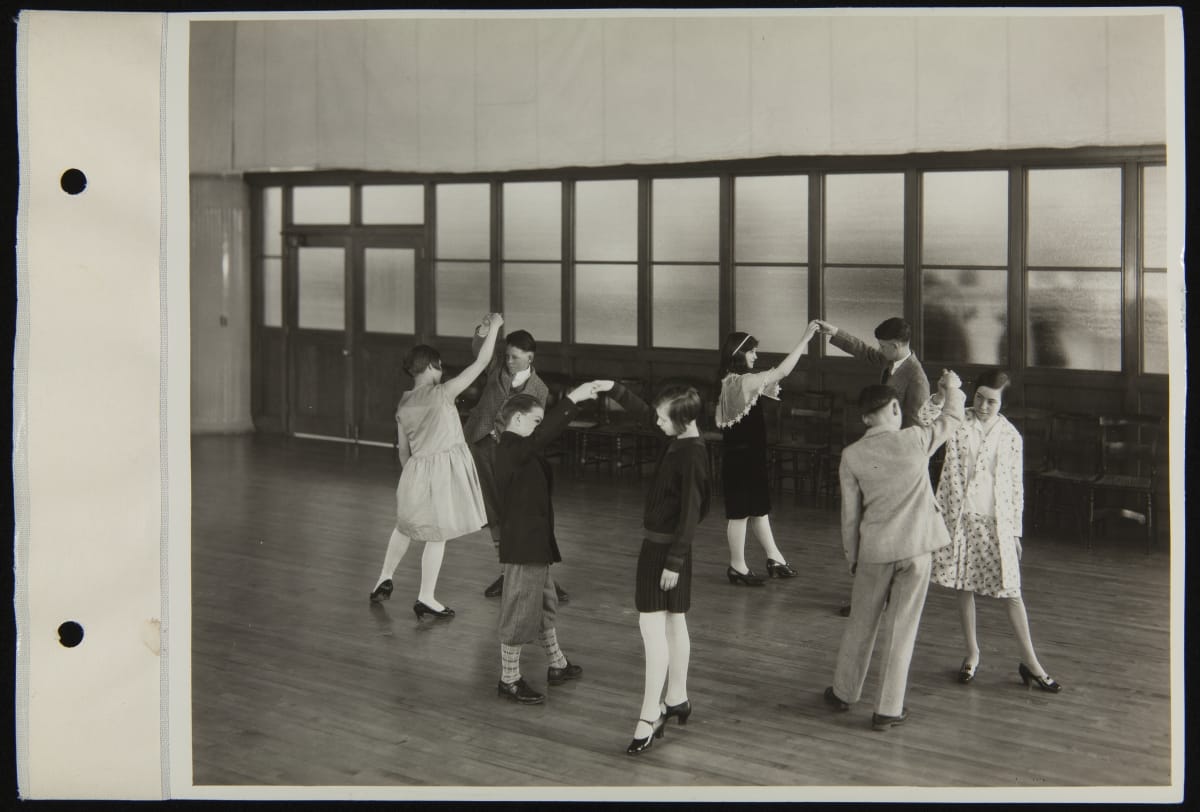
- Edison Institute School Students in the Dance Room of Ford Engineering Laboratory, May 1929 - Henry Ford created a room for dancing at Ford Motor Company's Engineering Lab, where his office and the company's engineering activities were located. These students are learning the traditional American dances of Henry Ford's youth -- along with dance etiquette. Later, Ford built Lovett Hall, an elegant ballroom named for his dancing master.
- May 11, 1929
- Collections - Artifact
Edison Institute School Students in the Dance Room of Ford Engineering Laboratory, May 1929
Henry Ford created a room for dancing at Ford Motor Company's Engineering Lab, where his office and the company's engineering activities were located. These students are learning the traditional American dances of Henry Ford's youth -- along with dance etiquette. Later, Ford built Lovett Hall, an elegant ballroom named for his dancing master.
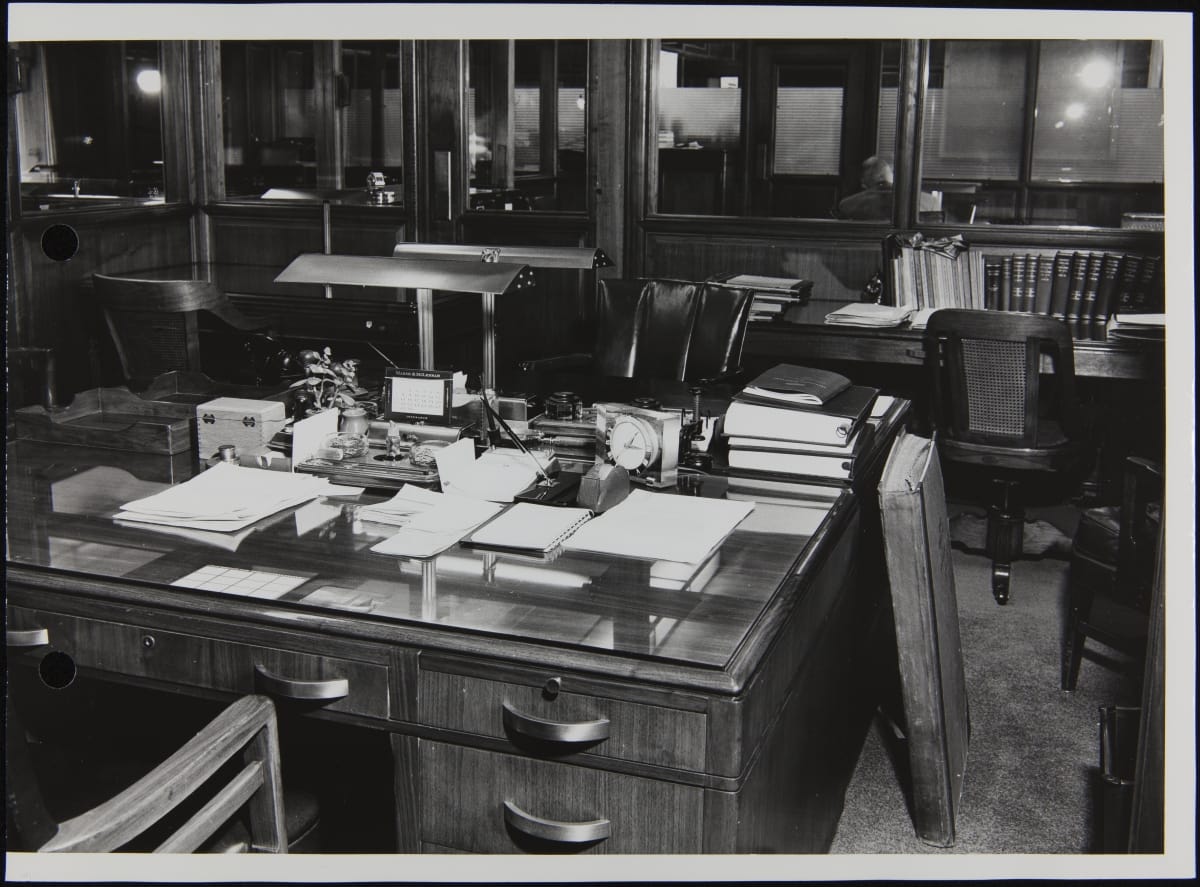
- Office of H. R. Waddell in the Ford Engineering Laboratory, September 1952 - In 1923, H.R. Waddell joined the mailing department at Dearborn Publishing Company -- one of Henry Ford's many businesses outside Ford Motor Company. The next year, he was transferred to the Office of Henry Ford, where he was given secretarial duties. Mr. Waddell's responsibilities increased over time. This photo shows his office in the Ford Engineering Laboratory.
- September 17, 1952
- Collections - Artifact
Office of H. R. Waddell in the Ford Engineering Laboratory, September 1952
In 1923, H.R. Waddell joined the mailing department at Dearborn Publishing Company -- one of Henry Ford's many businesses outside Ford Motor Company. The next year, he was transferred to the Office of Henry Ford, where he was given secretarial duties. Mr. Waddell's responsibilities increased over time. This photo shows his office in the Ford Engineering Laboratory.
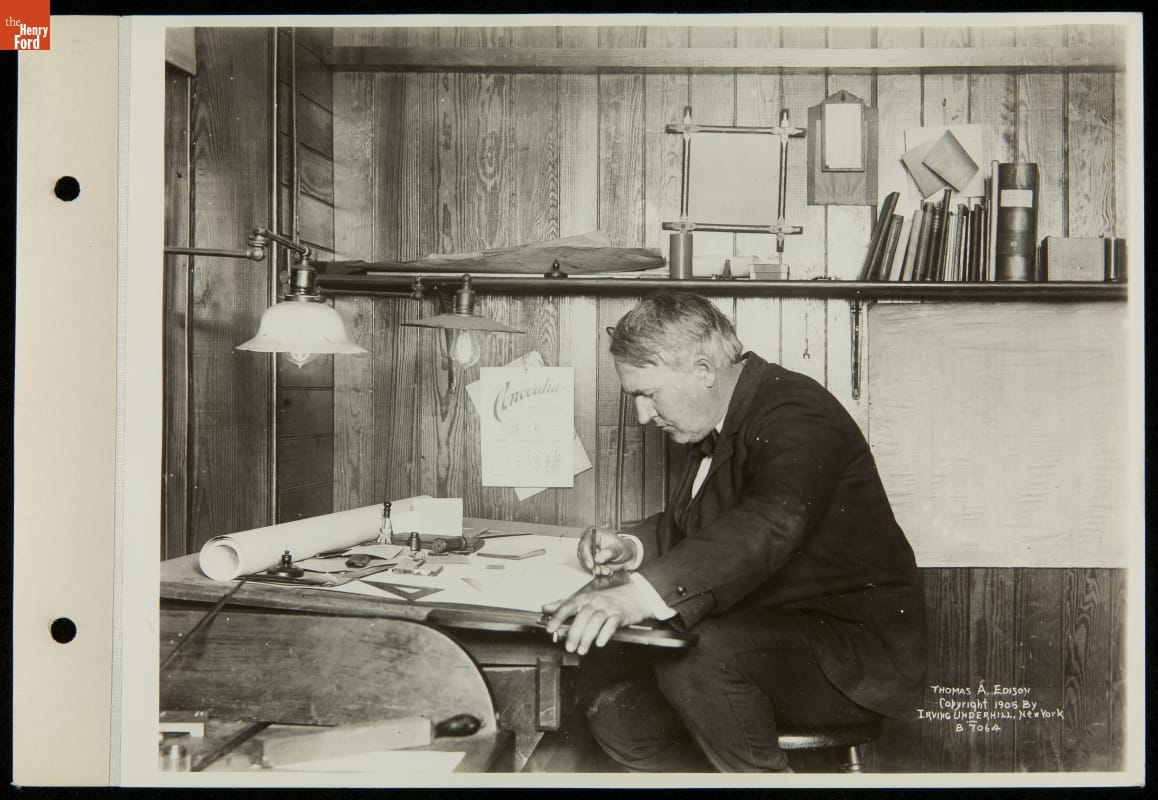
- Thomas Edison at His Laboratory in West Orange, New Jersey, 1898 - This photograph shows inventor Thomas Alva Edison at work in his West Orange, New Jersey, laboratory. Edison directed teams of research assistants here for nearly fifty years -- from 1887 until his death in 1931. More than half of Edison's 1,093 patents resulted from the collaborative work done in this complex, which became a model for modern research and development laboratories.
- November 05, 1929
- Collections - Artifact
Thomas Edison at His Laboratory in West Orange, New Jersey, 1898
This photograph shows inventor Thomas Alva Edison at work in his West Orange, New Jersey, laboratory. Edison directed teams of research assistants here for nearly fifty years -- from 1887 until his death in 1931. More than half of Edison's 1,093 patents resulted from the collaborative work done in this complex, which became a model for modern research and development laboratories.