
Search
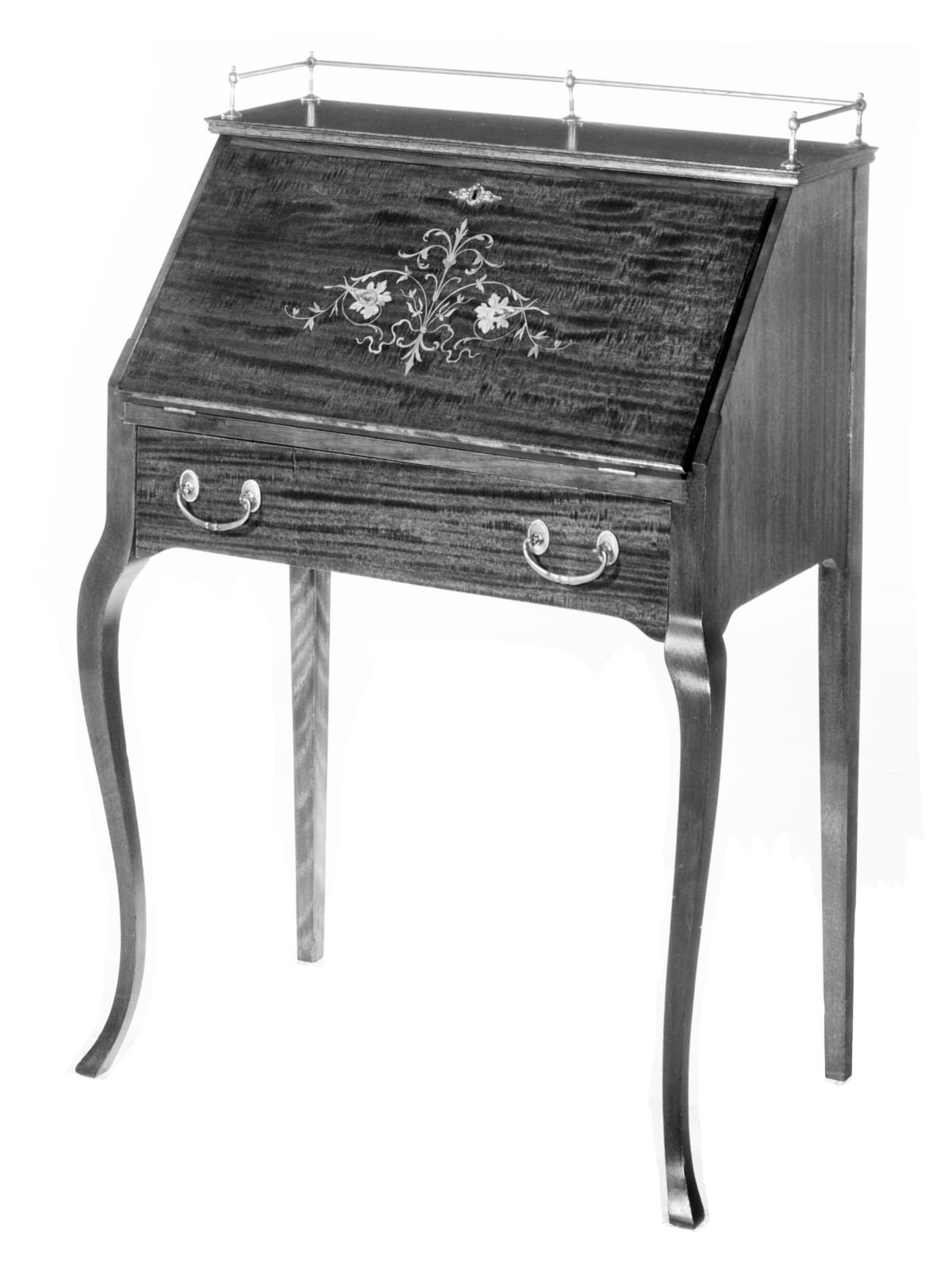
- Wright Family Writing Desk, 1890-1900 - This ladies' writing desk is the starting point for a transportation revolution. On May 30, 1899, a Dayton, Ohio, bicycle shop owner named Wilbur Wright sat down at his sister's desk and wrote a letter to the secretary of the Smithsonian Institution. Wilbur's letter sparked a series of events that led to the world's first powered airplane flight in 1903.
- 1890-1900
- Collections - Artifact
Wright Family Writing Desk, 1890-1900
This ladies' writing desk is the starting point for a transportation revolution. On May 30, 1899, a Dayton, Ohio, bicycle shop owner named Wilbur Wright sat down at his sister's desk and wrote a letter to the secretary of the Smithsonian Institution. Wilbur's letter sparked a series of events that led to the world's first powered airplane flight in 1903.
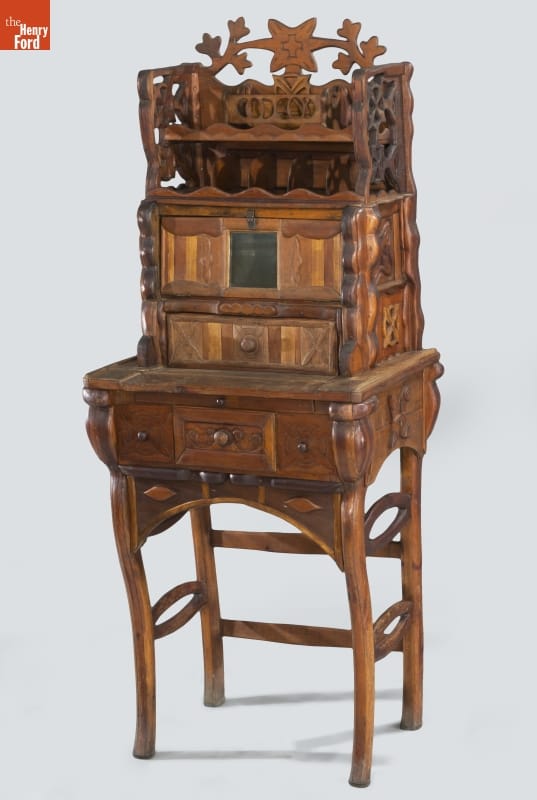
- Ladies' Writing Desk, 1890-1925 -
- 1890-1925
- Collections - Artifact
Ladies' Writing Desk, 1890-1925
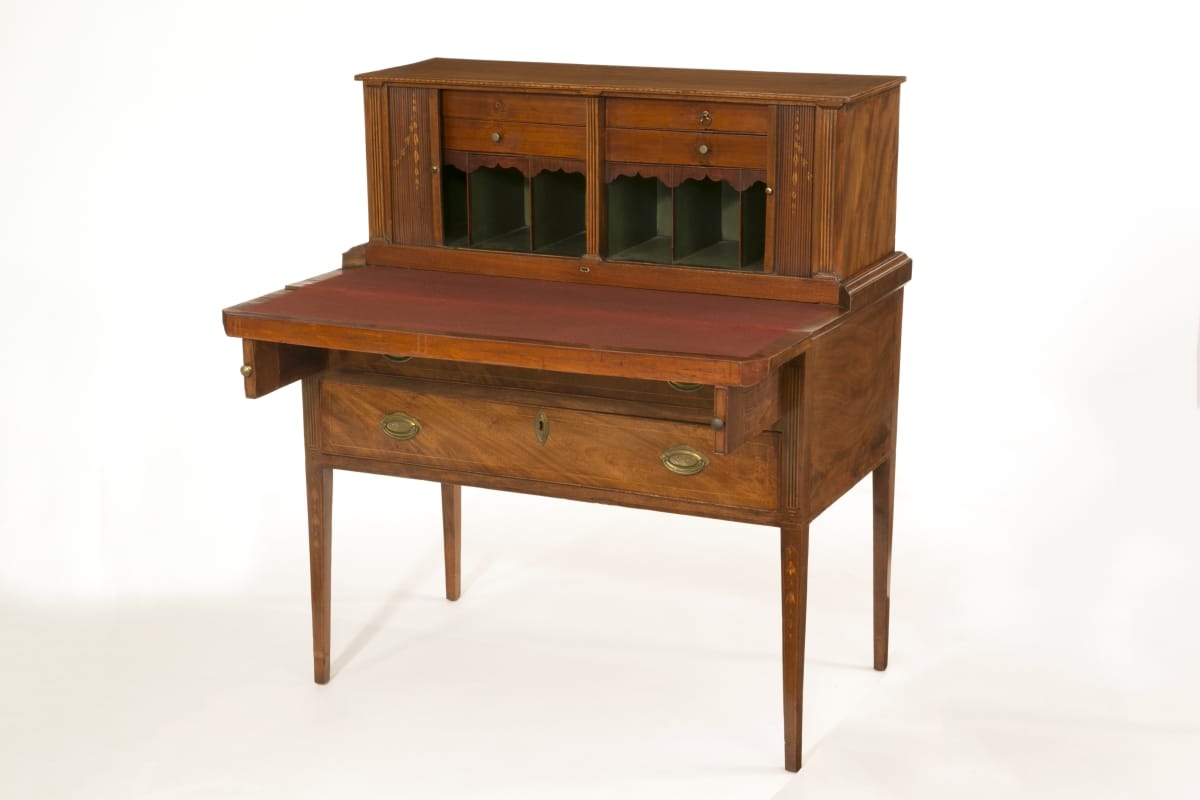
- Tambour Desk, by John Seymour, 1795-1805 - Tambour desks are an American innovation associated with the father and son cabinetmaking team of John and Thomas Seymour. The Seymours emigrated from England in the 1780s, eventually settling in Boston. They are distinguished by reeded tambours, or panels, covering pigeonholes and drawers, much like later roll-top desks. Combining small size and delicate proportions, Tambour desks were intended for use by women, for correspondence and addressing invitations.
- 1795-1805
- Collections - Artifact
Tambour Desk, by John Seymour, 1795-1805
Tambour desks are an American innovation associated with the father and son cabinetmaking team of John and Thomas Seymour. The Seymours emigrated from England in the 1780s, eventually settling in Boston. They are distinguished by reeded tambours, or panels, covering pigeonholes and drawers, much like later roll-top desks. Combining small size and delicate proportions, Tambour desks were intended for use by women, for correspondence and addressing invitations.