
Search
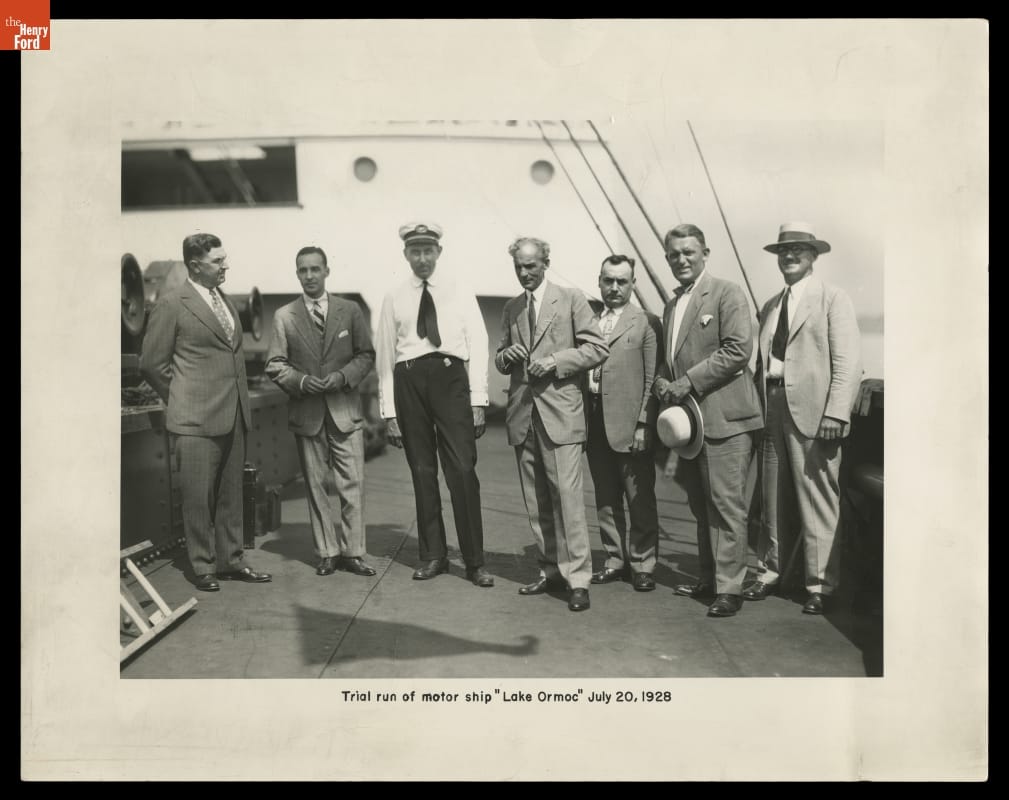
- Edsel Ford and Henry Ford with Others on Trial Run of the Lake Ormoc, July 20, 1928 - Henry Ford established Fordlandia and Belterra in the Brazilian rainforest to supply rubber for automobile production. He began shipping machinery and supplies to the Amazon in 1928. Two ships, <EM>Lake Ormoc</EM> and <EM>Lake Farge</EM>, left Dearborn, Michigan, that July. Ford and other executives posed for this photograph on the <EM>Lake Ormoc</EM> to commemorate the start of the project.
- July 20, 1928
- Collections - Artifact
Edsel Ford and Henry Ford with Others on Trial Run of the Lake Ormoc, July 20, 1928
Henry Ford established Fordlandia and Belterra in the Brazilian rainforest to supply rubber for automobile production. He began shipping machinery and supplies to the Amazon in 1928. Two ships, Lake Ormoc and Lake Farge, left Dearborn, Michigan, that July. Ford and other executives posed for this photograph on the Lake Ormoc to commemorate the start of the project.
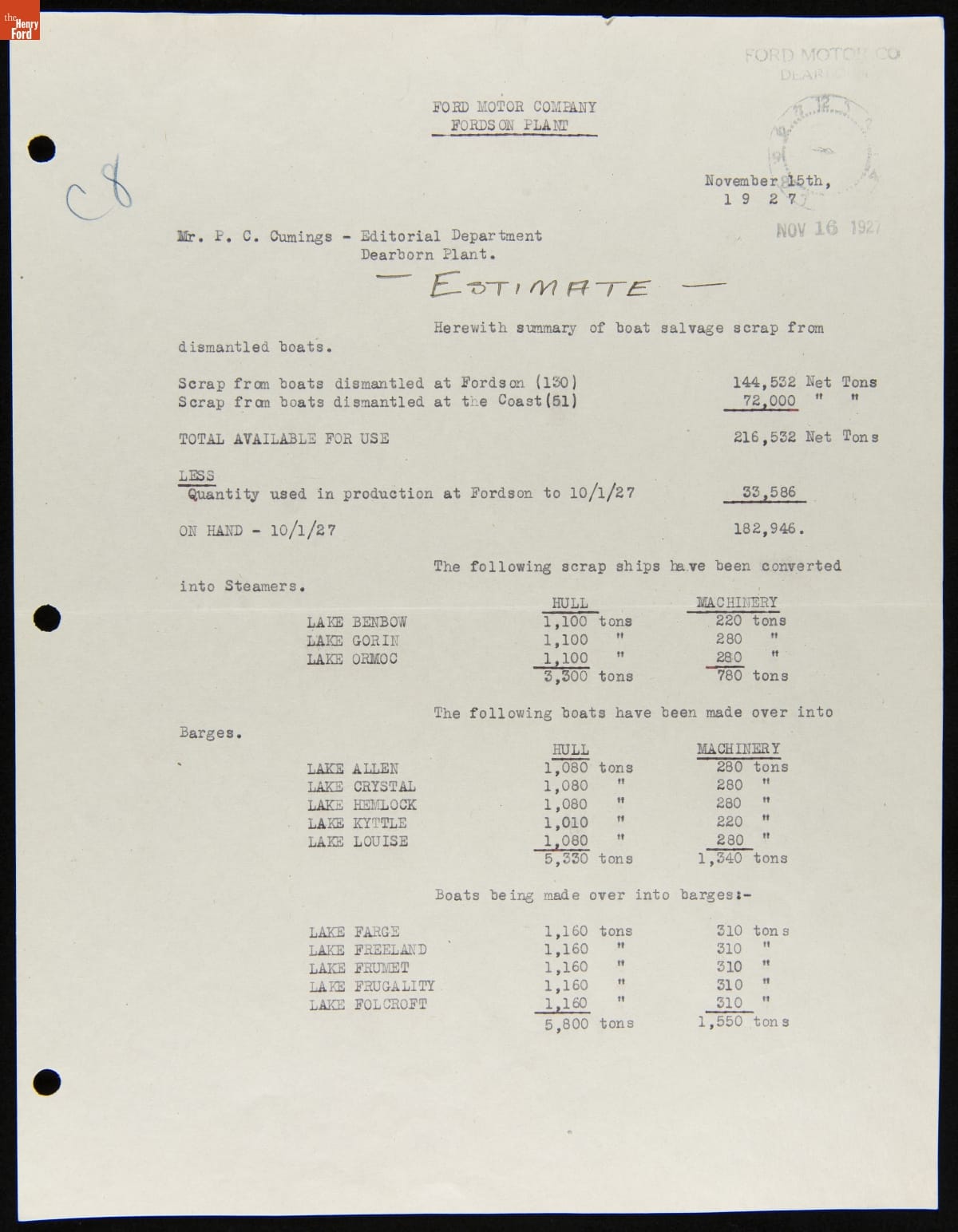
- Summary of Scrap from Dismantled Boats in the Ford Motor Company Ship Salvage Program, November 15, 1927 - Henry Ford purchased 199 surplus World War I merchant ships from the United States government in 1925. Many of these ships were towed to Ford's River Rouge Plant and dismantled -- their steel, metal, and salvageable parts were recycled. The other vessels were refurbished or converted to help transport raw materials and finished products as part of Ford's operations.
- October 01, 1927
- Collections - Artifact
Summary of Scrap from Dismantled Boats in the Ford Motor Company Ship Salvage Program, November 15, 1927
Henry Ford purchased 199 surplus World War I merchant ships from the United States government in 1925. Many of these ships were towed to Ford's River Rouge Plant and dismantled -- their steel, metal, and salvageable parts were recycled. The other vessels were refurbished or converted to help transport raw materials and finished products as part of Ford's operations.
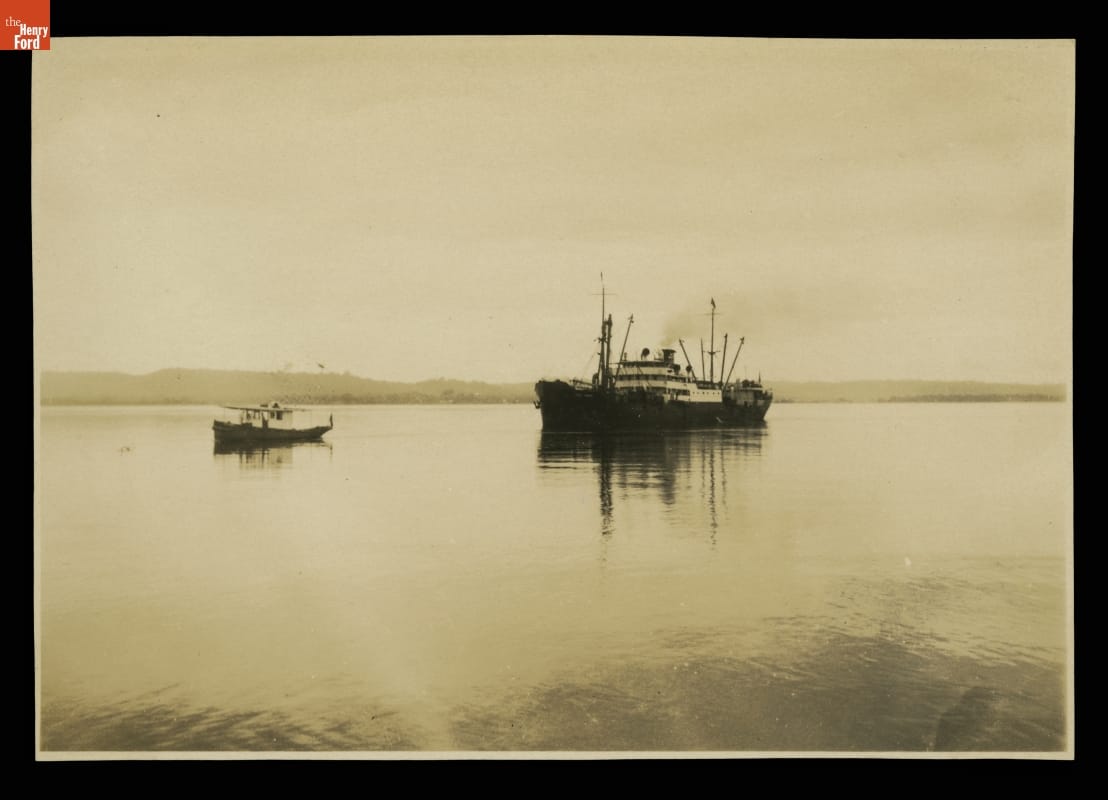
- Steamer "Lake Ormoc" Being Towed by the Tugboat Santarem, Fordlandia, Brazil, 1930 - Henry Ford established Fordlandia and Belterra in the Brazilian rainforest to supply rubber for automobile production. He began shipping machinery and supplies to the Amazon in 1928. Ford paid the indigenous workers good wages and supplied various amenities -- he also imposed foreign work traditions and behavioral restrictions which the workers resented. The plantations failed and Ford Motor Company disposed of the project in 1945.
- April 01, 1930
- Collections - Artifact
Steamer "Lake Ormoc" Being Towed by the Tugboat Santarem, Fordlandia, Brazil, 1930
Henry Ford established Fordlandia and Belterra in the Brazilian rainforest to supply rubber for automobile production. He began shipping machinery and supplies to the Amazon in 1928. Ford paid the indigenous workers good wages and supplied various amenities -- he also imposed foreign work traditions and behavioral restrictions which the workers resented. The plantations failed and Ford Motor Company disposed of the project in 1945.
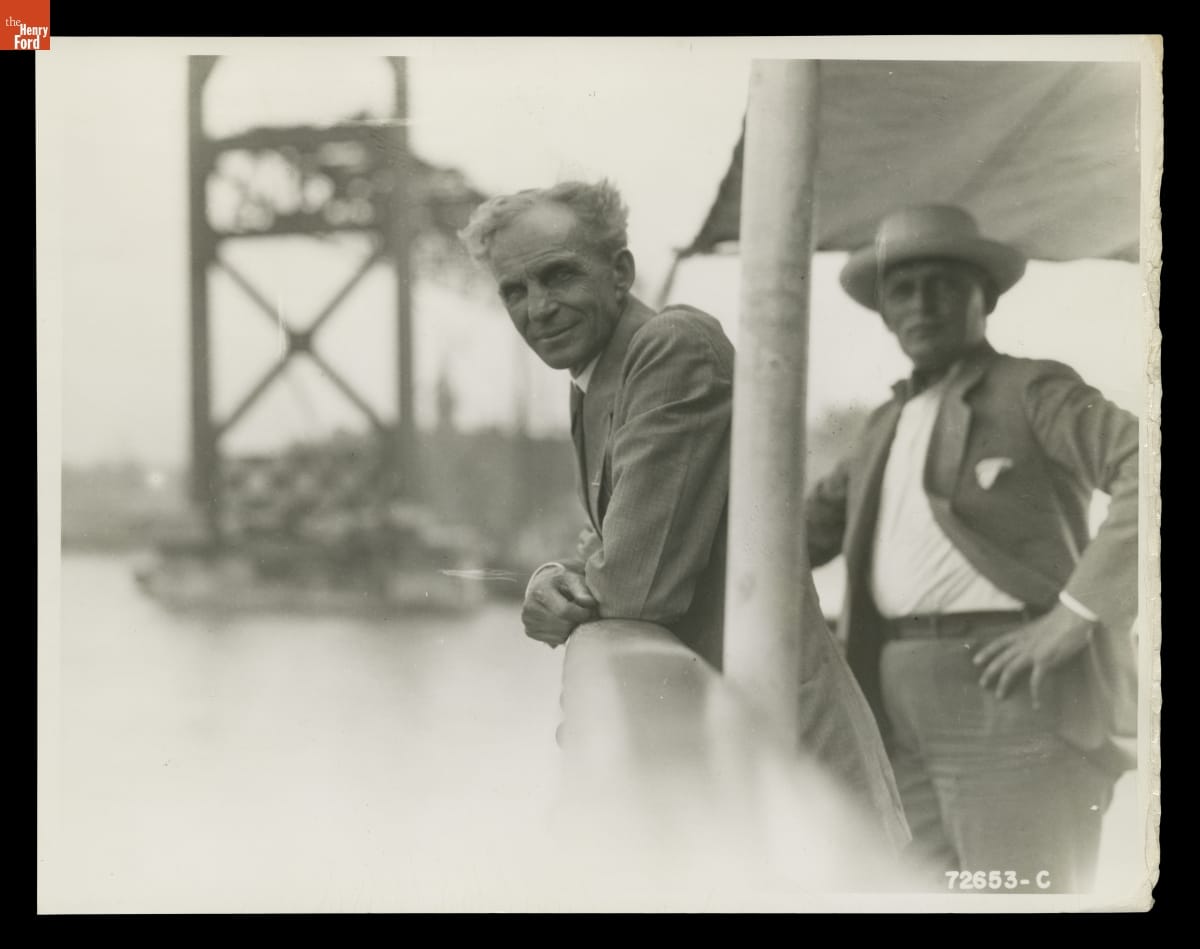
- Henry Ford and Charles Sorensen aboard the Ford Motor Company Ship Lake Ormoc, circa 1935 - Charles Sorensen joined Ford Motor Company in 1905. He impressed Henry Ford early on with his strong work ethic, and Sorensen was given increasing production management responsibilities. His hard-driving style contributed to the company's enormous gains with the assembly line. Sorensen's greatest achievement came during World War II when he oversaw B-24 aircraft assembly at Willow Run.
- circa 1935
- Collections - Artifact
Henry Ford and Charles Sorensen aboard the Ford Motor Company Ship Lake Ormoc, circa 1935
Charles Sorensen joined Ford Motor Company in 1905. He impressed Henry Ford early on with his strong work ethic, and Sorensen was given increasing production management responsibilities. His hard-driving style contributed to the company's enormous gains with the assembly line. Sorensen's greatest achievement came during World War II when he oversaw B-24 aircraft assembly at Willow Run.
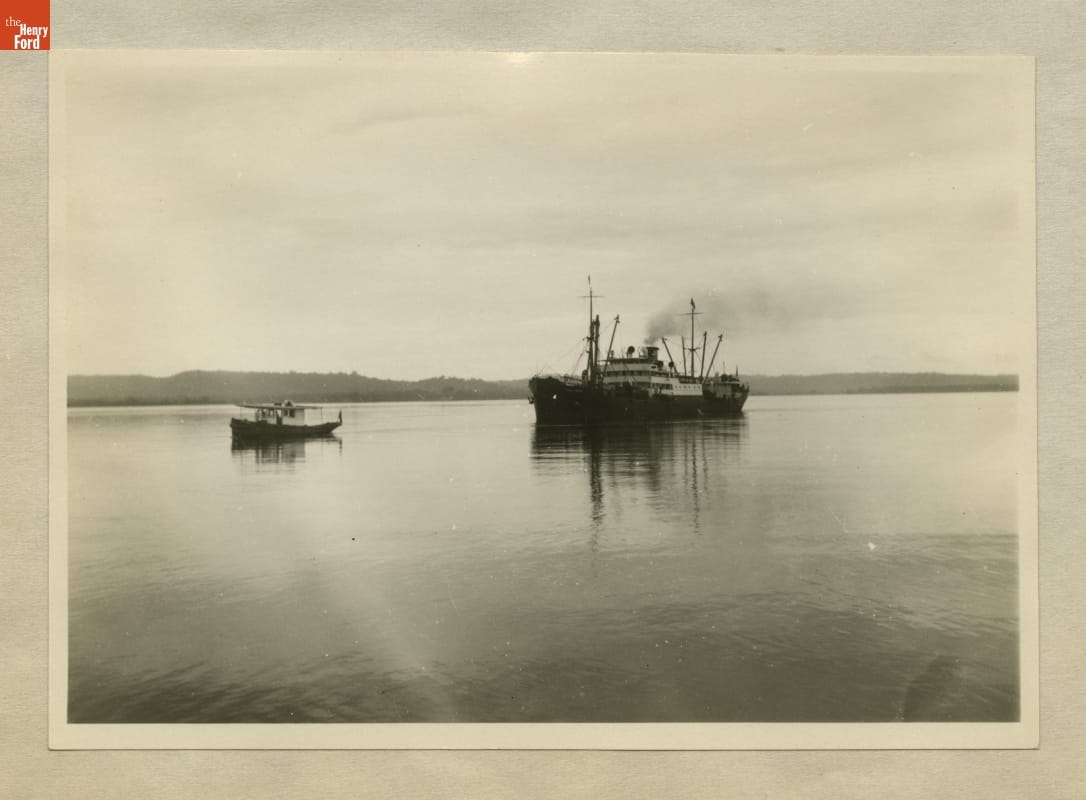
- Steamer "Lake Ormoc" Being Towed by the Tugboat Santarem, Fordlandia, Brazil, April 1930 - Henry Ford established Fordlandia and Belterra in the Brazilian rainforest to supply rubber for automobile production. He began shipping machinery and supplies to the Amazon in 1928. Ford paid the indigenous workers good wages and supplied various amenities -- he also imposed foreign work traditions and behavioral restrictions which the workers resented. The plantations failed and Ford Motor Company disposed of the project in 1945.
- April 01, 1930
- Collections - Artifact
Steamer "Lake Ormoc" Being Towed by the Tugboat Santarem, Fordlandia, Brazil, April 1930
Henry Ford established Fordlandia and Belterra in the Brazilian rainforest to supply rubber for automobile production. He began shipping machinery and supplies to the Amazon in 1928. Ford paid the indigenous workers good wages and supplied various amenities -- he also imposed foreign work traditions and behavioral restrictions which the workers resented. The plantations failed and Ford Motor Company disposed of the project in 1945.
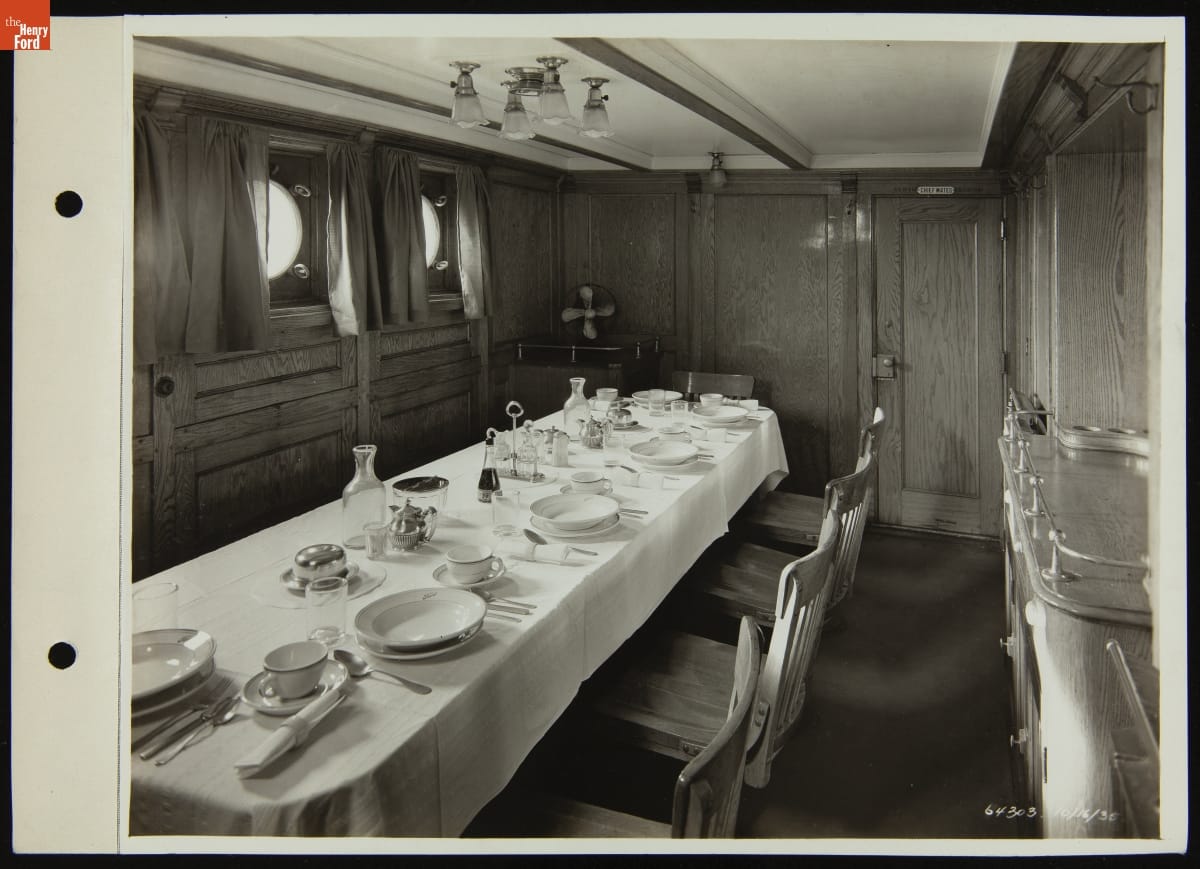
- Crew Dining Room on Ford Steamer "Lake Ormoc," October 16, 1935 - Henry Ford purchased 199 surplus World War I merchant ships from the United States government in 1925. Most of these ships were scrapped. But a few, like the <em>Lake Ormoc</em>, were refitted into ocean-going freighters. In 1928, Ford sent the <em>Lake Ormoc</em> to help establish his rubber plantation in Brazil. The vessel would later transport car and tractor parts to Ford plants along the American seaboard.
- October 16, 1935
- Collections - Artifact
Crew Dining Room on Ford Steamer "Lake Ormoc," October 16, 1935
Henry Ford purchased 199 surplus World War I merchant ships from the United States government in 1925. Most of these ships were scrapped. But a few, like the Lake Ormoc, were refitted into ocean-going freighters. In 1928, Ford sent the Lake Ormoc to help establish his rubber plantation in Brazil. The vessel would later transport car and tractor parts to Ford plants along the American seaboard.
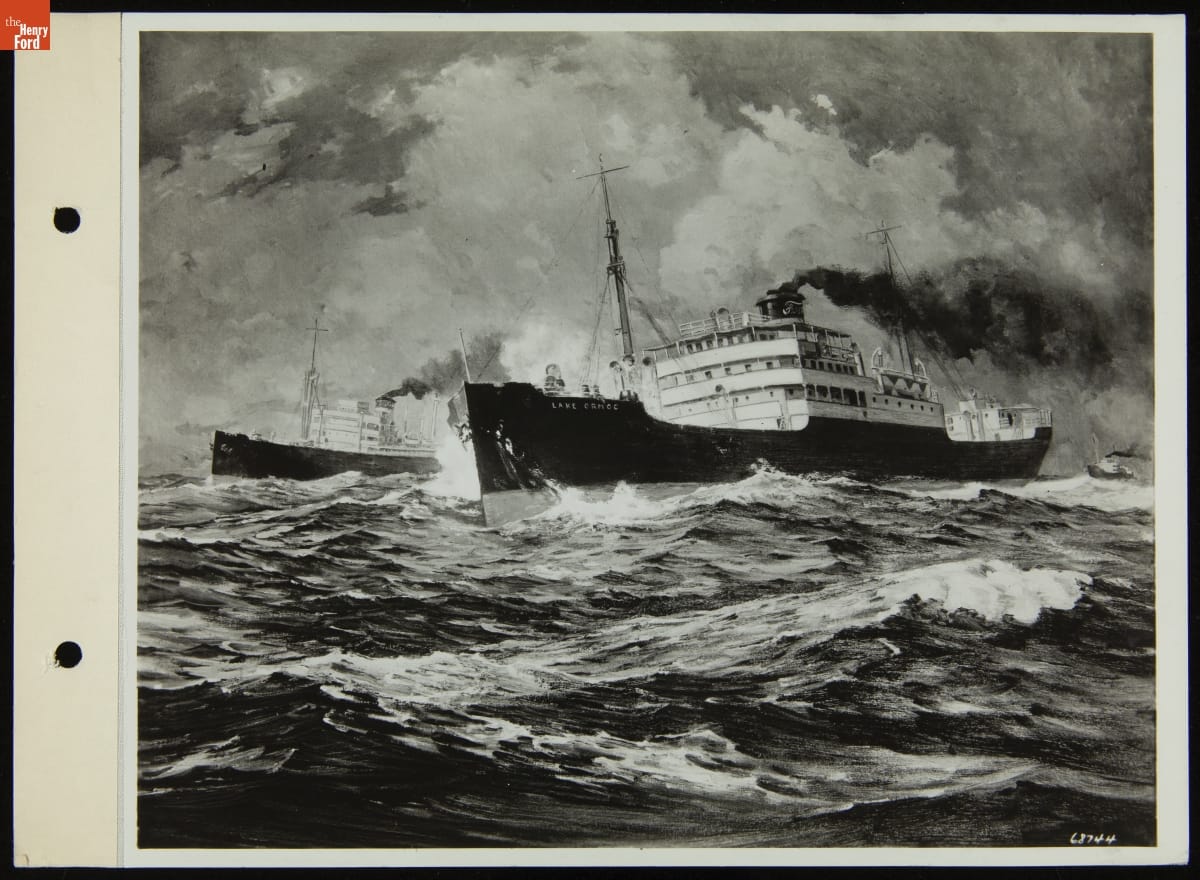
- Painting "Ford Ships Sail the Seven Seas," Photographed September 1, 1937 -
- September 01, 1937
- Collections - Artifact
Painting "Ford Ships Sail the Seven Seas," Photographed September 1, 1937
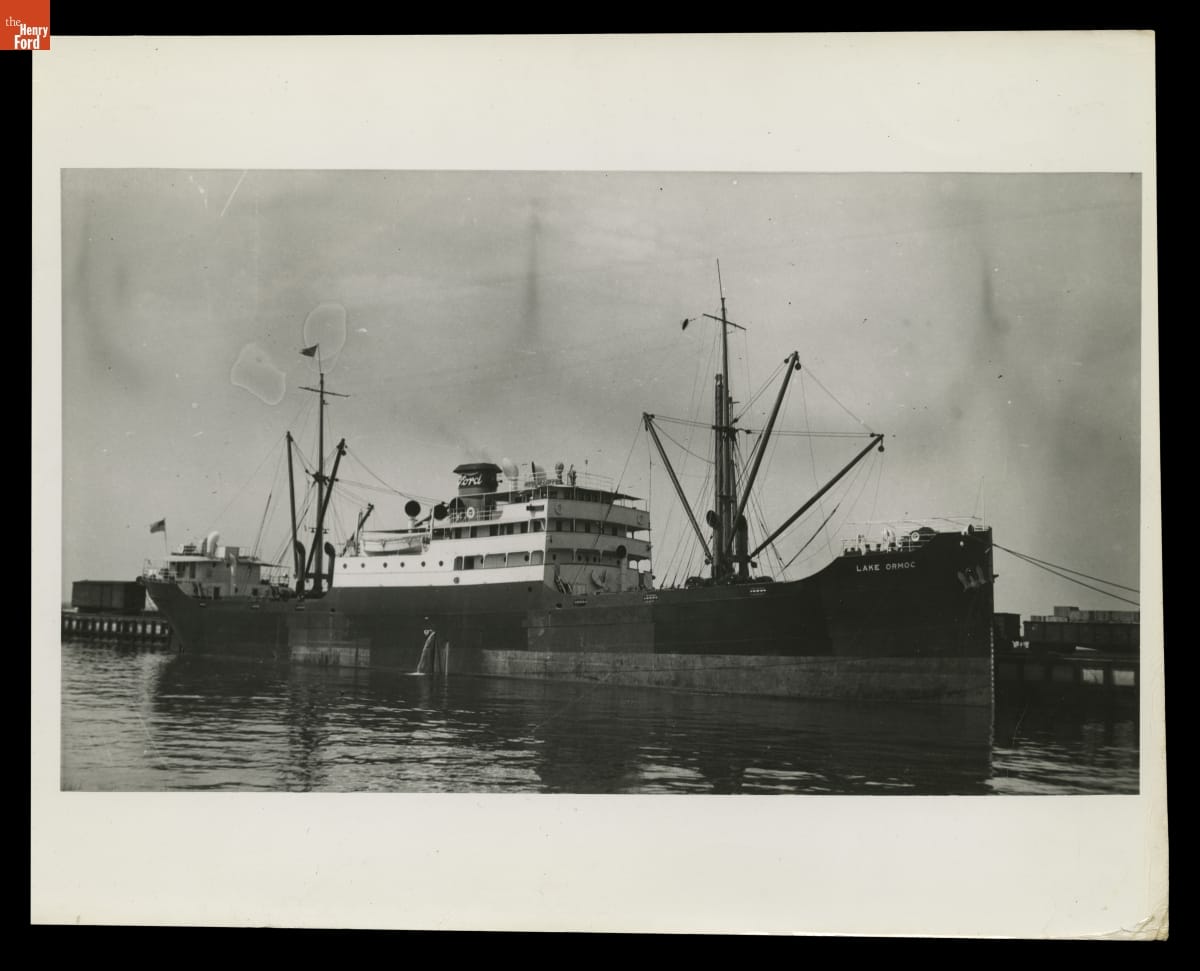
- Ford Motor Company Ship "Lake Ormoc" Docked at Ford Rouge Plant, July 1938 - Henry Ford purchased 199 surplus World War I merchant ships from the United States government in 1925. Most of these ships were scrapped. But a few, like the <em>Lake Ormoc</em>, were refitted into ocean-going freighters. In 1928, Ford sent the <em>Lake Ormoc</em> to help establish his rubber plantation in Brazil. The vessel would later transport car and tractor parts to Ford plants along the American seaboard.
- July 21, 1938
- Collections - Artifact
Ford Motor Company Ship "Lake Ormoc" Docked at Ford Rouge Plant, July 1938
Henry Ford purchased 199 surplus World War I merchant ships from the United States government in 1925. Most of these ships were scrapped. But a few, like the Lake Ormoc, were refitted into ocean-going freighters. In 1928, Ford sent the Lake Ormoc to help establish his rubber plantation in Brazil. The vessel would later transport car and tractor parts to Ford plants along the American seaboard.
- Dock at Belterra Rubber Plantation and the "Lake Ormoc" Steamer Lying at Dock, Brazil, 1930 - Henry Ford established Fordlandia and Belterra in the Brazilian rainforest to supply rubber for automobile production. He began shipping machinery and supplies to the Amazon in 1928. Ford paid the indigenous workers good wages and supplied various amenities -- he also imposed foreign work traditions and behavioral restrictions which the workers resented. The plantations failed and Ford Motor Company disposed of the project in 1945.
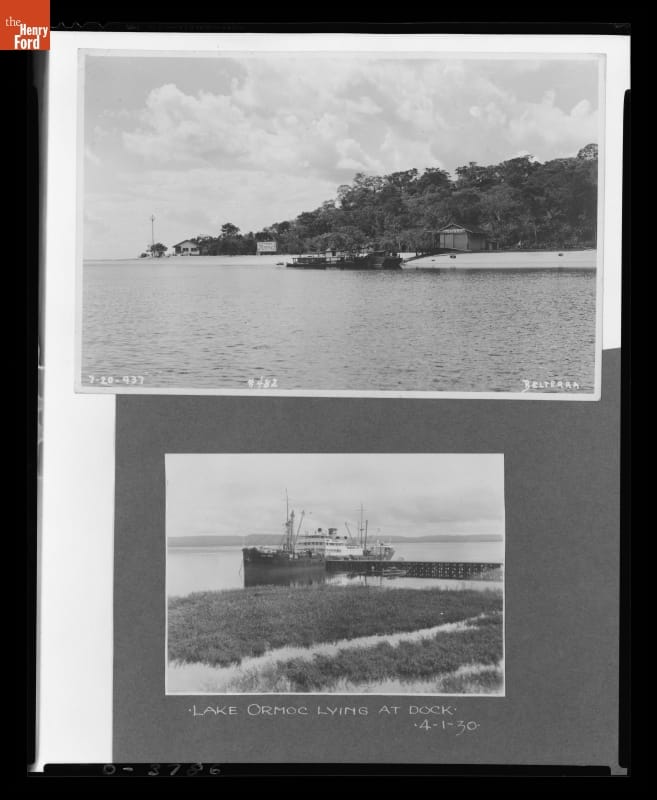
- 1930
- Collections - Artifact
Dock at Belterra Rubber Plantation and the "Lake Ormoc" Steamer Lying at Dock, Brazil, 1930
Henry Ford established Fordlandia and Belterra in the Brazilian rainforest to supply rubber for automobile production. He began shipping machinery and supplies to the Amazon in 1928. Ford paid the indigenous workers good wages and supplied various amenities -- he also imposed foreign work traditions and behavioral restrictions which the workers resented. The plantations failed and Ford Motor Company disposed of the project in 1945.
- Henry Ford and Edsel Ford with Others Aboard the MS Lake Ormoc, July 20, 1928 - Henry Ford established Fordlandia and Belterra in the Brazilian rainforest to supply rubber for automobile production. He began shipping machinery and supplies to the Amazon in 1928. Two ships, <EM>Lake Ormoc</EM> and <EM>Lake Farge</EM>, left Dearborn, Michigan, that July. Ford and other executives posed for this photograph on the <EM>Lake Ormoc</EM> to commemorate the start of the project.
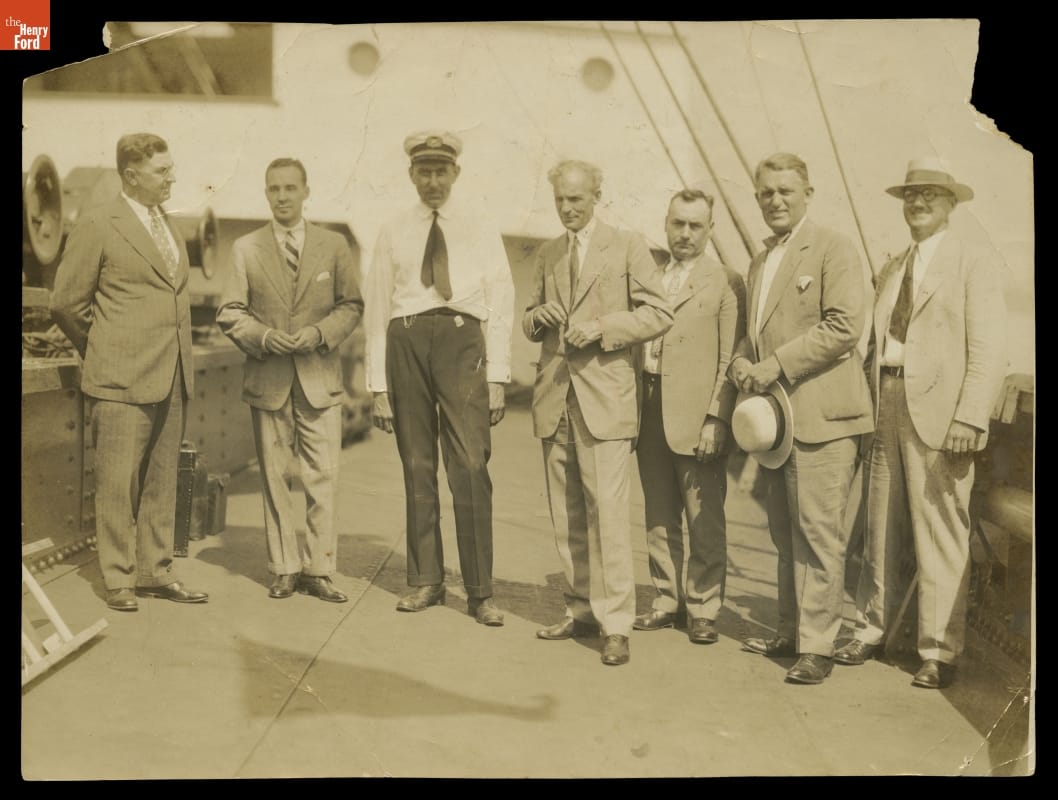
- July 20, 1928
- Collections - Artifact
Henry Ford and Edsel Ford with Others Aboard the MS Lake Ormoc, July 20, 1928
Henry Ford established Fordlandia and Belterra in the Brazilian rainforest to supply rubber for automobile production. He began shipping machinery and supplies to the Amazon in 1928. Two ships, Lake Ormoc and Lake Farge, left Dearborn, Michigan, that July. Ford and other executives posed for this photograph on the Lake Ormoc to commemorate the start of the project.