
Search
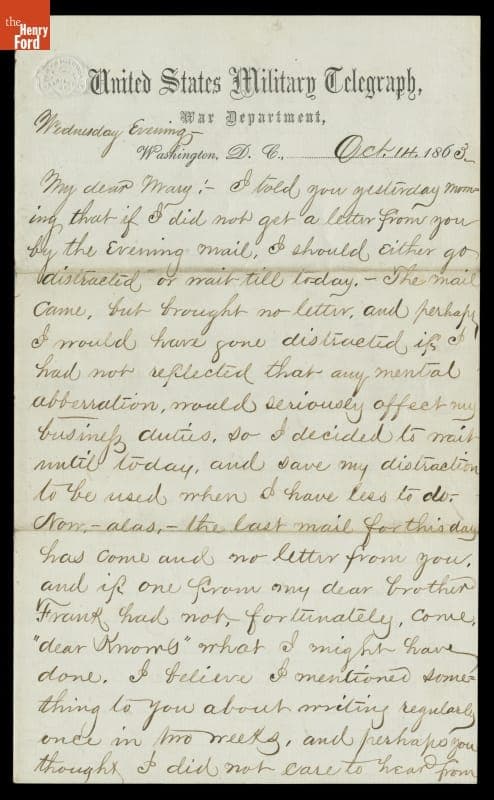
- Letter from Albert B. Chandler to Marilla Stedman, October 14, 1863 - Albert B. Chandler served as a cipher operator at the War Department office in Washington, D.C., during the Civil War. He transmitted coded messages to and decoded messages from Union military field commanders. While at this post, he became acquainted with President Abraham Lincoln. Chandler describes some of his wartime experiences in this letter to Marilla Stedman, his future bride.
- October 14, 1863
- Collections - Artifact
Letter from Albert B. Chandler to Marilla Stedman, October 14, 1863
Albert B. Chandler served as a cipher operator at the War Department office in Washington, D.C., during the Civil War. He transmitted coded messages to and decoded messages from Union military field commanders. While at this post, he became acquainted with President Abraham Lincoln. Chandler describes some of his wartime experiences in this letter to Marilla Stedman, his future bride.
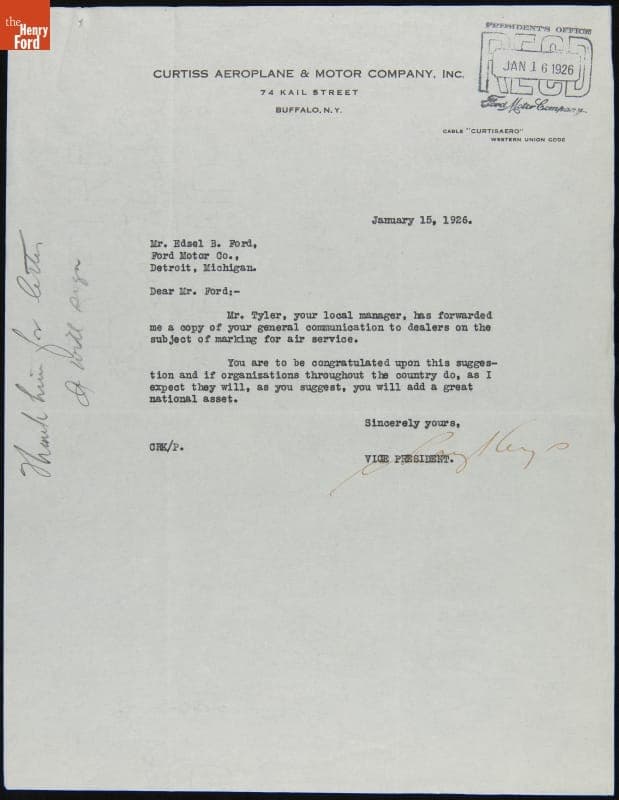
- Letter Congratulating Edsel Ford for Involving Ford Dealers with Airmarking Buildings in Their Towns, January 15, 1926 - Edsel Ford championed the development of commercial aviation in the United States. As an aid to aerial navigation, he wrote letters to Ford dealers encouraging them to paint two things on each dealer's roof: the name of the city and an arrow pointing due north. More than 4,000 communities had aerial markings of some sort by 1929.
- January 15, 1926
- Collections - Artifact
Letter Congratulating Edsel Ford for Involving Ford Dealers with Airmarking Buildings in Their Towns, January 15, 1926
Edsel Ford championed the development of commercial aviation in the United States. As an aid to aerial navigation, he wrote letters to Ford dealers encouraging them to paint two things on each dealer's roof: the name of the city and an arrow pointing due north. More than 4,000 communities had aerial markings of some sort by 1929.
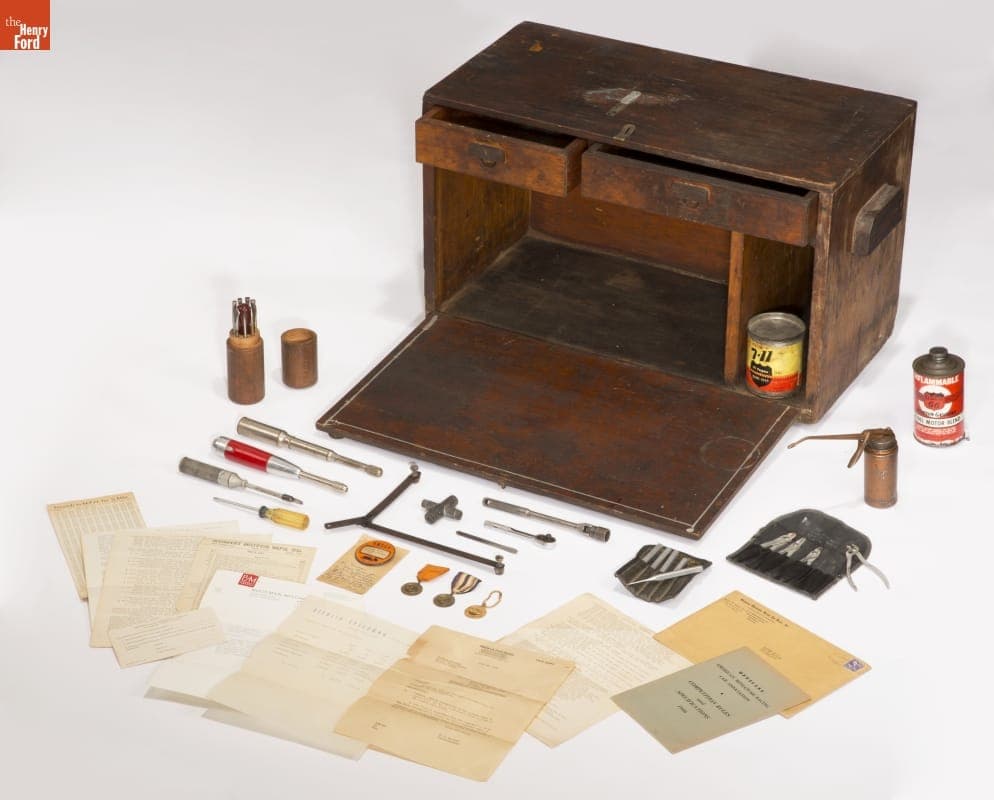
- Toolbox, Used by George Hook, 1946-1952 - Tether cars, gas-powered model race cars, were popular in the 1930s and 1940s. They were raced individually while tethered to a central pivot, or against each other on a scaled-down board track. Racers needed tools and spare parts with them at competitions. This box, used by George Hook, kept everything organized -- and included a place for the car as well.
- 1946-1952
- Collections - Artifact
Toolbox, Used by George Hook, 1946-1952
Tether cars, gas-powered model race cars, were popular in the 1930s and 1940s. They were raced individually while tethered to a central pivot, or against each other on a scaled-down board track. Racers needed tools and spare parts with them at competitions. This box, used by George Hook, kept everything organized -- and included a place for the car as well.
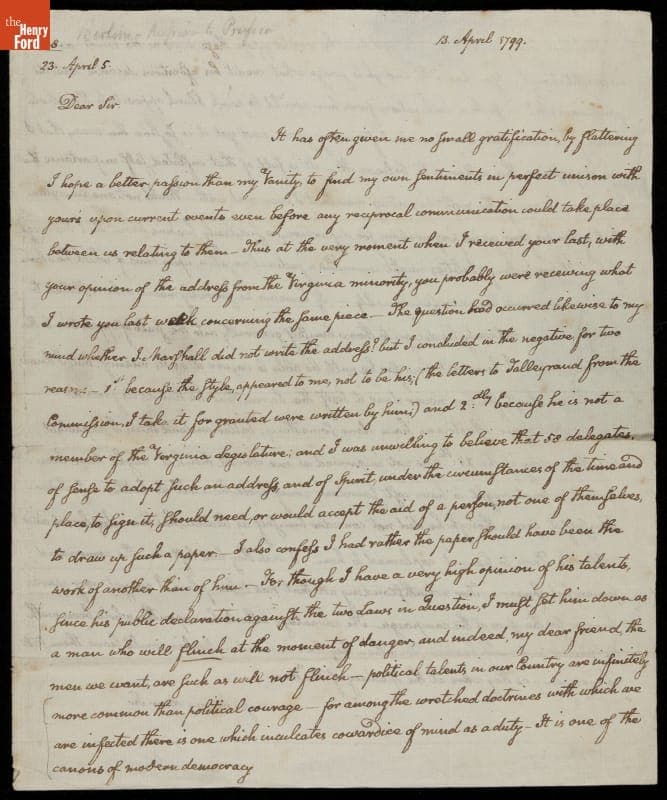
- Letter from John Quincy Adams to William Vans Murray, 1799 -
- April 13, 1799
- Collections - Artifact
Letter from John Quincy Adams to William Vans Murray, 1799
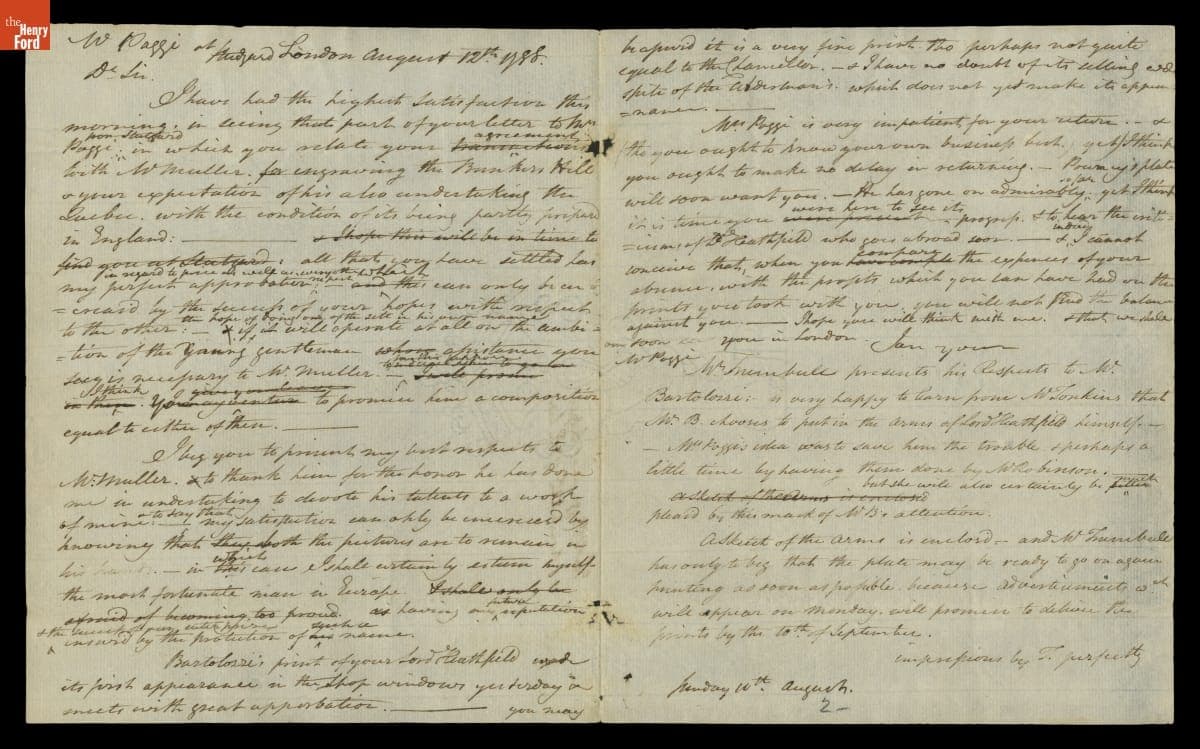
- Letter from John Trumbull to A. C. de Poggi, August 12, 1788 - American artist John Trumbull met Antonio Cesare Poggi while studying in Europe in the late 1700s. Poggi was an artist, art dealer and print publisher. The two became business associates and friends. In this letter from 1788, Trumbull is happy to hear that Poggi has entered an agreement with an engraver to create printing plates of Trumbull's paintings.
- August 12, 1788
- Collections - Artifact
Letter from John Trumbull to A. C. de Poggi, August 12, 1788
American artist John Trumbull met Antonio Cesare Poggi while studying in Europe in the late 1700s. Poggi was an artist, art dealer and print publisher. The two became business associates and friends. In this letter from 1788, Trumbull is happy to hear that Poggi has entered an agreement with an engraver to create printing plates of Trumbull's paintings.
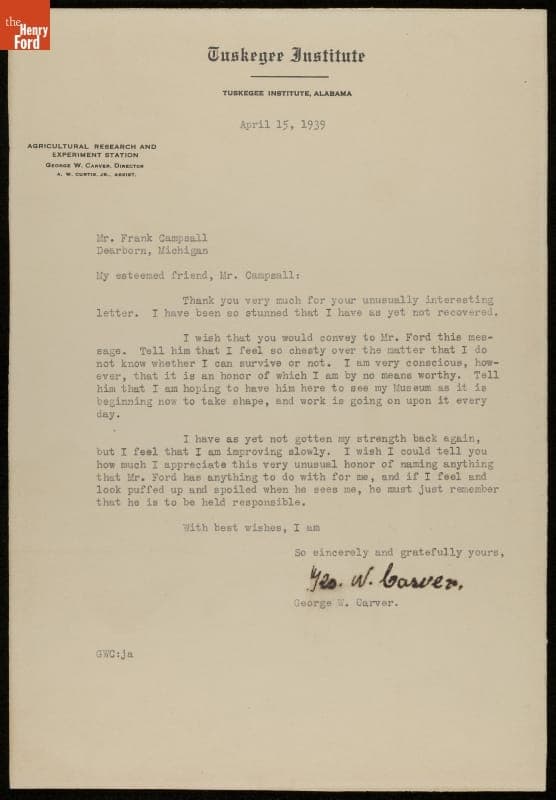
- Letter from George Washington Carver to Frank Campsall, April 15, 1939 - George Washington Carver and Henry Ford became friends in the late 1930s, drawn together by a mutual interest in developing new industrial products from the fruits of the soil. Carver's warm letters to Ford, Clara Ford, and Ford's secretary Frank Campsall speak to the genuine depth of the friendship. Carver often gives Ford advice on research avenues to pursue and suggests recipes for natural health.
- April 15, 1939
- Collections - Artifact
Letter from George Washington Carver to Frank Campsall, April 15, 1939
George Washington Carver and Henry Ford became friends in the late 1930s, drawn together by a mutual interest in developing new industrial products from the fruits of the soil. Carver's warm letters to Ford, Clara Ford, and Ford's secretary Frank Campsall speak to the genuine depth of the friendship. Carver often gives Ford advice on research avenues to pursue and suggests recipes for natural health.
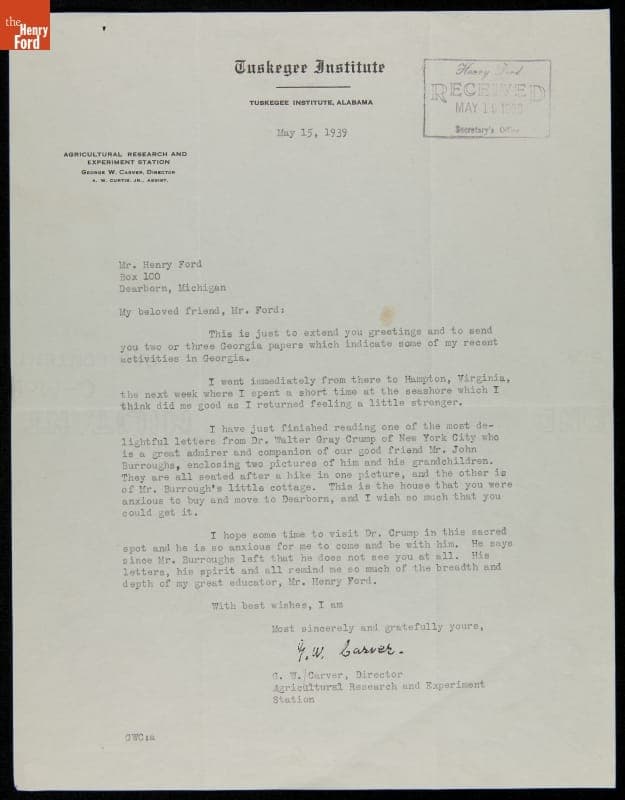
- Letter from George Washington Carver to Henry Ford, May 15, 1939 - George Washington Carver and Henry Ford became friends in the late 1930s, drawn together by a mutual interest in developing new industrial products from the fruits of the soil. Carver's warm letters to Ford, Clara Ford, and Ford's secretary Frank Campsall speak to the genuine depth of the friendship. Carver often gives Ford advice on research avenues to pursue and suggests recipes for natural health.
- May 15, 1939
- Collections - Artifact
Letter from George Washington Carver to Henry Ford, May 15, 1939
George Washington Carver and Henry Ford became friends in the late 1930s, drawn together by a mutual interest in developing new industrial products from the fruits of the soil. Carver's warm letters to Ford, Clara Ford, and Ford's secretary Frank Campsall speak to the genuine depth of the friendship. Carver often gives Ford advice on research avenues to pursue and suggests recipes for natural health.
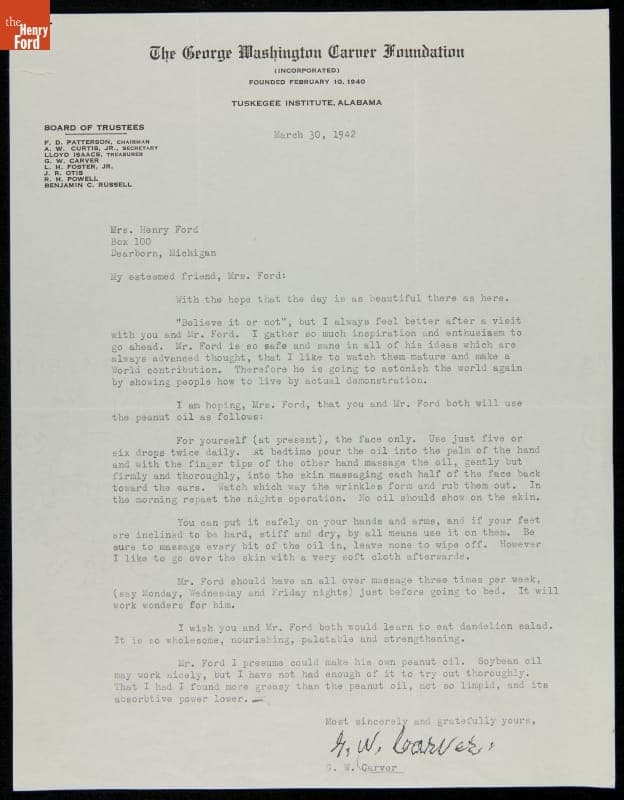
- Letter from George Washington Carver to Clara Ford, March 30, 1942 - George Washington Carver and Henry Ford became friends in the late 1930s, drawn together by a mutual interest in plants and industry. Carver's warm letters to both Henry and Clara Ford speak to the genuine depth of the friendship. In this letter to Clara, which was presumably accompanied a bottle of peanut oil, Carver offered advice on how to use the oil for natural health.
- March 30, 1942
- Collections - Artifact
Letter from George Washington Carver to Clara Ford, March 30, 1942
George Washington Carver and Henry Ford became friends in the late 1930s, drawn together by a mutual interest in plants and industry. Carver's warm letters to both Henry and Clara Ford speak to the genuine depth of the friendship. In this letter to Clara, which was presumably accompanied a bottle of peanut oil, Carver offered advice on how to use the oil for natural health.
- Letter from Austin Curtis, Jr. to Henry and Clara Ford, August 26, 1942 - Chemist Austin Curtis, Jr., came to the Tuskegee Institute in Alabama in 1935 to assist the increasingly frail George Washington Carver and carry on his work. Curtis accompanied Carver on his many trips, including one to Greenfield Village in the summer of 1942. In this letter he thanks Henry and Clara Ford for their hospitality on the recent visit.
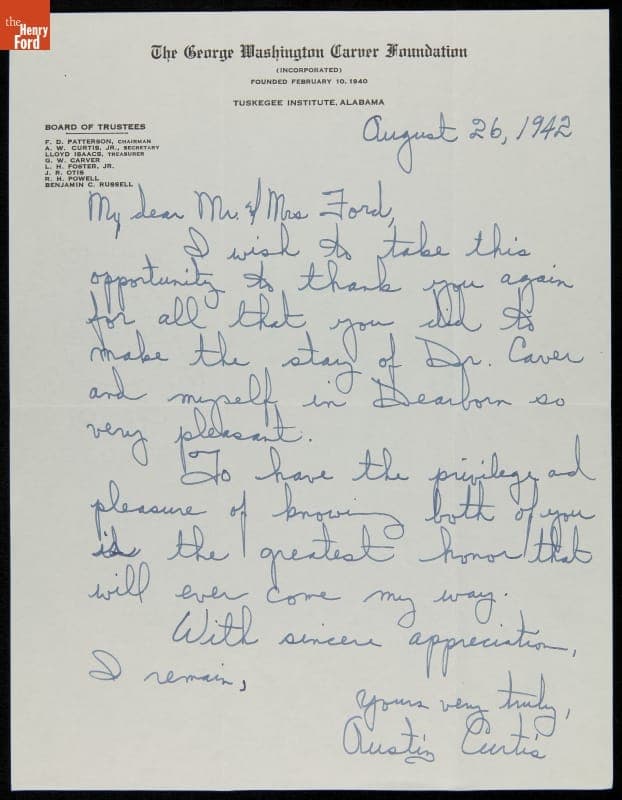
- August 26, 1942
- Collections - Artifact
Letter from Austin Curtis, Jr. to Henry and Clara Ford, August 26, 1942
Chemist Austin Curtis, Jr., came to the Tuskegee Institute in Alabama in 1935 to assist the increasingly frail George Washington Carver and carry on his work. Curtis accompanied Carver on his many trips, including one to Greenfield Village in the summer of 1942. In this letter he thanks Henry and Clara Ford for their hospitality on the recent visit.
- Letter from George Washington Carver to Frank Campsall, September 28, 1942 - George Washington Carver and Henry Ford became friends in the late 1930s, drawn together by a mutual interest in developing new industrial products from the fruits of the soil. Carver's warm letters to Ford, Clara Ford, and Ford's secretary Frank Campsall speak to the genuine depth of the friendship. Carver often gives Ford advice on research avenues to pursue and suggests recipes for natural health.
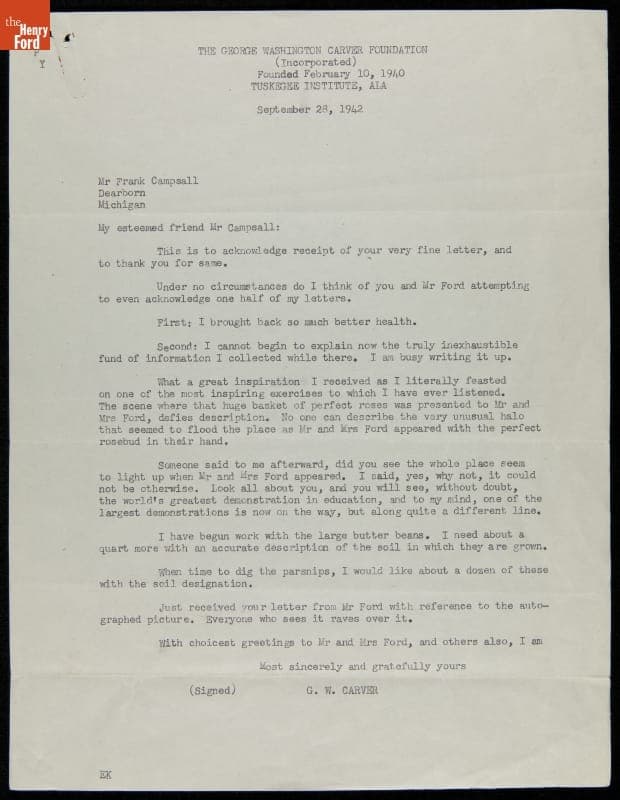
- September 28, 1942
- Collections - Artifact
Letter from George Washington Carver to Frank Campsall, September 28, 1942
George Washington Carver and Henry Ford became friends in the late 1930s, drawn together by a mutual interest in developing new industrial products from the fruits of the soil. Carver's warm letters to Ford, Clara Ford, and Ford's secretary Frank Campsall speak to the genuine depth of the friendship. Carver often gives Ford advice on research avenues to pursue and suggests recipes for natural health.