
Search
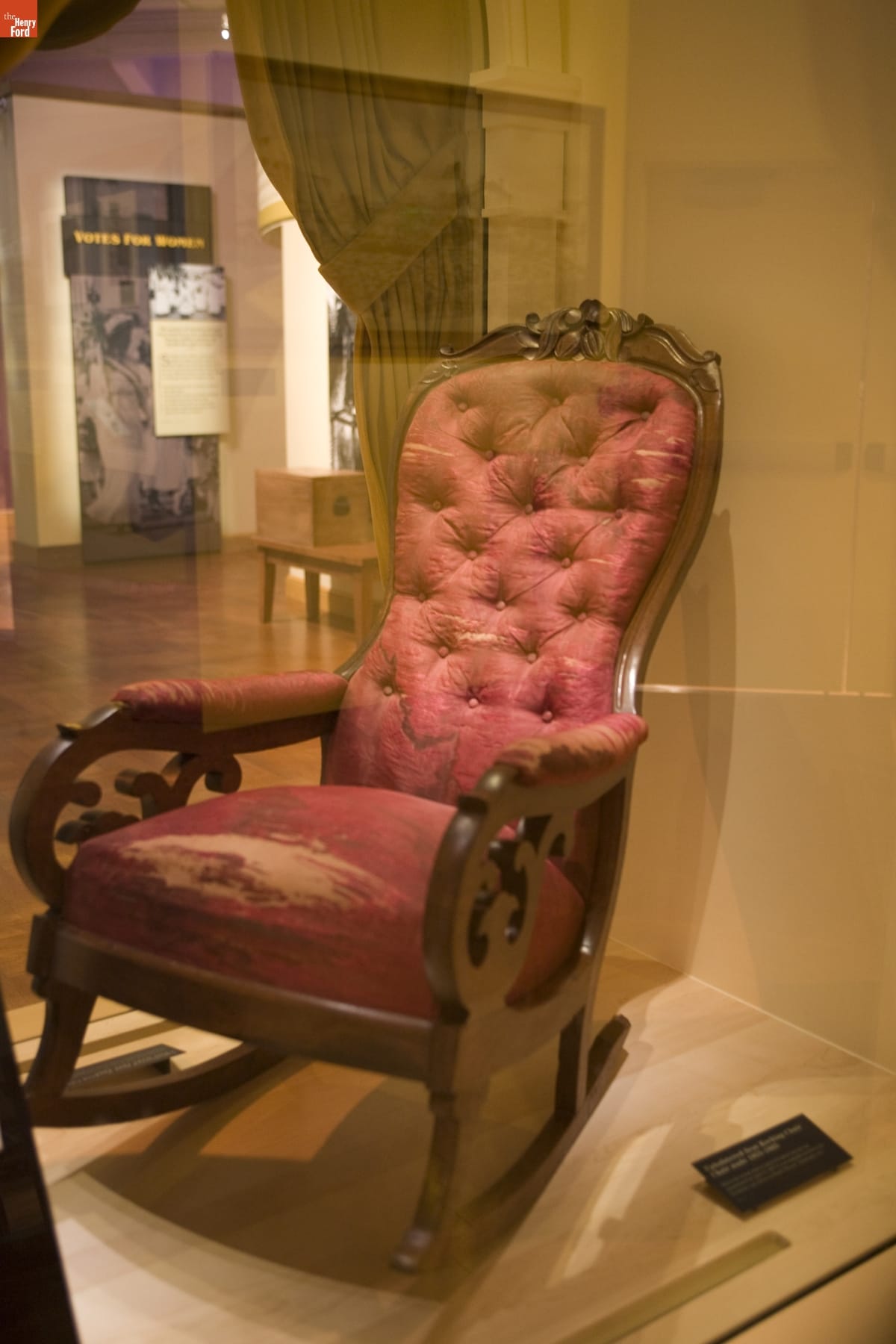
- The Chair in Which Abraham Lincoln Was Shot at Ford's Theatre, on Exhibit at Henry Ford Museum, June 2007 - President Abraham Lincoln was sitting in this rocking chair during a production of <EM>Our American Cousin</EM> at Ford's Theatre in Washington, D.C., when he was assassinated on April 14, 1865. Henry Ford purchased the chair in 1929 for the Museum, where it remains one of the most revered objects associated with the "man who saved the Union."
- June 01, 2007
- Collections - Artifact
The Chair in Which Abraham Lincoln Was Shot at Ford's Theatre, on Exhibit at Henry Ford Museum, June 2007
President Abraham Lincoln was sitting in this rocking chair during a production of Our American Cousin at Ford's Theatre in Washington, D.C., when he was assassinated on April 14, 1865. Henry Ford purchased the chair in 1929 for the Museum, where it remains one of the most revered objects associated with the "man who saved the Union."
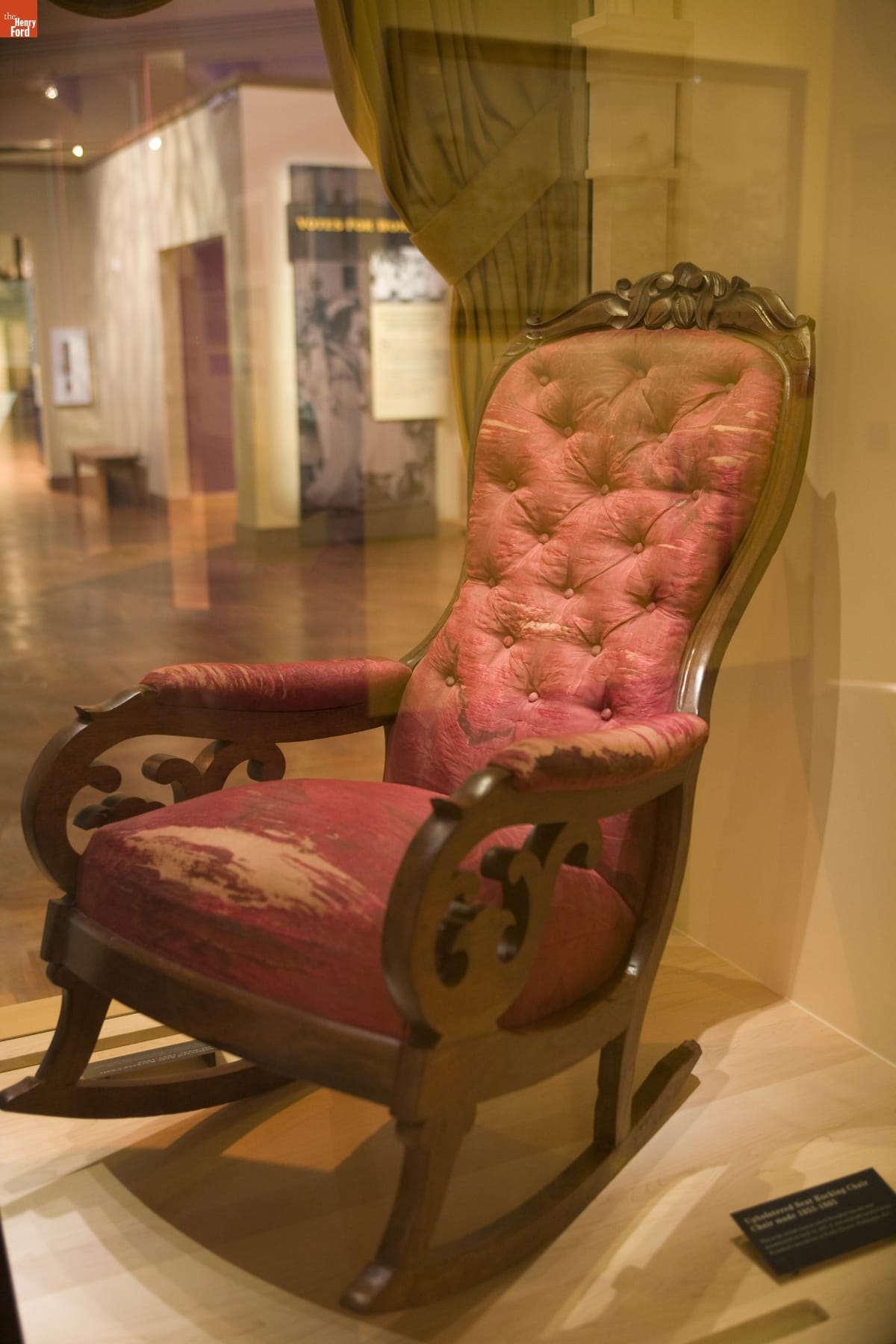
- The Chair in Which Abraham Lincoln Was Shot at Ford's Theatre, on Exhibit at Henry Ford Museum, June 2007 - President Abraham Lincoln was sitting in this rocking chair during a production of <EM>Our American Cousin</EM> at Ford's Theatre in Washington, D.C., when he was assassinated on April 14, 1865. Henry Ford purchased the chair in 1929 for the Museum, where it remains one of the most revered objects associated with the "man who saved the Union."
- June 01, 2007
- Collections - Artifact
The Chair in Which Abraham Lincoln Was Shot at Ford's Theatre, on Exhibit at Henry Ford Museum, June 2007
President Abraham Lincoln was sitting in this rocking chair during a production of Our American Cousin at Ford's Theatre in Washington, D.C., when he was assassinated on April 14, 1865. Henry Ford purchased the chair in 1929 for the Museum, where it remains one of the most revered objects associated with the "man who saved the Union."
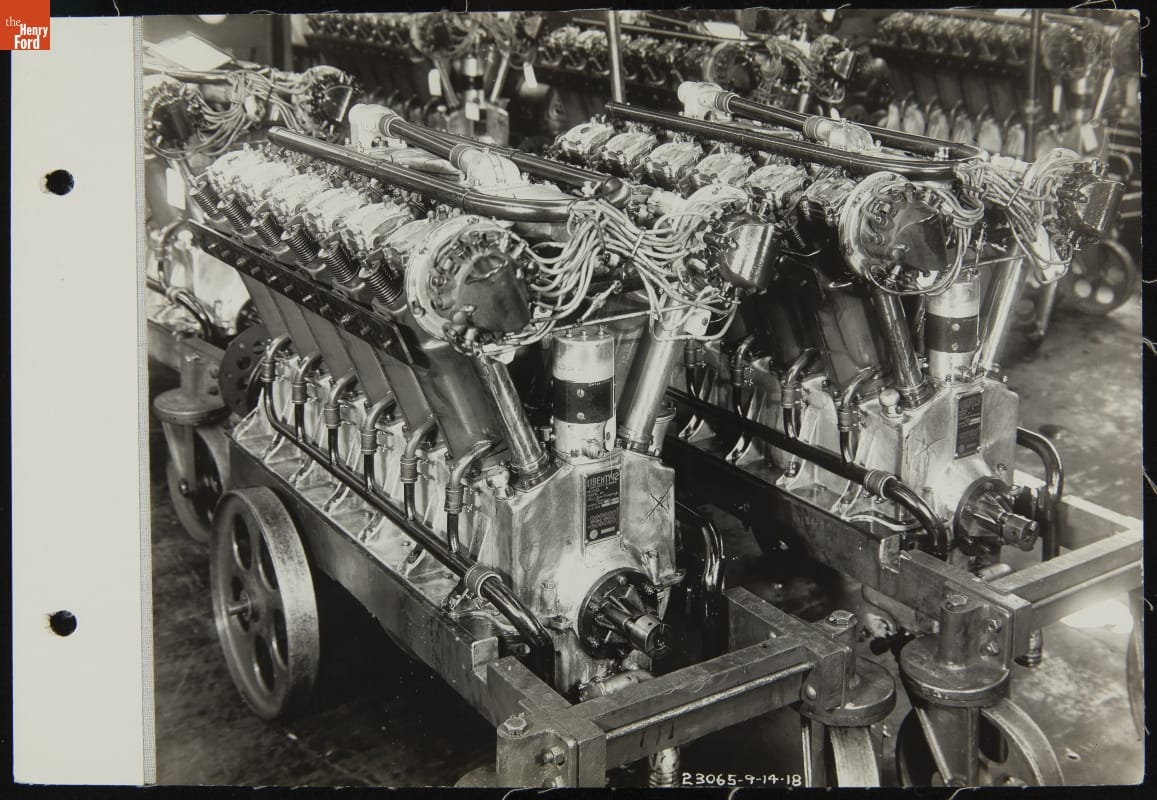
- Liberty Engine, 1918 - Designed at the urging of the United States government, the 400-horsepower Liberty V-12 engine powered military aircraft during World War I. Ford Motor Company manufactured 3,950 of these engines from May to November 1918. Lincoln, Marmon, Packard, Buick, and Cadillac also built Liberty engines during the war. Altogether, U.S. automakers produced more than 20,000 units.
- September 14, 1918
- Collections - Artifact
Liberty Engine, 1918
Designed at the urging of the United States government, the 400-horsepower Liberty V-12 engine powered military aircraft during World War I. Ford Motor Company manufactured 3,950 of these engines from May to November 1918. Lincoln, Marmon, Packard, Buick, and Cadillac also built Liberty engines during the war. Altogether, U.S. automakers produced more than 20,000 units.
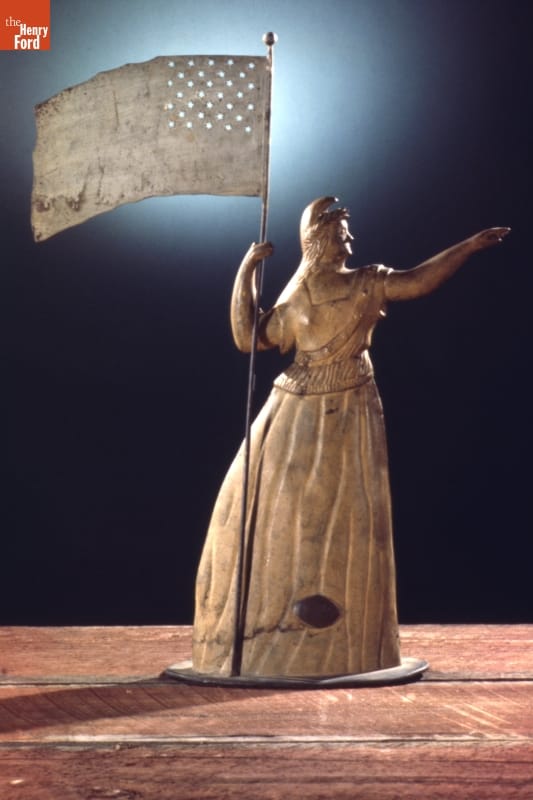
- "Goddess of Liberty" Weathervane, 1867-1872 - Weathervanes point into the direction of the wind. This helped viewers anticipate weather changes before local forecasts became common after 1920. Functional weathervanes required a basic pointing device and directional arms, but manufacturers added decorative elements, or ornaments, to appeal to consumer interests. Patriotic symbols became common around the time of the Civil War. This figure carried the 32-star flag adopted in 1858.
- 1867-1872
- Collections - Artifact
"Goddess of Liberty" Weathervane, 1867-1872
Weathervanes point into the direction of the wind. This helped viewers anticipate weather changes before local forecasts became common after 1920. Functional weathervanes required a basic pointing device and directional arms, but manufacturers added decorative elements, or ornaments, to appeal to consumer interests. Patriotic symbols became common around the time of the Civil War. This figure carried the 32-star flag adopted in 1858.
- Ford Liberty Motor Cylinder Welding Department, Ford Highland Park Plant, October 1918 - Liberty V-12 engines powered military aircraft during World War I. Ford, Buick, Cadillac, Lincoln, Marmon, and Packard built more than 20,000 of these engines for the Allied Powers. Ford produced the engine cylinders for all manufacturers. The company developed a new method for making cylinders from steel tubing, rather than boring them from solid forgings, which saved time and money.
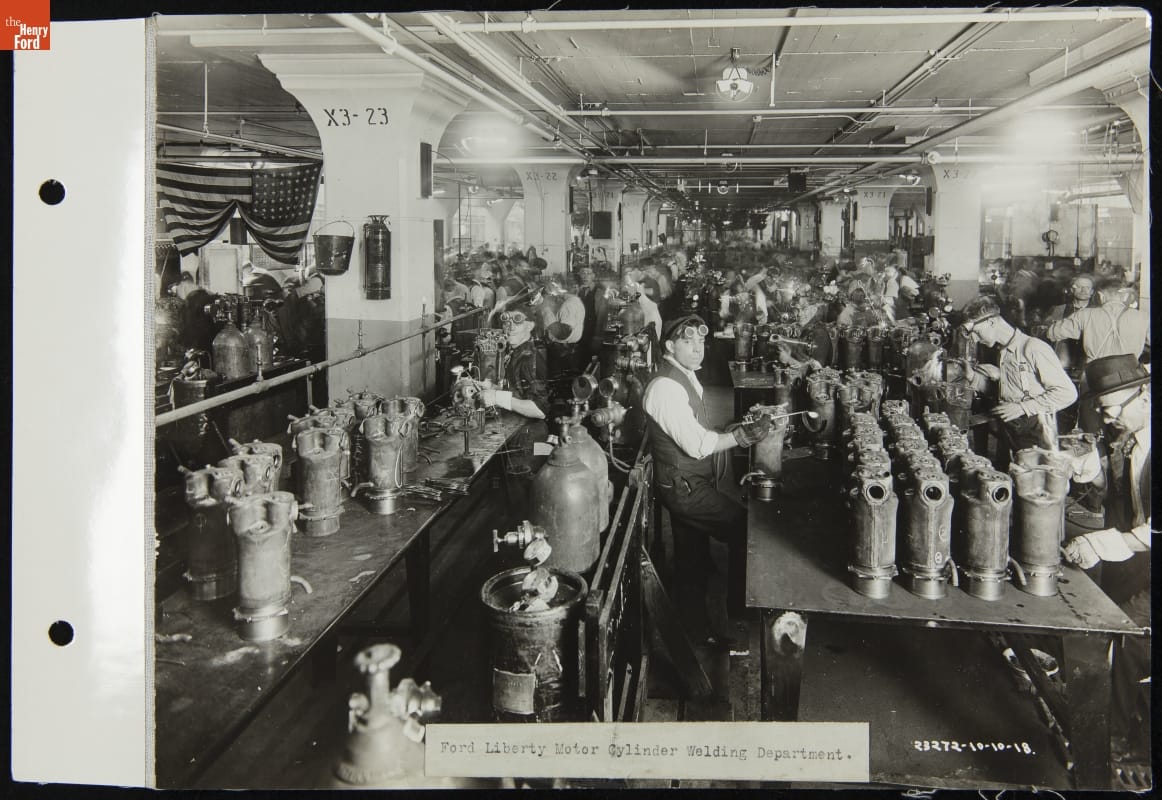
- October 10, 1918
- Collections - Artifact
Ford Liberty Motor Cylinder Welding Department, Ford Highland Park Plant, October 1918
Liberty V-12 engines powered military aircraft during World War I. Ford, Buick, Cadillac, Lincoln, Marmon, and Packard built more than 20,000 of these engines for the Allied Powers. Ford produced the engine cylinders for all manufacturers. The company developed a new method for making cylinders from steel tubing, rather than boring them from solid forgings, which saved time and money.
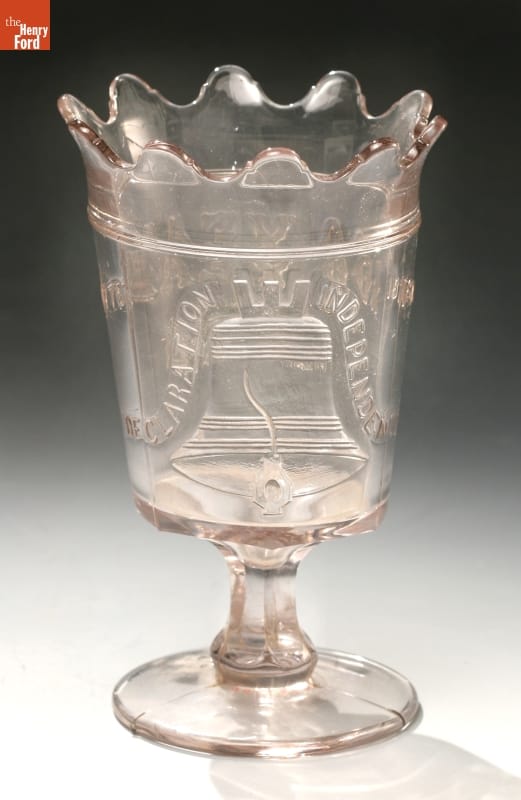
- Commemorative Spoon Holder, "Declaration of Independence: 100 Years Ago," 1876 - Glassmakers from around the world, including forty-seven American firms, mounted exhibitions at the 1876 Centennial Exposition in Philadelphia. Gillinder and Sons of Philadelphia constructed an entire working factory. Visitors could watch Gillinder craftsmen blow, press, engrave, and cut glass souvenirs celebrating the 100th anniversary of American independence. This example features an icon of national freedom, the Liberty Bell.
- 1876
- Collections - Artifact
Commemorative Spoon Holder, "Declaration of Independence: 100 Years Ago," 1876
Glassmakers from around the world, including forty-seven American firms, mounted exhibitions at the 1876 Centennial Exposition in Philadelphia. Gillinder and Sons of Philadelphia constructed an entire working factory. Visitors could watch Gillinder craftsmen blow, press, engrave, and cut glass souvenirs celebrating the 100th anniversary of American independence. This example features an icon of national freedom, the Liberty Bell.
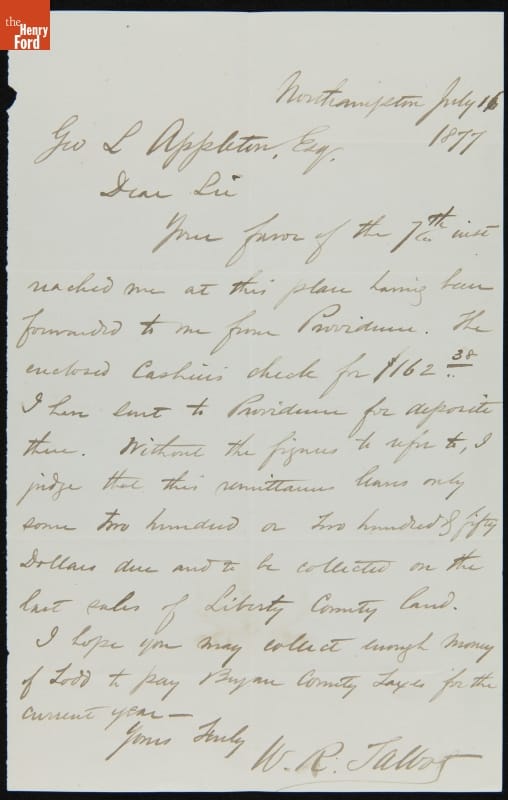
- Letter from William Talbot to George Appleton, July 16, 1877 -
- July 16, 1877
- Collections - Artifact
Letter from William Talbot to George Appleton, July 16, 1877
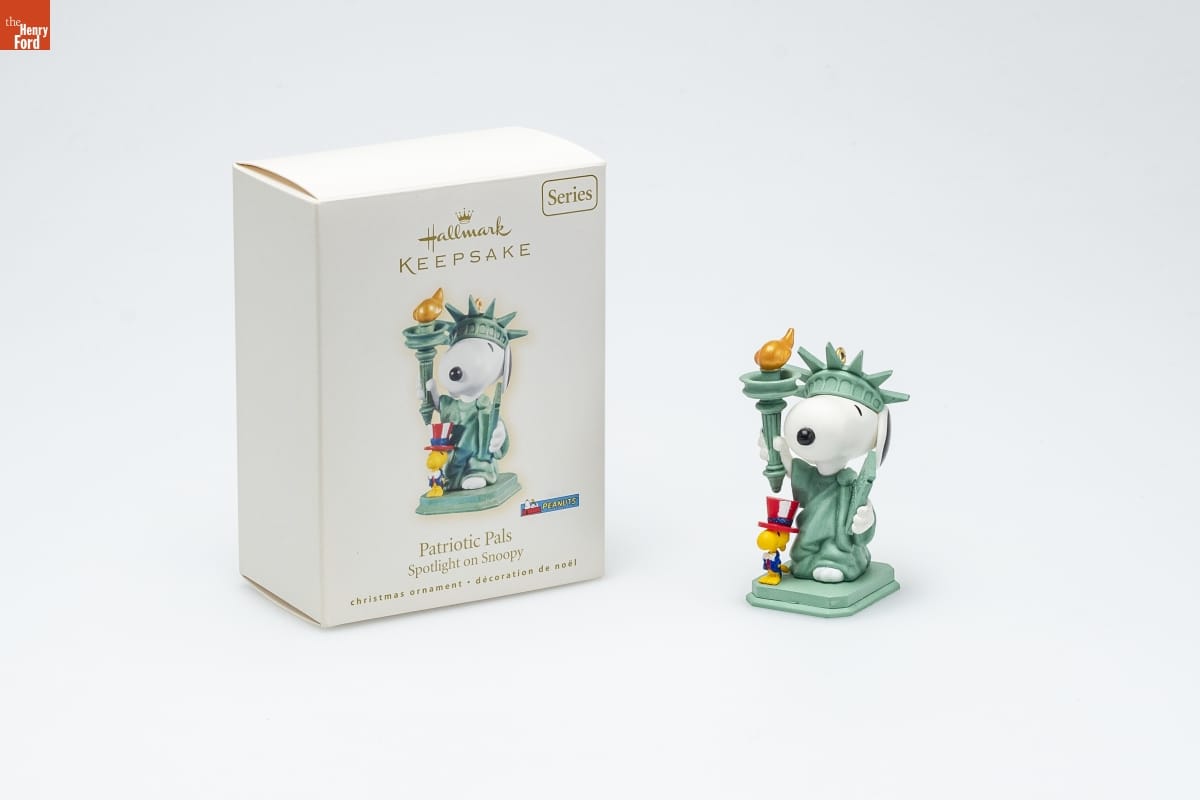
- Hallmark "Spotlight on Snoopy Series: Patriotic Pals" Christmas Ornament, 2008 - Already known for greeting cards, Hallmark introduced a line of Christmas ornaments in 1973. The company's annual release of an increasing array of ornaments revolutionized Christmas decorating, appealing to customers' interest in marking memories and milestones as well as expressing one's personality and unique tastes.
- 2008
- Collections - Artifact
Hallmark "Spotlight on Snoopy Series: Patriotic Pals" Christmas Ornament, 2008
Already known for greeting cards, Hallmark introduced a line of Christmas ornaments in 1973. The company's annual release of an increasing array of ornaments revolutionized Christmas decorating, appealing to customers' interest in marking memories and milestones as well as expressing one's personality and unique tastes.
- Hatbox, 1917-1920 -
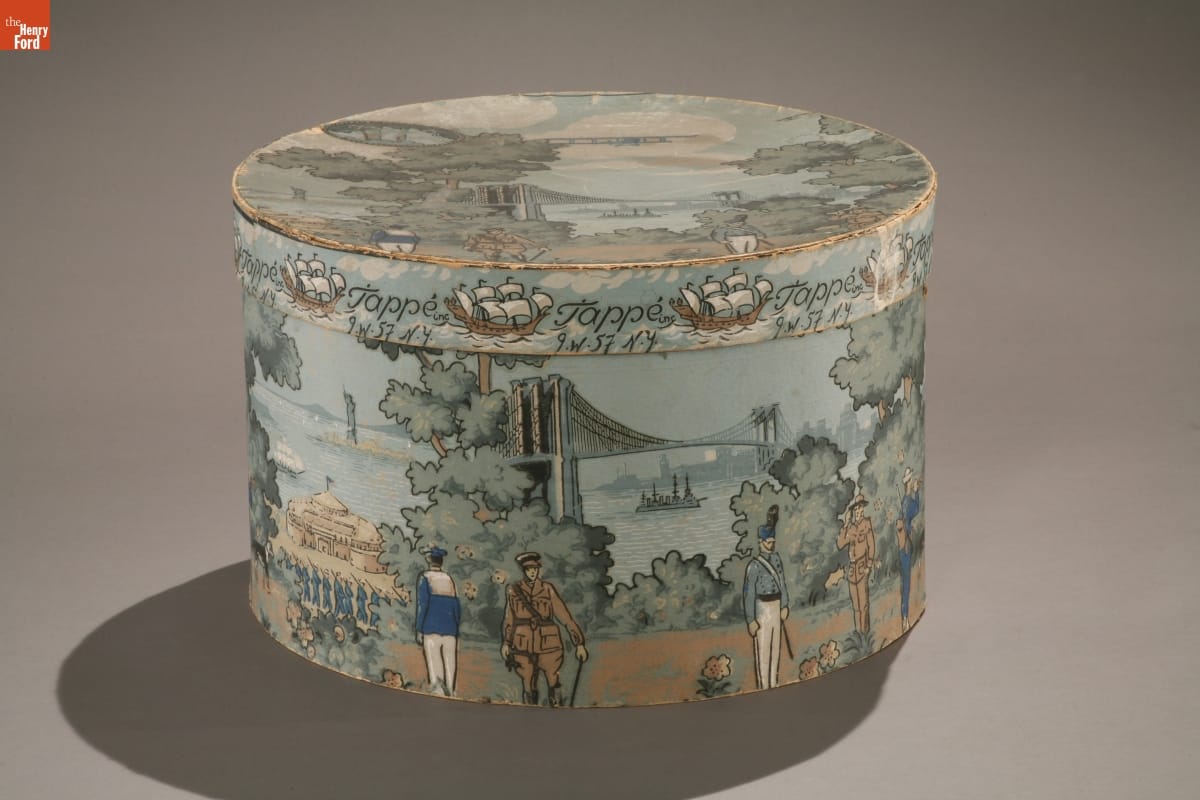
- 1917-1920
- Collections - Artifact
Hatbox, 1917-1920
- New York Evening Post Newspaper for September 23, 1862, "Emancipation Proclamation of President Lincoln" -
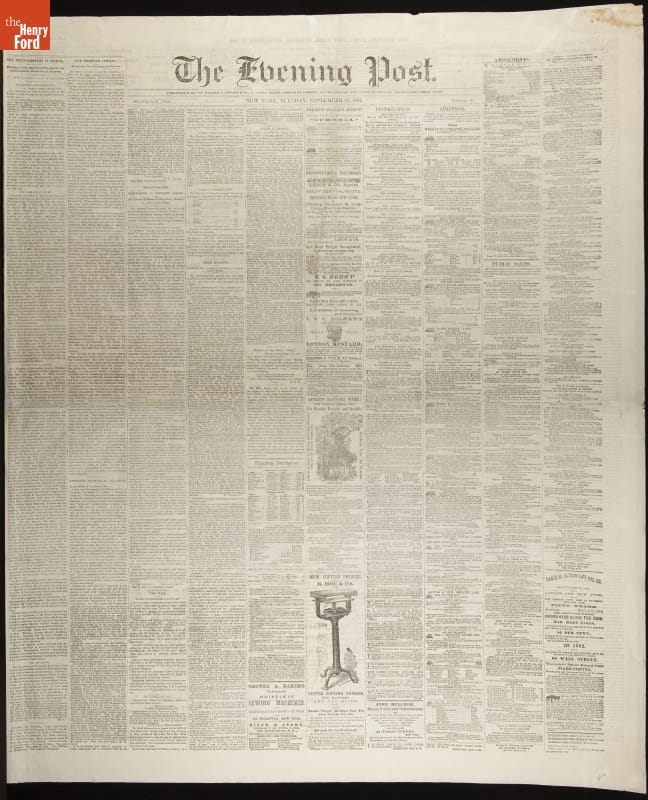
- September 23, 1862
- Collections - Artifact
New York Evening Post Newspaper for September 23, 1862, "Emancipation Proclamation of President Lincoln"