
Search
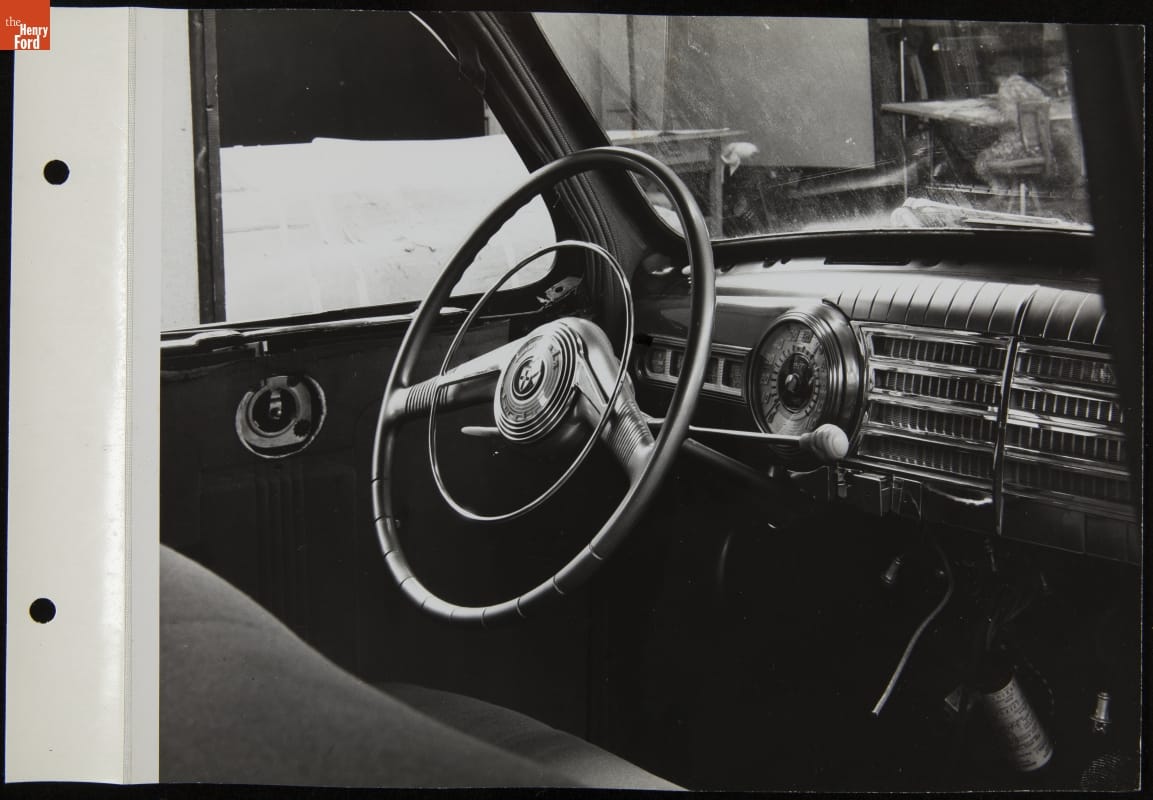
- Interior of Lincoln Zephyr Car in Design Department, Woman Designer in Background, October 1944 - With World War II moving toward a close, Lincoln designers began work on new civilian models. It was anticipated that the Lincoln Zephyr would return, so designers set about refreshing the 1942 model. However, the Zephyr name was dropped before the 1946 models -- the company's first postwar cars -- debuted.
- October 14, 1944
- Collections - Artifact
Interior of Lincoln Zephyr Car in Design Department, Woman Designer in Background, October 1944
With World War II moving toward a close, Lincoln designers began work on new civilian models. It was anticipated that the Lincoln Zephyr would return, so designers set about refreshing the 1942 model. However, the Zephyr name was dropped before the 1946 models -- the company's first postwar cars -- debuted.
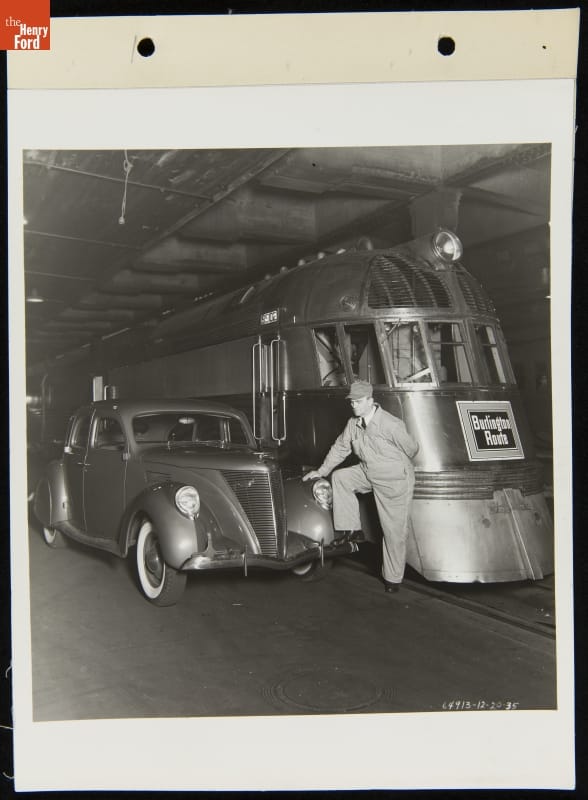
- Lincoln Zephyr Automobile with the Diesel-Powered "Burlington Zephyr" Streamlined Train, December 1935 - This publicity photo posed a Lincoln Zephyr automobile beside the Chicago, Burlington & Quincy Railroad's <em>Pioneer Zephyr</em>. In 1934 the streamlined train made a widely publicized run from Denver to Chicago in just over 13 hours, maintaining an average speed of 77 miles per hour. It's no coincidence that Lincoln gave its streamlined car, introduced in 1935, a similar name.
- December 20, 1935
- Collections - Artifact
Lincoln Zephyr Automobile with the Diesel-Powered "Burlington Zephyr" Streamlined Train, December 1935
This publicity photo posed a Lincoln Zephyr automobile beside the Chicago, Burlington & Quincy Railroad's Pioneer Zephyr. In 1934 the streamlined train made a widely publicized run from Denver to Chicago in just over 13 hours, maintaining an average speed of 77 miles per hour. It's no coincidence that Lincoln gave its streamlined car, introduced in 1935, a similar name.
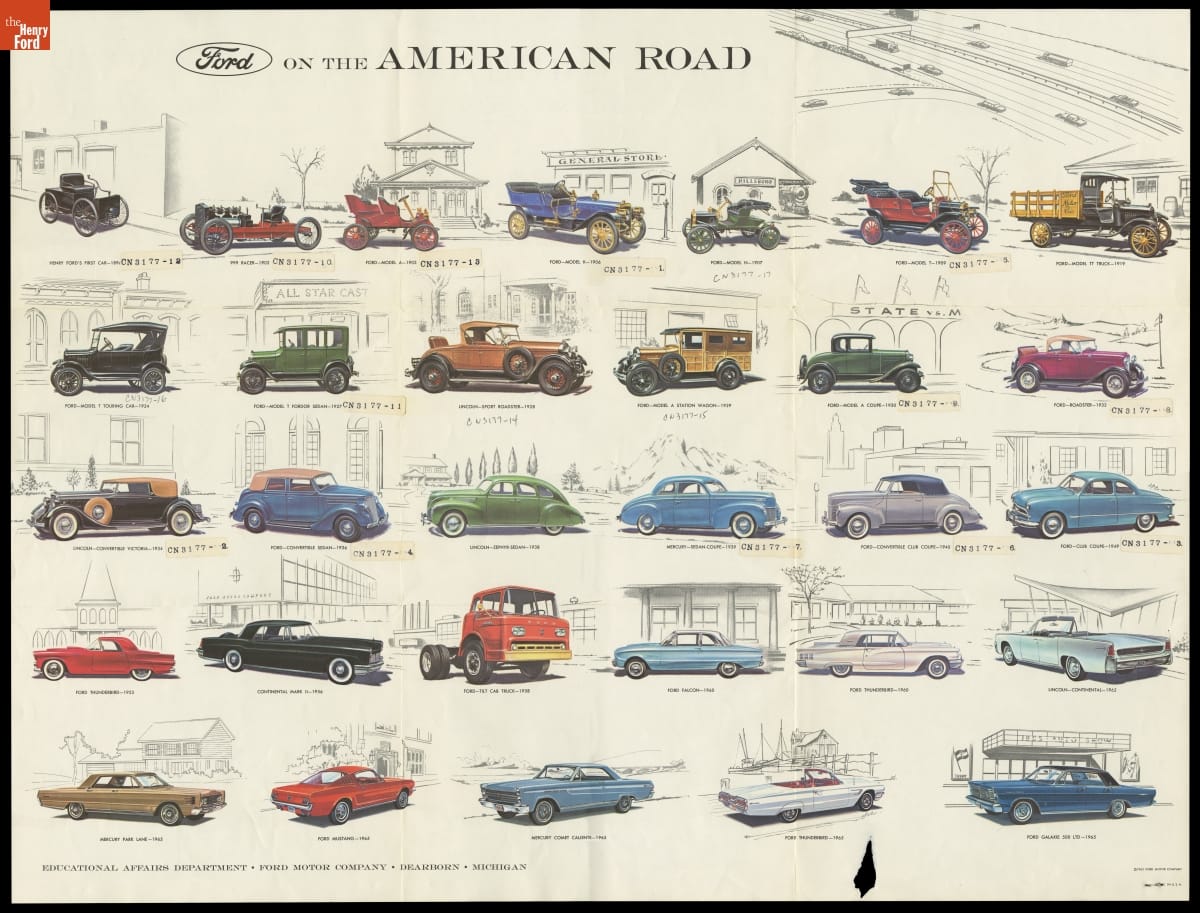
- Advertising Poster, "Ford on the American Road," 1962-1965 - The evolution of Ford Motor Company vehicles through 1965 is illustrated in this colorful advertisement. The line starts with the 1896 Quadricycle and the 1902 "999" race car, and it includes four variants of the pivotal Model T. The Lincoln and Mercury marques are each represented with multiple cars. Later important Ford models, like Thunderbird and Mustang, finish the progression.
- 1962 - 1965
- Collections - Artifact
Advertising Poster, "Ford on the American Road," 1962-1965
The evolution of Ford Motor Company vehicles through 1965 is illustrated in this colorful advertisement. The line starts with the 1896 Quadricycle and the 1902 "999" race car, and it includes four variants of the pivotal Model T. The Lincoln and Mercury marques are each represented with multiple cars. Later important Ford models, like Thunderbird and Mustang, finish the progression.
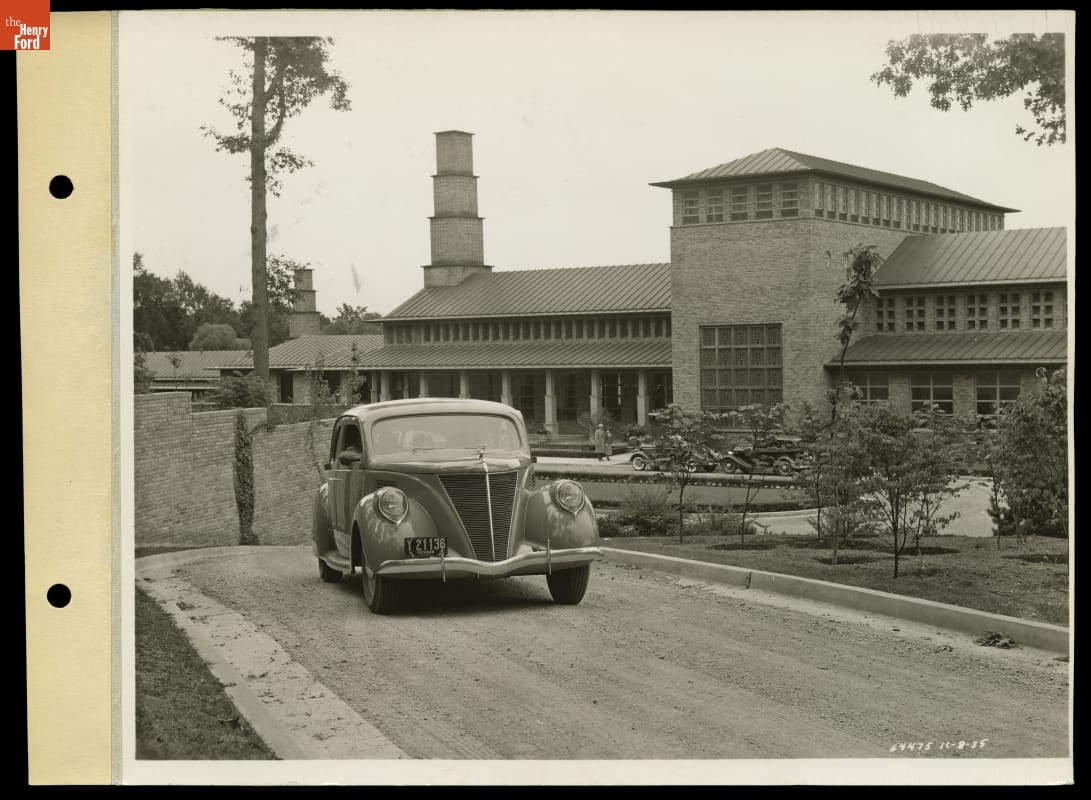
- Lincoln Zephyr Two-Door Sedan, 1935 - The Lincoln Zephyr was introduced in November 1935 for the 1936 model year. Sales of the $4,000+ Model K had fallen sharply during the Great Depression, and the $1,300 Zephyr was intended to bring customers back into Lincoln showrooms. The company built 14,994 Zephyrs for 1936 -- nearly ten times more than the 1,515 Model K Lincolns built that year.
- November 08, 1935
- Collections - Artifact
Lincoln Zephyr Two-Door Sedan, 1935
The Lincoln Zephyr was introduced in November 1935 for the 1936 model year. Sales of the $4,000+ Model K had fallen sharply during the Great Depression, and the $1,300 Zephyr was intended to bring customers back into Lincoln showrooms. The company built 14,994 Zephyrs for 1936 -- nearly ten times more than the 1,515 Model K Lincolns built that year.
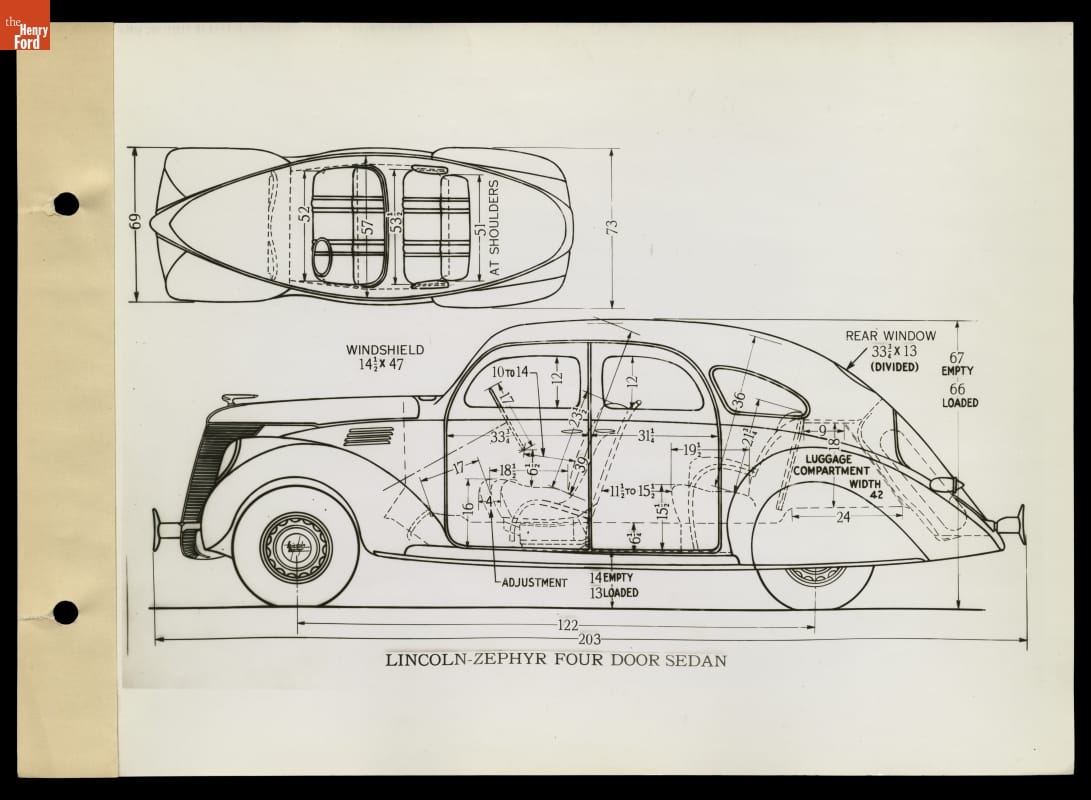
- Line Drawing of Lincoln Zephyr Four-Door Sedan, 1936 - Lincoln introduced the Zephyr for 1936 in response to the Great Depression. Sales of the $4,000+ Model K had fallen sharply, and the $1,300 Zephyr was intended to bring customers back into Lincoln showrooms. The Zephyr quickly became Lincoln's most important car, accounting for more than 90 percent of the company's production in the 1936 model year.
- March 24, 1936
- Collections - Artifact
Line Drawing of Lincoln Zephyr Four-Door Sedan, 1936
Lincoln introduced the Zephyr for 1936 in response to the Great Depression. Sales of the $4,000+ Model K had fallen sharply, and the $1,300 Zephyr was intended to bring customers back into Lincoln showrooms. The Zephyr quickly became Lincoln's most important car, accounting for more than 90 percent of the company's production in the 1936 model year.
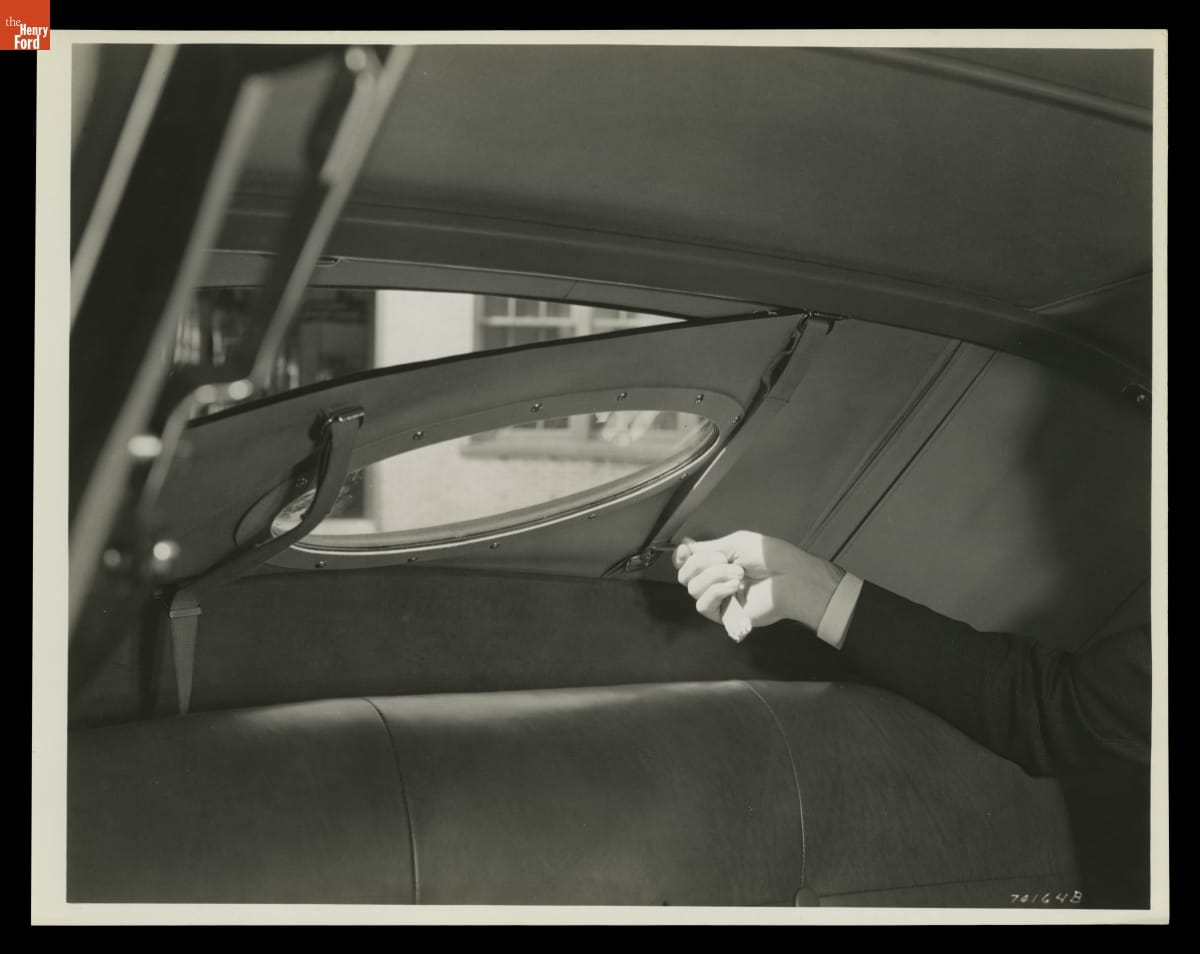
- Raising and Lowering Top on Lincoln Zephyr Convertible Coupe, April 1938 - Lincoln introduced the streamlined Zephyr for 1936. Designed partly in response to the Great Depression, it was a smaller car with a smaller price tag compared with Lincoln's full-size Model K. Zephyr quickly became the company's best seller. Lincoln added convertible coupes and sedans to Zephyr's fixed-roof lineup for 1938. Zephyr production ended in 1942.
- April 29, 1938
- Collections - Artifact
Raising and Lowering Top on Lincoln Zephyr Convertible Coupe, April 1938
Lincoln introduced the streamlined Zephyr for 1936. Designed partly in response to the Great Depression, it was a smaller car with a smaller price tag compared with Lincoln's full-size Model K. Zephyr quickly became the company's best seller. Lincoln added convertible coupes and sedans to Zephyr's fixed-roof lineup for 1938. Zephyr production ended in 1942.
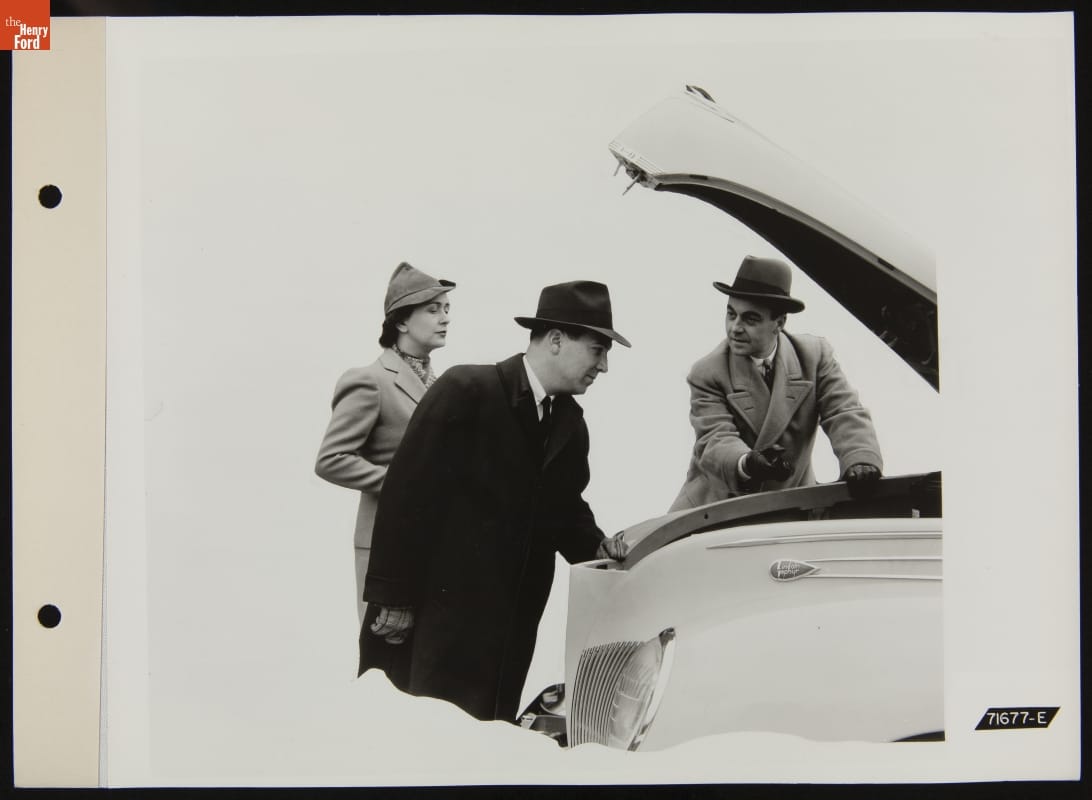
- Salesman and Customers, Illustration in Ford Publication "Selling the Lincoln Zephyr V-12," April 1939 - Lincoln introduced the Zephyr for 1936. The lower-priced car improved the company's sagging sales during the Great Depression. Zephyrs for 1939 featured hydraulic brakes, larger grilles, and reshaped bumpers. This photograph was used in a sales handbook titled <em>Selling the Lincoln Zephyr V-12</em>. Some 21,000 Zephyrs were built for 1939, compared with 133 of the costlier Lincoln Model K cars.
- April 05, 1939
- Collections - Artifact
Salesman and Customers, Illustration in Ford Publication "Selling the Lincoln Zephyr V-12," April 1939
Lincoln introduced the Zephyr for 1936. The lower-priced car improved the company's sagging sales during the Great Depression. Zephyrs for 1939 featured hydraulic brakes, larger grilles, and reshaped bumpers. This photograph was used in a sales handbook titled Selling the Lincoln Zephyr V-12. Some 21,000 Zephyrs were built for 1939, compared with 133 of the costlier Lincoln Model K cars.
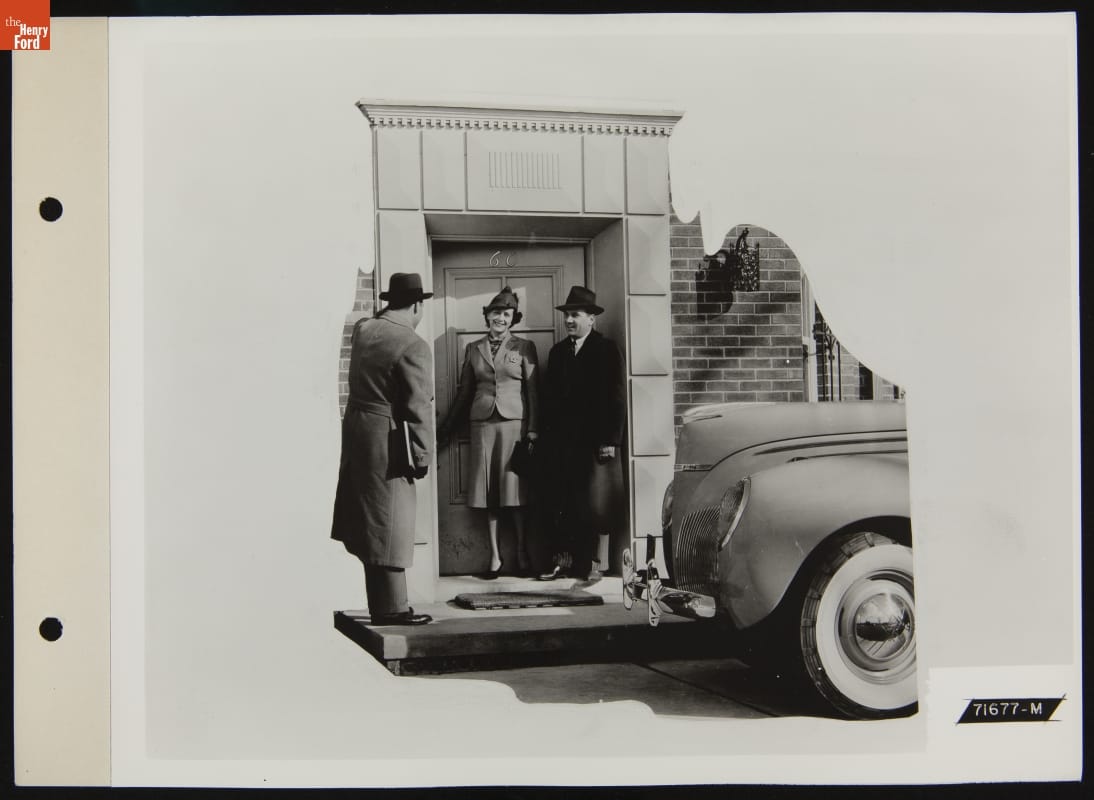
- Salesman and Customers, Illustration in Ford Publication "Selling the Lincoln Zephyr V-12," April 1939 - Lincoln introduced the Zephyr for 1936. The lower-priced car improved the company's sagging sales during the Great Depression. Zephyrs for 1939 featured hydraulic brakes, larger grilles, and reshaped bumpers. This photograph was used in a sales handbook titled <em>Selling the Lincoln Zephyr V-12</em>. Some 21,000 Zephyrs were built for 1939, compared with 133 of the costlier Lincoln Model K cars.
- April 05, 1939
- Collections - Artifact
Salesman and Customers, Illustration in Ford Publication "Selling the Lincoln Zephyr V-12," April 1939
Lincoln introduced the Zephyr for 1936. The lower-priced car improved the company's sagging sales during the Great Depression. Zephyrs for 1939 featured hydraulic brakes, larger grilles, and reshaped bumpers. This photograph was used in a sales handbook titled Selling the Lincoln Zephyr V-12. Some 21,000 Zephyrs were built for 1939, compared with 133 of the costlier Lincoln Model K cars.
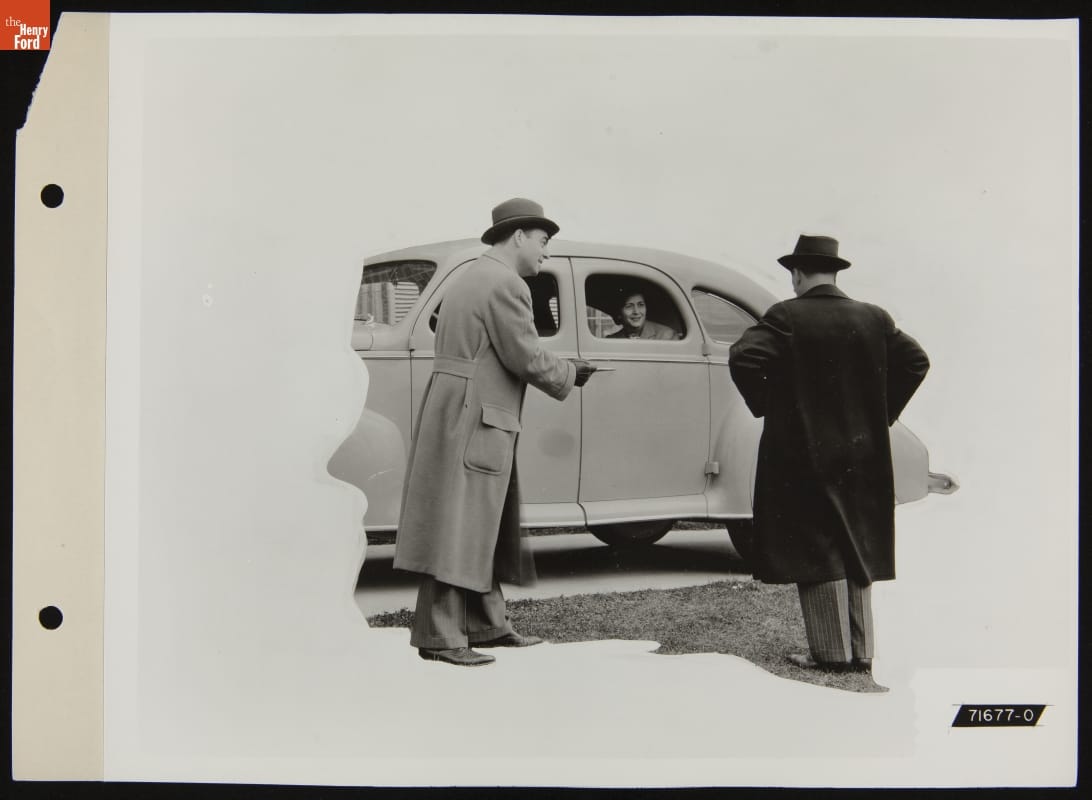
- Salesman and Customers, Illustration in Ford Publication "Selling the Lincoln Zephyr V-12," April 1939 - Lincoln introduced the Zephyr for 1936. The lower-priced car improved the company's sagging sales during the Great Depression. Zephyrs for 1939 featured hydraulic brakes, larger grilles, and reshaped bumpers. This photograph was used in a sales handbook titled <em>Selling the Lincoln Zephyr V-12</em>. Some 21,000 Zephyrs were built for 1939, compared with 133 of the costlier Lincoln Model K cars.
- April 05, 1939
- Collections - Artifact
Salesman and Customers, Illustration in Ford Publication "Selling the Lincoln Zephyr V-12," April 1939
Lincoln introduced the Zephyr for 1936. The lower-priced car improved the company's sagging sales during the Great Depression. Zephyrs for 1939 featured hydraulic brakes, larger grilles, and reshaped bumpers. This photograph was used in a sales handbook titled Selling the Lincoln Zephyr V-12. Some 21,000 Zephyrs were built for 1939, compared with 133 of the costlier Lincoln Model K cars.
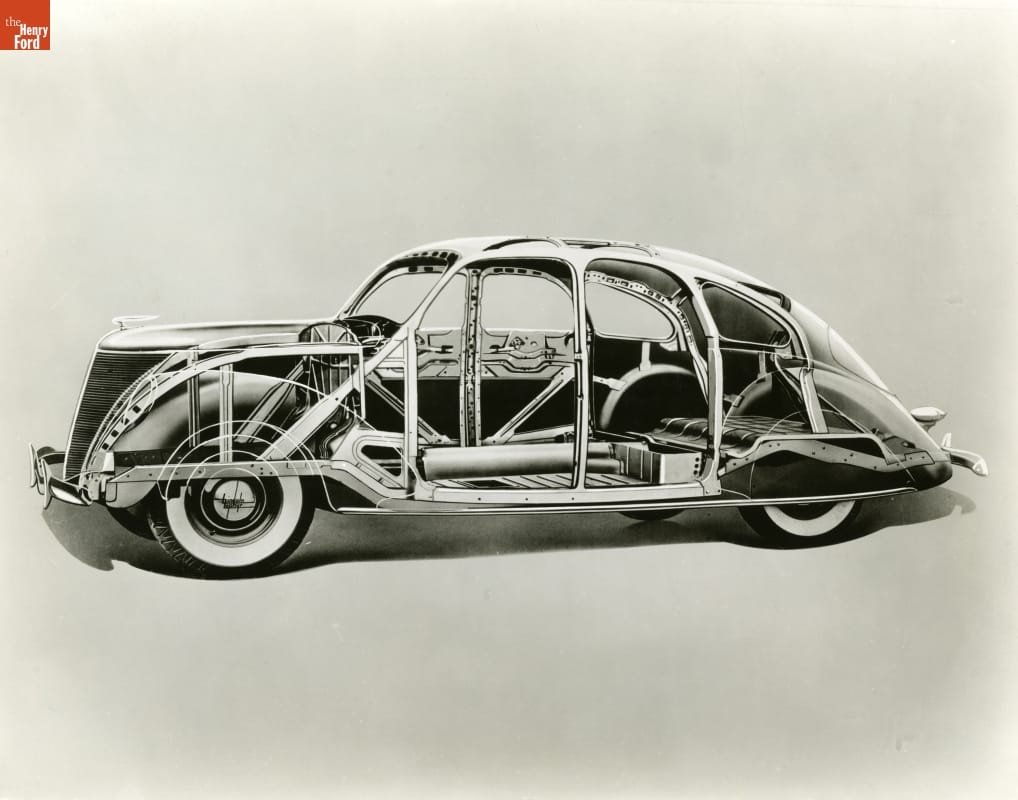
- Photograph, Cutaway Side View Illustration of 1936 Lincoln Zephyr Automobile - The Lincoln Zephyr, produced from 1936 to 1942, was distinguished from other contemporary cars by its streamlined shape, its rear-hinged "alligator" hood, and its horizontal-bar grille. Less visible, but no less advanced, was Zephyr's unit-body construction. The car's frame and body were integrated into a single, stronger unit, as seen in this cutaway.
- 1936
- Collections - Artifact
Photograph, Cutaway Side View Illustration of 1936 Lincoln Zephyr Automobile
The Lincoln Zephyr, produced from 1936 to 1942, was distinguished from other contemporary cars by its streamlined shape, its rear-hinged "alligator" hood, and its horizontal-bar grille. Less visible, but no less advanced, was Zephyr's unit-body construction. The car's frame and body were integrated into a single, stronger unit, as seen in this cutaway.